


Search results
Search for "XRD" in Full Text gives 121 result(s) in Beilstein Journal of Organic Chemistry.
A photochemical determination of luminescence efficiency of upconverting nanoparticles
Beilstein J. Org. Chem. 2019, 15, 2671–2677, doi:10.3762/bjoc.15.260
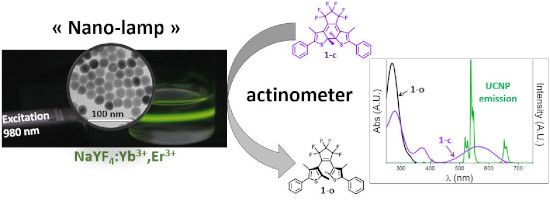
- volatile solvents removal, (iii) the high temperature crystallization step for 90 minutes. Spherical nanoparticles of 21.8 ± 1.3 nm were collected. Crystal quality was assayed by XRD and only the hexagonal β-phase could be detected (Supporting Information File 1). These particles are kept well dispersed in
- knowing NYb the number of ytterbium per nanoparticle: NYb and NEr (NEr: number of erbium atom per particles) can be derived from the number of RE atoms per NP, itself computed from TEM and XRD measurements taking into account the nanoparticles size (volume ≈ 5400 ± 1000 nm3), unit cell volume (107.6 Å3


1,5-Phosphonium betaines from N-triflylpropiolamides, triphenylphosphane, and active methylene compounds
Beilstein J. Org. Chem. 2019, 15, 2603–2611, doi:10.3762/bjoc.15.253

- XRD analysis (vide supra), the stereochemistry at the P-substituted olefinic bond could be determined in all cases from characteristic chemical shifts of the olefinic proton and from 3J(P,H) and 3J(P,C) coupling constants. The olefinic proton signal of the E-isomers was found in the δ range 6.8–7.7
- acid chlorides. Two mechanistic scenarios for the formation of betaines 3. Resonance structures describing the bonding in 1,2-oxaphospholes/1,5-betaines 8. Bond distances and torsion angles in betaines E-3a, E-3b, E-3e, and Z-3e based on XRD data.a Selected NMR data of betaines 3a. Supporting


Synthesis of benzo[d]imidazo[2,1-b]benzoselenoazoles: Cs2CO3-mediated cyclization of 1-(2-bromoaryl)benzimidazoles with selenium
Beilstein J. Org. Chem. 2019, 15, 2029–2035, doi:10.3762/bjoc.15.199
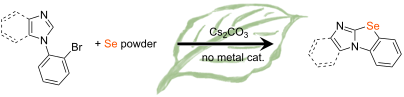
- was fully characterized by 1H and 13C NMR spectroscopy and HRMS, and further confirmed by single-crystal X-ray diffraction (XRD) analysis. The ORTEP drawing and packing structure of 2a obtained from the single crystal XRD analysis are illustrated in Figure 1. The crystal structure contained two


Installation of -SO2F groups onto primary amides
Beilstein J. Org. Chem. 2019, 15, 1907–1912, doi:10.3762/bjoc.15.186
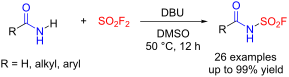
- converted to the corresponding N-fluorosulfonyl amides and only a mixture of undesired products were observed. Interestingly, during the work-up process of drying 2e with Na2SO4, a colourless crystal 4e was observed and its structure was confirmed by XRD analysis (Scheme 3). We speculate that the


Selenophene-containing heterotriacenes by a C–Se coupling/cyclization reaction
Beilstein J. Org. Chem. 2019, 15, 1379–1393, doi:10.3762/bjoc.15.138

- crucial cyclization steps to the stable and soluble fused systems were achieved by copper-catalyzed C–S and C–Se coupling/cyclization reactions. Structures and packing motifs in the solid state were elucidated by single crystal X-ray analysis and XRD powder measurements. Comparison of the optoelectronic
- 45–52%) and a mixture of both, parallel and antiparallel stacked dimers, were found in the X-ray structure analysis of heterotriacenes 2 (Figure S6b,c) and 4 (Figure S8b and S8c in Supporting Information File 1), respectively. XRD powder measurements For completion, we performed XRD measurements on
- microcrystalline powders of all derivatives (Supporting Information File 1, Figure S9). At first glance, the stronger intensity of the signals for DTT 1 and DST 3 clearly evidences a higher crystallinity compared to triacenes DTS 2 and DSS 4. XRD plots of heterotriacenes 1 to 3 obtained from the corresponding


Mechanochemical synthesis of hyper-crosslinked polymers: influences on their pore structure and adsorption behaviour for organic vapors
Beilstein J. Org. Chem. 2019, 15, 1154–1161, doi:10.3762/bjoc.15.112
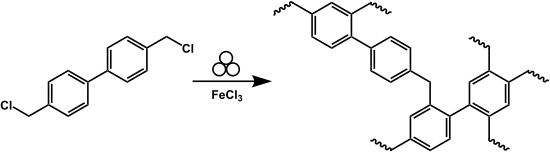
- protocol the polymer obtained through this mechanochemical route is also amorphous as visualized by the XRD (X-ray diffraction) patters recorded (Supporting Information File 1, Figure S1) [43]. Furthermore, NG-HCP similarly shows a high thermal stability with a decomposition onset in air (Supporting


Fabrication, characterization and adsorption properties of cucurbit[7]uril-functionalized polycaprolactone electrospun nanofibrous membranes
Beilstein J. Org. Chem. 2019, 15, 992–999, doi:10.3762/bjoc.15.97
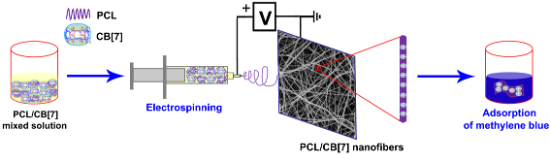
- , Xiangnan University, Chenzhou 423000, China 10.3762/bjoc.15.97 Abstract The fabrication of electrospun nanofibers comprising cucurbit[7]uril (CB[7]) and poly(ε-caprolactone) (PCL) is reported. Various techniques such as SEM, FTIR, XRD, DSC and TG were utilized to characterize the morphology, composition
- dispersion and crystallization of CB[7] and PCL in the composite nanofibers, XRD patterns of neat PCL nanofibers and all PCL/CB[7] nanofibers were recorded (Figure 2). PCL is a semi-crystalline polymer, and neat PCL nanofibers elicit two strong and sharp characteristic diffraction peaks at 2θ = 22° and 2θ
- = 24.5° which correspond to (110) and (200) reflections, respectively [12][15][17]. On the other hand, there are two wider diffraction peaks at 2θ = 13° and 2θ = 21.2° in the XRD curve of CB[7] powders. From the XRD curves of the PCL/CB[7] nanofibers, the sharp diffraction peaks of PCL and wide


Fabrication of supramolecular cyclodextrin–fullerene nonwovens by electrospinning
Beilstein J. Org. Chem. 2019, 15, 89–95, doi:10.3762/bjoc.15.10
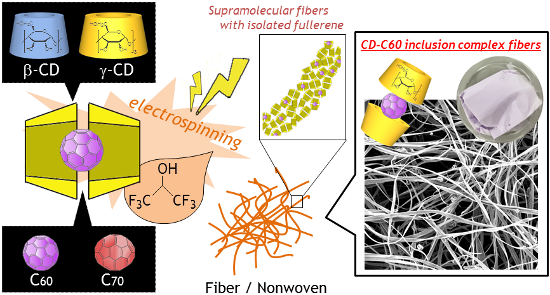
- structurally amorphous fiber materials consistently [9][11]. In this work, we expected that the incorporation of C60 into γ-CD nanofibers helps with the regular arrangement of γ-CD molecules, but γ-CD–C60 microfiber materials do not also show a specific XRD pattern (Figure S8 in Supporting Information File 1
- Information Supporting Information File 2: UV–vis and viscosity measurements of the spinning solutions, electrospinning at various parameters, and XRD patterns of the prepared nonwovens. Acknowledgements This research was financially supported by a research fund from Kondo Memorial Foundation and a Grant in


MoO3 on zeolites MCM-22, MCM-56 and 2D-MFI as catalysts for 1-octene metathesis
Beilstein J. Org. Chem. 2018, 14, 2931–2939, doi:10.3762/bjoc.14.272
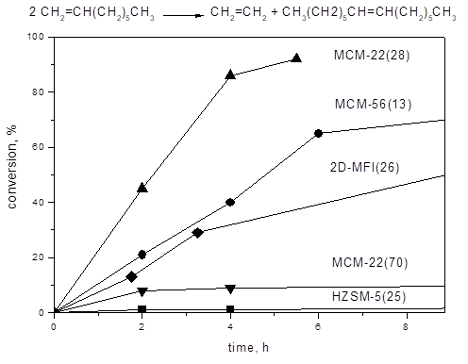
- –Grubbs type hybrid catalysts active in metathesis of long-chain unsaturated esters [24]. Results and Discussion Catalyst preparation and characterization XRD patterns and texture properties (Table 1, Figure 1 A,B,C,D) of prepared MCM-22, MCM-56 and 2D-MFI zeolites proved a high quality of these supports
- already observed earlier [9][10][24]. For x MoO3/MCM-22(28), XRD patterns of catalysts are similar to those of their parents approximately up to x = 6 wt % of Mo (0.9 Mo atoms per nm2). At higher Mo concentrations signals of crystalline MoO3 appeared (marked with * in Figure 1 A,B,D). It suggests 6 wt
- , catalysts with 6 wt % (and lower) content of Mo did not exhibit any MoO3 signals. It is consistent with the previous observation that MoO2(acac)2 provided better catalyst than MoO3 [9]. XRD patterns of 6MoO3/MCM-56(13) and 6MoO3/2D-MFI(26) indicated also a good MoO3 spreading, contrary to 6MoO3/HZSM-5(25


An overview on recent advances in the synthesis of sulfonated organic materials, sulfonated silica materials, and sulfonated carbon materials and their catalytic applications in chemical processes
Beilstein J. Org. Chem. 2018, 14, 2745–2770, doi:10.3762/bjoc.14.253
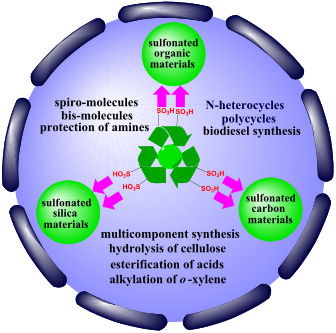
- minutes at 70 °C, a dark green soiled salt was obtained in 98% yield. The catalyst was characterized by different analyses. The FE-SEM images exhibited that the particles of the catalyst are in nano size. According to XRD pattern, the crystallite size is at about 13.7 nm. The IR spectrum confirmed the




Transition metal-free oxidative and deoxygenative C–H/C–Li cross-couplings of 2H-imidazole 1-oxides with carboranyl lithium as an efficient synthetic approach to azaheterocyclic carboranes
Beilstein J. Org. Chem. 2018, 14, 2618–2626, doi:10.3762/bjoc.14.240

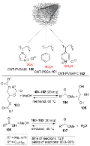
- be attributed to C-2 of the imidazole ring. The structure of imidazolyl carborane 5d has also been proved by the X-ray analysis (Figure 3). The single crystals were obtained by slow evaporation of imidazolyl carborane 5d from a mixture of CH2Cl2/heptane, 8:2. According to the XRD data, two


Calixazulenes: azulene-based calixarene analogues – an overview and recent supramolecular complexation studies
Beilstein J. Org. Chem. 2018, 14, 2488–2494, doi:10.3762/bjoc.14.225
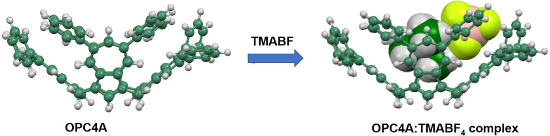
- solvents prevented a fuller examination of its potential supramolecular properties with fullerenes, a topic of particular interest to us [18]. Therefore, the solid state supramolecular complexation properties of 5 were experimentally studied using solid state NMR and XRD experiments, and also theoretically


Bioinspired cobalt cubanes with tunable redox potentials for photocatalytic water oxidation and CO2 reduction
Beilstein J. Org. Chem. 2018, 14, 2331–2339, doi:10.3762/bjoc.14.208
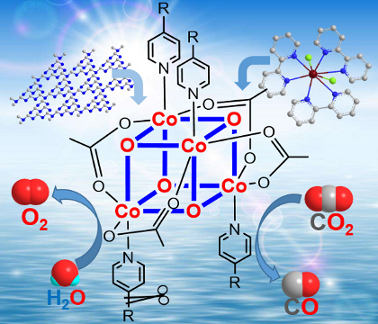
- observed at ≈759, ≈692, ≈634 and ≈574 cm−1, corresponding to the “Co4O4” cubane-like core present in the complex [54]. The XRD patterns for 1-R cubanes are shown in Supporting Information File 1, Figure S8. Moreover, as shown in Scheme S1 (Supporting Information File 1), all aqueous solutions of 1-R are
- TECNAIG2F20 instrument. Powder X-ray diffraction (XRD) patterns were collected on Bruker D8 Advance diffractometer with Cu K1 radiation (λ = 1.5406 Å). Photocatalytic test for water oxidation system [69]: Photocatalytic O2 production was carried out in a Pyrex top-irradiation reaction vessel connected to a


Bi-mediated allylation of aldehydes in [bmim][Br]: a mechanistic investigation
Beilstein J. Org. Chem. 2018, 14, 2198–2203, doi:10.3762/bjoc.14.193
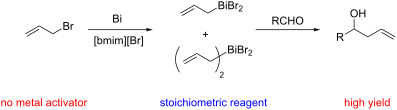
- the powder XRD analysis of the light yellow precipitate. Earlier, it has been reported [38][43] that the organobismuth halide generated in situ may act as a Lewis acid activator for the faster production of linear homoallylic alcohols. In the present case also, such a mechanism cannot be excluded




Revisiting ring-degenerate rearrangements of 1-substituted-4-imino-1,2,3-triazoles
Beilstein J. Org. Chem. 2018, 14, 2098–2105, doi:10.3762/bjoc.14.184
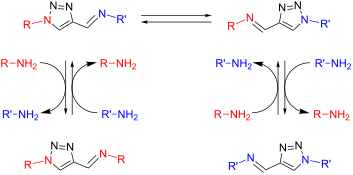
- pairings of reactants. Crystals of 2cc’ suitable for XRD analysis were grown from slow evaporation of a methylene chloride solution. As shown in Figure 2, each of the three aromatic rings in this molecule’s fully conjugated π-system adopts a largely coplanar configuration. The dihedral angle between the 1
- Union Road, Cambridge, CB2 1EZ, UK (fax: +44-(0)1223-336033 or e-mail: despoit@ccdc.cam.ac.uk). Supporting Information File 474: Experimental procedures, copies 1H and 13C NMR spectra for all reported compounds, details of XRD analysis and UV–visible spectra for kinetic assays. Acknowledgements This


Graphitic carbon nitride prepared from urea as a photocatalyst for visible-light carbon dioxide reduction with the aid of a mononuclear ruthenium(II) complex
Beilstein J. Org. Chem. 2018, 14, 1806–1812, doi:10.3762/bjoc.14.153
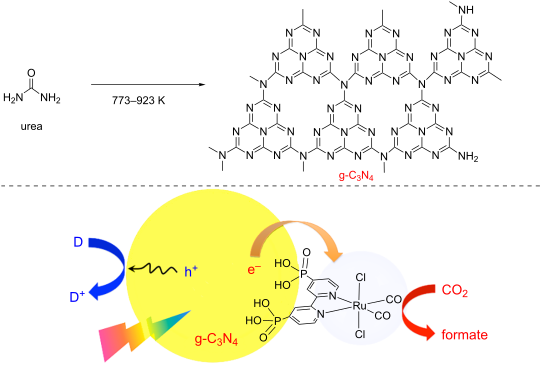
- reactions. Results and Discussion Synthesis of g-C3N4 by thermal heating of urea at different temperatures Figure 1 shows XRD patterns of g-C3N4 samples synthesized at different temperatures. Two peaks are observed at 2theta = 13 and 27.4°, which are assigned to an in-planar repeating motif and the stacking
- increasing temperature. This further indicates the production of g-C3N4 at elevated temperatures, consistent with the XRD analysis (Figure 1). The 812 cm−1 peak is attributed to the out-of-plane bending vibration characteristic of heptazine rings. The results of elemental analyses for the as-prepared g-C3N4
- ). MeCN was distilled over P2O5 twice, and then distilled over CaH2 prior to use. TEOA was distilled under reduced pressure (<1 Torr). The distilled DMA and TEOA were kept under Ar prior to use. Characterization The prepared materials were characterized by X-ray diffraction (XRD) (MiniFlex600, Rigaku; Cu


Cobalt–metalloid alloys for electrochemical oxidation of 5-hydroxymethylfurfural as an alternative anode reaction in lieu of oxygen evolution during water splitting
Beilstein J. Org. Chem. 2018, 14, 1436–1445, doi:10.3762/bjoc.14.121
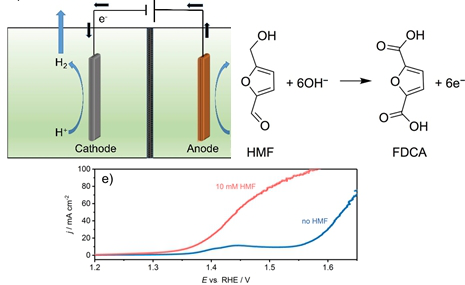
- -temperature synthesis from the elements and was obtained by salt metathesis from Mg2Si and CoCl2 at 400 °C under inert conditions. Characterization of the materials was performed using powder XRD (Figure 1). For Co2Si, the observed reflexes correlate well with those observed for PXRD patterns generated from
- dilution with 990 μL water. Physical characterization X-ray diffractometry XRD data were obtained using a Panalytical X'PERT Pro MPD X-ray diffractometer with a Cu Kα radiation source (λ = 1.5418 Å) in the 2θ = 20–80° range. Scanning electron microscopy SEM images were taken using a Quanta ED FEG scanning
- electron microscope (FEI). The SEM was operated at 20 kV. XRD patterns of Co2Si, CoTe, CoAs. Cobalt is indicated by (+) and signals corresponding to the desired materials are indicated by (*). Linear sweep voltammograms of CoP, CoB, CoTe, Co2Si, CoAs modified and blank Ni RDEs for the OER (a) and the HMF



Mechanochemistry of nucleosides, nucleotides and related materials
Beilstein J. Org. Chem. 2018, 14, 955–970, doi:10.3762/bjoc.14.81
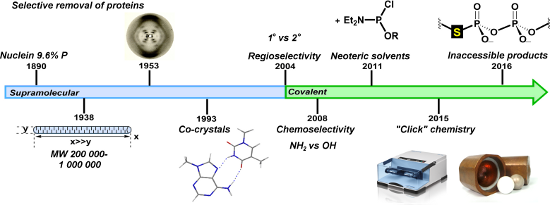
- using mechanochemistry [94] and Rajamohan and co-workers described using a mortar and pestle to effect LAG of β-cyclodextrin with either inosine [95] or cytidine [96] in the presence of water. Weak complex formation was inferred by powder XRD for cytidine. Conclusion Access to reliable and reproducible


Heterogeneous Pd catalysts as emulsifiers in Pickering emulsions for integrated multistep synthesis in flow chemistry
Beilstein J. Org. Chem. 2018, 14, 648–658, doi:10.3762/bjoc.14.52
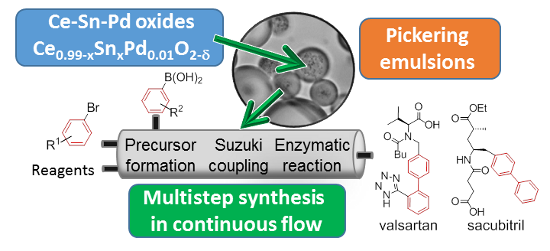
- analysed using different state-of-the-art methods. Details of the characterisation were published recently [37]. Here, only the most important characteristics are summarised. The obtained X-ray diffraction (XRD) profiles proved the nanocrystallinity of the catalyst particles, which either show single phase
- cubic, tetragonal or a more amorphous cubic/tetragonal mixed phase structure depending on the content of Sn. As far as palladium substitution in the lattice is concerned, XRD and X-ray photoelectron spectroscopy (XPS) analysis approved the predominant cationic nature of incorporated palladium (Pd2+) and





Solid-state studies and antioxidant properties of the γ-cyclodextrin·fisetin inclusion compound
Beilstein J. Org. Chem. 2017, 13, 2138–2145, doi:10.3762/bjoc.13.212
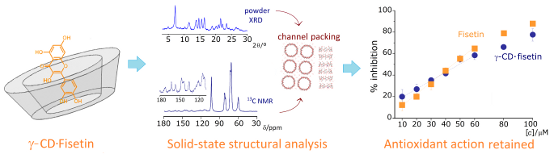
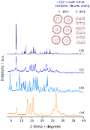
- XRD data were collected at ambient temperature on an X’Pert MPD Philips diffractometer (Cu Kα1 = 1.540598 Å) with a curved graphite monochromator, equipped with a X’Celerator detector, operating in a flat Bragg–Brentano configuration (40 kV, 50 mA). Data was collected with steps of 0.04° in a




Mechanochemical Knoevenagel condensation investigated in situ
Beilstein J. Org. Chem. 2017, 13, 2010–2014, doi:10.3762/bjoc.13.197
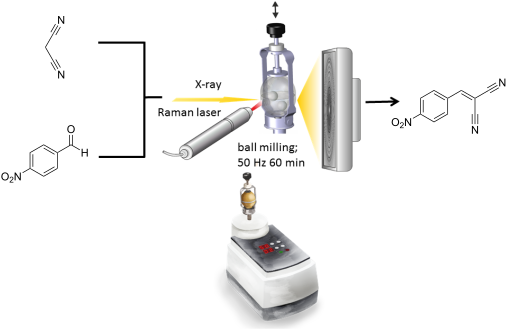
- excitation wavelength was 785 nm. A typical measurement consists of five accumulated recordings for 5 s. A new measurement was started every 30 s. Single crystal X-ray diffraction: Single crystal XRD measurements were performed on a D8 Venture diffractometer (Bruker AXS, Germany) using Mo Kα radiation (λ


New bio-nanocomposites based on iron oxides and polysaccharides applied to oxidation and alkylation reactions
Beilstein J. Org. Chem. 2017, 13, 1982–1993, doi:10.3762/bjoc.13.194
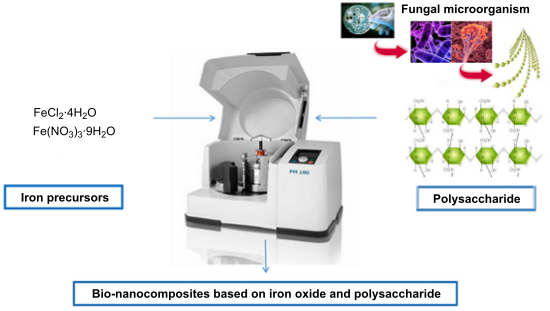
- assessed in the alkylation reaction of toluene with benzyl chloride and the selective oxidation of benzyl alcohol to benzaldehyde. X-ray diffraction The structure and arrangement of the synthesized materials were analyzed by X-ray diffraction. The XRD pattern of the Fe2O3-PS4 nanomaterial exhibited a
- of the magnetic material showed a mixture of maghemite and hematite phases. In this case, a similar XRD pattern could be in principle associated to magnetite (Fe3O4) over the maghemite phase, since these two phases are difficult to clearly distinguish by XRD analysis. However, the absence of Fe2
- (Supporting Information File 1, Figure S1C). X-ray photoelectron spectroscopy X-ray photoelectron spectroscopy (XPS) measurements were consistent with XRD data, where the main peaks were found to correspond to Fe2O3 species. In the three nanocomposites, the presence of Fe3+ species could be also inferred from


Ni nanoparticles on RGO as reusable heterogeneous catalyst: effect of Ni particle size and intermediate composite structures in C–S cross-coupling reaction
Beilstein J. Org. Chem. 2017, 13, 1796–1806, doi:10.3762/bjoc.13.174
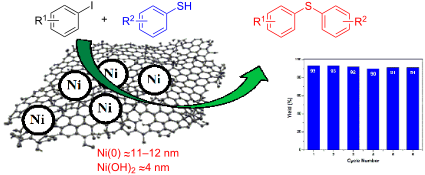
- materials were well characterized by powder XRD, TEM, TGA and XPS studies. The preparation and characterization of the nanocomposites were described in detail in our previous publications [48][49]. Usually, bare Ni NPs are unstable and likely to undergo aerial oxidation [43]. However, in the Ni/RGO
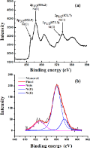
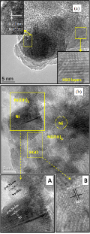
- times for the same reaction examined consecutively without any significant drop in catalytic activity. Figure 1 shows the results of consecutive recycle runs. Characterization of the recovered catalyst To establish the reaction mechanism, we characterized the recovered catalyst by Raman, XRD, XPS and
- TEM studies. The Raman and XRD results of fresh Ni/RGO-40 were reported in our previous publication [48]. However, for comparison, Raman and XRD of a fresh Ni/RGO-40 sample were again recorded and presented along with that of the recovered sample. The Raman spectrum of the Ni/RGO-40 composite (Figure




Block copolymers from ionic liquids for the preparation of thin carbonaceous shells
Beilstein J. Org. Chem. 2017, 13, 1693–1701, doi:10.3762/bjoc.13.163
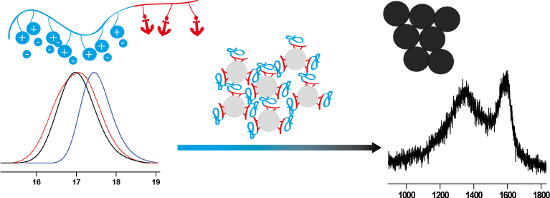
- higher temperatures (above 700 °C) is not advisable. Due to the use of TiO2, phase transitions of the anatase TiO2 might occur, which leads to a mixture of anatase and rutile TiO2. XRD measurements (Figure 5) show that under the applied conditions, the pyrolyzed nanoparticles still contain TiO2. In


Encaging palladium(0) in layered double hydroxide: A sustainable catalyst for solvent-free and ligand-free Heck reaction in a ball mill
Beilstein J. Org. Chem. 2017, 13, 1661–1668, doi:10.3762/bjoc.13.160
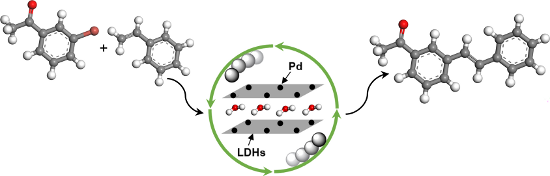
- milling (HSBM) conditions at room temperature. The effects of milling-ball size, milling-ball filling degree, reaction time, rotation speed and grinding auxiliary category, which would influence the yields of mechanochemical Heck reactions, were investigated in detail. The characterization results of XRD
- prepared materials We initially prepared the Pd/MgAl-LDHs catalyst as described in the Experimental section (see Supporting Information File 1). Figure 1 shows the powder XRD patterns of MgAl-LDHs, MgAl-LDHs-PdCl42− and Pd/MgAl-LDHs at 2θ = 5–80°. All samples have diffraction peaks located around 10°, 20
- significant loss in coupling product yields. The XRD patterns for the samples of MgAl-LDHs, MgAl-LDHs-PdCl42− and Pd/MgAl-LDHs. Examination of the milling-ball filling degree (ΦMB) and milling-ball sizes on the yield of 3aa. Reaction conditions: 1a (1.5 mmol), 2a (2.1 mmol), Pd/MgAl-LDHs (2.5 mol %), TBAB





