Search results
Search for "carbon" in Full Text gives 2167 result(s) in Beilstein Journal of Organic Chemistry. Showing first 200.
Total synthesis of natural products based on hydrogenation of aromatic rings
Beilstein J. Org. Chem. 2026, 22, 88–122, doi:10.3762/bjoc.22.4
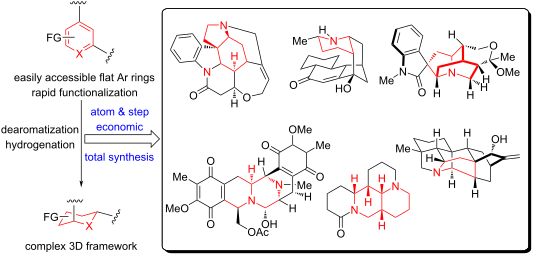
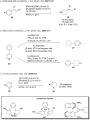
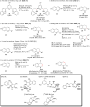
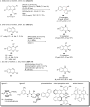
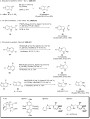
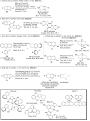
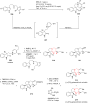
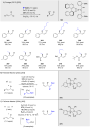
- the reaction include high functional group tolerance and excellent stereocontrol. In the same year, Zhou and co-workers reported a rhodium/bisphosphine-catalyzed asymmetric hydrogenation reaction of all-carbon aromatic rings 69 (Scheme 8) [64]. Through desymmetrization or kinetic resolution, a series
- metal catalyst to completely hydrogenate substituted naphthalene to saturated 6–6 fused bicycle (Scheme 8) [65][66]. The target decahydronaphthalene was obtained in high yield and high enantioselectivity. In 2024, Ding and co-workers reported a method for the selective hydrogenation of the carbon ring
- in quinoline to generate hexahydroquinoline using a Ru catalyst (Scheme 8) [67]. When (S,S,S)-DKP was used as a ligand, the hydrogenation of the carbon ring was highly selective. Reduction of aromatic rings via hydride or electron transfer pathways Beyond catalytic hydrogenation, aromatic rings can











Reactivity umpolung of the cycloheptatriene core in hexa(methoxycarbonyl)cycloheptatriene
Beilstein J. Org. Chem. 2026, 22, 64–70, doi:10.3762/bjoc.22.2
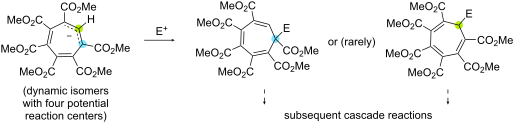
- -group elimination but through intermolecular hydride-transfer reactions as well. Therefore, the expected strategy to establish a chemical bond with a cycloheptatriene core is a reaction of a tropylium ion derivative with a nucleophile. Such reactions may involve either carbon [9][10][11] or heteroatom
- α-position, respectively. Compounds 5 represent derivatives with two substituents at the sp3-carbon atoms which sometimes tend to rearrange into the corresponding norcaradiene derivatives [29][30]. Our reactions of anion 2 with electrophiles confirm this tendency – we always observed either a
- partial positive charge on the i-positioned carbon atom [36], confirmed by an unusually downfield shifted signal of the CH fragment in the 13C NMR spectrum (δ 160.4 ppm in CD3CN) [21]. Moreover, anion 2 underwent a nucleophilic attack onto the i-position by amines to form fluorescent 5


Synthesis and applications of alkenyl chlorides (vinyl chlorides): a review
Beilstein J. Org. Chem. 2026, 22, 1–63, doi:10.3762/bjoc.22.1
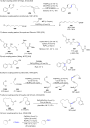
- vary widely across the literature, with solvents ranging from neat conditions to cyclohexane, hexanes, toluene, benzene, carbon tetrachloride, dichloromethane, and diethyl ether. Reaction temperatures span from −10 °C to 100 °C. The first detailed investigation of this transformation was reported by
- the monomer for polyvinyl chloride (PVC) [87]. The hydrochlorination of acetylene remains a key industrial process for vinyl chloride synthesis – particularly in China, where approximately 70% of the total production is based on this route. The reaction is typically catalyzed by carbon-supported























Sustainable electrochemical synthesis of aliphatic nitro-NNO-azoxy compounds employing ammonium dinitramide and their in vitro evaluation as potential nitric oxide donors and fungicides
Beilstein J. Org. Chem. 2025, 21, 2739–2754, doi:10.3762/bjoc.21.211
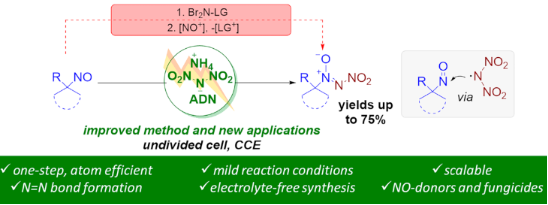
- -nitrosocyclohexane-1-carbonitrile (1i), 2-nitro-2-nitrosopropane (1a), and 2,2-dimethyl-5-nitro-5-nitroso-1,3-dioxane (1f) were recorded on a working glassy-carbon electrode in MeCN solution (Figure 1). Tetrabutylammonium tetrafluoroborate was chosen as the supporting electrolyte. As shown by the voltammograms of
- oxidation products with full conversion of S1. The obtained data indicate that the presence of an electron-withdrawing group (NO2, CN) at the carbon atom geminal to the NO group prevents latter from facile oxidation, which, in turn, facilitate the desired nitro-NNO-azoxylation. As previously demonstrated in
- -nitrosopropane (1a) (experimental details for Table 1): In a manner analogous to one described in [87], an undivided 10 mL electrochemical cell was equipped with a platinum plate, stainless steel, nickel, graphite, carbon felt, or glassy carbon plate anode (40 × 10 mm) and a platinum plate, platinum wire (d = 1





Competitive cyclization of ethyl trifluoroacetoacetate and methyl ketones with 1,3-diamino-2-propanol into hydrogenated oxazolo- and pyrimido-condensed pyridones
Beilstein J. Org. Chem. 2025, 21, 2716–2729, doi:10.3762/bjoc.21.209
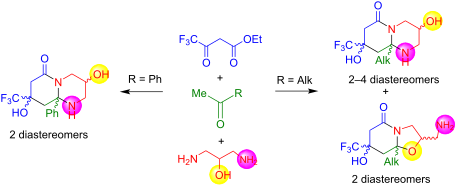
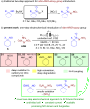
- functional group, the presence of which should affect their diastereomeric structure. We have found only one work describing the use of 1,3-diaminopropan-2-ol to form heterocycles, where it is reported to react with chloroacetaldehyde and carbon dioxide as an N,N-dinucleophile only, giving hexahydro[1,3
- (Figure 2 and Figure 3), the piperidone ring has a half-chair conformation in which the pseudo-equatorially located trifluoromethyl group is a conformational anchor. The five atoms of the six-membered piperidone ring are coplanar, and the trifluoromethyl-substituted carbon atom С(8) is significantly
- substituent R at the bridgehead carbon atom can occupy only an axial position with respect to both cycles. On the other hand, the CF3 group is a conformational anchor and always occupies a pseudo-equatorial position, which is why it leads to the trans-configuration of the piperidone cycle. In the cis-junction


Mechanistic insights into hydroxy(tosyloxy)iodobenzene-mediated ditosyloxylation of chalcones: a DFT study
Beilstein J. Org. Chem. 2025, 21, 2703–2715, doi:10.3762/bjoc.21.208
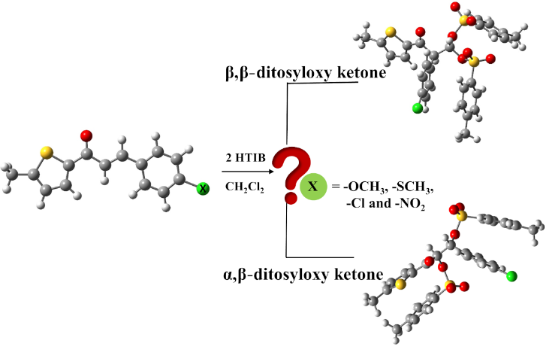
- of the hydroxy(tosyloxy)iodobenzene (HTIB)-mediated conversion of chalcones (α,β-unsaturated carbonyl compounds) to ditosyloxy ketones is investigated. Here, at β-carbon of the chalcone, an aryl group with a para-substituent is present. Our study focuses on investigating the effect of different
- , however, a number of studies also report the formation of a carbenium ion as an alternate pathway, typically for the oxidation of alkenes with phenyl substituents on carbon–carbon double bonds [10][11][12][29][34][35]. Here, Scheme 1 depicts the reaction investigated in the current study which is, HTIB
- HTIB leading to formation of ditosyloxy ketone may not occur at all [42]. The subsequent nucleophilic addition of −OTs on Int1 takes place on β-position specifically in a syn-manner with respect to the carbon–iodine bond. This nucleophilic syn-addition leads to the formation of an intermediate referred


Tandem hydrothiocyanation/cyclization of CF3-iminopropargyl alcohols with NaSCN in the presence of AcOH
Beilstein J. Org. Chem. 2025, 21, 2694–2702, doi:10.3762/bjoc.21.207
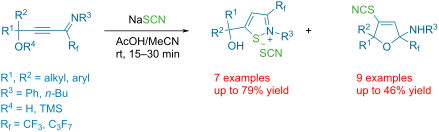
- , thioethers, disulfides, phosphonothioates, and trifluoromethyl sulfides. Additionally, due to the presence of two electrophilic sites (the sulfur atom and the carbon of the nitrile function), thiocyanates can readily undergo domino-type intramolecular cyclization reactions to form heterocycles. So, if a



Recent advancements in the synthesis of Veratrum alkaloids
Beilstein J. Org. Chem. 2025, 21, 2657–2693, doi:10.3762/bjoc.21.206
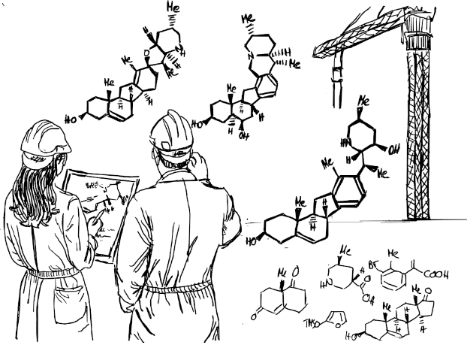
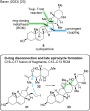
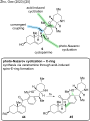
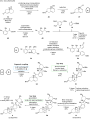
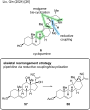
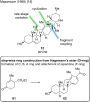
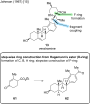
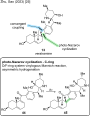
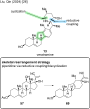
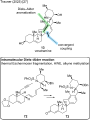
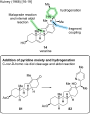
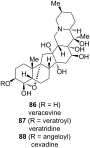
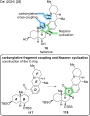
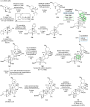
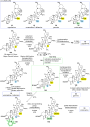
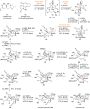
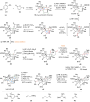
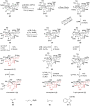
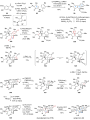
- . For intermediates, circles are added with the number of carbon atoms (carbons included in the skeleton, carbon atoms of protecting groups are not counted). We decided to deviate from the originally proposed step-count and will stick to the definition of a reaction step being the sum of all
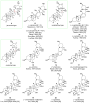
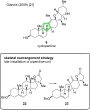
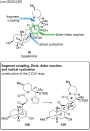
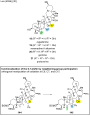
- achieve C–C connections (dark green) in a semisynthesis (with most of the required carbon atoms being already part of the starting material). Highlight of this synthesis was the key biomimetic rearrangement in the middle of the sequence, furnishing the C-nor-D-homo scaffold. This synthesis provided the
















Synthesis of new tetra- and pentacyclic, methylenedioxy- and ethylenedioxy-substituted derivatives of the dibenzo[c,f][1,2]thiazepine ring system
Beilstein J. Org. Chem. 2025, 21, 2645–2656, doi:10.3762/bjoc.21.205
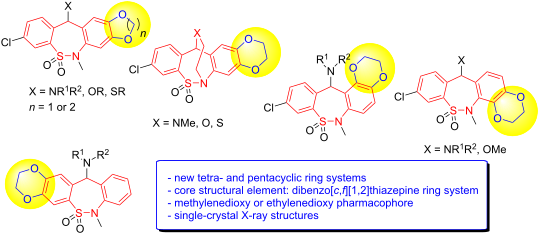
- ring systems containing a two or three-carbon linker between the nitrogen atom of the thiazepine ring and the nitrogen (3), oxygen (4), or sulfur (5) atom linked to the C(11) atom [2][3]. In continuation of our efforts to study new ring systems, we decided to synthesize new tetra- and pentacyclic
- of male sexual disfunction. A review published in 2020 [12] gives an excellent overview about the medicinal chemistry of compounds incorporating a 1,4-benzodioxane scaffold variously substituted either on the aliphatic or on the aromatic carbon atoms. In connection with our present work, the latter


Thiazolidinones: novel insights from microwave synthesis, computational studies, and potentially bioactive hybrids
Beilstein J. Org. Chem. 2025, 21, 2618–2636, doi:10.3762/bjoc.21.203
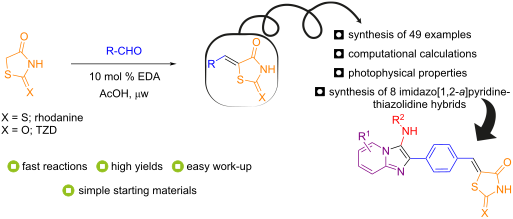
- scaffolds for several synthetic or natural compounds [5]. Five-membered heterocycles include the thiazolidinone nucleus, characterized by two heteroatoms and a carbonyl group on the fourth carbon, as seen in compounds like rhodanine and thiazolidine-2,4-dione derivatives (Figure 1). These privileged
- spectra (Scheme 7b). A remarkable feature of the 13C NMR spectra of compounds 3n and 4n in DMSO is the attenuation/absence of peaks corresponding to the carbon atoms at the ortho and meta positions of the six-membered ring. It is known that quaternary carbon atoms have very long relaxation times, but this
- behavior is not expected from hydrogen-bonded carbon atoms in aromatic rings. Since peak intensities depend on spin-lattice relaxation times, the absence of peaks implies some degree of molecular rigidity, which could be related to two factors: the viscosity of DMSO and the conjugation between the six






Visible-light-driven NHC and organophotoredox dual catalysis for the synthesis of carbonyl compounds
Beilstein J. Org. Chem. 2025, 21, 2584–2603, doi:10.3762/bjoc.21.200
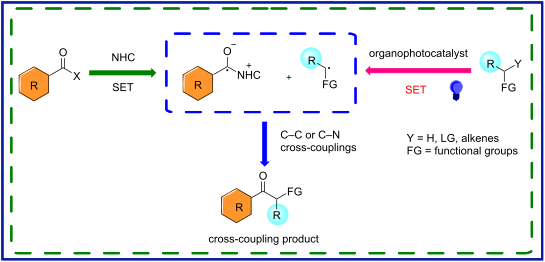
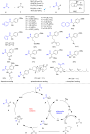
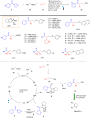
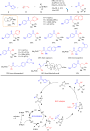
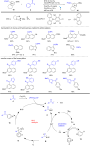
- cross-coupling between the C-centered and N-centered radicals. These methods are expected to open new avenues for visible-light- and NHC/4CzIPN-catalyzed carbon–heteroatom bond-forming processes (Scheme 1) [51]. In 2021, Studer et al. developed a novel method for the 1,3-difunctionalization of





Recent advances in total synthesis of illisimonin A
Beilstein J. Org. Chem. 2025, 21, 2571–2583, doi:10.3762/bjoc.21.199
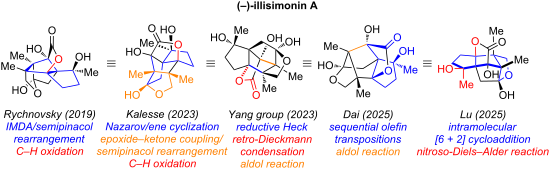
- sterically congested sesquiterpenoids isolated from the genus Illicium. Illisimonin A stands out as one of the most structurally intricate members of this family, featuring a novel bridged tricyclo[5.2.1.01,5]decane carbon framework designated as the “illisimonane” skeleton. This core ring system is further
- have been isolated from this genus, among which Illicium sesquiterpenes represent a prominent group. Since the first isolation of anisatin in 1952 [1], more than 100 Illicium sesquiterpenes have been isolated from over 40 species of Illicium [2]. Based on their carbon skeletons, they can be classified
- ][23][24][25]. In 2017, Yu and co-workers isolated a new Illicium sesquiterpene, namely illisimonin A, from the fruits of Illicium simonsii [26]. Unlike other Illicium sesquiterpenes, illisimonin A features an unprecedented bridged tricyclo[5.2.1.01,5]decane carbon framework that incorporates a highly






Total syntheses of highly oxidative Ryania diterpenoids facilitated by innovations in synthetic strategies
Beilstein J. Org. Chem. 2025, 21, 2553–2570, doi:10.3762/bjoc.21.198
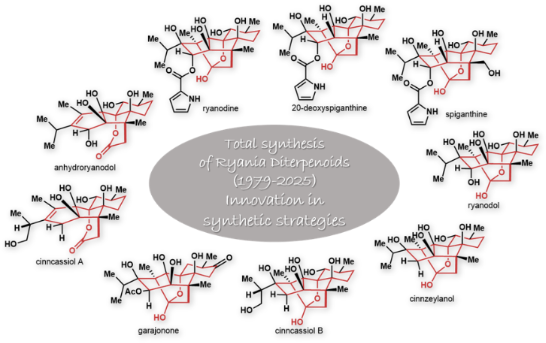
- pericyclic reactions [31][32][33][34][35][36][37][38][39][40][41][42][43][44], to control the formation of the crucial C5 chiral center precisely. Subsequent oxidative cleavage of the carbon–carbon double bond introduced in the Diels–Alder reaction, followed by an intramolecular aldol reaction, efficiently
- the simultaneous construction of four quaternary carbon centers (C1, C4, C5, and C12) and the core AB bicyclic skeleton, markedly improving synthetic efficiency. Subsequent oxidative desymmetrization of the C14–C15 olefin in (±)-33 established the sterically hindered C11 quaternary carbon center. An α
- stereocenters characteristic of the target molecule, the authors strategically implemented this methodology. This approach efficiently established two carbon–carbon and four carbon–oxygen bonds while introducing four contiguous stereocenters, successfully assembling the highly functionalized AB ring system







Ni-promoted reductive cyclization cascade enables a total synthesis of (+)-aglacin B
Beilstein J. Org. Chem. 2025, 21, 2548–2552, doi:10.3762/bjoc.21.197
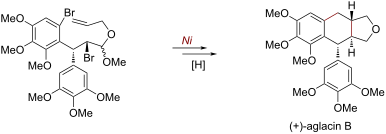
- the formation of inter- or intramolecular carbon–carbon bonds under mild conditions [9][10][11][12], and strategically applied this method for the divergent syntheses of some natural products [13][14][15][16][17]. Herein, we report our recent advance to a total synthesis of (+)-aglacin B (2), which


Rapid access to the core of malayamycin A by intramolecular dipolar cycloaddition
Beilstein J. Org. Chem. 2025, 21, 2542–2547, doi:10.3762/bjoc.21.196
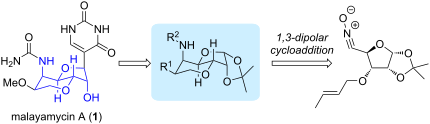
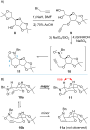
- 19 was moderate because the anomeric carbon at C7 is associated with an acid-sensitive acetonide group. The structural determination of the major product 19a was accomplished by comprehensive NMR spectroscopy and further unambiguously confirmed by X-ray analysis (see Supporting Information File 1 for




Synthesis and characterization of a isothiouronium-calix[4]arene derivative: self-assembly and anticancer activity
Beilstein J. Org. Chem. 2025, 21, 2535–2541, doi:10.3762/bjoc.21.195
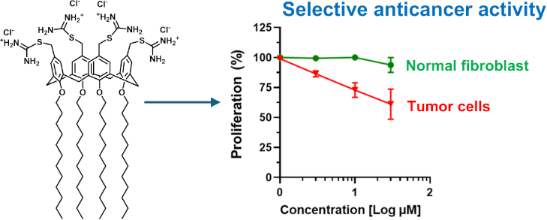
- ). The proton signals of the NH₂ and CH₂S groups of the isothiouronium substituents were clearly observed at 9.04 ppm and 4.23 ppm, respectively. Additionally, the carbon signal of the CH₂S group appeared at 169.3 ppm. The NMR signals, consistent with a fully symmetric structure, evidenced the exhaustive


Isoorotamide-based peptide nucleic acid nucleobases with extended linkers aimed at distal base recognition of adenosine in double helical RNA
Beilstein J. Org. Chem. 2025, 21, 2513–2523, doi:10.3762/bjoc.21.193
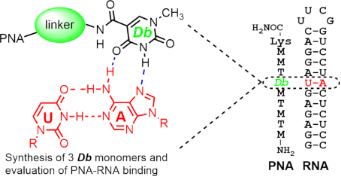
- linker are highlighted in red. Sequences for RNA hairpins and PNA ligands used for binding studies. Major-groove view of hydrogen-bonding interactions in the (A) Db1*U–A triplet, (B) Db2*U–A triplet, (C) Db2*C–G triplet, and (D) Db3*U–A triplet. Carbon, hydrogen, oxygen, and nitrogen are labelled in


Synthesis of the tetracyclic skeleton of Aspidosperma alkaloids via PET-initiated cationic radical-derived interrupted [2 + 2]/retro-Mannich reaction
Beilstein J. Org. Chem. 2025, 21, 2470–2478, doi:10.3762/bjoc.21.189
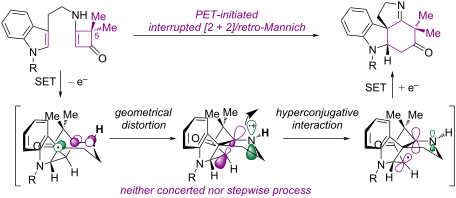
- construction of the tetracyclic core of Aspidosperma alkaloids. Our method involves an Ir-catalyzed PET reaction of K for the stereoselective formation of the cis-configured BC bicyclic core with an all-carbon quaternary center [25][26]. Computational studies suggest that the observed tandem PET reaction of K
- the formation of benzyl radical IN2, which has a boat-like seven-membered ring. This structural feature may facilitate formation of the C19–C12 bond, even in the presence of critical steric hindrance between the C5 quaternary carbon and the indole moiety. Further DFT investigation proved challenging


Ex-situ generation of gaseous nitriles in two-chamber glassware for facile haloacetimidate synthesis
Beilstein J. Org. Chem. 2025, 21, 2465–2469, doi:10.3762/bjoc.21.188
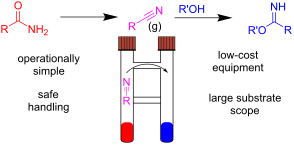
- point = −64 °C). To minimize the setup needed and handling we decided to utilize the two-chamber reaction vessels introduced by Skrydstrup and co-workers [19], which were originally designed for use with carbon monoxide reactions [20] and are now commercially available under the tradename COware (Figure


Transformation of the cyclohexane ring to the cyclopentane fragment of biologically active compounds
Beilstein J. Org. Chem. 2025, 21, 2416–2446, doi:10.3762/bjoc.21.185
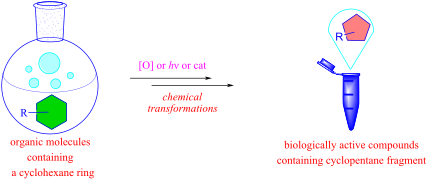
- with two attached side chains – of seven (α-chain) and eight (β- or ω-chain) carbon atoms. Their main physiological role is to maintain the homeostatic harmony of the organism [1][2]. Among the terpenoids containing cyclopentane in their structure, we should mention jatrophane or latirane diterpenoids
- and 51 showed high cytotoxic activity (IC50 1.38–15.91 μM). 2 Rearrangements with 1,2-carbon migration Rearrangements with 1,2-carbon migration are widely used in the synthesis of natural compounds [37]. These include benzilic acid and semipinacol-type rearrangements, reactions promoted by thallium
- [52] achieved high regioselectivity and stereospecific construction of contiguous all-carbon quaternary centers through an oxidative ring contraction of cyclic α-formyl ketones by the action of H2O2. This reaction is easy to perform, environmentally friendly, and does not require expensive catalysts


An Fe(II)-catalyzed synthesis of spiro[indoline-3,2'-pyrrolidine] derivatives
Beilstein J. Org. Chem. 2025, 21, 2383–2388, doi:10.3762/bjoc.21.183
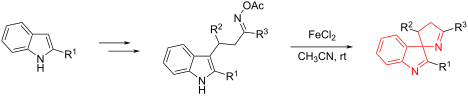
- pathway (Scheme 4). Initial Fe(II)-mediated reductive cleavage of the N–O bond in the ketoxime acetate generates an iminyl radical. This is followed by a 5-exo-trig cyclization to form a carbon-centered radical. Final single-electron oxidation by Fe(III) delivers the desired spirocyclic product. All




Synthetic study toward vibralactone
Beilstein J. Org. Chem. 2025, 21, 2376–2382, doi:10.3762/bjoc.21.182

- vibralactone, a potent inhibitor of pancreatic lipase, is reported. The synthesis of the challenging all-carbon quaternary center within the cyclopentene ring was achieved through intramolecular alkylidene carbene C–H insertion. Keywords: alkylidene carbene; C–H insertion; total synthesis; vibralactone
- cyclopentene ring containing an all-carbon quaternary center [14], and inhibits pancreatic lipase with an IC50 of 0.4 µg/mL. Several congeners with varying oxidation state, as well as related β-hydroxy acids or esters have also been isolated from the culture broth of the basidiomycete [15][16][17][18][19][20
- -lactone with an all-carbon quaternary center and two trisubstituted olefin moieties. It is therefore not surprising that this compound has attracted considerable interest from both the chemical biology and synthetic chemistry communities. Sieber and co-workers disclosed that vibralactone can target ClpP1


Rotaxanes with integrated photoswitches: design principles, functional behavior, and emerging applications
Beilstein J. Org. Chem. 2025, 21, 2345–2366, doi:10.3762/bjoc.21.179

- -stilbenes have 5-membered rings fused to the carbon–carbon double bond, are more photostable, and undergo reversible photoisomerization with higher efficiency (Figure 2) [75]. Notably, their cis isomer exhibits higher thermal stability than that of other commonly used photoswitches, such as azobenzene. This


Recent advances in Norrish–Yang cyclization and dicarbonyl photoredox reactions for natural product synthesis
Beilstein J. Org. Chem. 2025, 21, 2315–2333, doi:10.3762/bjoc.21.177
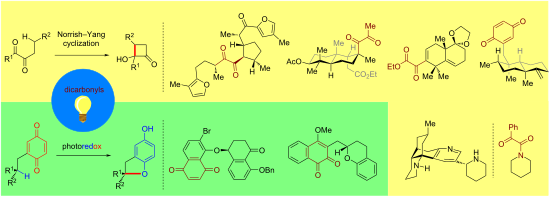
- stereochemical inversion of the Norrish–Yang reaction. This achieved efficient construction of benzofuranone-based 4,5-spirocycles with contiguous all-carbon quaternary centers, offering a conformational regulation protocol for stereocontrol in complex polycyclic systems. 1.3 Avarane-type meroterpenoids In 2024
- ingeniously leverages the high selectivity of photochemical reactions and the strain-release property of rearrangement reactions, enabling the precise construction of multiple stereocenters in one step and overcoming the synthetic challenges posed by contiguous quaternary carbon centers and sterically




Insoluble methylene-bridged glycoluril dimers as sequestrants for dyes
Beilstein J. Org. Chem. 2025, 21, 2302–2314, doi:10.3762/bjoc.21.176
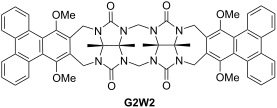
- due to its simplicity, efficiency, low cost, and the absence of hazardous byproducts [6]. Many different adsorptive materials have been investigated including activated carbon [7][8][9], hybrid nanomaterials [10], metal oxide-based hybrid materials [11], metal organic frameworks [12], polymers [13
- ], and non-conventional adsorbents [14]. Although activated carbon is widely used, its ability to capture polar compounds is limited and the regeneration process is complex and energy-intensive [15]. In work that stimulated supramolecular chemists to enter the game, Dichtel and co-workers demonstrated