


Search results
Search for "carbonyl" in Full Text gives 1296 result(s) in Beilstein Journal of Organic Chemistry. Showing first 200.
Pathway economy in cyclization of 1,n-enynes
Beilstein J. Org. Chem. 2025, 21, 2260–2282, doi:10.3762/bjoc.21.173
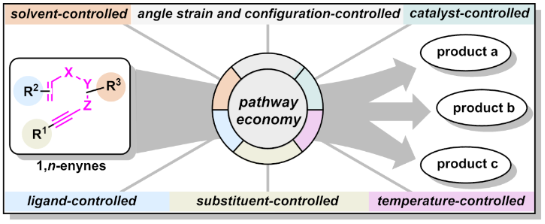
- pathway-controlled approach using tryptamine ynamides bearing Michael acceptor moieties as substrates (Scheme 27) [38][39]. Under strong Brønsted acid catalysis, protonation of the carbonyl group was achieved, which facilitated a Michael addition between the electron-rich indole C3-position and the


Research towards selective inhibition of the CLK3 kinase
Beilstein J. Org. Chem. 2025, 21, 2250–2259, doi:10.3762/bjoc.21.172
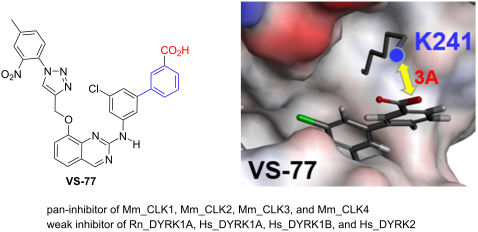
- ). Second, molecular docking using DYRK1A crystal structure was used to understand the unexpected binding on the DYRK kinases (Figure 6). Surprisingly, another lysine (K175) is also located near the acidic group of VS-77 (at 3.2 Å between the carbonyl carbon atom and nitrogen from amine). This residue is


A chiral LC–MS strategy for stereochemical assignment of natural products sharing a 3-methylpent-4-en-2-ol moiety in their terminal structures
Beilstein J. Org. Chem. 2025, 21, 2243–2249, doi:10.3762/bjoc.21.171
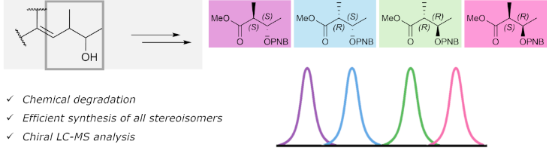
- –MS detection of the MPO-derived fragment and to achieve a separation of four candidate stereoisomers. To this end, methylation of commercially available methyl acetoacetate (2) and subsequent reduction of the ketone carbonyl group was carried out to prepare a mixture of four stereoisomers of methyl 3


A m-quaterphenyl probe for absolute configurational assignments of primary and secondary amines
Beilstein J. Org. Chem. 2025, 21, 2211–2219, doi:10.3762/bjoc.21.168
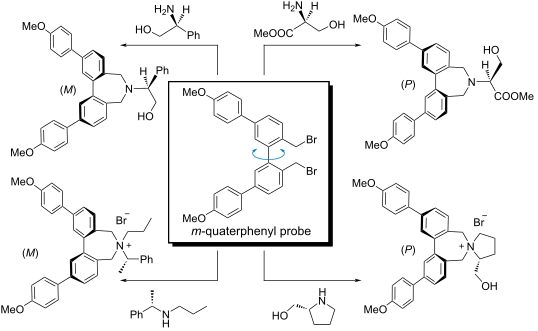
- conjugates (S)-2d,e exhibited positive first and negative second Cotton effects indicating that the two long axes in the methoxybiphenyl chromophores constitute a P twist. The methyl ester group is estimated to be sterically more hindered than the planar ester carbonyl group in (S)-2d,e. The CD spectra of
- the methylene protons. In contrast, in the M conformer, the medium-sized methyl group (denoted as M) is located near the seven-membered ring, reducing the steric repulsion involving the hydroxymethyl group with the methylene protons. Moreover, considering that the phenyl ring and the ester carbonyl


C2 to C6 biobased carbonyl platforms for fine chemistry
Beilstein J. Org. Chem. 2025, 21, 2103–2172, doi:10.3762/bjoc.21.165
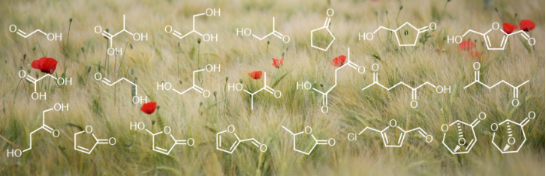
- of Science and Technology, 1037 Luoyu road, Wuhan 430074, China 10.3762/bjoc.21.165 Abstract The carbonyl group is central in organic synthesis, thanks to its ability to undergo a vast range of different chemical transformations on its carbon center or at the neighboring positions. Due to the high
- level of oxygen content in biomass, small molecules arising from biomass often possess a carbonyl group. This is why biobased platform molecules possessing a carbonyl group, either under the form of an aldehyde, a ketone, an acid or an ester, play a dominant role in biobased chemistry. This review aims
- at illustrating how the chemistry of biobased carbonyl platform molecules with backbones from C2 to C6 offers opportunities to reach all kinds of chemical architectures, sometimes even complex ones benefiting from the ability of the carbonyl group to be involved in multicomponent reactions. Keywords


Discovery of cytotoxic indolo[1,2-c]quinazoline derivatives through scaffold-based design
Beilstein J. Org. Chem. 2025, 21, 2062–2071, doi:10.3762/bjoc.21.161
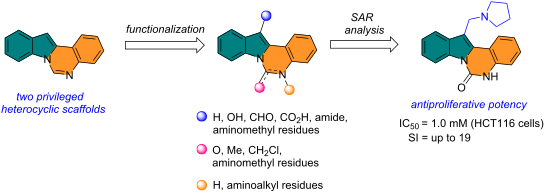
- ]. Given the presence of the indole moiety in indolo[1,2-c]quinazolin-6(5H)-one (1), the design of novel gramine-like analogues via aminomethyl substitution at position 12 is feasible. To evaluate the influence of the urea carbonyl group on biological activity, a modified scaffold, 6-methylindolo[1,2-c
- ]quinazoline (8) [26], was also used in which the carbonyl oxygen at position 6 is replaced by a methyl group. Substitution at position C6 will enable to investigate the influence of electronic and steric changes for target affinity, while retaining the key pharmacophoric features of the indoloquinazolinone
- . Comparative analysis of the most active derivative 9c (Table 2) with its structural analogue 10b (Table 3) revealed that replacing the carbonyl group with a methyl moiety appears to increase the non-specific cytotoxicity of this chemotype, thereby reducing its selectivity. We also estimated the potency of the


α-Ketoglutaric acid in Ugi reactions and Ugi/aza-Wittig tandem reactions
Beilstein J. Org. Chem. 2025, 21, 2021–2029, doi:10.3762/bjoc.21.157
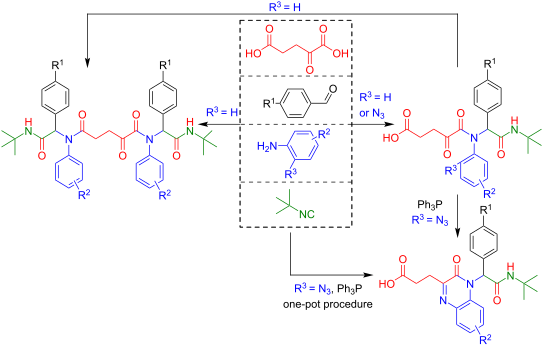
- sufficiently electrophilic carbonyl carbon atom with the elimination of triphenylphosphine oxide via the aza-Wittig reaction. It should be noted that the best method for the isolation of quinoxalinones 9 was column chromatography using an elution gradient of hexane/ethyl acetate 3:1 to hexane/ethyl acetate 1:2
- shift of the signal in the 198 ppm region, corresponding to the carbonyl carbon of compounds 8, to a stronger field in quinoxalinones 9, where cyclization of the keto group has occurred. The structure of quinoxalinones of type 9 was finally assigned based on X-ray diffraction analysis made for 3-(4-(2


Photochemical reduction of acylimidazolium salts
Beilstein J. Org. Chem. 2025, 21, 1973–1983, doi:10.3762/bjoc.21.153
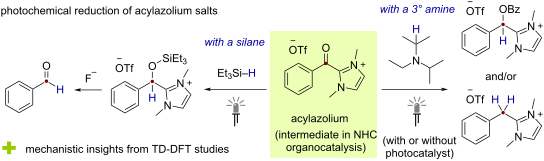
- transformations of carbonyl substrates with umpolung processes of aldehydes such as the benzoin condensation and Stetter reaction being particularly well studied [4][5][6][7][8][9][10][11]. In these processes, addition of the NHC to the aldehyde followed by proton transfer generates the enamine-like Breslow
- intermediate A (Figure 1a), in which the formerly electrophilic carbonyl carbon reacts as a nucleophilic center. In this way, the traditional reactivity profile of the carbonyl group is transiently inverted, and unconventional product classes are generated. Alternatively, addition/elimination of the NHC to a
- species C benefitting from additional stabilization by virtue of electron delocalization onto the NHC-derived azolium ring [17][18][19][20]. Similarly, the cationic azolium fragment in acylazolium salts can effectively lower the carbonyl reduction potential relative to the starting material with single


Asymmetric total synthesis of tricyclic prostaglandin D2 metabolite methyl ester via oxidative radical cyclization
Beilstein J. Org. Chem. 2025, 21, 1964–1972, doi:10.3762/bjoc.21.152
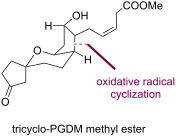
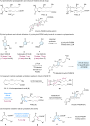
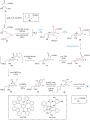
- intermediate 22 (see Supporting Information File 1 for the details). Reasoning that the preferential coordination of the palladium catalyst with the hydroxy group at C15 and the carbonyl group at C18 in compound 22 may have deactivated the palladium catalyst [34], we protected the hydroxy group. Compound 22



Preparation of spirocyclic oxindoles by cyclisation of an oxime to a nitrone and dipolar cycloaddition
Beilstein J. Org. Chem. 2025, 21, 1890–1896, doi:10.3762/bjoc.21.146
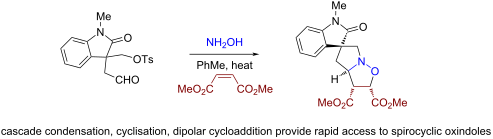
- stereoisomer has the ring-junction NC–H bond, the imide carbonyls, and the oxindole carbonyl all cis to one another across the two newly formed rings. This must arise from a preference for an exo transition state that places the incoming maleimide away from the oxindole carbonyl. The cascade chemistry allows
- same stereochemical outcome predominates. There are two possible exo transition states, both of which avoid steric (and electronic clash) of the dipolarophile carbonyls with the oxindole. Of these, the preference appears to be for the dipolarophile carbonyl groups, in this case for dimethyl maleate, to
- approach the nitrone on the side opposite the oxindole carbonyl (in a similar way to that shown in Figure 2 for the maleimide). Conclusion In conclusion, we have demonstrated the feasibility of our approach to the core of several Alstonia alkaloids by using a cascade cyclisation–dipolar cycloaddition


Systematic pore lipophilization to enhance the efficiency of an amine-based MOF catalyst in the solvent-free Knoevenagel reaction
Beilstein J. Org. Chem. 2025, 21, 1854–1863, doi:10.3762/bjoc.21.144
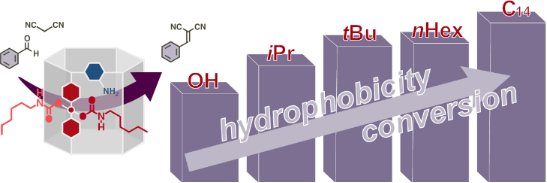
- of carbonyl compounds, such as aldehydes or ketones, with active methylene compounds [37]. The resulting α,β-unsaturated carbonyl products can then be further elaborated to form natural products, therapeutic agents, polymers, pesticides, and insecticides [38], which have important applications in the


Photoswitches beyond azobenzene: a beginner’s guide
Beilstein J. Org. Chem. 2025, 21, 1808–1853, doi:10.3762/bjoc.21.143
- 14, box) and repulsion between the aryl and the carbonyl group in the E-isomer. Some studies on N-acylindigo derivatives reported, besides the expected spectral blue-shift, also a decrease in the fatigue resistance due to photochemical rearrangements [68][69]. Dube and co-workers reported a series of
- interesting results: in the case of derivative 63 containing pyrrole, capable of hydrogen bonding with the carbonyl oxygen (Scheme 20, left) [61][62], the E form is obtained almost quantitatively upon irradiation. In the case of pyridine-containing derivative 64 (Scheme 20, right) no photoswitching is
- pronounced red-shift of the E-isomer was observed for the pyrrole derivative 66 [81], showing that the hydrogen bond between pyrrole and carbonyl also plays a role (Scheme 21, left). The band separation also provides almost quantitative PSS in both directions. The imidazole derivative 67 (Scheme 21, right




Fe-catalyzed efficient synthesis of 2,4- and 4-substituted quinolines via C(sp2)–C(sp2) bond scission of styrenes
Beilstein J. Org. Chem. 2025, 21, 1799–1807, doi:10.3762/bjoc.21.142
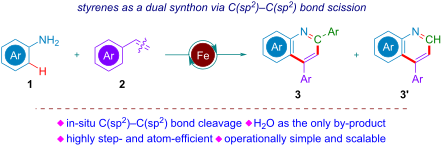
- promising industrial relevance. Oxidative cleavage of alkenes to yield carbonyl compounds is one of the key transformations in synthetic organic chemistry [41][42]. Over the past two decades, this field has witnessed significant advancements, primarily through the use of organic oxidants and transition




Unique halogen–π association detected in single crystals of C–N atropisomeric N-(2-halophenyl)quinolin-2-one derivatives and the thione analogue
Beilstein J. Org. Chem. 2025, 21, 1748–1756, doi:10.3762/bjoc.21.138
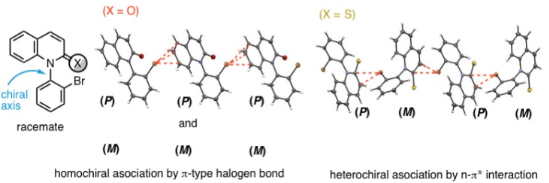
- through a σ-type intermolecular halogen bonding (C–Br···O) between the ortho-bromine atom and the carbonyl oxygen. The formation of similar heterochiral polymers through a σ-type intermolecular halogen bond (C–Br···S) was also found in crystals of the thio-analogue rac-II. On the other hand, in the


Convenient alternative synthesis of the Malassezia-derived virulence factor malassezione and related compounds
Beilstein J. Org. Chem. 2025, 21, 1730–1736, doi:10.3762/bjoc.21.135
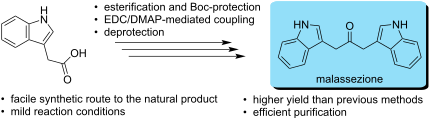
- between the H4-H5, H5-H6, H6-H7, and H1-H2 protons, as well as long-range coupling between the H2-H8 protons. Again, these data are fully consistent with those published previously [20]. Together, these results indicate the presence of two indoles, one carbonyl, one methylene, and one methine group where
- the connectivities of these groups were supported from the 1H-13C HMBC spectrum. Couplings between the H8 and C9 (or H8′ and C9) atoms are consistent with the C8 and C8′ atoms linked to the carbonyl carbon (C9). In addition, couplings between the H8 and the C2, C3, C3a, and C8 carbon atoms, as well as


Influence of the cation in hypophosphite-mediated catalyst-free reductive amination
Beilstein J. Org. Chem. 2025, 21, 1661–1670, doi:10.3762/bjoc.21.130
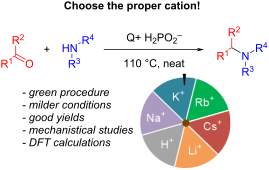
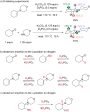
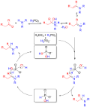
- issue is a fundamentally important factor. In the present work, the reactivity of the hypophosphites of alkali metals (Li, K, Rb, and Cs) in reductive amination was explored for the first time. A set of secondary and tertiary amines was synthesized from various types of carbonyl compounds and amines
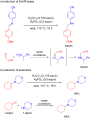
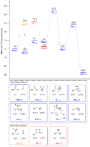
- has shown clear influence of the cation in the hypophosphite salt on the effectiveness of the reductive amination. The acidity of the reaction media was a key factor affecting the equilibrium in the interaction between carbonyl compounds and amines. Intermediately acidic media is the optimal for the
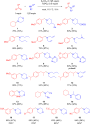
- substrate scope of the developed synthetic approach was investigated. Aromatic and aliphatic carbonyl compounds reacted with primary and secondary amines. The reductive amination efficiently proceeded with both cyclic and acyclic secondary amines. Steric hindrance in ortho-position in carbonyl compound 13


Formal synthesis of a selective estrogen receptor modulator with tetrahydrofluorenone structure using [3 + 2 + 1] cycloaddition of yne-vinylcyclopropanes and CO
Beilstein J. Org. Chem. 2025, 21, 1639–1644, doi:10.3762/bjoc.21.127
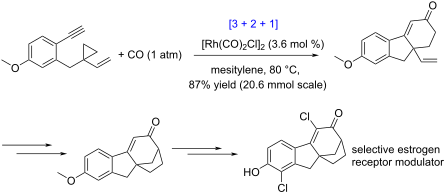
- carbonyl group, giving 7 in 59% yield. Then, under basic conditions, the aldehyde group in 7 was converted into a vinyl group via Wittig reaction, affording yne-VCP substrate 8 in 90% yield. During this process, the TMS protecting group was lost. We then investigated the [3 + 2 + 1] reaction of 8 and CO
- )2Cl]2 catalyst can be reduced to 3.6 mol % (the reaction scale was 20.6 mmol). After finishing the key [3 + 2 + 1] reaction, we focused on building the D ring in 1. Initially, we tried to directly close the ring through addition of the α position of the carbonyl group to the bridgehead vinyl group
- introduce an ester group at the α position of the carbonyl group in 9 to get compound 10, which could have a more nucleophilic carbon better for the Heck reaction. 10 was obtained in 70% yield with a diastereomeric ratio of 4.5:1. Then, we screened various palladium catalysts and solvents to accomplish the


Transition-state aromaticity and its relationship with reactivity in pericyclic reactions
Beilstein J. Org. Chem. 2025, 21, 1613–1626, doi:10.3762/bjoc.21.125
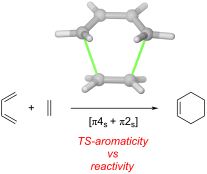
- used in the synthesis of a good number of target molecules, including complex natural products [32][33][34][35]. Typically, the LA binds the dienophile through a donor–acceptor interaction (usually involving a carbonyl group) which results in a significant stabilization of the dienophile’s LUMO. As a
- following subchapter) but also to other processes such as aza-Michael additions or processes catalyzed by species able to establish noncovalent interactions with the reactants [52][53][54][55][56][57]. Lewis acid-catalyzed carbonyl–ene reactions Similar to the Diels–Alder cycloaddition reaction, the Alder
- , typically binds a carbonyl group in the enophile partner. In this sense, the acceleration is even more significant in the so-called carbonyl–ene reaction [63], an analogous process where a carbonyl group directly acts as the enophile. This transformation has also been applied to the synthesis of complex


pH-Controlled isomerization kinetics of ortho-disubstituted benzamidines: E/Z isomerism and axial chirality
Beilstein J. Org. Chem. 2025, 21, 1568–1576, doi:10.3762/bjoc.21.120
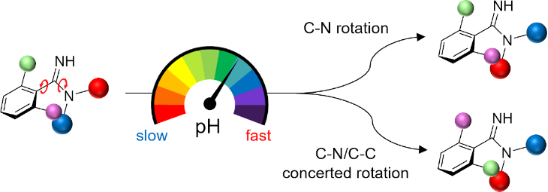
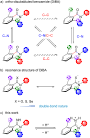
- formal substitution of the carbonyl oxygen atom of DiBA to an NH group, could act as a pH-responsive molecular switch (Figure 1c). Namely, the double-bond nature of an amidine moiety can be altered by the protonation of the amidine nitrogen atom. This suggests the possibility of controlling the rate of C



Facile synthesis of hydantoin/1,2,4-oxadiazoline spiro-compounds via 1,3-dipolar cycloaddition of nitrile oxides to 5-iminohydantoins
Beilstein J. Org. Chem. 2025, 21, 1552–1560, doi:10.3762/bjoc.21.118

- known that nitrile oxides are capable of reacting with various multiple carbon–heteroatom bonds [28]. In contrast to the products of nitrile oxide cycloaddition to imino groups, 1,4,2-oxathiazoles, formed by addition to C=S bonds, are unstable and undergo decomposition into isothiocyanate and a carbonyl

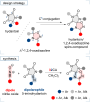


Azide–alkyne cycloaddition (click) reaction in biomass-derived solvent CyreneTM under one-pot conditions
Beilstein J. Org. Chem. 2025, 21, 1544–1551, doi:10.3762/bjoc.21.117
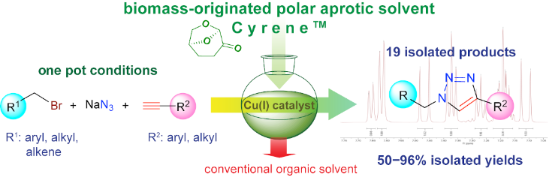
- successfully introduced into homogeneous [26][27][28][29] and heterogeneous [30][31] carbon–carbon and carbon–heteroatom bond-forming protocols. Although its reactive carbonyl group could limit its application when a strong base (aldol condensation [29]) or amines (potential Schiff-base formation) are present


General method for the synthesis of enaminones via photocatalysis
Beilstein J. Org. Chem. 2025, 21, 1535–1543, doi:10.3762/bjoc.21.116
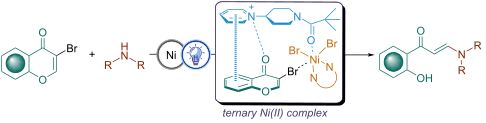
- ; enaminones; nickel; photocatalysis; Introduction Enaminones are relevant intermediates in organic chemistry and the pharmaceutical industry [1][2][3][4][5][6]. These enamines have a carbonyl group conjugated to a carbon–carbon double bond, owing its great versatility in organic synthesis to its ability to
- adduct 10 was identified using GC–MS (Figure S1, Supporting Information File 1). When the reaction was performed under air-equilibrated conditions, the intended product 9a was obtained in a 31% yield, indicating that air influenced the interaction between the Ni-catalyst and the α,β-unsaturated carbonyl
- , pseudo-octahedral Ni(II) complex [44] involving the carbonyl groups of PS1 and 7a, which is further activated on aggregation of the pyridinium salt and the chromone aromatic ring through π−π stacking. Then, PC1 was submitted to Stern–Volmer quenching experiments. Whereas no interaction occurred between




Highly distinguishable isomeric states of a tripodal arylazopyrazole derivative on graphite through electron/hole-induced switching at ambient conditions
Beilstein J. Org. Chem. 2025, 21, 1496–1507, doi:10.3762/bjoc.21.112
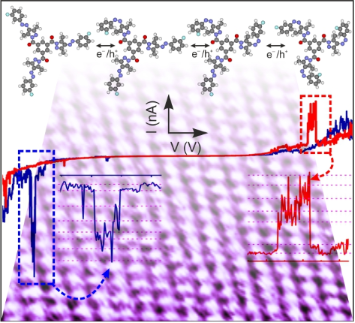
- well-ordered large domains on graphite and are revealed by atomic force microscopy (AFM) and scanning tunneling microscopy (STM) studies. The molecular level arrangement in the assembly reveals a hexagonal packing through weak non-bonding interactions between the carbonyl and aromatic hydrogen, and is
- is to be noted that the fluorine atoms are oriented toward the aromatic and aliphatic hydrogen and the carbonyl group to aromatic hydrogen. This suggests possible directional non-bonding interactions between the molecules. For molecules with 3-fold symmetry, the 3-fold orientation within the assembly
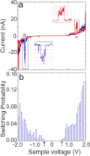
- the vectors. Black arrows indicate the compact lattice directions of graphite. Magenta dashed lines depict possible non-bonding interactions between carbonyl groups and aromatic hydrogen atoms. Blue dashed lines depict the same between fluorine and aromatic/methyl hydrogen atoms. (a) Current versus



Wittig reaction of cyclobisbiphenylenecarbonyl
Beilstein J. Org. Chem. 2025, 21, 1454–1461, doi:10.3762/bjoc.21.107
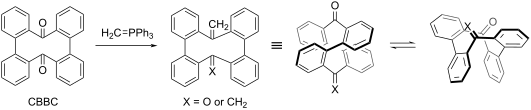
- Cyclobisbiphenylenecarbonyl (CBBC) represents a readily available chiral figure-eight macrocycle containing two carbonyl groups. However, the transformation of the carbonyl groups has been unexplored. Herein, we conducted the Wittig reaction of CBBC with methylenetriphenylphosphorane to furnish two chiral macrocycles
- containing one or two exocyclic olefin units. Owing to the transformation of carbonyl groups, the resulting products exhibit several unique physical and chemical properties: (1) the enhancement of configurational stability, (2) the appearance of fluorescence, and (3) the reductive carbon–carbon-bond
- formation between carbonyl and alkene units. Keywords: bathtub; chirality; cyclobisbiphenylenecarbonyl; figure-eight; Wittig reaction; Introduction Figure-eight π-conjugated molecules represent chiral macrocycles with a twisted crossover structure [1][2][3][4][5][6][7][8][9][10][11][12][13][14][15



Advances in nitrogen-containing helicenes: synthesis, chiroptical properties, and optoelectronic applications
Beilstein J. Org. Chem. 2025, 21, 1422–1453, doi:10.3762/bjoc.21.106
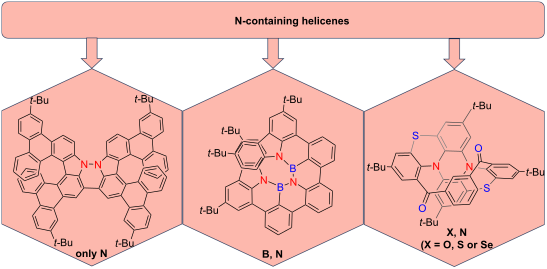
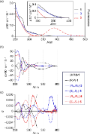
- carbonyl-nitrogen embedded hetero[7]helicenes 25a and 25b bearing axial chirality [39]. Compound 25a displays excellent optical characteristics with ΦF = 0.57, |gabs| = 1.7 × 10⁻², |glum| = 1.4 × 10⁻³, and a BCPL of 8.94 M−1 cm−1. Then, Chen’s group contributed triple aza[6]helicenes 26a and 26b with |glum
- and co-workers introduced an intramolecular radical cyclization strategy to synthesize highly luminescent tetraceno[6]helicenone and its aza analogue 76 [90] (Table 26). The incorporation of a carbonyl group into the helicene backbone substantially enhanced fluorescence quantum yields and red-shifted




