


Search results
Search for "identification" in Full Text gives 459 result(s) in Beilstein Journal of Organic Chemistry. Showing first 200.
Chemical structure metagenomics of microbial natural products: surveying nonribosomal peptides and beyond
Beilstein J. Org. Chem. 2024, 20, 3050–3060, doi:10.3762/bjoc.20.253

- would be fractionated further, tested again, and this process would be performed iteratively until a pure compound is obtained. Notably, BGF is not limited to the identification of metabolites with antimicrobial activity or those of bacterial origin. It is applicable to the screening of natural products
- failed to match a nonribosomal code in the algorithm training dataset and were deemed “unpredictable” [37]. It is also possible that the A domain in question aligned so poorly to prototypical A domains that prevented the proper identification of the nonribosomal code itself [70]. Regardless of the
- . Fractionation is an iterative process guided by screening for the desired bioactivity until the isolation of a pure compound. This workflow was invented by Selman Waksman and has facilitated the identification of the vast majority of natural products known to date. However, it has fallen out of favor due to


Computational design for enantioselective CO2 capture: asymmetric frustrated Lewis pairs in epoxide transformations
Beilstein J. Org. Chem. 2024, 20, 2668–2681, doi:10.3762/bjoc.20.224
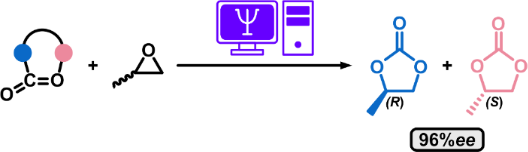
- fluoride ion, respectively. Volcanic 1.3.3, a Python package for the NaviCat platform, was used to generate 3D volcano plots, facilitating the identification of the most appropriate catalyst for the coupling reaction being considered [27]. Volcano plots Volcano plots are a visualisation of the Sabatier
- –CH(CH3) bond. Additionally, the (S)-epoxide enantiomer was employed consistently. Symmetric FLP scaffolds – achiral environment Following the initial exploration and preliminary results, our attention shifted toward the identification of a suitable catalyst. Drawing inspiration from the literature


The scent gland composition of the Mangshan pit viper, Protobothrops mangshanensis
Beilstein J. Org. Chem. 2024, 20, 2644–2654, doi:10.3762/bjoc.20.222
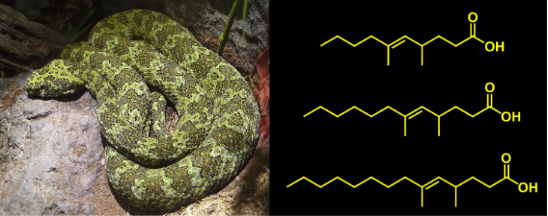
- , proline-containing diketopiperazines were identified for the first time in snake scent glands, although an artificial formation from amino acids likely present in the secretion cannot be excluded. Keywords: carboxylic acids; identification; mass spectrometry; pheromones; snakes; Introduction Located in
- components of the SGS bouquet obtained from animals living in a zoo, including the identification of unique fatty acids of medium chain length not reported before from nature. Similar acids are not known from any other snake. In addition, small amounts of diketopiperazines were found for the first time in


Deciphering the mechanism of γ-cyclodextrin’s hydrophobic cavity hydration: an integrated experimental and theoretical study
Beilstein J. Org. Chem. 2024, 20, 2635–2643, doi:10.3762/bjoc.20.221

- cavity (b) and in the center of the upper rim plane. Therefore, the narrow rim with the H-bonded primary OH groups can be considered as a major attractor (anchor, hot spot) for the incoming water molecules. The identification of this hot spot location provides very useful information for modelling the γ


Improved deconvolution of natural products’ protein targets using diagnostic ions from chemical proteomics linkers
Beilstein J. Org. Chem. 2024, 20, 2323–2341, doi:10.3762/bjoc.20.199
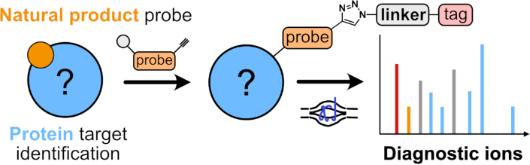
- Andreas Wiest Pavel Kielkowski LMU Munich, Department of Chemistry, Butenandtstr. 5-13, 81377 Munich, Germany 10.3762/bjoc.20.199 Abstract Identification of interactions between proteins and natural products or similar active small molecules is crucial for understanding of their mechanism of
- identification rates and may help to identify otherwise difficult to find interactions between active compounds and proteins, which may result from unperturbed conditions, and thus are of high physiological relevance. Keywords: chemical proteomics; diagnostic ions; mass spectrometry; target identification
- disease [2][3]. In parallel, mass spectrometry (MS) has been crucial in many areas centered around the characterization of NPs [4]. First to annotate their often complex structures using diverse fragmentation techniques [4]. Nowadays, MS is applied for the identification of NPs’ cellular protein targets




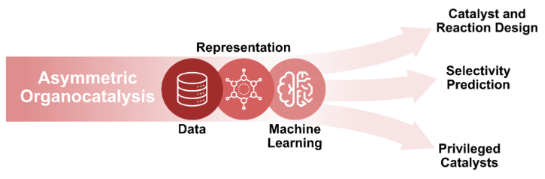
Catalysing (organo-)catalysis: Trends in the application of machine learning to enantioselective organocatalysis
Beilstein J. Org. Chem. 2024, 20, 2280–2304, doi:10.3762/bjoc.20.196
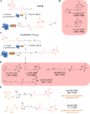
- , balancing high enantioselectivity with a broader substrate scope. CSC enabled the identification of two well-performing, general catalysts. A different generality metric was proposed by Betinol et al. [133] (Figure 13). The authors performed clustering on the reaction space of interest representing the


Finding the most potent compounds using active learning on molecular pairs
Beilstein J. Org. Chem. 2024, 20, 2152–2162, doi:10.3762/bjoc.20.185

- exhibit poor performance during early project stages where the training data is limited and model exploitation might lead to analog identification with limited scaffold diversity. Here, we present ActiveDelta, an adaptive approach that leverages paired molecular representations to predict improvements
- regimes by enabling faster and more accurate identification of more diverse molecular hits against critical drug targets. Keywords: active learning; drug design; machine learning; molecular optimization; potency predictions; Introduction Active learning is a powerful concept in molecular machine
- learning that allows algorithms to guide iterative experiments to improve model performance and identify the most optimal molecular solutions [1]. Many prominent studies have shown the potential for active learning to accelerate and de-risk the identification of optimal chemical reaction conditions [2][3


Computational toolbox for the analysis of protein–glycan interactions
Beilstein J. Org. Chem. 2024, 20, 2084–2107, doi:10.3762/bjoc.20.180
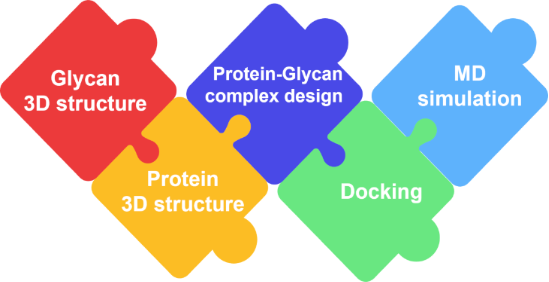
- physical functions [3]. Glycoscience encompasses the comprehensive study of glycans focusing on their structural, biosynthetic, biological and evolutionary aspects [4], thus playing a central role in the identification and characterisation of the glycome’ structure and function, and in unveiling its
- homology modelling. It guides the user in building protein homology models at different levels of complexity. This program builds a homology model by employing four main steps: (i) identification of structural template(s), (ii) alignment of target sequence and template structure(s), (iii) model-building
- on Voronoi tessellation and alpha spheres. It consists of three main programs: Fpocket for pocket identification, Tpocket for benchmarking pocket detection, and Dpocket for collecting pocket descriptor values. Written in C, Fpocket is well-suited for developing new scoring functions and extracting


Negishi-coupling-enabled synthesis of α-heteroaryl-α-amino acid building blocks for DNA-encoded chemical library applications
Beilstein J. Org. Chem. 2024, 20, 1922–1932, doi:10.3762/bjoc.20.168
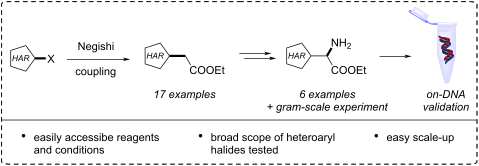
- ; flow chemistry; Negishi; on-DNA chemistry; Introduction DNA-encoded chemical library (DEL) technology is a powerful tool for hit identification [1][2]. DELs are chemically synthesized libraries in which every member is covalently attached to a unique DNA sequence serving as a molecular “barcode” [3


The Groebke–Blackburn–Bienaymé reaction in its maturity: innovation and improvements since its 21st birthday (2019–2023)
Beilstein J. Org. Chem. 2024, 20, 1839–1879, doi:10.3762/bjoc.20.162
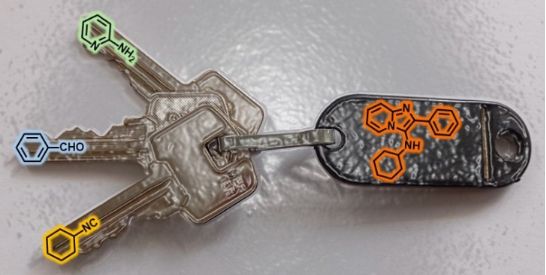
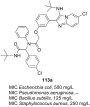
- . Brunschweiger et al. employed the compartmentation strategy to overcome synthetic problems related to the preparation of a DNA-encoded GBB library [17]. DNA-encoded libraries (DELs) are widely used in screening projects, allowing the synthesis of a huge number of compounds as pools, and the identification of






Hetero-polycyclic aromatic systems: A data-driven investigation of structure–property relationships
Beilstein J. Org. Chem. 2024, 20, 1817–1830, doi:10.3762/bjoc.20.160
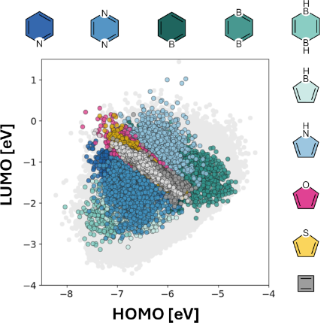
- (bottom row) and connected the points in each series by lines to assist in visual identification. The shading represents the 95% confidence interval of the value. Supporting Information The COMPAS-2 dataset is freely available online at the Poranne Group repository: https://gitlab.com/porannegroup/compas


Discovery of antimicrobial peptides clostrisin and cellulosin from Clostridium: insights into their structures, co-localized biosynthetic gene clusters, and antibiotic activity
Beilstein J. Org. Chem. 2024, 20, 1800–1816, doi:10.3762/bjoc.20.159

- similarity within the sequences resulting from the BLAST search. Identification and selection of CloA1 and CloA2 BGCs For Clostridia, there were 37 predicted BGCs (15 of these with at least one precursor and one biosynthetic gene, Table S2 in Supporting Information File 1), with 76 precursor peptides
- CloPt2, they are Cys18 and His 92. These residues maintained a distance and structural positions like the catalytic residues in PCAT1 (where the catalytic residues are Cys21 and His99). A similar procedure was carried out for CloM1 and CloM2, leading to the identification of the closest sequences within
- Bioinformatic analyses Lanthipeptides identification For the search of lanthipeptides, a LanM class II lanthionine synthetase enzyme gene was selected using a MIBiG [38] search of experimentally characterized lanthipeptide BGCs. 28 LanM enzyme amino acid sequences underwent analysis with BLASTP [39] on the BV




Syntheses and medicinal chemistry of spiro heterocyclic steroids
Beilstein J. Org. Chem. 2024, 20, 1713–1745, doi:10.3762/bjoc.20.152
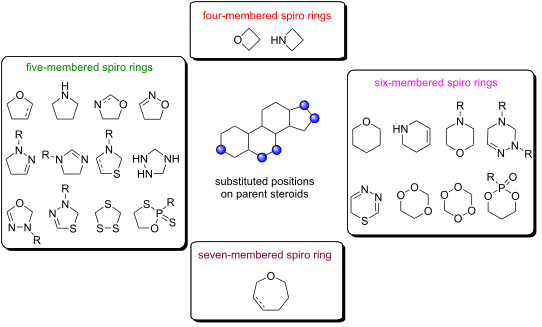
- the steroidal family of spirostans and three-membered spiro heterocyclic steroids, as oxirane derivatives are typically prepared to expand into four- or more membered rings rather than being the final target. The described methodologies are presented to facilitate the identification of the atoms or


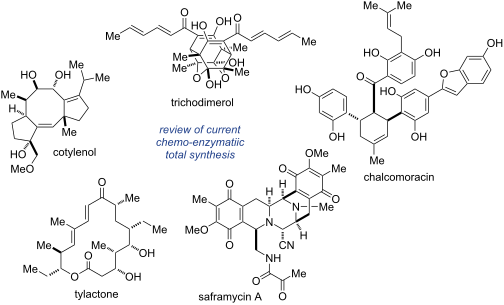
Chemo-enzymatic total synthesis: current approaches toward the integration of chemical and enzymatic transformations
Beilstein J. Org. Chem. 2024, 20, 1693–1712, doi:10.3762/bjoc.20.151
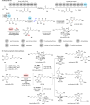
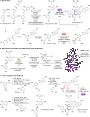
- identification” (Scheme 5B) [52][53][54]. In addition, the utilization of MaDA allowed the chemo-enzymatic total synthesis of 3 and related natural products (Scheme 5C). To identify the Diels–Alderase (MaDA), the research group initially demonstrated an in vivo enzymatic reaction by treating chemically
- oxidase family is known to catalyze a variety of oxidative transformations critical for natural products biosynthesis [55]. Further transcriptome analysis of the candidate proteins led to the identification of two BBE-like enzymes, MaMO and MaDA, as key biosynthetic enzymes for 3. These enzymes were
- identify the corresponding enzymes. The developed "biosynthetic intermediate probe (BIP)-based target identification” method, a chemical pull-down approach for identifying the target enzymes, would be applied and expanded to the chemo-enzymatic synthesis of other natural products. In the total synthesis of




Ring opening of photogenerated azetidinols as a strategy for the synthesis of aminodioxolanes
Beilstein J. Org. Chem. 2024, 20, 1671–1676, doi:10.3762/bjoc.20.148
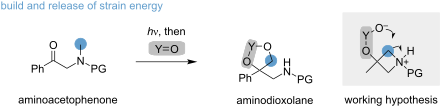
- . Key to the successful development of this two-step process is the identification of a benzhydryl-protecting group, which orchestrates the photochemical Norrish–Yang cyclization and facilitates the subsequent ring opening. Keywords: azetidine; Norrish–Yang cyclization; ring-opening reaction; ring


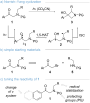

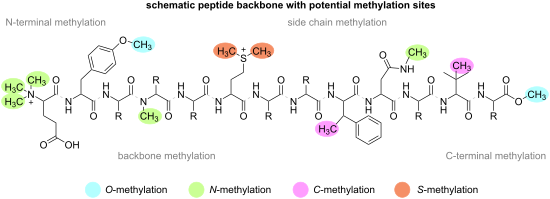
Methyltransferases from RiPP pathways: shaping the landscape of natural product chemistry
Beilstein J. Org. Chem. 2024, 20, 1652–1670, doi:10.3762/bjoc.20.147
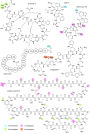
- [94]. Divamide A (Figure 4) was first isolated from a marine tunicate, Didemnum molle, extract, based on its anti-HIV activity in a bioassay-guided fractionation. Further investigation on the identification of the BGC revealed that the tunicate symbiont, Prochloron didemni, is actually responsible for




Polymer degrading marine Microbulbifer bacteria: an un(der)utilized source of chemical and biocatalytic novelty
Beilstein J. Org. Chem. 2024, 20, 1635–1651, doi:10.3762/bjoc.20.146
- . coli from a marine Microbulbifer sp. ALW1 [59]. Enzyme structure and site-directed mutagenesis led to the identification of key residues in the enzyme active site that participated in the hydrolytic activity [59]. Carbohydrate esterases Carbohydrate esterases (CEs) catalyze the O- or N-deacylation of
- algae [17]. Further investigation indicated that the bioactive substance was mainly located in the cell-free supernatant of Microbulbifer sp. RZ01. Fractionation and spectroscopic characterization led to the isolation and identification of the extracellularly secreted molecule, 3,3´,5,5´-tetrabromo-2,2


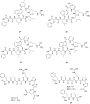


Regio- and stereochemical stability induced by anomeric and gauche effects in difluorinated pyrrolidines
Beilstein J. Org. Chem. 2024, 20, 1572–1579, doi:10.3762/bjoc.20.140
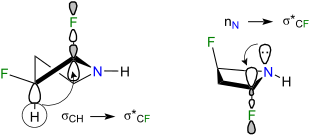
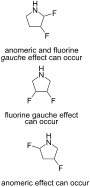
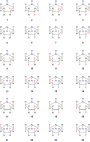
- 3,4-difluoropyrrolidines, compared to the CCSD/DGTZVP level [14][15]. The evaluated levels encompassed the B3LYP-GD3BJ [16][17][18], ωB97XD [19], and PBEPBE [20] functionals, along with the 6-311++G(d,p) [21] and DGTZVP [15] basis sets. Following the identification of B3LYP-GD3BJ/6-311++G(d,p) as the





Cofactor-independent C–C bond cleavage reactions catalyzed by the AlpJ family of oxygenases in atypical angucycline biosynthesis
Beilstein J. Org. Chem. 2024, 20, 1198–1206, doi:10.3762/bjoc.20.102
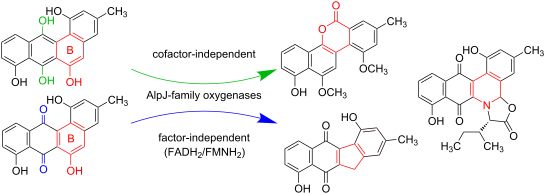
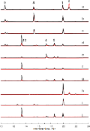
- -independent AlpJ-family oxygenases. Supporting Information Supporting Information File 44: Sequence comparison results and phylogenetic tree of AlpJ-family enzymes and anthrone oxygenases, crystal structures of AlpJ and ActVA-Orf6, SDS-PAGE of purified proteins, HPLC traces of prosthetic group identification




Novel analogues of a nonnucleoside SARS-CoV-2 RdRp inhibitor as potential antivirotics
Beilstein J. Org. Chem. 2024, 20, 1029–1036, doi:10.3762/bjoc.20.91
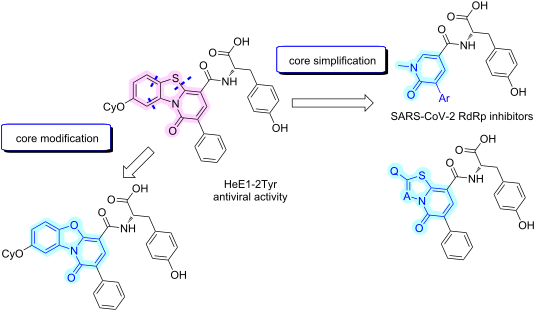
- suitably decorated benzoxazole derivative 12a. The benzoxazole core showed increased sensitivity towards a basic environment, resulting in the ring-opened side product 13 through saponification of the ester function of compound 12a. The identification of this side product proved to be challenging due to


A Diels–Alder probe for discovery of natural products containing furan moieties
Beilstein J. Org. Chem. 2024, 20, 1001–1010, doi:10.3762/bjoc.20.88
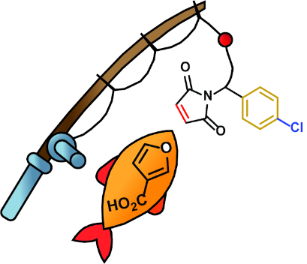
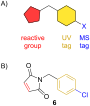
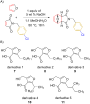
- easily identifiable on liquid chromatography–mass spectrometry (LC–MS). The molecular probe, which undergoes this reaction with a variety of furans, was designed with both a UV-tag and a mass tag to enable easy identification. The probe has been tested with a variety of purified furans, including natural
- products, methylenomycin furan (MMF) hormones, and MMF derivatives. Moreover, the molecular probe has been tested in crude supernatants of various Streptomyces strains and enables identification of MMFs. Keywords: Diels–Alder reaction; furans; methylenomycin furan hormones; natural products; reactivity
- probe contains a UV-tag and MS-tag for easy identification utilizing LC–MS. Additionally, it is capable of covalently attaching to a variety of furan rings via a [4 + 2] Diels–Alder cycloaddition in relatively mild reaction conditions. It reacts with naturally occurring MMFs as well as their derivatives




Confirmation of the stereochemistry of spiroviolene
Beilstein J. Org. Chem. 2024, 20, 852–858, doi:10.3762/bjoc.20.77
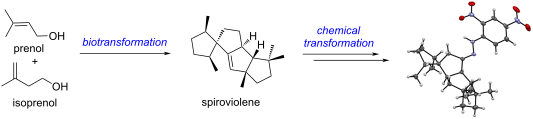
- either IM-9 or IM-11 cations. A direct dyotropic rearrangement, or two stepwise 1,2-alkyl migrations of IM-9, are possible pathways en route to cation IM-10. The presence of these intermediates IM-9, -10, -11 could be inferred by the identification of GJ1012B/D (5/6, Scheme 1D) [11], cattleyene (7) [19


Discovery and biosynthesis of bacterial drimane-type sesquiterpenoids from Streptomyces clavuligerus
Beilstein J. Org. Chem. 2024, 20, 815–822, doi:10.3762/bjoc.20.73
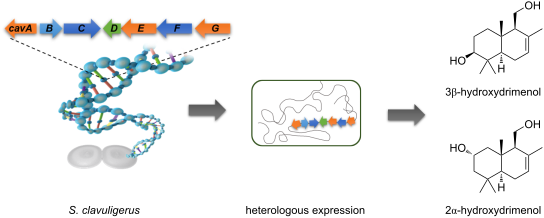
- subfamilies within the sesquiterpenoids. Our discovery significantly broadens the scope for future exploration of bacterial DMTs. Discovery and identification of a DMS in the cav BGC in S. clavuligerus To explore the BGC responsible for DMTs production in S. clavuligerus, we performed bioinformatics research


Methodology for awakening the potential secondary metabolic capacity in actinomycetes
Beilstein J. Org. Chem. 2024, 20, 753–766, doi:10.3762/bjoc.20.69
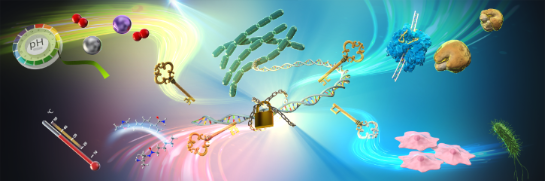
- , genome mining of the marine actinomycete Streptomyces seoulensis A01 enabled the identification of a giant type I polyketide synthase gene cluster (asm) [30]. Heterologous expression of the cryptic asm cluster using a bacterial artificial chromosome vector in a heterologous host led to the production of
- carbonate and terminal olefin functionalities [50]. Thus, artificial methods of genetic engineering and chemistry also play an important role in the identification of novel secondary metabolites. Culture conditions Medium composition, pH, oxygen supply, light Simply modifying the culture conditions is an


Substrate specificity of a ketosynthase domain involved in bacillaene biosynthesis
Beilstein J. Org. Chem. 2024, 20, 734–740, doi:10.3762/bjoc.20.67
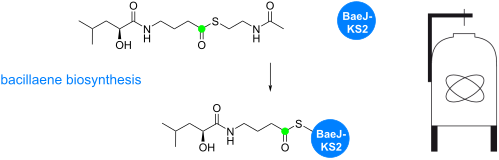
- organism shares the same habitat with the predator Myxococcus xanthus that feeds on other bacteria including B. subtilis, and bacillaene is the primary factor conferring B. subtilis cells resistance to predation by M. xanthus [8]. The identification of its biosynthetic gene cluster (bae) revealed that the





