


Search results
Search for "multistep synthesis" in Full Text gives 82 result(s) in Beilstein Journal of Organic Chemistry.
Contribution of microreactor technology and flow chemistry to the development of green and sustainable synthesis
- Flavio Fanelli,
- Giovanna Parisi,
- Leonardo Degennaro and
- Renzo Luisi
Beilstein J. Org. Chem. 2017, 13, 520–542, doi:10.3762/bjoc.13.51
- produce enantioenriched materials were employed. It is worth mentioning that this work represents a very nice example on the use of chiral catalysis in a multistep flow synthesis of a drug target on gram scale. The multistep synthesis of (S)-rolipram reported in Scheme 23 begins from a benzaldehyde
- very compact in size [1.0 m × 0.7 m × 1.8 m, (W × L × H)], and low-weighing (about 100 kg) and was able to perform complex multistep synthesis, work-up procedures as well as purification operations such as crystallization. This platform was also equipped with devices for real-time monitoring and final
- artemisinic acid. Flow reactor system for multistep synthesis of (S)-rolipram. Pumps are labelled a, b, c, d and e; Labels A, B, C, D, E and F are flow lines. X are molecular sieves; Y is Amberlyst 15Dry; Z is Celite. (Reproduced with permission from [84], copyright 2015 Nature Publishing Group).

Graphical Abstract

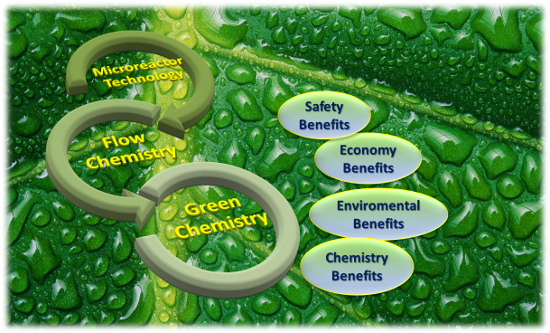
Figure 1: Microreactor technologies and flow chemistry for a sustainable chemistry.

Scheme 1: A flow microreactor system for the generation and trapping of highly unstable carbamoyllithium spec...

Scheme 2: Flow synthesis of functionalized α-ketoamides.

Scheme 3: Reactions of benzyllithiums.

Scheme 4: Trapping of benzyllithiums bearing carbonyl groups enabled by a flow microreactor. (Adapted with pe...

Scheme 5: External trapping of chloromethyllithium in a flow microreactor system.

Scheme 6: Scope for the direct tert-butoxycarbonylation using a flow microreactor system.

Scheme 7: Control of anionic Fries rearrangement reactions by using submillisecond residence time. (Adapted w...

Figure 2: Chip microreactor (CMR) fabricated with six layers of polyimide films. (Reproduced with permission ...

Scheme 8: Flow microreactor system for lithiation, borylation, Suzuki–Miyaura coupling and selected examples ...

Scheme 9: Experimental setup for the flow synthesis of 2-fluorobi(hetero)aryls by directed lithiation, zincat...

Scheme 10: Experimental setup for the coupling of fluoro-substituted pyridines. (Adapted with permission from [53]...

Scheme 11: Continuous flow process setup for the preparation of 11 (Reproduced with permission from [54], copyrigh...
Scheme 12: Continuous-flow photocatalytic oxidation of thiols to disulfides.

Scheme 13: Trifluoromethylation by continuous-flow photoredox catalysis.

Scheme 14: Flow photochemical synthesis of 6(5H)-phenanthridiones from 2-chlorobenzamides.

Scheme 15: Synthesis of biaryls 14a–g under photochemical flow conditions.

Scheme 16: Flow oxidation of hydrazones to diazo compounds.

Scheme 17: Synthetic use of flow-generated diazo compounds.

Scheme 18: Ley’s flow approach for the generation of diazo compounds.
Scheme 19: Iterative strategy for the sequential coupling of diazo compounds.

Scheme 20: Integrated synthesis of Bakuchiol precursor via flow-generated diazo compounds.

Scheme 21: Kappe’s continuous-flow reduction of olefines with diimide.

Scheme 22: Multi-injection setup for the reduction of artemisinic acid.

Scheme 23: Flow reactor system for multistep synthesis of (S)-rolipram. Pumps are labelled a, b, c, d and e; L...

Figure 3: Reconfigurable modules and flowcharts for API synthesis. (Reproduced with permission from [85], copyrig...

Figure 4: Reconfigurable system for continuous production and formulation of APIs. (Reproduced with permissio...
Continuous-flow synthesis of highly functionalized imidazo-oxadiazoles facilitated by microfluidic extraction
- Ananda Herath and
- Nicholas D. P. Cosford
Beilstein J. Org. Chem. 2017, 13, 239–246, doi:10.3762/bjoc.13.26
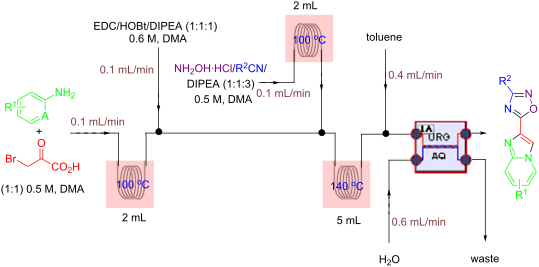
- -oxadiazoles starting from carboxylic acids is reported. This process was applied to the multistep synthesis of imidazo[1,2-a]pyridin-2-yl-1,2,4-oxadiazoles, using a three reactor, multistep continuous-flow system without isolation of intermediates. This continuous-flow method was successfully combined with a

Graphical Abstract

Scheme 1: In-flask (batch) preparation of imidazo[1,2-a]pyridin-2-yl-1,2,4-oxadiazoles (S1P1 agonists) [27].

Scheme 2: Gram-scale synthesis of mGlu5 NAM by continuous flow in combination with microfluidic extraction.

Scheme 3: Gram-scale synthesis of imidazo[1,2-a]pyridin-2-yl-1,2,4-oxadiazole S1P1 agonist scaffold by contin...
Rearrangements of organic peroxides and related processes
- Ivan A. Yaremenko,
- Vera A. Vil’,
- Dmitry V. Demchuk and
- Alexander O. Terent’ev
Beilstein J. Org. Chem. 2016, 12, 1647–1748, doi:10.3762/bjoc.12.162
- multistep synthesis of cannabinergic lactones from dimethylheptylresorcinol. Two regioisomeric cannabinergic lactones were obtained, one of which possessed pronounced affinity towards the CB1 receptor and lower affinities for mCB2 and hCB2 receptors [228]. Oxidation with H2O2–acid systems: With in situ
- [280][281][282] as the catalyst. The obtained asymmetric oxidation products can be used in the multistep synthesis of new biologically active compounds. Possible mechanisms for the asymmetric oxidation of 3-substituted cyclobutanone 96a with H2O2 catalyzed by chiral phosphoric acid are presented in

Graphical Abstract
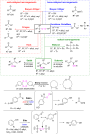
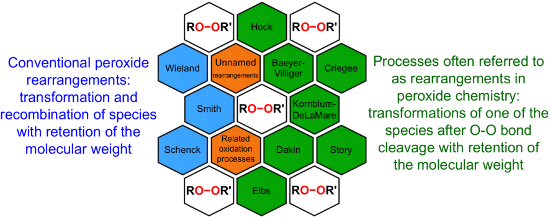
Figure 1: The named transformations considered in this review.

Scheme 1: The Baeyer–Villiger oxidation.

Scheme 2: The general mechanism of the peracid-promoted Baeyer–Villiger oxidation.

Scheme 3: General mechanism of the Lewis acid-catalyzed Baeyer–Villiger rearrangement.

Scheme 4: The theoretically studied mechanism of the BV oxidation reaction promoted by H2O2 and the Lewis aci...

Scheme 5: Proton movements in the transition states of the Baeyer–Villiger oxidation.

Scheme 6: The dependence of the course of the Baeyer–Villiger oxidation on the type of O–O-bond cleavage in t...
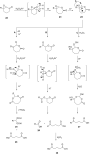
Scheme 7: The acid-catalyzed Baeyer–Villiger oxidation of cyclic epoxy ketones 22.

Scheme 8: Oxidation of isophorone oxide 29.

Scheme 9: Synthesis of acyl phosphate 32 from acyl phosphonate 31.

Scheme 10: Synthesis of aflatoxin B2 (36).

Scheme 11: The Baeyer–Villiger rearrangement of ketones 37 to lactones 38.

Scheme 12: Synthesis of 3,4-dimethoxybenzoic acid (40) via Baeyer–Villiger oxidation.

Scheme 13: Oxone transforms α,β-unsaturated ketones 43 into vinyl acetates 44.

Scheme 14: The Baeyer–Villiger oxidation of ketones 45 using diaryl diselenide and hydrogen peroxide.

Scheme 15: Baeyer–Villiger oxidation of (E)-2-methylenecyclobutanones.

Scheme 16: Oxidation of β-ionone (56) by H2O2/(BnSe)2 with formation of (E)-2-(2,6,6-trimethylcyclohex-1-en-1-...

Scheme 17: The mechanism of oxidation of ketones 58a–f by hydrogen peroxide in the presence of arsonated polys...

Scheme 18: Oxidation of ketone (58b) by H2O2 to 6-methylcaprolactone (59b) catalyzed by Pt complex 66·BF4.

Scheme 19: Oxidation of ketones 67 with H2O2 in the presence of [(dppb}Pt(µ-OH)]22+.

Scheme 20: The mechanism of oxidation of ketones 67 in the presence of [(dppb}Pt(µ-OH)]22+ and H2O2.

Scheme 21: Oxidation of benzaldehydes 69 in the presence of the H2O2/MeReO3 system.

Scheme 22: Oxidation of acetophenones 72 in the presence of the H2O2/MeReO3 system.

Scheme 23: Baeyer–Villiger oxidation of 2-adamantanone (45c) in the presence of Sn-containing mesoporous silic...

Scheme 24: Aerobic Baeyer–Villiger oxidation of ketones 76 using metal-free carbon.

Scheme 25: A regioselective Baeyer-Villiger oxidation of functionalized cyclohexenones 78 into a dihydrooxepin...

Scheme 26: The oxidation of aldehydes and ketones 80 by H2O2 catalyzed by Co4HP2Mo15V3O62.

Scheme 27: The cleavage of ketones 82 with hydrogen peroxide in alkaline solution.

Scheme 28: Oxidation of ketones 85 to esters 86 with H2O2–urea in the presence of KHCO3.

Scheme 29: Mechanism of the asymmetric oxidation of cyclopentane-1,2-dione 87a with the Ti(OiPr)4/(+)DET/t-BuO...

Scheme 30: The oxidation of cis-4-tert-butyl-2-fluorocyclohexanone (93) with m-chloroperbenzoic acid.

Scheme 31: The mechanism of the asymmetric oxidation of 3-substituted cyclobutanone 96a in the presence of chi...

Scheme 32: Enantioselective Baeyer–Villiger oxidation of cyclic ketones 98.

Scheme 33: Regio- and enantioselective Baeyer–Villiger oxidation of cyclic ketones 101.

Scheme 34: The proposed mechanism of the Baeyer–Villiger oxidation of acetal 105f.

Scheme 35: Synthesis of hydroxy-10H-acridin-9-one 117 from tetramethoxyanthracene 114.

Scheme 36: The Baeyer–Villiger oxidation of the fully substituted pyrrole 120.

Scheme 37: The Criegee rearrangement.

Scheme 38: The mechanism of the Criegee reaction of a peracid with a tertiary alcohol 122.

Scheme 39: Criegee rearrangement of decaline ethylperoxoate 127 into ketal 128.

Scheme 40: The ionic cleavage of 2-methoxy-2-propyl perester 129.

Scheme 41: The Criegee rearrangement of α-methoxy hydroperoxide 136.
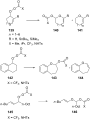
Scheme 42: Synthesis of enol esters and acetals via the Criegee rearrangement.

Scheme 43: Proposed mechanism of the transformation of 1-hydroperoxy-2-oxabicycloalkanones 147a–d.

Scheme 44: Transformation of 3-hydroxy-1,2-dioxolanes 151 into diketone derivatives 152.

Scheme 45: Criegee rearrangement of peroxide 153 with the mono-, di-, and tri-O-insertion.

Scheme 46: The sequential Criegee rearrangements of adamantanes 157a,b.

Scheme 47: Synthesis of diaryl carbonates 160a–d from triarylmethanols 159a–d through successive oxygen insert...

Scheme 48: The synthesis of sesquiterpenes 162 from ketone 161 with a Criegee rearrangement as one key step.

Scheme 49: Synthesis of trans-hydrindan derivatives 164, 165.

Scheme 50: The Hock rearrangement.

Scheme 51: The general scheme of the cumene process.

Scheme 52: The Hock rearrangement of aliphatic hydroperoxides.
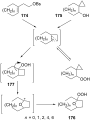
Scheme 53: The mechanism of solvolysis of brosylates 174a–c and spiro cyclopropyl carbinols 175a–c in THF/H2O2....

Scheme 54: The fragmentation mechanism of hydroperoxy acetals 178 to esters 179.

Scheme 55: The acid-catalyzed rearrangement of phenylcyclopentyl hydroperoxide 181.

Scheme 56: The peroxidation of tertiary alcohols in the presence of a catalytic amount of acid.

Scheme 57: The acid-catalyzed reaction of bicyclic secondary alcohols 192 with hydrogen peroxide.

Scheme 58: The photooxidation of 5,6-disubstituted 3,4-dihydro-2H-pyrans 196.

Scheme 59: The oxidation of tertiary alcohols 200a–g, 203a,b, and 206.

Scheme 60: Transformation of functional peroxide 209 leading to 2,3-disubstitued furans 210 in one step.

Scheme 61: The synthesis of carbazoles 213 via peroxide rearrangement.

Scheme 62: The construction of C–N bonds using the Hock rearrangement.

Scheme 63: The synthesis of moiety 218 from 217 which is a structural motif in the antitumor–antibiotic of CC-...

Scheme 64: The in vivo oxidation steps of cholesterol (219) by singlet oxygen.

Scheme 65: The proposed mechanism of the rearrangement of cholesterol-5α-OOH 220.

Scheme 66: Photochemical route to artemisinin via Hock rearrangement of 223.

Scheme 67: The Kornblum–DeLaMare rearrangement.

Scheme 68: Kornblum–DeLaMare transformation of 1-phenylethyl tert-butyl peroxide (225).

Scheme 69: The synthesis 4-hydroxyenones 230 from peroxide 229.

Scheme 70: The Kornblum–DeLaMare rearrangement of peroxide 232.

Scheme 71: The reduction of peroxide 234.

Scheme 72: The Kornblum–DeLaMare rearrangement of endoperoxide 236.

Scheme 73: The rearrangement of peroxide 238 under Kornblum–DeLaMare conditions.

Scheme 74: The proposed mechanism of rearrangement of peroxide 238.

Scheme 75: The Kornblum–DeLaMare rearrangement of peroxides 242a,b.

Scheme 76: The base-catalyzed rearrangements of bicyclic endoperoxides having electron-withdrawing substituent...

Scheme 77: The base-catalyzed rearrangements of bicyclic endoperoxides 249a,b having electron-donating substit...

Scheme 78: The base-catalyzed rearrangements of bridge-head substituted bicyclic endoperoxides 251a,b.

Scheme 79: The Kornblum–DeLaMare rearrangement of hydroperoxide 253.

Scheme 80: Synthesis of β-hydroxy hydroperoxide 254 from endoperoxide 253.

Scheme 81: The amine-catalyzed rearrangement of bicyclic endoperoxide 263.

Scheme 82: The base-catalyzed rearrangement of meso-endoperoxide 268 into 269.

Scheme 83: The photooxidation of 271 and subsequent Kornblum–DeLaMare reaction.

Scheme 84: The Kornblum–DeLaMare rearrangement as one step in the oxidation reaction of enamines.

Scheme 85: The Kornblum–DeLaMare rearrangement of 3,5-dihydro-1,2-dioxenes 284, 1,2-dioxanes 286, and tert-but...

Scheme 86: The Kornblum–DeLaMare rearrangement of epoxy dioxanes 290a–d.

Scheme 87: Rearrangement of prostaglandin H2 292.

Scheme 88: The synthesis of epicoccin G (297).

Scheme 89: The Kornblum–DeLaMare rearrangement used in the synthesis of phomactin A.

Scheme 90: The Kornblum–DeLaMare rearrangement in the synthesis of 3H-quinazolin-4-one 303.

Scheme 91: The Kornblum–DeLaMare rearrangement in the synthesis of dolabriferol (308).

Scheme 92: Sequential transformation of 3-substituted 2-pyridones 309 into 3-hydroxypyridine-2,6-diones 311 in...

Scheme 93: The Kornblum–DeLaMare rearrangement of peroxide 312 into hydroxy enone 313.

Scheme 94: The Kornblum–DeLaMare rearrangement in the synthesis of polyfunctionalized carbonyl compounds 317.

Scheme 95: The Kornblum–DeLaMare rearrangement in the synthesis of (Z)-β-perfluoroalkylenaminones 320.

Scheme 96: The Kornblum–DeLaMare rearrangement in the synthesis of γ-ketoester 322.

Scheme 97: The Kornblum–DeLaMare rearrangement in the synthesis of diterpenoids 326 and 328.

Scheme 98: The synthesis of natural products hainanolidol (331) and harringtonolide (332) from peroxide 329.

Scheme 99: The synthesis of trans-fused butyrolactones 339 and 340.

Scheme 100: The synthesis of leucosceptroid C (343) and leucosceptroid P (344) via the Kornblum–DeLaMare rearra...

Scheme 101: The Dakin oxidation of arylaldehydes or acetophenones.

Scheme 102: The mechanism of the Dakin oxidation.

Scheme 103: A solvent-free Dakin reaction of aromatic aldehydes 356.

Scheme 104: The organocatalytic Dakin oxidation of electron-rich arylaldehydes 358.

Scheme 105: The Dakin oxidation of electron-rich arylaldehydes 361.

Scheme 106: The Dakin oxidation of arylaldehydes 358 in water extract of banana (WEB).

Scheme 107: A one-pot approach towards indolo[2,1-b]quinazolines 364 from indole-3-carbaldehydes 363 through th...

Scheme 108: The synthesis of phenols 367a–c from benzaldehydes 366a-c via acid-catalyzed Dakin oxidation.

Scheme 109: Possible transformation paths of the highly polarized boric acid coordinated H2O2–aldehyde adduct 3...

Scheme 110: The Elbs oxidation of phenols 375 to hydroquinones.

Scheme 111: The mechanism of the Elbs persulfate oxidation of phenols 375 affording p-hydroquinones 376.

Scheme 112: Oxidation of 2-pyridones 380 under Elbs persulfate oxidation conditions.

Scheme 113: Synthesis of 3-hydroxy-4-pyridone (384) via an Elbs oxidation of 4-pyridone (382).

Scheme 114: The Schenck rearrangement.

Scheme 115: The Smith rearrangement.

Scheme 116: Three main pathways of the Schenck rearrangement.

Scheme 117: The isomerization of hydroperoxides 388 and 389.

Scheme 118: Trapping of dioxacyclopentyl radical 392 by oxygen.

Scheme 119: The hypothetical mechanism of the Schenck rearrangement of peroxide 394.

Scheme 120: The autoxidation of oleic acid (397) with the use of labeled isotope 18O2.

Scheme 121: The rearrangement of 18O-labeled hydroperoxide 400 under an atmosphere of 16O2.

Scheme 122: The rearrangement of the oleate-derived allylic hydroperoxides (S)-421 and (R)-425.

Scheme 123: Mechanisms of Schenck and Smith rearrangements.

Scheme 124: The rearrangement and cyclization of 433.

Scheme 125: The Wieland rearrangement.

Scheme 126: The rearrangement of bis(triphenylsilyl) 439 or bis(triphenylgermyl) 441 peroxides.

Scheme 127: The oxidative transformation of cyclic ketones.

Scheme 128: The hydroxylation of cyclohexene (447) in the presence of tungstic acid.

Scheme 129: The oxidation of cyclohexene (447) under the action of hydrogen peroxide.

Scheme 130: The reaction of butenylacetylacetone 455 with hydrogen peroxide.

Scheme 131: The oxidation of bridged 1,2,4,5-tetraoxanes.

Scheme 132: The proposed mechanism for the oxidation of bridged 1,2,4,5-tetraoxanes.

Scheme 133: The rearrangement of ozonides.

Scheme 134: The acid-catalyzed oxidative rearrangement of malondialdehydes 462 under the action of H2O2.

Scheme 135: Pathways of the Lewis acid-catalyzed cleavage of dialkyl peroxides 465 and ozonides 466.

Scheme 136: The mechanism of the transformation of (tert-butyldioxy)cyclohexanedienones 472.

Scheme 137: The synthesis of Vitamin K3 from 472a.

Scheme 138: Proposed mechanism for the transformation of 478d into silylated endoperoxide 479d.

Scheme 139: The rearrangement of hydroperoxide 485 to form diketone 486.

Scheme 140: The base-catalyzed rearrangement of cyclic peroxides 488a–g.

Scheme 141: Synthesis of chiral epoxides and aldols from peroxy hemiketals 491.

Scheme 142: The multistep transformation of (R)-carvone (494) to endoperoxides 496a–e.

Scheme 143: The decomposition of anthracene endoperoxide 499.

Scheme 144: Synthesis of esters 503 from aldehydes 501 via rearrangement of peroxides 502.

Scheme 145: Two possible paths for the base-promoted decomposition of α-azidoperoxides 502.

Scheme 146: The Story decomposition of cyclic diperoxide 506a.

Scheme 147: The Story decomposition of cyclic triperoxide 506b.

Scheme 148: The thermal rearrangement of endoperoxides A into diepoxides B.

Scheme 149: The transformation of peroxide 510 in the synthesis of stemolide (511).

Scheme 150: The possible mechanism of the rearrangement of endoperoxide 261g.

Scheme 151: The photooxidation of indene 517.

Scheme 152: The isomerization of ascaridole (523).

Scheme 153: The isomerization of peroxide 525.

Scheme 154: The thermal transformation of endoperoxide 355.

Scheme 155: The photooxidation of cyclopentadiene (529) at a temperature higher than 0 °C.

Scheme 156: The thermal rearrangement of endoperoxides 538a,b.

Scheme 157: The transformation of peroxides 541.

Scheme 158: The thermal rearrangements of strained cyclic peroxides.

Scheme 159: The thermal rearrangement of diacyl peroxide 551 in the synthesis of C4-epi-lomaiviticin B core 553....

Scheme 160: The 1O2 oxidation of tryptophan (554) and rearrangement of dioxetane intermediate 555.

Scheme 161: The Fe(II)-promoted cleavage of aryl-substituted bicyclic peroxides.

Scheme 162: The proposed mechanism of the Fe(II)-promoted rearrangement of 557a–c.

Scheme 163: The reaction of dioxolane 563 with Fe(II) sulfate.

Scheme 164: Fe(II)-promoted rearrangement of 1,2-dioxane 565.

Scheme 165: Fe(II) cysteinate-promoted rearrangement of 1,2-dioxolane 568.

Scheme 166: The transformation of 1,2-dioxanes 572a–c under the action of FeCl2.

Scheme 167: Fe(II) cysteinate-promoted transformation of tetraoxane 574.

Scheme 168: The CoTPP-catalyzed transformation of bicyclic endoperoxides 600a–d.

Scheme 169: The CoTPP-catalyzed transformation of epoxy-1,2-dioxanes.

Scheme 170: The Ru(II)-catalyzed reactions of 1,4-endoperoxide 261g.

Scheme 171: The Ru(II)-catalyzed transformation as a key step in the synthesis of elyiapyrone A (610) from 1,4-...

Scheme 172: Peroxides with antimalarial activity.

Scheme 173: The interaction of iron ions with artemisinin (616).

Scheme 174: The interaction of FeCl2 with 1,2-dioxanes 623, 624.

Scheme 175: The mechanism of reaction 623 and 624 with Fe(II)Cl2.

Scheme 176: The reaction of bicyclic natural endoperoxides G3-factors 631–633 with FeSO4.

Scheme 177: The transformation of terpene cardamom peroxide 639.
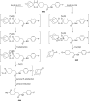
Scheme 178: The different ways of the cleavage of tetraoxane 643.

Scheme 179: The LC–MS analysis of interaction of tetraoxane 646 with iron(II)heme 647.

Scheme 180: The rearrangement of 3,6-epidioxy-1,10-bisaboladiene (EDBD, 649).

Scheme 181: Easily oxidized substrates.

Scheme 182: Biopathway of synthesis of prostaglandins.

Scheme 183: The reduction and rearrangements of isoprostanes.

Scheme 184: The partial mechanism for linoleate 658 oxidation.

Scheme 185: The transformation of lipid hydroperoxide.

Scheme 186: The acid-catalyzed cleavage of the product from free-radical oxidation of cholesterol (667).

Scheme 187: Two pathways of catechols oxidation.

Scheme 188: Criegee-like or Hock-like rearrangement of the intermediate hydroperoxide 675 in dioxygenase enzyme...

Scheme 189: Carotinoides 679 cleavage by carotenoid cleavage dioxygenases.
3,6-Carbazole vs 2,7-carbazole: A comparative study of hole-transporting polymeric materials for inorganic–organic hybrid perovskite solar cells
- Wei Li,
- Munechika Otsuka,
- Takehito Kato,
- Yang Wang,
- Takehiko Mori and
- Tsuyoshi Michinobu
Beilstein J. Org. Chem. 2016, 12, 1401–1409, doi:10.3762/bjoc.12.134
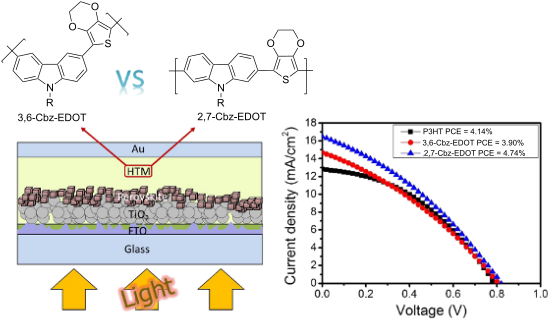
- as its complicated multistep synthesis, low hole mobility in its pristine form, and expensive fabrication costs of the PSCs due to the sublimable small molecule. Accordingly, solution-processable hole-transporting polymers with simple structures have also been pursued as HTMs in the PSCs. Common p

Graphical Abstract

Scheme 1: Synthesis of 3,6-Cbz-EDOT and 2,7-Cbz-EDOT by Stille polycondensation.

Figure 1: (a) Normalized UV–vis absorption of Cbz-EDOT polymers in CH2Cl2 measured at 10−5 M repeat unit−1 an...

Figure 2: Energy level diagram of PSC components including P3HT, 3,6-Cbz-EDOT, and 2,7-Cbz-EDOT.

Figure 3: (a) Current density–voltage curves and (b) incident photon to current conversion efficiency (IPCE) ...

Figure 4: Impedance spectroscopy characterization of the PSCs with different HTMs over the frequency range fr...
Self and directed assembly: people and molecules
- Tony D. James
Beilstein J. Org. Chem. 2016, 12, 391–405, doi:10.3762/bjoc.12.42
- of Victoria, I knew very little about Japan and almost-nothing about the Japanese Language. (Karate had taught me to count from 1 to 10). Having just finished a project with a lot of multistep synthesis, I was immediately drawn to projects as part of the boronic acid research group. The boronic acid

Graphical Abstract

Scheme 1: Reaction of trimethylsilyl cyanide with tricarbonyl (η5-cyclohexadienyl)iron(1+) salts. Reproduced ...

Figure 1: (a) Supramolecular pore formers. Reproduced with permission from [6]. Copyright 1990 Elsevier. (b) Uni...

Figure 2: An intelligent liquid crystal to read out saccharide structure as a color-change. Picture provided ...

Scheme 2: Polymeric boronic acid receptor units developed by Wulff. Reproduced from [16]. Copyright 1982 Internat...
Figure 3: Fluorescence photoinduced electron transfer (PET) pH sensor developed by A. P. De Silva.

Figure 4: Fluorescence PET sensor for saccharides.

Figure 5: (a) Glucose selective PET system. (b) Chiral discriminating PET system.

Figure 6: (a) Fluorescence photoinduced electron transfer (PET) cation sensors developed by A. P. De Silva. (...

Figure 7: (a) Pyrene diboronic acids (n = 3–8). (b) Pyrene monoboronic acid. (c) Block chart showing the rela...

Figure 8: Glysure Continuous Intravascular Glucose Monitoring (CIGM) System. Image provided by Nicholas P. Ba...

Figure 9: Chiral discrimination of D- and L-tartaric acid by (R)-8 at pH 5.6. [(R)-8] = 5.0 × 10⁻⁶ mol dm−3, ...
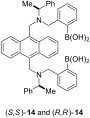
Figure 10: Chiral discriminating sensor (relative stereochemistry shown) constructed using a good fluorophore ...

Figure 11: Fluorescence emission intensity-pH profile of: (a) Sensor 15: 1.0 × 10⁻⁶ mol dm−3 (λex 370 nm, λem ...

Figure 12: Modular chiral discriminating d-PET systems (relative stereochemistry shown).

Figure 13: With Matthew Davidson and Steven Bull during “World Cup” lecture tour of Japan in 2002. (Left) Priv...

Figure 14: Preparation of chiral boron reagent and use as catalyst for aza-Diels–Alder reactions.

Figure 15: Chiral three component self-assembling system.
Synthesis of cyclic N1-pentylinosine phosphate, a new structurally reduced cADPR analogue with calcium-mobilizing activity on PC12 cells
- Ahmed Mahal,
- Stefano D’Errico,
- Nicola Borbone,
- Brunella Pinto,
- Agnese Secondo,
- Valeria Costantino,
- Valentina Tedeschi,
- Giorgia Oliviero,
- Vincenzo Piccialli and
- Gennaro Piccialli
Beilstein J. Org. Chem. 2015, 11, 2689–2695, doi:10.3762/bjoc.11.289
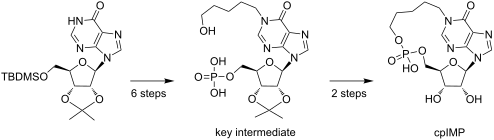
- usually performed by joining the two phosphate moieties at the end of the multistep synthesis [24][25][26][27][28][29]. Similarly, the preparation of the new cpIMP derivative 4 could be performed by the cyclization of a monophosphate precursor via phosphodiester bond formation. For this purpose we

Graphical Abstract

Figure 1: Structures of cADPR (1), cIDPR (2), cpIDP (3) and cpIMP (4).

Figure 2: Synthetic strategies explored in the cyclization step via phosphodiester bond formation.

Scheme 1: i) (iPr)2NP(OCE)Cl, DIPEA, THF, 1 h, rt; ii) 1) 1H-tetrazole, THF, 2) t-BuOOH, 2 h, rt; iii) 1) (iP...

Scheme 2: i) DNCB, K2CO3, DMF, 4 h, 80 °C; ii) 5-aminopentan-1-ol, DMF, 16 h, 50 °C; iii) Ac2O, pyridine, 2 h...

Figure 3: Effect of 3 and 4 on intracellular [Ca2+] in NGF-differentiated PC12 cells. (A) and (B): representa...
Carbon–carbon bond cleavage for Cu-mediated aromatic trifluoromethylations and pentafluoroethylations
- Tsuyuka Sugiishi,
- Hideki Amii,
- Kohsuke Aikawa and
- Koichi Mikami
Beilstein J. Org. Chem. 2015, 11, 2661–2670, doi:10.3762/bjoc.11.286
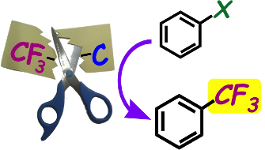
- materials or require expensive reagents and a multistep synthesis. The [18F]trifluoromethylation performed with commercially available reagents by using [18F]fluoride demands no complex such as [18F]CF2Cu, and thus the method should contribute to efficient PET imaging [42] (Scheme 8). Synthesis of

Graphical Abstract

Scheme 1: Trifluoromethylation using trifluoroacetate.

Scheme 2: Decarboxylative pentafluoroethylation and its application.

Scheme 3: Trifluoromethyation with trifluoroacetate in a flow system.

Scheme 4: Trifluoromethylation of 4-bromotoluene by [(NHC)Cu(TFA)].

Scheme 5: Trifluoromethylation of aryl iodides with small amounts of Cu and Ag2O. aThe yield was determined b...

Scheme 6: C–H trifluoromethylation of arenes using trifluoroacetic acid.

Scheme 7: CF3Cu generated from chlorofluoroacetate and CuI.

Scheme 8: [18F]Trifluoromethyation with difluorocarbenes for PET. aRadiochemical yield determined by HPLC.

Scheme 9: Trifluoromethylation with trifluoroacetate and copper iodide.

Scheme 10: Preparation of trifluoromethylcopper from trifluoromethyl ketone.

Scheme 11: Trifluoromethylation of aryl iodides. aIsolated yield. b1 equivalent each of CF3Cu reagent and 1,10...

Scheme 12: Pentafluoroethylation of aryl bromides. aYield was determined by 19F NMR analysis using benzotriflu...
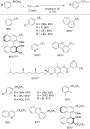
Scheme 13: Perfluoroalkylation reactions of arylboronic acids. aIsolated yield. bDMF was used instead of tolue...

Scheme 14: Trifluoromethylation with silylated hemiaminal of fluoral.

Scheme 15: Catalytic trifluoromethylation with a fluoral derivative.

Scheme 16: The scope of Cu-catalyzed aromatic trifluoromethylation. The yield was determined by 19F NMR analys...

Scheme 17: Plausible mechanism of Cu-catalyzed aromatic trifluoromethylation [53].
Supramolecular chemistry: from aromatic foldamers to solution-phase supramolecular organic frameworks
- Zhan-Ting Li
Beilstein J. Org. Chem. 2015, 11, 2057–2071, doi:10.3762/bjoc.11.222
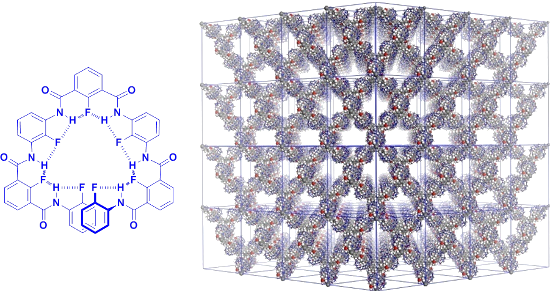
- course among the others. In particular, I enjoyed one course called “Organic Synthesis Skills” taught by Professor Zhixin Huang, which introduced multistep synthesis. I must say that since 1987 I have benefited greatly from this course as a graduate student at the Shanghai Institute of Organic Chemistry
- institution for organic chemistry in China. Studying at SIOC: N···I interaction I joined SIOC in late August of 1987. For many years, graduate students in the first year studied physical organic chemistry, organic synthesis, and organic analytical chemistry. Impressively, all students performed 6–8 multistep
- synthesis experiments that involved the use of all standard organic synthesis techniques. This was a challenge to many students, but all received systematic training in organic synthesis upon completion of the experiments. In 1988, I entered Professor Ching-Sung Chi’s group in the Laboratory of Organic

Graphical Abstract

Scheme 1: Proposed structures of complexes between 1a and 1b with 2.

Scheme 2: The formation of catenanes 6a–c.

Scheme 3: The structures of cantenanes 7a–c.

Scheme 4: The structures of dimer 8·8 and compounds 9 and 10.

Figure 1: X-ray structure of 10 showing a quadruple hydrogen-bonded dimeric motif [17].

Scheme 5: The structures of compounds 11a–g.

Figure 2: Zipper-featured folding motif of δ-peptides 11a–g driven by the cooperative donor–acceptor interact...

Scheme 6: The structures of compounds 12a–g and the formation of the helical conformation by the longer oligo...

Scheme 7: The structures of compounds 13a,b, 14, and 15a–d.

Scheme 8:
The structures of complex C60 ![[Graphic 1]](/bjoc/content/inline/1860-5397-11-222-i19.png?max-width=637&scale=1.18182) 16 and dynamic [2]catenane formed by compounds 17–19.
16 and dynamic [2]catenane formed by compounds 17–19.

Scheme 9: The structure of homodimers 20a·20a and 20b·20b.

Scheme 10: The structures of foldamers 21 and 22a–c.

Scheme 11: Complexation-promoted hydrolysis of foldamer 23.

Scheme 12: The structure of foldamer 24.

Scheme 13: The structures of foldamers 24a–c.

Scheme 14: Proposed structures of heterodimers 25·28, 26·28, and 27·28.

Scheme 15: Proposed structure of complex formed by 29 and 30.

Scheme 16: The structures of polymers P31a,b and P32a–d.

Scheme 17: The structure of compound 33.

Scheme 18: The structure of compound 34.
The simple production of nonsymmetric quaterpyridines through Kröhnke pyridine synthesis
- Isabelle Sasaki,
- Jean-Claude Daran and
- Gérard Commenges
Beilstein J. Org. Chem. 2015, 11, 1781–1785, doi:10.3762/bjoc.11.193

- nonsymmetric quaterpyridines; Constable et al. proposed a multistep synthesis of 4’-(alkylthio)quaterpyridines [23] to avoid the Stille palladium-catalyzed coupling, whereas Fallahpour obtained the 4’-nitroquaterpyridine by employing the Stille coupling method [24]. Sauer et al. extended the use of triazine
- ”’-quaterpyridines was described that required a multistep synthesis producing elaborate intermediates [24][27]. This short survey of the different ways to produce quaterpyridines (and in particular, nonsymmetric quaterpyridines) shows that a new simple synthesis can be quite relevant. The synthetic approach adopted

Graphical Abstract

Scheme 1: Synthesis of the quaterpyridines 6–8 and of the platinum complex 9.

Figure 1: Molecular view of compound 8 with the atom labelling scheme. Ellipsoids are drawn at the 50% probab...

Figure 2: Molecular view of compound 9 using the atom labelling scheme. Selected values of bonds (Å) and angl...
Synthesis of γ-hydroxypropyl P-chirogenic (±)-phosphorus oxide derivatives by regioselective ring-opening of oxaphospholane 2-oxide precursors
- Iris Binyamin,
- Shoval Meidan-Shani and
- Nissan Ashkenazi
Beilstein J. Org. Chem. 2015, 11, 1332–1339, doi:10.3762/bjoc.11.143
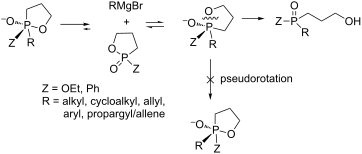
- -tert-butyl peroxide [46]. As both methods utilize phosphorus starting materials which are not commercially available and a multistep synthesis is required for their preparation. As with oxaphospholane 4, compound 5 was reacted with 3 equiv of various Grignard reagents to produce phosphine oxides in

Graphical Abstract

Figure 1: Chemical structures of 2-methoxy-1,3,2-dioxaphospholane 2-oxide (1), 2-ethoxy-1,3,2-dioxaphospholan...

Scheme 1: (A) Alkaline hydrolysis of dioxaphospholane: the phosphorane intermediate includes one endocyclic o...

Scheme 2: Reaction of 4 with various Grignard reagents.

Scheme 3: Synthesis of 2-phenyl-1,2-oxaphospholane 2-oxide (5).

Scheme 4: Formation of phosphinates and phosphine oxides bearing three different substituents from oxaphospho...

Scheme 5: Synthesis of acetylene and allene phosphine oxides.
The synthesis of active pharmaceutical ingredients (APIs) using continuous flow chemistry
- Marcus Baumann and
- Ian R. Baxendale
Beilstein J. Org. Chem. 2015, 11, 1194–1219, doi:10.3762/bjoc.11.134
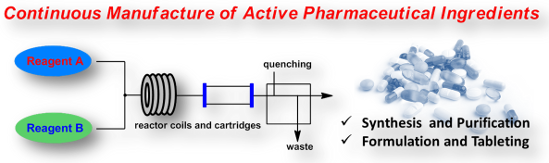

Graphical Abstract

Figure 1: Pharmaceutical structures targeted in early flow syntheses.

Scheme 1: Flow synthesis of 6-hydroxybuspirone (9). Inserted photograph reprinted with permission from [45]. Copy...

Figure 2: Configuration of a baffled reactor tube (left) and its schematic working principle (right).

Scheme 2: McQuade’s flow synthesis of ibuprofen (16).

Scheme 3: Jamison’s flow synthesis of ibuprofen sodium salt (17).

Scheme 4: Flow synthesis of imatinib (23).

Scheme 5: Flow synthesis of the potent 5HT1B antagonist 28.

Scheme 6: Flow synthesis of a selective δ-opioid receptor agonist 33.

Scheme 7: Flow synthesis of a casein kinase I inhibitor library (38).

Scheme 8: Flow synthesis of fluoxetine (46).

Scheme 9: Flow synthesis of artemisinin (55).

Scheme 10: Telescoped flow synthesis of artemisinin (55) and derivatives (62–64).

Scheme 11: Flow approach towards AZD6906 (65).

Scheme 12: Pilot scale flow synthesis of key intermediate 73.

Scheme 13: Semi-flow synthesis of vildagliptine (77).

Scheme 14: Pilot scale asymmetric flow hydrogenation towards 83. Inserted photograph reprinted with permission...

Figure 3: Schematic representation of the ‘tube-in-tube’ reactor.

Scheme 15: Flow synthesis of fanetizole (87) via tube-in-tube system.

Scheme 16: Flow synthesis of diphenhydramine.HCl (92).

Scheme 17: Flow synthesis of rufinamide (95).

Scheme 18: Large scale flow synthesis of rufinamide precursor 102.

Scheme 19: First stage in the flow synthesis of meclinertant (103).

Scheme 20: Completion of the flow synthesis of meclinertant (103).

Scheme 21: Flow synthesis of olanzapine (121) utilising inductive heating techniques.

Scheme 22: Flow synthesis of amitriptyline·HCl (127).

Scheme 23: Flow synthesis of E/Z-tamoxifen (132) using peristaltic pumping modules.

Figure 4: Container sized portable mini factory (photograph credit: INVITE GmbH, Leverkusen Germany).

Scheme 24: Flow synthesis of imidazo[1,2-a]pyridines 136 linked to frontal affinity chromatography (FAC).

Figure 5: Structures of zolpidem (142) and alpidem (143).

Scheme 25: Synthesis and screening loops in the discovery of new Abl kinase inhibitors.

Figure 6: Schotten–Baumann approach towards LY573636.Na (147).

Scheme 26: Pilot scale flow synthesis of LY2886721 (146).

Scheme 27: Continuous flow manufacture of alikiren hemifumarate 152.
Recent advances in the electrochemical construction of heterocycles
- Robert Francke
Beilstein J. Org. Chem. 2014, 10, 2858–2873, doi:10.3762/bjoc.10.303
- -step of the synthesis of glycozoline 37, an antifungal and antibacterial agent. Analogously, 38 was converted to 39 as a part of the multistep synthesis of two different tetrahydropyrroloiminoquinone alkaloids 40 and 41 (Scheme 15) [58][60]. Tanaka et al. could achieve the electrochemical construction

Graphical Abstract

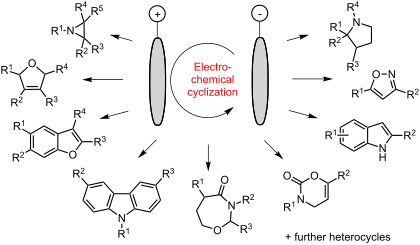
Figure 1: Common types of electrochemically induced cyclization reactions.

Scheme 1: Principle of indirect electrolysis.

Scheme 2: Anodic intramolecular cyclization of olefines in methanol.

Scheme 3: Anodic cyclization of olefines in CH2Cl2/DMSO.

Scheme 4: Intramolecular coupling of 1,6-dienes in CH2Cl2/DMSO.

Scheme 5: Cyclization of bromopropargyloxy ester 12.

Scheme 6: Proposed mechanism for the radical cyclization of bromopropargyloxy ester 12.
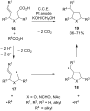
Scheme 7: Preparation of pyrrolidines and tetrahydrofurans via Kolbe-type electrolysis of unsaturated carboxy...

Scheme 8: Anodic cyclization of chalcone oximes 19.

Scheme 9: Generation of N-acyliminium (23) and alkoxycarbenium species (24) from amides and ethers with and w...

Scheme 10: Anodic cyclization of dipeptide 25.

Scheme 11: Anodic cyclization of a dipeptide using an electroauxiliary.

Scheme 12: Anodic cyclization of hydroxyamino compound 29.

Scheme 13: Cyclization of unsaturated thioacetals using the ArS(ArSSAr)+ mediator.

Scheme 14: Cyclization of biaryl 35 to carbazol 36 as key-step of the synthesis of glycozoline (37).

Scheme 15: Electrosynthesis of 39 as part of the total synthesis of alkaloids 40 and 41.

Scheme 16: Wacker-type cyclization of alkenyl phenols 42.

Scheme 17: Cathodic synthesis of indol derivatives.

Scheme 18: Fluoride mediated anodic cyclization of α-(phenylthio)acetamides.

Scheme 19: Synthesis of 2-substituted benzoxazoles from Schiff bases.

Scheme 20: Synthesis of euglobal model compounds via electrochemically induced Diels–Alder cycloaddition.

Scheme 21: Cycloaddition of anodically generated N-acyliminium species 58 with olefins and alkynes.

Scheme 22: Electrochemical aziridination of olefins.

Scheme 23: Proposed mechanism for the aziridination reaction.

Scheme 24: Electrochemical synthesis of benzofuran and indole derivatives.

Scheme 25: Anodic anellation of catechol derivatives 66 with different 1,3-dicarbonyl compounds.

Scheme 26: Electrosynthesis of 1,2-fused indoles from catechol and ketene N,O-acetals.

Scheme 27: Reaction of N-acyliminium pools with olefins having a nucleophilic substituent.

Scheme 28: Synthesis of thiochromans using the cation-pool method.

Scheme 29: Electrochemical synthesis and diversity-oriented modification of 73.
Convergent synthetic methodology for the construction of self-adjuvanting lipopeptide vaccines using a novel carbohydrate scaffold
- Vincent Fagan,
- Istvan Toth and
- Pavla Simerska
Beilstein J. Org. Chem. 2014, 10, 1741–1748, doi:10.3762/bjoc.10.181
- [30]. The lipo-amino acids used previously for synthesis of the LCP system [31] were prepared by a multistep synthesis which resulted in a racemic mixture. In the current study, enantiomerically pure lipidated Fmoc-lysine (8) was synthesized and used to prepare the lipidic adjuvanting moiety

Graphical Abstract

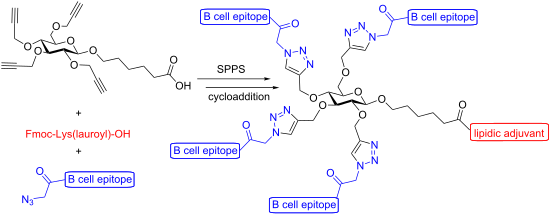
Scheme 1: Convergent construction of self-adjuvanting vaccines bearing multiple copies of a B cell epitope.

Scheme 2: Synthesis of carbohydrate building block 1.

Scheme 3: (A) Lipidation of Fmoc-Lys-OH with lauroyl chloride: (B) Lipidation of Fmoc-Lys-OH with sulfonic-ca...

Scheme 4: Convergent synthesis of self-adjuvanting vaccine candidate 10 consisting of lipidic adjuvanting moi...

Figure 1: Analytical HPLCs of copper-catalyzed alkyne–azide cycloaddition reaction at the start (top) and aft...

Scheme 5: Convergent synthesis of self-adjuvanting vaccine candidate 12 consisting of lipidic adjuvanting moi...
Carbohydrate PEGylation, an approach to improve pharmacological potency
- M. Eugenia Giorgi,
- Rosalía Agusti and
- Rosa M. de Lederkremer
Beilstein J. Org. Chem. 2014, 10, 1433–1444, doi:10.3762/bjoc.10.147
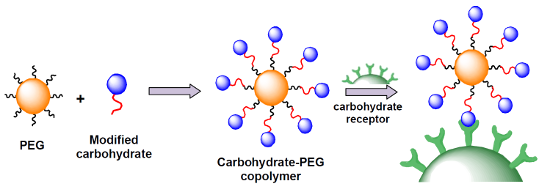
- of two hydroxy methylene groups present in pentofuranose derivatives with a PEG dimethyl ester yielded sugar-PEG copolymers used for drug encapsulation. The carbohydrate monomer was obtained by a multistep synthesis starting from the easily available diacetone glucose (Scheme 5) [41]. Galactose has

Graphical Abstract

Figure 1: Types of PEG utilized for derivatization of drugs and peptides.

Figure 2: Activated PEG derivatives for conjugation.

Scheme 1: Chemoenzymatic method for the preparation of PEG-CMP-SA, adapted from [32,33].
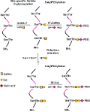
Scheme 2: GlycoPEGylation by sequential in vitro, enzyme mediated, O-glycosylation followed by transfer of PE...

Scheme 3: Chemical glycation of a protein and PEGylation after periodate oxidation, adapted from [34].
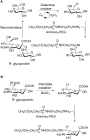
Scheme 4: PEGylation of native glycosylated proteins after modification of the glycan. (A) Enzymatic modifica...

Scheme 5: PEGylation of a pentofuranose derivative, adapted from [41].

Scheme 6: Galactosyl PEGylation of polystyrene nanoparticles, adapted from [42].

Figure 3: Mannosyl PEGylated polyethylenimine for delivery systems. (A) Mannose and PEG are independently lin...

Figure 4: PEGylated mannose derivatives, adapted from [45].

Scheme 7: PEGylation of lactose analogs [53].
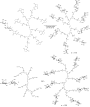
Scheme 8: Conjugation of lactose analogs with dendritic PEGs [54].

Figure 5: PEGylated chitosan derivative, adapted from [61].

Figure 6: Chitosan/PEG functionalized with a mannose at the distal end, adapted from [62].
Microwave-assisted Cu(I)-catalyzed, three-component synthesis of 2-(4-((1-phenyl-1H-1,2,3-triazol-4-yl)methoxy)phenyl)-1H-benzo[d]imidazoles
- Yogesh Kumar,
- Vijay Bahadur,
- Anil K. Singh,
- Virinder S. Parmar,
- Erik V. Van der Eycken and
- Brajendra K. Singh
Beilstein J. Org. Chem. 2014, 10, 1413–1420, doi:10.3762/bjoc.10.145

- hybrid molecules to date. An extensive literature survey revealed the existence of a multistep synthesis with low yields and long reaction times. This encouraged us to develop a new methodology for this synthesis. Results and Discussion Three different approaches for the construction of the proposed 2-(4

Graphical Abstract

Scheme 1: Synthesis of 2-(4-((1-phenyl-1H-1,2,3-triazol-4-yl)methoxy)phenyl)-1H-benzo[d]imidazoles.

Scheme 2: Plausible mechanism for the synthesis of 2-(4-((1-phenyl-1H-1,2,3-triazol-4-yl)methoxy)phenyl)-1H-b...
Atherton–Todd reaction: mechanism, scope and applications
- Stéphanie S. Le Corre,
- Mathieu Berchel,
- Hélène Couthon-Gourvès,
- Jean-Pierre Haelters and
- Paul-Alain Jaffrès
Beilstein J. Org. Chem. 2014, 10, 1166–1196, doi:10.3762/bjoc.10.117

- illustrated by the work of Charette et al. who used this reaction in the first step of a multistep synthesis to produce chiral arylphospholane [54]. Another interesting example, reported by Selikhov et al., involved an AT reaction between a functionalized coumarine and dioleyl phosphite [55]. In this reaction

Graphical Abstract

Scheme 1: Pioneer works of Atherton, Openshaw and Todd reporting on the synthesis of phosphoramidate starting...

Scheme 2: Mechanisms 1 (i) and 2 (ii) suggested by Atherton and Todd in 1945; adapted from [1].

Scheme 3: Two reaction pathways (i and ii) to produce chlorophosphate 2. Charge-transfer complex observed whe...

Scheme 4: Mechanism of the Atherton–Todd reaction with dimethylphosphite according to Roundhill et al. (adapt...

Scheme 5: Synthesis of dialkyl phosphate from dialkyl phosphite (i) and identification of chloro- and bromoph...

Scheme 6: Synthesis of chiral phosphoramidate with trichloromethylphosphonate as the suggested intermediate (...
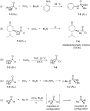
Scheme 7: Selection of results that address the question of the stereochemistry of the AT reaction (adapted f...

Scheme 8: Synthesis of phenoxy spirophosphorane by the AT reaction (adapted from [34]).

Scheme 9: Suggested mechanism of the Atherton–Todd reaction, (i) and (ii) formation of chlorophosphate with a...

Scheme 10: AT reaction in biphasic conditions (adapted from [38]).

Scheme 11: AT reaction with iodoform as halide source (adapted from [37]).

Scheme 12: AT reaction with phenol at low temperature in the presence of DMAP (adapted from [40]).

Scheme 13: Synthesis of a triphosphate by the AT reaction starting with the preparation of chlorophosphate (ad...

Scheme 14: AT reaction with sulfonamide (adapted from [42]).

Scheme 15: Synthesis of a styrylphosphoramidate starting from the corresponding aniline (adapted from [43]).

Scheme 16: Use of hydrazine as nucleophile in AT reactions (adapted from [48]).

Scheme 17: AT reaction with phenol as a nucleophilic species; synthesis of dioleyl phosphate-substituted couma...

Scheme 18: Synthesis of β-alkynyl-enolphosphate from allenylketone with AT reaction (adapted from [58]).

Scheme 19: Synthesis of pseudohalide phosphate by using AT reaction (adapted from [67]).

Scheme 20: AT reaction with hydrospirophosphorane with insertion of CO2 in the product (adapted from [69]).

Scheme 21: AT reaction with diaryl phosphite (adapted from [70]).

Scheme 22: AT reaction with O-alkyl phosphonite (adapted from [71]).

Scheme 23: Use of phosphinous acid in AT reactions (adapted from [72]).

Scheme 24: AT reaction with secondary phosphinethiooxide (adapted from [76]).

Scheme 25: Use of H-phosphonothioate in the AT reaction (adapted from [78]).

Scheme 26: AT-like reaction with CuI as catalyst and without halide source (adapted from [80]).

Scheme 27: Reduction of phenols after activation as phosphate derivatives (adapted from [81] i ; [82], ii; and [83], iii).

Scheme 28: Synthesis of medium and large-sized nitrogen-containing heterocycles (adapted from [85]).

Scheme 29: Synthesis of arylstannane from aryl phosphate prepared by an AT reaction (adapted from [86]).

Scheme 30: Synthesis and use of aryl dialkyl phosphate for the synthesis of biaryl derivatives (adapted from [89])....

Scheme 31: Synthesis of aryl dialkyl phosphate by an AT reaction from phenol and subsequent rearrangement yiel...

Scheme 32: Selected chiral phosphoramidates used as organocatalyst; i) chiral phosphoramidate used in the pion...

Scheme 33: Determination of ee of H-phosphinate by the application of the AT reaction with a chiral amine (ada...

Scheme 34: Chemical structure of selected flame retardants synthesized by AT reactions; (BDE: polybrominated d...

Scheme 35: Transformation of DOPO (i) and synthesis of polyphosphonate (ii) by the AT reaction (adapted from [117] ...

Scheme 36: Synthesis of lipophosphite (bisoleyl phosphite) and cationic lipophosphoramidate with an AT reactio...

Scheme 37: Use of AT reactions to produce cationic lipids characterized by a trimethylphosphonium, trimethylar...

Scheme 38: Cationic lipid synthesized by the AT reaction illustrating the variation of the structure of the li...

Scheme 39: Helper lipids for nucleic acid delivery synthesized with the AT reaction (adapted from [130]).

Scheme 40: AT reaction used to produce red/ox-sensitive cationic lipids (adapted from [135]).

Scheme 41: Alkyne and azide-functionalized phosphoramidate synthesized by AT reactions,(i); illustration of so...

Scheme 42: Cationic lipids exhibiting bactericidal action – arrows indicate the bond formed by the AT reaction...

Scheme 43: β-Cyclodextrin-based lipophosphoramidates (adapted from [138]).

Scheme 44: Polyphosphate functionalized by an AT reaction (adapted from [139]).

Scheme 45: Synthesis of zwitterionic phosphocholine-bound chitosan (adapted from [142]).

Scheme 46: Synthesis of AZT-based prodrug via an AT reaction (adapted from [143]).
Synthesis of five- and six-membered cyclic organic peroxides: Key transformations into peroxide ring-retaining products
- Alexander O. Terent'ev,
- Dmitry A. Borisov,
- Vera A. Vil’ and
- Valery M. Dembitsky
Beilstein J. Org. Chem. 2014, 10, 34–114, doi:10.3762/bjoc.10.6
- performed with Amberlyst-15 ion-exchange resin. This approach was used in the multistep synthesis of the natural endoperoxide 9,10-dihydroplakortin, which exhibits antimalarial and anticancer activities as do its structural analogues [320][321]. 2-(3,6,6-Trimethyl-1,2-dioxan-3-yl)ethanol (224) was

Graphical Abstract

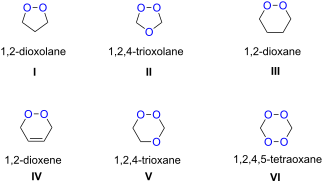
Figure 1: Five and six-membered cyclic peroxides.

Figure 2: Artemisinin and semi-synthetic derivatives.

Scheme 1: Synthesis of 3-hydroxy-1,2-dioxolanes 3a–c.

Scheme 2: Synthesis of dioxolane 6.

Scheme 3: Photooxygenation of oxazolidines 7a–d with formation of spiro-fused oxazolidine-containing dioxolan...

Scheme 4: Oxidation of cyclopropanes 10a–e and 11a–e with preparation of 1,2-dioxolanes 12a–e.

Scheme 5: VO(acac)2-catalyzed oxidation of silylated bicycloalkanols 13a–c.

Scheme 6: Mn(II)-catalyzed oxidation of cyclopropanols 15a–g.

Scheme 7: Oxidation of aminocyclopropanes 20a–c.

Scheme 8: Synthesis of aminodioxolanes 24.
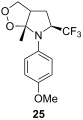
Figure 3: Trifluoromethyl-containing dioxolane 25.

Scheme 9: Synthesis of 1,2-dioxolanes 27a–e by the oxidation of cyclopropanes 26a–e.

Scheme 10: Photoinduced oxidation of methylenecyclopropanes 28.

Scheme 11: Irradiation-mediated oxidation.

Scheme 12: Application of diazene 34 for dioxolane synthesis.

Scheme 13: Mn(OAc)3-catalyzed cooxidation of arylacetylenes 37a–h and acetylacetone with atmospheric oxygen.
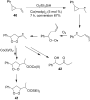
Scheme 14: Peroxidation of (2-vinylcyclopropyl)benzene (40).

Scheme 15: Peroxidation of 1,4-dienes 43a,b.

Scheme 16: Peroxidation of 1,5-dienes 46.

Scheme 17: Peroxidation of oxetanes 53a,b.

Scheme 18: Peroxidation of 1,6-diene 56.

Scheme 19: Synthesis of 3-alkoxy-1,2-dioxolanes 62a,b.

Scheme 20: Synthesis of spiro-bis(1,2-dioxolane) 66.

Scheme 21: Synthesis of dispiro-1,2-dioxolanes 68, 70, 71.

Scheme 22: Synthesis of spirohydroperoxydioxolanes 75a,b.

Scheme 23: Synthesis of spirohydroperoxydioxolane 77 and dihydroperoxydioxolane 79.

Scheme 24: Ozonolysis of azepino[4,5-b]indole 80.

Scheme 25: SnCl4-mediated fragmentation of ozonides 84a–l in the presence of allyltrimethylsilane.

Scheme 26: SnCl4-mediated fragmentation of bicyclic ozonide 84m in the presence of allyltrimethylsilane.

Scheme 27: MCl4-mediated fragmentation of alkoxyhydroperoxides 96 in the presence of allyltrimethylsilane.

Scheme 28: SnCl4-catalyzed reaction of monotriethylsilylperoxyacetal 108 with alkene 109.

Scheme 29: SnCl4-catalyzed reaction of triethylsilylperoxyacetals 111 with alkenes.

Scheme 30: Desilylation of tert-butyldimethylsilylperoxy ketones 131a,b followed by cyclization.

Scheme 31: Deprotection of peroxide 133 followed by cyclization.

Scheme 32: Asymmetric peroxidation of methyl vinyl ketones 137a–e.

Scheme 33: Et2NH-catalyzed intramolecular cyclization.

Scheme 34: Synthesis of oxodioxolanes 143a–j.

Scheme 35: Haloperoxidation accompanied by intramolecular ring closure.

Scheme 36: Oxidation of triterpenes 149a–d with Na2Cr2O7/N-hydroxysuccinimide.

Scheme 37: Curtius and Wolff rearrangements to form 1,2-dioxolane ring-retaining products.

Scheme 38: Oxidative desilylation of peroxide 124.

Scheme 39: Synthesis of dioxolane 158, a compound containing the aminoquinoline antimalarial pharmacophore.

Scheme 40: Diastereomers of plakinic acid A, 162a and 162b.

Scheme 41: Ozonolysis of alkenes.

Scheme 42: Cross-ozonolysis of alkenes 166 with carbonyl compounds.

Scheme 43: Ozonolysis of the bicyclic cyclohexenone 168.

Scheme 44: Cross-ozonolysis of enol ethers 172a,b with cyclohexanone.

Scheme 45: Griesbaum co-ozonolysis.

Scheme 46: Reactions of aryloxiranes 177a,b with oxygen.

Scheme 47: Intramolecular formation of 1,2,4-trioxolane 180.

Scheme 48: Formation of 1,2,4-trioxolane 180 by the reaction of 1,5-ketoacetal 181 with H2O2.

Scheme 49: 1,2,4-Trioxolane 186 with tetrazole fragment.

Scheme 50: 1,2,4-Trioxolane 188 with a pyridine fragment.

Scheme 51: 1,2,4-Trioxolane 189 with pyrimidine fragment.

Scheme 52: Synthesis of aminoquinoline-containing 1,2,4-trioxalane 191.

Scheme 53: Synthesis of arterolane.

Scheme 54: Oxidation of diarylheptadienes 197a–c with singlet oxygen.

Scheme 55: Synthesis of hexacyclinol peroxide 200.

Scheme 56: Oxidation of enone 201 and enenitrile 203 with singlet oxygen.

Scheme 57: Synthesis of 1,2-dioxanes 207 by oxidative coupling of carbonyl compounds 206 and alkenes 205.

Scheme 58: 1,2-Dioxanes 209 synthesis by co-oxidation of 1,5-dienes 208 and thiols.

Scheme 59: Synthesis of bicyclic 1,2-dioxanes 212 with aryl substituents.

Scheme 60: Isayama–Mukaiyama peroxysilylation of 1,5-dienes 213 followed by desilylation under acidic conditio...

Scheme 61: Synthesis of bicycle 218 with an 1,2-dioxane ring.

Scheme 62: Intramolecular cyclization with an oxirane-ring opening.

Scheme 63: Inramolecular cyclization with the oxetane-ring opening.

Scheme 64: Intramolecular cyclization with the attack on a keto group.

Scheme 65: Peroxidation of the carbonyl group in unsaturated ketones 228 followed by cyclization of hydroperox...

Scheme 66: CsOH and Et2NH-catalyzed cyclization.

Scheme 67: Preparation of peroxyplakoric acid methyl ethers A and D.

Scheme 68: Hg(OAc)2 in 1,2-dioxane synthesis.

Scheme 69: Reaction of 1,4-diketones 242 with hydrogen peroxide.

Scheme 70: Inramolecular cyclization with oxetane-ring opening.

Scheme 71: Inramolecular cyclization with MsO fragment substitution.

Scheme 72: Synthesis of 1,2-dioxane 255a, a structurally similar compound to natural peroxyplakoric acids.

Scheme 73: Synthesis of 1,2-dioxanes based on the intramolecular cyclization of hydroperoxides containing C=C ...

Scheme 74: Use of BCIH in the intramolecular cyclization.

Scheme 75: Palladium-catalyzed cyclization of δ-unsaturated hydroperoxides 271a–e.

Scheme 76: Intramolecular cyclization of unsaturated peroxyacetals 273a–d.

Scheme 77: Allyltrimethylsilane in the synthesis of 1,2-dioxanes 276a–d.

Scheme 78: Intramolecular cyclization using the electrophilic center of the peroxycarbenium ion 279.

Scheme 79: Synthesis of bicyclic 1,2-dioxanes.

Scheme 80: Preparation of 1,2-dioxane 286.

Scheme 81: Di(tert-butyl)peroxalate-initiated radical cyclization of unsaturated hydroperoxide 287.

Scheme 82: Oxidation of 1,4-betaines 291a–d.

Scheme 83: Synthesis of aminoquinoline-containing 1,2-dioxane 294.

Scheme 84: Synthesis of the sulfonyl-containing 1,2-dioxane.

Scheme 85: Synthesis of the amido-containing 1,2-dioxane 301.

Scheme 86: Reaction of singlet oxygen with the 1,3-diene system 302.

Scheme 87: Synthesis of (+)-premnalane А and 8-epi-premnalane A.

Scheme 88: Synthesis of the diazo group containing 1,2-dioxenes 309a–e.

Figure 4: Plakortolide Е.

Scheme 89: Synthesis of 6-epiplakortolide Е.

Scheme 90: Application of Bu3SnH for the preparation of tetrahydrofuran-containing bicyclic peroxides 318a,b.

Scheme 91: Application of Bu3SnH for the preparation of lactone-containing bicyclic peroxides 320a–f.

Scheme 92: Dihydroxylation of the double bond in the 1,2-dioxene ring 321 with OsO4.

Scheme 93: Epoxidation of 1,2-dioxenes 324.

Scheme 94: Cyclopropanation of the double bond in endoperoxides 327.

Scheme 95: Preparation of pyridazine-containing bicyclic endoperoxides 334a–c.

Scheme 96: Synthesis of 1,2,4-trioxanes 337 by the hydroperoxidation of unsaturated alcohols 335 with 1O2 and ...

Scheme 97: Synthesis of sulfur-containing 1,2,4-trioxanes 339.

Scheme 98: BF3·Et2O-catalyzed synthesis of the 1,2,4-trioxanes 342a–g.

Scheme 99: Photooxidation of enol ethers or vinyl sulfides 343.

Scheme 100: Synthesis of tricyclic peroxide 346.

Scheme 101: Reaction of endoperoxides 348a,b derived from cyclohexadienes 347a,b with 1,4-cyclohexanedione.

Scheme 102: [4 + 2]-Cycloaddition of singlet oxygen to 2Н-pyrans 350.

Scheme 103: Synthesis of 1,2,4-trioxanes 354 using peroxysilylation stage.

Scheme 104: Epoxide-ring opening in 355 with H2O2 followed by the condensation of hydroxy hydroperoxides 356 wi...

Scheme 105: Peroxidation of unsaturated ketones 358 with the H2O2/CF3COOH/H2SO4 system.

Scheme 106: Synthesis of 1,2,4-trioxanes 362 through Et2NH-catalyzed intramolecular cyclization.

Scheme 107: Reduction of the double bond in tricyclic peroxides 363.

Scheme 108: Horner–Wadsworth–Emmons reaction in the presence of peroxide group.

Scheme 109: Reduction of ester group by LiBH4 in the presence of 1,2,4-trioxane moiety.

Scheme 110: Reductive amination of keto-containing 1,2,4-trioxane 370.

Scheme 111: Reductive amination of keto-containing 1,2,4-trioxane and a Fe-containing moiety.

Scheme 112: Acid-catalyzed reactions of Н2О2 with ketones and aldehydes 374.

Scheme 113: Cyclocondensation of carbonyl compounds 376a–d using Me3SiOOSiMe3/CF3SO3SiMe3.

Scheme 114: Peroxidation of 4-methylcyclohexanone (378).

Scheme 115: Synthesis of symmetrical tetraoxanes 382a,b from aldehydes 381a,b.

Scheme 116: Synthesis of unsymmetrical tetraoxanes using of MeReO3.

Scheme 117: Synthesis of symmetrical tetraoxanes using of MeReO3.

Scheme 118: Synthesis of symmetrical tetraoxanes using of MeReO3.

Scheme 119: MeReO3 in the synthesis of symmetrical tetraoxanes with the use of aldehydes.

Scheme 120: Preparation of unsymmmetrical 1,2,4,5-tetraoxanes with high antimalarial activity.

Scheme 121: Re2O7-Catalyzed synthesis of tetraoxanes 398.

Scheme 122: H2SO4-Catalyzed synthesis of steroidal tetraoxanes 401.

Scheme 123: HBF4-Catalyzed condensation of bishydroperoxide 402 with 1,4-cyclohexanedione.

Scheme 124: BF3·Et2O-Catalyzed reaction of gem-bishydroperoxides 404 with enol ethers 405 and acetals 406.

Scheme 125: HBF4-Catalyzed cyclocondensation of bishydroperoxide 410 with ketones.

Scheme 126: Synthesis of symmetrical and unsymmetrical tetraoxanes 413 from benzaldehydes 412.

Scheme 127: Synthesis of bridged 1,2,4,5-tetraoxanes 415a–l from β-diketones 414a–l and H2O2.

Scheme 128: Dimerization of zwitterions 417.

Scheme 129: Ozonolysis of verbenone 419.

Scheme 130: Ozonolysis of O-methyl oxime 424.

Scheme 131: Peroxidation of 1,1,1-trifluorododecan-2-one 426 with oxone.

Scheme 132: Intramolecular cyclization of dialdehyde 428 with H2O2.

Scheme 133: Tetraoxanes 433–435 as by-products in peroxidation of ketals 430–432.

Scheme 134: Transformation of triperoxide 436 in diperoxide 437.

Scheme 135: Preparation and structural modifications of tetraoxanes.

Scheme 136: Structural modifications of steroidal tetraoxanes.

Scheme 137: Synthesis of 1,2,4,5-tetraoxane 454 containing the fluorescent moiety.

Scheme 138: Synthesis of tetraoxane 458 (RKA182).
Garner’s aldehyde as a versatile intermediate in the synthesis of enantiopure natural products
- Mikko Passiniemi and
- Ari M.P. Koskinen
Beilstein J. Org. Chem. 2013, 9, 2641–2659, doi:10.3762/bjoc.9.300
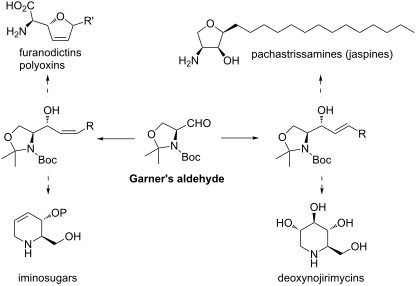
- times and has been used in over 600 publications. Synthesis of Garner’s aldehyde Garner’s aldehyde (1) has been widely used as an intermediate in multistep synthesis. Thus the synthesis of 1 has to meet some essential requirements: 1) easy and large scale preparation and 2) configurational and chemical
- Garner’s aldehyde. BDP - bis(diazaphospholane). Use of Garner’s aldehyde 1 in multistep synthesis. Explanation of the anti- and syn-selectivity in the nucleophilic addition reaction. Herold’s method: (a) Lithium 1-pentadecyne, HMPT, THF, −78 °C (71%); (b) Lithium 1-pentadecyne, ZnBr2, Et2O, −78 °C → rt (87

Graphical Abstract

Figure 1: Structures of limonene, carvone and thalidomide.

Figure 2: Structure of Garner’s aldehyde.

Scheme 1: (a) i) Boc2O, 1.0 N NaOH (pH >10), dioxane, +5 °C → rt; ii) MeI, K2CO3, DMF, 0 °C → rt (86% over tw...

Scheme 2: (a) AcCl, MeOH, 0 °C → reflux (99%); (b) i) (Boc)2O, Et3N, THF, 0 °C → rt → 50 °C (89%); ii) Me2C(O...

Scheme 3: (a) LiAlH4, THF, rt (93–96%); (b) (COCl)2, DMSO, iPr2NEt, CH2Cl2, −78 °C → −55 °C (99%).

Scheme 4: The Koskinen procedure for the preparation of Garner’s aldehyde. (a) i) AcCl, MeOH, 0 °C → 50 °C (9...

Scheme 5: Burke’s synthesis of Garner’s aldehyde. BDP - bis(diazaphospholane).

Figure 3: Structures of some iminosugars (7, 9), peptide antibiotics (8) and sphingosine (10) and pachastriss...

Scheme 6: Use of Garner’s aldehyde 1 in multistep synthesis.

Scheme 7: Explanation of the anti- and syn-selectivity in the nucleophilic addition reaction.

Scheme 8: Herold’s method: (a) Lithium 1-pentadecyne, HMPT, THF, −78 °C (71%); (b) Lithium 1-pentadecyne, ZnBr...

Scheme 9: (a) Ethyl lithiumpropiolate, HMPT, THF, −78 °C; (b) (S)- or (R)-MTPA, DCC, DMAP, THF, rt (18, 81%) ...

Scheme 10: Coleman’s selectivity studies and their transition state model for the co-ordinated delivery of the...

Scheme 11: (a) PhMgBr, THF, −78 °C → 0 °C [62] or (a) PhMgBr, Et2O, 0 °C [63].

Scheme 12: (a) cat. RhCl3·3H2O, cat. 26, NaOMe, Ph-B(OH)2, aq DME, 80 °C (24, 71%); (b) cat. RhCl3·3H2O, cat. ...

Scheme 13: Lithiated dithiane (3 equiv), CuI (0.3 equiv), BF3·Et2O (6 equiv), THF, −50 °C, 12 h (70%).

Scheme 14: Addition reaction reported by Lam et al. (a) 1-Hexyne, n-BuLi, THF, −15 °C or −40 °C.

Scheme 15: (a) n-BuLi, HMPT, toluene, −78 °C → rt (85%); (b) n-BuLi, ZnCl2, toluene/Et2O, −78 °C → rt (65%).

Scheme 16: (a) n-BuLi, 34, THF, −40 °C [69]; (b) n-BuLi, 35, THF, −78 °C → rt (80%) [70]; (c) n-BuLi, 35, HMPT, THF, −...

Scheme 17: (a) cat. Rh(acac)(CO)2, 42, THF, 40 °C (74%).
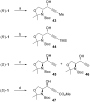
Scheme 18: (a) 1-PropynylMgBr, CuI, THF, Me2S, −78 °C (95%); (b) Ethynyltrimethylsilane, EtMgBr, CuI, THF, Me2...

Scheme 19: (a) cat. 50, toluene, 0 °C (52%); (b) cat. 51, toluene, 0 °C (51%); (c) cat. 52, toluene, 0 °C (50%...

Scheme 20: (a) (iPr)3SiH, cat. Ni(COD)2, dimesityleneimidazolium·HCl, t-BuOK, THF, rt.

Scheme 21: (a) Cp2Zr(H)Cl, cat. AgAsF6, CH2Cl2, rt; (b) Cp2Zr(H)Cl, 1-pentadecyne, cat. ZnBr2 in THF for anti-...

Scheme 22: (a) i) 31, n-BuLi, THF, −78 °C; ii) (S)-1, THF, −78 °C; (b) Red-Al, THF, 0 °C.

Scheme 23: (a) 61, n-BuLi, DMPU, toluene, −78 °C, then (S)-1, toluene, −95 °C (57%); (b) 61, n-BuLi, ZnCl2, to...

Scheme 24: Olefin A as an intermediate in natural product synthesis.

Scheme 25: (a) Ph3(Me)PBr, KH, benzene (66%, rac-64) or (b) AlMe3, Zn, CH2I2, THF (76%) [101]; (c) Ph3(Me)PBr, n-Bu...

Scheme 26: (a) Benzene, rt (82%) [108]; (b) K2CO3, MeOH (85%) [89]; (c) iPrOH, [Ir(COD)Cl]2, PPh3, THF, rt (81%) [114].

Scheme 27: Mechanism of the Still–Gennari modification of the HWE reaction leading to both olefin isomers.
Methylidynetrisphosphonates: Promising C1 building block for the design of phosphate mimetics
- Vadim D. Romanenko and
- Valery P. Kukhar
Beilstein J. Org. Chem. 2013, 9, 991–1001, doi:10.3762/bjoc.9.114
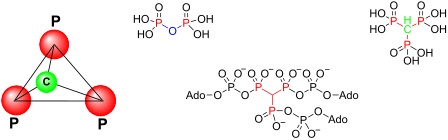
- quinone methides 17 and 19. Unexpected phosphonylation of the aromatic nucleus in reactions of quinone methides 19 and 21. Multistep synthesis of trisphosphonate 18 starting from quinone methide 25. Synthesis of hexaethyl methylidynetrisphosphonate (6) via metal-carbenoid-mediated P–H insertion reaction

Graphical Abstract

Scheme 1: Synthesis of hexaethyl dialkylaminomethylidynetrisphosphonates 1 from dichloromethylene dialkylammo...

Scheme 2: Synthesis and some transformations of trisphosphonate 2.

Scheme 3: Attempt to synthesize trisphosphonates by the combination of Arbuzov reaction and dialkyl phosphite...

Scheme 4: Synthesis of hexaethylmethylidynetrisphosphonate 6 via phosphinylation of tetraethyl methylenebisph...

Scheme 5: Synthetic approach to methylidynetrisphosphonate ester 9.

Scheme 6: Synthesis of alkylidyne-1,1,1-trisphosphonate esters 12.

Scheme 7: Two-step one-pot synthesis of propargyl-substituted trisphosphonate 15.

Scheme 8: Synthetic route to trisphosphonate 18 via 7,7-bisphosphonyl-3,5-di-tert-butylquinone methide 17.

Scheme 9: Synthesis of trisphosphonate 18 starting from 2,6-di-tert-butyl-4-(dichloromethyl)phenol.

Scheme 10: Synthesis of triphosphorus derivatives 20 via quinone methides 17 and 19.

Scheme 11: Unexpected phosphonylation of the aromatic nucleus in reactions of quinone methides 19 and 21.

Scheme 12: Multistep synthesis of trisphosphonate 18 starting from quinone methide 25.

Scheme 13: Synthesis of hexaethyl methylidynetrisphosphonate (6) via metal-carbenoid-mediated P–H insertion re...

Scheme 14: Reaction between tert-butylphosphaethyne and diethyl phosphite in the presence of sodium metal.

Scheme 15: Cross metathesis of trisphosphonates 12 with 2-methyl-2-butene and the Grubbs second-generation cat...

Scheme 16: Hydroboration–oxidation of trisphosphonates 12b,e.

Scheme 17: Reaction of 3-butyn-1-ylidenetrisphosphonate 15 with benzyl azide.

Scheme 18: The use of the transsilylation reaction for the synthesis of trisphosphonate salts 37.

Scheme 19: Synthesis of the sodium salt of the acid-labile trisphosphonic acid 38.

Scheme 20: Acidic hydrolysis of trisphosphonate ester 1a.

Scheme 21: Methylation of trisphosphonate 1a.

Scheme 22: Synthesis of the free methylidynetrisphosphonic acid via trisphosphonate salt 38.
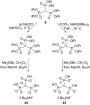
Scheme 23: Synthesis of halomethylidynetrisphosphonate salts 43 and 44 by modified Gross’s procedure.
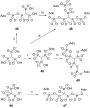
Scheme 24: Synthesis of trisphosphonate modified nucleotides. Reagents: i, 5'-O-tosyl adenosine, MeCN; ii, AMP...

Figure 1: Bond angles and bond distances in pyrophosphate, methylene-1,1-bisphosphonate and fluoromethylidyne...
3D-printed devices for continuous-flow organic chemistry
- Vincenza Dragone,
- Victor Sans,
- Mali H. Rosnes,
- Philip J. Kitson and
- Leroy Cronin
Beilstein J. Org. Chem. 2013, 9, 951–959, doi:10.3762/bjoc.9.109
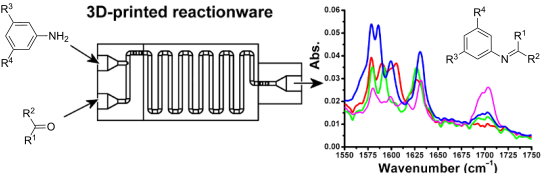
- of aldehydes and primary amines. Secondly, two reactors were connected in series to first perform an imine synthesis and then subsequently an imine reduction, with this second setup showing the potential for using the 3D-printed devices as reliable tools in multistep synthesis. This showed that the

Graphical Abstract

Figure 1: Schematic representation of the 3D-printed reactionware devices employed in this work showing the i...
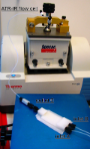
Figure 2: Flow system setup, where a R1 is connected to the syringe pumps and the ATR-IR flow cell with stand...

Figure 3: Carbonyl compounds and primary amines used in the syntheses reported in this work. Carbonyl compoun...

Figure 4: ATR-IR spectra of the synthesis of compounds 3b (on the left) and 3d (on the right). The spectrum o...

Figure 5: (a) IR spectra of benzaldehyde at different concentrations. The solvent peak at 1022 cm−1 remains c...

Figure 6: Comparison of the IR spectra of imine 3a, derived from benzaldehyde (1a) and aniline (2a), synthesi...

Figure 7: Representation of the setup for the two-step flow reaction employed in this work. The first reactor...

Figure 8: Example of an ATR-IR graph in which an imine spectrum is compared with the reduced imine spectrum.
A one-pot catalyst-free synthesis of functionalized pyrrolo[1,2-a]quinoxaline derivatives from benzene-1,2-diamine, acetylenedicarboxylates and ethyl bromopyruvate
- Mohammad Piltan,
- Loghman Moradi,
- Golaleh Abasi and
- Seyed Amir Zarei
Beilstein J. Org. Chem. 2013, 9, 510–515, doi:10.3762/bjoc.9.55
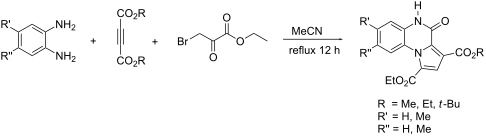
- )anilines with alkynes to form 4,5-dihydropyrrolo[1,2-a]quinoxalines [23][24]. Kobayashi and co-workers have described the Lewis acid catalyzed cyclization of 1-(2-isocyanophenyl)pyrroles to give pyrrolo[1,2-a]quinoxalines in good yields; however, the isocyanide substrates required multistep synthesis [25

Graphical Abstract

Scheme 1: Proposed mechanism for the formation of compound 4a.

Scheme 2: Synthesis of pyrrolo[1,2-a]pyrazine derivatives 9a,b.
Multistep organic synthesis of modular photosystems
- Naomi Sakai and
- Stefan Matile
Beilstein J. Org. Chem. 2012, 8, 897–904, doi:10.3762/bjoc.8.102
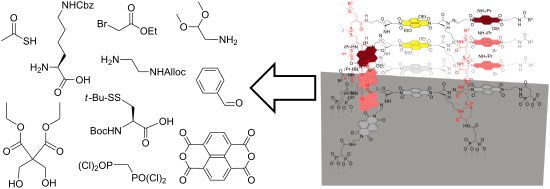
- objective of this brief highlight was to exemplify the synthetic efforts that are often hidden behind short papers on functional systems. Quite extensive multistep synthesis has been covered, followed by innovative surface-initiated polymerization and chemoorthogonal dynamic covalent chemistry. The

Graphical Abstract

Figure 1: Schematic structure of photosystem 1 on indium tin oxide (ITO, grey) with antiparallel gradients in...

Scheme 1: Synthesis of initiator 2.

Scheme 2: Synthesis of propagators 3 and 4.

Scheme 3: Synthesis of stack exchangers 5 and 6. Compounds 5, 6, 45 and 47 are mixtures of 2,6- and 3,7-regio...

Scheme 4: Synthesis of photosystem 1, self-organizing surface-initiated polymerization (SOSIP). R1 = SH (50) ...

Scheme 5: Synthesis of photosystem 1, stack exchange. R1 = SH or oxidized derivative, R1 = CH2CHCH2. 5 and 6 ...

Scheme 6: Schematic overview over SOSIP and stack exchange.
2-Allylphenyl glycosides as complementary building blocks for oligosaccharide and glycoconjugate synthesis
- Hemali D. Premathilake and
- Alexei V. Demchenko
Beilstein J. Org. Chem. 2012, 8, 597–605, doi:10.3762/bjoc.8.66
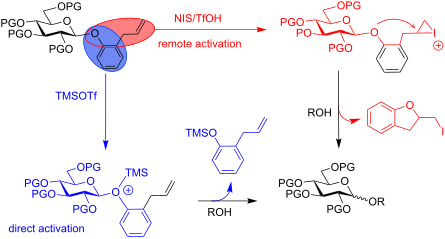
- orthogonality was shown for O-pentenyl versus O-propargyl glycosides by Hotha et al. [17] and for S-glycosyl O-methyl phenylcarbamothioate (SNea) versus thioglycosides/thioimidates by us [18], but still their applicability to multistep synthesis remains to be proven. Working to expand this concept, our group

Graphical Abstract

Scheme 1: Orthogonal strategy introduced by Ogawa et al.

Scheme 2: Determination of the AP activation pathways.

Scheme 3: AP building blocks in oligosaccharide synthesis.
Synthesis and photooxidation of styrene copolymer bearing camphorquinone pendant groups
- Branislav Husár,
- Norbert Moszner and
- Ivan Lukáč
Beilstein J. Org. Chem. 2012, 8, 337–343, doi:10.3762/bjoc.8.37
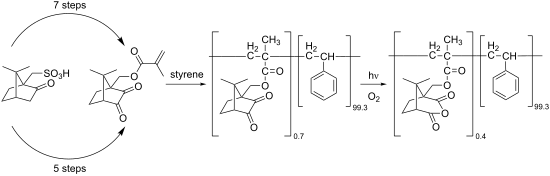
- use of a cheaper racemic starting material and by a simplified multistep synthesis. A shorter alternative synthetic route to 6 from 1 was proposed (Scheme 2, see Supporting Information File 1 and Supporting Information File 2 for full experimental data). (±)-10-Iodocamphor (8) was prepared in one step

Graphical Abstract

Scheme 1: Photoperoxidation of BZ in an aerated glassy polymer matrix.

Scheme 2: Synthesis of MCQ from (±)-10-camphorsulfonic acid (1). Only one enantiomer of each compound is depi...

Scheme 3: Photooxidation of CQ in aerated glassy PS matrix.

Figure 1: FTIR spectra of MCQ/S film after irradiation in a carousel for the indicated periods. Spectrum of PS...

Figure 2: UV–vis spectra of MCQ/S film after irradiation in a carousel apparatus for the indicated periods.

Scheme 4: Proposed mechanism of MCQ/S photochemistry.
Efficient oxidation of oleanolic acid derivatives using magnesium bis(monoperoxyphthalate) hexahydrate (MMPP): A convenient 2-step procedure towards 12-oxo-28-carboxylic acid derivatives
- Jorge A. R. Salvador,
- Vânia M. Moreira,
- Rui M. A. Pinto,
- Ana S. Leal and
- José A. Paixão
Beilstein J. Org. Chem. 2012, 8, 164–169, doi:10.3762/bjoc.8.17
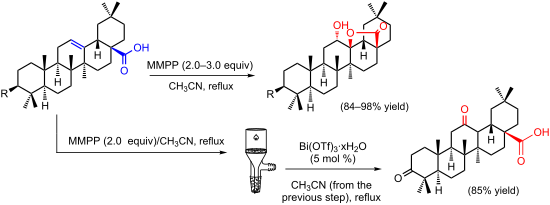
- -lactones can be efficiently converted into the corresponding 12-oxo-28-carboxylic acid derivatives by bismuth(III) triflate catalysis [18]. This new approach not only avoids an inconvenient multistep synthesis by means of a protection/deprotection strategy [19][20] but also results in chemical modification

Graphical Abstract

Figure 1: ORTEP diagram of compound 4 (50% probability level, H atoms of arbitrary sizes). The asymmetric uni...

Scheme 1: Sequential 2-step synthesis of 3,12-dioxoolean-28-oic acid (11) directly from 3-oxooleanolic acid (1...

Figure 2: ORTEP diagram of compound 11 (50% probability level, H atoms of arbitrary sizes).



