


Search results
Search for "nitro" in Full Text gives 538 result(s) in Beilstein Journal of Organic Chemistry. Showing first 200.
Advances in radical peroxidation with hydroperoxides
Beilstein J. Org. Chem. 2024, 20, 2959–3006, doi:10.3762/bjoc.20.249
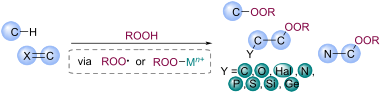
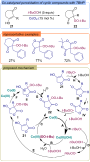
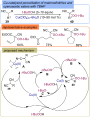
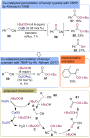
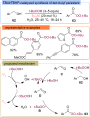
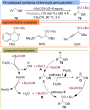
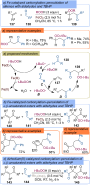
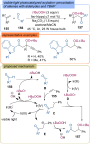
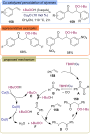
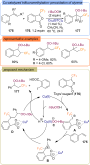
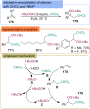
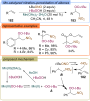
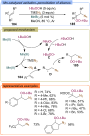
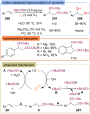
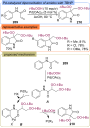
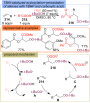
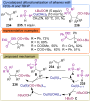
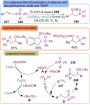
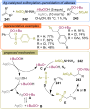
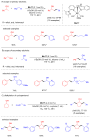
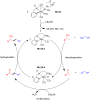
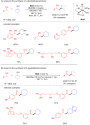
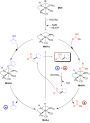
- the target product 181. With N-containing second fragment Mn(III)-catalyzed difunctionalization of alkenes 182 with TBHP and tert-butylnitrite to form β-peroxynitroalkanes 183 was developed (Scheme 57) [126]. tert-Butylnitrite was used as the precursor of the nitro group. The reaction proceeds under































Structure and thermal stability of phosphorus-iodonium ylids
Beilstein J. Org. Chem. 2024, 20, 2931–2939, doi:10.3762/bjoc.20.245
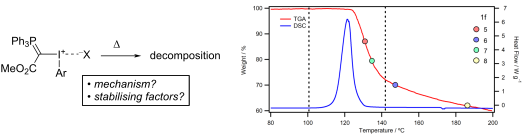
- charge on this substituent in the hypervalent bond. The long I–X distances (a = 2.758–4.165 Å) are indicative of ionic compounds, with the exception of the cyclic benziodoxolone 2, in which a covalent I–O bond is observed (a = 2.484 Å). We were unable to obtain a crystal structure of the ortho-nitro
- compound 1j. However, a previously reported crystal structure of ylid 3, which also contains an ortho-nitrobenzene substituent, suggests a pseudocyclic structure where the nitro group is coordinating to the iodine centre (a(I–ON) = 2.695 Å) [28], which we propose is likely to be the case in 1j as well. In


Recent advances in transition-metal-free arylation reactions involving hypervalent iodine salts
Beilstein J. Org. Chem. 2024, 20, 2891–2920, doi:10.3762/bjoc.20.243

- -arylation of α-cyano-α-fluoroacetamides (9, R = CN), too. Aryl(mesityl)iodonium salts 6 (which are unsymmetrical diaryliodonium salts) were used as hypervalent iodine salts in both reactions. To achieve the C(sp3)-arylation of the α-nitro derivative of compounds 9 within 2 h to yield products 10, K2CO3 as




C–H Trifluoromethylthiolation of aldehyde hydrazones
Beilstein J. Org. Chem. 2024, 20, 2883–2890, doi:10.3762/bjoc.20.242
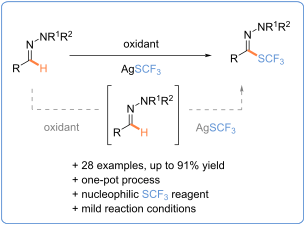
- being explained by a tedious purification. Interestingly, the methodology was successfully applied to the functionalization of aliphatic hydrazones 1s and 1t and even the hydrazone derived from citronellal 1u. The method was functional group-tolerant to various functional groups (nitro, CN, ester


Synthesis of fluoroalkenes and fluoroenynes via cross-coupling reactions using novel multihalogenated vinyl ethers
Beilstein J. Org. Chem. 2024, 20, 2691–2703, doi:10.3762/bjoc.20.226

- % yields (Table 3, entries 6–8). The reaction between 1a and 4j, which contains an electron-withdrawing nitro group, afforded 2j in 88% yield (Table 3, entry 9). Although p-hydroxyphenylboronic acid (4k) gave 2k in only 9% yield, m-aminophenylboronic acid (4l) provided 2l in high yield (Table 3, entries 10
- –Miyaura cross-coupling. The reaction of 1b or 1c, which had a m-methoxy or p-nitro group on the benzene ring, with 4a proceeded smoothly to furnish 2p or 2q in good yieds (Table 3, entries 15 and 16). A phenyl group could be introduced into 1d possessing an ester moiety in moderate yield, whereas the
- -naphthylacetylene (5g) provided the corresponding enynes (3b–g) in 43–92% yields (Table 4, entries 1–6). On the contrary, electron-withdrawing substituents such as chloro, trifluoromethyl and nitro groups resulted in low cross-coupling yields (3h–j) (Table 4, entries 7–9). p-Acetyl or p-formylphenylacetylene (5k or


Synthesis, electrochemical properties, and antioxidant activity of sterically hindered catechols with 1,3,4-oxadiazole, 1,2,4-triazole, thiazole or pyridine fragments
Beilstein J. Org. Chem. 2024, 20, 2378–2391, doi:10.3762/bjoc.20.202
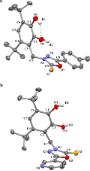
- of complexes 5 and 8 do not contain any solvent molecules, while the unit cell of crystals 6·0.5CH3CN contains one acetonitrile molecule per two catechol molecules. The nitro-substituted pyridine group in 5 is disordered in two positions. The X-ray structure of catechol 5 is shown in Figure 1, and
- planes of the cycles corresponds to 5°). These pairs (Figure 3) are bound in a supramolecular chain along the 0c axis owing to two H-bonds between the OH group of catechol and the oxygen atom of nitro-group (O1–H1···O4B (1−x, 1−y, −1+z): the H1···O4 distance is 2.46(1) Å, the O1···O4 distance is 2.886(3
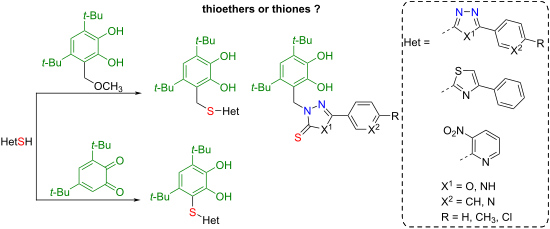
- of the electron-withdrawing nitro group. Some differences are observed in the electrochemical behavior of thiones 6–9 compared to thioethers 1–5. In the case of compounds 6–8 with a 1,3,4-oxadiazole-2-thione fragment, the oxidation potential of the first peak is shifted to the cathodic region




Electrochemical allylations in a deep eutectic solvent
Beilstein J. Org. Chem. 2024, 20, 2217–2224, doi:10.3762/bjoc.20.189
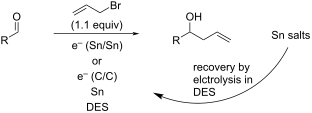
- product, although in this case, reduction of the nitro group to an amino group was observed and the resulting 4-aminobenzaldehyde is likely too electron-rich to undergo allylation. The use of other halides was also explored (Table 3). Switching to allyl chloride (Table 3, entry 2) did result in partial

O,S,Se-containing Biginelli products based on cyclic β-ketosulfone and their postfunctionalization
Beilstein J. Org. Chem. 2024, 20, 2143–2151, doi:10.3762/bjoc.20.184
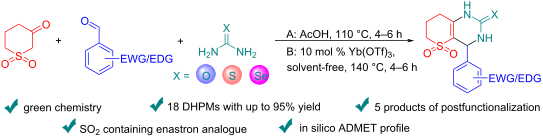
- derivatives 3–7 using SwissADME (http://www.swissadme.ch) [44], ProTox 3.0 (https://tox-new.charite.de) [45], and MolPredictX (https://www.molpredictx.ufpb.br) [46] free online software. Considering ADMET [47] and other crucial properties, we found that all compounds (except for the nitro derivative 2e) do



Multicomponent syntheses of pyrazoles via (3 + 2)-cyclocondensation and (3 + 2)-cycloaddition key steps
Beilstein J. Org. Chem. 2024, 20, 2024–2077, doi:10.3762/bjoc.20.178

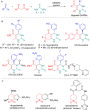
- process with hydrazine hydrate to give 3,5-substituted pyrazoles 136 (Scheme 47) [150]. Notably, nitro groups are reduced to amines due to the reductive conditions. Furthermore, neither aliphatic hydroxyiminoyl chlorides nor internal alkynes are competent substrates in this transformation. Palladium




Diastereoselective synthesis of highly substituted cyclohexanones and tetrahydrochromene-4-ones via conjugate addition of curcumins to arylidenemalonates
Beilstein J. Org. Chem. 2024, 20, 2016–2023, doi:10.3762/bjoc.20.177
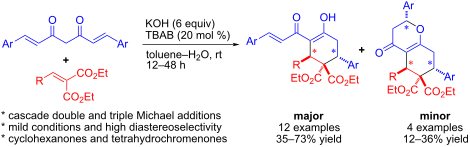
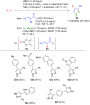
- (55–75%) with excellent diastereoselectivity (Table 2, entries 1–3). At the same time, the corresponding triple Michael adducts 4a–c were also formed as minor products (12–36%). There was no reaction with ortho-nitro-substituted arylidenemalonate 2d under the optimized conditions which is attributable


Allostreptopyrroles A–E, β-alkylpyrrole derivatives from an actinomycete Allostreptomyces sp. RD068384
Beilstein J. Org. Chem. 2024, 20, 1981–1987, doi:10.3762/bjoc.20.174
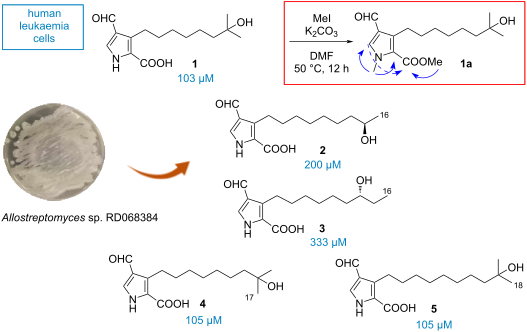
- 2-nitro congeners, nitropyrrolins [14] and heronapyrroles [15], bearing a farnesyl chain at the C4 position. Pyrroloterpenes are proposed to be of mixed biogenesis, elaborated from an aromatic pyrrole moiety and a terpenoid chain [15]. Prodigiosin, a major metabolite of Serratia, is another example


Electrochemical radical cation aza-Wacker cyclizations
Beilstein J. Org. Chem. 2024, 20, 1900–1905, doi:10.3762/bjoc.20.165
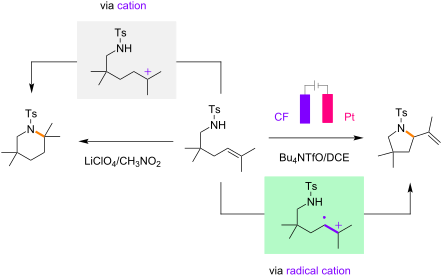
- compatible to give the respective five-membered pyrrolidines, except for that possessing a 2-nitro group 7. As discussed later with cyclic voltammetric studies, the electron density in the aryl rings does not seem to have a significant impact on the reaction. While benzyl sulfonamide 8 was productive under




Harnessing unprotected deactivated amines and arylglyoxals in the Ugi reaction for the synthesis of fused complex nitrogen heterocycles
Beilstein J. Org. Chem. 2024, 20, 1758–1766, doi:10.3762/bjoc.20.154
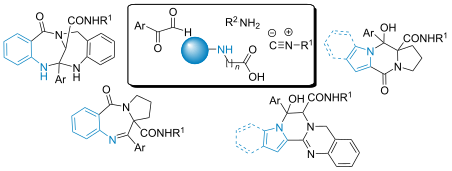
- chromatography column, while the more eco-friendly second strategy needs an additional stage for the reduction of the nitro group on the Ugi adduct. In order to find a more efficient synthesis, we thought that the second nitrogen in the diazepine nucleus could be incorporated without the need of surrogates or
- more complex systems, we explored post-condensation reactions on the 2-nitrobenzylamine and 3-bromopropylamine derivatives. Thus, we carried out the reduction of the nitro group on derivatives 5b and 5h employing tin(II) chloride and chlorhydric acid in boiling n-butanol (120 °C), conditions previously
- [29], through post-condensation reactions. Following the methodology previously described in our group [30], the reduction of the nitro group on indole and pyrrole derivatives 9f,g,l–o (Scheme 9, Table 5) employing tin(II) chloride under acidic conditions in boiling n-butanol (120 °C) afforded the


Electrocatalytic hydrogenation of cyanoarenes, nitroarenes, quinolines, and pyridines under mild conditions with a proton-exchange membrane reactor
Beilstein J. Org. Chem. 2024, 20, 1560–1571, doi:10.3762/bjoc.20.139
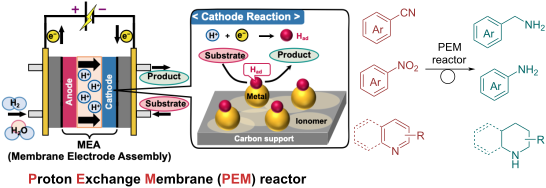
- compound 7r′, in which the benzene ring was hydrogenated. Substrates with chloro groups produced the dechlorinated products (7t and 7u). Unfortunately, during the electrolysis of quinolines with cyano (6v), formyl (6w and 6x), nitro (6y), and amino (6z) groups, the flow path was clogged probably due to the
- conditions, and the nitro group was selectively reduced. The addition of an acid was also effective in reducing quinolines to 1,2,3,4-tetrahydroquinolines. In the presence a catalytic amount of PTSA, various 1,2,3,4-tetrahydroquinolines were obtained. Although a stoichiometric amount of PTSA was required


Benzylic C(sp3)–H fluorination
Beilstein J. Org. Chem. 2024, 20, 1527–1547, doi:10.3762/bjoc.20.137

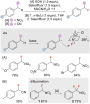
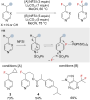
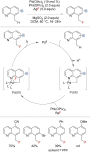
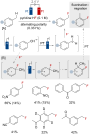
- have been used to effect the transformation of benzylic C(sp3)–H to C(sp3)–F bonds [22]. Shreeve and co-workers reported the use of KOH or n-BuLi to deprotonate acidic protons at benzylic positions adjacent to electron-withdrawing nitro or nitrile groups, respectively, generating benzylic anions that
- in good yield. The requirement of adjacent to nitro or nitrile groups limits the scope of this approach. Furthermore, the use of strong bases, particularly n-BuLi, prevents the application of this methodology on any substrate bearing sensitive functional groups. An analogous method for
- monofluorination of tertiary benzylic C(sp3)–H bonds adjacent to nitro groups was reported by Loghmani-Khouzani and co-workers in 2006, in which ammonium acetate and Selectfluor were employed under sonochemical conditions to effect the fluorination (Figure 3) [35]. The authors noted that the use of sonochemistry








Tetrabutylammonium iodide-catalyzed oxidative α-azidation of β-ketocarbonyl compounds using sodium azide
Beilstein J. Org. Chem. 2024, 20, 1510–1517, doi:10.3762/bjoc.20.135
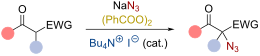
- observed intermediate formation of the α-iodinated β-ketoester 3 as well (vide supra), which suggests an analogous mechanistic scenario as for the azidation (compare with Scheme 3). However, it should also be stated that the α-nitro products 10 were found to be not too stable, undergoing some unspecific


Domino reactions of chromones with activated carbonyl compounds
Beilstein J. Org. Chem. 2024, 20, 1256–1269, doi:10.3762/bjoc.20.108
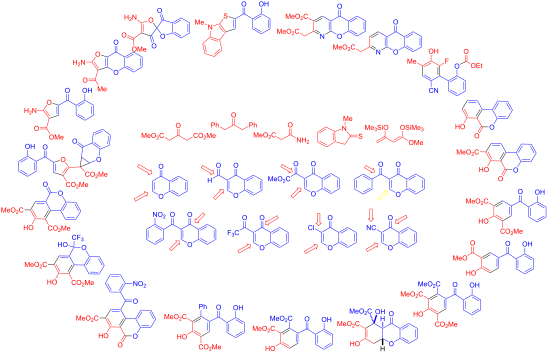
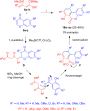
- (70 and 83%) were obtained for a 3-nitro- and a 3,5-dinitrophenyl group, presumably due to the electron-withdrawing character of the nitro groups and an enhanced electrophilicity. A moderate yield (49%) was obtained for the phenyl derivative. 1,3-Diphenylacetone Similarly, reaction of 1,3
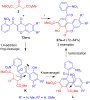
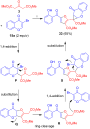
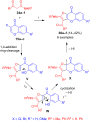
- yields (up to 74%) were obtained for products containing nitro groups. 3-(2-Nitrobenzoyl)chromones Dimethyl acetone-1,3-dicarboxylate A completely different result was obtained when chromones containing a 2-nitrobenzoyl group were employed. The reaction of dimethyl acetone-1,3-dicarboxylate (3) with 3-(2
- applications have been developed. In the future, it will be interesting also to study reactions of 3-nitrochromone with carbonyl compounds. In this context, biological properties of the products will be interesting, as the nitro group can be transformed to the biologically important amino group. Structures of









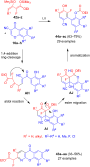
The Ugi4CR as effective tool to access promising anticancer isatin-based α-acetamide carboxamide oxindole hybrids
Beilstein J. Org. Chem. 2024, 20, 1213–1220, doi:10.3762/bjoc.20.104
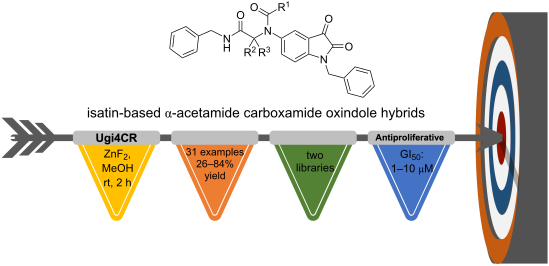
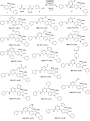
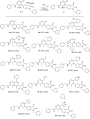
- structure–activity relationships derived from the GI50 values. The presence of a nitro group at the furan moiety enhanced the activity (8d > 8m). Presumably, the nitro group made 8d the most potent analogue bearing an aromatic amide (8c, 8e, 8g, 8i, 8l–n). For the aliphatic amides, the most potent




Bismuth(III) triflate: an economical and environmentally friendly catalyst for the Nazarov reaction
Beilstein J. Org. Chem. 2024, 20, 1167–1178, doi:10.3762/bjoc.20.99
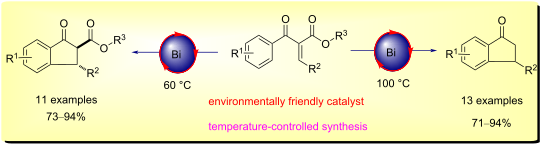
- ], Reformatsky reaction [65], azalactone synthesis [66], nitro reduction [67][68], epoxide rearrangement, thiourea guanylation, and others [69][70]. In this article, we describe a simple and direct protocol for the preparation of indanones through a classical Nazarov reaction catalyzed by bismuth(III) triflate


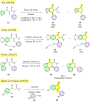


Manganese-catalyzed C–C and C–N bond formation with alcohols via borrowing hydrogen or hydrogen auto-transfer
Beilstein J. Org. Chem. 2024, 20, 1111–1166, doi:10.3762/bjoc.20.98
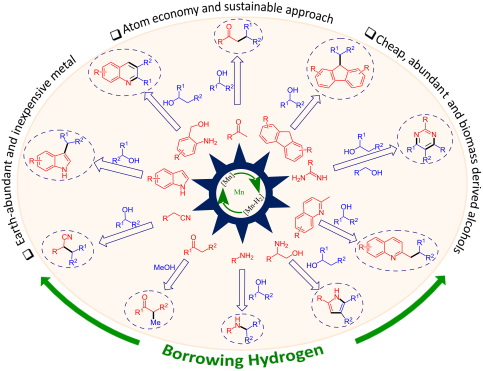
- , hydroaminomethylation, reduction of nitriles and nitro compounds or through reductive amination of carbonyl derivatives [26][27][28][29][30]. However, for example, cross-coupling reactions with alkyl or aryl halides generate considerable amounts of waste (Scheme 2A). Even though many different approaches exist for
- )phosphine ligand (PN3P) (Mn3) and studied N-methylation reactions in the presence of t-BuOK (20 mol %) at 120 °C for 24 h in toluene [36]. This catalytic system tolerated various functional groups, including nitro, ester, amide, and ketones and gave moderate to good yields (42–98%) of the mono-N-methylated
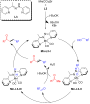
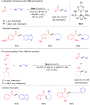
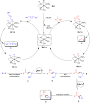
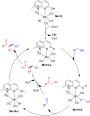
- moderate-to-high yields with aliphatic and aromatic alcohols (Scheme 18). In addition, this protocol allowed for the synthesis of indole through an intramolecular reaction and a resveratrol-derived amine. However, this catalytic method did not tolerate some functional groups such as nitro, ester, and























Mild and efficient synthesis and base-promoted rearrangement of novel isoxazolo[4,5-b]pyridines
Beilstein J. Org. Chem. 2024, 20, 1069–1075, doi:10.3762/bjoc.20.94
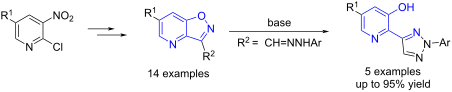
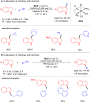
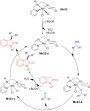
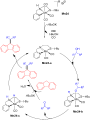
- the basis of readily available 2-chloro-3-nitropyridines via the intramolecular nucleophilic substitution of the nitro group as a key step. The previously unknown base-promoted Boulton–Katritzky rearrangement of isoxazolo[4,5-b]pyridine-3-carbaldehyde arylhydrazones into 3-hydroxy-2-(2-aryl[1,2,3
- ]triazol-4-yl)pyridines was observed. Keywords: aromatic nitro compounds; Boulton–Katritzky rearrangement; isoxazolo[4,5-b]pyridines; nucleophilic substitution; 1,2,3-triazoles; Introduction Nitrogen heterocycles represent a very important class of organic compounds that has found application in various
- isoxazolo[4,5-b]pyridine core synthesis have been summarized in a microreview [22]. Here, we wish to report an efficient method for the synthesis of isoxazolo[4,5-b]pyridines bearing electron-withdrawing groups (EWG) at positions 3 and 6 starting from readily available 2-chloro-3-nitro-6-R-pyridines as


Auxiliary strategy for the general and practical synthesis of diaryliodonium(III) salts with diverse organocarboxylate counterions
Beilstein J. Org. Chem. 2024, 20, 1020–1028, doi:10.3762/bjoc.20.90
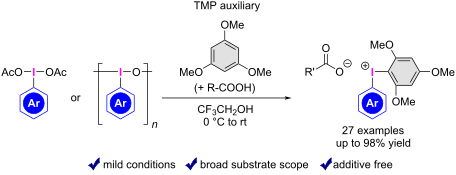
- prepared through the oxidation of iodoarenes with NaBO3·4H2O [34], AcOOH [35], mCPBA [36], and NaClO·5H2O [37] in the presence of acetic acid. The reaction of (diacetoxyiodo)arenes bearing electron-donating (methyl (1b), methoxy (1c), and phenyl (1d)) and electron-withdrawing (methyl ester (1e), nitro (1f


Carbonylative synthesis and functionalization of indoles
Beilstein J. Org. Chem. 2024, 20, 973–1000, doi:10.3762/bjoc.20.87
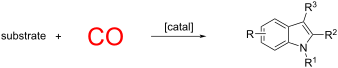
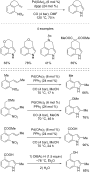
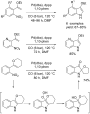
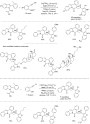
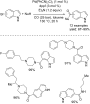
- reductive elimination and the generated Pd(0) species gets oxidated by the oxygen to the active Pd(II) species (Scheme 7). Synthesis of indoles by metal-catalyzed reductive cyclization reaction of organic nitro compounds with carbon monoxide as reductant In the last 60 years, the metal-catalyzed
- carbonylative reduction approach of organic nitro compounds has been used for the synthesis of important industrial and pharmaceutical compounds such as indoles. In 1986, Cenini et al. reported a new synthetic method for indoles that involved 2-nitrostyrene derivatives. The reaction took place under drastic
- byproducts (Scheme 10) [23]. Two years later they developed two Pd-catalyzed reductive N-heteroannulations for the synthesis of fused indoles [24] and indoles isolated from two species of European Basidiomycetes [25] starting from suitably functionalized nitro compounds. Both in the first case and in the












Enantioselective synthesis of β-aryl-γ-lactam derivatives via Heck–Matsuda desymmetrization of N-protected 2,5-dihydro-1H-pyrroles
Beilstein J. Org. Chem. 2024, 20, 940–949, doi:10.3762/bjoc.20.84
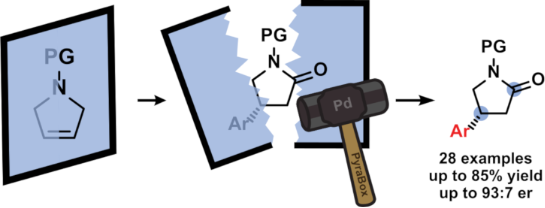
- 4bo (o-phenoxy and o-bromo group, respectively), the er dropped considerably. Finally, a strong electron-withdrawing group in the ortho position such as nitro (4bn) was met with a decrease in yield (66%), but with a higher er. During the development of the scope, the hemiaminal ethers (Heck–Matsuda




Ortho-ester-substituted diaryliodonium salts enabled regioselective arylocyclization of naphthols toward 3,4-benzocoumarins
Beilstein J. Org. Chem. 2024, 20, 841–851, doi:10.3762/bjoc.20.76
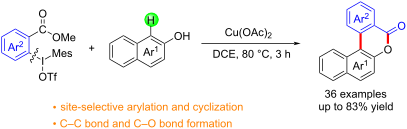
- explored the reactivity of ortho-functionalized diaryliodonium salts containing electron-withdrawing groups (EWGs) such as fluorine and nitro groups [29][30]. These ortho-substituted diaryliodonium salts undergo selective benzocyclizations and arylocyclizations with aromatic acids, leading to 3,4
- group (such as a nitro group) in the para position was reacted, the corresponding product could not be obtained, but instead the O-arylated product 3at was obtained (Table 2, entry 19). Apart from naphthol, we also tested substituted phenols under the standard conditions. The corresponding products of





