


Search results
Search for "oxazoline" in Full Text gives 107 result(s) in Beilstein Journal of Organic Chemistry.
Fluorocyclisation via I(I)/I(III) catalysis: a concise route to fluorinated oxazolines
Beilstein J. Org. Chem. 2018, 14, 1021–1027, doi:10.3762/bjoc.14.88
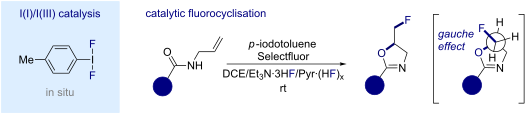
- -ray crystallographic analysis of a representative example. Given the importance of fluorine in drug discovery, its ability to modulate conformation, and the prevalence of the 2-oxazoline scaffold in Nature, this strategy provides a rapid entry into an important bioisostere class. Keywords: catalysis
- ; cyclisation; fluorination; gauche effect; hypervalent iodine; oxazolines; Introduction Marine and terrestrial natural product bioprospecting has established a broad spectrum of structurally complex, bioactive metabolites containing the venerable 2-oxazoline unit [1][2]. This diversity is exemplified by the
- siderophore antibiotic D-fluviabactin, the cytotoxic agent westiellamide, the antifungal macrodiolide leupyrrin A1 and the antitumour compound BE-70016 (Figure 1). In addition, synthetic polymers based on the 2-oxazoline building block constitute versatile platforms for a range of biomedical applications


Nanoreactors for green catalysis
Beilstein J. Org. Chem. 2018, 14, 716–733, doi:10.3762/bjoc.14.61
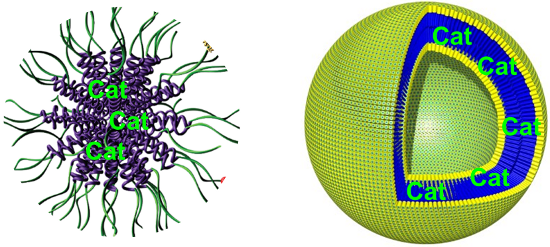
- synthesis of dendrimers and their applications as nanoreactors and catalyst carriers have been extensively studied over the last decades [94][95][96]. Fan and co-workers incorporated a bis(oxazoline)-copper(II) complex in the hydrophobic core of a polyether dendrimer [11]. The copper catalytic complex was


Heterogeneous Pd catalysts as emulsifiers in Pickering emulsions for integrated multistep synthesis in flow chemistry
Beilstein J. Org. Chem. 2018, 14, 648–658, doi:10.3762/bjoc.14.52
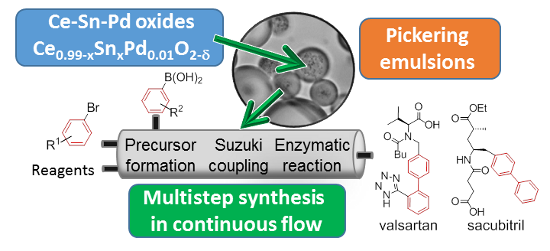
- palladium by ligands which are covalently bound to the support material [12]. One example of such a catalyst was reported by our group using a bis(oxazoline) ligand bonded to 3-mercaptopropyl-functionalised silica [20]. Alternatively, the use of unsupported Pd nanoparticles or encapsulated Pd complexes are





Synthetic and semi-synthetic approaches to unprotected N-glycan oxazolines
Beilstein J. Org. Chem. 2018, 14, 416–429, doi:10.3762/bjoc.14.30
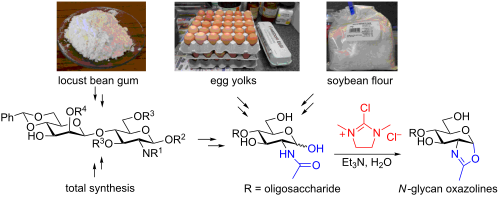
- chloride (DMC), and related reagents, which can direct convert an oligosaccharide with a 2-acetamido sugar at the reducing terminus directly into the corresponding oxazoline in water. Therefore, oxazoline formation can now be achieved in water as the final step of any synthetic sequence, obviating the need
- these materials, in concert with DMC-mediated oxazoline formation as a final step, allow access to a selection of N-glycan oxazoline structures both in larger quantities and in a more expedient fashion than is achievable by total synthesis. Keywords: DMC, ENGase; glycosyl oxazolines; N-glycans
- ] (ENGases, EC 3.2.1.96), a class of enzyme which specifically cleave between the innermost two GlcNAc residues of N-glycans attached to N-linked glycoproteins, all operate via a two-step mechanism involving neighbouring group participation of the 2-acetamide group and an oxazoline as a high energy




Fluorination of some highly functionalized cycloalkanes: chemoselectivity and substrate dependence
Beilstein J. Org. Chem. 2017, 13, 2364–2371, doi:10.3762/bjoc.13.233
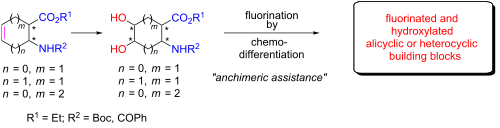
- treatment of dihydroxylated amino acid ester (±)-1 with 1.5 equiv of Deoxofluor after 70 min afforded through intramolecular cyclization a compound which was identified on the basis of 2D NMR analysis as oxazoline derivative (±)-2 as the sole product in 71% yield. When the same reaction was carried out in
- amide O-atom. Increasing the amount of Deoxofluor to 4 equiv resulted in the exclusive formation of the fluorine-containing oxazoline derivative (±)-3. Note that the addition of DBU did not have a significant effect on this reaction. When isolated hydroxyoxazoline (±)-2 is subjected to the fluorination
- , namely oxazoline derivative (±)-21 (Scheme 10). This is in high contrast to the transformation of (±)-14 (Scheme 7). Interestingly, when (±)-20 is treated with Deoxofluor in excess, again, differently from its all-cis counterpart (±)-14, two fluorinated oxazolines in nearly 1:1 ratio are obtained: (±)-22


Iodoarene-catalyzed cyclizations of N-propargylamides and β-amidoketones: synthesis of 2-oxazolines
Beilstein J. Org. Chem. 2017, 13, 1823–1827, doi:10.3762/bjoc.13.177
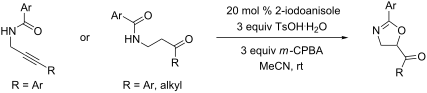
- [32][33][34][35][36]. Gao and co-workers described the I2-catalyzed cyclization of β-acylaminoketones using tert-butyl hydroperoxide as the oxidant; notably, adding DBU led to oxazole formation whereas adding K2CO3 generated oxazolines [37][38]. Our proposed new approaches to oxazoline formation
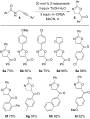
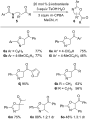
- 2-oxazoline formation through the iodoarene-catalyzed cyclization of β-amidoketones 5. These are readily prepared by alkylation of the corresponding β-ketoester followed by decarboxylation (Scheme 4) [40][41]. The cyclization of β-amidoketones 5 was successful with the same conditions as
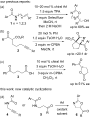
- could be improved to 5:1 by substituting p-toluenesulfonic acid with trifluoroacetic acid albeit with a loss of yield. When the p-nitrophenylamide 5p was subjected to the reaction conditions, the expected oxazoline 6p was not observed (Scheme 6). Instead, alcohol 8 was isolated in 66% yield. Presumably






Strategies toward protecting group-free glycosylation through selective activation of the anomeric center
Beilstein J. Org. Chem. 2017, 13, 1239–1279, doi:10.3762/bjoc.13.123

- ]. The two most successful saccharide donors to date are 1-fluoroglycosides or oxazoline derivatives (Scheme 2). In addition to the aforementioned enzymes, thioglycoligases and thioglycosynthases have also been developed for the synthesis of thioglycosides as reviewed by Withers et al. [12]. An elegant
- ligation of an oxazoline donor and commercially available RNase B protein (with the glycans curtailed to a single GlcNAc moiety [17]) as the acceptor [16]. The beauty of this work extends beyond the enzymatic glycosylation reaction. We point out that the oxazoline functionality was installed chemically in
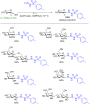
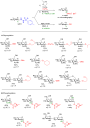
- 1,6-anhydrosugars: The treatment of a 2-deoxy-2-N-acetylated sugar with DMC and an amine base in the absence of any nucleophile provides the observable (by 1H NMR) or even isolatable (LacNAc) corresponding oxazoline derivative in moderate to very good yield (Scheme 21, pathway A) [68][69]. It is




Correction: Inherently chiral calix[4]arenes via oxazoline directed ortholithiation: synthesis and probe of chiral space
Beilstein J. Org. Chem. 2017, 13, 347–347, doi:10.3762/bjoc.13.38
- Simon A. Herbert Laura J. van Laeren Dominic C. Castell Gareth E. Arnott Department of Chemistry and Polymer Science, Stellenbosch University, Private Bag X1, Matieland 7602, South Africa 10.3762/bjoc.13.38 Keywords: calix[4]arene; inherently chiral; ortholithiation; oxazoline; Tsuji–Trost; In
Chromium(II)-catalyzed enantioselective arylation of ketones
Beilstein J. Org. Chem. 2016, 12, 2771–2775, doi:10.3762/bjoc.12.275
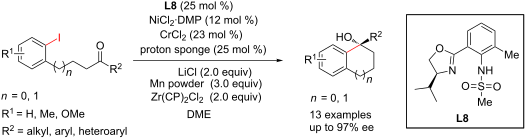
- asymmetric addition to ketones remains a big challenge probably due to the decreased reactivity and selectivity [36][37]. A breakthrough was made by the Sigman group who reported the catalytic enantioselective addition of allylic bromides and propargyl halides to arylaliphatic ketones using oxazoline ligands
- ) was selected as the model reaction for optimization employing Kishi’s oxazoline/sulfonamides as the chiral ligands. A series of oxazoline/sulfonamide ligands (L1–L8) were tested and the results were summarized in Table 1. Four subgroups of R1 were studied (entries 1–4, Table 1) and isopropyl
- substituted oxazoline proved to be the best ligand with a 42% ee. Afterwards, R2 (Table 1, entries 2, 5 and 6) and R3 (Table 1, entries 6–8) substituents were also examined, and L8 bearing a methyl group in both R2 and R3 gave the best enantiocontrol. The solvent effect was then investigated, and 1,2

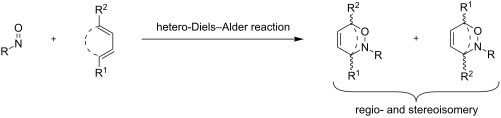
Stereo- and regioselectivity of the hetero-Diels–Alder reaction of nitroso derivatives with conjugated dienes
Beilstein J. Org. Chem. 2016, 12, 1949–1980, doi:10.3762/bjoc.12.184
- -ethyl-2-oxazoline in methanol [69]. Additionally, acylnitroso compounds can be generated by the rearrangement of diazonitroalkanes 26 [70], the photochemical cleavage of 1,2,4-oxadiazole-4-oxides 25 [71] and the cycloreversion of 9,10-dimethylantracene adducts 27 (Scheme 7) [72][73]. Dienes: There is a
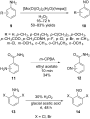
- ). Recent research of the Whiting group revealed a wide spectrum of results on the reactions of hydroxamic acid analogues 35 with various dienes 37 using the copper/oxazoline/air catalytic system (Scheme 10) [69]. Conclusions of an experimental as well as a computational approach to understanding the
- reactions of acylnitroso compounds in [4 + 2] cycloadditions indicate several facts. The copper–oxazoline complex behaves as an excellent catalyst for the aerobic oxidation of acylhydroxamic acids. However, this system is useful only for hydroxamic acids containing a heteroatom between the aryl and carbonyl




Biosynthesis of oxygen and nitrogen-containing heterocycles in polyketides
Beilstein J. Org. Chem. 2016, 12, 1512–1550, doi:10.3762/bjoc.12.148




Conjugate addition–enantioselective protonation reactions
Beilstein J. Org. Chem. 2016, 12, 1203–1228, doi:10.3762/bjoc.12.116
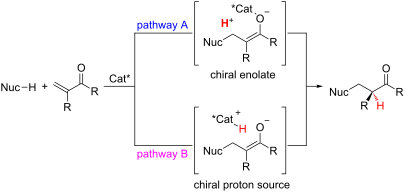
- (Scheme 2) [15][16][17]. A Mg-(bis)oxazoline complex serves as both a Lewis acid for the activation of α-substituted acrylates 6 towards radical addition and as a chiral template for an enantioselective hydrogen atom transfer from Bu3SnH to the α-ester radical intermediate. The authors found that the
- stoichiometric chiral Mg-(bis)oxazoline complex was required to achieve high enantioselectivity. Higher enantioselectivity was generally observed for reactions using secondary or tertiary alkyl halides. When performing radical conjugate additons to give 2-hydroxymethyl esters 7c, the authors observed a complete


NeoPHOX – a structurally tunable ligand system for asymmetric catalysis
Beilstein J. Org. Chem. 2016, 12, 1185–1195, doi:10.3762/bjoc.12.114
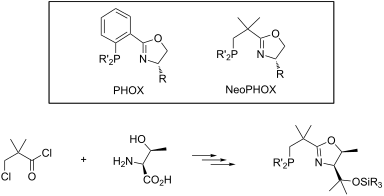
- intermediate is a NeoPHOX derivative bearing a methoxycarbonyl group at the stereogenic center next to the oxazoline N atom. The addition of methylmagnesium chloride leads to a tertiary alcohol, which can be acylated or silylated to produce NeoPHOX ligands with different sterical demand. The new NeoPHOX
- efficiency and excellent enantioselectivity. Among the many oxazoline-derived ligands that have been reported in the literature, SimplePHOX [17] and ThrePHOX [18] have emerged as some of the most versatile and most easily accessible ligand classes. However, although iridium complexes derived from these
- state-of-the-art oxazoline-based ligands is the high cost of tert-leucinol as starting material, which reduces their potential for industrial-scale application. We therefore thought of ways to replace the tert-butyloxazoline ring by an equally effective oxazoline unit derived from a less expensive


Catalytic asymmetric synthesis of biologically important 3-hydroxyoxindoles: an update
Beilstein J. Org. Chem. 2016, 12, 1000–1039, doi:10.3762/bjoc.12.98
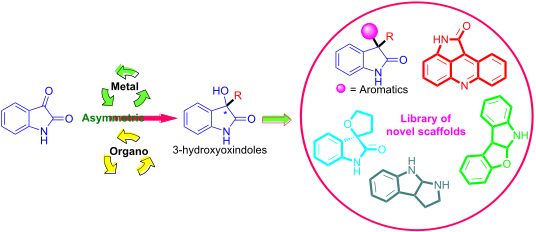
- allylated product in 93% yield and 72% ee value when cat. 2 was used (Scheme 2). Kesavan and co-workers described that the Pd/bis(oxazoline) (L1) complex can catalyze the asymmetric allylation of 3-O-Boc-oxindole, yielding the 3-allyl-3-hydroxyoxindoles in good yields (up to 93% yield) and with high
- the Cu(OTf)2 as the catalyst (10 mol %) and a fluorinated bis(oxazoline) L2 as the ligand (10 mol %), affording the products in moderate yields (up to 66% yield) and with good to excellent enantioselectivities (up to 92% ee). Interestingly, the fluorinated bis(oxazoline) L2 can be recovered and reused




Enantioselective carbenoid insertion into C(sp3)–H bonds
Beilstein J. Org. Chem. 2016, 12, 882–902, doi:10.3762/bjoc.12.87
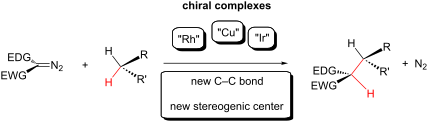
- (sp3)–H bond has gained special attention, as in the works of Muler and Boléa [9], Flynn [10], Stattery [11] and their respective co-workers. The most selective copper carbenoids are those generated from chiral bis(oxazoline) ligands in the presence of copper(I) triflate (CuOTf) (Figure 3). The rhodium
- transformation was regio and stereoselective where the main product was trans-γ-lactam (56). The chiral rhodium complexes (S)-17, (S)-18 and (S)-23 were also evaluated and yielded similar regio- and diastereoselectivity, however, with lower enantioselectivity when compared to the bis(oxazoline)/CuCl2/NaBARF
- carbene, triplet carbene and carbenoids. Classification of the carbenoid intermediates by the electronic nature of the groups attached to the divalent carbene carbon. Chiral bis(oxazoline) ligands used in enantioselective copper carbenoid insertion. Chemical structures of complexes (R)-18 and (S)-18


Synthesis and in vitro cytotoxicity of acetylated 3-fluoro, 4-fluoro and 3,4-difluoro analogs of D-glucosamine and D-galactosamine
Beilstein J. Org. Chem. 2016, 12, 750–759, doi:10.3762/bjoc.12.75
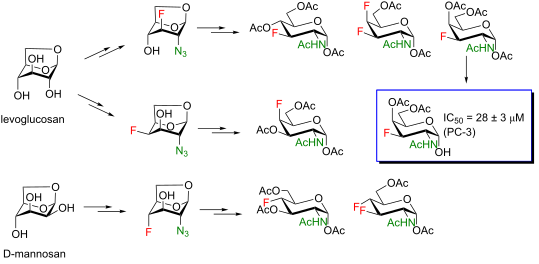
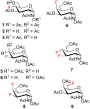
- acetal with acetic anhydride gave a mixture containing 1,2-oxazoline 41 as the main product (Scheme 5). The structure of oxazoline 41 was confirmed by single crystal X-ray diffraction analysis which also confirmed the retention of configuration during the preceding fluorine introduction. To prevent
- oxazoline formation, the order of reactions was reversed, and triethylsilyl triflate (TESOTf)-catalyzed [58] acetolysis of the 1,6-anhydro bridge in 19 gave 42 (Table 1) as a mixture of anomers from which the α-anomer crystallized. TESOTf as a catalyst for acetolysis gave better results than sulfuric acid
- 8, and oxazoline 41 was therefore tested for 24 h on the human prostate cancer PC-3 cell line, and human ovarian cancer A2780 cell line using the MTT assay, and the obtained IC50 values were compared with those obtained for cisplatin and 5-fluorouracil. All of the tested compounds induced only



Antibiotics from predatory bacteria
Beilstein J. Org. Chem. 2016, 12, 594–607, doi:10.3762/bjoc.12.58
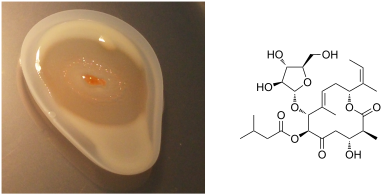
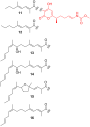
- possess antioxidative properties and might thus confer resistance towards oxidative stress [63]. Structurally, the DKxanthenes harbor a hydrophilic asparagine moiety attached to a hydrophobic polyene chain bearing an additional oxazoline and pyrrol ring system. Their production seems to be universal among




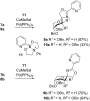
Spiro-fused carbohydrate oxazoline ligands: Synthesis and application as enantio-discrimination agents in asymmetric allylic alkylation
Beilstein J. Org. Chem. 2016, 12, 166–171, doi:10.3762/bjoc.12.18
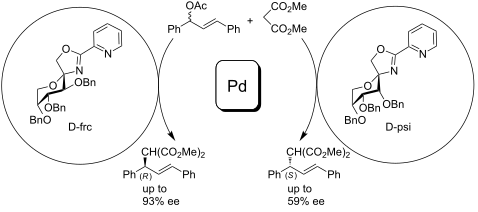
- present work, we describe a convenient synthesis of spiro-fused D-fructo- and D-psico-configurated oxazoline ligands and their application in asymmetric catalysis. The ligands were synthesized from readily available 3,4,5-tri-O-benzyl-1,2-O-isopropylidene-β-D-fructopyranose and 3,4,5-tri-O-benzyl-1,2-O
- benzylation, fully characterized and subjected to palladium catalyzed Suzuki–Miyaura coupling with 2-pyridineboronic acid N-phenyldiethanolamine ester to give the corresponding 2-pyridyl spiro-oxazoline (PyOx) ligands. The spiro-oxazoline ligands showed high asymmetric induction (up to 93% ee) when applied as
- for metal-catalyzed asymmetric syntheses [16] we recently described the preparation of spiro-fused oxazoline ligands of type C from D-fructose [17]. We could demonstrate that our oxazoline ligands, in contrast to A, were able to form air and moisture-stable palladium complexes of type D upon reaction




Enantioselective additions of copper acetylides to cyclic iminium and oxocarbenium ions
Beilstein J. Org. Chem. 2015, 11, 2696–2706, doi:10.3762/bjoc.11.290
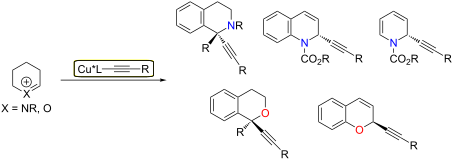
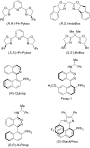
- , highlighting both the accomplishments and the future work needed in this important area. Throughout the discussion below, it is clear that there are privileged ligand architectures of these copper-catalyzed alkynylations. High enantioselectivities have been achieved with pyridine bis(oxazoline) (Pybox), bis
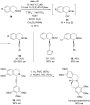
- (oxazoline) (Box), and Quinap-type ligands (Figure 1). Review Additions to iminium ions Although this review will focus on enantioselective additions to cyclic electrophiles, it is worth noting that the first enantioselective additions of chiral copper acetylides to imines or iminium ions utilized acyclic





Recent advances in copper-catalyzed asymmetric coupling reactions
Beilstein J. Org. Chem. 2015, 11, 2600–2615, doi:10.3762/bjoc.11.280
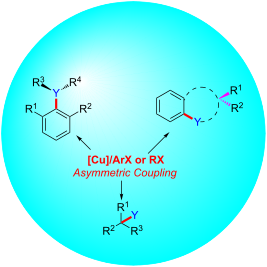
- of trans-4,5,9,10-tetrahydroxy-9,10-dihydrophenanthrene at room temperature (Scheme 4). In 1994, Meyers and Nelson [23][24] developed a copper-mediated asymmetric biaryl coupling with oxazoline as the chiral auxiliary to afford the biaryl-coupling products in high diastereomeric purity (dr = 93:7
- )hexopyranose derivatives. Preparation of 3,3’-disubstituted MeO-BIPHEP derivatives. Enantioselective synthesis of trans-4,5,9,10-tetrahydroxy-9,10-dihydrophenanthrene. Copper-catalyzed coupling of oxazoline-substituted aromatics to afford biaryl products with high diastereomeric purity. Total synthesis of O


Synthesis of D-fructose-derived spirocyclic 2-substituted-2-oxazoline ribosides
Beilstein J. Org. Chem. 2015, 11, 2289–2296, doi:10.3762/bjoc.11.249
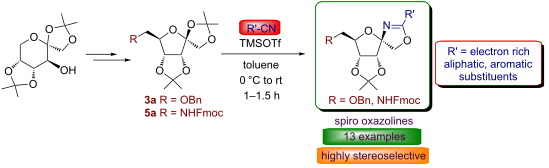
- Madhuri Vangala Ganesh P. Shinde Department of Chemistry, Indian Institute of Science Education and Research, Pune 411 008, India 10.3762/bjoc.11.249 Abstract The TMSOTf-mediated synthesis of β-configured spirocyclic 2-substituted-2-oxazoline ribosides was achieved using a “Ritter-like” reaction
- spirooxazolines are stable and were obtained in good yield with high stereoselectivity due to the conformational rigidity imparted by the 3,4-isopropylidene group. Keywords: fructose; oxazoline; riboside; Ritter reaction; spiro; Introduction 2-Oxazolines represent a unique class of 5-membered heterocyclic
- compounds with a wide range of applications spanning different chemistry disciplines. 2-Oxazoline derivatives are extensively studied due to their presence in numerous bioactive natural products [1][2][3] and synthetic drugs with anticancer, antibiotic, antidiabetic, and antifungal properties (Figure 1, 1–4


Recent advances in copper-catalyzed C–H bond amidation
Beilstein J. Org. Chem. 2015, 11, 2209–2222, doi:10.3762/bjoc.11.240

- or secondary sulfonamides 15 with the assistance of 1,10-phenanthroline as a ligand (Scheme 3). Notably, the asymmetric version of a similar amidation had been previously achieved by Clark et al. via copper catalysis in the presence of a chiral oxazoline ligand, which allowed the synthesis of
- alkene substrates were systematically investigated by Chemler and co-workers. For example, they [67] developed the copper-catalyzed protocol for the sulfonamidation reaction of alkenes 68 via direct C–H activation to provide N-vinylsufonamides 69 in the presence of an oxazoline ligand. On the other hand




Recent applications of ring-rearrangement metathesis in organic synthesis
Beilstein J. Org. Chem. 2015, 11, 1833–1864, doi:10.3762/bjoc.11.199
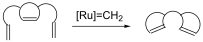
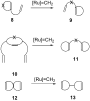
- , heteroaryl, and alkyl, etc. to produce α,β-unsaturated acylimidazolidinones 215. Next, the Evan’s asymmetric DA methodology involving a [4 + 2] cycloaddition of chiral bis(oxazoline) in the presence of Cu(OTf)2 was employed to furnish the required norbornene system 216. Later, it was converted into a lactam




Synthesis of racemic and chiral BEDT-TTF derivatives possessing hydroxy groups and their achiral and chiral charge transfer complexes
Beilstein J. Org. Chem. 2015, 11, 1561–1569, doi:10.3762/bjoc.11.172
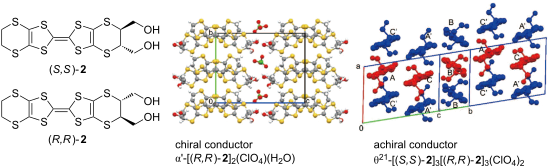
- -TTF (2), TTF (3), BEDT-TTF (4), EDT-TTF-methyl-oxazoline 5, and trans-dimethyl-EDT-TTF (6). (a) Crystal structure, (b) θ21-type donor arrangement of molecules A and A’ [(S,S) and (R,R)-2 indicated by red and blue with charge of +0.59(8)], B and B’ [(R,R) and (S,S)-2, blue and red with +0.23(7)], and C


New palladium–oxazoline complexes: Synthesis and evaluation of the optical properties and the catalytic power during the oxidation of textile dyes
Beilstein J. Org. Chem. 2015, 11, 1175–1186, doi:10.3762/bjoc.11.132
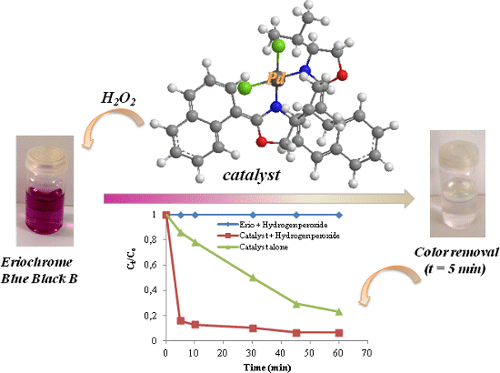
- University of Versailles Saint-Quentin-en-Yvelines, Institut Lavoisier de Versailles, UMR CNRS 8180, 45, avenue des Etats-Unis, 78035 Versailles, France 10.3762/bjoc.11.132 Abstract The present paper describes the synthesis of new palladium–oxazoline complexes in one step with good to high yields (68–95
- used for the total synthesis of natural products and nanocompounds [5]. It is only since 1986 that oxazoline-based ligands have been utilized in asymmetric catalysis. This initiated considerable research activity in this field and triggered the synthesis of numerous chiral ligands containing at least
- one oxazoline ring [6]. Oxazoline units are expected to readily coordinate to a metal center and have been shown to bind a wide range of transition metals [7]. The wide variety of ligands with one or more oxazoline rings incorporating different heteroatoms, additional chiral groups, and specific





