


Search results
Search for "quenching" in Full Text gives 421 result(s) in Beilstein Journal of Organic Chemistry. Showing first 200.
Synthesis and characterization of 1,2,3,4-naphthalene and anthracene diimides
Beilstein J. Org. Chem. 2024, 20, 1767–1772, doi:10.3762/bjoc.20.155
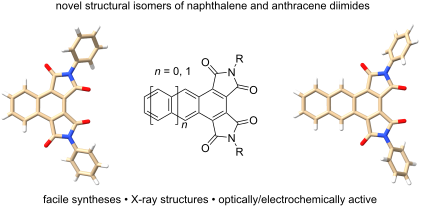
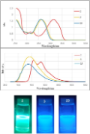
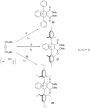
- has low fluorescence intensity (Φ = 0.006) [20], 7-Hex emits more efficiently with Φ = 0.41. Interestingly, 7-Ph has nearly no emission intensity, as evidenced by the low signal-to-noise ratio in the data and a near-zero quantum yield when excited at 400 nm. This fluorescence quenching is likely


Chemo-enzymatic total synthesis: current approaches toward the integration of chemical and enzymatic transformations
Beilstein J. Org. Chem. 2024, 20, 1693–1712, doi:10.3762/bjoc.20.151
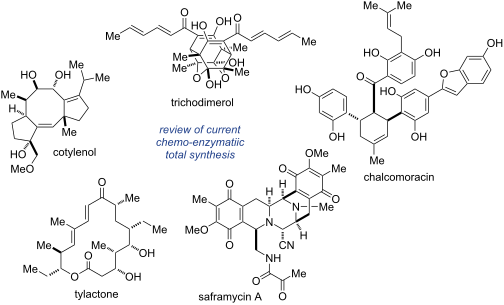
- recombinant SorbC enantioselectively introduced a hydroxy group to generate the reactive intermediate (S)-34 [34]. Cyclohexadienone (S)-34 was relatively stable in aqueous reaction solvents, however, quenching the enzymatic reaction by the addition of organic solvents led to homo-dimerization. Based on these




Generation of alkyl and acyl radicals by visible-light photoredox catalysis: direct activation of C–O bonds in organic transformations
Beilstein J. Org. Chem. 2024, 20, 1348–1375, doi:10.3762/bjoc.20.119
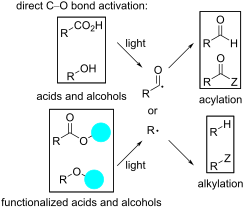
- was applicable to various carboxylic acids with electron-donating as well as electron-withdrawing substituents but unfortunately, aliphatic acids were not effective in this reaction. In addition, several control experiments, such as fluorescence quenching and Stern–Volmer studies, were done to analyze
- the SET transfer process of PPh3 and quenching of photoexcited *[Ir(dF(CF3)ppy)2(bpy)]PF6 by PPh3. Fluorinated organic compounds are widely used in pharmaceuticals and pesticides. Therefore, it is crucial to diversify organic scaffolds by addition of fluorinated groups or by defluorination. In 2020








Mechanistic investigations of polyaza[7]helicene in photoredox and energy transfer catalysis
Beilstein J. Org. Chem. 2024, 20, 1236–1245, doi:10.3762/bjoc.20.106
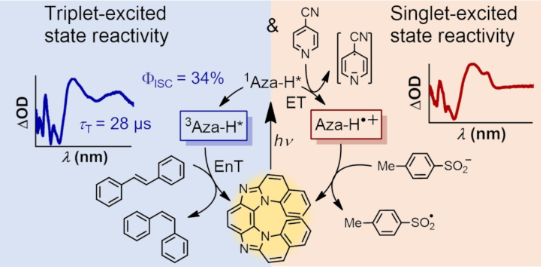
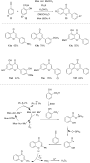
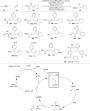
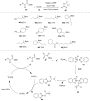
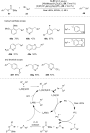
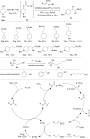
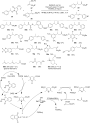
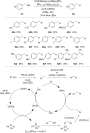
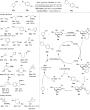
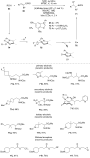
- ][13][14][15]. Most of the established organic catalysts (acridinium salts [16][17][18][19], cyanoarenes [8][20][21][22], quinones [23][24], etc.) [10][25] are cationic or electron-deficient and tend to act as excited state oxidants in a reductive quenching cycle. Only recently, more reducing catalyst
- , yielding clear-cut evidence for the proposed reaction mechanism [47][48][49][50][51][52][53][54][55][56][57]. We found that quenching of the singlet-excited Aza-H by 4-cyanopyridine is the main pathway for the 3-CR, while the triplet state of our catalyst, which is formed with a quantum yield as high as
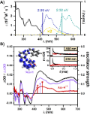
- potentials of Aza-H and the substrates and initial steady-state fluorescence quenching experiments (Scheme 1, left), but detailed mechanistic insights and direct evidence of the transient radical ions could not be obtained yet [45]. Figure 1A illustrates the absorption and emission spectra of Aza-H in MeCN




Kinetically stabilized 1,3-diarylisobenzofurans and the possibility of preparing large, persistent isoacenofurans with unusually small HOMO–LUMO gaps
Beilstein J. Org. Chem. 2024, 20, 1099–1110, doi:10.3762/bjoc.20.97
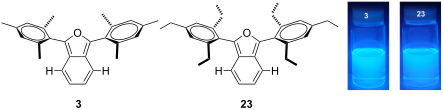
- . We previously studied substituent effects in acenes and reported that several substituents promote photooxidative resistance in pentacenes [5] and larger acenes including heptacene [6] and nonacene [7]. One or more substituents that promote photooxidative resistance by quenching singlet oxygen could






Synthesis of 1,4-azaphosphinine nucleosides and evaluation as inhibitors of human cytidine deaminase and APOBEC3A
Beilstein J. Org. Chem. 2024, 20, 1088–1098, doi:10.3762/bjoc.20.96
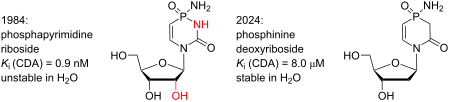
- dichlorophosphane 9 from commercially available PCl3 and ethyl vinyl ether using a previously published procedure [68]. Compound 9 reacted with 1 equiv of benzyl alcohol in absolute Et2O and pyridine at −78 °C, followed by quenching of the reaction mixture with H2O. This procedure provided phosphinate 10 in more


Advancements in hydrochlorination of alkenes
Beilstein J. Org. Chem. 2024, 20, 787–814, doi:10.3762/bjoc.20.72
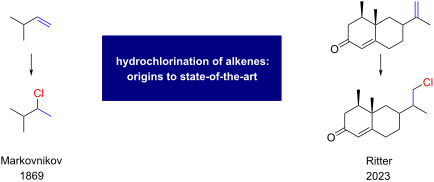
- state thereof, denoted with an asterisk, possessing a reduction potential of 2.0 V versus SCE (saturated calomel electrode). Subsequently, this excited state undergoes quenching through photoinduced electron transfer (PET) with styrene 5. The resulting vinyl radical cation exhibits electrophilicity at






Synthesis and characterization of water-soluble C60–peptide conjugates
Beilstein J. Org. Chem. 2024, 20, 777–786, doi:10.3762/bjoc.20.71
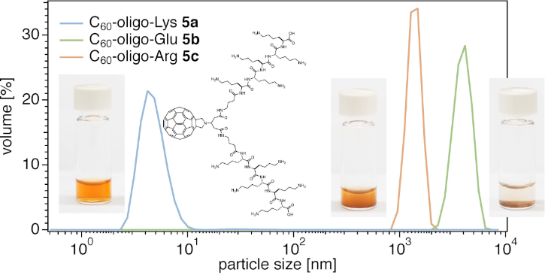
- photodynamic therapy photosensitizers (PDT PSs) [41] and magnetic resonance imaging contrast agents (MRI CAs) [42], which are the most relevant topics in fullerene biological studies. Aggregated fullerenes in the micelle structure may cause self-quenching of the excited state of PS fullerenes or may inhibit




SOMOphilic alkyne vs radical-polar crossover approaches: The full story of the azido-alkynylation of alkenes
Beilstein J. Org. Chem. 2024, 20, 701–713, doi:10.3762/bjoc.20.64
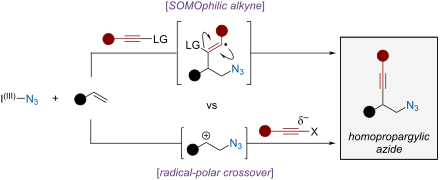
- since the formation of a stabilized carbocation might be required for the reaction to occur. Xu [41] and Molander [42] previously reported the quenching of similar cationic species by alkynyl-BF3K salts. Boronate 5a was therefore selected as nucleophilic alkyne. Gratifyingly, using Cu(dap)2Cl in DCE


Switchable molecular tweezers: design and applications
Beilstein J. Org. Chem. 2024, 20, 504–539, doi:10.3762/bjoc.20.45

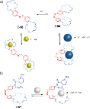
- the two metallic centers in the tweezers cavity in a bridging mode. For the heterometallic Zn/Au system, luminescence quenching was observed in the closed state. The pyridine-hydrazine-pyridine unit has been extensively studied by Lehn and co-workers in coordination-responsive supramolecular polymers
- reversibly reopened by the addition of TREN as a competitive ligand. The authors reported a slight luminescence quenching in the zinc-closed state with a decrease in the quantum yield from 0.27 to 0.21. However, Hg2+ presented a special behavior with the formation of a 2:1 complex, the closing of the
- tweezers by the first equivalent generating an allosteric binding site specific to a second Hg2+ ion. While the addition of one equivalent of Hg2+ decreased the quantum yield to 0.09, the formation of a bis-coordinated [tweezers-Hg2]4+ complex resulted in a total luminescence quenching (quantum yield <10−3




Mechanisms for radical reactions initiating from N-hydroxyphthalimide esters
Beilstein J. Org. Chem. 2024, 20, 346–378, doi:10.3762/bjoc.20.35
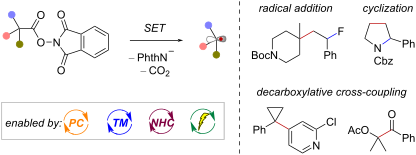
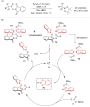
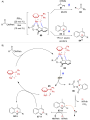
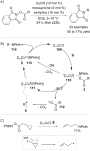
- absorption of light, an excited photocatalyst (*PC) engages in single-electron transfer (SET) with either donor (D) or acceptor (A) molecules (Scheme 3) [8][36]. Accordingly, a reductive quenching mechanism (path a) will operate when an excited photocatalyst effects the one-electron oxidation of a
- sacrificial donor giving rise to a strongly reducing catalytic species (PCn−1). On the other hand, in an oxidative quenching mechanism (path b) the excited photocatalyst directly induces the one-electron reduction of an acceptor substrate. Alternatively, the photocatalyst can mediate the formation of an
- specific activation mechanism, both net reductive and redox neutral transformations can be implemented. Photocatalytic reductive quenching mechanism Among the most common reactions of NHPI esters are radical additions to electron-deficient olefins under net-reductive conditions, often referred to as Giese






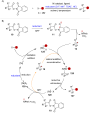
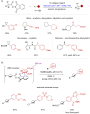


Synthesis of π-conjugated polycyclic compounds by late-stage extrusion of chalcogen fragments
Beilstein J. Org. Chem. 2024, 20, 287–305, doi:10.3762/bjoc.20.30
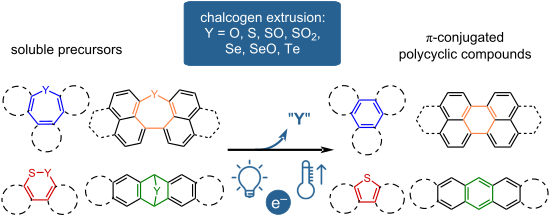
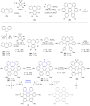
- reducing agent, O-extrusion takes place with concomitant ring contraction to give the corresponding PBI 6f, isolated in 63% yield after oxidative quenching and work-up. Contrary to photo- or thermal activation, it is important to note that the mechanism for O-extrusion involves in this case the dianion of




Photochromic derivatives of indigo: historical overview of development, challenges and applications
Beilstein J. Org. Chem. 2024, 20, 228–242, doi:10.3762/bjoc.20.23
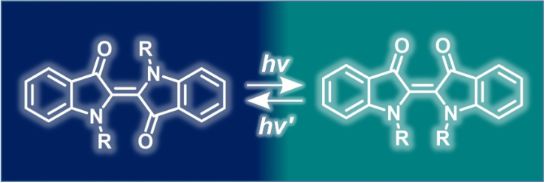
- be assigned to a triplet state was also observed for rigid molecules 10 and 16, based on the quenching experiments and the fact that the same transient species could be found under sensitized conditions. Further insight in the excited state properties of derivatives 9a, 9d, 9g, 9h and N,N





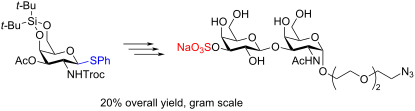
Synthesis of the 3’-O-sulfated TF antigen with a TEG-N3 linker for glycodendrimersomes preparation to study lectin binding
Beilstein J. Org. Chem. 2024, 20, 173–180, doi:10.3762/bjoc.20.17
- silica gel 60 F254. Visualisation was performed with UV-light (254 nm) fluorescence quenching, and/or by staining with an 8% H2SO4 dip (stock solution: 8 mL conc. H2SO4, 92 mL EtOH), ninhydrin dip (stock solution: 0.3 g ninhydrin, 3 mL AcOH, 100 mL EtOH) and/or ceric ammonium molybdate dip (stock


Perspectives on push–pull chromophores derived from click-type [2 + 2] cycloaddition–retroelectrocyclization reactions of electron-rich alkynes and electron-deficient alkenes
Beilstein J. Org. Chem. 2024, 20, 125–154, doi:10.3762/bjoc.20.13
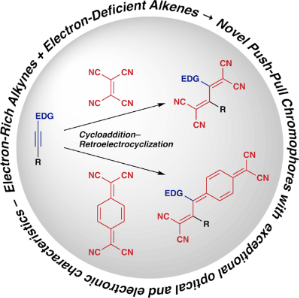
- emission increases when they are excited at 420 nm, resulting in white-light emission. The underlying mechanism governing these luminescence properties remains unknown. It has been established that 75 does not exhibit luminescence in its solid-state form, which is attributed to the quenching effects


Photoinduced in situ generation of DNA-targeting ligands: DNA-binding and DNA-photodamaging properties of benzo[c]quinolizinium ions
Beilstein J. Org. Chem. 2024, 20, 101–117, doi:10.3762/bjoc.20.11
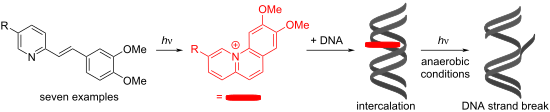
- efficient fluorescence quenching (Figure 5), which is commonly observed with this class of cationic ligands [3][70], mainly as a result of a photoinduced electron transfer from the excited, DNA-bound ligand with the DNA bases [71]. The binding isotherms obtained from the titration data were used to
- decrease of the cleavage to 17%. It has to be noted, however, that an inhibition of DNA cleavage in the presence of NaN3 may also be induced by direct deactivation of the excited photosensitizer by the azide and not only from quenching of singlet oxygen [83]. Similar, seemingly contradictory effects of D2O




Aromatic systems with two and three pyridine-2,6-dicarbazolyl-3,5-dicarbonitrile fragments as electron-transporting organic semiconductors exhibiting long-lived emissions
Beilstein J. Org. Chem. 2023, 19, 1867–1880, doi:10.3762/bjoc.19.139
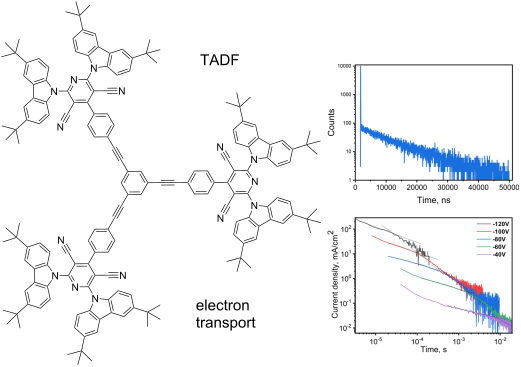
- solutions of compounds 6–9 is increased after deoxygenation by argon (Figure 3a and Figure S2a in Supporting Information File 1). The increase of PL intensity is attributed to a delayed fluorescence turn-on when the triplet quenching by oxygen is omitted. This delayed fluorescence is TADF in nature as it is


Selectivity control towards CO versus H2 for photo-driven CO2 reduction with a novel Co(II) catalyst
Beilstein J. Org. Chem. 2023, 19, 1766–1775, doi:10.3762/bjoc.19.129
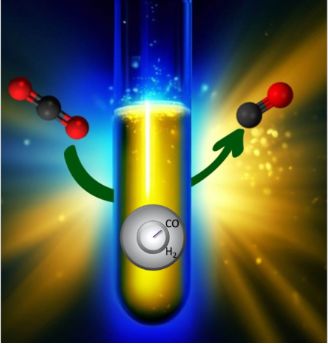
- (helping in the deprotonation of the radical cation BIH•+ formed after the reductive quenching of the PS), but also can actively assist the catalysis, by capturing CO2 [50][51][52]. On the other hand, having three hydroxy groups, TEOA is also considered a proton donor and the formation of metal hydrides is
- maximum. Being the emission of [Cu(dmp)DPEPhos](BF4) in DMA/TEA 7:1 567 nm, the value of E00 is 2.19 eV. It follows that Eox* is −1.22 V and Ered* is 0.52 V (see Table S3 in Supporting Information File 1). Thermodynamically, an oxidative quenching of PS* by the catalyst 1 is not feasible (ΔG > 0.3 V
- ), while a reductive quenching by BIH could be possible since the oxidation potential of BIH is 0.27 V (ΔG < −0.25 V). We performed Stern–Volmer analyses to verify our hypothesis. As expected, the lifetime of the PS* (τ0 = 14 ns in aerated DMA/TEA 7:1), is reduced upon the addition of the sacrificial


Charge carrier transport in perylene-based and pyrene-based columnar liquid crystals
Beilstein J. Org. Chem. 2023, 19, 1755–1765, doi:10.3762/bjoc.19.128
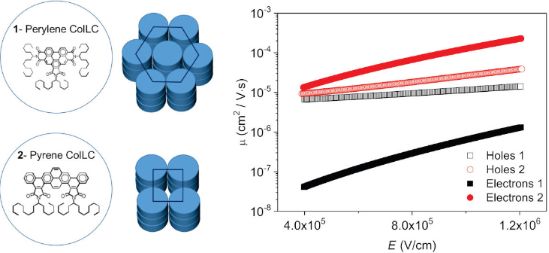
- -shifted in the film. These results indicate molecular π-stacking aggregation and excimer formation on the films [2]. The PL in film was obtained as a function of temperature (Figure 4). The observed reduction of the PL intensity on heating is expected for organic semiconductors due to self-quenching


Tying a knot between crown ethers and porphyrins
Beilstein J. Org. Chem. 2023, 19, 1630–1650, doi:10.3762/bjoc.19.120
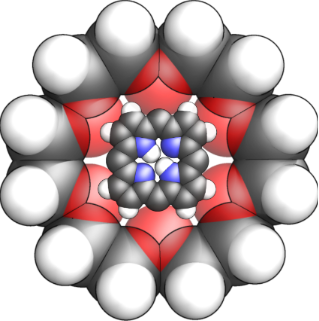
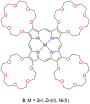
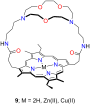
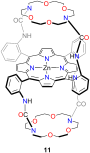
- alkylammonium guests. The binding constants Ka in CHCl3/MeOH 9:1 determined for 9-Zn complexes with [NH3(CH2)NH2]+, [NH3(CH2)2NH3]2+, [NH3(CH2)3NH3]2+, and [NH3CH2CH3]+ equal to 8.3·103, 6.2·103, 8.7·103, and 7.7·102 M−1, respectively, were reported. Based on the fluorescence quenching experiments the formation
- of coordination compounds of copper(II), iron(II/III), manganese(II), nickel(II), and cobalt(II) with 9-Zn and 9-Cu was demonstrated. The emission quenching was rationalised considering the binding of the transition metal within the crown ether cavity. No quenching was observed upon the addition of







Radical chemistry in polymer science: an overview and recent advances
Beilstein J. Org. Chem. 2023, 19, 1580–1603, doi:10.3762/bjoc.19.116
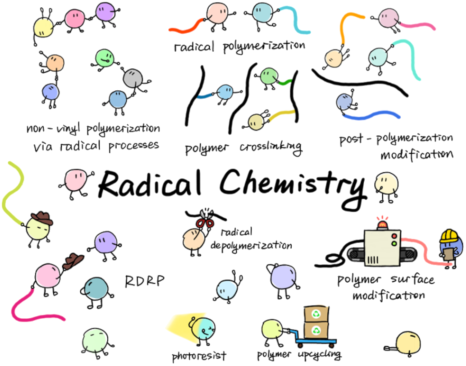
- necessary. MF-ROMP, also termed photo-ROMP, is a novel technique to polymerize cyclic olefins. It begins with the reductive quenching of an photoexcited photocatalyst (PC) at an enol ether initiator to produce a radical cation carrier [90]. Then, the carrier undergoes cyclic addition with a cyclic olefin
- couplings in PATs. Scheme 10 redrawn from [79]. General thiol-ene photopolymerization process. Scheme 11 redrawn from [81]. (a) Three generations of Grubbs catalysts. (b) Proposed mechanism for photo-ROMP via a reductive quenching pathway and (c, d) chemical structures of the (c) initiators and (d) monomers




Cyclodextrins permeabilize DPPC liposome membranes: a focus on cholesterol content, cyclodextrin type, and concentration
Beilstein J. Org. Chem. 2023, 19, 1570–1579, doi:10.3762/bjoc.19.115
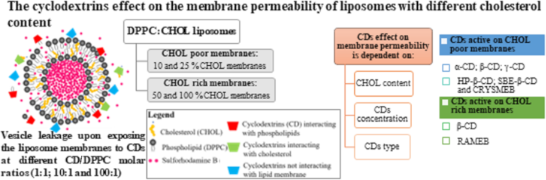
- formulation, a solution containing only liposomes was used as the blank solution. The membrane permeability study by fluorescence spectroscopy The membrane permeability is commonly evaluated by following the leakage of self-quenching probes such as SRB from liposomes [14]. Indeed, a fluorescence auto
- -quenching effect is observed when SRB is encapsulated at a high concentration inside the liposomes. The recovery of the fluorescence signal is achieved upon the release of the dye from liposomes and its dilution in the external medium. Thus, the effect of CDs on the permeability of liposomal membranes was


Functions of enzyme domains in 2-methylisoborneol biosynthesis and enzymatic synthesis of non-natural analogs
Beilstein J. Org. Chem. 2023, 19, 1452–1459, doi:10.3762/bjoc.19.104
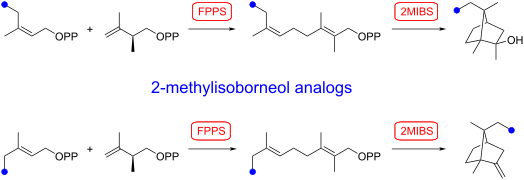
- by two sequential cyclisation reactions to A and B, and terminal quenching with water. This hypothesis was confirmed by the discovery of the biosynthetic genes coding for a GPP methyltransferase (GPPMT) and a type I terpene synthase termed 2-methylisoborneol synthase (2MIBS) [23][24]. Interestingly


α-(Aminomethyl)acrylates as acceptors in radical–polar crossover 1,4-additions of dialkylzincs: insights into enolate formation and trapping
Beilstein J. Org. Chem. 2023, 19, 1443–1451, doi:10.3762/bjoc.19.103
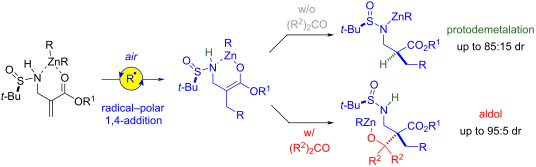
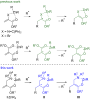
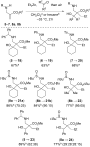
- addition (Scheme 7, bottom). Much to our surprise however, no deuterium incorporation is observed on quenching with ND4Cl/D2O the reaction between 8a and Et2Zn. By contrast, a significant deuterium incorporation is obtained when deuterated starting material (8a-d) is engaged. The combination of these two






Organic thermally activated delayed fluorescence material with strained benzoguanidine donor
Beilstein J. Org. Chem. 2023, 19, 1289–1298, doi:10.3762/bjoc.19.95
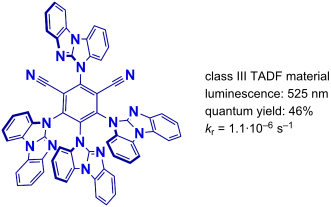
- aerated MCH solution. The reduction in quantum yield on exposure to oxygen is due to quenching of the triplet excited states indicating a TADF luminescence mechanism. PLQY in Zeonex films is 39% in air, which is lower than the PLQY of 87% reported for 4CzIPN [17]. The two-component excited state lifetime





