


Search results
Search for "reactive intermediates" in Full Text gives 134 result(s) in Beilstein Journal of Organic Chemistry.
1,5-Phosphonium betaines from N-triflylpropiolamides, triphenylphosphane, and active methylene compounds
Beilstein J. Org. Chem. 2019, 15, 2603–2611, doi:10.3762/bjoc.15.253

- their isolation and structural characterization are still less common. A very convenient access to such betaines is provided by the nucleophilic addition of tertiary phosphanes to electron-deficient alkenes, alkynes and allenes (phospha-Michael addition), which generates the betaines as reactive
- intermediates that can be transformed intra- or intermolecularly into a wide array of acyclic, carbocyclic and heterocyclic structures. In these processes, the tertiary phosphanes can act as nucleophilic organocatalysts (for reviews, see [1][2][3][4] or be incorporated in the (pre-)final products, typically as


Thermal stability of N-heterocycle-stabilized iodanes – a systematic investigation
Beilstein J. Org. Chem. 2019, 15, 2311–2318, doi:10.3762/bjoc.15.223
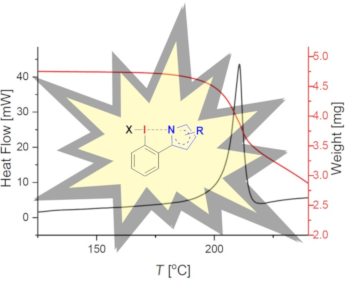
- electrophilic hypervalent iodine atom in its ground state or directly influences its reactivity by stabilizing reactive intermediates or transition states. In recent years, a plethora of cyclic and pseudocyclic iodanes have been developed with covalently attached stabilizing ligands L2 and applied in a variety


An overview of the cycloaddition chemistry of fulvenes and emerging applications
Beilstein J. Org. Chem. 2019, 15, 2113–2132, doi:10.3762/bjoc.15.209
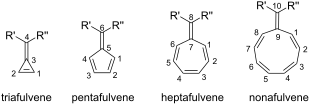
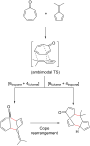
- the formation of several different products, although predominantly enol lactones [47][50][51][52] (Scheme 3). Highly reactive intermediates formed during these reactions (Scheme 3) have only been observed spectroscopically at low temperatures (−55 °C) [52]. Heptafulvenes also undergo reactions with





Reactions of 2-carbonyl- and 2-hydroxy(or methoxy)alkyl-substituted benzimidazoles with arenes in the superacid CF3SO3H. NMR and DFT studies of dicationic electrophilic species
Beilstein J. Org. Chem. 2019, 15, 1962–1973, doi:10.3762/bjoc.15.191
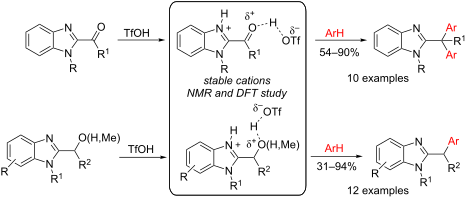
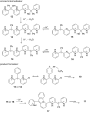
- should be reactive electrophiles. While, in the case of hydroxyalkylbenzimidazoles 3–8, N,O-diprotonated species III, V, VII, VIII, the most probably, may be reactive intermediates. The calculation of electrophilic properties of these cations show that species I and II have higher values of


Inherent atomic mobility changes in carbocation intermediates during the sesterterpene cyclization cascade
Beilstein J. Org. Chem. 2019, 15, 1890–1897, doi:10.3762/bjoc.15.184
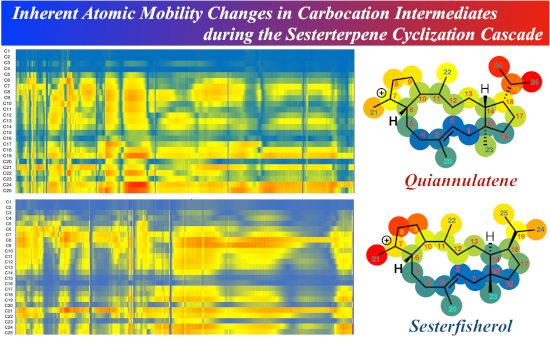
- ) triggering the biosynthetic cyclization cascade by the elimination of pyrophosphate or by protonation; (ii) preorganization of the substrate to generate the reactive conformation; (iii) protection of reactive intermediates from water; and (iv) termination of the reaction by deprotonation or hydration. We


The cyclopropylcarbinyl route to γ-silyl carbocations
Beilstein J. Org. Chem. 2019, 15, 1769–1780, doi:10.3762/bjoc.15.170
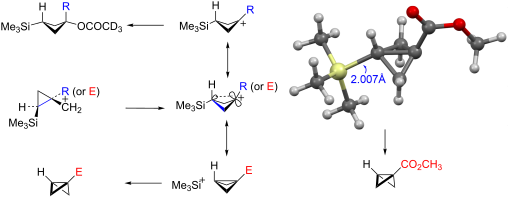
- ; rearrangement; silicon; Introduction Carbocations, positively charged trivalent carbon compounds and reactive intermediates, have continued to fascinate chemists since the early discoveries of tropylium [1][2] and trityl [3][4][5][6][7] salts. Many of the giants of organic chemistry during the last century
- ], which have also been termed ”percaudal” interactions [56]. Certain carbenes can also be stabilized in a similar fashion [60][61]. Thus substrates of type 10 solvolyze in protic solvents with large rate enhancements (anchimeric assistance) to generate carbocations 11 as reactive intermediates (Scheme 3


Superelectrophilic carbocations: preparation and reactions of a substrate with six ionizable groups
Beilstein J. Org. Chem. 2019, 15, 1515–1520, doi:10.3762/bjoc.15.153
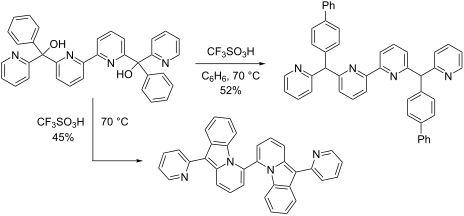
- superacidic CF3SO3H leads to cyclization or arylation products, depending on the presence or absence of benzene. A mechanism is proposed involving tetra-, penta-, and hexacationic reactive intermediates. Most notably, this system shows remarkably good chemoselectivity in its reaction with benzene (only




Mechanochemical Friedel–Crafts acylations
Beilstein J. Org. Chem. 2019, 15, 1313–1320, doi:10.3762/bjoc.15.130
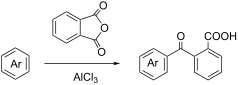
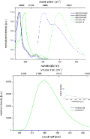
- transient reactive intermediates were predicted by density functional theory method B3LYP/6-31G* (Supporting Information File 1) [61]. The stretching of the +C≡O bond of the acylium ion was predicted to be at about 2300 cm−1. Raman spectroscopy revealed that the complexation of phthalic anhydride with AlCl3


A diastereoselective approach to axially chiral biaryls via electrochemically enabled cyclization cascade
Beilstein J. Org. Chem. 2019, 15, 795–800, doi:10.3762/bjoc.15.76
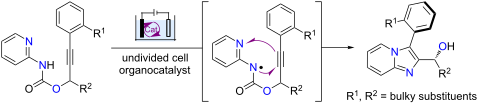
- -centered radicals (NCRs) are attractive reactive intermediates for organic synthesis as they provide opportunities for the efficient construction of C–N bonds [15][16][17][18][19]. Recently, the generation of NCRs through electron transfer-based methods has been attracting attention. Organic




Mechanistic studies of an L-proline-catalyzed pyridazine formation involving a Diels–Alder reaction with inverse electron demand
Beilstein J. Org. Chem. 2019, 15, 30–43, doi:10.3762/bjoc.15.3
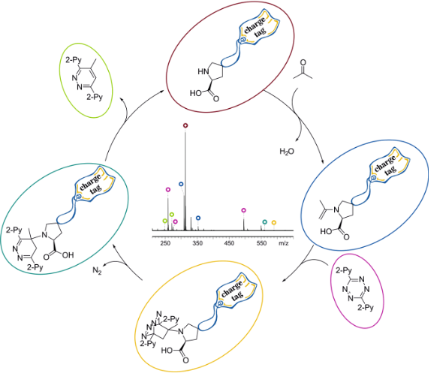
- intermediates mimic single steps of the proposed catalytic cycle in the gas phase. Thus, the charge-tagged catalyst proved one more time its superior effectiveness for the detection and study of reactive intermediates at low concentrations. Keywords: charge-tag; electrospray ionization; enamine organocatalysis
- species that are not involved in the reaction and do not carry the charge-tag will have a much lower ESI response. A charge-tag thus facilitates “fishing” [5][23][28] for reactive intermediates. We have previously used the charge-tagged L-proline derived catalyst 1∙Cl (Figure 1) in an ESIMS study of a L
- ) in the reacting solution. In order to enhance the ESI response of putative reactive intermediates, the reaction was performed with the charge-tagged tetrazine 4∙Br (R2, Scheme 5). A continuous-flow setup [4][17][18] was used for fast sampling of the reaction R2 directly after its initiation. A




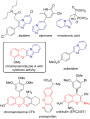
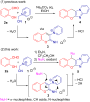
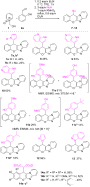
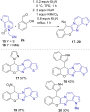
Mn-mediated sequential three-component domino Knoevenagel/cyclization/Michael addition/oxidative cyclization reaction towards annulated imidazo[1,2-a]pyridines
Beilstein J. Org. Chem. 2018, 14, 3078–3087, doi:10.3762/bjoc.14.287
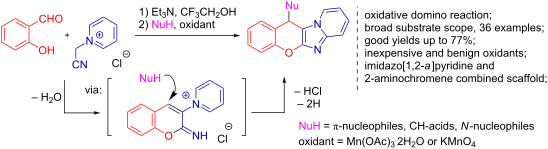
- given to domino reactions with an oxidation step, revealing possibilities for shifting the equilibrium by making products more stable or in situ generating reactive intermediates [2][3][4][5][6][7][8][9][10][11][12][13]. In its turn, multicomponent reactions (MCRs), usually occurring as domino processes





Mannich base-connected syntheses mediated by ortho-quinone methides
Beilstein J. Org. Chem. 2018, 14, 560–575, doi:10.3762/bjoc.14.43
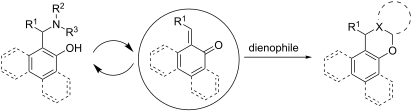
- 57, which were used to connect with site-directing ligands [89] (Scheme 9). As reactive intermediates, o-QMs can also play the role of monomers in polymerization reactions. Ishida et al. reported the ring-opening polymerization of monofunctional alkyl-substituted aromatic amine-based benzoxazines [90
- ]. It was shown that the methylene bridges can be formed by o-QMs that are resulted by the cleavage of phenolic Mannich bridge structure 56 (Scheme 9). Biological properties As discussed earlier, o-QMs are known as short-lived, highly reactive intermediates. Therefore, their biological activity is


Stereochemical outcomes of C–F activation reactions of benzyl fluoride
Beilstein J. Org. Chem. 2018, 14, 106–113, doi:10.3762/bjoc.14.6
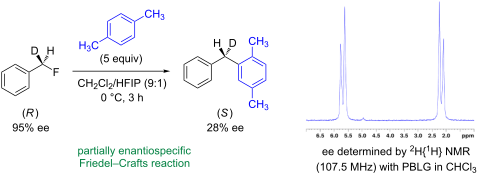
- by deconvolution of the line shapes and subsequent integration. Possible reactive intermediates for C–F activation of benzyl fluoride 1 with strong hydrogen bond donors. Synthesis of enantioenriched 7-[2H1]-(R)-benzyl fluoride ((R)-1) from benzaldehyde (2). Synthesis of enantioenriched (S


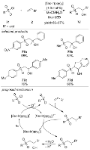
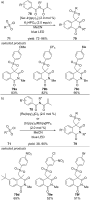
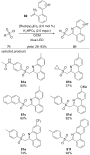
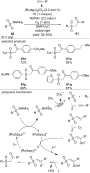
Photocatalytic formation of carbon–sulfur bonds
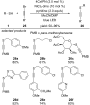
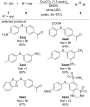
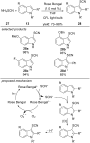
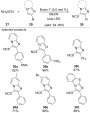
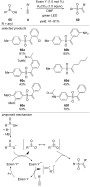
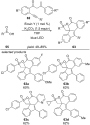
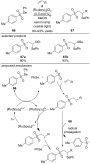
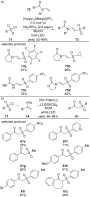
Beilstein J. Org. Chem. 2018, 14, 54–83, doi:10.3762/bjoc.14.4



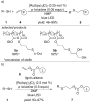

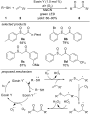
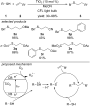


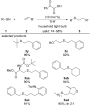

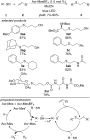

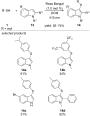
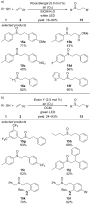
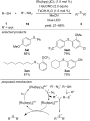

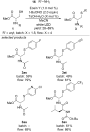
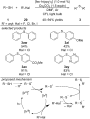

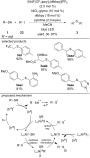
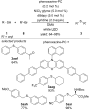






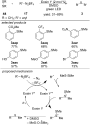


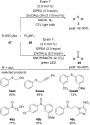

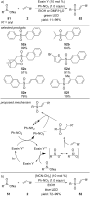
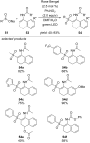










One-pot syntheses of blue-luminescent 4-aryl-1H-benzo[f]isoindole-1,3(2H)-diones by T3P® activation of 3-arylpropiolic acids
Beilstein J. Org. Chem. 2017, 13, 2340–2351, doi:10.3762/bjoc.13.231
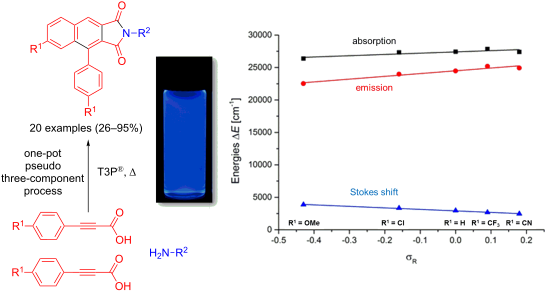
- anhydrides as reactive intermediates blue-luminescent 4-aryl-1H-benzo[f]isoindole-1,3(2H)-diones are formed by consecutive pseudo three-component syntheses in a one-pot fashion. The Stokes shifts correlate excellently with the Hammett–Taft σR parameter indicating an extended degree of resonance stabilization
- , sensing and display applications [41]. 4-Phenylnaphtho[2,3-c]furan-1,3-diones can well serve as reactive intermediates in multicomponent reactions, e.g., for synthesizing the corresponding imides. A particularly intriguing access to 4-phenylnaphtho[2,3-c]furan-1,3-diones is the intramolecular [4 + 2
- , leaving the anhydride unimpaired. For employing 4-phenylnaphtho[2,3-c]furan-1,3-diones 2 as reactive intermediates for the en route conversion with primary amines 3 into 4-aryl-1H-benzo[f]isoindole-1,3(2H)-diones 4 the reaction conditions were optimized with 4-phenylnaphtho[2,3-c]furan-1,3-dione (2a) and




Preactivation-based chemoselective glycosylations: A powerful strategy for oligosaccharide assembly
Beilstein J. Org. Chem. 2017, 13, 2094–2114, doi:10.3762/bjoc.13.207
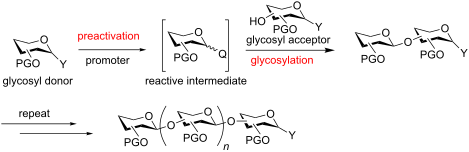
- method where both the glycosyl donor and the acceptor are present when the promoter is added, preactivation can generate reactive intermediates as the resting state allowing spectroscopic analysis such as low temperature NMR studies to better characterize the intermediate. This can help gaining a deeper







Difunctionalization of alkenes with iodine and tert-butyl hydroperoxide (TBHP) at room temperature for the synthesis of 1-(tert-butylperoxy)-2-iodoethanes
Beilstein J. Org. Chem. 2017, 13, 2023–2027, doi:10.3762/bjoc.13.200
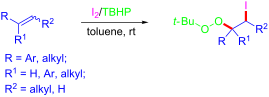
- and biological properties [26][27]. Organoperoxides have wide applications in the field of organic synthesis, as radical initiators, oxidants that replace transition metal oxidants, and key reactive intermediates in diverse organic synthesis reactions [28][29][30], as well as in medicinal chemistry


Mechanochemical synthesis of thioureas, ureas and guanidines
Beilstein J. Org. Chem. 2017, 13, 1828–1849, doi:10.3762/bjoc.13.178
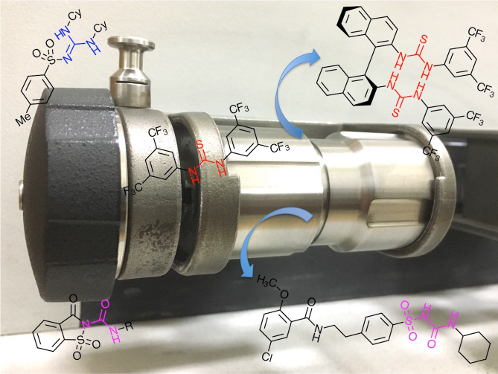
- reactions were performed which has led to the discovery of reactive intermediates, new phases and novel topologies in systems previously studied only by ex situ analyses [25][26]. To overcome the inability of PXRD to provide structural information on amorphous materials, a method based on real time in situ
- 27, it has been explicitly stated in the literature that these compounds are very reactive intermediates and immediately decompose to isothiocyanates and 1H-benzotriazole (HBt). With this in mind, we investigated the possibility to run the thiocarbamoylation reaction of para-substituted anilines as
- synthetic tool that enables the synthesis and isolation of molecular species as bench-stable chemicals, that are normally considered as reactive intermediates in solution environment. The observed reactivity of thiocarbamoyl benzotriazoles prompted us to examine their reaction with ammonia, as a potential




Chiral phase-transfer catalysis in the asymmetric α-heterofunctionalization of prochiral nucleophiles
Beilstein J. Org. Chem. 2017, 13, 1753–1769, doi:10.3762/bjoc.13.170
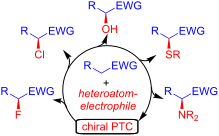
- asymmetric α-amination reactions [145]. By using hydroxylamines 43 as simple N-containing reagents, the addition of these compounds to trichloroacetonitrile gives the reactive intermediates 44, which then serve as versatile electrophilic N-transfer reagents under asymmetric triazolium salt L catalysis


Total synthesis of TMG-chitotriomycin based on an automated electrochemical assembly of a disaccharide building block
Beilstein J. Org. Chem. 2017, 13, 919–924, doi:10.3762/bjoc.13.93
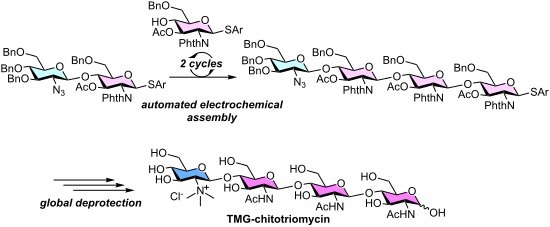
- pathway [30]. Although it is hard to exclude another reaction mechanism involving oxocarbenium ions as reactive intermediates, the commonly accepted reactivity difference between α- and β-isomers of glycosyl triflate 3 seems to explain the observed selectivity well. Next, we attempted to synthesize the


Metal-free hydroarylation of the side chain carbon–carbon double bond of 5-(2-arylethenyl)-3-aryl-1,2,4-oxadiazoles in triflic acid
Beilstein J. Org. Chem. 2017, 13, 883–894, doi:10.3762/bjoc.13.89

- study protonated forms of the oxadiazoles as reactive intermediates by means of NMR and DFT calculations. It should be noted, that the metal-catalyzed hydroarylation of C=C bonds is widely used in organic synthesis [26][27]. The most efficient catalysts for these purposes are complexes of the transition
- species D. Thus, the NMR data reveal that the protonation of 5-styryl-substituted 1,2,4-oxadiazoles in superacids results in the formation of their relatively stable N4-protonated forms. However, these species do not react with aromatic π-nucleophiles (vide infra). Most probably, those reactive
- intermediates, generated under the protonation of substrates 1, are N4,C-diprotonated species D. The experimental results from the hydroarylation reactions of the side chain C=C double bond of oxadiazoles 1a–n with various arenes under the action of different acidic reagents leading to oxadiazoles 2a–za are


Continuous-flow processes for the catalytic partial hydrogenation reaction of alkynes
Beilstein J. Org. Chem. 2017, 13, 734–754, doi:10.3762/bjoc.13.73
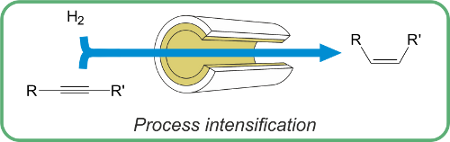
- chemical processes that are difficult to perform under batch conditions, e.g., involving reactive intermediates or competitive reactions [74][75]. Compared to batch setups, performing reactions under continuous flow allows a fine tuning of the contact time between intermediates and catalytic active phase








Contribution of microreactor technology and flow chemistry to the development of green and sustainable synthesis
Beilstein J. Org. Chem. 2017, 13, 520–542, doi:10.3762/bjoc.13.51
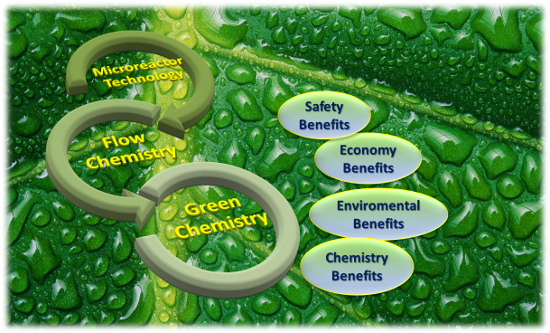
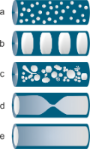
- of the channels, volume), and on the flow rate. The residence time is one of the crucial factors to be considered in optimizing flow reactions, especially when unstable or short-lived reactive intermediates are concerned. Microreactor technology provides also several benefits. Safety benefits
- the possibility to generate highly reactive intermediates, such as halomethyllithium carbenoids, that need to be used under internal-quenching technique in batch mode. In 2014, the first example of effective external trapping of a reactive chloromethyllithium (CML) has been reported [28]. α






Dimerization reactions of aryl selenophen-2-yl-substituted thiocarbonyl S-methanides as diradical processes: a computational study
Beilstein J. Org. Chem. 2017, 13, 410–416, doi:10.3762/bjoc.13.44

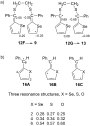
- intermediate, delocalized diradical species. The influence of selenium as a ‘heavy atom’ for stabilization of this intermediate has been emphasized. Keywords: 1,3-dipolar cycloadditions; reaction mechanisms; reactive intermediates; thiocarbonyl S-methanides; thioketones; Introduction Thiocarbonyl S
- -methanides 1 belong to the class of S-centered 1,3-dipolar species, which were identified by Huisgen as reactive intermediates formed via nitrogen extrusion from 2,5-dihydro-1,3,4-thiadiazoles 2 [1][2]. In spite of the fact that several methods are reported for the preparation of these precursors, the most
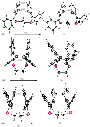
- with solvation effects (assuming ∆H(solv) = ∆G(solv)) to obtain enthalpies at 298 K in THF (Equation 1). The calculated entropy was used to determine the –T∆S term to form free energies at 298 K in THF (Equation 2). Structures of the reactive intermediates as a diradical 6 or a zwitterion 7 in the


NMR reaction monitoring in flow synthesis
Beilstein J. Org. Chem. 2017, 13, 285–300, doi:10.3762/bjoc.13.31
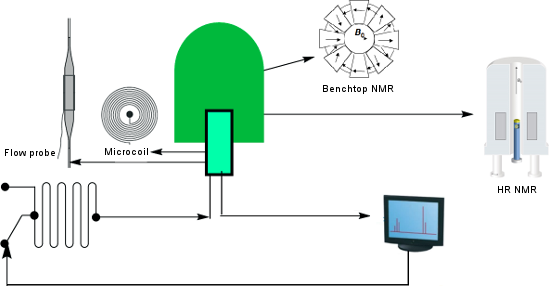
- -on-a-chip approach. Kinetic and mechanistic studies The rapid analysis produced in flow NMR can be used for the detection of reactive intermediates and consequently for studying reaction mechanisms and the rapid optimization of a chemical process. The first example was described by Nakakoshi et al





