Search results
Search for "sugar" in Full Text gives 340 result(s) in Beilstein Journal of Organic Chemistry. Showing first 200.
Synthetic strategies toward 1,3-oxathiolane nucleoside analogues
Beilstein J. Org. Chem. 2021, 17, 2680–2715, doi:10.3762/bjoc.17.182
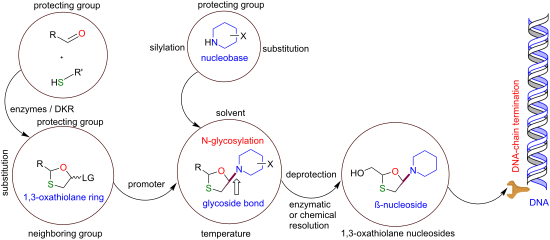
- Academy of Higher Education, Manipal-576104, Karnataka, India 10.3762/bjoc.17.182 Abstract Sugar-modified nucleosides have gained considerable attention in the scientific community, either for use as molecular probes or as therapeutic agents. When the methylene group of the ribose ring is replaced with a
- -oxathiolane nucleosides via resolution methods. The chemical as well as enzymatic procedures are reviewed and segregated in this review for effective synthesis of 1,3-oxathiolane nucleoside analogues. Keywords: chiral auxiliaries; enzymes; Lewis acids; N-glycosylation; 1,3-oxathiolane sugar and nucleosides
- -(−)-enantiomer 2, exhibits potential antiviral activity against HIV-1 (EC50 = 0.009 µM) in CEM cells. However, the corresponding ᴅ-(+)-enantiomer is less active against HIV-1 (EC50 = 0.84 µM) [15]. The fusion of an appropriate sugar element, carbacycle, or heterocyclic equivalent with an activated base results


Phenolic constituents from twigs of Aleurites fordii and their biological activities
Beilstein J. Org. Chem. 2021, 17, 2329–2339, doi:10.3762/bjoc.17.151
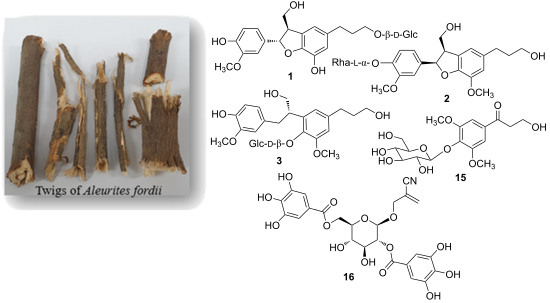
- 5.51 (d, J = 6.1 Hz, H-7)], an anomeric proton of a sugar [δH 4.27 (d, J = 7.8 Hz, H-1′′)], and a methoxy group [δH 3.84 (s, 3-OCH3)]. The 13C NMR data (Table 1) showed 25 peaks including 12 aromatic carbons [δC 147.6 (C-3), 145.9 (C-4), 145.1 (C-4′), 140.4 (C-3′), 135.2 (C-1′), 133.7 (C-1), 128.3 (C-5
- (Figure 2). The locations of the glucose unit and the methoxy group were confirmed from the observed HMBC correlations of H-1′′/C-9′ and 3-OCH3/C-3, respectively (Figure 2). Acid hydrolysis of 1 was conducted to analyze the aglycone and sugar moiety. The structure of the aglycone (1a) was confirmed as
- absolute configuration. The planar structure of 3 was further confirmed by analysis of 2D NMR data, including COSY, HSQC, and HMBC (Figure 2). The determination of the stereochemistry for the sugar unit of 3 was conducted following the same method as for compound 2. The structure of the aglycone 3a


Progress and challenges in the synthesis of sequence controlled polysaccharides
Beilstein J. Org. Chem. 2021, 17, 1981–2025, doi:10.3762/bjoc.17.129
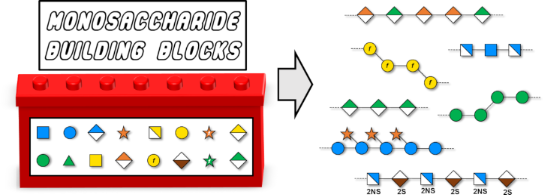
- polysaccharides longer than hexasaccharides. Shorter oligomers are discussed when they represent a key step towards the synthesis of the corresponding polysaccharide. Polymers based on a sugar backbone connected via glycosidic linkages are analyzed, excluding glycopolymers and other mimetics. Extraction
- ), β(1–3) or a combination of β(1–4)- and β(1–3)-linked β-ᴅ-xylopyranosyl units. Rarely, α(1–3) glycosidic linkages are present [194]. These backbones are often partially acetylated or appended with sugar side chains, mainly ʟ-arabinose, fucose, galactose and 4-O-methylglucuronic acid [195]. In general










Cationic oligonucleotide derivatives and conjugates: A favorable approach for enhanced DNA and RNA targeting oligonucleotides
Beilstein J. Org. Chem. 2021, 17, 1828–1848, doi:10.3762/bjoc.17.125
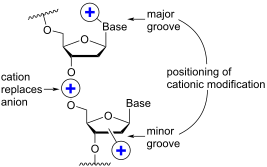
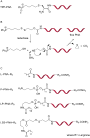
- strategy that has been employed to optimize the delivery profile of ASOs, is the functionalization of ASOs with cationic amine groups, either by direct conjugation onto the sugar, nucleobase or internucleotide linkage. The introduction of these positively charged groups has improved properties like
- been separated into three sections, nucleobase, sugar and backbone modifications, highlighting what impact the cationic amine groups have on the ONs/ASOs physiochemical and biological properties. Finally, a concluding section has been added, summarizing the important knowledge from the three chapters
- , and examining the future design for ASOs. Keywords: antisense oligonucleotides; backbone modifications; cations; nucleobase modifications; sugar modifications; Introduction Antisense oligonucleotides (ASOs) are single-stranded (ss) oligomers composed of typically 10–25 nucleotides linked by


Sustainable manganese catalysis for late-stage C–H functionalization of bioactive structural motifs
Beilstein J. Org. Chem. 2021, 17, 1733–1751, doi:10.3762/bjoc.17.122

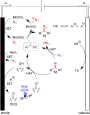
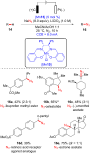
- peptide–carbohydrate conjugation was achieved using tryptophan-containing peptides 29 and sugar-containing allyl carbonates 30 in chemo- and site-selective manners using a pyridyl directing group. The optimized reaction conditions entailed the use of dimanganese decacarbonyl as the catalyst and sodium
- acetate as the base to deliver the corresponding peptide–sugar conjugates 31 at the late stage. Notably, the chemoselective glycoconjugation strategy was compatible with various sugar scaffolds, affording glycotryptophans bearing either furanose or pyranose motifs. In addition, a brevianamide F analogue
- -NH tryptophan. Notably, alkenylative ligation of tryptophan-containing peptides and alkynes containing biomolecular motifs including sugar, menthol, or coumarin units was successful, delivering unprecedented hybrid complex peptides 34d–f in good yield. Based on the developed intermolecular process








Chemical approaches to discover the full potential of peptide nucleic acids in biomedical applications
Beilstein J. Org. Chem. 2021, 17, 1641–1688, doi:10.3762/bjoc.17.116
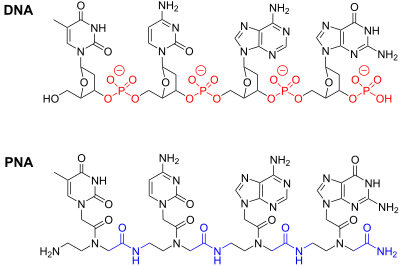
- for innovative chemistry and biology to unlock the full potential of PNA in biomedical applications. Keywords: antisense; chemical modifications; diagnostics; peptide nucleic acid; PNA; Introduction Peptide nucleic acid (PNA) is a DNA mimic where the sugar–phosphate backbone of DNA is replaced with
- key considerations were elimination of electrostatic repulsion (neutral backbone) and synthetic accessibility (simple to make achiral amide linkages) [3]. The design was guided by a simple computer model where the natural sugar-phosphodiester backbone of the Hoogsteen strand of a T•A–T DNA triplex was
- resembled the B- and A-form conformations of natural nucleic acids. The PNA–RNA duplex adopted a conformation very close to the standard A-form helix [40]. In contrast, the PNA–DNA duplex adopted an intermediate structure where positioning of the base pairs was A-like, while the backbone curvature, sugar








Total synthesis of ent-pavettamine
Beilstein J. Org. Chem. 2021, 17, 1440–1446, doi:10.3762/bjoc.17.99
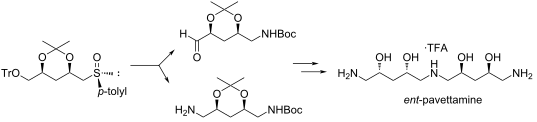
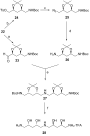
- the 1,3-diol motif [19]. The group is also associated with ease of deprotection, which is well documented in carbohydrate and sugar chemistry [20]. Comparison of our new route involving trityl and TBS protections with our previously published acetonide protection route for the synthesis of 4, showed


Double-headed nucleosides: Synthesis and applications
Beilstein J. Org. Chem. 2021, 17, 1392–1439, doi:10.3762/bjoc.17.98
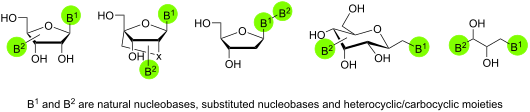
- sugar [3][4]. The synthetic accessibility of these organic molecules encouraged researchers to prepare sugar-modified nucleosides [5][6] and nucleobase-modified nucleosides [7][8]. Modified nucleoside monomers comprising more than one nucleobase are called double-headed nucleosides [9][10]. A thorough
- attached directly to the sugar or via a linker. Further modifications were introduced by the substitution of some of the naturally occurring nucleobases by halogens or alkyl groups. On the other hand, a variety of heterocyclic/carbocyclic moieties were considered as the head of these modified nucleosides
- attached to the anomeric carbon of the pentofuranosyl/hexopyranosyl sugar moiety and an additional nucleobase/heterocyclic/carbocyclic moiety attached either directly or through a linker to any carbon of the sugar moiety either by C–N or C–C bonds. However, in case of base to base double-headed nucleosides





Icilio Guareschi and his amazing “1897 reaction”
Beilstein J. Org. Chem. 2021, 17, 1335–1351, doi:10.3762/bjoc.17.93







A comprehensive review of flow chemistry techniques tailored to the flavours and fragrances industries
Beilstein J. Org. Chem. 2021, 17, 1181–1312, doi:10.3762/bjoc.17.90




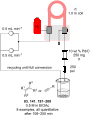


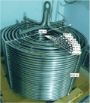

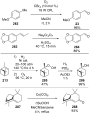

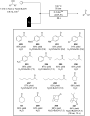


Synthesis of multiply fluorinated N-acetyl-D-glucosamine and D-galactosamine analogs via the corresponding deoxyfluorinated glucosazide and galactosazide phenyl thioglycosides
Beilstein J. Org. Chem. 2021, 17, 1086–1095, doi:10.3762/bjoc.17.85
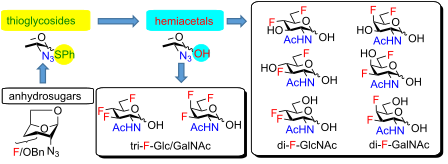
- . These observations are consistent with the recently reported instability of O-acylated GlcNAc under basic conditions due to elimination reactions of transient hemiacetal intermediates [38]. This instability of amino sugar hemiacetals underscores the requirement to both protect the anomeric position with
- resulting from the low stability of amino sugar hemiacetals. The prepared polyfluorinated thiodonors and hemiacetals are valuable intermediates in oligosaccharide synthesis and their utility in glycosylation is currently being studied in our group. Retrosynthetic analysis of the target fluoro analogs



Synthetic accesses to biguanide compounds
Beilstein J. Org. Chem. 2021, 17, 1001–1040, doi:10.3762/bjoc.17.82
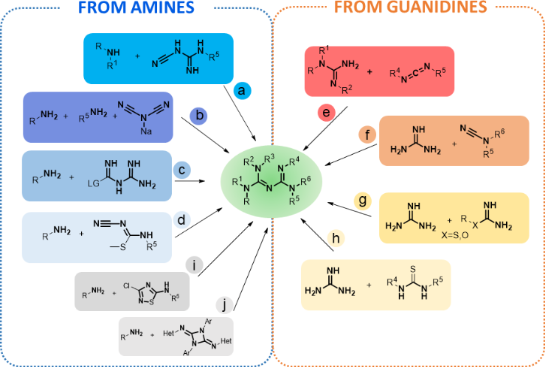
- demonstrated by Schenker and Hasspacher for the synthesis of potential blood sugar-lowering biguanides, derived from cyclic secondary amines (Scheme 32) [66]. Besides, Bernatowicz et al. showed in a methodological study that primary amines are more reactive toward N-amidinopyrazole than N-amidino


Beyond ribose and phosphate: Selected nucleic acid modifications for structure–function investigations and therapeutic applications
Beilstein J. Org. Chem. 2021, 17, 908–931, doi:10.3762/bjoc.17.76
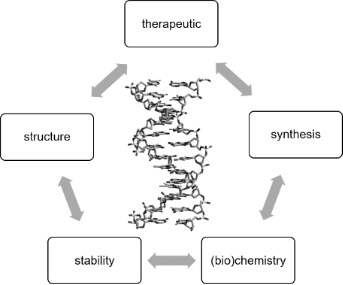
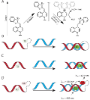
- oligonucleotides that have been explored for gene silencing. Keywords: antisense; chemically modified oligonucleotides; crystallography; siRNA; structure; Introduction The natural nucleic acids sugar-phosphate backbone comes in two flavors, 2'-deoxyribose in DNA and ribose in RNA. However, this relative
- modifications reported by chemists along with the synthesis of 2'-deoxy-2'-fluoro-nucleosides (FRNA) [24]. The negatively charged phosphodiester linkages in the backbones of DNA and RNA are of fundamental importance for reactivity, stability, conformation and hydration [25][26]. The sugar moieties in DNA and
- group between the sugars in DNA and RNA is at the origin of the vastly expanded fold [29][30][31][32] and functional spaces of RNA [33][34][35][36][37][38][39]. Perhaps less known is the fact that the sugar moiety in the backbone of a nucleic acid determines the base pairing priorities. For example, in




Synthesis of bis(aryloxy)fluoromethanes using a heterodihalocarbene strategy
Beilstein J. Org. Chem. 2021, 17, 813–818, doi:10.3762/bjoc.17.70
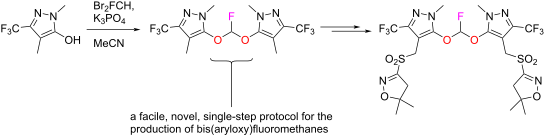
- led us to attempt to displace a single fluoride ion from 5 with the anion of 6 (Scheme 3), with fluorophilic calcium hydroxide as a base, in analogy to a report where phenoxide moieties are introduced to the anomeric position of a fluorinated sugar [9]. This gave only traces of 4, while adjustments in


DNA with zwitterionic and negatively charged phosphate modifications: Formation of DNA triplexes, duplexes and cell uptake studies
Beilstein J. Org. Chem. 2021, 17, 749–761, doi:10.3762/bjoc.17.65
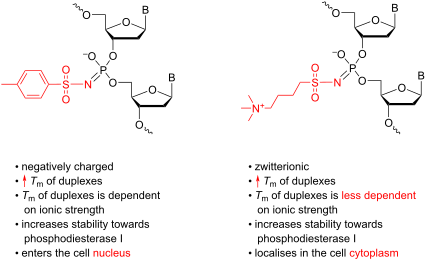
- [47][48], a sugar [49][50], or the DNA backbone [51][52][53] leading to the formation of more stable duplexes and triplexes [54]. The introduction of sulfonamide RNA (SaRNA monomers) to replace the phosphodiester backbone led to charge-neutral sulfonamide antisense oligonucleotides (SaASOs), which


Simulating the enzymes of ganglioside biosynthesis with Glycologue
Beilstein J. Org. Chem. 2021, 17, 739–748, doi:10.3762/bjoc.17.64
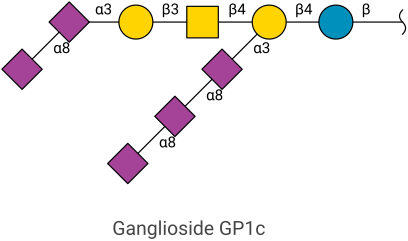
- negative charge. Figure 1 shows the structure of the monosialylated ganglioside GM1a. The biosynthesis of gangliosides occurs in the endoplasmic reticulum and Golgi, where specific glycosyltransferases act, in stepwise fashion, by adding monosaccharides from sugar nucleotide donors, first to ceramide, and
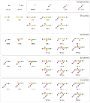
- . The method involves a set of regular-expression-based rules acting on strings of characters that representing the monosaccharide units, x, model the actions of transferases in the general form, Ax + B = A + xB, where Ax is a nucleotide sugar and B is the carbohydrate moiety of the acceptor, be it a
- , sugars, and are read from right to left starting with the base (reducing-end) sugar. The letters a and b are reserved for α and β-anomers, respectively, while brackets are used to delimit branches, and the letter T is used to denote the connection point to ceramide, or to another conjugate depending on




Synthesis and properties of oligonucleotides modified with an N-methylguanidine-bridged nucleic acid (GuNA[Me]) bearing adenine, guanine, or 5-methylcytosine nucleobases
Beilstein J. Org. Chem. 2021, 17, 622–629, doi:10.3762/bjoc.17.54
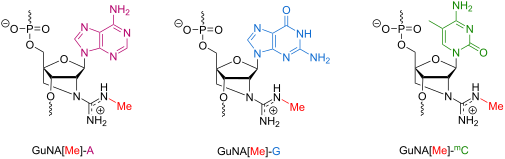
- synthesis of 2'-amino-LNA (Figure 1) functionalized with a peptide or sugar at the N2'-position, with the aim of modulating the physicochemical properties and specific organ distributions of the therapeutic oligonucleotides [13][14]. A more favorable example is the covalent attachment of a guanidine moiety
19F NMR as a tool in chemical biology
Beilstein J. Org. Chem. 2021, 17, 293–318, doi:10.3762/bjoc.17.28


Direct synthesis of anomeric tetrazolyl iminosugars from sugar-derived lactams
Beilstein J. Org. Chem. 2021, 17, 115–123, doi:10.3762/bjoc.17.12
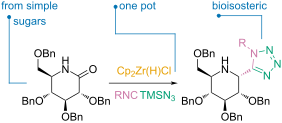
- , we have performed a number of different functionalizations of such cyclic systems with various complexity, and with a particular focus on the modification of sugar-derived lactams. As summarized in Scheme 1, this includes simple nucleophile addition to in situ-generated imines [23], the consecutive
- molecule incorporating both an iminosugar and a tetrazole fragment is of particular interest, due to the interesting properties of both moieties (Figure 1). It is probably hard to overestimate the importance of sugar scaffolds in nature, and we believe that it speaks for itself, however, a significance of
- have, however, only reported one example of lactam functionalization which only proceeded with moderate efficiency (1-tert-butylazepan-2-one, 41% yield of the desired product). Unfortunately, this approach cannot be utilized for the functionalization of secondary amides, like sugar-derived lactams, due




Chemical constituents of Chaenomeles sinensis twigs and their biological activity
Beilstein J. Org. Chem. 2020, 16, 3078–3085, doi:10.3762/bjoc.16.257
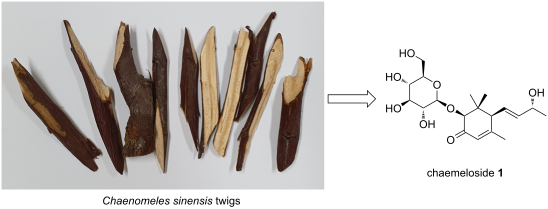
- at 23.3 min for ᴅ-glucopyranose by the LC–MS analysis, which corresponded with that of the ᴅ-form of the authentic sugar (23.3 min for ᴅ-glucopyranose and 21.4 min for ʟ-glucopyranose). Aglycone (1a). Colorless gum; 1H (700 MHz) and 13C NMR (175 MHz) data, see Table 1. Cytotoxicity assessment. The


Changed reactivity of secondary hydroxy groups in C8-modified adenosine – lessons learned from silylation
Beilstein J. Org. Chem. 2020, 16, 2854–2861, doi:10.3762/bjoc.16.234
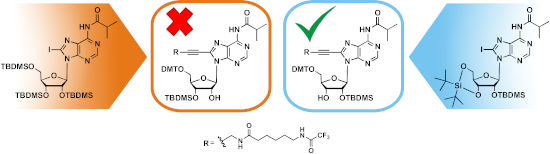
- conjugation of the desired moiety. A C8-alkynyl-modified adenosine derivative was synthesized, reviving an old synthetic pathway for iodination of purine nucleobases. Silylation of the C8-alkynyl-modified adenosine revealed unexpected selectivity of the two secondary sugar hydroxy groups, with the 3'-O-isomer
- halide to iodine, taking into account that direct iodination of purines has been claimed being troublesome [26], although not impossible [27]. For C8-iodination of adenosine, first the hydroxy groups at the sugar moiety were protected with tert-butyldimethylsilyl (TBDMS) groups. The silylated nucleoside
- not protected, side reactions were not observed and good yields (79%) of the C8-iodo derivative 3 were achieved. Prior to Sonogashira coupling of the linker moiety, the exocyclic amine of the nucleoside derivative was protected with an isobutyryl group, and the silyl groups at the sugar hydroxy


Dirhamnolipid ester – formation of reverse wormlike micelles in a binary (primerless) system
Beilstein J. Org. Chem. 2020, 16, 2820–2830, doi:10.3762/bjoc.16.232
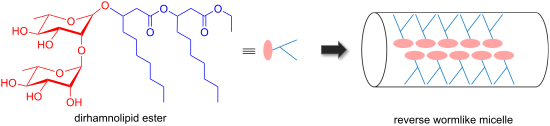
- Pseudomonas aeruginosa, a Gram-negative rod-shaped bacterium [5][6][7][8]. RL are built up by one or two rhamnose sugar units as well as one to three β-hydroxy fatty acids, which can also be unsaturated. These highly functional biomolecules exhibit interesting biological and antibacterial properties, as
- micelles are entangled at ambient temperature, so that a network-like structure is formed. An illustration of the formation of RWLM by the dirhamnolipid esters is shown in Figure 9. The hydrophilic sugar parts are oriented towards the interior of the micelle and the lipophilic alkyl chains are pointed


Anion exchange resins in phosphate form as versatile carriers for the reactions catalyzed by nucleoside phosphorylases
Beilstein J. Org. Chem. 2020, 16, 2607–2622, doi:10.3762/bjoc.16.212
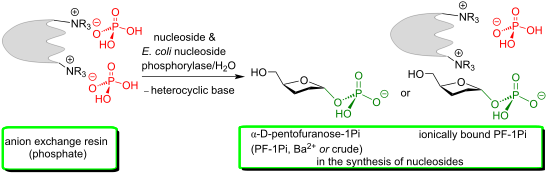
- problems associated with the reversibility of enzymatic phosphorolysis/synthesis reactions, along with the solubility of heterocyclic bases and accessibility of PF-1Pis. Despite all this, in a number of cases these problems have been successfully solved and, as a result, the desired base and/or sugar


Water-soluble host–guest complexes between fullerenes and a sugar-functionalized tribenzotriquinacene assembling to microspheres
Beilstein J. Org. Chem. 2020, 16, 2551–2561, doi:10.3762/bjoc.16.207

- Department of Chemistry, Center for Molecular Materials (CM2), Bielefeld University, 33615 Bielefeld, Germany 10.3762/bjoc.16.207 Abstract A sugar-functionalized water-soluble tribenzotriquinacene derivative bearing six glucose residues, TBTQ-(OG)6, was synthesized and its interaction with C60 and C70
- motif. In the work presented here, we have introduced sugar motifs that possess good water solubility and biocompatibility [36][37][38] at the six outer peripheral positions of the TBTQ framework to provide, for the first time, a water-soluble TBTQ-based host bearing an extended cavity. The complexation
- Discussion Synthesis of the host TBTQ-(OG)6. The sugar-functionalized host TBTQ-(OG)6 was synthesized starting from the known compound TBTQ-(OH)6 (Scheme 1) [31][32][33]. The reaction of TBTQ-(OH)6 with propargyl bromide in the presence of potassium carbonate gave the hexakis-propargyl ether, TBTQ-(OP)6, in


![[Graphic 2]](/bjoc/content/inline/1860-5397-16-207-i3.svg?max-width=637&scale=1.18182) C60 [TBTQ-(OG)6: 50 μM; C60: 50 μM] and (b) TBTQ-(OG)6
C60 [TBTQ-(OG)6: 50 μM; C60: 50 μM] and (b) TBTQ-(OG)6 


Comparative ligand structural analytics illustrated on variably glycosylated MUC1 antigen–antibody binding
Beilstein J. Org. Chem. 2020, 16, 2540–2550, doi:10.3762/bjoc.16.206

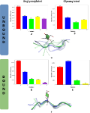
- approach, we aim to use the tools and workflows available as part of the Galaxy project to analyze MD simulations to find out if the sugar moiety of the Tn-antigen binds directly to the antibody. Further, if the sugar does not bind directly (as found previously), then we will use these analyses to observe
- how the sugar modulates binding. Methods The inputs, simulation scripts, Galaxy workflows (a series of tools and dataset actions that run in sequence), and data for these simulations are available at https://github.com/chrisbarnettster/bjoc-paper-2020-sm. Simulation There is an increasing number of
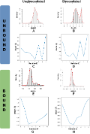
- pre-organized for antibody binding. A Ramachandran plot can be used to understand the role of the sugar moiety, by comparison of the dihedral angle distribution of the glycosidic linkage between the glycan and peptide portion of the Tn-antigen (Figure S3 in Supporting Information File 1). In solution