Search results
Search for "UV–vis spectra" in Full Text gives 257 result(s) in Beilstein Journal of Organic Chemistry. Showing first 200.
The B & B approach: Ball-milling conjugation of dextran with phenylboronic acid (PBA)-functionalized BODIPY
Beilstein J. Org. Chem. 2020, 16, 2272–2281, doi:10.3762/bjoc.16.188
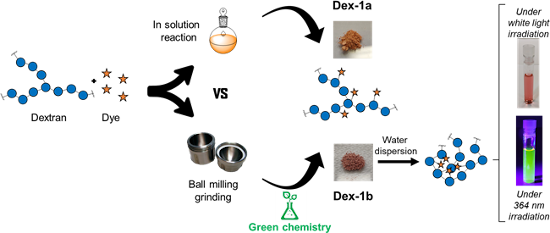
- by UV–vis spectroscopy (λmax = 508–511 nm). The DMSO/ethanol mixtures and ethanol solutions were dried under vacuum, the recovered dye was solubilized in DMSO, and the UV–vis spectra were recorded. The amount of recovered PBA-BODIPY (1) was estimated (Figure 2A), using the molar extinction
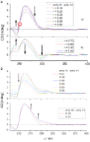
- -BODIPY-dextran conjugate Dex-1b were studied in water. The UV–vis spectra of Dex-1b reported in Figure 3A shows the same absorption pattern of the PBA-BODIPY (1, see Supporting Information File 1) [26]. The main absorption band corresponding to the transition S0 → S1, is observed at λabs = 508 nm. The
- out using a glass vacuum filter with 0.2 µm sartorius. UV–vis spectra were recorded on a Varian Cary 4000 UV–vis spectrophotometer using a 1 cm cell or a BioTeK Synergy H4 microplate reader. Fluorescence spectra were registered on a Jasco FP750 spectrofluorometer using a 1 cm cell. NMR spectra were


Naphthalene diimide bis-guanidinio-carbonyl-pyrrole as a pH-switchable threading DNA intercalator
Beilstein J. Org. Chem. 2020, 16, 2201–2211, doi:10.3762/bjoc.16.185
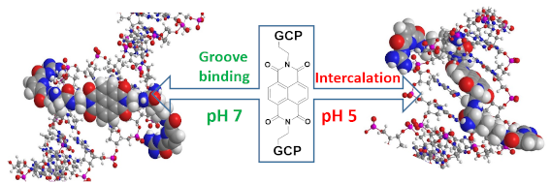
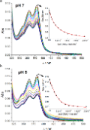
- longer incubation times [23][26][27], the time required for reaching equilibrium was checked by repeatedly collecting UV–vis spectra of compound 4 upon the additions of DNA or RNA aliquots to the dye solution in 10 s intervals. The results showed that an incubation period of 180 s proved to be sufficient
- : s, singlet; d, doublet, m, multiplet; br, broad. MALDI–TOF mass spectra were recorded on a Bruker BioTOF III. The UV–vis spectra were recorded on a Varian Cary 100 Bio spectrophotometer and CD spectra on JASCO J815 spectrophotometer at 25 °C using appropriate 1 cm path quartz cuvettes. The





Azo-dimethylaminopyridine-functionalized Ni(II)-porphyrin as a photoswitchable nucleophilic catalyst
Beilstein J. Org. Chem. 2020, 16, 2119–2126, doi:10.3762/bjoc.16.179
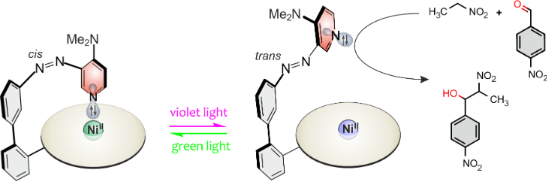
- ) in the PSS at 530 nm and 435 nm, determined by 1H NMR spectroscopy (600 MHz; for details, see Supporting Information File 1). a) UV–vis cuvette with a solution of porphyrin 1 (13.1 µM in THF) and the corresponding UV–vis spectra at 25 °C in the PSS at 530 nm (green) and 435 nm (blue). b) Signals of


Naphthalene diimide–amino acid conjugates as novel fluorimetric and CD probes for differentiation between ds-DNA and ds-RNA
Beilstein J. Org. Chem. 2020, 16, 2032–2045, doi:10.3762/bjoc.16.170
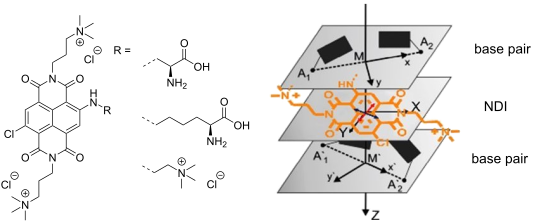
- molecular ground-state electrical dipole (µ = 7.04 D), which is an evidence for an intramolecular charge transfer (CT) character of the chromophore [34]. The predicted UV–vis spectra by TD-DFT are in excellent agreement with the experimental one (Figure 3, Table 1, the vibrational coupling is neglected
- (cacodylate buffer, pH 5.0, λex = 470 nm): λmax [nm] = 573; Φfl = 0.32. Spectrophotometric studies The UV–vis spectra were recorded on a Varian Cary 100 Bio spectrophotometer or on a Jasco V670/770 spectrometer, steady state fluorescence spectra were measured on a PTI QM4/2003 or Varian Eclipse


Synthesis and properties of quinazoline-based versatile exciplex-forming compounds
Beilstein J. Org. Chem. 2020, 16, 1142–1153, doi:10.3762/bjoc.16.101
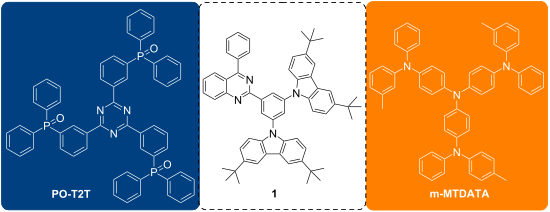
- . The theoretical UV–vis spectra of the derivatives had single absorption bands. The band at ca. 310 nm was characterized by a combination of various transitions towards several excited states. The theoretical UV spectrum of derivative 1 had a shoulder at 390 nm. In general, the experimental UV spectra


Synthesis of esters of diaminotruxillic bis-amino acids by Pd-mediated photocycloaddition of analogs of the Kaede protein chromophore
Beilstein J. Org. Chem. 2020, 16, 1111–1123, doi:10.3762/bjoc.16.98
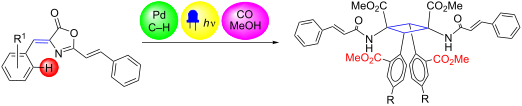
- was obtained with 96% isolated yield. In order to understand the different reactivities of oxazolones 2 and complexes 3 towards light, the absorption UV–vis spectra of the oxazolones 2 and ortho-palladated complexes 3 (CH2Cl2, 5 × 10⁻⁴ M) were measured and this provided some clues. The positions of
- cyclobutanes 4 and reductive elimination. UV–vis spectra of 2 and 3: absorption maxima (λmax, nm). Supporting Information Supporting Information File 319: Complete experimental section; copies of NMR spectra of 2 and 3. Supporting Information File 320: Copies on NMR spectra of compounds 4 and 5
- –vis spectra of oxazolones 2 show that the absorption is zero or close to zero. Therefore, the lack of reactivity of species 2 can be related with the absence of the absorption of light. However, the ortho-palladation causes a clear bathochromic shift from compounds 2 to 3 and this results in


Synthesis of novel multifunctional carbazole-based molecules and their thermal, electrochemical and optical properties
Beilstein J. Org. Chem. 2020, 16, 1066–1074, doi:10.3762/bjoc.16.93
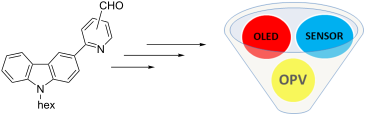
- Fluorescence and Absorbance Spectrometer. Each compound (7a/7b) displayed three distinctive absorption bands in the UV–vis spectra: high energy bands and mid energy bands were assigned to π–π* and n–π* transitions, whereas the low energy bands were assigned to an intramolecular charge transfer (ICT) transition
- the compounds are given in Figure 4. Solvatochromism In general, ICT-based absorption and emission bands show solvent dependency. This is better known as solvatochromism. The ICT behaviour of compounds 7a and 7b was further investigated in different solvents. Normalised UV–vis spectra of compounds 7a
- compounds 7a and 7b in dichloromethane. Normalised UV–vis spectra of compounds 7a and 7b in different solvents. PL spectra of compounds 7a and 7b in different solvents (A–H). Synthesis of compounds 7a and 7b from carbazole 1. i) NBS, DMF, 0 °C to rt, 24 h. ii) n-hexyl bromide, TBAI, NaOH (50%), 77 °C, 8 h


Towards triptycene functionalization and triptycene-linked porphyrin arrays
Beilstein J. Org. Chem. 2020, 16, 763–777, doi:10.3762/bjoc.16.70
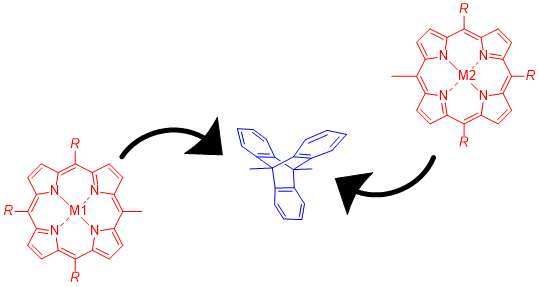
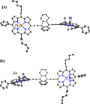
- linked which, theoretically, can cause a significant energy/charge sink. Moreover, the use of π-conjugated linkers in porphyrin arrays results in significantly altered UV–vis spectra, indicating very strong electronic coupling that causes the loss of individual unit characteristics through delocalization
- fluorescence emission spectra of related dimers (Figure 8), connected via different linker groups, were taken (Figure 9 and Figure 10). Both the triptycene-linked zinc porphyrin dimer 9 and BODIPY dimer 7 were compared with a meso–meso-linked dimer 19 [50] and butadiyne-linked dimer 20 [51]. The UV–vis spectra
- triptycene-linked porphyrin dimers 9 and 16, and a triptycene-linked porphyrin monomer 14 in CHCl3 (all compounds were excited at λ = 430 nm). Compounds used for spectroscopic comparisons. UV–vis spectra of various porphyrin/BODIPY dimers with different linker groups in CHCl3. Fluorescence emission spectrum





Synthesis of C70-fragment buckybowls bearing alkoxy substituents
Beilstein J. Org. Chem. 2020, 16, 681–690, doi:10.3762/bjoc.16.66
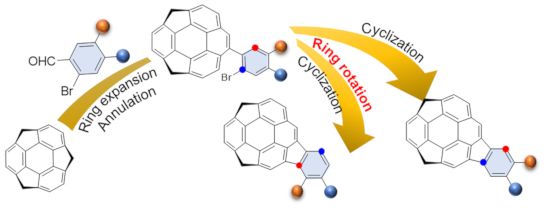
- hydrogen bonds (C37∙∙∙O1, C11∙∙∙O2, C40∙∙∙O4) (Figure 5c). Photophysical properties of the dialkoxides were investigated by UV–vis and emission spectroscopies (Figure 6). UV–vis spectra of 5a and 5b well reflected the electric property of 1, showing two strong bands observed at around 280–300 nm and 330
- axis and c) from the a axis. The dotted lines indicate; blue: π–π, grey: CH···π, red: CH···O interactions. In b) and c), hydrogen atoms which are not engaged in any interactions are omitted for clarity. a) UV–vis spectra and b) emission spectra of 1 and dialkoxides 5a–c. For all the spectra, the
- depths of 5b at the specific focused carbons. Supporting Information Supporting Information File 7: CIF files of compounds 5a–c. Supporting Information File 8: 1H and 13C NMR data of 3a, 3b, 4a, 4b and 5a–c, simulated UV–vis spectra of 5a, 5b and 5c. Funding This work was supported by a Grant-in-Aid


Efficient synthesis of 3,6,13,16-tetrasubstituted-tetrabenzo[a,d,j,m]coronenes by selective C–H/C–O arylations of anthraquinone derivatives
Beilstein J. Org. Chem. 2020, 16, 544–550, doi:10.3762/bjoc.16.51
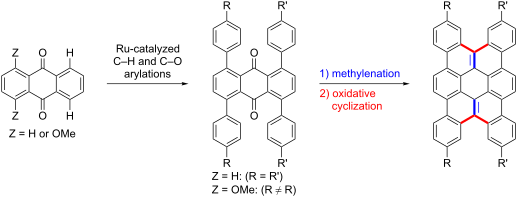
- the substituents in compounds 7 on their optical properties was studied by UV–vis spectroscopy (Figure 1). The UV–vis spectra of 7aa, 7bb, and 7ba were measured in chloroform, and the normalized UV–vis spectra are shown in Figure 1. These compounds showed similar peak patterns between 300 and 500 nm


Six-fold C–H borylation of hexa-peri-hexabenzocoronene
Beilstein J. Org. Chem. 2020, 16, 391–397, doi:10.3762/bjoc.16.37
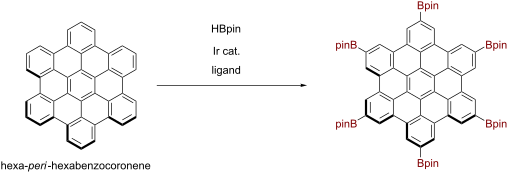
- 1 and Cartesian coordinates of the optimized structure of 1. Supporting Information File 101: UV–vis spectra, NMR spectra and Cartesian coordinates. Supporting Information File 102: Crystallographic information file of compound 1. Acknowledgements We thank Prof. Tsuyohiko Fujigaya (Kyushu


p-Pyridinyl oxime carbamates: synthesis, DNA binding, DNA photocleaving activity and theoretical photodegradation studies
Beilstein J. Org. Chem. 2020, 16, 337–350, doi:10.3762/bjoc.16.33
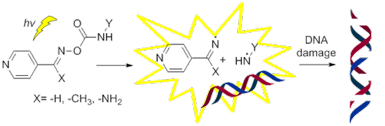
- cause of the activity. Therefore, the interaction of selected compounds, i.e., 11 and 12, with CT DNA was monitored by UV–vis spectroscopy and viscosity measurements. Additionally, the EB−displacing ability of the compounds was evaluated by fluorescence emission spectroscopy. The UV–vis spectra of a CT
- ; such changes may show the binding of the compounds to DNA which may result in the formation of a new conjugate between DNA and the compound under study [67]. The UV–vis spectra of the compounds (1 × 10⁻⁴ M) were recorded in the presence of CT DNA at increasing concentrations (diverse r’ values
- ) (Supporting Information File 1, Figure S-4.1). Both bands of the compound 11 (Supporting Information File 1, Figure S-4.1A) with λmax at 262 nm and 388 nm show hypochromism up to 14% and 2%, respectively, while for the band appearing at 271 nm a hyperchromism of 12% is observed. In the UV–vis spectra of


Potent hemithioindigo-based antimitotics photocontrol the microtubule cytoskeleton in cellulo
Beilstein J. Org. Chem. 2020, 16, 125–134, doi:10.3762/bjoc.16.14
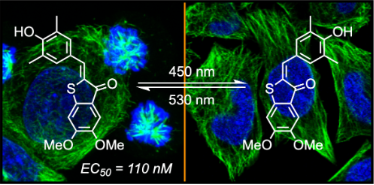
- , and high-yielding synthesis of HITub-4. Chemical structures of HITubs. Key variations with respect to HITub-4 are highlighted in dashed boxes. Photocharacterisation of HITub-4. a) Photochemical and thermal isomerisation. b) UV–vis spectra after saturating illumination at λ = 450, 505, and 530 nm




The interaction between cucurbit[8]uril and baicalein and the effect on baicalein properties
Beilstein J. Org. Chem. 2020, 16, 71–77, doi:10.3762/bjoc.16.9
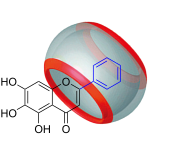
- concentrations of Q[8] were recorded (Figure 4A–C). Figure 4 shows the changes in the UV–vis spectra of BALE upon the gradual addition of Q[8]. The maximum absorption wavelength of BALE was at 270 nm and the host showed no absorbance in the range of >210 nm. The absorption spectra of the guest exhibited a


Starazo triple switches – synthesis of unsymmetrical 1,3,5-tris(arylazo)benzenes
Beilstein J. Org. Chem. 2020, 16, 22–31, doi:10.3762/bjoc.16.4
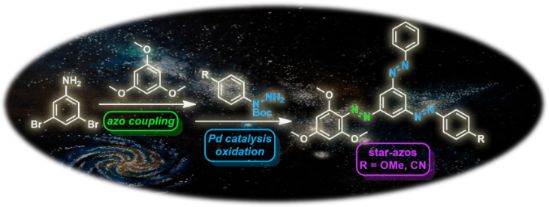
- and 3b showed characteristic UV–vis spectra of ABs with strong π–π* absorption, having their absorption maxima at 337 nm (3a) and 349 nm (3b), respectively (Figure 2a). In contrast to AB, the π–π* and n–π* bands of both compounds overlapped, forming shoulders at ca. 450 nm. The samples were irradiated
- switchable multistate photoswitches: previous [11][12] and present work. a) UV–vis spectra of tris(arylazo)benzenes 3a/3b in ethanol. b) Reversible photoisomerization of 3a and c) 3b using light of 365 nm wavelength to induce E→Z isomerization and of 448 nm wavelength for photochemical back-conversion


Synthesis and characterization of bis(4-amino-2-bromo-6-methoxy)azobenzene derivatives
Beilstein J. Org. Chem. 2019, 15, 3000–3008, doi:10.3762/bjoc.15.296
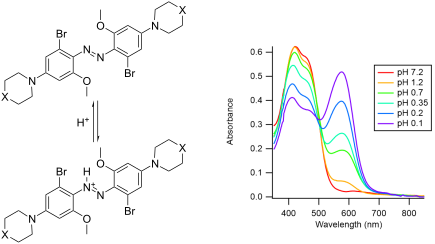
- , 2H), 4.11 (s, 6H), 3.45 (m, 8H), 3.00 (m, 8H); 13C NMR (126 MHz, DCM-d2) δ 158.9, 154.0, 140.2, 123.0, 111.5, 107.2, 66.9, 57.3, 45.1; HRMS (m/z): [M + H]+ calcd for C22H29Br2N6O2, 567.0719; found, 567.0713. UV–vis spectroscopy UV–vis spectra were recorded on a PerkinElmer LAMBDA 35, Shimadzu UV
- experiments. Estimates of the percentage of cis/trans isomers in PSSs Based on NMR spectra, we assumed that the fraction of Z-isomer present at equilibrium in the dark was negligible. Since UV–vis spectra obtained during thermal reversion exhibited an isosbestic point, we assumed that only E- and Z-isomers
- subjected to TD-SCF calculations using the same functionals and basis set, assuming the first 15 singlet excitations, and by applying a SMD (assuming water as the solvent) to implicitly approximate the effect of the solvent [29]. TD-SCF data were used to generate the simulated UV–vis spectra by applying a


Chemical tuning of photoswitchable azobenzenes: a photopharmacological case study using nicotinic transmission
Beilstein J. Org. Chem. 2019, 15, 2812–2821, doi:10.3762/bjoc.15.274
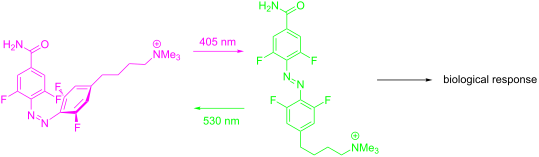
- Supporting Information File 1. Absorption spectroscopy UV–vis spectra were recorded using a Cary 50 spectrophotometer (Agilent, Santa Clara, CA, USA) at rt in quartz cuvettes with a 1 cm path length in HEPES buffer at pH 7.4. UPLC Chromatography was performed using a Waters Acuity Arc using Cortecs C-18




Skeletocutins M–Q: biologically active compounds from the fruiting bodies of the basidiomycete Skeletocutis sp. collected in Africa
Beilstein J. Org. Chem. 2019, 15, 2782–2789, doi:10.3762/bjoc.15.270

- range: 100–2500 m/z, capillary voltage: 4500 V, drying temperature: 200 °C). UV–vis spectra were recorded with a Shimadzu UV-2450 UV–vis spectrophotometer. The chromatogram in Figure 1 was recorded on a Bruker Agilent 1260 Infinity Series equipped with DAD and an ESI ion trap mass spectrometer (amaZon


A combinatorial approach to improving the performance of azoarene photoswitches
Beilstein J. Org. Chem. 2019, 15, 2753–2764, doi:10.3762/bjoc.15.266
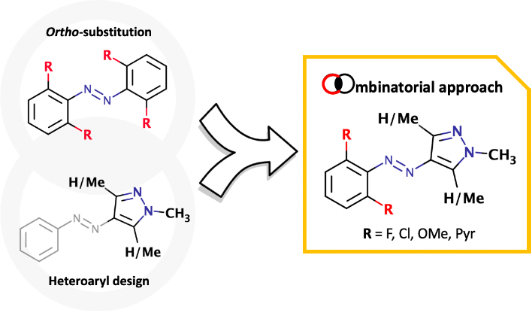
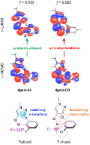
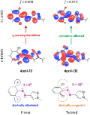
- 4pzMe-F2 (left), 4pzH-F2 (middle) and 4pzMe-OMe2 (right). Experimental UV–vis spectra of 4pzMe-F2, 4pzMe-Cl2, 4pzMe-OMe2 and 4pzH-F2 in MeCN at 25 µM. Theoretical half-lives (t1/2, theor in hours and days) calculated at the PBE0-D3/6-31G** level of theory for ortho-substituted arylazopyrazoles 4pzH-X




A photochemical determination of luminescence efficiency of upconverting nanoparticles
Beilstein J. Org. Chem. 2019, 15, 2671–2677, doi:10.3762/bjoc.15.260
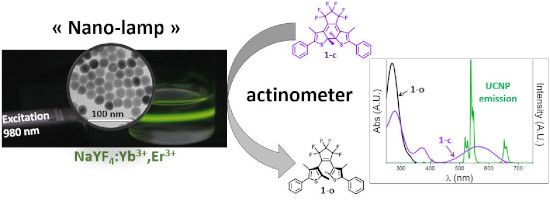
- length L of 9 cm, most of the light escapes the cuvette and no simplification can be done. Thus, privileging the spectral information (clear UV–vis spectra are indeed monitored) lead to a loss of information; another photoreactor design would then be necessary. Conclusion We have demonstrated that the


Plasma membrane imaging with a fluorescent benzothiadiazole derivative
Beilstein J. Org. Chem. 2019, 15, 2644–2654, doi:10.3762/bjoc.15.257
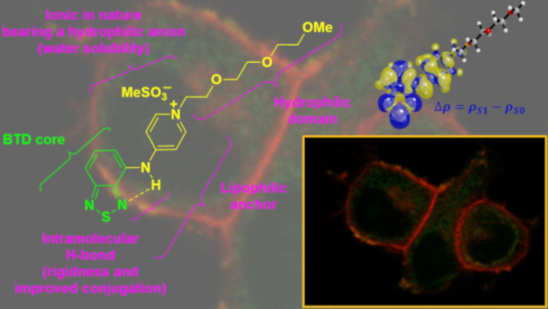
- geometry of BTD-4APTEG (implicit DMSO). (B) TD-DFT UV–vis spectra of BTD-4APTEG calculated at the PBE1PBE/6-311+G(2d,p) level of theory. Solvent effects were estimated under the IEF-PCM formalism. (C) PBE1PBE/6-311+G(2d,p)//CAM-B3LYP/6-311+G(d) HOMO and LUMO orbitals of BTD-4APTEG in DMSO involved in the


Nanangenines: drimane sesquiterpenoids as the dominant metabolite cohort of a novel Australian fungus, Aspergillus nanangensis
Beilstein J. Org. Chem. 2019, 15, 2631–2643, doi:10.3762/bjoc.15.256
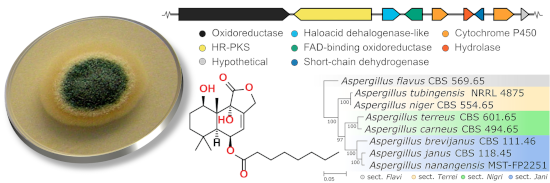
- General experimental details Optical rotations were acquired in MeOH on a Perkin-Elmer Model 341 polarimeter in a 50 × 5 mm cell or on a Jasco P-1010 polarimeter in a 100 × 3.5 mm cell. UV–vis spectra were acquired in MeCN on a Varian Cary 4000 spectrophotometer or a Jasco V-760 spectrophotometer in a 10


A toolbox of molecular photoswitches to modulate the CXCR3 chemokine receptor with light
Beilstein J. Org. Chem. 2019, 15, 2509–2523, doi:10.3762/bjoc.15.244
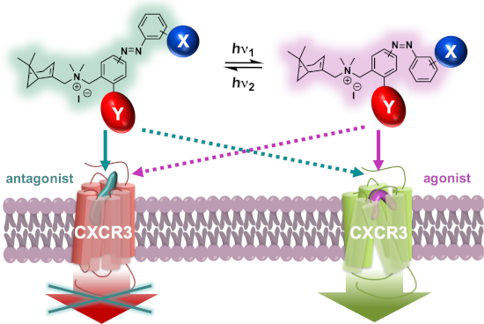
- which was followed by methylation to afford 6f–h as orange solids with ≥98% trans-isomer. The synthetic strategies for the synthesis of compound 6i were reported in our previous communication [7]. In the subseries depicted in Table 3, several notable differences in both the UV–vis spectra (Figure S1



In search of visible-light photoresponsive peptide nucleic acids (PNAs) for reversible control of DNA hybridization
Beilstein J. Org. Chem. 2019, 15, 2500–2508, doi:10.3762/bjoc.15.243
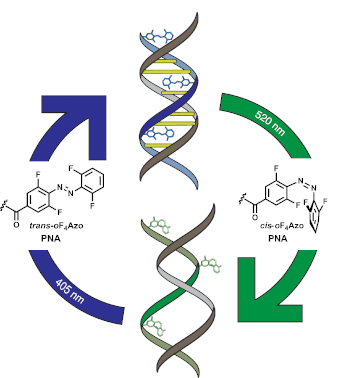
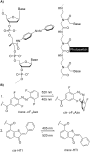
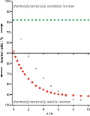
- irradiated to obtain maximal cis (oF4Azo, 520 nm, 10 min) or trans (HTI, 405 nm, 2 min) and stored in the dark. PNA12(oF4Azo) (3) was also measured with continuous heating at 90 °C (gray squares). UV–vis spectra were collected at different time points during 10 h. Curves derived were calculate from two



Experimental and computational electrochemistry of quinazolinespirohexadienone molecular switches – differential electrochromic vs photochromic behavior
Beilstein J. Org. Chem. 2019, 15, 2473–2485, doi:10.3762/bjoc.15.240
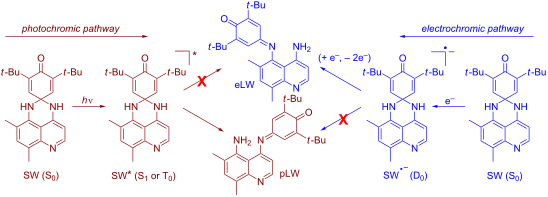
- assignment. UV–vis spectra taken of eLW solutions generated by bulk electrolysis in acetonitrile and acetonitrile-d3 were compared against photoirradiated (pLW) solutions. No difference was observed in the UV–vis spectrum of the LW isomer prepared from either photolysis or electrolysis of solutions of 1b (as