


Search results
Search for "catalytic hydrogenation" in Full Text gives 137 result(s) in Beilstein Journal of Organic Chemistry.
Selected synthetic strategies to cyclophanes
Beilstein J. Org. Chem. 2015, 11, 1274–1331, doi:10.3762/bjoc.11.142
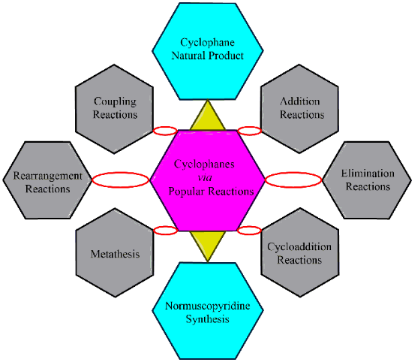
- subjected to the RCM with G-I (12) as a catalyst in CH2Cl2. Later, catalytic hydrogenation followed by deacetylation gave compound 141 (48%). Similarly, alkyne metathesis of compound 142 was carried out in the presence of Mo(CO)6 and 2-fluorophenol in chlorobenzene and heated under reflux to yield the
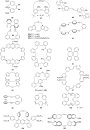
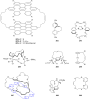
- °C in dimethyl propylene urea (DMPU) gave dione 235 (72%). An RCM sequence of compound 235 in the presence of G-I (12) catalyst gave the RCM product 236. A subsequent catalytic hydrogenation generated the saturated dione 237. Finally, the pyridine ring has been introduced by reacting dione 237 with






The chemical behavior of terminally tert-butylated polyolefins
Beilstein J. Org. Chem. 2015, 11, 1246–1258, doi:10.3762/bjoc.11.139
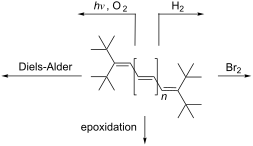
- Lebensmittelsicherheit (BVL), Messeweg 11/12, D-38104 Braunschweig, Germany 10.3762/bjoc.11.139 Abstract The chemical behavior of various oligoenes 2 has been studied. The catalytic hydrogenation of diene 3 yielded monoene 4. Triene 7 was hydrogenated to diene 8, monoene 9 and saturated hydrocarbon 10. Bromine addition
- of the hydrocarbons 2. Results and Discussion Catalytic hydrogenation We started our studies on the reactive behavior of polyolefins 2 with one of the formally simplest alkene reactions: catalytic hydrogenation. When diene 3 was hydrogenated under relatively mild conditions (Pd/C, EtOH, room temp
- levels. The polyenes 2 stabilized by terminal tert-butyl substituents. The catalytic hydrogenation of diene 3. The catalytic hydrogenation of triene 7. Addition of bromine to model dienes. Bromine addition to diene 3 and triene 7. Bromine addition to the higher oligoenes 19–22. Epoxidation of triene 7


Cathodic hydrodimerization of nitroolefins
Beilstein J. Org. Chem. 2015, 11, 1163–1174, doi:10.3762/bjoc.11.131
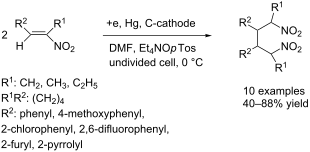
- in [6][7][8]. There have been reports on the reductive dimerization of nitro alkenes prior to 1991. 1,4-Dinitro-2,3-diphenylbutane (3) has been obtained in less than 20% yield in the catalytic hydrogenation of β-nitrostyrene (4) [11]. Hydrodimerization of 4 was observed in enzymatic reduction [12


An intramolecular C–N cross-coupling of β-enaminones: a simple and efficient way to precursors of some alkaloids of Galipea officinalis
Beilstein J. Org. Chem. 2015, 11, 884–892, doi:10.3762/bjoc.11.99

- catalytic hydrogenation of the corresponding quinolones 2 (Scheme 2) with yields not greater than 43%. In the present work, we introduce a quite different approach to the exocyclic enaminones 1 based on an intramolecular C–N cross-coupling of enaminones 3 (Scheme 2). Results and Discussion The synthesis of


Hydrogenation of unactivated enamines to tertiary amines: rhodium complexes of fluorinated phosphines give marked improvements in catalytic activity
Beilstein J. Org. Chem. 2015, 11, 622–627, doi:10.3762/bjoc.11.70
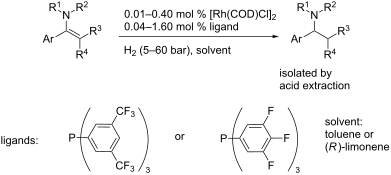
- as purification step, particularly if catalysts could be recycled, although that is likely to be challenging in moisture sensitive catalytic hydrogenation chemistry. The ligand electronic effects seem counter intuitive at first glance, but they support the finding by DFT calculations that enamine



A simple and efficient method for the preparation of 5-hydroxy-3-acyltetramic acids
Beilstein J. Org. Chem. 2015, 11, 323–327, doi:10.3762/bjoc.11.37
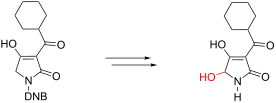
- attempts to remove the benzyl group under various catalytic hydrogenation conditions failed entirely. Cleavage of the DMB group with TFA [16] was also tried, but brought no success and extensive formation of polymerization products of the corresponding iminium ion was observed. Oxidative cleavage of the


Synthesis of divalent ligands of β-thio- and β-N-galactopyranosides and related lactosides and their evaluation as substrates and inhibitors of Trypanosoma cruzi trans-sialidase
Beilstein J. Org. Chem. 2014, 10, 3073–3086, doi:10.3762/bjoc.10.324
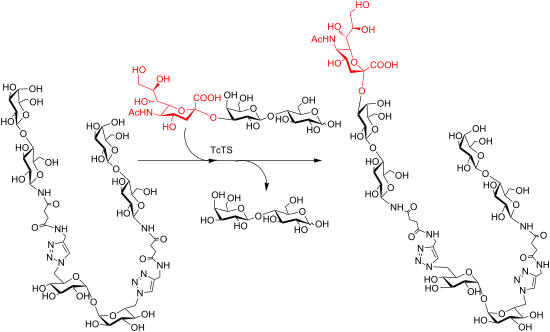
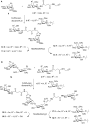
- trans-sialidase. Taking into consideration that mainly ester but also glycosidic linkages are labile in biological fluids, we choose amide and thioglycosidic bonds to attach the sugar residues to the platforms. 2,3,4,6-Tetra-O-acetyl-β-D-galactosylamine (1) was obtained by catalytic hydrogenation of the




(2R,1'S,2'R)- and (2S,1'S,2'R)-3-[2-Mono(di,tri)fluoromethylcyclopropyl]alanines and their incorporation into hormaomycin analogues
Beilstein J. Org. Chem. 2014, 10, 2844–2857, doi:10.3762/bjoc.10.302
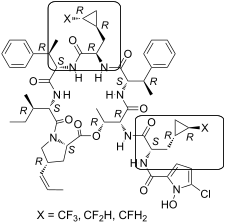
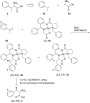
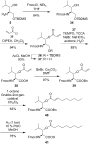
- (DCPM) ester of N-Fmoc-protected Ile 37, was condensed with N-Z-protected (βMe)Phe-OH 39. After removal of the Z group from the N-terminus of the resulting dipeptide 42 by catalytic hydrogenation, the product was coupled with N-Fmoc-protected (2R,1'R,2'R)-[3-(mono-, di- or tri-)fluoromethylcyclopropyl




A versatile δ-aminolevulinic acid (ΑLA)-cyclodextrin bimodal conjugate-prodrug for PDT applications with the help of intracellular chemistry
Beilstein J. Org. Chem. 2014, 10, 2414–2420, doi:10.3762/bjoc.10.251
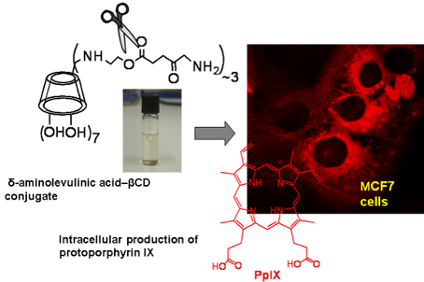
- stretching vibrations of the azido group (2104 cm−1, (Supporting Information File 1, Figure S5). The so obtained conjugate 9 was subsequently reduced under strongly acidic catalytic hydrogenation conditions to 2 in nearly quantitative yield. Crucial to the spectroscopic characterization of the product was


Derivatives of the triaminoguanidinium ion, 3. Multiple N-functionalization of the triaminoguanidinium ion with isocyanates and isothiocyanates
Beilstein J. Org. Chem. 2014, 10, 2255–2262, doi:10.3762/bjoc.10.234
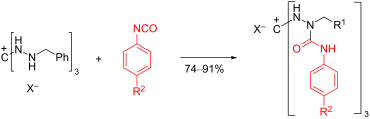
- was combined with benzaldehyde and hydratropic aldehyde to furnish the corresponding tris(imines), which were converted into 1,2,3-tris(benzylamino)guanidinium salts by catalytic hydrogenation in the former, and by borane reduction in the latter case. The resulting alkyl-substituted
- halides, tosylates and triflates. In our hands, solvent-free heterogenous mixtures of the solid guanidinium salt and a liquid alkylating reagent did not react as desired. Therefore, we developed a two-step alkylation procedure, by which the catalytic hydrogenation of 1,2,3-tris(benzyliminyl)guanidinium
- %) under sonication of the reaction mixture with ultrasound. Concerning the conversion of salt 4 into a 1,2,3-tris(2-phenylpropylamino)guanidinium salt 5, all attempts to reduce 4 by catalytic hydrogenation failed, and classical reducing agents such as sodium borohydride and lithium aluminum hydride showed


Five-membered ring annelation in [2.2]paracyclophanes by aldol condensation
Beilstein J. Org. Chem. 2014, 10, 2021–2026, doi:10.3762/bjoc.10.210
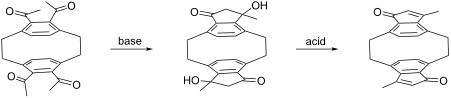
- compounds 2 we previously prepared precursors such as 5 (easily available by Wittig–Horner reaction of the appropriate bis-formyl cyclophanes) and subjected them to catalytic hydrogenation followed by a double Friedel–Crafts cyclization. However, it appeared to us that a more direct route to these useful


Postsynthetic functionalization of glycodendrons at the focal point
Beilstein J. Org. Chem. 2014, 10, 1482–1487, doi:10.3762/bjoc.10.152
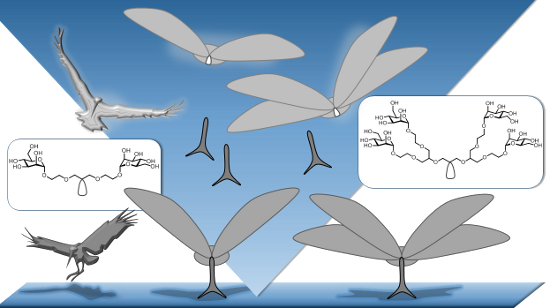
- cross coupling products 16 and 17 in 77% and 43% respective yields. Again, only the trans-metathesis products were obtained. The cross-coupled alkenes 14 and 16 were carried on in catalytic hydrogenation reactions for reduction of the double bond, followed by deprotection of the sugar isopropylidene


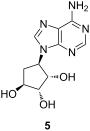
Stereoselective synthesis of carbocyclic analogues of the nucleoside Q precursor (PreQ0)
Beilstein J. Org. Chem. 2014, 10, 1333–1338, doi:10.3762/bjoc.10.135
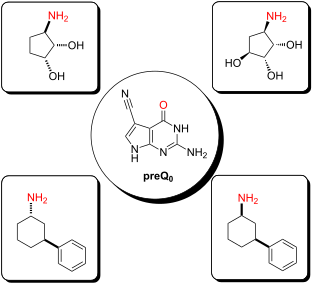
- trans-isomers. After column chromatography the isolated diol 12 showed a diastereomeric purity of >99% by 1H NMR. The dibenzoate 13 was obtained in good yield following standard acylation conditions [31]. Final removal of the two benzyl groups was accomplished in excellent yield using catalytic
- hydrogenation [30], using EtOAc as a co-solvent to improve the substrate solubility. Amine 14 was coupled with 9 and the pivalamide and benzoate groups were cleaved in the one-pot procedure previously described to afford 15, the (1RS,2SR,3RS)-3-aminocyclopentane-1,2-diol derivative of PreQ0. Adapting a protocol




Amino acid motifs in natural products: synthesis of O-acylated derivatives of (2S,3S)-3-hydroxyleucine
Beilstein J. Org. Chem. 2014, 10, 1135–1142, doi:10.3762/bjoc.10.113
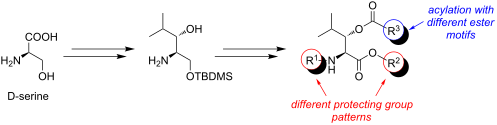
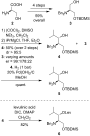
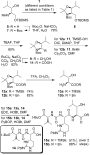
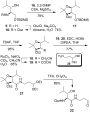
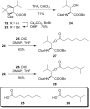
- of the benzyl ester by catalytic hydrogenation, 6-methylheptanoic acid (26) could be obtained in 92% yield for the final step (Scheme 5). With respect to the (2S,3S)-3-hydroxyleucine motif occurring in several different peptidic natural products (vide supra), we also investigated the synthesis of N




Visible light mediated intermolecular [3 + 2] annulation of cyclopropylanilines with alkynes
Beilstein J. Org. Chem. 2014, 10, 975–980, doi:10.3762/bjoc.10.96
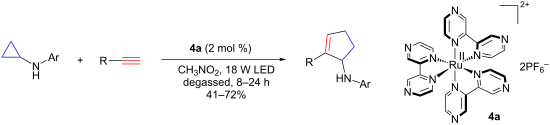
- 21 in 52% yield. The fused indoline motif was formed via an intramolecular Heck reaction under Fu’s conditions [41] to provide a mixture of two olefinic regioisomers 22, which were converted to saturated fused indoline 23 under standard catalytic hydrogenation conditions in a combined yield of 40


Group-assisted purification (GAP) chemistry for the synthesis of Velcade via asymmetric borylation of N-phosphinylimines
Beilstein J. Org. Chem. 2014, 10, 746–751, doi:10.3762/bjoc.10.69
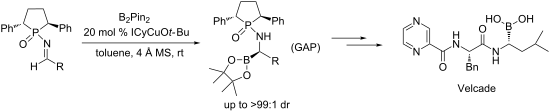
- -catalyzed borylation of the imine anchored with chiral auxiliaries [16][17]; (3) to conduct asymmetric catalytic hydrogenation as the key step to control the chiral center of boronic aicd [18]. As anticipated, the above known syntheses required traditional purification methods using column chromatography or


A novel family of (1-aminoalkyl)(trifluoromethyl)- and -(difluoromethyl)phosphinic acids – analogues of α-amino acids
Beilstein J. Org. Chem. 2014, 10, 722–731, doi:10.3762/bjoc.10.66
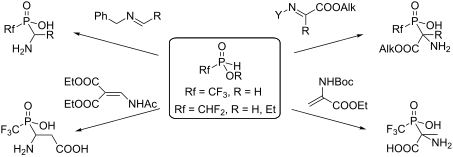
- did not form hydrochlorides under this procedure consistent with the strongly acidic nature of the CF3 phosphinic acid group. Catalytic hydrogenation of intermediates 13a,b with Pd/C removed the benzyl groups and produced the corresponding acids 14a,b in high yields. The hydrophosphinylation of
- catalytic hydrogenation conditions (II). To a solution of compounds, containing N-Bn fragment (5 mmol) in ethanol (10 mL) 10% Pd/C (0.05 g) was added, and the mixture was hydrogenated at room temperature and normal pressure. After ~3 h the precipitation commenced, and water (5 mL) was added to dissolve this


Synthesis of (2S,3R)-3-amino-2-hydroxydecanoic acid and its enantiomer: a non-proteinogenic amino acid segment of the linear pentapeptide microginin
Beilstein J. Org. Chem. 2014, 10, 667–671, doi:10.3762/bjoc.10.59
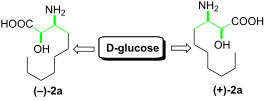
- ]. While targeting the synthesis of 2a, the Wittig olefination of 3a with n-hexyltriphenylphosphonium bromide and t-BuOK gave olefin 4a as a diasteromeric mixture of Z and E-isomers in the ratio 9.5:0.5 as shown by 1H NMR of the crude product. The catalytic hydrogenation of alkene 4a with 10% Pd/C in


From porphyrin benzylphosphoramidate conjugates to the catalytic hydrogenation of 5,10,15,20-tetrakis(pentafluorophenyl)porphyrin
Beilstein J. Org. Chem. 2014, 10, 628–633, doi:10.3762/bjoc.10.54
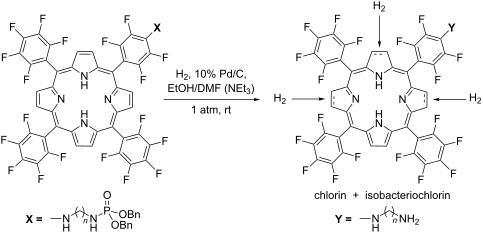
- of the catalytic hydrogenation to TPPF20 with 10% Pd/C was then studied with a variety of solvents. The results showed that ethanol/DMF is the solvent of choice to produce chlorin TPCF20 and an ethanol/DMF/NEt3 mixture is more adequate to produce isobacteriochlorin (TPIF20). Keywords: catalytic
- with 10% Pd/C and NEt3 the benzyl groups could not be selectively removed without affecting the phosphoramidate moiety and the porphyrin core. Catalytic hydrogenation of TPPF20 with H2/10% Pd/C There are many methods for performing the reduction of porphyrins (or metalloporphyrins) leading to different
- levels of hydrogenation on the β-pyrrolic double bonds [12][13]. Most of these methods employ chemicals other than H2 as hydrogen donors to reduce porphyrins into chlorins [14][15][16][17][18]. In our case, we decided to investigate the extent of the direct catalytic hydrogenation with H2 over TPPF20 in


New syntheses of 5,6- and 7,8-diaminoquinolines
Beilstein J. Org. Chem. 2013, 9, 2669–2674, doi:10.3762/bjoc.9.302
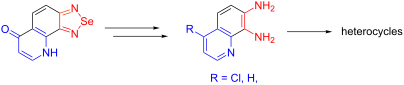
- method, the Skraup reaction of 3-chloroaniline led to 7-chloroquinoline which, after nitration, replacement of the chlorine atom by the amino group and catalytic hydrogenation on 5% palladium on charcoal, yielded 7,8-diaminoquinoline [10]. The preparation of 5,6-diaminoquinoline is more effective because
- recrystallisation from toluene (Scheme 1). The temperature of the chlorination (90 °C) was found to be crucial, since heating of the reaction mixture under reflux led to a rapid decomposition. The catalytic hydrogenation of 6-chloroderivative 2 using 10% palladium on charcoal or Raney nickel did not afford 7,8
- -chloroderivative 2 was performed in two successive steps. First, the reductive deselenation with SnCl2·2H2O in concentrated hydrochloric acid afforded 4-chlorodiaminoquinoline 4 in 89% yield. The subsequent catalytic hydrogenation on 10% palladium on charcoal in the absence of base, after filtration of the


The preparation of several 1,2,3,4,5-functionalized cyclopentane derivatives
Beilstein J. Org. Chem. 2013, 9, 1705–1712, doi:10.3762/bjoc.9.195
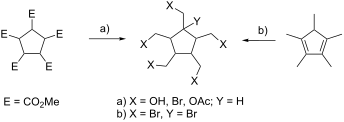
- excellent yield [7]. This bicyclic adduct was converted by ozonolysis followed by LAH reduction into the all-cis-derivative 15, whose benzyl ether protection group was finally removed by catalytic hydrogenation over palladium on carbon [7][8]. The full experimental details and the complete set of the



Synthesis of the calcilytic ligand NPS 2143
Beilstein J. Org. Chem. 2013, 9, 1383–1387, doi:10.3762/bjoc.9.154
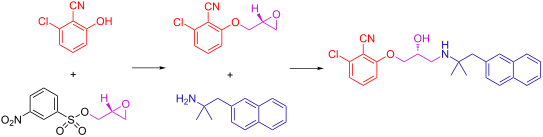
- ethanol under reflux. Subsequently, the crude pyridinium salt 10 was exposed to the sodium salt of 2-nitropropane (11) to give nitro compound 12. Reduction of the nitro group in 12 by catalytic hydrogenation at atmospheric pressure to produce amine 6 has previously been described by Kamal and Chouhan [17


Simple and rapid hydrogenation of p-nitrophenol with aqueous formic acid in catalytic flow reactors
Beilstein J. Org. Chem. 2013, 9, 1156–1163, doi:10.3762/bjoc.9.129
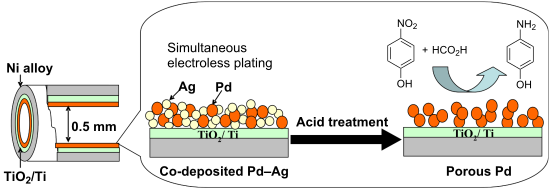
- produced in the syntheses of various chemicals including dyes, pharmaceuticals, and anticorrosive lubricants [14][15][16]. The catalytic hydrogenation of aromatic nitro compounds with H2 has been studied extensively in the presence of Pd, Pt, Ni, and Rh metals [14][16][17][18][19][20][21][22]. In the light
- catalytic hydrogenation of p-nitrophenol. Influence of temperature on the conversion of 0.01 M p-nitrophenol with 0.1 M formic acid at 30 °C and 40 °C. Tubular reactors coated with Pd, PdO, Pd–Ag, porous Pd or porous PdO were applied for demonstration of the catalytic activity. All experiments were


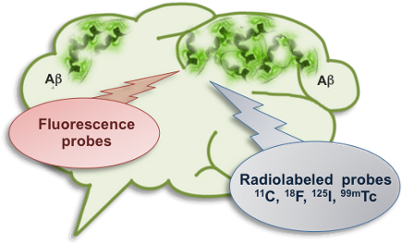
Amyloid-β probes: Review of structure–activity and brain-kinetics relationships
Beilstein J. Org. Chem. 2013, 9, 1012–1044, doi:10.3762/bjoc.9.116
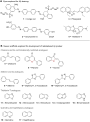
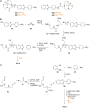
- ). Boric acid catalyzed condensation of 4-nitro-2-aminophenol (103) and 4-dimethylaminobenzoic acid (101) gave the nitro intermediate 104. Catalytic hydrogenation as above gave the amine intermediate, and subsequent reaction with 4-iodobenzoyl chloride (105) and installation of the radiolabel gave the
- to decrease molecular weight and increase lipophilicity and afforded [125I]IBOX (94) [70]. Compound 94 was prepared via boric acid catalyzed condensation of 5-nitro-2-aminophenol (100) and 4-dimethylaminobenzoic acid (101) to give the nitro intermediate 102, which was reduced through catalytic
- hydrogenation to the amine (Scheme 8A). Subsequent conversion to the diazonium ion and displacement with iodide ion gave IBOX, which was radiolabeled to give 94. Compound 94 showed similar affinity for Aβ1-40 aggregates when compared to 58a, and it was able to label Aβ plaques in postmortem AD brain sections









Simple synthesis of pyrrolo[3,2-e]indole-1-carbonitriles
Beilstein J. Org. Chem. 2013, 9, 934–941, doi:10.3762/bjoc.9.107
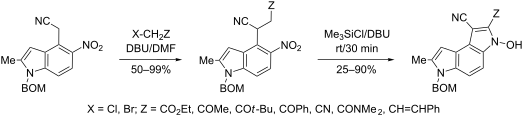
- ketone 5d upon reduction with SnCl2 cyclized to pyrrolo[3,2-f]quinoline-9-carbonitrile 7 [17]. The removal of the benzyloxymethyl group from 1-(benzyloxymethyl)pyrrolo[3,2-e]indoles by catalytic hydrogenation has been described by Macor [6]. The hydroxy group from the N-hydroxypyrrole fragment can be





