Search results
Search for "electrostatic interactions" in Full Text gives 120 result(s) in Beilstein Journal of Organic Chemistry.
Cross-linked cyclodextrin-based material for treatment of metals and organic substances present in industrial discharge waters
Beilstein J. Org. Chem. 2016, 12, 1826–1838, doi:10.3762/bjoc.12.172
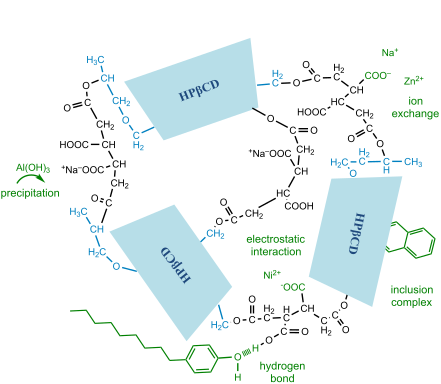
- groups and CD cavities, the adsorption mechanism involves four main interactions: ion exchange, electrostatic interactions and precipitation for metal removal, and inclusion complexes for organics removal. In industrial discharge waters, competition effects appeared, especially because of the presence of
- material was initially activated by NaHCO3. Discussion To explain the adsorption performance of polyBTCA-CD, a chemisorption mechanism involving several interactions can occur including ion exchange, electrostatic interactions, inclusion complexation and/or precipitation [3][12][13][14][15][16]. The
- sodium bicarbonate was necessary to enhance metal retention, as also reported by Ducoroy et al. [17], allowing for a removal efficiency for metals higher than 99% for Co2+, Ni2+ and Zn2+, through both electrostatic interactions and ion exchange. Indeed, during the process of polymer synthesis, the cross


Beta-hydroxyphosphonate ribonucleoside analogues derived from 4-substituted-1,2,3-triazoles as IMP/GMP mimics: synthesis and biological evaluation
Beilstein J. Org. Chem. 2016, 12, 1476–1486, doi:10.3762/bjoc.12.144
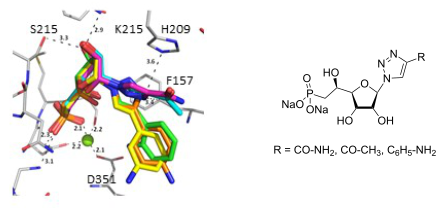
- very close to that of IMP or to the previously characterized inhibitor, UA1776. This may be explained by the presence of a phosphonate chain in all compounds which binds to the protein by electrostatic interactions through the magnesium ion and thus largely contributing to the final score. As the


Stimuli-responsive HBPS-g-PDMAEMA and its application as nanocarrier in loading hydrophobic molecules
Beilstein J. Org. Chem. 2016, 12, 939–949, doi:10.3762/bjoc.12.92
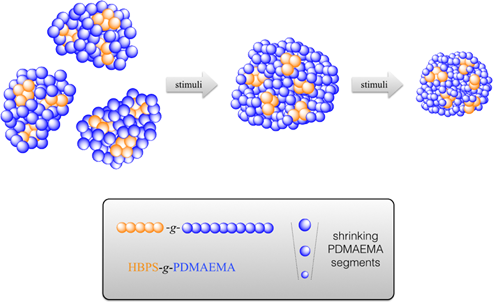
- aggregation behavior of HBPS-g-PDMAEMA The electrostatic interaction is a major factor to influence the behavior of PDMAEMA in aqueous solution. So in this work, the influence of ionic strength, which affects the electrostatic interactions, was studied. In this case, pH was not adjusted and deionized water
- aqueous solution with relatively low concentrations of NaCl, and there was no maximum point. This is because higher concentrations of NaCl lowered the repulsive electrostatic interactions between PDMAEMA chains. So, higher concentrations of NaCl led to smaller aggregation sizes. The change of size was


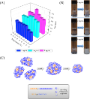


Supramolecular structures based on regioisomers of cinnamyl-α-cyclodextrins – new media for capillary separation techniques
Beilstein J. Org. Chem. 2016, 12, 97–109, doi:10.3762/bjoc.12.11
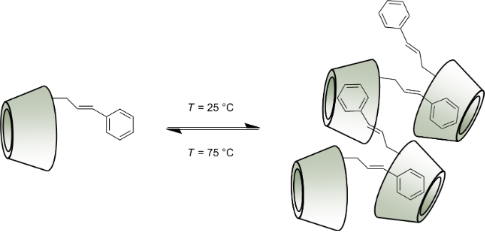
- held together by non-covalent interactions, such as electrostatic interactions, coordination bonds, hydrogen bonds, hydrophobic interactions and host–guest interactions [1]. Their formation is spontaneous and reversible by self-assembly of the monomer units. Because of this special non-covalent


Supramolecular polymer assembly in aqueous solution arising from cyclodextrin host–guest complexation
Beilstein J. Org. Chem. 2016, 12, 50–72, doi:10.3762/bjoc.12.7
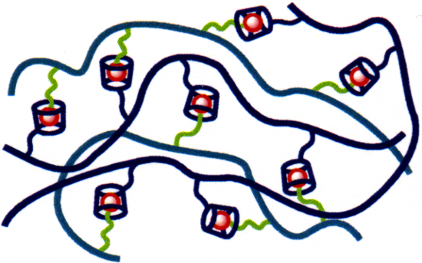
- associative forces including hydrogen bonding, coordinate bonding, electrostatic interactions and hydrophobic interactions is ubiquitous in nature. This is exemplified by the use of DNA and RNA complementarity [1][2] and polypeptide helix formation [3][4] to produce three-dimensional structures and materials


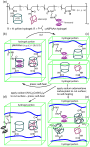
Physical properties and biological activities of hesperetin and naringenin in complex with methylated β-cyclodextrin
Beilstein J. Org. Chem. 2015, 11, 2763–2773, doi:10.3762/bjoc.11.297
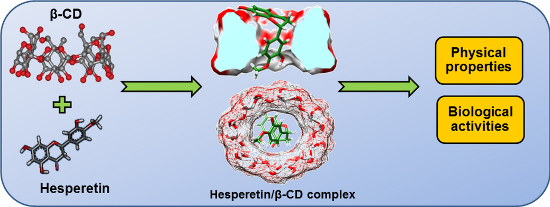
- was truncated within a 12 Å cutoff distance. The particle-mesh of Ewald’s method [64] was used for adequate treatment of the long-range electrostatic interactions with 12 Å cutoff. All bond lengths involving hydrogen atoms were constrained by SHAKE [32]. The coordinates were recorded every 500 steps


Size-controlled and redox-responsive supramolecular nanoparticles
Beilstein J. Org. Chem. 2015, 11, 2388–2399, doi:10.3762/bjoc.11.260
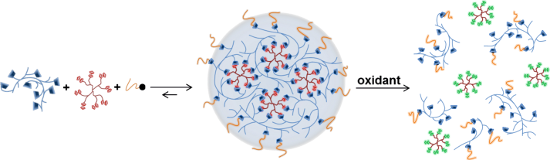
- role in controlling the aggregate growth. The attractive supramolecular and repulsive electrostatic interactions constitute a balance of forces in this system at low ionic strengths. At higher ionic strengths, the increased charge screening led to a loss of electrostatic repulsion and therefore to
- . Davis et al. showed the formation of SNPs using attractive electrostatic interactions between positively charged β-cyclodextrin (CD)-containing polymers and negatively charged siRNA at the core [8]. Neutral adamantyl-grafted poly(ethylene glycol) (Ad-PEG) was incorporated at the surface to stabilize
- repulsive electrostatic interactions using a multicomponent system based on a linear, negatively charged polymer. The force balance used in the latter approach was only observed with negatively charged polymers at low ionic strengths, and it is not known whether this balance occurs also for positively


Co-solvation effect on the binding mode of the α-mangostin/β-cyclodextrin inclusion complex
Beilstein J. Org. Chem. 2015, 11, 2306–2317, doi:10.3762/bjoc.11.251
- on a modified linear response to treat electrostatic interactions with an empirical term treating the dispersion interactions. In this work, the ΔGsolv was considered as polar and non-polar solvation terms. The polar solvation term is evaluated from the Poisson–Boltzmann (PB) solvation method which
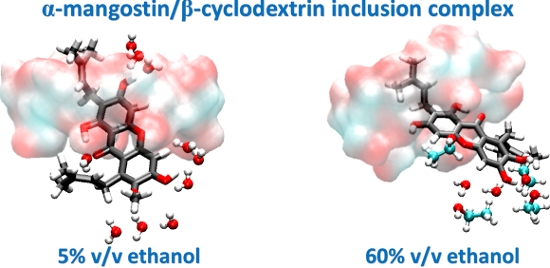
- ) was a preferable arrangement. On the other hand, in complex I, the secondary rim is wide enough to support two functional groups of the C-ring. Even though α-MGS has three hydroxy groups, no hydrogen bonding between guest and host molecules was detected. Thus, electrostatic interactions may not be the
- higher than for electrostatic interactions (ΔEele). Through summation of the solvation free energy (ΔGsolv) and the entropy term (TΔS), the predicted binding free energies (ΔGbind) of the inclusion complexes I and II are similar with values of –8.86 ± 3.25 and –9.06 ± 2.87 kcal/mol, respectively. Thus



Efficient synthesis of π-conjugated molecules incorporating fluorinated phenylene units through palladium-catalyzed iterative C(sp2)–H bond arylations
Beilstein J. Org. Chem. 2015, 11, 2012–2020, doi:10.3762/bjoc.11.218
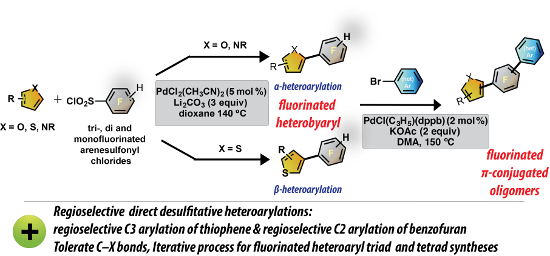
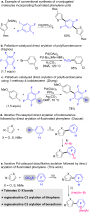
- dramatically influence both chemical properties and reactivities owing to its electronegativity, size, lipophilicity, and electrostatic interactions. For example, introduction of fluorine into natural products can result in beneficial biological properties [6]. On the other hand, fluorinated π-conjugated



Surprisingly facile CO2 insertion into cobalt alkoxide bonds: A theoretical investigation
Beilstein J. Org. Chem. 2015, 11, 1340–1351, doi:10.3762/bjoc.11.144
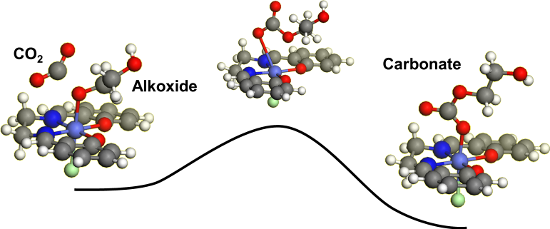
- )-phenoxide to form zinc(II)–phenylcarbonate [47]. The CO2 insertion was found to take place via electrostatic interactions between the electron lone pairs of the zinc-bonded oxygen and the carbon of CO2, forming an intermediate that finally produces a stable insertion product. Current research: CO2 Insertion


Glycoluril–tetrathiafulvalene molecular clips: on the influence of electronic and spatial properties for binding neutral accepting guests
Beilstein J. Org. Chem. 2015, 11, 1023–1036, doi:10.3762/bjoc.11.115
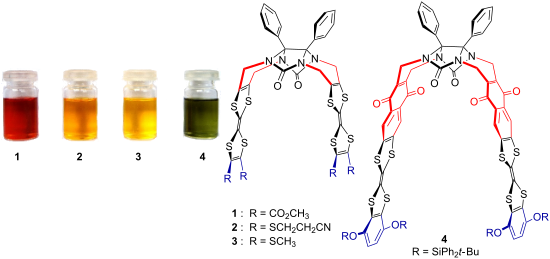
- second oxidation step (Eapp0ox2) leading to fully oxidized TTF units is in accordance with independent TTF2+ states subject to repulsive electrostatic interactions. Such splitting phenomenon of the first oxidation wave has been previously reported by Azov et al. for TTF-containing molecular tweezers




Impact of multivalent charge presentation on peptide–nanoparticle aggregation
Beilstein J. Org. Chem. 2015, 11, 792–803, doi:10.3762/bjoc.11.89
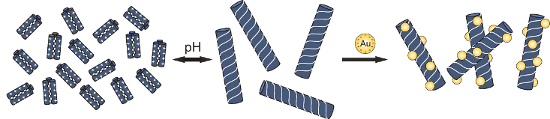
- Strategies to achieve controlled nanoparticle aggregation have gained much interest, due to the versatility of such systems and their applications in materials science and medicine. In this article we demonstrate that coiled-coil peptide-induced aggregation based on electrostatic interactions is highly
- of assemblies is most likely achieved by hydrogen bonds or other common receptor–binding interactions [28]. Although it is known that nanoparticles can be organised by binding to membranes by means of electrostatic interactions between the charged head group of the lipid and the oppositely charged
- nanoparticle [29], only limited effort has been put forth to use peptides or proteins to organize nanoparticles by electrostatic interactions [30][31]. As the overall net charge of a peptide is pH dependent, this can be a powerful tool for the controlled and reversible assembly of nanoparticles. Recently we


Discrete multiporphyrin pseudorotaxane assemblies from di- and tetravalent porphyrin building blocks
Beilstein J. Org. Chem. 2015, 11, 748–762, doi:10.3762/bjoc.11.85
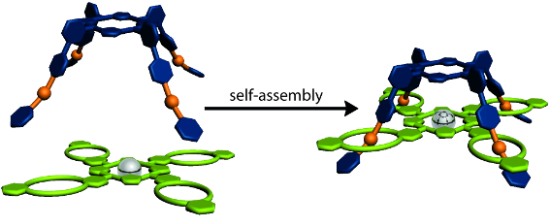
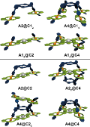
- (Soret band) and less intense absorption bands between 500 and 600 nm (Q-bands). However, A4 shows rather strong aggregation even in the µM concentration regime likely caused by electrostatic interactions mediated by the closely associated BArF counter-ions that are expected to be significant as rather



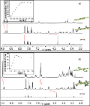


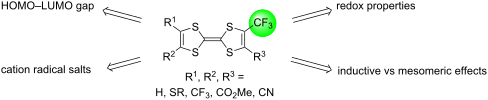
Trifluoromethyl-substituted tetrathiafulvalenes
Beilstein J. Org. Chem. 2015, 11, 647–658, doi:10.3762/bjoc.11.73
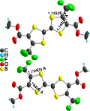
- strongest electrostatic interactions between the most electron-rich and electron-poor regions of both partners. In that respect, it appears here that the TCNQ acceptor essentially overlaps with the dithiole ring bearing the dithioethylene substituent, a likely consequence of the electron-withdrawing effect




Formulation development, stability and anticancer efficacy of core-shell cyclodextrin nanocapsules for oral chemotherapy with camptothecin
Beilstein J. Org. Chem. 2015, 11, 204–212, doi:10.3762/bjoc.11.22
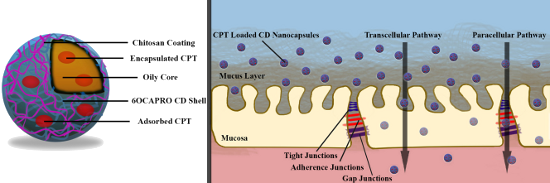
- to higher cellular adhesion and increasing residence time at the cell surface provided by CS molecules. This finding suggests that with chitosan-coated cationic NCs, electrostatic interactions between positively charged CS amino groups and the negatively charged cell membrane occurred. Therefore, the


Properties of cationic monosubstituted tetraalkylammonium cyclodextrin derivatives – their stability, complexation ability in solution or when deposited on solid anionic surface
Beilstein J. Org. Chem. 2015, 11, 192–199, doi:10.3762/bjoc.11.20
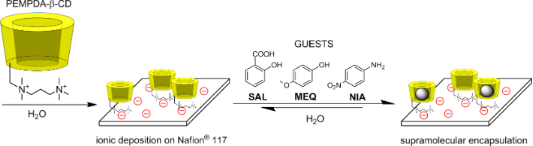
- surface of polymeric Nafion® 117 membrane via electrostatic interactions. Deposition kinetics and coverage of the surface were determined by ELSD. Finally, the ability of the CD derivatives bound to the solid surface to encapsulate aromatic compounds from aqueous solution was measured by UV–vis
- capillary zone electrophoresis [8][9][10][11][12] and also as catalysts of chemical reactions [13][14][15]. The main goal of our research is to explore the possibility of binding of the monosubstituted cationic CD derivatives to an anionic surface by simple electrostatic interactions. Such an assembly could


First chemoenzymatic stereodivergent synthesis of both enantiomers of promethazine and ethopropazine
Beilstein J. Org. Chem. 2014, 10, 3038–3055, doi:10.3762/bjoc.10.322
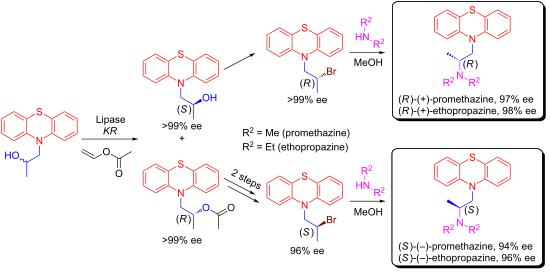
- the active conformation of the enzyme molecule by destabilizing electrostatic interactions, and even strip off the essential water layer (water of hydration) leading to loss of the biocatalytic activity. In turn, more lipophilic organic solvents positively interact with the enzyme protein enhancing




Come-back of phenanthridine and phenanthridinium derivatives in the 21st century
Beilstein J. Org. Chem. 2014, 10, 2930–2954, doi:10.3762/bjoc.10.312

- shape, whereas the high polarizability (and permanent positive charge of N-5 alkylated derivatives) also plays an important role in aromatic and electrostatic interactions with polynucleotides. Moreover, non-covalent interactions with DNA and RNA can be reversibly controlled by a pH-induced positive


Binding mode and free energy prediction of fisetin/β-cyclodextrin inclusion complexes
Beilstein J. Org. Chem. 2014, 10, 2789–2799, doi:10.3762/bjoc.10.296
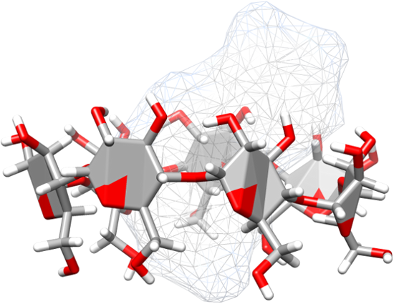
- the SANDER module in accordance with our previous studies [40][41][42]. The particle-mesh of Ewald’s method [43] was used for the treatment of the long-range electrostatic interactions with 12 Å cutoff distance. In order to constrain all bonds with hydrogen atoms, the SHAKE algorithm [44] was applied


Encapsulation of biocides by cyclodextrins: toward synergistic effects against pathogens
Beilstein J. Org. Chem. 2014, 10, 2603–2622, doi:10.3762/bjoc.10.273
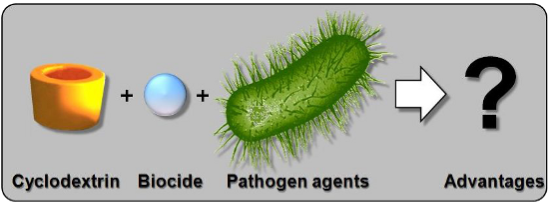
- amphiphilic biocides mechanism is based on four-steps: (a) the biocide diffuses in the solution, (b) electrostatic interactions maintained the charged biocides in the vicinity of the cell membrane, (c) the biocide is inserted between the phospholipids of the cell membrane, and (d) the modification of the


Molecular ordering at electrified interfaces: Template and potential effects
Beilstein J. Org. Chem. 2014, 10, 2243–2254, doi:10.3762/bjoc.10.233
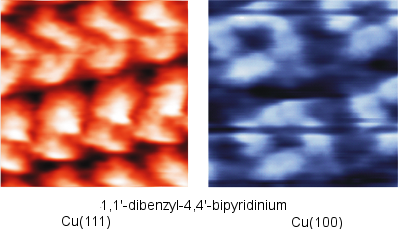
- . In this respect electrochemical deposition has the additional advantage that these electrostatic interactions can be “tuned” by the electrochemical potential in two ways. On the one hand the mere charge density at the electrode surface itself determines the electrostatic forces between adsorbed ions
- particular, the consideration of electrostatic interactions between the bipyridinium core and the benzyl groups (for more details see the discussion below) we propose the molecular arrangement as shown in Figure 4c. The structural correlation between the DBV2+ adlayer and the underlying chloride lattice
- interactions between neighboring monocation radicals are important which, by spin-pairing, are known to lead to the formation of dimers in solution [5]. The adsorbate–substrate interactions are obviously dominated by electrostatic interactions between the doubly (DBV2+) or singly (DBV+•) charged bipyridinium




Atherton–Todd reaction: mechanism, scope and applications
Beilstein J. Org. Chem. 2014, 10, 1166–1196, doi:10.3762/bjoc.10.117





Conformational analysis of 2,2-difluoroethylamine hydrochloride: double gauche effect
Beilstein J. Org. Chem. 2014, 10, 877–882, doi:10.3762/bjoc.10.84
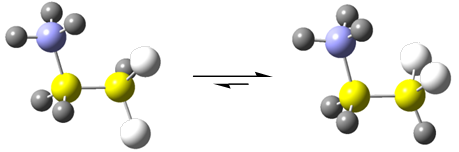
- with both fluorine atoms) in 2 are the Lewis-type ones. Particularly, electrostatic interactions are operative even in water solution, where they should be significantly attenuated, whereas hyperconjugation and hydrogen bond have secondary importance. Keywords: conformational analysis; 2,2
- interactions, such as steric effects and dipolar (electrostatic) interactions. On the other hand, non-Lewis-type interactions refer to electron delocalization from filled to empty orbitals, such as hyperconjugation. Indeed, the σCH→σ*CF hyperconjugative interaction has been found to be the main factor

A novel family of (1-aminoalkyl)(trifluoromethyl)- and -(difluoromethyl)phosphinic acids – analogues of α-amino acids
Beilstein J. Org. Chem. 2014, 10, 722–731, doi:10.3762/bjoc.10.66
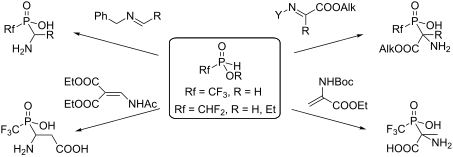
- of its strong electronegativity. This enables modulation of the lipophilicity profile, of electrostatic interactions with the target structure and inhibition of some metabolic pathways [7][8][9]. Data concerning the biological activity and synthetic approaches toward fluorinated aminophosphonates


Synthesis of the B-seco limonoid core scaffold
Beilstein J. Org. Chem. 2014, 10, 194–208, doi:10.3762/bjoc.10.15
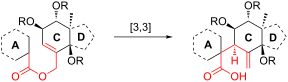
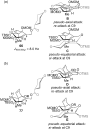
- transition states D and E seem to compete without any preference for a conformation that clearly favours axial attack (Figure 3b). Presumably because of the absence of electrostatic interactions in the pseudo-axial attack of the silyl ketene acetal (compare transition state B in Figure 3a: electrostatic