


Search results
Search for "glycoside" in Full Text gives 156 result(s) in Beilstein Journal of Organic Chemistry.
O-Alkylated heavy atom carbohydrate probes for protein X-ray crystallography: Studies towards the synthesis of methyl 2-O-methyl-L-selenofucopyranoside
Beilstein J. Org. Chem. 2016, 12, 2828–2833, doi:10.3762/bjoc.12.282

- ) and ≈2 ppm (13C NMR). To prevent acidic degradation, 6 was treated with palladium on charcoal under a hydrogen atmosphere (Table 1, entries 3–5). In MeOH as the solvent, transglycosylation of the seleno glycoside 6 to its methyl O-glycoside was observed (Table 1, entry 3). Changing the solvent to the
- seleno furanoside 11 were obtained over three steps in 70% and 23% yield, respectively. By this route, the desired seleno glycoside 3 could be successfully synthesized with a high β/α ratio of 18:1. Previously, the tectonins were shown to bind the α-anomer of 2-O-methylated fucoside, and natural


Enzymatic synthesis and phosphorolysis of 4(2)-thioxo- and 6(5)-azapyrimidine nucleosides by E. coli nucleoside phosphorylases
Beilstein J. Org. Chem. 2016, 12, 2588–2601, doi:10.3762/bjoc.12.254
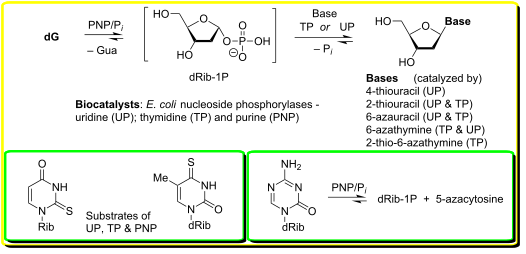
- cleavage of the glycoside linkages (i) of 2-thioxo analogues and corresponding natural nucleosides by UP proceeds at the same rate at the initial stages of reactions, (ii) of Ud and 2SUd occurs somewhat faster vs that of Td and 2STd, and (iii) of Ud and Td stops at the level of ca. 55% conversion. Contrary
- eight-membered ring comprising two H-bonds formed by the side-chain of Gln166 plays an important role in the phosphorolytic cleavage of the glycoside bond and in all likelihood in the reversed reaction of the glycoside bond formation. It is conceivable that the Gln166/base hydrogen bonding provides the
- differences of tautomeric structures of pyrimidines studied and their recognition by E. coli UP vs TP in the glycoside bond formation: Activation of uracil and thymine as well as their related analogues in the chemical synthesis of nucleosides consists in the trimethylsilylation giving rise to the formation


TMSBr-mediated solvent- and work-up-free synthesis of α-2-deoxyglycosides from glycals
Beilstein J. Org. Chem. 2016, 12, 1758–1764, doi:10.3762/bjoc.12.164
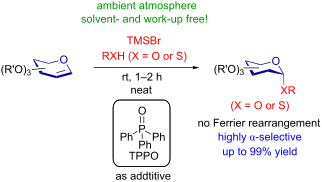
- undergoes double SN2-like substitution by TPPO and the alcohol to give the α-glycoside as the major product [77] (Scheme 2, route B). Conclusion A simple, efficient, and environmentally friendly method for preparing S- and O-2-deoxyglycosides was established. S-2-Deoxyglycosides were obtained with moderate


Synthesis and in vitro cytotoxicity of acetylated 3-fluoro, 4-fluoro and 3,4-difluoro analogs of D-glucosamine and D-galactosamine
Beilstein J. Org. Chem. 2016, 12, 750–759, doi:10.3762/bjoc.12.75
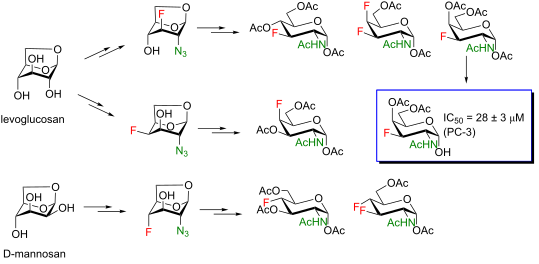
- obtained in only 40% yield after chromatography and recrystallization. Cytotoxicity Some acetylated fluorinated hexosamines (HexN), including peracetates of the α-methyl glycoside of 3-fluoro-D-ManNAc [18], 3-fluoro-D-GlcNAc 5 [18], 4-fluoro-D-GlcNAc 1 [19], 4-fluoro-D-GalNAc 4 [19], 4,4-difluoro-D-xylo



Three new trixane glycosides obtained from the leaves of Jungia sellowii Less. using centrifugal partition chromatography
Beilstein J. Org. Chem. 2016, 12, 674–683, doi:10.3762/bjoc.12.68
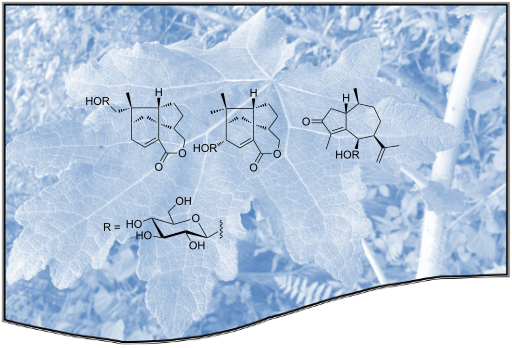
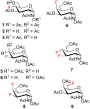
- antiprotozoal activity. Liquid–liquid partition and CPC turned to be a versatile technique of glycoside purification which is environmentally friendly and requires a limited amount of organic solvents. Keywords: CPC; guaiane; Jungia; trixanolide; Introduction Jungia (Asteraceae) comprises shrubs, lianas and


A selective and mild glycosylation method of natural phenolic alcohols
Beilstein J. Org. Chem. 2016, 12, 524–530, doi:10.3762/bjoc.12.51
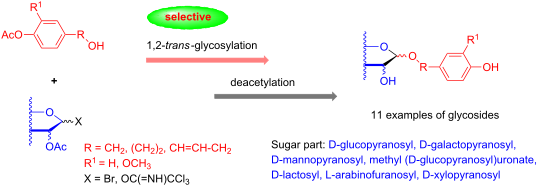
- to the stereoselective glycoside synthesis. The final products were obtained by conventional Zemplén deacetylation. Keywords: diastereoselectivity; p-hydroxyphenylalkyl glycosides; mild promoters; natural products; 1,2-trans-glycosylation; Introduction Arylalkyl (substituted benzyl, phenethyl and
- new promoter in the stereoselective 1,2-trans-glycoside synthesis (Table 1, entries 4, 9, 13, 17, 19 and 25). The selection of methods C and D was based on the common knowledge that iodine, either alone or in combination with other promoters such as salts of various metals (other than the traditional
- Koenigs–Knorr heavy metals), serves as an effective activator of disarmed glycosyl halides in the 1,2-trans-glycoside synthesis [35][36][37][38]. Despite the fact that the precise mechanism is not clear, it is assumed that the reaction of the glycosyl bromide promoted by iodine (through the formation of


Art, auto-mechanics, and supramolecular chemistry. A merging of hobbies and career
Beilstein J. Org. Chem. 2016, 12, 362–376, doi:10.3762/bjoc.12.40
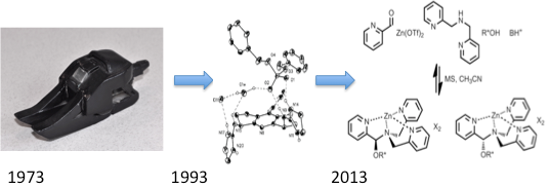
- continued fascination with approaching mechanistic problems using more classical physical organic methods, and we published a series of papers on the mechanisms of glycoside [49][50] and phosphoester hydrolysis [51]. Why textbooks? After achieving tenure, it is natural to reflect “Whew, what now?” In




Mycothiol synthesis by an anomerization reaction through endocyclic cleavage
Beilstein J. Org. Chem. 2016, 12, 328–333, doi:10.3762/bjoc.12.35
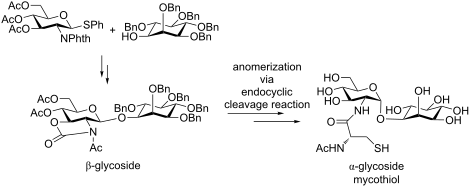
- pyranosides with N-acetyl 2,3-trans-carbamate groups exhibited complete anomerization from β-glycoside to α-glycoside in the presence of a weak Lewis acid through an endocyclic cleavage reaction [29][30][31][32][33]. We showed evidence of the endocyclic cleavage reaction by trapping linear cations through
- . Results and Discussion Based on the results of our previous study, we expected that an anomerization would be useful for the stereoselective synthesis of α-aminoglycosides, which is normally difficult by conventional glycosylation reactions. β-Glycoside 2, which is synthesized by assistance from the
- phthalimide group in the 2-position, was converted to α-glycoside 4, by introducing an N-acetyl 2,3-trans-carbamate group (Scheme 3) and by conducting an anomerization reaction. The glycosylation reaction of phthalimido-protected glucosamine thioglycoside 5 with inositol 6 [24] afforded β-linked pseudo


Synthesis, antimicrobial and cytotoxicity evaluation of new cholesterol congeners
Beilstein J. Org. Chem. 2015, 11, 1922–1932, doi:10.3762/bjoc.11.208
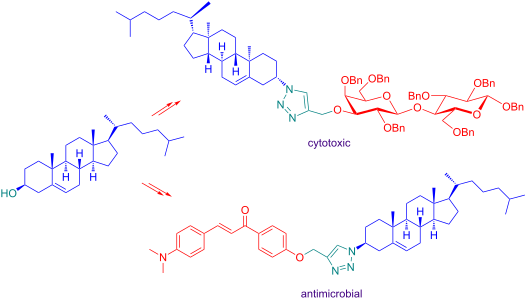
- IR spectroscopic techniques. Chalcone conjugate 6c showed the best antimicrobial activity, while the lactoside conjugate 27 showed the best cytotoxic effect in vitro. Keywords: antimicrobial; chalcone; cholesterol; cytotoxicity; glycoside; triazole; Introduction Cholest-5-en-3β-ol (cholesterol, 1
- ] was coupled with cholest-5-en-3β-ol (1) as glycosyl acceptor in the presence of catalytic TMSOTf as promoter to afford 15 in 74% yield. The large anomeric coupling constant (J1,2 = 8.4 Hz) of the pyranoside moiety at δ = 5.30 ppm ensured the β-configuration of this glycoside. Deacetylation of
- of azidohexanol 9a with trichloroacetimidate 14 afforded the intermediate β-glycoside 18 (J1,2 = 8.4 Hz at δ = 5.18 ppm) in 71% yield. CuAAC of derivative 18 with compound 10 afforded compound 19 in 67% yield. The H-5 proton of the triazole moeity was observed at δ = 7.49 ppm which confirms a




Synthesis of icariin from kaempferol through regioselective methylation and para-Claisen–Cope rearrangement
Beilstein J. Org. Chem. 2015, 11, 1220–1225, doi:10.3762/bjoc.11.135
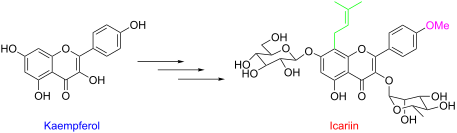
- , Southwest University for Nationalities, Chengdu 610041, China 10.3762/bjoc.11.135 Abstract The hemisynthesis of the naturally occurring bioactive flavonoid glycoside icariin (1) has been accomplished in eleven steps with 7% overall yield from kaempferol. The 4′-OH methylation of kaempferol, the 8


Are D-manno-configured Amadori products ligands of the bacterial lectin FimH?
Beilstein J. Org. Chem. 2015, 11, 1096–1104, doi:10.3762/bjoc.11.123
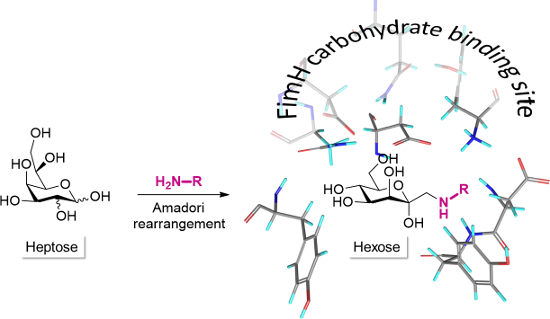
- the anomeric position is found in the sterically favoured equatorial position located towards the β-face of the sugar ring, whereas the anomeric hydroxy group is α-positioned. Whether this particular C-type glycoside architecture is suited for FimH complexation had to be tested. Theoretical
- green) of the glycoside is pointing out of the binding site, whereas the axial 2-OH group as well as all other hydroxy groups of the sugar ring are complexed within the FimH carbohydrate binding site. Complexation of mannoside ligands is further supported by a conserved water molecule inside the


N-Alkyl derivatives of diosgenyl 2-amino-2-deoxy-β-D-glucopyranoside; synthesis and antimicrobial activity
Beilstein J. Org. Chem. 2015, 11, 869–874, doi:10.3762/bjoc.11.97
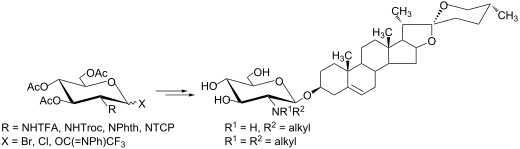
- , Poland 10.3762/bjoc.11.97 Abstract Diosgenyl 2-amino-2-deoxy-β-D-glucopyranoside is a synthetic saponin exhibiting attractive pharmacological properties. Different pathways tested by us to obtain this glycoside are summarized here. Moreover, the synthesis of N-alkyl and N,N-dialkyl derivatives of the
- of 2a with diosgenin conducted by the “reverse” procedure in the CH2Cl2/Et2O mixture leads to glycoside 6a in 77% yield. The same procedure applied in CH2Cl2 gives no glycoside. Similarly, reaction of 2b with diosgenin conducted by the “reverse” procedure in the CH2Cl2/Et2O mixture gives glycoside 6b
- glycoside (7), adopt the 4C1 conformation, as demonstrated by the J1,2 ≈ 8 Hz, J2,3 ≈ J3,4 ≈ J4,5 ≈ 9–10 Hz coupling constants. Evaluation of antimicrobial activity The N-alkyl derivatives of diosgenyl 2-amino-2-deoxy-β-D-glucopyranosides 8–15 and 17 were tested for their antibacterial and antifungal in


Glycodendrimers: tools to explore multivalent galectin-1 interactions
Beilstein J. Org. Chem. 2015, 11, 739–747, doi:10.3762/bjoc.11.84
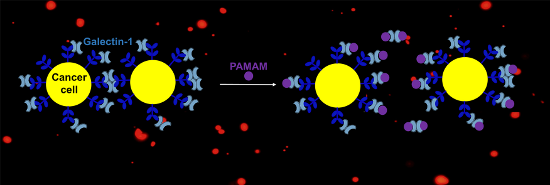
- ][25]. Synthetic multivalent ligands have been observed to enhance galectin-1 binding through the glycoside cluster effect by mediating the formation of cross-linked aggregates [26][27][28]. Tinari et al. observed galectin-1 augmentation of homotypic cellular aggregation in human melanoma cells (A375




Automated solid-phase synthesis of oligosaccharides containing sialic acids
Beilstein J. Org. Chem. 2015, 11, 617–621, doi:10.3762/bjoc.11.69
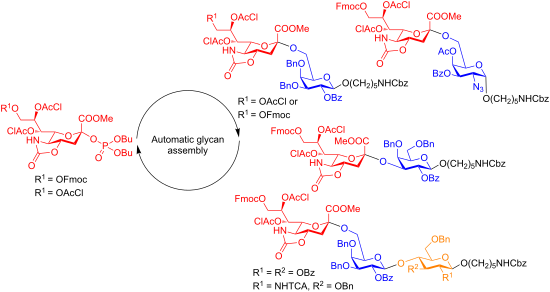
- synthesis in the future as well. The tumor associated sTn carbohydrate antigen (Neu5Ac-α(2,6)GalNAc-α(1,1)linker) disaccharide 17, that resembles the sTn antigen glycan framework (Neu5Ac-α(2,6)GalNAc-α(1,1)Ser/Thr) was synthesized. In order to install the cis-glycoside formed by the union of the


Synthesis of 1,2-cis-2-C-branched aryl-C-glucosides via desulfurization of carbohydrate based hemithioacetals
Beilstein J. Org. Chem. 2015, 11, 583–588, doi:10.3762/bjoc.11.64
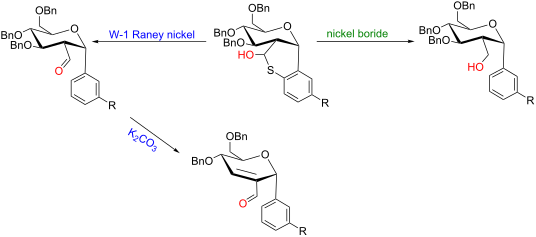
- to C-glycosides are 2-C-branched carbohydrates which are employed as bioisosters of the natural 2-acetamido glycoside derivatives. Gammon et al. prepared a series of 2-C-branched carbohydrates as potential inhibitors of enzymes implicated in the biosynthesis of mycothiol, Mycobacterium tuberculosis’s
- and 5a’ was treated with a catalytic amount of K2CO3 according to Scheme 3 to afford 2,3-unsaturated-α-aryl-C-glycoside 9a (Ferrier product) which was claimed to have been synthesized under acidic conditions [26] by a completely different reaction protocol. However, our spectroscopic data were not in


Electrochemical oxidation of cholesterol
Beilstein J. Org. Chem. 2015, 11, 392–402, doi:10.3762/bjoc.11.45
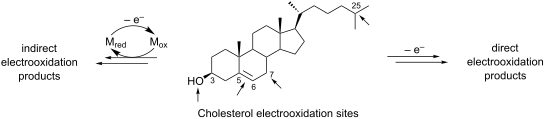
- dichloromethane in the presence of the sugar used in excess afforded glycoside 20 (28%) as a 1:1 mixture of α and β-anomers, accompanied by a number of by-products such as cholesteryl acetate (1a, 10%), dicholesteryl ether (18, 4%), cholest-4-en-3-one (21, 6%), and cholesta-4,6-dien-3-one (22, 9%). An analogous


Photovoltaic-driven organic electrosynthesis and efforts toward more sustainable oxidation reactions
Beilstein J. Org. Chem. 2015, 11, 280–287, doi:10.3762/bjoc.11.32
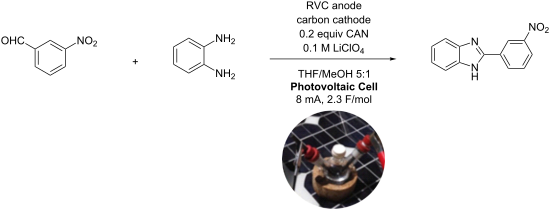
- supply with a more challenging electrolysis reaction is a valid concern. In the following section, the use of the visible-light-driven electrolysis setup for three such reactions is illustrated. The first case stems from the use of an anodic coupling reaction to make C-glycoside derivatives from styrenes


Natural phenolic metabolites with anti-angiogenic properties – a review from the chemical point of view
Beilstein J. Org. Chem. 2015, 11, 249–264, doi:10.3762/bjoc.11.28
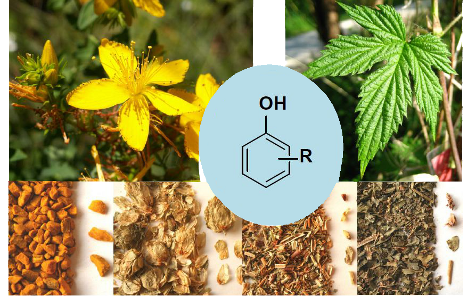
- xanthohumol intake [77]. To date, xanthohumol in vivo metabolites have not been investigated regarding their anti-angiogenic activity. Genistein Genistein (60) is an isoflavone extracted from soybeans (Glycine max (L.) MERR, Fabaceae). It is present as the 7-O-glycoside genistein in the plant; however, during


Synthesis and biological evaluation of a novel MUC1 glycopeptide conjugate vaccine candidate comprising a 4’-deoxy-4’-fluoro-Thomsen–Friedenreich epitope
Beilstein J. Org. Chem. 2015, 11, 155–161, doi:10.3762/bjoc.11.15
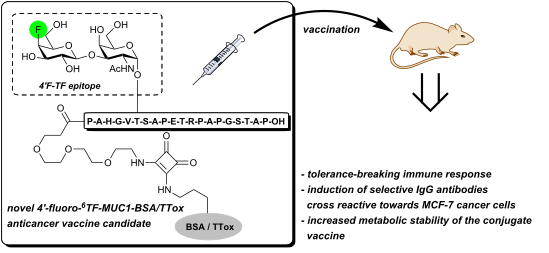
- ’-fluoro-TF SPPS building block 11 started by conversion of peracetylated D-glucose 1 into β-thio-glycoside 2 [45][46] under Lewis acid catalysis in 81% yield (Scheme 1). Subsequent Zemplén deacetylation [47], followed by 4,6-benzylidene acetal formation and acetylation provided fully protected precursor 3




Synthesis of the pentasaccharide repeating unit of the O-antigen of E. coli O117:K98:H4
Beilstein J. Org. Chem. 2014, 10, 2724–2728, doi:10.3762/bjoc.10.287
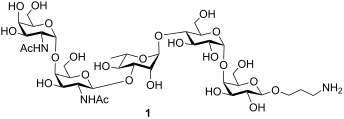
- pentasaccharide repeating unit of the O-specific polysaccharide of E. coli O117:K98:H4 as its 3-aminopropyl glycoside is presented herein (Figure 2). The 3-aminopropyl group would be suitable for attachment of the pentasaccharide to any surface or carrier proteins. Results and Discussion The target
- pentasaccharide 1 has been synthesized as its 3-aminopropyl glycoside using a combination of sequential and [3 + 2] block glycosylation strategy. A trisaccharide acceptor 11 and a disaccharide trichloroacetimidate donor 14 were synthesized from the appropriately protected monosaccharide intermediates 2 [20], 3
- glycosylation strategy has been developed to synthesize a pentasaccharide 3-aminopropyl glycoside (1) corresponding to the O-antigen of E. coli O117:K98:H4 strain. The in situ removal of the PMB ether in one-pot following the glycosylation reaction reduced the overall number of steps. Structure of the


Galactan synthesis in a single step via oligomerization of monosaccharides
Beilstein J. Org. Chem. 2014, 10, 2658–2663, doi:10.3762/bjoc.10.279
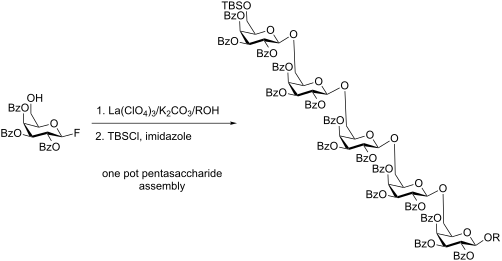
- earlier attempt at the oligomerization of a 6-hydroxyglucosamine thioglycoside donor in the presence of an initiating primary alcohol resulted in a single glycosylation of the initiating alcohol to provide a glycoside product, and trace amounts of further oligomerization were detected in some cases [15


Synthesis of aromatic glycoconjugates. Building blocks for the construction of combinatorial glycopeptide libraries
Beilstein J. Org. Chem. 2014, 10, 2453–2460, doi:10.3762/bjoc.10.256
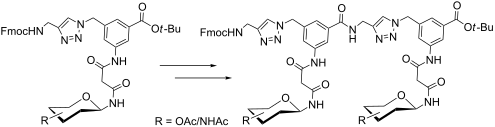
- linked to the backbone by a malonyl moiety were prepared via peptide coupling. The orthogonally protected glycoconjugates, bearing an acetyl-protected glycoside, were converted into their corresponding acids which are suitable building blocks for combinatorial glycopeptide synthesis. Keywords: amino


Synthesis and immunological evaluation of protein conjugates of Neisseria meningitidis X capsular polysaccharide fragments
Beilstein J. Org. Chem. 2014, 10, 2367–2376, doi:10.3762/bjoc.10.247
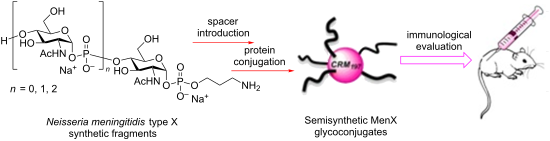
- performed at an early stage of the synthetic route than on valuable advanced intermediates. Accordingly, the azide reduction with NiCl2/NaBH4 protocol [29] occurred smoothly on the previously described [25] silyl glycoside 4, and after standard N-acetylation furnished acetamide 5 in high yield (Scheme 1


Indium-mediated allylation in carbohydrate synthesis: A short and efficient approach towards higher 2-acetamido-2-deoxy sugars
Beilstein J. Org. Chem. 2014, 10, 2230–2234, doi:10.3762/bjoc.10.231
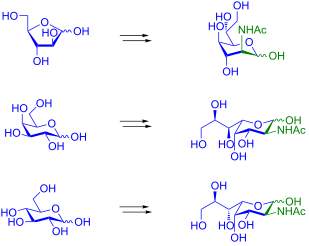
- intramolecular Michael addition, leading to the formation of highly substituted tetrahydrofuran derivatives of the C-glycoside type [31]. Next, we investigated the azide reduction of compounds 6a–c under different reaction conditions. Unfortunately DTT/DIPA, thioacetic acid, tributylphosphine/H2O and H2/Pd


Expeditive synthesis of trithiotriazine-cored glycoclusters and inhibition of Pseudomonas aeruginosa biofilm formation
Beilstein J. Org. Chem. 2014, 10, 1981–1990, doi:10.3762/bjoc.10.206
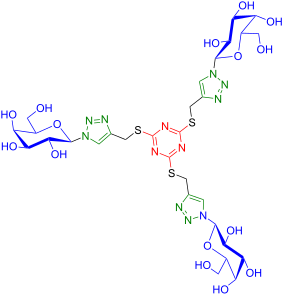
- 34% yield. A second [3 + 2] cycloaddition with a different glycoside, such as D-glycopyranosyl azide 8, under the same conditions, provided for example the mixed Gal2-Glc triazine cluster 17 (Scheme 2). The efficient conjugation of unprotected glycosyl azides to trithiotriazine 2 thus provides





