


Search results
Search for "polymer" in Full Text gives 637 result(s) in Beilstein Journal of Organic Chemistry. Showing first 200.
Light-responsive rotaxane-based materials: inducing motion in the solid state
Beilstein J. Org. Chem. 2023, 19, 873–880, doi:10.3762/bjoc.19.64
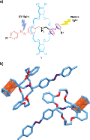
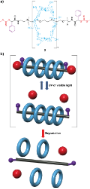
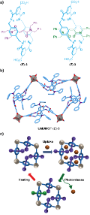
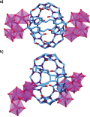
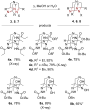
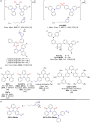
- ) Chemical structure of polyrotaxane 2; and (b) cartoon representation of the light-triggered degradation of rotaxane polymer 2 [52]. The key colour of the cartoon representation is analogous to that of the chemical structures. a) Chemical structures of rotaxanes (E)-3 and (Z)-3; b) stick representation of

pH-Responsive fluorescent supramolecular nanoparticles based on tetraphenylethylene-labelled chitosan and a six-fold carboxylated tribenzotriquinacene
Beilstein J. Org. Chem. 2023, 19, 635–645, doi:10.3762/bjoc.19.45
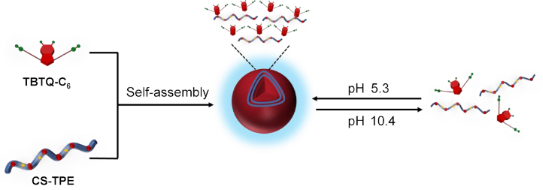
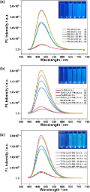
- labelling of hydrophobic TPE fluorogens, reducing the affinity of the CS chains to the aqueous medium and resulting in the entanglement or wrapping of the TPE fluorogens by polymer chains. As a result, the RIR process was enhanced, greatly increasing the fluorescence. In addition, the fluorescence intensity
- improved water solubility of the supra-amphiphile due to the highly water-soluble behavior of TBTQ-C6 under alkaline conditions in its carboxyl anion form. As a result, the polymer chains were extended, releasing the entanglement and wrapping of the TPE fluorogens, thereby reducing the emission of the
- successfully designed and synthesized different degrees of TPE-labelled CS polymer compounds that exhibit the AIE fluorescence effect and we constructed pH-responsive fluorescent supramolecular spherical nanoparticles based on CS-TPE alone and the host–guest TBTQ-C6/CS-TPE supra-amphiphile. The critical



Discrimination of β-cyclodextrin/hazelnut (Corylus avellana L.) oil/flavonoid glycoside and flavonolignan ternary complexes by Fourier-transform infrared spectroscopy coupled with principal component analysis
Beilstein J. Org. Chem. 2023, 19, 380–398, doi:10.3762/bjoc.19.30
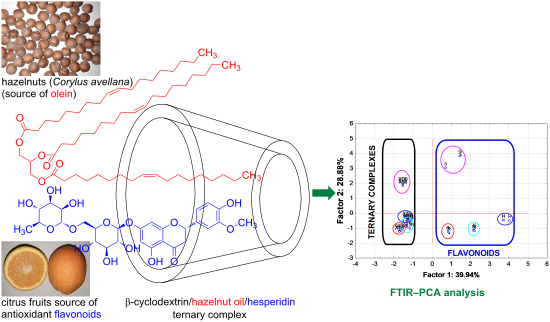
- cannabinus L.) seed oil or “Persian lilac” (Melia azedarach L.) seed oil. The oils were complexed by spray drying using β-CD/gum arabic/sodium caseinate or a β-CD polymer, respectively [22][23]. However, there are less studies on the CD encapsulation of non-volatile vegetable oils in comparison with
- biologically active molecules on CD-coated polymers used in chromatography [62]. PCA was used for the evaluation of the similarity/dissimilarity of some pesticides, especially fungicides and herbicides, using the effect of a water-soluble β-CD polymer on the apparent pesticide’s lipophilicity [63]. Also



CuAAC-inspired synthesis of 1,2,3-triazole-bridged porphyrin conjugates: an overview
Beilstein J. Org. Chem. 2023, 19, 349–379, doi:10.3762/bjoc.19.29
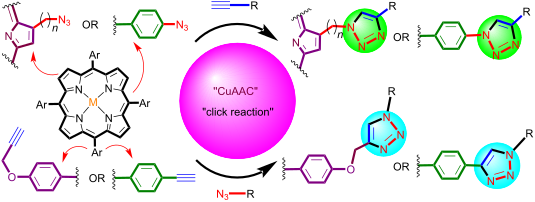
- hydrophilic triazole-linked porphyrin-polymer conjugates (PPCs) (Scheme 28). The PPCs 137 and 139 were prepared by the reaction between tetraazido-Zn-porphyrin 135 or diazido-Zn-porphyrin 138 with polymers 136 bearing various hydrophilic and hydrophobic substituents using CuSO4∙4H2O and ascorbic acids under
- -bridged porphyrin-β-CD conjugate 126. Synthesis of meso-triazole-bridged porphyrin star trimer 129. Synthesis of 1,2,3-triazole-linked porphyrin-β-CD conjugates 131a,b. Synthesis of tritriazole-bridged porphyrin-lantern-DNA sequence 134. Synthesis of meso-triazole-linked porphyrin-polymer conjugates 137




Investigation of cationic ring-opening polymerization of 2-oxazolines in the “green” solvent dihydrolevoglucosenone
Beilstein J. Org. Chem. 2023, 19, 217–230, doi:10.3762/bjoc.19.21
- Solomiia Borova Robert Luxenhofer Functional Polymer Materials, Chair for Advanced Materials Synthesis, Institute for Functional Materials and Biofabrication, Department of Chemistry and Pharmacy, Julius-Maximilans-University of Würzburg, Röntgenring 11, 97070 Würzburg, Germany Soft Matter
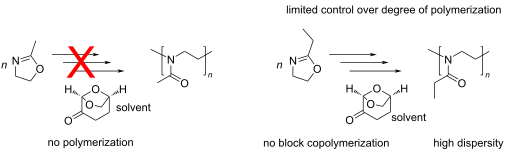
- reasons [1]. Halogenated solvents such as chlorobenzene or dichloromethane are widely used in polymer production, but their toxicity and high energy consumption for synthesis make them unwanted for widespread commercial use. Many other dipolar solvents such as dimethyl sulfoxide (DMSO), N,N
- biomedical applications, in particular as an alternative to the hydrophilic poly(ethylene glycol) (PEG), which is the polymer of choice for many biomedical applications due to its high solubility, low cytotoxicity and biocompatibility [3][4][5][6][7][8][9]. However, an ongoing discussion about pre-existing


Insight into oral amphiphilic cyclodextrin nanoparticles for colorectal cancer: comprehensive mathematical model of drug release kinetic studies and antitumoral efficacy in 3D spheroid colon tumors
Beilstein J. Org. Chem. 2023, 19, 139–157, doi:10.3762/bjoc.19.14
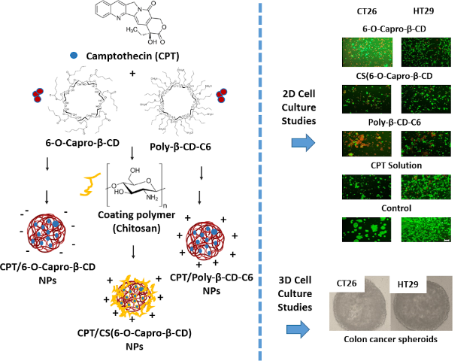
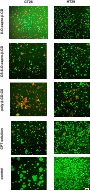
- through either (i) the cationic nature of the CD such as poly-β-CD-C6 or (ii) coating of non-ionic 6-O-capro-β-CD with the cationic polymer chitosan (CS). Uncoated 6-O-capro-β-CD negatively charged NPs were used as control formulation. Results and Discussion Fabrication and in vitro characterization of
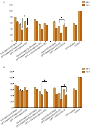
- the relaxation of the polymer chain begins and accelerates the release in SIF. When a further evaluation was made for the CS-(6-O-capro-β-CD), which showed a high correlation between the two models, the diffusional exponent values of the Korsmeyer–Peppas and Peppas–Sahlin models were calculated as
- 1.039 and 0.450, respectively. Similarly, the n value of Korsmeyer–Peppas above 0.85 indicates that the release mechanism is realized by super case II [44]. This value was interpreted as indicative of the release seen with the erosion of the nanoparticle material and the initiation of polymer relaxation




Nostochopcerol, a new antibacterial monoacylglycerol from the edible cyanobacterium Nostochopsis lobatus
Beilstein J. Org. Chem. 2023, 19, 133–138, doi:10.3762/bjoc.19.13
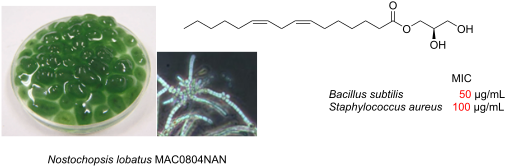
- , antifoamers, preservatives, antistatic agents, polymer lubricants, and mold-releasing agents for the production of foods, cosmetics, ointments, paints, and plastics [33]. Compound 1 exhibited antibacterial activity, evaluated by a microculture method, with MIC 50 μg/mL against B. subtilis ATCC6633 and 100 μg
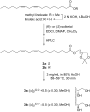
- ) to see the separation of activity at the top two and slow-eluting fractions. The top fraction was purified by repeated HPLC first on an ODS column (Cosmosil AR-II 1 × 25 cm) and second on a styrene-divinylbenzene polymer column (Hamilton PRP-1 1 × 25 cm) both eluted with MeCN/50 mM NaClO4 75:25 to


Inline purification in continuous flow synthesis – opportunities and challenges
Beilstein J. Org. Chem. 2022, 18, 1720–1740, doi:10.3762/bjoc.18.182
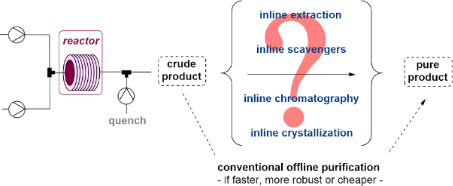
- chromatography system which utilizes multiple columns in parallel with a series of valves to stagger the injection of crude material to each of the column lines. The columns are filled with a diethylaminopropyl-functionalized polymer, followed by an UV–vis detector to identify and separate the different peaks
- heterogeneous fashion. This oftentimes leads to improved green credentials, safety, and sometimes efficiency, especially when it is applied to the downstream process. Commercially available resins, activated charcoal, polymer-supported species that trap spent reagents or side-products as well as related




Molecular and macromolecular electrochemistry: synthesis, mechanism, and redox properties
Beilstein J. Org. Chem. 2022, 18, 1505–1506, doi:10.3762/bjoc.18.158

- , polymer electrolyte membrane electrolysis technology, and new methods coupled with photoredox catalysts or transition metal catalysis, resulting in remarkable progress in organic electrosynthetic processes. Theoretical calculations have also led to a better understanding of the electron transfer behavior
Microelectrode arrays, electrosynthesis, and the optimization of signaling on an inert, stable surface
Beilstein J. Org. Chem. 2022, 18, 1488–1498, doi:10.3762/bjoc.18.156
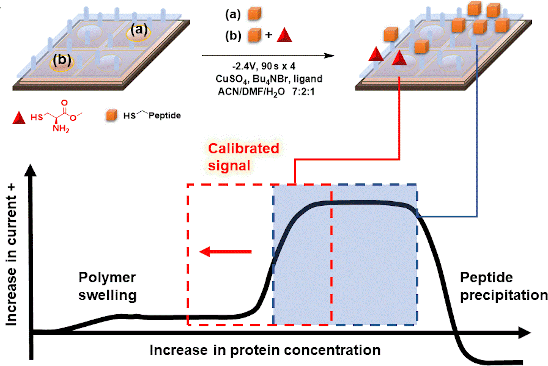
- how available Cu-based electrosynthetic reactions can be used to calibrate electrochemical signals on a polymer-coated electrode array and delineate the factors to be considered when choosing a polymer surface for such a study. Keywords: calibration of binding curves; electrochemical signaling
- development of polymer-coated arrays that capitalize on the versatility of diblock copolymers as surface coatings (Figure 2) [17][18][19]. In the polymer, one of the blocks is used to place attachment sites for molecules above the electrodes (the arylbromide or arylborate block in the polymer shown), and the
- other block is used to provide a site for cross-linking the polymer in order to render the surface more stable once it is coated onto an array (the cinnamate block is used to make a polymer network through photochemical cross-linking). The use of the borate ester surface provides a tunable surface that


1,4,6,10-Tetraazaadamantanes (TAADs) with N-amino groups: synthesis and formation of boron chelates and host–guest complexes
Beilstein J. Org. Chem. 2022, 18, 1424–1434, doi:10.3762/bjoc.18.148
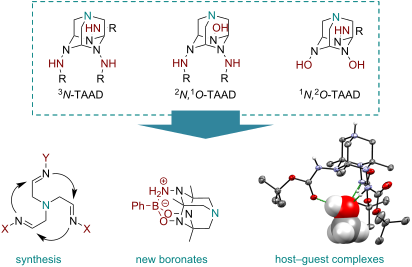
- dynamic covalent libraries [25]. TAAD can be covalently bound to a polymer matrix through the nucleophilic nitrogen N(1) that was used to prepare scavengers of boronic acids [25]. Also, TAAD was demonstrated to serve as a scorpionate-type ligand for manganese and iron leading to complexes with the metal







Computational model predicts protein binding sites of a luminescent ligand equipped with guanidiniocarbonyl-pyrrole groups
Beilstein J. Org. Chem. 2022, 18, 1322–1331, doi:10.3762/bjoc.18.137
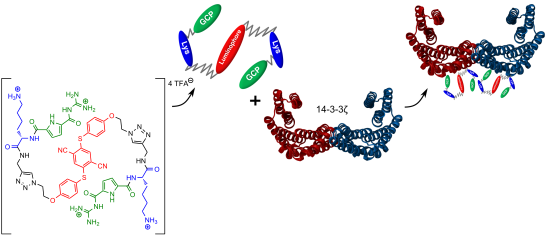
- electrostatic potential grid into energy grids suitable for the Hamiltonian, chemically relevant polymer fragments were used as molecular probes in Epitopsy [26]. Epitopsy is a tool designed to calculate the electrostatic energy of a protein–ligand system from the protein potential grid and ligand charge
- in the context of polymer studies [33][34][35]. Our model is a chain of five beads, GCP-Lys-AIE-Lys-GCP, with each pair of neighbors in the chain connected by a harmonic spring potential (Figure 1b). Given the symmetry of 1, there are two types of springs, GCP-Lys and Lys-AIE. The spring parameters





Ionic multiresonant thermally activated delayed fluorescence emitters for light emitting electrochemical cells
Beilstein J. Org. Chem. 2022, 18, 1311–1321, doi:10.3762/bjoc.18.136
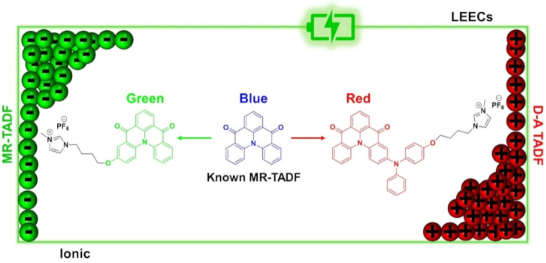
- where the emissive layer also contained an inorganic salt and a conducting polymer. Recently, a step-change in device performance were achieved by He et al. who employed a cationic TADF compound that possesses low-lying through-space and through-bond charge transfer excited states [23]. The LEEC showed



Make or break: the thermodynamic equilibrium of polyphosphate kinase-catalysed reactions
Beilstein J. Org. Chem. 2022, 18, 1278–1288, doi:10.3762/bjoc.18.134
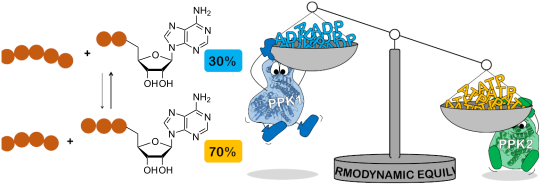
- ; Introduction Polyphosphate (polyP, Figure 1) is a linear polymer of up to thousands of phosphate residues connected by phosphate anhydride bonds. It serves as a phosphate storage molecule and plays a crucial role in biofilm formation and stress responses of cells [1]. So far polyP has been detected in every


Polymer and small molecule mechanochemistry: closer than ever
Beilstein J. Org. Chem. 2022, 18, 1225–1235, doi:10.3762/bjoc.18.128
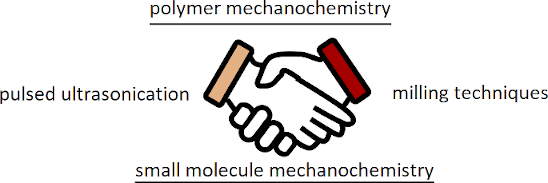
- (mechanochemistry) can be accomplished through various experimental strategies. Among them, ultrasonication of polymeric matrices and ball milling of reaction partners have become the two leading approaches to carry out polymer and small molecule mechanochemistry, respectively. Often, the methodological differences
- between these practical strategies seem to have created two seemingly distinct lines of thought within the field of mechanochemistry. However, in this Perspective article, the reader will encounter a series of studies in which some aspects believed to be inherently related to either polymer or small
- molecule mechanochemistry sometimes overlap, evidencing the connection between both approaches. Keywords: ball milling; mechanochemistry; mechanophore; polymer; pulsed ultrasonication; Introduction In the past two decades, the growth in popularity of mechanochemistry has been unmistakable. During this


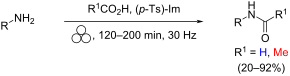
From amines to (form)amides: a simple and successful mechanochemical approach
Beilstein J. Org. Chem. 2022, 18, 1210–1216, doi:10.3762/bjoc.18.126
- assistance with the generation of the 1H, 13C NMR, and GC–MS spectroscopic data. Funding This research was funded by MIUR Italy, PRIN 2017 project (grant number: 2017B7MMJ5_001) “MultIFunctional poLymer cOmposites based on groWn matERials (MIFLOWER) and Fondazione di Sardegna (FdS, F72F20000230007).
Heterogeneous metallaphotoredox catalysis in a continuous-flow packed-bed reactor
Beilstein J. Org. Chem. 2022, 18, 1123–1130, doi:10.3762/bjoc.18.115
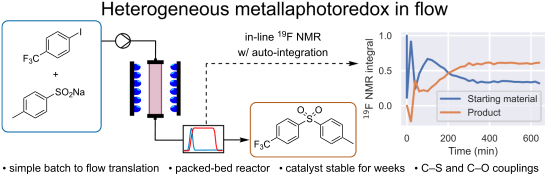
- colour of the polymer in the packed bed turned rapidly black (see Supporting Information File 1, Figure S4), and lower yields were observed (Table 1, entries 6 and 7). The catalyst deactivation could be due to the formation of nickel-black [28], or via (photo-)thermal degradation of the polymer. Packed





Introducing a new 7-ring fused diindenone-dithieno[3,2-b:2',3'-d]thiophene unit as a promising component for organic semiconductor materials
Beilstein J. Org. Chem. 2022, 18, 944–955, doi:10.3762/bjoc.18.94
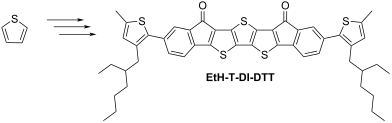
- example, ITIC (10), is shown in Figure 4. ITIC [17], in combination with polymer 11, achieved a power conversion efficiency (PCE) of 6.8%, which was the best value for NFA organic solar cells at the time of publication. Fluorination of ITIC, obtaining IT-4F (12), shown in Figure 5, reduced ELUMO. Combined
- with the donor polymer 13, PCEs up to 17% were achieved [8]. More recently, another fused-thiophene containing NFA was published, Y6 (14), shown in Figure 6 [30]. Y6 held the record for the highest value of an OPV with PCEs up to 18% upon blending with polymer 15 [31]. This has now been surpassed; in
- 2021, Hou et al. reported a ternary OPV, using a mixture of the novel PBQx-TF (16) donor polymer and the non-fullerene acceptor eC9-2Cl (17), shown in Figure 7. In addition, a third material, F-BTA3 (18) was blended in [32]; all three materials are fused thiophene systems. The resulting OPV achieved a


Post-synthesis from Lewis acid–base interaction: an alternative way to generate light and harvest triplet excitons
Beilstein J. Org. Chem. 2022, 18, 825–836, doi:10.3762/bjoc.18.83
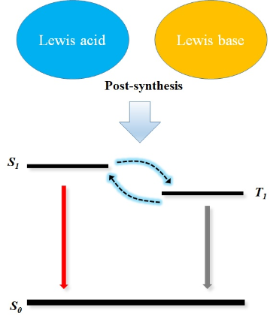
- . In 2002, Monkman reported the addition of camphor sulfonic acid (CSA) to the fluorescent polymer poly{2,5-pyridylene-co-1,4-[2,5-bis(2-ethylhexyloxy)]phenylene} (compound 1 in Figure 2) containing pyridine groups led to the protonation effect [26]. CSA has strong acidity and low volatility, which is
- (C6F5)3 (BCF) to bind to nitrogen atoms at the basic site a of π-conjugated polymer, providing a simple strategy to regulate the optical properties of the A–D–A chromophore with charge transfer excited state properties [28]. In 2019, Wang et al. constructed a novel exciplex system by using the Lewis
- substituents on the benzene rings of B(C6F5)3 is responsible for its stronger Lewis acidity compared to B(C6H5)3, and reacted efficiently with the basic fluorescent materials. In 2011, Hayashi investigated the modification of pyridyl-conjugated polymer films with the Lewis acid BF3 [31]. Through repeated acid


A trustworthy mechanochemical route to isocyanides
Beilstein J. Org. Chem. 2022, 18, 732–737, doi:10.3762/bjoc.18.73
- Ricerca d'Ateneo) core facility of the University of Cagliari and Dr. Sandrina Lampis for assistance with the generation of the 1H and 13C NMR spectroscopic data. Funding This research was funded by MIUR Italy, PRIN 2017 project (grant number: 2017B7MMJ5_001) “MultIFunctional poLymer cOmposites based on


BINOL as a chiral element in mechanically interlocked molecules
Beilstein J. Org. Chem. 2022, 18, 508–523, doi:10.3762/bjoc.18.53
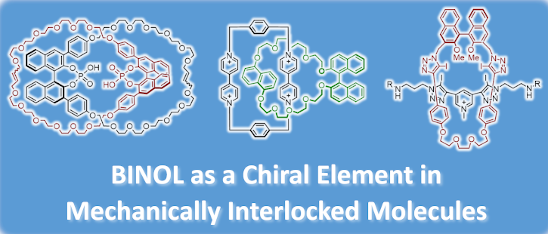
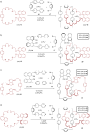
- the axle, placing it away from the polymer backbone. By N-acylation of the ammonium group, a shuttling of the macrocycle towards the ester moiety is achieved, placing the chiral information of the macrocycle in closer proximity to the polymer backbone (polymers 33). The influence of the chiral BINOL
- unit on the helicity of the polyacetylene was investigated by CD spectroscopy. Here, no chiral induction was observed for the ammonium species 32, while the N-acylated polymers 33 showed clear Cotton effects in the absorption range of the polymer main chain (490 nm), demonstrating an effective




Substituent effect on TADF properties of 2-modified 4,6-bis(3,6-di-tert-butyl-9-carbazolyl)-5-methylpyrimidines
Beilstein J. Org. Chem. 2022, 18, 497–507, doi:10.3762/bjoc.18.52
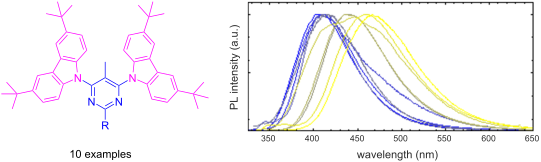
- toluene solutions as well as 1 wt % PMMA (poly(methyl methacrylate)) films. The solid-state samples were prepared by dissolving the compounds and polymer or host material at appropriate ratios in toluene solution and then wet-casting the solutions on quartz substrates. The absorption spectra were recorded




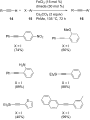
Recent developments and trends in the iron- and cobalt-catalyzed Sonogashira reactions
Beilstein J. Org. Chem. 2022, 18, 262–285, doi:10.3762/bjoc.18.31
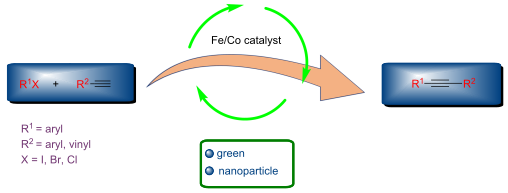
- polymer) (Co@imine-POP) has been synthesized by immobilizing cobalt onto a nitrogen-rich porous organic polymer (Scheme 20) [35]. Using scanning electron microscopy, the surface morphology of the catalyst was evaluated. Nowadays, covalent organic frameworks (COF) were found to be a suitable support in
- reaction (Scheme 31). Non-nanoparticle-based protocols Nanoparticles are materials with sizes around nanometer scales. The used nanoparticles are environmentally friendly magnetic cross-linked chitosan fibers which is a natural polysaccharide polymer. In this regard the use of such polymers is promising




Green synthesis of C5–C6-unsubstituted 1,4-DHP scaffolds using an efficient Ni–chitosan nanocatalyst under ultrasonic conditions
Beilstein J. Org. Chem. 2022, 18, 133–142, doi:10.3762/bjoc.18.14
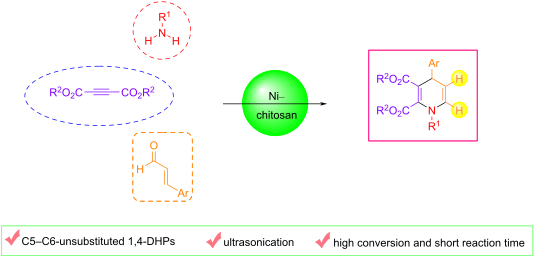
- . Chitosan is one of the most abundant bio-based polymers in nature [9]. It is the N-deacetylated form of chitin found in industrial waste [10]. Chitosan is a broadly used natural polymer because of properties such as biocompatibility, low cost, and nontoxicity. It has diverse applications, such as drug




Study on the interactions between melamine-cored Schiff bases with cucurbit[n]urils of different sizes and its application in detecting silver ions
Beilstein J. Org. Chem. 2021, 17, 2950–2958, doi:10.3762/bjoc.17.204
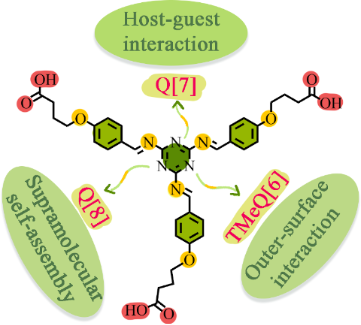
- supermolecule polymer with TBT due to its larger cavity. Since Q[7] and TBT form a host–guest complex, the carboxyl group at the end of TBT and the carbonyl group of the Q[7] still have a strong ability to coordinate with metals. Therefore, Q[7]-TBT is selected for the detection of silver ions (Ag+) [32][33





