


Search results
Search for "protein" in Full Text gives 699 result(s) in Beilstein Journal of Organic Chemistry. Showing first 200.
Cofactor-independent C–C bond cleavage reactions catalyzed by the AlpJ family of oxygenases in atypical angucycline biosynthesis
Beilstein J. Org. Chem. 2024, 20, 1198–1206, doi:10.3762/bjoc.20.102
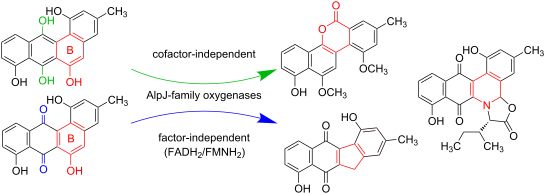
- contraction reactions, yielding a benzofluorene intermediate 4 and the dimer 5, both featuring a kinamycin skeleton (Scheme 1) [11][12]. Recent investigations unveiled the catalytic activity of the O-methyltransferase-like protein AlpH, which catalyzes a unique SAM-independent coupling of ʟ-glutamylhydrazine
- demonstrate the FADH2/FMNH2-dependent nature of AlpJ-family oxygenases when utilizing 1 as the substrate. Intriguingly, these enzymes exhibit notable similarities to cofactor-independent anthrone oxygenases, exemplified by TcmH and ActVA-Orf6, in both protein sequences and structures (see Figure S1
- oxygenases. Notably, AlpJ-family oxygenases stand as a pioneering example of enzymes capable of catalyzing oxidative reactions in either an FADH2/FMNH2-dependent or -independent manner. Up to date, many oxygenases from diverse evolutionary families, featuring varied protein folds and quaternary arrangements




Mild and efficient synthesis and base-promoted rearrangement of novel isoxazolo[4,5-b]pyridines
Beilstein J. Org. Chem. 2024, 20, 1069–1075, doi:10.3762/bjoc.20.94
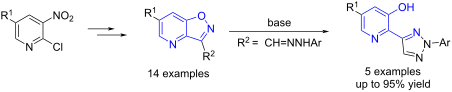
- inhibitor of homeodomain-interacting protein kinases (HIPKs) [32], and combretastatin A-4 analogs evaluated for their anticancer properties against a panel of 60 human cancer cell lines [33] (Figure 2). The structures of all new compounds were confirmed by 1H and 13C NMR and HRMS. X-ray diffraction studies


Monitoring carbohydrate 3D structure quality with the Privateer database
Beilstein J. Org. Chem. 2024, 20, 931–939, doi:10.3762/bjoc.20.83
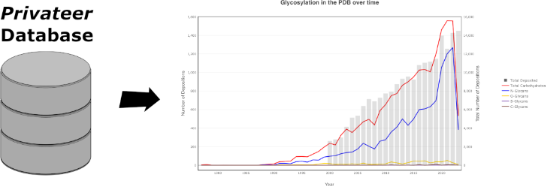
- Jordan S. Dialpuri Haroldas Bagdonas Lucy C. Schofield Phuong Thao Pham Lou Holland Jon Agirre York Structural Biology Laboratory, Department of Chemistry, University of York, UK 10.3762/bjoc.20.83 Abstract The remediation of the carbohydrate data of the Protein Data Bank (PDB) has brought
- modelling of glycoproteins and protein–carbohydrate complexes is pivotal in understanding the complex biochemical interactions that affect the physiological function of cells [1]. Any mechanistic analysis done with finely grained approaches such as QM/MM [2] relies heavily on the correctness of the starting
- in the past has been plagued with software related problems from incorrect libraries to incomplete support [4]. Carbohydrates are mobile, highly branched additions to the comparatively rigid protein framework; in macromolecular crystallography, this causes heterogeneity throughout the crystal lattice


(Bio)isosteres of ortho- and meta-substituted benzenes
Beilstein J. Org. Chem. 2024, 20, 859–890, doi:10.3762/bjoc.20.78
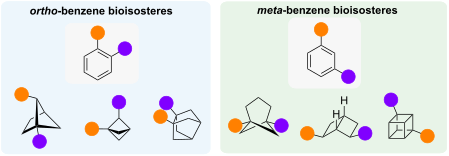
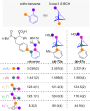
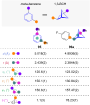
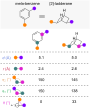
- benzenes that have more than one substituent; for example, the ortho-, meta-, or para- relative substitution of a disubstituted benzene should ideally be replicated in the saturated bioisostere to ensure ligand–protein binding is conserved through the bioisosteric swap. Bioisosteres of para-substituted


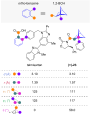


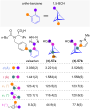
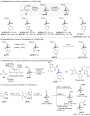










Activity assays of NnlA homologs suggest the natural product N-nitroglycine is degraded by diverse bacteria
Beilstein J. Org. Chem. 2024, 20, 830–840, doi:10.3762/bjoc.20.75
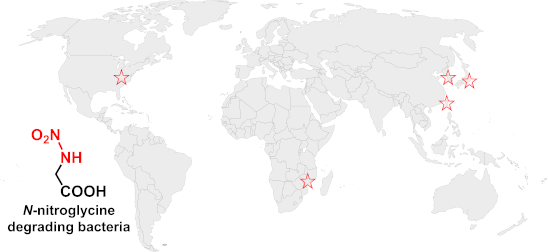
- (Scheme 1) [20][21]. Vs NnlA contains a Per-Arnt-Sim (PAS) domain – protein domains that often bind heme and function as gas or redox sensors [20]. Indeed, Vs NnlA was shown to contain a heme cofactor [21]. Mutagenesis of a predicted histidine ligand to this heme resulted in loss of the heme and the
- contaminants but are either undissociated higher oligomer states or are oligomers whose formation is induced by SDS treatment, which has been observed for other proteins [29][30]. To characterize these oligomer states of native protein, analytical size exclusion chromatography data were collected (Figure 2B
- these homologs exist mostly as dimers in solution. Next, the heme incorporation of the isolated homologs was measured. UV–vis absorption spectra showed that each NnlA homolog exhibited characteristic Soret absorption features consistent with heme binding to the protein (Figure 3). In addition, the A412


Methodology for awakening the potential secondary metabolic capacity in actinomycetes
Beilstein J. Org. Chem. 2024, 20, 753–766, doi:10.3762/bjoc.20.69
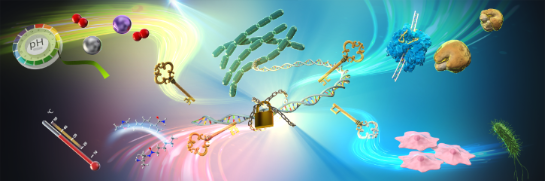
- production of secondary metabolites. For example, overexpression of Streptomyces antibiotic regulatory protein (SARP) family transcriptional activators led to the discovery of many new secondary metabolites [42]. Du et al. searched for SARP family transcriptional activators from the draft genome of
- inducing resistance, and this approach has contributed to the isolation of many new compounds [47]. The ribosome engineering method is based on the principle that a mutation in the ribosomal S12 protein, which is associated with the acquisition of antibiotic resistance, activates secondary metabolism. The
- ribosomal S12 protein mutation results in increased expression of translation factors, which leads to enhanced protein synthesis in secondary metabolism [47]. Liu et al. reported activation of the production of bohemamines 11–13, bacterial alkaloids containing a pyrrolizidine core with two unusual methyl


Research progress on the pharmacological activity, biosynthetic pathways, and biosynthesis of crocins
Beilstein J. Org. Chem. 2024, 20, 741–752, doi:10.3762/bjoc.20.68
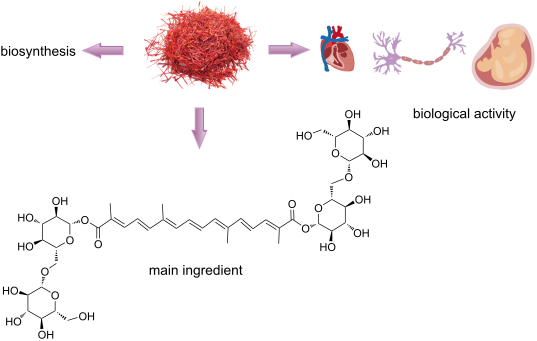
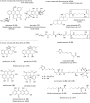
- (ROSs) [28]. Crocins can inhibit the activity of acetylcholinesterase and increase the acetylcholine concentration, thus improving the learning and memory ability of the brain [29]. Moreover, crocins prevent the abnormal aggregation of amyloid β-protein (Aβ), microtubule-associated protein tau, and α
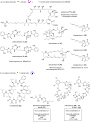
- mg/g in the leaves [85]. It was reported that CrtZ catalyzes the rate-limiting reaction in zeaxanthin (7) biosynthesis, and the ORANGE protein regulates PSY expression to increase carotenoid accumulation. Ahrazem et al. coexpressed AtOrMut from A. thaliana, BrCrtZ from a Brevundimonas sp., and


Substrate specificity of a ketosynthase domain involved in bacillaene biosynthesis
Beilstein J. Org. Chem. 2024, 20, 734–740, doi:10.3762/bjoc.20.67
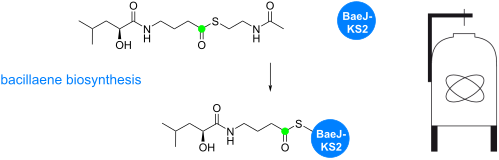
- performed to eliminate any unreacted free 11 in the reaction mixture. The resulting protein preparations were subsequently analysed by 13C NMR spectroscopy. While the signal for the thioester carbonyl group of free 11 dissolved in incubation buffer was observed at δ = 203.33 ppm (Figure 1A), for both
- analysed by 13C NMR, showing the presence of free 11 after the first centrifugation step (Figure 1C), but not after the last round of centrifugation (Figure 1D). Protein binding of the substrate surrogates 11 was confirmed through digestion of BaeJ-KS2 using protease K after buffer exchange. The digested
- binding of both substrate surrogates to BaeJ-KS2, but it is unclear from these experiments, if 11 is bound covalently to the protein or through non-covalent interactions. To gain further evidence for the covalent binding of 11 to BaeJ-KS2, the highly conserved Cys residue involved in substrate attachment


Chemoenzymatic synthesis of macrocyclic peptides and polyketides via thioesterase-catalyzed macrocyclization
Beilstein J. Org. Chem. 2024, 20, 721–733, doi:10.3762/bjoc.20.66
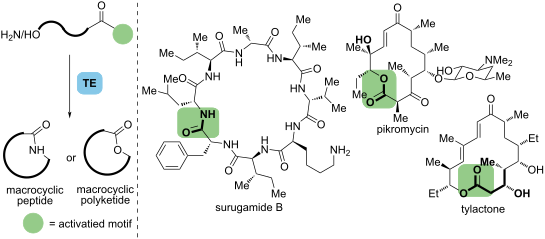
- essential domains, namely adenylation (A), condensation (C), and peptidyl carrier protein (PCP). Each type I PKS module consists of three core domains containing acyltransferase (AT), ketosynthase (KS), and acyl carrier protein (ACP). PCP and ACP are collectively called thiolation domain (T). The sequence
- chemically synthetic mimics before developing the enzymatic transformation. Due to N-acetylcysteamine (NAC) having a substructure to the phosphopantetheinyl arm of the carrier protein [24][25], the corresponding thioester can be recognized by TE domains and has become the most common substrate in enzymatic
- gramicidin S synthetase GrsB [44]. Combined with the peptidyl carrier protein, GrsB PCP-TE was tested by using corresponding pentapeptides NAC thioester and thiophenol thioester, which led to the formation of the desired cyclic decapeptide lactam gramicidin S (9) through a sequential dimerization and


New variochelins from soil-isolated Variovorax sp. H002
Beilstein J. Org. Chem. 2024, 20, 692–700, doi:10.3762/bjoc.20.63
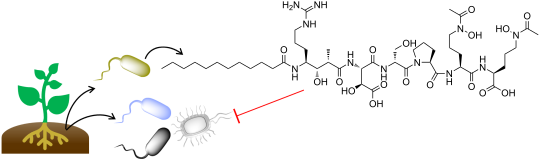
- , we also identified a var gene cluster containing NRPS and PKS genes: the domain organizations of NRPS and PKS, and the adjacently encoded modification enzymes, were comparable to those of the gene cluster reported by Nett et al. with 92–99% identity at the protein level [5] (Figure 3a and Figure S42
- by diamonds. EIMS of DMOX derivatized free fatty acids derived from variochelins C–E (3–5). (a) 3, (b) 4, and (c) 5. (a) Plausible biosynthetic pathway of variochelin A–E (1–5). The circles represent domains: A: adenylation domain, C: condensation domain, PCP: peptide carrier protein, E


Production of non-natural 5-methylorsellinate-derived meroterpenoids in Aspergillus oryzae
Beilstein J. Org. Chem. 2024, 20, 638–644, doi:10.3762/bjoc.20.56
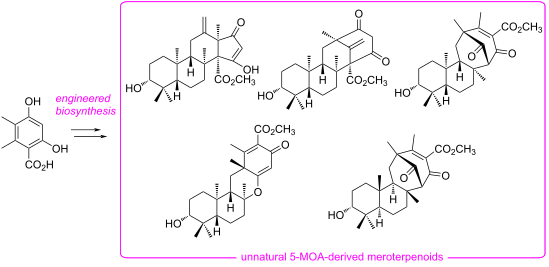
- adrI used in this study was constructed in our previous study, in which the product of AdrI was clearly detected [21], the inability of AdrI to yield a cyclized product is not likely to be caused by an inactive protein. The trt1-transformed strain produced a new compound 3 (molecular formula: C25H36O5



Introduction of a human- and keyboard-friendly N-glycan nomenclature
Beilstein J. Org. Chem. 2024, 20, 607–620, doi:10.3762/bjoc.20.53
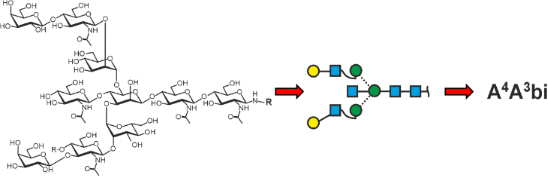
- greatly facilitate keyboard-based mining for glycan substructures in glycan repositories. Keywords: N-glycans; nomenclature; structural features; Introduction Virtually any article on protein glycosylation starts with imposing assurances about the biological significance of the various structures. This
- the chemical peculiarities deliberately introduced by their sorcery. Biochemists and medical chemists, however, rather focus on the native glycan structure as grafted on the protein substrate by the biosynthetic machinery. Thus, biochemists could do with the much simpler IUPAC code [1] (Figure 1
- “proglycan” nomenclature, an acronym derived from our then nom de guerre “protein-glycosylation analysis” group. By the way, glycan analysis also funneled in activities in the area of allergy diagnosis, where the term MUXF3 enjoys widespread use [38][39][40]. Finally, our work on the isomer-specific analysis



Chemical and biosynthetic potential of Penicillium shentong XL-F41
Beilstein J. Org. Chem. 2024, 20, 597–606, doi:10.3762/bjoc.20.52
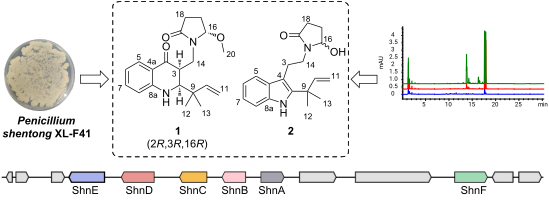
- reverse prenylated tryptophan. However, attempts to express the protein in various Escherichia coli hosts were unsuccessful, suggesting that eukaryotic hosts might be more suitable for future studies. We plan to conduct further experiments to substantiate the hypothesis regarding the biosynthetic pathways




A myo-inositol dehydrogenase involved in aminocyclitol biosynthesis of hygromycin A
Beilstein J. Org. Chem. 2024, 20, 589–596, doi:10.3762/bjoc.20.51
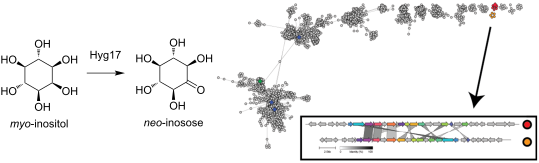
- the individual enzyme activities is lacking. In this study, we verify the activity for one enzyme in this pathway. We show that Hyg17 is a myo-inositol dehydrogenase that has a unique substrate scope when compared to other myo-inositol dehydrogenases. Furthermore, we analyze sequences from the protein
- family containing Hyg17 and discuss genome mining strategies that target this protein family to identify biosynthetic clusters for natural product discovery. Keywords: aminocyclitol; biosynthesis; hygromycin A; inositol dehydrogenase; myo-inositol; Introduction Hygromycin A is a natural product that
- bodies when recombinantly produced by various E. coli expression strains. However, we were able to obtain pure soluble protein when expressing Hyg17 in a Rhodococcus expression system (Supporting Information File 1, Figure S1) [10][11]. According to the proposed hygromycin A biosynthetic pathway, Hyg17


Possible bi-stable structures of pyrenebutanoic acid-linked protein molecules adsorbed on graphene: theoretical study
Beilstein J. Org. Chem. 2024, 20, 570–577, doi:10.3762/bjoc.20.49
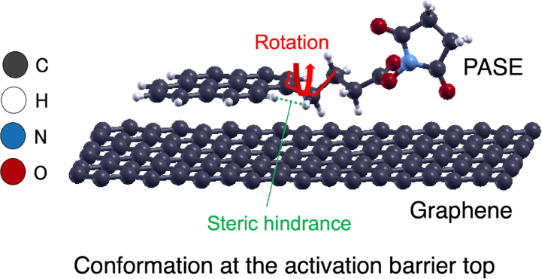
- Yasuhiro Oishi Motoharu Kitatani Koichi Kusakabe Graduate School of Science, University of Hyogo, Kamigori, Hyogo 678-1297, Japan 10.3762/bjoc.20.49 Abstract We theoretically analyze possible multiple conformations of protein molecules immobilized by 1-pyrenebutanoic acid succinimidyl ester (PASE
- ) linkers on graphene. The activation barrier between two bi-stable conformations exhibited by PASE is confirmed to be based on the steric hindrance effect between a hydrogen on the pyrene group and a hydrogen on the alkyl group of this molecule. Even after the protein is supplemented, this steric hindrance
- effect remains if the local structure of the linker consisting of an alkyl group and a pyrene group is maintained. Therefore, it is likely that the kinetic behavior of a protein immobilized with a single PASE linker exhibits an activation barrier-type energy surface between the bi-stable conformations on


Entry to new spiroheterocycles via tandem Rh(II)-catalyzed O–H insertion/base-promoted cyclization involving diazoarylidene succinimides
Beilstein J. Org. Chem. 2024, 20, 561–569, doi:10.3762/bjoc.20.48
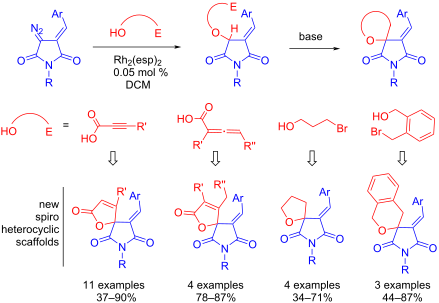
- modern drug design [1][2]. They are known to promote higher success rates, when targeting three-dimensional protein molecules [3][4]. Furthermore, a wide variety of spirocyclic fragments can be spotted in natural products [5]. The aspects mentioned unveil the development of synthetic methodologies
- ], drospirenone (exhibits high affinity to progesterone receptors and is used as a birth control medication) [26][27], griseofulvin (an antifungal agent used to treat fungal infections of the fingernails and toes) [28], as well as oliceridine (a selective G protein-biased μ-opioid receptor agonist used for


Synthesis and biological profile of 2,3-dihydro[1,3]thiazolo[4,5-b]pyridines, a novel class of acyl-ACP thioesterase inhibitors
Beilstein J. Org. Chem. 2024, 20, 540–551, doi:10.3762/bjoc.20.46
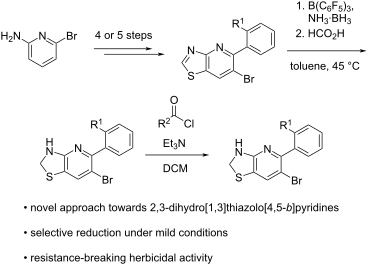
- with emphasis on the structural diversity of small-molecule ligands. In this context, acyl-acyl carrier protein (acyl-ACP) thioesterase inhibitors have shown a remarkable variability. Fatty acid thioesterase (FAT) enzymes represent a family of proteins exclusively found in higher plants. They mediate
- binding affinity to enzyme targets, e.g., acyl-ACP thioesterases, belonging to the protein family of FATs, was demonstrated by using co-crystallization, fluorescence-based thermal shift assays, and chemoproteomics techniques [3]. Likewise, methiozolin (2) is a recently assigned FAT inhibitor that has
- A protein was expressed in E. coli BL21Star(DE3) cells. 5 mL of an overnight culture of E. coli cells grown in LB medium with 100 µg/mL carbenicillin were used to inoculate 0.5 L of autoinduction medium containing 100 µg/mL carbenicillin [28]. The bacteria were grown at 37 °C and 120 rpm for about


Switchable molecular tweezers: design and applications
Beilstein J. Org. Chem. 2024, 20, 504–539, doi:10.3762/bjoc.20.45




Development of a chemical scaffold for inhibiting nonribosomal peptide synthetases in live bacterial cells
Beilstein J. Org. Chem. 2024, 20, 445–451, doi:10.3762/bjoc.20.39
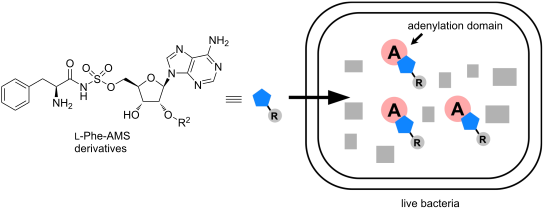
- arm in an adjacent peptidyl carrier protein (PCP). The amino acid loaded on the PCP then undergoes coupling with the amino acid loaded on the downstream PCP in the condensation (C) domain. Finally, the linear peptide on the PCP in the last module is either hydrolyzed or cyclized by a thioesterase (TE
- differences in the composition of cell membranes and presence of efflux pumps [9]. Specific protein labeling using a chemical probe can help to identify, characterize, and visualize target proteins [10][11]. The first chemical probe used for A-domains in NRPSs was reported by Marahiel et al. [8]. They
- previously described an activity-based protein profiling (ABPP) strategy for NRPSs using ABPs that target A-domains (Figure 2b) [13][14][15]. The probes comprise an aminoacyl-AMS ligand and a photoaffinity group with clickable alkyne functionality appended to the 2′-OH group of adenosine. A complex structure


Green and sustainable approaches for the Friedel–Crafts reaction between aldehydes and indoles
Beilstein J. Org. Chem. 2024, 20, 379–426, doi:10.3762/bjoc.20.36
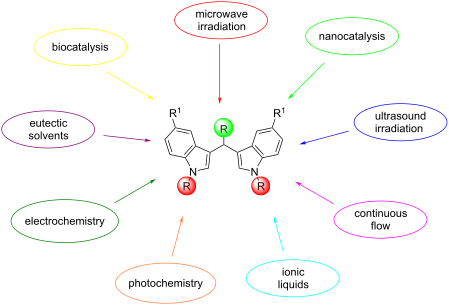
- cruciferous vegetables, as hydrolysis products from the metabolism of glucosinolates [1]. In 2017, Müller and her research team showcased the ability of BIMs to operate as anti-inflammatory drugs by acting as GPR84 agonists [2]. GPR84 is a protein-coupled receptor found in immune cells, which regulates a
- related environments [8]. The mechanism of action involves the binding of BIMs to the penicillin-restricting protein PBP2a which inhibits the biosynthesis of the bacterial cell wall, making the treatment feasible without any toxicity to human cells [9][10]. The applications of BIMs have also been extended




Discovery of unguisin J, a new cyclic peptide from Aspergillus heteromorphus CBS 117.55, and phylogeny-based bioinformatic analysis of UngA NRPS domains
Beilstein J. Org. Chem. 2024, 20, 321–330, doi:10.3762/bjoc.20.32
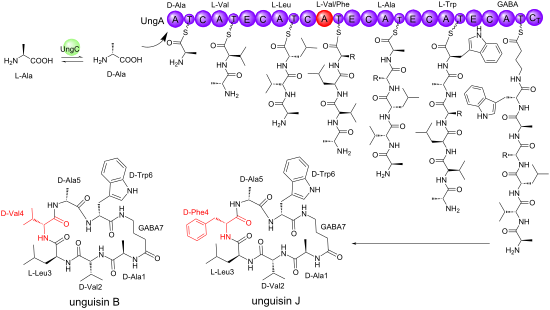
- genome was initially screened using fungiSMASH to identify scaffolds/contigs encoding secondary metabolites. Scaffold MSFL01000005.1 was further investigated using FGENESH [17] to further refine gene boundaries, introns, and resulting protein sequence (Table S1, Supporting Information File 1


Elucidating the glycan-binding specificity and structure of Cucumis melo agglutinin, a new R-type lectin
Beilstein J. Org. Chem. 2024, 20, 306–320, doi:10.3762/bjoc.20.31
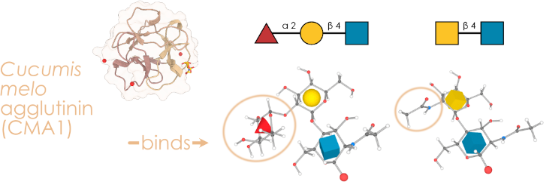
- member of characterized melon lectins, namely the Cucumis melo agglutinin (CMA1), an R-type lectin derived from melon. Prior to our study, CMA1 was only a predicted protein from genomic sequencing, with moderate certainty scores on lectin-specific databases. Our comprehensive analysis using glycan array
- unique binding profile of specifically recognizing C2-substituted galactose in the context of glycans. Results and Discussion Identification and production of a new lectin from the melon Cucumis melo CMA1 is a predicted protein from whole-genome shotgun sequencing of leaves from the melon plant Cucumis
- , as an archetypal example of melon lectins. For this, we needed to express the lectin recombinantly. As it is a secreted plant protein, we elected to express it in mammalian cell lines, to maximize the chances of a functional protein, because of post-translational modifications that would be lacking


Visible-light-induced radical cascade cyclization: a catalyst-free synthetic approach to trifluoromethylated heterocycles
Beilstein J. Org. Chem. 2024, 20, 118–124, doi:10.3762/bjoc.20.12
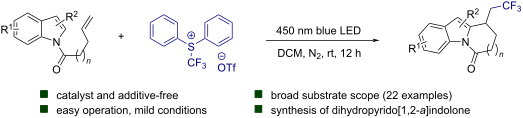
- compounds (Figure 1) [1][2][3], which exhibit a wide range of biological and pharmaceutical activities [4]. For example, mersicarpine has been found to inhibit protein translation and induce apoptosis [5] and vinburnine acts as a vasodilator for the treatment of cerebrovascular insufficiency [6][7]. Given




Identification of the p-coumaric acid biosynthetic gene cluster in Kutzneria albida: insights into the diazotization-dependent deamination pathway
Beilstein J. Org. Chem. 2024, 20, 1–11, doi:10.3762/bjoc.20.1
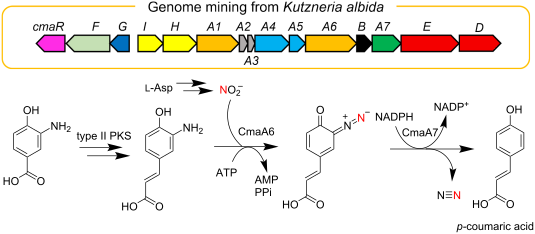
- recent studies [9][10][11][12][13][14]. Most of them belong to the adenylate-forming enzyme superfamily (ANL superfamily) and utilize ATP to activate nitrous acid by AMPylation, with the only exception being AzpL in alazopeptin biosynthesis, which is a membrane protein that catalyzes diazotization
- biosynthetic pathway [13]. In this pathway, 3-amino-4-hydroxybenzoic acid (3,4-AHBA, 1), synthesized by AvaH and AvaI, is loaded onto AvaA3 (carrier protein) by AvaA1 (AMP-dependent ligase), resulting in 3,4-AHBA-AvaA3. A highly reducing type II polyketide synthase (PKS) system [15][16] (AvaA2, A4, A5, and A8
- insights into how highly reducing type II PKSs control starter substrate incorporation. The only difference between avenalumic acid and p-coumaric acid is the chain length. The CLF CmaA5 shows 35.4% identity to AvaA5, which is the lowest similarity score among Ava and Cma protein pairs (Table 1). This is


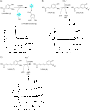
Long oligodeoxynucleotides: chemical synthesis, isolation via catching-by-polymerization, verification via sequencing, and gene expression demonstration
Beilstein J. Org. Chem. 2023, 19, 1957–1965, doi:10.3762/bjoc.19.146

- ligation from shorter 20 to 60 nt ODNs produced by automated de novo chemical synthesis. While these methods have made many projects in areas such as synthetic biology and protein engineering possible, they have various drawbacks. For example, they cannot produce genes and genomes with long repeats and
- 401 nt ODNs were synthesized and purified with CBP. The two were joined together using Gibson assembly to give the 800 nt green fluorescent protein (GFP) gene construct. The sequence of the construct was verified via Sanger sequencing. To demonstrate the potential use of the long ODN synthesis method
- . Keywords: automated synthesis; catching-by-polymerization; gene assembly; long oligonucleotide; synthetic biology; Introduction Long oligodeoxynucleotides (ODNs) are segments of DNAs extending beyond one hundred nucleotides (nt). Emerging research areas such as synthetic biology [1][2], protein





