Search results
Search for "redox" in Full Text gives 466 result(s) in Beilstein Journal of Organic Chemistry. Showing first 200.
A facile three-component route to powerful 5-aryldeazaalloxazine photocatalysts
Beilstein J. Org. Chem. 2024, 20, 1831–1838, doi:10.3762/bjoc.20.161
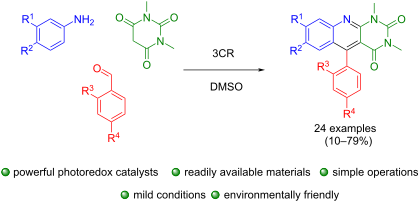
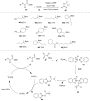
- of applications in medicinal chemistry, chemosensors, polymers and catalysis [1][2][3][4][5][6][7][8]. Among them, flavins (Fl) are essential redox-active natural compounds that act as enzyme cofactors in numerous biochemical processes [9]. Structurally related to flavins are isomeric alloxazines
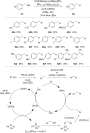
- of photocatalysts by tuning their redox and photophysical properties. Thus, we successfully developed a one-pot, three-component synthetic method with those substituents in 5-aryldeazaflavins 1 on the deazaisoalloxazine core or on the phenyl ring by condensation of N-substituted anilines, aromatic




Synthesis of polycyclic aromatic quinones by continuous flow electrochemical oxidation: anodic methoxylation of polycyclic aromatic phenols (PAPs)
Beilstein J. Org. Chem. 2024, 20, 1746–1757, doi:10.3762/bjoc.20.153
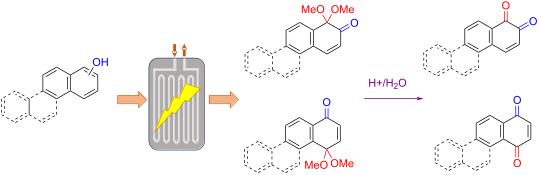
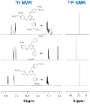
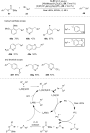
- after removal of solvents from the reaction mixture. Thus, Et4NOTs can easily be recycled and reused for a greener reaction. Voltammetric studies To investigate their redox behaviour, PAPs 1a,b (Figure 1A), 3a–c (Figure 1C), and 6a–c (Figure 1E) were scanned between +2.2 V and −1.5 V. All compounds
- radical and a naphthyloxy cation leading to the formation of 5. Our CV studies exhibit oxidation peaks, which seem in line with what to expect for an electrochemical oxidation of PAPs. Through the cyclic voltammetry experiments for the investigation of the redox behavior of the PAPs, an estimation of
- hexafluorophosphate ([NBu4] [PF6]) solution in acetonitrile. The solvent was dried and degassed using N2 prior to each experiment. All experiments were conducted at room temperature. All redox potentials were calibrated against ferrocene/ferrocenium (Fc/Fc+) redox couple. Cyclic voltammograms of PAPs first scan at




New triazinephosphonate dopants for Nafion proton exchange membranes (PEM)
Beilstein J. Org. Chem. 2024, 20, 1623–1634, doi:10.3762/bjoc.20.145

- combinatorial chemistry [35], in analytical chemistry, in electrochemical redox processes, in crystal engineering, and as fluorescent, light emitting, corrosion inhibitors or several other materials [36][37][38][39][40][41][42]. The most used triazine is 1,3,5-triazine (or s-triazine) that can provide




Tetrabutylammonium iodide-catalyzed oxidative α-azidation of β-ketocarbonyl compounds using sodium azide
Beilstein J. Org. Chem. 2024, 20, 1510–1517, doi:10.3762/bjoc.20.135
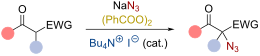
- ][25][26][27][28][29][30][31]. Such oxidative coupling strategies of two inherently nucleophilic species allow for the direct utilization of simple starting materials in an efficient manner and especially the use of quaternary ammonium iodides as redox active catalysts has emerged as a powerful


Electrophotochemical metal-catalyzed synthesis of alkylnitriles from simple aliphatic carboxylic acids
Beilstein J. Org. Chem. 2024, 20, 1497–1503, doi:10.3762/bjoc.20.133
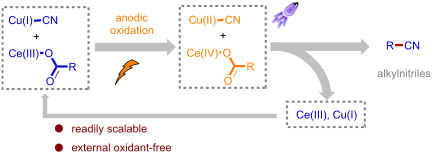
- ][18]. Owing to the prevalence of aliphatic carboxylic acids in biomass and natural products, decarboxylative cyanation represents one of the most straightforward and attractive approaches to accessing alkylnitriles [19][20]. As an elegant example, Barton demonstrated the application of redox-active
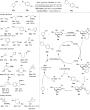
- plate as the cathode, was electrolyzed with a cell potential of 2.3 V (corresponding to an initial anodic potential of 0.10 V versus the ferrocenium ion/ferrocene redox couple) under the irradiation of 400 nm light-emitting diodes (LEDs). Through systematic optimization, we found that the use of readily


Generation of alkyl and acyl radicals by visible-light photoredox catalysis: direct activation of C–O bonds in organic transformations
Beilstein J. Org. Chem. 2024, 20, 1348–1375, doi:10.3762/bjoc.20.119
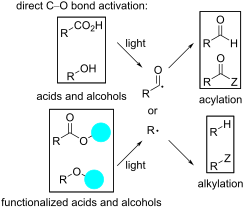
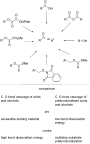
- becomes significant. C(sp3)–O bonds are ubiquitous in nature and can be easily found in biochemical feedstocks, such as alcohols and acids. On the other hand, alcohols and acids are easily accessible. Although the starting materials are abundant, the C–O bond strength and the high redox potential impede
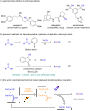
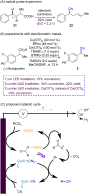
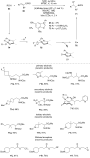
- , such as iridium complexes or organic dyes, and activating agents, including dimethyl dicarbonate (DMDC) and PPh3. Redox-active esters are created when activating agents and carboxylic acids react. These esters can then be reduced using a photoredox catalyst to produce the acyl radical. In 2019, Doyle
- interesting. However, direct C–O bond activation of alcohols by visible light is limited due to the large redox potential and the high C–O bond energy. As such, the conversion of alcohols to redox-active groups is necessary to tackle this issue. In this section, we will discuss various types of








Transition-metal-catalyst-free electroreductive alkene hydroarylation with aryl halides under visible-light irradiation
Beilstein J. Org. Chem. 2024, 20, 1327–1333, doi:10.3762/bjoc.20.116
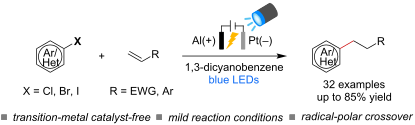
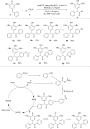
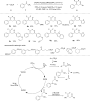
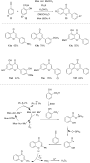
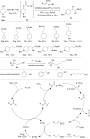
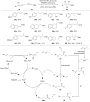
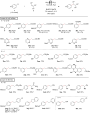
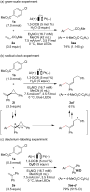
- conditions. The key to success is the use of 1,3-dicyanobenzene as a redox mediator and visible-light irradiation, which effectively suppresses the formation of simple reduction, i.e., hydrodehalogenation, products to afford the desired products in good to high yields. Mechanistic investigations proposed
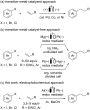
- the additional electron transfer to form the corresponding anions is a highly favorable pathway due to the more positive reduction potential of radicals than that of the starting halides [38], employing redox mediators enables the generated aryl radicals to participate in radical arylation reactions
- ][53]. Furthermore, odd-numbered [n]cumulenes have proven to be effective redox mediators for electroreductive radical borylation of unactivated aryl chlorides without visible-light irradiation by the group of Milner [54]. Herein, we report transition-metal-catalyst-free electroreductive alkene


Phenotellurazine redox catalysts: elements of design for radical cross-dehydrogenative coupling reactions
Beilstein J. Org. Chem. 2024, 20, 1292–1297, doi:10.3762/bjoc.20.112
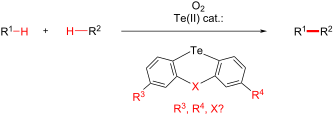
- Alina Paffen Christopher Cremer Frederic W. Patureau Institute of Organic Chemistry, RWTH Aachen University, Landoltweg 1, 52074 Aachen, Germany 10.3762/bjoc.20.112 Abstract Redox active phenotellurazine catalysts have been recently utilized in two different cross-dehydrogenative coupling
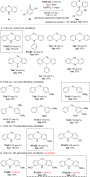
- reactions. In this study, we revisit the design of the phenotellurazine redox catalysts. In particular, we investigate the level of cooperativity between the Te- and N-centers, the effect of secondary versus tertiary N-centers, the effect of heterocyclic versus non-heterocyclic structures, and the effect of
- substitution patterns on the redox catalytic activity. Keywords: cross-dehydrogenative coupling; O2 activation; phenotellurazine; redox catalysis; Te catalysis; Introduction Tellurium catalysis has become increasingly important in recent years. This is due to its unique chalcogen bonding ability, thus



Oxidative hydrolysis of aliphatic bromoalkenes: scope study and reactivity insights
Beilstein J. Org. Chem. 2024, 20, 1286–1291, doi:10.3762/bjoc.20.111
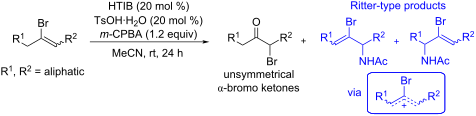
- alternative reaction pathway. Keywords: bromoalkenes; bromoketones; hypervalent iodine; oxidative hydrolysis; Ritter-type; Introduction Organic synthesis heavily relies on oxidative transformations to facilitate chemical reactions. One popular method for achieving these transformations is using redox-active


Mechanistic investigations of polyaza[7]helicene in photoredox and energy transfer catalysis
Beilstein J. Org. Chem. 2024, 20, 1236–1245, doi:10.3762/bjoc.20.106
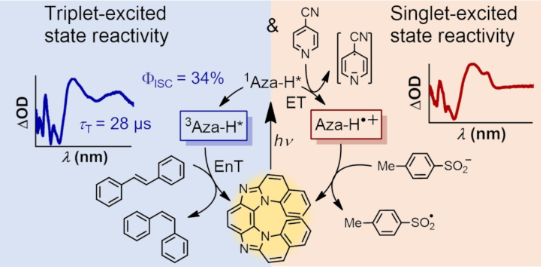
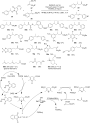
- its photochemical reactivity. The main reaction class catalyzed by excited-state polyazahelicene Aza-H so far is the redox-neutral addition of sulfinates and cyanopyridines, under elimination of cyanide, to styrenes in a three-component reaction. The proposed mechanism was derived from the redox


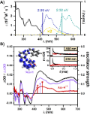


Two-fold addition reaction of silylene to C60: structural and electronic properties of a bis-adduct
Beilstein J. Org. Chem. 2024, 20, 1179–1188, doi:10.3762/bjoc.20.100
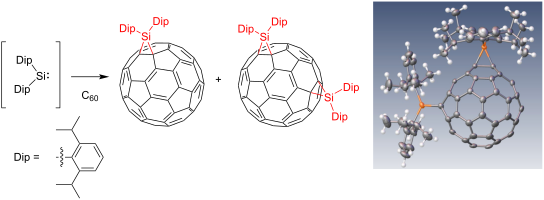
- silirane (silacyclopropane) derivative of fullerenes. Electrochemical measurements confirmed that the redox potentials of 3 are shifted cathodically compared to those of the parent mono-adduct 2. Density functional theory (DFT) calculations provided the basis for the electronic properties of compound 3
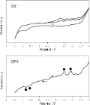
- irreversible, probably because of the removal of silylene addends, whereas the electrochemically reversible behavior was observed for the reduction waves. Table 2 presents the redox potentials of 3 obtained by DPV with those of C60 and 2, as reference compounds. Both the reduction (Ered) and the oxidation (Eox
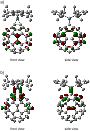
- [52][53][54][55][56]. The energies of HOMOs and LUMOs of the calculated regioisomers of 3 were compared with those of C60 and 2a (Table 3). The HOMO and LUMO levels of 3e were both found to be higher than those of C60 and 2a, respectively, which is qualitatively consistent with the shifts in the redox


Light on the sustainable preparation of aryl-cored dibromides
Beilstein J. Org. Chem. 2024, 20, 1076–1087, doi:10.3762/bjoc.20.95
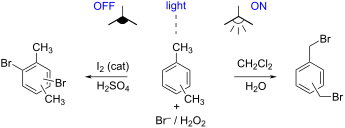
- process. Therefore, various forms of oxidative halogenations have been reported over the years. For example, Ishii described the use of the NaBrO3–NaHSO3 couple to slowly generate Br2 through an aqueous redox equilibrium [39]. Few years later, Adimurthy et al. proposed an improved variant based on the
- redox couple NaBr–NaBrO3 in acidic media [40][41]. Other variations include the system KBr–Oxone® [42]. However, based on a literature review, we concluded that unparalleled efficiency and sustainability can be achieved through the well-established redox equilibria between hydrogen peroxide and halide


(Bio)isosteres of ortho- and meta-substituted benzenes
Beilstein J. Org. Chem. 2024, 20, 859–890, doi:10.3762/bjoc.20.78
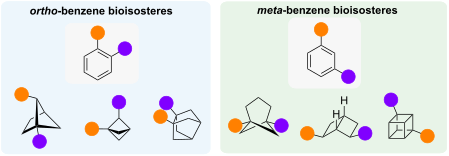
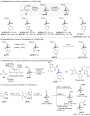
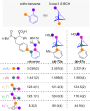
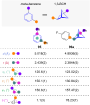
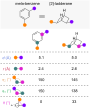
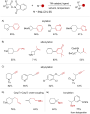
- esterification of alcohol (±)-5 gave redox active ester (±)-6, which was itself shown to be a suitable substrate for nickel-catalysed decarboxylative cross coupling reactions to aryl-substituted BCPs (±)-7. Oxidation of alcohol (±)-8 gave acid (±)-9 which yielded amine (±)-10 after a Curtius rearrangement
- rearrangement, amine (±)-27 was then accessible in one additional step. Formation of redox active ester (±)-28 from acid (±)-26 allowed photochemical Minisci reaction to 1,2-BCH (±)-29 and borylation to boronic ester (±)-30. Synthesis of phenol isostere (±)-31 was possible through oxidation of boronic ester
- development of a new synthetic route to diester 1,2-cubane 88 from dimethyl cubane-1,4-dicarboxylate (85) (Scheme 9A) [51]. 1,4-Cubane 85 is photochemically carboxylated to 86, and selective saponification of the least hindered ester leads to 87. Formation of a redox active ester followed by photocatalytical












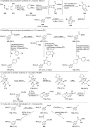


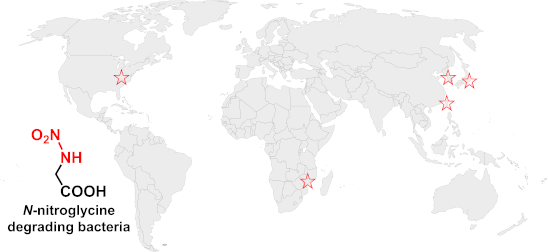
Activity assays of NnlA homologs suggest the natural product N-nitroglycine is degraded by diverse bacteria
Beilstein J. Org. Chem. 2024, 20, 830–840, doi:10.3762/bjoc.20.75
- (Scheme 1) [20][21]. Vs NnlA contains a Per-Arnt-Sim (PAS) domain – protein domains that often bind heme and function as gas or redox sensors [20]. Indeed, Vs NnlA was shown to contain a heme cofactor [21]. Mutagenesis of a predicted histidine ligand to this heme resulted in loss of the heme and the


SOMOphilic alkyne vs radical-polar crossover approaches: The full story of the azido-alkynylation of alkenes
Beilstein J. Org. Chem. 2024, 20, 701–713, doi:10.3762/bjoc.20.64
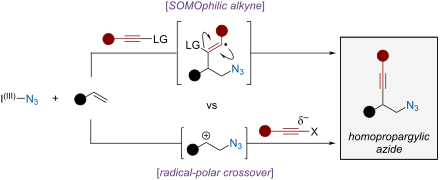
- the development of the azidobenziodazolone scaffold [17]. This class of derivative showed an improved safety profile while retaining the redox properties of the original reagent. A single example of azido-alkynylation has been reported by Ramasastry and co-workers during a mechanistic study for an
- except for 4ClDPAIPN which afforded 10% of yield of 4a (Table 2, entries 6–10). No correlation between the different redox potentials of the photocatalysts and the yield of the reaction could be established. Ru(bpy)3Cl2·6H2O was selected as the optimal catalyst since it afforded the highest yield and


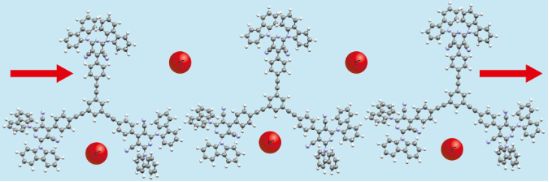
Organic electron transport materials
Beilstein J. Org. Chem. 2024, 20, 672–674, doi:10.3762/bjoc.20.60
- orthogonal processing. One of the biggest challenges with n-type materials is air stability. This is explained by the redox potentials of water (−0.66 V vs standard calomel electrode (SCE)) and oxygen (+0.024 V vs SCE, +0.57 V vs SCE) [2][3]. Therefore, it has been observed that once the overpotential
- required for these redox reactions to progress is taken into consideration, a lowest unoccupied molecular orbital (LUMO) energy ≤ −4.0 eV (relative to vacuum) is required for air stable electron transport materials [2] and this is a common target for researchers developing these types of materials. In

Enhanced reactivity of Li+@C60 toward thermal [2 + 2] cycloaddition by encapsulated Li+ Lewis acid
Beilstein J. Org. Chem. 2024, 20, 653–660, doi:10.3762/bjoc.20.58
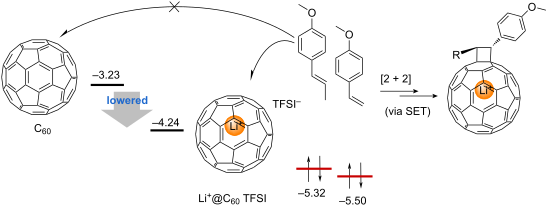
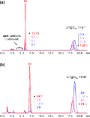
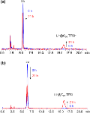
- redox waves, with subsequent reduction resulting in an irreversible electrochemical response. The first reduction potentials of 5a and 5b were measured at −0.51 V and −0.52 V (vs Fc/Fc+), respectively, which were more negative than that of pristine Li+@C60 (E1/2red1 = −0.39 V). While the detailed
- reasons for the irreversible redox properties after the second reduction process have not been thoroughly investigated, the observed phenomena could potentially be attributed to ring opening or simple decomposition under the conditions. From these results, the LUMO levels of the compounds were estimated




A laterally-fused N-heterocyclic carbene framework from polysubstituted aminoimidazo[5,1-b]oxazol-6-ium salts
Beilstein J. Org. Chem. 2024, 20, 621–627, doi:10.3762/bjoc.20.54
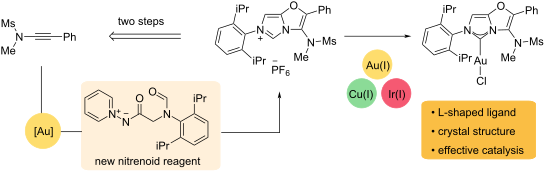
- secondary gold-ligand interactions [8][9][10], chiral environments [11][12][13] including those enabling secondary interactions with substrates for asymmetric catalysis [14], cooperative and bimetallic catalysis [7][15], and redox-enabling function for Au(I)/(III) cycles [16][17]. Such L-shaped ligands


Switchable molecular tweezers: design and applications
Beilstein J. Org. Chem. 2024, 20, 504–539, doi:10.3762/bjoc.20.45
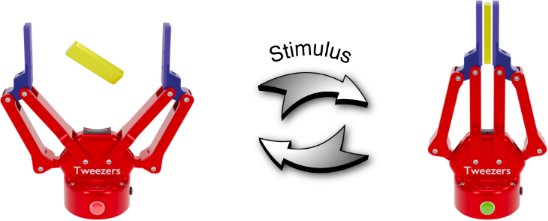
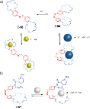
- first part will be devoted to chemically responsive tweezers, including stimuli such as pH, metal coordination, and anion binding. Then, redox-active and photochemical tweezers will be presented. Keywords: coordination; molecular recognition; molecular switches; photoswitch; redox; supramolecular
- reactions. Electrochemical stimuli, while generating no waste when employing electrodes, may face limitations due to the electroactive window of the solvent and require the incorporation of redox-active switching units, which can impose constraints on design and functionality. It is worth noting that the
- potential if the arms exhibit additional properties such as luminescence, magnetism, catalysis, redox activity, or more. Such systems can also provide two orthogonal responses: the mechanical motion between the open and closed forms, and a potential new property that emerges when the arms are in spatial




Enhanced host–guest interaction between [10]cycloparaphenylene ([10]CPP) and [5]CPP by cationic charges
Beilstein J. Org. Chem. 2024, 20, 436–444, doi:10.3762/bjoc.20.38
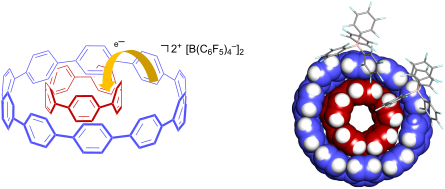
- new CPP analogs [4][5][6][7][8] and unveiling their unique physical properties, such as size-dependent photophysical [9][10][11][12][13][14][15] and redox properties [16][17][18][19][20][21]. The other, and one of the most exciting, functions of CPPs derived from the ring structure is their host




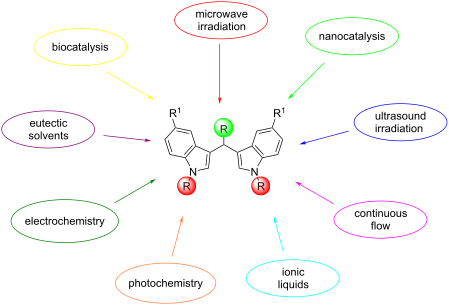
Green and sustainable approaches for the Friedel–Crafts reaction between aldehydes and indoles
Beilstein J. Org. Chem. 2024, 20, 379–426, doi:10.3762/bjoc.20.36




Mechanisms for radical reactions initiating from N-hydroxyphthalimide esters
Beilstein J. Org. Chem. 2024, 20, 346–378, doi:10.3762/bjoc.20.35
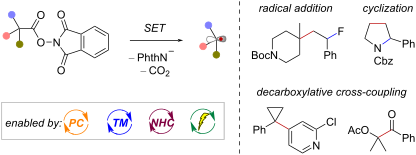
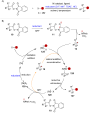
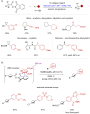
- electrochemical conditions [30][31]. Due to their propensity towards single-electron reduction, NHPI esters, and similar derivatives such as N-hydroxytetrachlorophthalimide (TCNHPI) esters, are collectively referred to as "redox-active esters" (RAEs). The versatility of RAEs stems, in part, to the sensitivity of
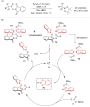
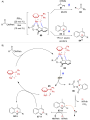
- TCNHPI ester 5 (measured in MeCN vs Fc0/Fc+, see Scheme 2A) [32]. Based solely on their redox potentials, single-electron reduction of RAEs is only possible in the presence of a sufficiently strong reducing agent. However, the reduction of RAEs can also be facilitated through the formation of charge
- hydrogen atom transfer (HAT) or sequential electron transfer and proton transfer (ET/PT) steps. Alternatively, redox-neutral transformations can be envisioned using catalytic reductants, which can enable a complementary scope of downstream functionalizations (Scheme 2B). In this perspective, we present an








Synthesis of π-conjugated polycyclic compounds by late-stage extrusion of chalcogen fragments
Beilstein J. Org. Chem. 2024, 20, 287–305, doi:10.3762/bjoc.20.30
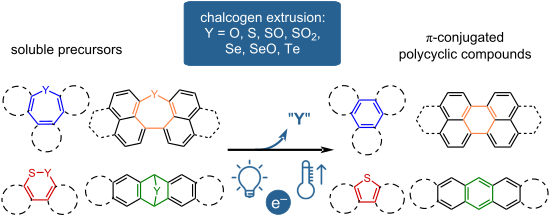
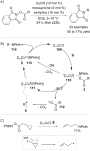
- conversion in situ, triggered by thermal activation, photoirradiation or redox control. Beside well-established reactions involving the elimination of carbon-based small molecules, i.e., retro-Diels–Alder and decarbonylation processes, the late-stage extrusion of chalcogen fragments has emerged as a highly
- synthesized thiepine-containing polymers designed to undergo redox-driven bent-to-planar conformational changes [63]. However, upon electrochemical oxidation of the drop-cast film of polymer 13, the authors observed the conversion of the dithienobenzothiepine monomeric units into dithienonaphthalenes, which
- can be ascribed to a redox-driven S-extrusion (Scheme 6). This behavior of extended thiepines upon oxidation was further confirmed by investigating the corresponding sulfoxide, which appeared labile and readily underwent ring contraction. Since thiepine precursors (such as 15) and the corresponding




Additive-controlled chemoselective inter-/intramolecular hydroamination via electrochemical PCET process
Beilstein J. Org. Chem. 2024, 20, 264–271, doi:10.3762/bjoc.20.27
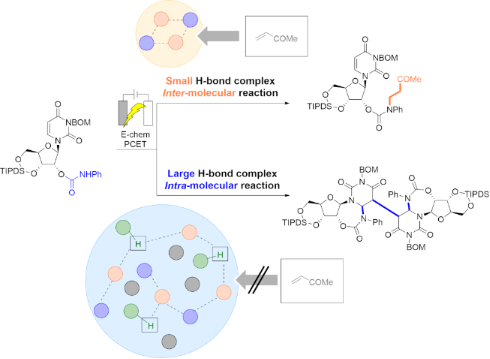
- 1,1,1,3,3,3-hexafluoro-2-propanol (HFIP) as an additive. These results provide fundamental insights for the design of PCET-based redox reaction systems under electrochemical conditions. Keywords: amidyl radical; cyclic voltammetry; electrosynthesis; hydroamination; proton coupled electron transfer
- 1. Detailed CV analysis indicated that the size of the hydrogen bond complex determined the selectivity, and HFIP played a crucial role in expanding the hydrogen bond network. These results provide fundamental insights beneficial for the design of PCET-based redox reaction systems under


Substitution reactions in the acenaphthene analog of quino[7,8-h]quinoline and an unusual synthesis of the corresponding acenaphthylenes by tele-elimination
Beilstein J. Org. Chem. 2024, 20, 243–253, doi:10.3762/bjoc.20.24
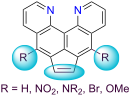
- acenaphthylene 8) or as a result of double protodebromination (giving acenaphthene 5). Overall, the observed process resembles a redox transformation. Benzyl-type anions, which have hydride mobility and are formed in an alkaline environment from 15, may act as a reducing agent here. We tried to stop this