


Search results
Search for "entropy" in Full Text gives 132 result(s) in Beilstein Journal of Organic Chemistry.
Synthesis of indole-based propellane derivatives via Weiss–Cook condensation, Fischer indole cyclization, and ring-closing metathesis as key steps
Beilstein J. Org. Chem. 2013, 9, 2709–2714, doi:10.3762/bjoc.9.307
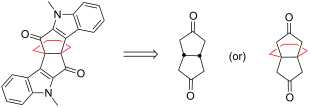
- unfavourable entropy factors [51][52][53], but in our strategy the eight membered ring is successfully assembled with the aid of Grubbs 2nd catalyst. Diindole derivative 4 was also synthesized by an independent route starting with [4.3.3]propellane derivative 12 obtained by Weiss–Cook condensation with


Synthesis of enantiomerically pure (2S,3S)-5,5,5-trifluoroisoleucine and (2R,3S)-5,5,5-trifluoro-allo-isoleucine
Beilstein J. Org. Chem. 2013, 9, 2009–2014, doi:10.3762/bjoc.9.236
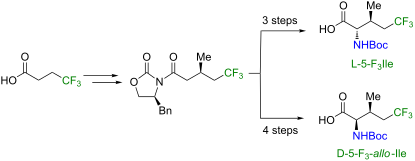
- CF3 resulted in an approximately eight-fold higher thermal stability of the respective GCN4 analogue than the replacement of the γ-CH3 group of Val by CF3 [12]. This finding was explained by the substantial loss of side-chain entropy of Val due to steric restriction between the significantly larger γ


Aerobic radical multifunctionalization of alkenes using tert-butyl nitrite and water
Beilstein J. Org. Chem. 2013, 9, 1713–1717, doi:10.3762/bjoc.9.196

- having a methine group to form an organized transition state to induce the 1,5-hydrogen shift because they have only one hydrogen atom that can be abstracted [17]. In short, entropy factors might be dominant in the present reaction. We attempted to transform the product obtained by the present reaction


Electron self-exchange activation parameters of diethyl sulfide and tetrahydrothiophene
Beilstein J. Org. Chem. 2013, 9, 1448–1454, doi:10.3762/bjoc.9.164
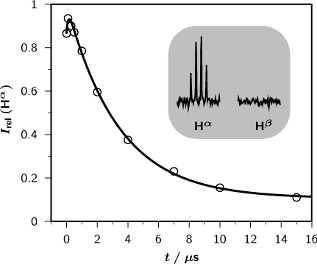
- of our high radical concentrations, the apparent depletion of DES by this complexation is higher for smaller substrate concentrations. On these grounds, we regard the intercept in Figure 2, and thus the activation entropy in Table 1, as a lower limit in the case of DES. The activation enthalpies are
- ] gave an activation entropy of +7.6 JK−1 mol−1). Our experimental values indicate transitions states that are much more ordered than usual, which is strong evidence that in these systems the self-exchange does not involve the monomeric radical cations D•+ but the dimeric ones , for which the formation
- ) and THTP (filled circles and solid line; linear regression, 15.24 – 349/T, r2 = 0.88) in acetonitrile-d3; sensitizer TTP+. For all other experimental parameters and further explanation, see Figure 1 and text. Activation parameters (enthalpy entropy and free energy at room temperature (298K)) for


Space filling of β-cyclodextrin and β-cyclodextrin derivatives by volatile hydrophobic guests
Beilstein J. Org. Chem. 2013, 9, 1185–1191, doi:10.3762/bjoc.9.133
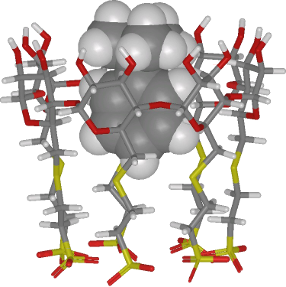
- destabilizing the β-CD framework. This destabilization leads to a reduction of the binding potential, because of an unfavorable negative binding entropy. Recently, we also found a diminished binding potential for those β-CD derivatives methylated at the 2- and 3-positions [38]. In contrast, the binding


Substituent effect on the energy barrier for σ-bond formation from π-single-bonded species, singlet 2,2-dialkoxycyclopentane-1,3-diyls
Beilstein J. Org. Chem. 2013, 9, 925–933, doi:10.3762/bjoc.9.106
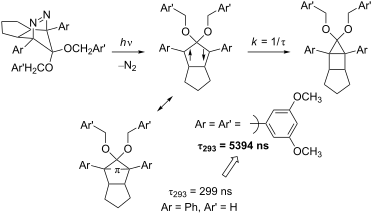
- entropy effect were found to play crucial roles in increasing the lifetime. Keywords: laser flash photolysis; lifetime; singlet diradicals (biradicals); substituent effect; π-single bond; Introduction Localized singlet diradicals are key intermediates in processes involving the homolytic bond-cleavage
- , entry 4) with that of DRd (1933 ns, Table 1, entry 3). When the 3,5-dimethoxyphenyl group was introduced at all of the C(1), C(2), and C(3) positions, the lifetime of the diradical DRf (ΔG‡ = 42.2 kJ mol−1, Table 1, entry 5) was dramatically increased to 5394 ns at 293 K. The activation entropy (ΔS
- lifetimes are largely dependent on the substituent pattern of Ar and Ar’ at the C(1)–C(3) positions of the 1,3-diyls. Thus, both the enthalpy and entropy effect were found to play crucial roles in increasing the lifetime. Experimental All reagents were purchased from commercial sources and were used without


Kinetics and mechanism of the anilinolysis of aryl phenyl isothiocyanophosphates in acetonitrile
Beilstein J. Org. Chem. 2013, 9, 615–620, doi:10.3762/bjoc.9.68
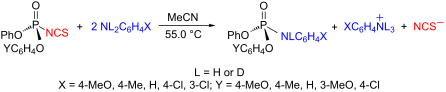
- . Activation parameters, enthalpies and entropies of activation, are determined as shown in Table 5. The enthalpies of activation are relatively low and entropies of activation are of relatively large negative value. The relatively low value of activation enthalpy and large negative value of activation entropy


Complete σ* intramolecular aromatic hydroxylation mechanism through O2 activation by a Schiff base macrocyclic dicopper(I) complex
Beilstein J. Org. Chem. 2013, 9, 585–593, doi:10.3762/bjoc.9.63
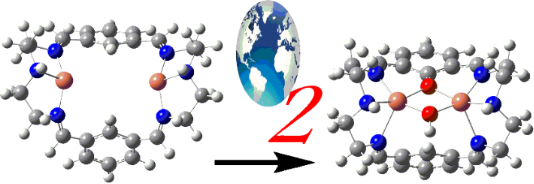
- same solvent used experimentally. The relative Gibbs energies reported in this work include energies computed using the B3LYP/6-311G(d,p)//B3LYP/6-31G(d) method together with solvent effects obtained at the B3LYP/6-31G(d) level, and zero-point energies, thermal corrections, and entropy effects


Electron and hydrogen self-exchange of free radicals of sterically hindered tertiary aliphatic amines investigated by photo-CIDNP
Beilstein J. Org. Chem. 2013, 9, 437–446, doi:10.3762/bjoc.9.46
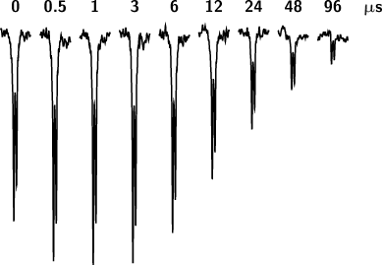
- -sensitized reaction lends a posteriori support to our above reasoning. From the regression lines in Figure 4, one calculates the activation parameters given in Table 2. The much more negative activation entropy in the XA-sensitized reaction is clearly consistent with our preceding explanation of the
- different reaction rates, because a hydrogen self-exchange must involve a more ordered transition state than an electron self-exchange; the small positive activation entropy in the AQ-sensitized reaction also supports our interpretation, because this is a well-known fact for outer-sphere electron transfer


Asymmetric Diels–Alder reaction with >C=P– functionality of the 2-phosphaindolizine-η1-P-aluminium(O-menthoxy) dichloride complex: experimental and theoretical results
Beilstein J. Org. Chem. 2013, 9, 392–400, doi:10.3762/bjoc.9.40
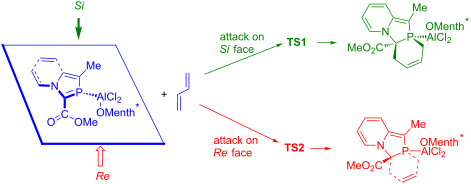
- unaffected in methylene chloride. Kinetics of the reactions Standard-state entropies and entropy changes of different species, as well as the enthalpies and the Gibbs free energies of the computed reactions (as shown in Scheme 5) are given in Table 1. The entropy effects have been found to play a major role
- in enzyme catalysis [53]. However, in the present case, the entropy difference between the TS1 and TS3 is negligible and does not appear to play significant role. On the other hand, entropy effects favour the endo approach over the exo approach from the Si face. Although the three reactions are
- -phosphaindolizine complex. Standard state entropies S0, entropy change ΔS, reaction enthalpies ΔH0 and reaction Gibbs free energies ΔG0. Supporting Information Supporting Information File 142: Cartesian coordinates of the geometries optimized (Table S1) and total energies of reactants, transition structures and


Spin state switching in iron coordination compounds
Beilstein J. Org. Chem. 2013, 9, 342–391, doi:10.3762/bjoc.9.39
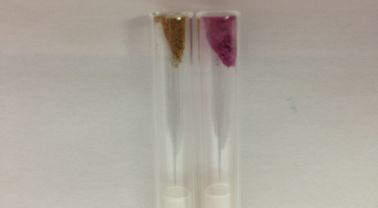
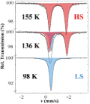
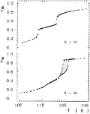
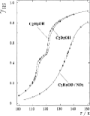
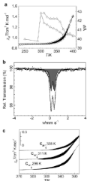
- τN, and thus, the spin state fluctuation rate is 1/τN ≤ 107 s−1. Calorimetry Studies of SCO compounds often require a knowledge of thermodynamic quanitities such as the changes of enthalpy ΔH = HHS − HLS and entropy ΔS = SHS − SLS because of their valuable information regarding the ST properties, in
- particular cooperative interactions and the order of the ST transition. Enthalpy changes ΔH = HHS − HLS are typically 10 to 20 kJ mol−1, and entropy changes ΔS = SHS − SLS are on the order of 50 to 80 J mol−1 K−1 [22]. The thermally induced ST is an entropy-driven process because the degree of freedom is
- much higher in the HS state than in the LS state, which is schematically shown in Figure 1 by the narrower distances between the vibrational levels in the HS state as compared to the LS state. Approximately 25% of the total entropy gain on going from LS to HS is of magnetic origin, viz., it arises from


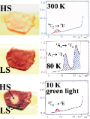





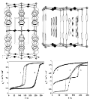
![[Graphic 1]](/bjoc/content/inline/1860-5397-9-39-i3.png?max-width=637&scale=1.18182) ) modes versus the anion volu...
) modes versus the anion volu...






Towards a biocompatible artificial lung: Covalent functionalization of poly(4-methylpent-1-ene) (TPX) with cRGD pentapeptide
Beilstein J. Org. Chem. 2013, 9, 270–277, doi:10.3762/bjoc.9.33
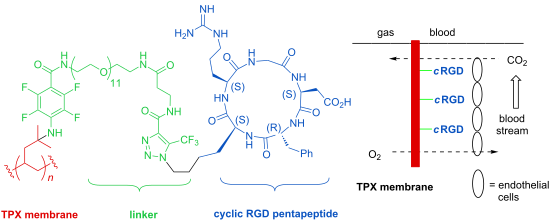
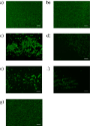
- hydrophilicity resulting from the oxidative plasma conditioning on the surface [32]. The plasma-mediated surface oxidation yields polar groups including hydroxy groups, which rapidly vanish, a well-investigated aging effect of plasma-treated materials. This process is an entropy-initiated surface reorientation


Preparation of mixed trialkyl alkylcarbonate derivatives of etidronic acid via an unusual route
Beilstein J. Org. Chem. 2012, 8, 2019–2024, doi:10.3762/bjoc.8.228
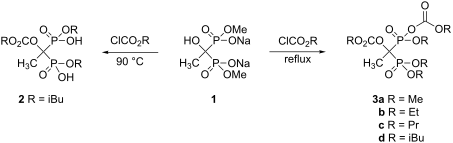
- chloride as the reagent [30], or more probably after rearrangement by means of a regular acid (HCl) hydrolysis. The driving force in this irreversible reaction is entropy, since gaseous CH3Cl is evaporated leading to product 2. The formation of the stable intermediate 2 also explains the difficulty




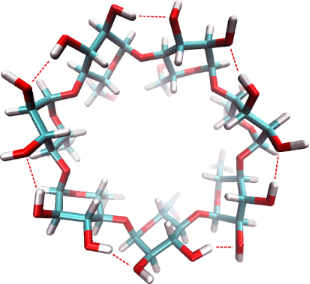
Influence of intramolecular hydrogen bonds on the binding potential of methylated β-cyclodextrin derivatives
Beilstein J. Org. Chem. 2012, 8, 1890–1895, doi:10.3762/bjoc.8.218
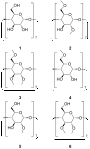
- β-CD 3 and the 2,3-dimethylated derivative 6 showed the lowest binding constants K, less than one tenth of the one of native β-CD 1. These very low binding constants are accompanied by positive values of the entropy term −TΔS° weakening the binding free enthalpy ΔG°. On the other hand, binding
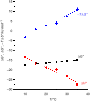
- secondary positions showed much lower affinities towards this guest than 1 did. Again, a positive value of the entropy term −TΔS° was found for 2,3,5-tri-O-methyl-β-CD. As shown in Figure 2, this entropy term further grew with increasing temperature, compensating most of the strongly negative binding
- of neutral guests by concave hosts in water, because it can lead both to entropy gains and enthalpic advantages [36]. The observed value for 2,3,5-tri-O-methyl-β-CD is even higher than that for native β-CD, ΔCp = −320 ± 20 J mol−1 K−1 [37]. This difference was attributed to the larger internal


The preferred conformation of erythro- and threo-1,2-difluorocyclododecanes
Beilstein J. Org. Chem. 2012, 8, 1271–1278, doi:10.3762/bjoc.8.143
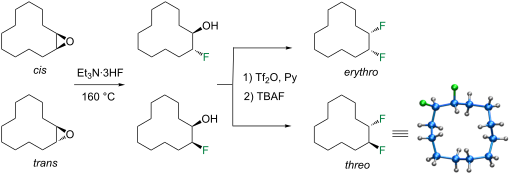
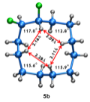
- ground state, thus this is most probably the major contributor to the enthalpy difference. The opposite sign in entropy (ΔS#) for each isomer makes a relatively small contribution to the overall free energy; however, the positive value for the erythro isomer is perhaps unexpected for progression towards




An intramolecular inverse electron demand Diels–Alder approach to annulated α-carbolines
Beilstein J. Org. Chem. 2012, 8, 829–840, doi:10.3762/bjoc.8.93
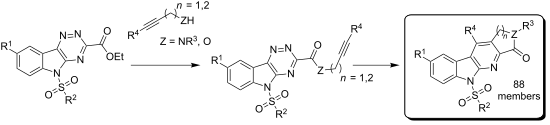
- annulations was previously noted by Taylor [95][96][97][98], and has been ascribed to the greater entropy loss for the larger rings [99]. Indeed, it has been estimated that the effective molarity for 5-membered ring closures can be as high as 1,000-fold greater in comparison to 6-membered ring cyclizations


Self-assembly of Ru4 and Ru8 assemblies by coordination using organometallic Ru(II)2 precursors: Synthesis, characterization and properties
Beilstein J. Org. Chem. 2012, 8, 313–322, doi:10.3762/bjoc.8.34
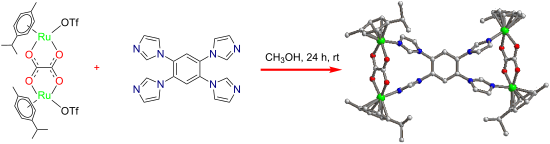
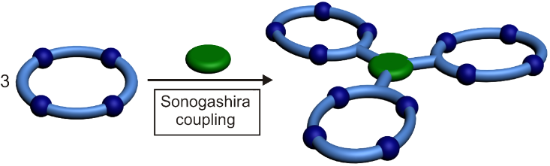
- the loss of entropy in the latter case is more. As shown in Scheme 2, the binuclear acceptor 1a or 1b was treated separately with an imidazole-based tetratopic donor L in a 2:1 molar ratio in methanol at room temperature to obtain [2 + 1] self-assembled macrocycles 2a and 2b, respectively, in high


Synthesis of multivalent host and guest molecules for the construction of multithreaded diamide pseudorotaxanes
Beilstein J. Org. Chem. 2012, 8, 234–245, doi:10.3762/bjoc.8.24
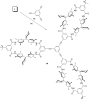
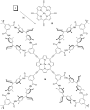
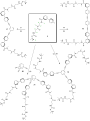
- view of previous theoretical calculations on amide/tetralactam macrocycle complexes [111], which show that simple amide axles dethread in the gas phase because of a favourable entropy term arising from the increase in particle number upon complex dissociation. This entropic contribution overcompensates


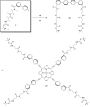
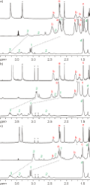
Thermodynamic and kinetic stabilization of divanadate in the monovanadate/divanadate equilibrium using a Zn-cyclene derivative: Towards a simple ATP synthase model
Beilstein J. Org. Chem. 2012, 8, 81–89, doi:10.3762/bjoc.8.8
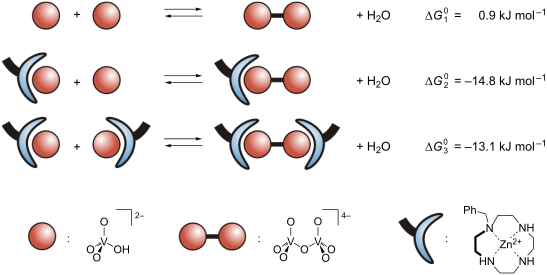
- complexed monovanadate is only possible from the non-shielded side. Moreover, the role of the monovanadate acting as the electrophile is defined by complexation which reduces the probability of effective collisions and, thus, decreases the entropy of activation. Both effects, obviously, overcompensate the


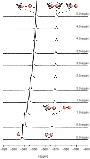


(How) does 1,3,5-triethylbenzene scaffolding work? Analyzing the abilities of 1,3,5-triethylbenzene- and 1,3,5-trimethylbenzene-based scaffolds to preorganize the binding elements of supramolecular hosts and to improve binding of targets
Beilstein J. Org. Chem. 2012, 8, 1–10, doi:10.3762/bjoc.8.1
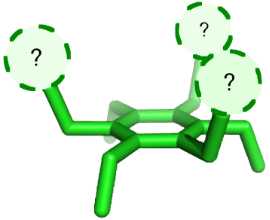
- methyl groups, but the size of this advantage can be small and is dependent on the groups involved. Keywords: binding affinity; entropy; molecular recognition; scaffolds; supramolecular hosts; triethylbenzene; trimethylbenzene; Introduction Supramolecular hosts use arrays of multiple weak interactions
- the energy that must be paid to adopt a (potentially unfavorable) binding conformation, and can also have effects on binding entropy when one considers the degrees of freedom in the host, guest, and solvated host–guest complex. Rigid macrocyclic hosts are often successful because of their high degree
- ) calculated here are most closely akin to enthalpies (∆H), and neglect differences in entropy (∆S) from one host type to another. The aspects of host entropy that might contribute to guest binding, i.e., translational, vibrational, solvation, and configurational entropy, are worth separate discussions


Dependency of the regio- and stereoselectivity of intramolecular, ring-closing glycosylations upon the ring size
Beilstein J. Org. Chem. 2011, 7, 1609–1619, doi:10.3762/bjoc.7.189
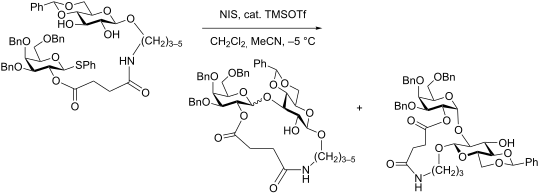
- , entropy-reducing intramolecular cyclization step. Within the frame of an overall SN1 reaction, the cyclization step is regarded as the rate-determining step; therefore, the transition state for the nucleophilic addition to the glycosyl cyclic oxonium intermediate may allow for a rationalization of the


Intramolecular hydroamination of alkynic sulfonamides catalyzed by a gold–triethynylphosphine complex: Construction of azepine frameworks by 7-exo-dig cyclization
Beilstein J. Org. Chem. 2011, 7, 951–959, doi:10.3762/bjoc.7.106
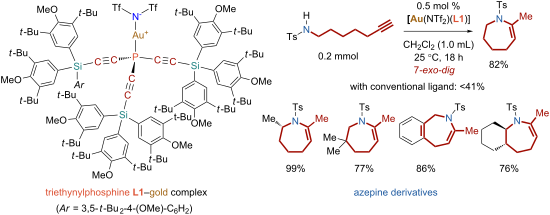
- alkyne substrates, which had also been difficult due to the steric repulsion between a nucleophilic center and a terminal substituent on the alkyne moiety [56]. We proposed that the cavity in the ligand forces the nucleophilic center closer to the gold-bound alkyne, resulting in the entropy-based rate
- , gold-catalyzed hydroamination of N-(5-hexyn-1-yl)-p-toluenesulfonamide 7. As expected from entropy considerations, the six-membered ring formations of 7 with these ligands were generally much faster than the seven-membered ring formations of 4: The reaction with 0.5 mol % catalyst loading at room


Kinetic evaluation of the solvolysis of isobutyl chloro- and chlorothioformate esters
Beilstein J. Org. Chem. 2011, 7, 543–552, doi:10.3762/bjoc.7.62
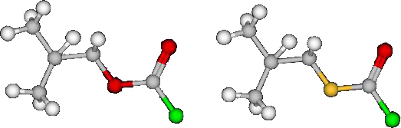
- organic mixtures with wide ranging nucleophilicity and ionizing power. For 1, we also report the first-order rate constants determined at different temperatures in pure ethanol (EtOH), methanol (MeOH), 80% EtOH, and in both 97% and 70% 2,2,2-trifluoroethanol (TFE). The enthalpy (ΔH≠) and entropy (ΔS≠) of
- corresponding values of the enthalpy (ΔH≠) and entropy (ΔS≠) of activation. Results and Discussion The specific rates of solvolysis of 1 at 40.0 °C and of 2 at 25.0 °C, are reported in Table 1. Also presented in Table 1 are the NT and YCl values needed for the multiple correlation analysis of the assembled data
- using Equation 1. For 1, we report in Table 2 the first-order rate constants determined at different temperatures in pure ethanol (EtOH), methanol (MeOH), 80% EtOH, 97% 2,2,2-trifluoroethanol (TFE) and 70% TFE. The corresponding enthalpy (ΔH≠) and entropy (ΔS≠) of activation values obtained from


Heavy atom effects in the Paternò–Büchi reaction of pyrimidine derivatives with 4,4’-disubstituted benzophenones
Beilstein J. Org. Chem. 2011, 7, 113–118, doi:10.3762/bjoc.7.16
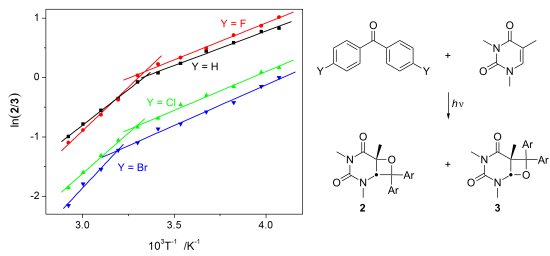
- 1b. Temperature effects on the regioselectivity of 1b–e systems showed some interesting features for systems with heavy atoms (including the 1d and 1e systems), such as higher inversion temperatures, and an entropy-controlled regioselectively whereas the regioselectivity for two other systems (1b and
- 1c) is enthalpy–entropy controlled. A heavy atom effect is suggested to be responsible for these unusual phenomena based on the triplet-diradical mechanism of the Paternò–Büchi reaction. Keywords: benzophenone; heavy atom effect; Paternò–Büchi reaction; regioselectivity; triplet diradical
- other systems (−2.1 J/mol for 1d, −3.2 kJ/mol for 1e). In other words, this is an entropy-determined selection for the regioselectivity over the whole temperature range investigated. Interception of heavy atom effects Based on the triplet mechanism of the Paternò–Büchi reaction, it is possible to have a


The intriguing modeling of cis–trans selectivity in ruthenium-catalyzed olefin metathesis
Beilstein J. Org. Chem. 2011, 7, 40–45, doi:10.3762/bjoc.7.7
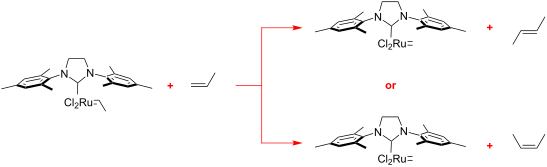
- kcal·mol−1, since the gas-phase rotational/translational entropy of coordination from classical statistical thermodynamics is generally considered to overestimate the coordination entropy in solution. The –TΔS contribution of 10 kcal·mol−1 is the experimental coordination entropy of C2H4 to a Pd-complex





