


Search results
Search for "hazardous" in Full Text gives 153 result(s) in Beilstein Journal of Organic Chemistry.
Amidofluorene-appended lower rim 1,3-diconjugate of calix[4]arene: synthesis, characterization and highly selective sensor for Cu2+
Beilstein J. Org. Chem. 2016, 12, 1749–1757, doi:10.3762/bjoc.12.163
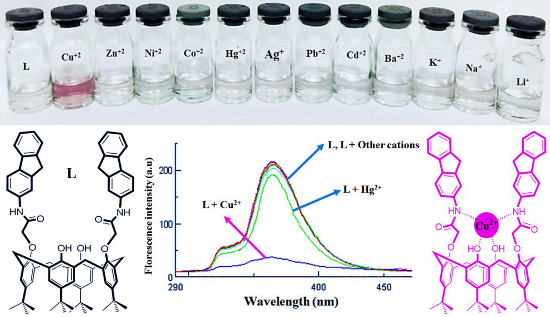
- amounts of Cu2+ are hazardous, due to generate reactive oxygen species (ROS) that disturbs cellular metabolism [10][11]. On the other hand, its deficiency may cause haematological and neurological diseases [12]. Therefore, the selective and sensitive measurement of Cu2+ ions – either as significant



Diradical reaction mechanisms in [3 + 2]-cycloadditions of hetaryl thioketones with alkyl- or trimethylsilyl-substituted diazomethanes
Beilstein J. Org. Chem. 2016, 12, 716–724, doi:10.3762/bjoc.12.71
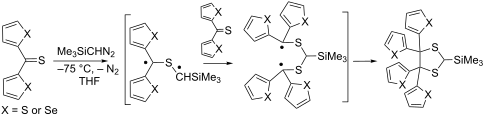
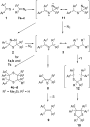
- these atoms are expected (cf. [19]). Trimethylsilyldiazomethane (7c) is widely applied as a practical and useful synthetic equivalent of the hazardous diazomethane [24][25]. In our earlier publications, its reactions with thiofluorenone (1b) and S-methyl (phosphonyl)dithioformate, leading to the


Continuous formation of N-chloro-N,N-dialkylamine solutions in well-mixed meso-scale flow reactors
Beilstein J. Org. Chem. 2015, 11, 2408–2417, doi:10.3762/bjoc.11.262
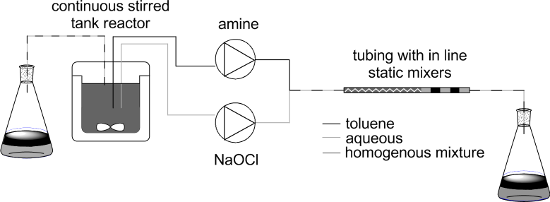
- properties, making it highly hazardous and operationally difficult to use. In addition, the hydrochloric acid byproduct requires additional processing to neutralise and separate it. N-Chlorosuccinimide is used frequently in the laboratory because it is a relatively stable solid that is easily weighed and
- added to reactions [3][17], however, it has a low atom economy, poor economics, and requires separation of the succinimide byproduct [18]. The tert-butyl hypochlorite (t-BuOCl) reagent is also used regularly, but is similarly expensive, wasteful and hazardous [14][19][20][21]. On the other hand sodium
- of hazardous or unstable products. Furthermore smaller volumes with higher surface areas enable faster heat removal and better temperature control to limit unwanted side reactions. Further kinetic control is achieved with reactant concentrations, feed rates, mixing regime and residence time resulting


Coupling of α,α-difluoro-substituted organozinc reagents with 1-bromoalkynes
Beilstein J. Org. Chem. 2015, 11, 2145–2149, doi:10.3762/bjoc.11.231

- , unique stereoelectronic properties of the CF2-unit may be exploited in conformational analysis [3][4][5], carbohydrate and peptide research [6][7], and reaction engineering [8][9]. Typically, the difluoromethylene fragment is created by deoxyfluorination, which requires harsh or hazardous conditions [10


Olefin metathesis in air
Beilstein J. Org. Chem. 2015, 11, 2038–2056, doi:10.3762/bjoc.11.221
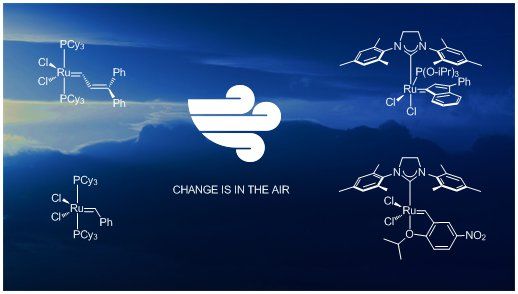
- reaction with styrene, avoiding the use of hazardous diazo compound 7 [82]. Towards the end of 2013, a report by Olszewski, Skowerski and co-workers showed how a variety of commercially available catalysts (Figure 12) could be employed in air with nondegassed ACS grade green solvents. Their results were in


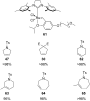


Hexacoordinate Ru-based olefin metathesis catalysts with pH-responsive N-heterocyclic carbene (NHC) and N-donor ligands for ROMP reactions in non-aqueous, aqueous and emulsion conditions
Beilstein J. Org. Chem. 2015, 11, 1960–1972, doi:10.3762/bjoc.11.212
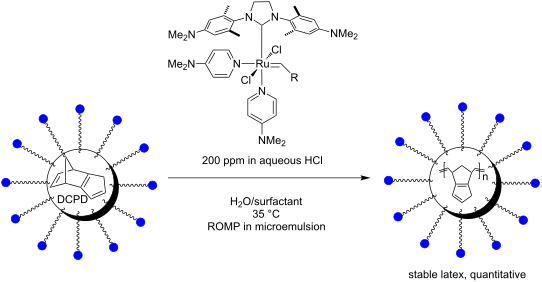
- combination of a wide range of substrates and solvents [9][10][11][12]. Over the past decade, Ru–alkylidene based olefin metathesis in aqueous media has become increasingly important [13]. Benefits such as the non-hazardous, vastly abundant and commercially highly attractive of water coupled with a high heat


The synthesis of active pharmaceutical ingredients (APIs) using continuous flow chemistry
Beilstein J. Org. Chem. 2015, 11, 1194–1219, doi:10.3762/bjoc.11.134
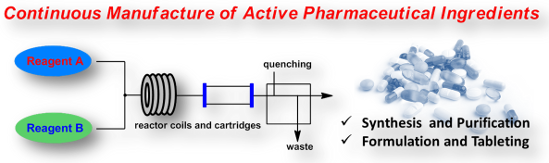
- of such processes, but also enables the chemist to perform more potentially hazardous and otherwise forbidden transformations in a safer and more reliable fashion [16][17][18][19][20][21]. The main advantages cited for improved operational safety are principally the reduced inventories of reactive
- inventory of the reactive intermediate reduced the safety concerns associated with the use of the azide. The choice of flow when handling hazardous materials like azides is a very frequently encountered driver and several publications detailing the associated benefits have emerged over the years [88][89][90


Are D-manno-configured Amadori products ligands of the bacterial lectin FimH?
Beilstein J. Org. Chem. 2015, 11, 1096–1104, doi:10.3762/bjoc.11.123
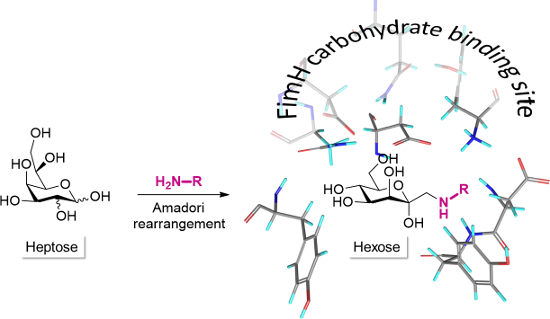
- yield of 85% from 6. This is a synthetic route to aldoheptoses 8a and 8b alternative to the one reported [2] with the advantage that the use of environmental hazardous as well as highly toxic HCN is not required. Amadori rearrangement of the diasteromeric mixture 8 with an amine of choice allows an


Radical-mediated dehydrative preparation of cyclic imides using (NH4)2S2O8–DMSO: application to the synthesis of vernakalant
Beilstein J. Org. Chem. 2015, 11, 1008–1016, doi:10.3762/bjoc.11.113
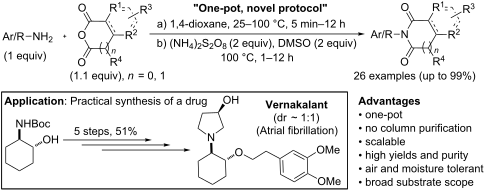
- distillation [46]. Imide synthesis methodologies starting from different types of starting materials also have been reported [47][48][49][50][51][52][53][54]. However, low yields, use of acidic conditions, lack of generality, use of expensive and toxic metal catalysts or reagents, formation of hazardous


3-Glucosylated 5-amino-1,2,4-oxadiazoles: synthesis and evaluation as glycogen phosphorylase inhibitors
Beilstein J. Org. Chem. 2015, 11, 499–503, doi:10.3762/bjoc.11.56
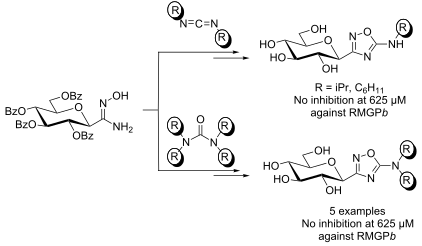
- from carbonyl diimidazole was not successful [30], and since phosgene was not considered due to its hazardous reaction conditions, ureas 2b–d could be readily prepared from triphosgene 1 (as a phosgene precursor) and the corresponding amines (Scheme 1). While treatment of triphosgene with the


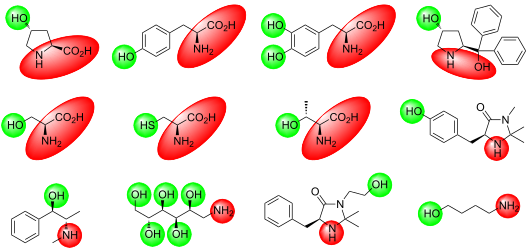
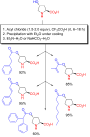
Chemoselective O-acylation of hydroxyamino acids and amino alcohols under acidic reaction conditions: History, scope and applications
Beilstein J. Org. Chem. 2015, 11, 446–468, doi:10.3762/bjoc.11.51




Electrochemical oxidation of cholesterol
Beilstein J. Org. Chem. 2015, 11, 392–402, doi:10.3762/bjoc.11.45
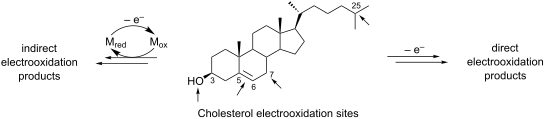
- –Takeya [33][34] groups. The oxidation of cholesteryl acetate with hydrogen peroxide or peracetic acid catalyzed by these complexes varied depending on the solvent used and the reaction conditions. To avoid the use of hazardous peroxy reagents, an electrochemical system was invented, which can be


Visible-light-induced bromoetherification of alkenols for the synthesis of β-bromotetrahydrofurans and -tetrahydropyrans
Beilstein J. Org. Chem. 2015, 11, 31–36, doi:10.3762/bjoc.11.5
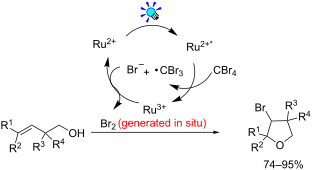
- alkenes have received considerable attention from chemists, and various approaches have been made in this area. Initially, the classical synthetic pathway for bromocyclization proceeds utilizing bromine [10]. However, molecular bromine is hazardous and difficult to handle. Further research show that N


First chemoenzymatic stereodivergent synthesis of both enantiomers of promethazine and ethopropazine
Beilstein J. Org. Chem. 2014, 10, 3038–3055, doi:10.3762/bjoc.10.322
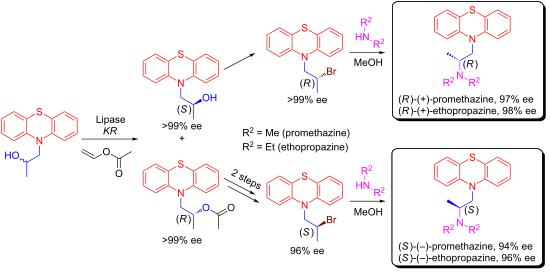
- of the reaction [11][12][13]. In addition, the easy handling (not involving the use of a complex chemical apparatus), possibility of catalyst recovery, mild experimental (room temperature, atmospheric pressure, etc.) and non-hazardous environmental conditions as well as organic solvent-, moisture




Sequential decarboxylative azide–alkyne cycloaddition and dehydrogenative coupling reactions: one-pot synthesis of polycyclic fused triazoles
Beilstein J. Org. Chem. 2014, 10, 3031–3037, doi:10.3762/bjoc.10.321
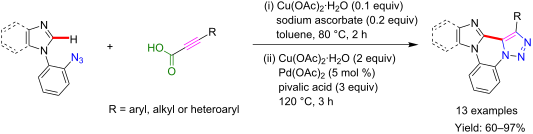
- several advantages over the classical C–C bond formation method including the stability and preparation of the starting material and the non-hazardous byproducts. In 2011, Kolarovič et al. [6] first reported the copper-catalyzed decarboxylative [3 + 2] cycloaddition reaction of 2-alkynoic acid with


Recent advances in the electrochemical construction of heterocycles
Beilstein J. Org. Chem. 2014, 10, 2858–2873, doi:10.3762/bjoc.10.303
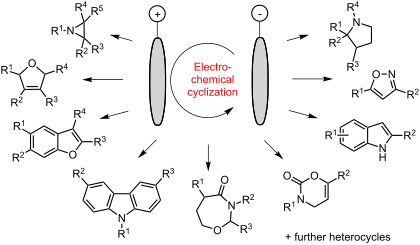
- the use of an expensive catalyst and/or toxic and hazardous reagents. In order to meet increasing environmental and economic constraints, further efforts should be directed towards the development of mild and reagent-free methods [17][18]. In this context, electroorganic synthesis can provide an
- interesting and practical alternative to conventional methods for heterocycle synthesis [19][20]. Since toxic and hazardous redox reagents are either replaced by electric current (direct electrolysis) or generated in situ from stable and non-hazardous precursors (indirect electrolysis), electrosynthesis is




Removal of volatile organic compounds using amphiphilic cyclodextrin-coated polypropylene
Beilstein J. Org. Chem. 2014, 10, 2743–2750, doi:10.3762/bjoc.10.290
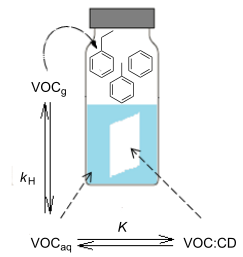
- suspected to be hazardous to the aquatic environment and/or human health [2] thus the maximum concentration limit in wastewater was set in the ppb range [1]. In the literature, various alternative wastewater treatment methods, such as treatment with active carbon or ozone, have been investigated but none


Electrocarboxylation: towards sustainable and efficient synthesis of valuable carboxylic acids
Beilstein J. Org. Chem. 2014, 10, 2484–2500, doi:10.3762/bjoc.10.260
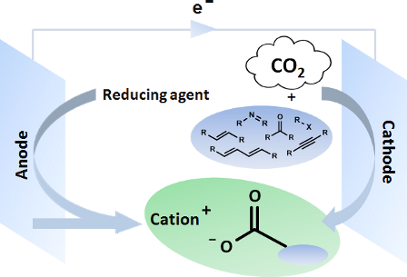
- hazardous reducing agents by clean electrons. In this case, the high thermodynamic stability of CO2 is by-passed by a simple one-electron reduction at an electrode, leading to in situ generation of reactive intermediates. Often, room temperature conditions are sufficient, considering that the energy of the
- ]. The electrocarboxylation of organic halides can also be considered as an alternative dechlorination pathway for chlorobenzenes [122] and polychloromethanes [142]. While the synthesis of halogenated reagents is rather hazardous, the electrocarboxylation of organic halides is an interesting method to
- for the hazardous synthesis via alkali metal cyanides [137][145][146]. Derivatives of cyanoacetic acid are precious starting materials in pharmaceutical and agrochemical synthesis [137]. When the anodic reaction is the oxidation of a halide, lower current efficiencies can be attributed to a successive


Oxidative phenylamination of 5-substituted 1-hydroxynaphthalenes to N-phenyl-1,4-naphthoquinone monoimines by air and light “on water”
Beilstein J. Org. Chem. 2014, 10, 2448–2452, doi:10.3762/bjoc.10.255
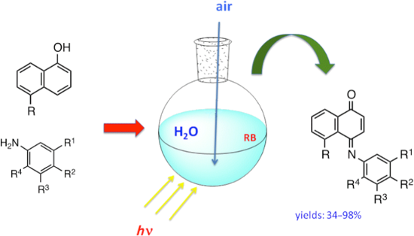
- conventional oxidative phenylamination procedures, this novel synthetic method offers the advantage of aerobic conditions “on water” instead of hazardous oxidant reagents currently employed in aqueous alcoholic media. Keywords: 1,4-naphthoquinone monoimines; on water; oxidative coupling; rose bengal; solar




Synthesis of α-amino amidines through molecular iodine-catalyzed three-component coupling of isocyanides, aldehydes and amines
Beilstein J. Org. Chem. 2014, 10, 2065–2070, doi:10.3762/bjoc.10.214
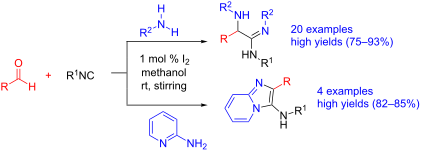
- ], ZnO nanoparticles [18] and BF3·OEt2 [19] were reported with varying degrees of success. All these reported methods for the preparation of α-amino amidines have their own limitations such as long reaction times, high catalyst loading and use of expensive and hazardous metal catalysts. Therefore, the


Supercritical carbon dioxide: a solvent like no other
Beilstein J. Org. Chem. 2014, 10, 1878–1895, doi:10.3762/bjoc.10.196
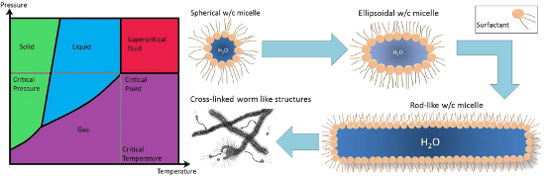
- on the philosophy of green chemistry, a concept encouraging the design of chemically efficient products and processes that reduce or eliminate the use or generation of hazardous substances [1]. This can, in theory, be achieved through the application of a set of ‘principles’, including reduced use
- chemical processing and as a solvent [3], thus replacing the volatile organic compounds (VOCs) that are currently commonly used [4]. These VOCs are environmentally hazardous and notoriously difficult to dispose of so a reduction in use would improve the sustainability of many chemical processes. As well as


Nonanebis(peroxoic acid): a stable peracid for oxidative bromination of aminoanthracene-9,10-dione
Beilstein J. Org. Chem. 2014, 10, 921–928, doi:10.3762/bjoc.10.90
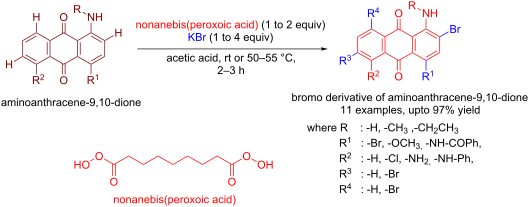
- ) [18][19][20][21]. In all processes, hazardous molecular bromine is used as a bromine source [11][12][13][14][15][16][17][18][19][20][21]. Ghaieni et. al. [22][23] have reported bromination of aminoanthracene-9,10-dione in a mixture of conc sulfuric acid with chlorobenzene, glacial acetic acid


Continuous flow nitration in miniaturized devices
Beilstein J. Org. Chem. 2014, 10, 405–424, doi:10.3762/bjoc.10.38
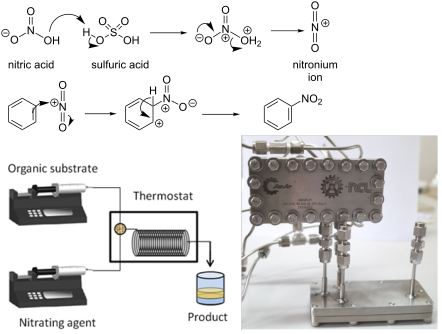
- of a special stainless steel alloy (1.4361, X1CrNiSi18154). Electrical heaters and two integrated water coolers were used for heat transfer in different sections of the integrated reactor. The integration of these functions in one setup facilitates the handling of hazardous chemicals at higher


Flow microreactor synthesis in organo-fluorine chemistry
Beilstein J. Org. Chem. 2013, 9, 2793–2802, doi:10.3762/bjoc.9.314
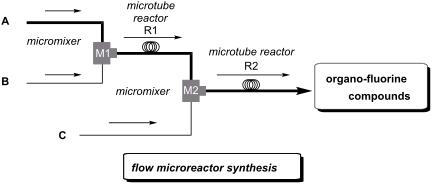
- microreactor technology to overcome long-standing problems in synthetic organofluorine chemistry are showcased. Reactions using hazardous fluorinating reagents Direct fluorination employing elemental fluorine (F2) is one of the most straightforward methods to make fluorine-containing molecules with high atom
- ][40]. Direct fluorination of aromatics in microreactor system took place cleanly [36]. As another splendid example for safe handling of hazardous fluorinating reagents, the flow microreactor synthesis using diethylaminosulfur trifluoride (Et2NSF3, abbreviated as DAST) was demonstrated. DAST is a


Silica sulfuric acid: a reusable solid catalyst for one pot synthesis of densely substituted pyrrole-fused isocoumarins under solvent-free conditions
Beilstein J. Org. Chem. 2013, 9, 2344–2353, doi:10.3762/bjoc.9.269
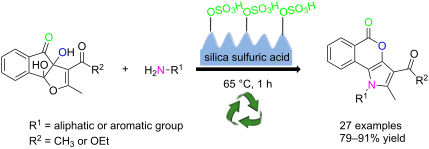
- ]. Although these methods are useful for the synthesis of isocoumarin derivatives, the reactions involved in the synthesis still suffer from some serious limitations such as the use of expensive and hazardous reagents [12] and toxic metal catalysts [10][11][15][17]. Some of the reactions need laborious and





