Search results
Search for "linker" in Full Text gives 414 result(s) in Beilstein Journal of Organic Chemistry. Showing first 200.
Sustainable manganese catalysis for late-stage C–H functionalization of bioactive structural motifs
Beilstein J. Org. Chem. 2021, 17, 1733–1751, doi:10.3762/bjoc.17.122

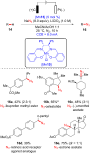
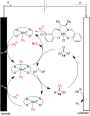
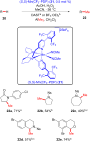
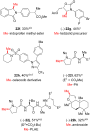
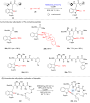
- [104]. The manganese(I)-catalyzed intermolecular alkenylation of tryptophan-containing peptides 32 was performed under basic conditions, yielding hybrid peptides 34 without racemization, containing a trans-alkene linker bearing biologically active motifs in chemo- and site-selective manners assisted by








Chemical approaches to discover the full potential of peptide nucleic acids in biomedical applications
Beilstein J. Org. Chem. 2021, 17, 1641–1688, doi:10.3762/bjoc.17.116
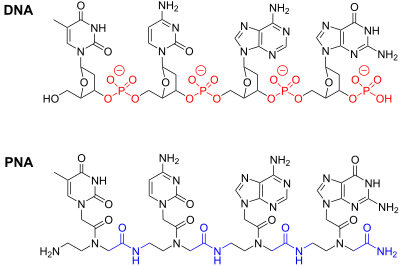
- (Figure 2B). An innovative design links the two ends together with an ethylene glycol linker (Figure 2C), which reduced the unfavorable loss of entropy by converting the binding event from a trimolecular to a bimolecular process [34][35][36]. The new bis-PNAs (Figure 2C) showed about two orders of
- connected E to the PNA backbone with a linker two atoms longer than in standard PNA, which was suggested to circumvent the 5-methyl group of thymine and enable hydrogen bonding to the 4-oxo group [110]. More recent work [111] has questioned the originally proposed hydrogen bonding scheme shown in Figure 7








Recent advances in the application of isoindigo derivatives in materials chemistry
Beilstein J. Org. Chem. 2021, 17, 1533–1564, doi:10.3762/bjoc.17.111
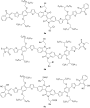
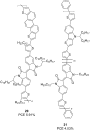
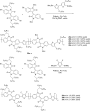
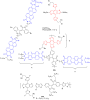
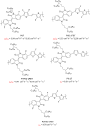
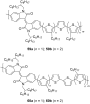
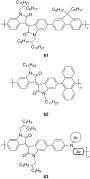
- acceptor anchor units. Nonfullerene OSC based on perylene diimide-derived isoindigo. Isoindigo as an additive in all-polymer OSCs. Bisisoindigos with different linker structures. Nonthiophene oligomeric monoisoindigos for OSCs. The simplest examples of polymers with a monothienylisoindigo monomeric unit














Chemical synthesis of C6-tetrazole ᴅ-mannose building blocks and access to a bioisostere of mannuronic acid 1-phosphate
Beilstein J. Org. Chem. 2021, 17, 1527–1532, doi:10.3762/bjoc.17.110
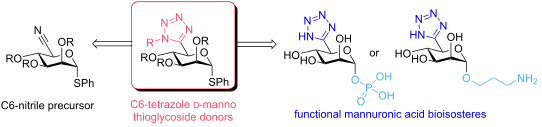
- to explore the synthesis of a ᴅ-manno C6-tetrazole thioglycoside donor and examine subsequent installation of C1 phosphate and anomeric linker groups. Results and Discussion An initial route towards a protected C6-tetrazole building block started from known mannuronic acid thioglycoside 1 (Scheme 1
- overall yield for the route increased from 9 to 21%. To demonstrate capability for anomeric linker attachment and conversion to a biologically relevant analogue of mannuronic acid 1-phosphate, 3-aminopropyl glycoside 20 and glycosyl 1-phosphate 21 were synthesised (Scheme 4). The mixture 18/19 was used


Double-headed nucleosides: Synthesis and applications
Beilstein J. Org. Chem. 2021, 17, 1392–1439, doi:10.3762/bjoc.17.98
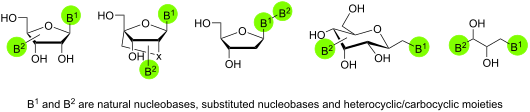
- attached directly to the sugar or via a linker. Further modifications were introduced by the substitution of some of the naturally occurring nucleobases by halogens or alkyl groups. On the other hand, a variety of heterocyclic/carbocyclic moieties were considered as the head of these modified nucleosides
- attached to the anomeric carbon of the pentofuranosyl/hexopyranosyl sugar moiety and an additional nucleobase/heterocyclic/carbocyclic moiety attached either directly or through a linker to any carbon of the sugar moiety either by C–N or C–C bonds. However, in case of base to base double-headed nucleosides
- , the additional nucleobase/substituent or unsubstituted phenyl moiety/polyaromatic moiety/carbocyclic moiety/heterocyclic moiety is attached to the first nucleobase with/without a linker. Whereas, all the acyclic double-headed nucleosides had natural nucleobases or heterocyclic moieties attached at the





Beyond ribose and phosphate: Selected nucleic acid modifications for structure–function investigations and therapeutic applications
Beilstein J. Org. Chem. 2021, 17, 908–931, doi:10.3762/bjoc.17.76
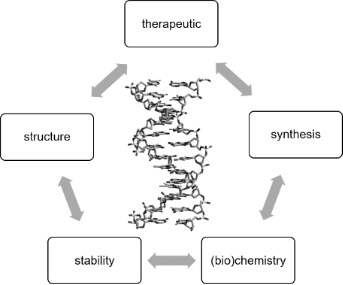
- moieties, such as a tetrose (ʟ-α-threofuranose, TNA [48]), and hexoses (e.g., hexitol, HNA [49]; altritol AtNA [50]; xylol XyNA [51]), or cyclohexene (CeNA [52]), a morpholino moiety (PMO [53]), and an acyclic, chiral glycol linker (GNA [54]), to generate so-called xeno nucleic acids (XNAs [55][56]). In




Enhanced target cell specificity and uptake of lipid nanoparticles using RNA aptamers and peptides
Beilstein J. Org. Chem. 2021, 17, 891–907, doi:10.3762/bjoc.17.75
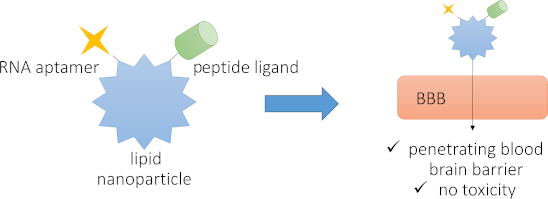
- Hope (Duarte, CA). The RNA aptamers, A-1 [35] and G-3 [34], were developed by Dr. Jiehua Zhou at City of Hope (Duarte, CA), and include the addition of a 3 carbon linker (XXXXXX), a sticky-bridge motif, and a 3’ amino linker C6, 3aminoC6, at the 3’ end. Annealing of the Cy5 DNA oligonucleotide to the
- columns. Initially, fluorenylmethyloxycarbonyl (Fmoc) group removal from the Rink linker was achieved by applying 20% piperidine in DMF (2 × 30 min). Preactivation of Fmoc amino acid (4 equiv) prior each coupling was performed with 1-[bis(dimethylamino)methylene]-1H-1,2,3-triazolo[4,5-b]pyridinium 3-oxide



Synthetic strategies of phosphonodepsipeptides
Beilstein J. Org. Chem. 2021, 17, 461–484, doi:10.3762/bjoc.17.41
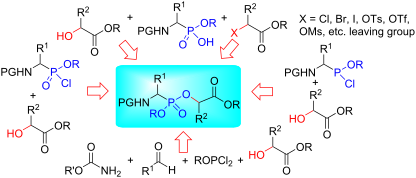
- -hydroxyisovaleric acid-derived spirophosphoranes as the phosphorus reagents [57]. By using a similar strategy, linker-linked bisphosphonodepsidipeptides were synthesized [10]. The current method is also an interesting synthetic strategy of phosphonodepsipeptides. It can realize an asymmetric synthesis of


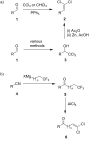
Unexpected rearrangements and a novel synthesis of 1,1-dichloro-1-alkenones from 1,1,1-trifluoroalkanones with aluminium trichloride
Beilstein J. Org. Chem. 2021, 17, 404–409, doi:10.3762/bjoc.17.36
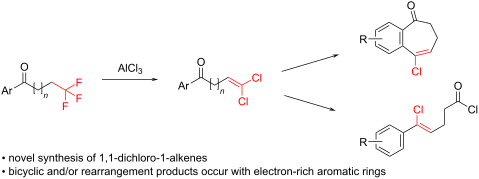
- the described reactivity would be observed with substrates not containing a ketone linker. Replacing the ketone moiety with an oxygen or sulphur atom proved unsuccessful, with only complex mixtures being obtained the upon treatment with AlCl3 (see Supporting Information File 1). This observation




Regioselective chemoenzymatic syntheses of ferulate conjugates as chromogenic substrates for feruloyl esterases
Beilstein J. Org. Chem. 2021, 17, 325–333, doi:10.3762/bjoc.17.30
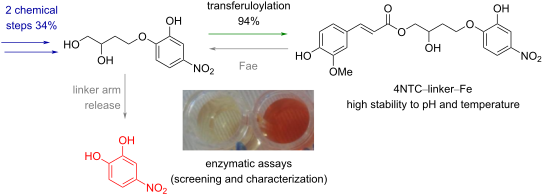
- ferulate to the primary hydroxy group of α‐ʟ‐arabinofuranosides. Moreover, a novel feruloylated 4-nitrocatechol-1-yl-substituted butanetriol analog, containing a cleavable hydroxylated linker, was also synthesized in 32% overall yield in 3 steps (convergent synthesis). The latter route combined the
- that obviates the need for a glycosyl moiety while containing a cleavable hydroxylated linker that mimics the natural geometry and physicochemical properties of glycosidic linkages. Results and Discussion Chemoenzymatic synthesis of 5-O-feruloylated α-ʟ-arabinofuranosides The synthesis of the
- ) displaying a hindered electron-withdrawing group. This led to a low target product yield (i.e., 5, 6, 8, and 9), a lower reactivity, and/or a higher hydrolysis of the vinyl ferulate into ferulic acid. Synthesis of ʟ-arabinofuranoside-free 4-nitrocatechol-1-yl–linker–ferulate chromogenic substrate 12 and


Insight into functionalized-macrocycles-guided supramolecular photocatalysis
Beilstein J. Org. Chem. 2021, 17, 139–155, doi:10.3762/bjoc.17.15
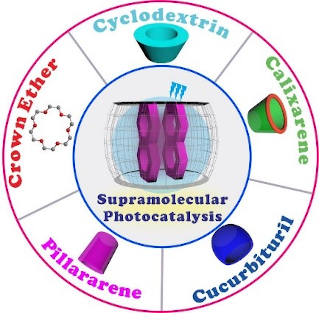
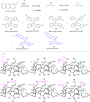
- stereochemistry as catalysts [27]. The stereochemical properties were sensitive to the linker size and length, and the yield of the syn-head-to-tail-9,10:9',10'-cyclodimer could reach 97–98%. Traditional thiol-functionalized organic ligands decorated on the surface of gold nanoclusters (AuNCs) tend to generate a






Supramolecular polymers with reversed viscosity/temperature profile for application in motor oils
Beilstein J. Org. Chem. 2021, 17, 105–114, doi:10.3762/bjoc.17.11
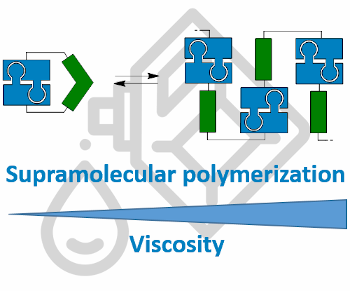
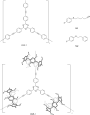
- -complementary [14] binding units (BU, blue) and a connecting linker unit (LU, green) to connect the BUs. In this case, the BUs are ureidopyrimidone units, which dimerize due to a fourfold hydrogen bond, thus allowing for strong supramolecular interactions [15]. Due to the flexibility of the LUs, the BUs can
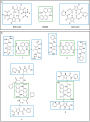
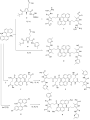
- Meijer, we now developed a series of novel ditopic monomers as potential VIIs. We conducted a systematic variation of both the linker unit and the binding unit in order to investigate structure–property relationships with regard to VII performance and solubility in nonpolar solvents (such as motor oils
- BUs via the amino group should result in the necessary concave prearrangement [28]. Force field calculations, carried out in order to determine the optimal distance between LU and BU (see Supporting Information File 1, chapter 8), show that a propionamide is the shortest linker that allows for




Selected peptide-based fluorescent probes for biological applications
Beilstein J. Org. Chem. 2020, 16, 2971–2982, doi:10.3762/bjoc.16.247

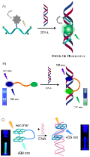
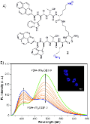
- ]. The attachment of pyrenes to the termini of a flexible peptide linker results in a ratiometric fluorescent probe (Figure 1C). Upon interaction with a biomolecule, the distance between the pyrenes changes, subsequently their monomer to excimer and vice versa fluorescence signal changes. However, the
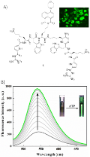
- ) [42]. Probe 6 has a central lysine spacer which is connected to two symmetric peptidic arms. Each arm contains a cationic lysine as a positively charged head group and a pyrene moiety at the end of the γ-aminobutyric acid linker. Compound 6 is mostly in folded conformation in solution and emits pyrene



Regioselective synthesis of heterocyclic N-sulfonyl amidines from heteroaromatic thioamides and sulfonyl azides
Beilstein J. Org. Chem. 2020, 16, 2937–2947, doi:10.3762/bjoc.16.243
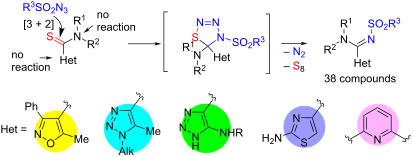
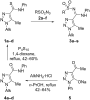
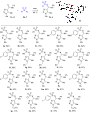
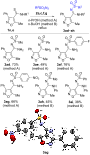
- linker. The solvent-free protocol includes the use of a lower amount of azide 2d,c,f (2.5 equiv) in comparison with the reaction in n-propanol (4 equiv of azide) to afford the desired products in the same yield and therefore was selected as the method of choice for the synthesis of 3aj–an (Scheme 6). The







Incorporation of a metal-mediated base pair into an ATP aptamer – using silver(I) ions to modulate aptamer function
Beilstein J. Org. Chem. 2020, 16, 2870–2879, doi:10.3762/bjoc.16.236
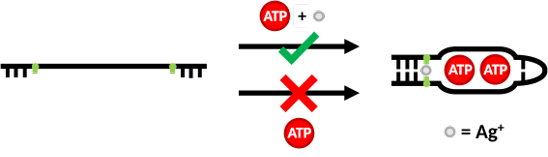
- using an ATP-loaded agarose gel obtained from Sigma-Aldrich (cross-linked 4% beaded agarose, ATP is attached at its C8 position via a 9C linker, 1–5 μmol ATP per mL gel). For the binding assay, 5 nmol DNA in 200 μL column buffer (300 mM NaClO4, 5 mM Mg(ClO4)2, 20 mM MOPS (pH 7.4)) were loaded onto 500


Changed reactivity of secondary hydroxy groups in C8-modified adenosine – lessons learned from silylation
Beilstein J. Org. Chem. 2020, 16, 2854–2861, doi:10.3762/bjoc.16.234
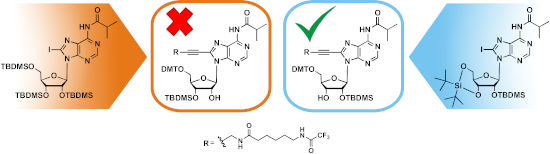
- synthesized a number of pyrimidine and purine derivatives carrying amino linkers of different length and flexibility [13][20]. Linker-modified uridine derivatives, upon conversion into phosphoramidite building blocks, were incorporated in RNA and used for a systematic study of distance determination of
- nucleic acids via Förster Resonance Energy Transfer (FRET) [20]. More recently, we started an effort to develop an efficient strategy for the preparation of a linker-modified adenosine building block, which in a future project is to be used for post synthetic conjugation of reporters or functional
- phosphoramidite building block 9 (Scheme 2). Results and Discussion Typically, the synthesis of C8-alkynyl derivatives relies on C8-bromoadenosine as reactant for the Sonogashira cross-coupling reaction to introduce the amino linker N-(propyn-2-yl)-6-(trifluoroacetamido)hexanamide (L) bearing an alkynyl moiety


Using multiple self-sorting for switching functions in discrete multicomponent systems
Beilstein J. Org. Chem. 2020, 16, 2831–2853, doi:10.3762/bjoc.16.233
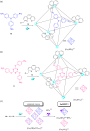
- units as the metal-coordination units (Figure 9a). When the ligand 20 was mixed with Fe2+ or Zn2+ ions, the tetrahedral cage complexes [M4(20)12]8+ were formed quantitatively. The flexibility through a methylene linker in 20 allowed the formation of the S4-symmetric cages [Fe4(20)12]8+ or [Zn4(20)12]8







Synthesis and investigation of quadruplex-DNA-binding, 9-O-substituted berberine derivatives
Beilstein J. Org. Chem. 2020, 16, 2795–2806, doi:10.3762/bjoc.16.230
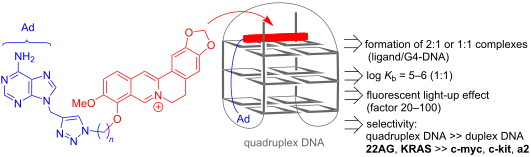
- derivatives. Notably, a clear relationship between the binding affinity of the ligands with the length of the alkyl linker chain, n, was not observed. However, depending on the structure, the ligands exhibited different effects when bound to the G4-DNA, such as fluorescent light-up effects and formation of
- ICD bands, which are mostly pronounced with a linker length of n = 4 (with a2) and n = 5 (with 22AG), thus indicating that each ligand–G4-DNA complex has a specific structure with respect to relative alignment and conformational flexibility of the ligand in the binding site. It was shown exemplarily
- . With this background, we proposed that the functionalization of the berberine scaffold with adenine-appended alkyl substituents may provide a useful platform to further explore this important aspect. Specifically, we wished to examine whether adenine–berberine conjugates with a varying linker length


Optical detection of di- and triphosphate anions with mixed monolayer-protected gold nanoparticles containing zinc(II)–dipicolylamine complexes
Beilstein J. Org. Chem. 2020, 16, 2687–2700, doi:10.3762/bjoc.16.219
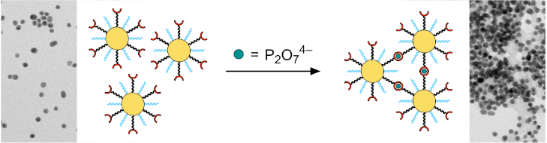
- conformational reorganization of the linker connecting the chromophore with the surface. The likely most frequently used strategy of analyte detection relies on the color change of AuNP solutions resulting from analyte-induced nanoparticle crosslinking. Depending on whether soluble or insoluble aggregates are


Synthesis of 4-substituted azopyridine-functionalized Ni(II)-porphyrins as molecular spin switches
Beilstein J. Org. Chem. 2020, 16, 2589–2597, doi:10.3762/bjoc.16.210
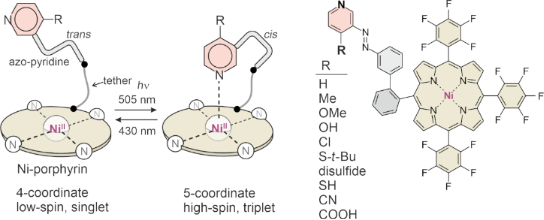
- ], switchable NMR relaxation agents [8][9][10], and building blocks for molecular spintroncis [11]. Our modular design is based on three components: a) a Ni(II)-porphyrin (square planar base complex), b) an azoaryl unit (photoswitchable ligand) and c) a molecular linker or tether (connecting the porphyrin with


Thermodynamic and electrochemical study of tailor-made crown ethers for redox-switchable (pseudo)rotaxanes
Beilstein J. Org. Chem. 2020, 16, 2576–2588, doi:10.3762/bjoc.16.209

- connection to the crown ether core, and in NDIC7, a more flexible ethylenediamine linker is used. Crown ether synthesis and crystal structures With respect to the synthesis of previously reported TTFC8 and exTTFC8 [35][37], we synthesized the novel 21-crown-7 analogs following a similar synthetic route
- Information File 1). Slow diffusion of CH3CN into a concentrated solution of NDIC7 in CH2Cl2 yielded single crystals suitable for X-ray diffraction (Figure 2b). The macrocycle displays a folded conformation in the solid state due to the flexible linker, featuring an intramolecular NDI/naphthalene stacking
- synthesis of a [2]rotaxane. Due to the remote position of the NDI unit and the rigid linker, rotaxane formation does not have a significant impact on the optoelectronic properties of the NDI moiety. The electrostatic interaction observed for NDI2− and ammonium ions observed in the pseudo[2]rotaxane A1·PF6




Tools for generating and analyzing glycan microarray data
Beilstein J. Org. Chem. 2020, 16, 2260–2271, doi:10.3762/bjoc.16.187
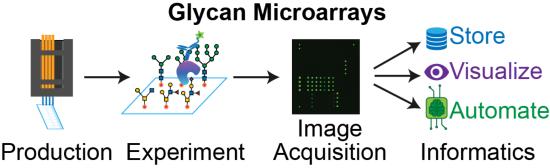
- microarray surface and linker is a reciprocal process, involving the preparation of the glycans in the context of appropriate surface to which the glycans are desired to be attached. Several types of functionalized slide surfaces are available such as NHS, epoxy, nitrocellulose and PVDF (Table 1); each
- synthesized, or isolated and purified from either source materials, and then conjugated with a linker which is appropriate for the printing surface. The glycoconjugates are then printed upon appropriately functionalized slides, followed by blocking; the printed slides are stored under ideal conditions prior
- to use depending on glycoconjugate and linker type, and scanning requirements. These linker types and surfaces are the most commonly used and there are more specialized surfaces and linker chemistries that are commercially available. Screenshot of microarray databases: (A) Screenshot of an example of


Naphthalene diimide–amino acid conjugates as novel fluorimetric and CD probes for differentiation between ds-DNA and ds-RNA
Beilstein J. Org. Chem. 2020, 16, 2032–2045, doi:10.3762/bjoc.16.170
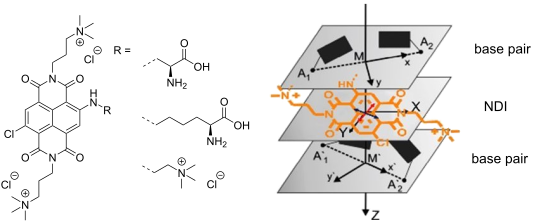
- )-polynucleotides. The DNA/RNA binding-induced circular dichroism (ICD) response of NDI at 450–550 nm strongly depended on the length and rigidity of the linker to the amino acid unit, which controls the orientation of the NDI unit inside within the intercalative binding site. The ICD selectivity also depends on
- preparing novel fluorophore–amino acid (AA) conjugates. The amino acids (S)-2,3-diaminopropionic acid (ʟ-Dap) and (S)-2,6-diaminohexanoic acid (ʟ-Lys) were chosen to test the difference in the aliphatic linker lengths (Figure 1) on DNA/RNA binding. For comparison purposes, reference compound 5 with 2
- strongly selective toward DNA [8]. The NDI 5 caused by far the strongest stabilisation – likely due to the three permanent charges. NDI 3b, with a longer and thus more flexible linker, has a higher ∆Tm value than the shorter and less adaptable NDI 3a. For an accurate determination of the binding affinity


Design, synthesis and application of carbazole macrocycles in anion sensors
Beilstein J. Org. Chem. 2020, 16, 1901–1914, doi:10.3762/bjoc.16.157

- preferred seemed to be dependent on the –CH2– linker length. Benzoate and pivalate were too large to fit the rings of even the biggest macrocycles. However, the out of plane residue –X should be able to, at least to some extent, benefit from the solvophobic effects of the –CH2– linker if binding occurred in




Nonenzymatic synthesis of anomerically pure, mannosyl-based molecular probes for scramblase identification studies
Beilstein J. Org. Chem. 2020, 16, 1732–1739, doi:10.3762/bjoc.16.145
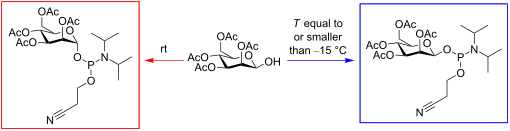
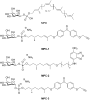
- individual building blocks (e.g., the phosphoramidites) will enable the creation of a series of molecular probes with different functional groups and varying linker lengths with relatively little effort. The crucial step in the synthetic pathway consists of the conversion of the carbohydrate intermediates
- )-labeled analog MPC-2 carries an additional dodecanyl linker between the citronellyl unit and the fluorophore. This is intended to increase the hydrophobic interactions between the probe and the lipid bilayer and also to increase the flexibility. More specifically, the probe should adopt a U-shaped
- structure in which the citronellyl–dodecanyl linker is located in the phospholipid membrane, and the mannose and the NBD are positioned in the surrounding aqueous medium. The close proximity of the NBD fluorophore to the membrane–water interface [30][31] allows for fluorescence-based scramblase assays