Search for "metabolite" in Full Text gives 160 result(s) in Beilstein Journal of Organic Chemistry.
Beilstein J. Org. Chem. 2017, 13, 451–494, doi:10.3762/bjoc.13.48
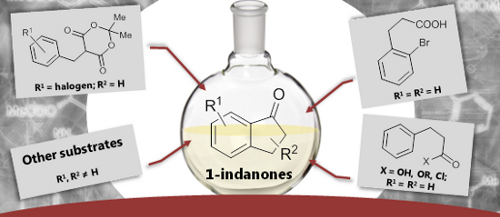
Graphical Abstract
Figure 1: Biologically active 1-indanones and their structural analogues.
Figure 2: Number of papers about (a) 1-indanones, (b) synthesis of 1-indanones.
Scheme 1: Synthesis of 1-indanone (2) from hydrocinnamic acid (1).
Scheme 2: Synthesis of 1-indanone (2) from 3-(2-bromophenyl)propionic acid (3).
Scheme 3: Synthesis of 1-indanones 5 from 3-arylpropionic acids 4.
Scheme 4: Synthesis of kinamycin (9a) and methylkinamycin C (9b).
Scheme 5: Synthesis of trifluoromethyl-substituted arylpropionic acids 12, 1-indanones 13 and dihydrocoumarin...
Scheme 6: Synthesis of 1-indanones 16 from benzoic acids 15.
Scheme 7: Synthesis of 1-indanones 18 from arylpropionic and 3-arylacrylic acids 17.
Scheme 8: The NbCl5-induced one-step synthesis of 1-indanones 22.
Scheme 9: Synthesis of biologically active 1-indanone derivatives 26.
Scheme 10: Synthesis of enantiomerically pure indatraline ((−)-29).
Scheme 11: Synthesis of 1-indanone (2) from the acyl chloride 30.
Scheme 12: Synthesis of the mechanism-based inhibitors 33 of coelenterazine.
Scheme 13: Synthesis of the indane 2-imidazole derivative 37.
Scheme 14: Synthesis of fluorinated PAHs 41.
Scheme 15: Synthesis of 1-indanones 43 via transition metal complexes-catalyzed carbonylative cyclization of m...
Scheme 16: Synthesis of 6-methyl-1-indanone (46).
Scheme 17: Synthesis of 1-indanone (2) from ester 48.
Scheme 18: Synthesis of benzopyronaphthoquinone 51 from the spiro-1-indanone 50.
Scheme 19: Synthesis of the selective endothelin A receptor antagonist 55.
Scheme 20: Synthesis of 1-indanones 60 from methyl vinyl ketone (57).
Scheme 21: Synthesis of 1-indanones 64 from diethyl phthalate 61.
Scheme 22: Synthesis of 1-indanone derivatives 66 from various Meldrum’s acids 65.
Scheme 23: Synthesis of halo 1-indanones 69.
Scheme 24: Synthesis of substituted 1-indanones 71.
Scheme 25: Synthesis of spiro- and fused 1-indanones 73 and 74.
Scheme 26: Synthesis of spiro-1,3-indanodiones 77.
Scheme 27: Mechanistic pathway for the NHC-catalyzed Stetter–Aldol–Michael reaction.
Scheme 28: Synthesis of 2-benzylidene-1-indanone derivatives 88a–d.
Scheme 29: Synthesis of 1-indanone derivatives 90a–i.
Scheme 30: Synthesis of 1-indanones 96 from o-bromobenzaldehydes 93 and alkynes 94.
Scheme 31: Synthesis of 3-hydroxy-1-indanones 99.
Scheme 32: Photochemical preparation of 1-indanones 103 from ketones 100.
Scheme 33: Synthesis of chiral 3-aryl-1-indanones 107.
Scheme 34: Photochemical isomerization of 2-methylbenzil 108.
Scheme 35: Synthesis of 2-hydroxy-1-indanones 111a–c.
Scheme 36: Synthesis of 1-indanone derivatives 113 and 114 from η6-1,2-dioxobenzocyclobutene complex 112.
Scheme 37: Synthesis of nakiterpiosin (117).
Scheme 38: Synthesis of 2-alkyl-1-indanones 120.
Scheme 39: Synthesis of fluorine-containing 1-indanone derivatives 123.
Scheme 40: Synthesis of 2-benzylidene and 2-benzyl-1-indanones 126, 127 from the chalcone 124.
Scheme 41: Synthesis of 2-bromo-6-methoxy-3-phenyl-1-indanone (130).
Scheme 42: Synthesis of combretastatin A-4-like indanones 132a–s.
Figure 3: Chemical structures of investigated dienones 133 and synthesized cyclic products 134–137.
Figure 4: Chemical structures of 1-indanones and their heteroatom analogues 138–142.
Scheme 43: Synthesis of 2-phosphorylated and 2-non-phosphorylated 1-indanones 147 and 148 from β-ketophosphona...
Scheme 44: Photochemical synthesis of 1-indanone derivatives 150, 153a, 153b.
Scheme 45: Synthesis of polysubstituted-1-indanones 155, 157.
Scheme 46: Synthesis of 1-indanones 159a–g from α-arylpropargyl alcohols 158 using RhCl(PPh3)3 as a catalyst.
Scheme 47: Synthesis of optically active 1-indanones 162 via the asymmetric Rh-catalyzed isomerization of race...
Scheme 48: Mechanism of the Rh-catalyzed isomerization of α-arylpropargyl alcohols 161 to 1-indanones 162.
Figure 5: Chemical structure of abicoviromycin (168) and its new benzo derivative 169.
Scheme 49: Synthesis of racemic benzoabicoviromycin 172.
Scheme 50: Synthesis of [14C]indene 176.
Scheme 51: Synthesis of indanone derivatives 178–180.
Scheme 52: Synthesis of racemic pterosin A 186.
Scheme 53: Synthesis of trans-2,3-disubstituted 1-indanones 189.
Scheme 54: Synthesis of 3-aryl-1-indanone derivatives 192.
Scheme 55: Synthesis of 1-indanone derivatives 194 from 3-(2-iodoaryl)propanonitriles 193.
Scheme 56: Synthesis of 1-indanones 200–204 by cyclization of aromatic nitriles.
Scheme 57: Synthesis of 1,1’-spirobi[indan-3,3’-dione] derivative 208.
Scheme 58: Total synthesis of atipamezole analogues 211.
Scheme 59: Synthesis of 3-[4-(1-piperidinoethoxy)phenyl]spiro[indene-1,1’-indan]-5,5’-diol hydrochloride 216.
Scheme 60: Synthesis of 3-arylindan-1-ones 219.
Scheme 61: Synthesis of 2-hydroxy-1-indanones 222.
Scheme 62: Synthesis of the 1-indanone 224 from the THP/MOM protected chalcone epoxide 223.
Scheme 63: Synthesis of 1-indanones 227 from γ,δ-epoxy ketones 226.
Scheme 64: Synthesis of 2-hydroxy-2-methylindanone (230).
Scheme 65: Synthesis of 1-indanone derivatives 234 from cyclopropanol derivatives 233.
Scheme 66: Synthesis of substituted 1-indanone derivatives 237.
Scheme 67: Synthesis of 7-methyl substituted 1-indanone 241 from 1,3-pentadiene (238) and 2-cyclopentenone (239...
Scheme 68: Synthesis of disubstituted 1-indanone 246 from the siloxydiene 244 and 2-cyclopentenone 239.
Scheme 69: Synthesis of 5-hydroxy-1-indanone (250) via the Diels–Alder reaction of 1,3-diene 248 with sulfoxid...
Scheme 70: Synthesis of halogenated 1-indanones 253a and 253b.
Scheme 71: Synthesis of 1-indanones 257 and 258 from 2-bromocyclopentenones 254.
Scheme 72: Synthesis of 1-indanone 261 from 2-bromo-4-acetoxy-2-cyclopenten-1-one (260) and 1,2-dihydro-4-viny...
Scheme 73: Synthesis of 1-indanone 265 from 1,2-dihydro-7-methoxy-4-vinylnaphthalene (262) and bromo-substitut...
Scheme 74: Synthesis of 1-indanone 268 from dihydro-3-vinylphenanthrene 266 and 4-acetoxy-2-cyclopenten-1-one (...
Scheme 75: Synthesis of 1-indanone 271 from phenylselenyl-substituted cyclopentenone 268.
Scheme 76: Synthesis of 1-indanone 272 from the trienone 270.
Scheme 77: Synthesis of the 1-indanone 276 from the aldehyde 273.
Scheme 78: Synthesis of 1-indanones 278 and 279.
Scheme 79: Synthesis of 1-indanone 285 from octa-1,7-diyne (282) and cyclopentenone 239.
Scheme 80: Synthesis of benz[f]indan-1-one (287) from cyclopentenone 239 and o-bis(dibromomethyl)benzene (286)....
Scheme 81: Synthesis of 3-methyl-substituted benz[f]indan-1-one 291 from o-bis(dibromomethyl)benzene (286) and...
Scheme 82: Synthesis of benz[f]indan-1-one (295) from the anthracene epidioxide 292.
Scheme 83: Synthesis of 1-indanone 299 from homophthalic anhydride 298 and cyclopentynone 297.
Scheme 84: Synthesis of cyano-substituted 1-indanone derivative 301 from 2-cyanomethylbenzaldehyde (300) and c...
Scheme 85: Synthesis of 1-indanone derivatives 303–305 from ketene dithioacetals 302.
Scheme 86: Synthesis of 1-indanones 309–316.
Scheme 87: Mechanism of the hexadehydro-Diels–Alder (HDDA) reaction.
Scheme 88: Synthesis of 1-indenone 318 and 1-indanones 320 and 321 from tetraynes 317 and 319.
Scheme 89: Synthesis of 1-indanone 320 from the triyn 319.
Scheme 90: Synthesis 1-indanone 328 from 2-methylfuran 324.
Scheme 91: Synthesis of 1-indanones 330 and 331 from furans 329.
Scheme 92: Synthesis of 1-indanone 333 from the cycloadduct 332.
Scheme 93: Synthesis of (S)-3-arylindan-1-ones 335.
Scheme 94: Synthesis of (R)-2-acetoxy-1-indanone 338.
Figure 6: Chemical structures of obtained cyclopenta[α]phenanthrenes 339.
Scheme 95: Synthesis of the benzoindanone 343 from arylacetaldehyde 340 with 1-trimethylsilyloxycyclopentene (...
Beilstein J. Org. Chem. 2017, 13, 417–427, doi:10.3762/bjoc.13.45
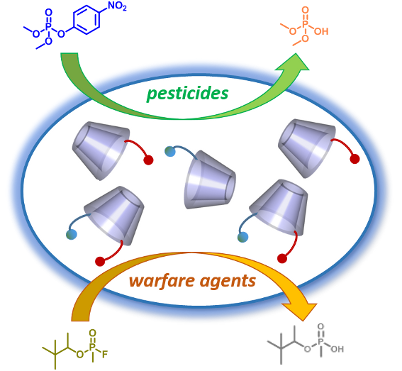
Graphical Abstract
Figure 1: Structures of G agents.
Figure 2: Scavenger based on a heterodifunctionalized β-cyclodextrin derivative.
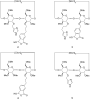
Figure 3: Structures of β-cyclodextrin derivatives 2–5.
Figure 4: Structures of pesticides tested.
Scheme 1: Synthetic pathway to derivatives 2 and 3 (Tr = trityl).
Scheme 2: Synthesis of compound 4.
Scheme 3: Synthesis of compound 5 (Tr = trityl).
Figure 5: Hydrolysis of methyl paraoxon (0.5 mM) in the presence of compounds 1, 2, 3 or 2-iodosobenzoic acid...
Figure 6: Hydrolysis of methyl paraoxon (0.5 mM) in the presence of compounds 1, 2, 3 or 2-iodosobenzoic acid...
Figure 7: Hydrolysis of methyl paraoxon (0.5 mM) in the presence of compounds 2, 4, 5 or 2-iodosobenzoic acid...
Figure 8: Hydrolysis of methyl paraoxon (0.5 mM) in the presence of mixtures of compounds 4, 5 with IBA or im...
Figure 9: Influence of the pesticide structure on the hydrolytic efficiency of compound 2 (0.25 mM). Kinetic ...
Figure 10: Influence of TRIMEB, IBA and imidazole on the hydrolysis of methyl parathion (0.5 mM). The final co...
Figure 11: Ability of compounds 1–4 in preventing the inhibition of acetylcholinesterase by soman (GD).
Beilstein J. Org. Chem. 2017, 13, 348–371, doi:10.3762/bjoc.13.39
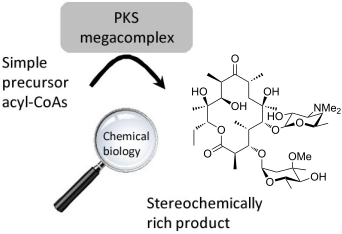
Graphical Abstract
Figure 1: Structures of clinically-relevant polyketides: erythromycin A (1), azithromycin (2), clarithromycin...
Figure 2: Schematic of erythromycin A (1) bound to 23S ribosomal RNA of the 50S subunit of the Deinococcus ra...
Figure 3: Schematic of the biosynthetic pathway leading to erythromycin A (1) in the bacterium Saccharopolysp...
Figure 4: Schematic of the virginiamycin PKS from Streptomyces virginiae, a member of the trans-AT PKS family ...
Figure 5: Determination of the stereochemistry of extender unit selection by the AT domains of modular PKS. a...
Figure 6: Creation by genetic engineering of the DEBS 1-TE model system. The region of the eryAIII gene encod...
Figure 7: Model for substrate selection by AT domains. a) Sequence motifs in malonyl- and methylmalonyl-CoA-s...
Figure 8: Proposed mechanism for KS-catalyzed chain extension, based on extrapolation from studies on homolog...
Figure 9: Experiment in vitro to determine the stereochemistry of condensation in modular PKS [46]. Use of specif...
Figure 10: Genetic engineering experiments which suggested a role for the KS domain in epimerization. a) A dik...
Figure 11: Models for control of the stereochemistry of reduction by KR domains. The two directions of ketored...
Figure 12: Assays in vitro to evaluate the stereospecificity of recombinant KR domains. A series of KR domains...
Figure 13: Assays in vitro which provided the first direct evidence that KR domains act as epimerases [77]. Biosyn...
Figure 14: Assays in vitro to demonstrate directly the epimerase activity of PKS KR domains. a) Equilibrium ex...
Figure 15: Model for DH-catalyzed generation of trans and cis double bonds by syn elimination from substrates ...
Figure 16: Stereospecificity of dehydration by Rif DH10 [94]. a) The four possible diastereomeric diketide-ACP sub...
Figure 17: Stereocontrol by PKS ER domains. Sequence motifs correlated with the final stereochemistry of the C...
Figure 18: a) PKS engineered to test the role of the ER stereospecificity residues [115]. TKS-ERY4 was created by r...
Beilstein J. Org. Chem. 2016, 12, 2325–2342, doi:10.3762/bjoc.12.226
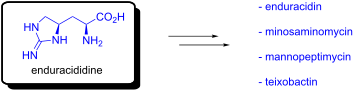
Graphical Abstract
Figure 1: Structures of the enduracididine family of amino acids (1–6).
Figure 2: Enduracidin A (7) and B (8).
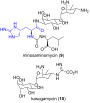
Figure 3: Minosaminomycin (9) and related antibiotic kasugamycin (10).
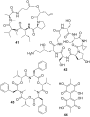
Figure 4: Enduracididine-containing compound 11 identified in a cytotoxic extract of Leptoclinides dubius [32].
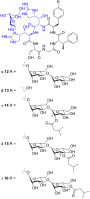
Figure 5: Mannopeptimycins α–ε (12–16).
Figure 6: Regions of the mannopeptimycin structure investigated in structure–activity relationship investigat...
Figure 7: Teixobactin (17).
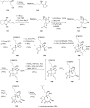
Scheme 1: Proposed biosynthesis of L-enduracididine (1) and L-β-hydroxyenduracididine (5).
Scheme 2: Synthesis of enduracididine (1) by Shiba et al.
Scheme 3: Synthesis of protected enduracididine diastereomers 31 and 32.
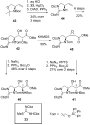
Scheme 4: Synthesis of the C-2 azido diastereomers 36 and 37.
Scheme 5: Synthesis of 2-azido-β-hydroxyenduracididine derivatives 38 and 39.
Scheme 6: Synthesis of protected β-hydroxyenduracididine derivatives 40 and 41.
Scheme 7: Synthesis of C-2 diastereomeric amino acids 46 and 47.
Scheme 8: Synthesis of protected β-hydroxyenduracididines 51 and 52.
Scheme 9: General transformation of alkenes to cyclic sulfonamide 54 via aziridine intermediate 53.
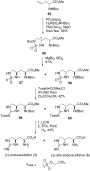
Scheme 10: Synthesis of (±)-enduracididine (1) and (±)-allo-enduracididine (3).
Scheme 11: Synthesis of L-allo-enduracididine (3).
Scheme 12: Synthesis of protected L-allo-enduracididine 63.
Scheme 13: Synthesis of β-hydroxyenduracididine derivative 69.
Scheme 14: Synthesis of minosaminomycin (9).
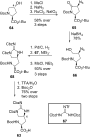
Scheme 15: Retrosynthetic analysis of mannopeptimycin aglycone (77).
Scheme 16: Synthesis of protected amino acids 87 and 88.
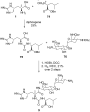
Scheme 17: Synthesis of mannopeptimycin aglycone (77).
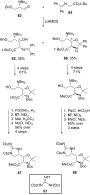
Scheme 18: Synthesis of N-mannosylation model guanidine 92 and attempted synthesis of benzyl protected mannosy...
Scheme 19: Synthesis of benzyl protected mannosyl D-β-hydroxyenduracididine 97.
Scheme 20: Synthesis of L-β-hydroxyenduracididine 98.
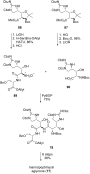
Scheme 21: Total synthesis of mannopeptimycin α (12) and β (13).
Scheme 22: Synthesis of protected L-allo-enduracididine 102.
Scheme 23: The solid phase synthesis of teixobactin (17).
Scheme 24: Retrosynthesis of the macrocyclic core 109 of teixobactin (17).
Scheme 25: Synthesis of macrocycle 117.
Beilstein J. Org. Chem. 2016, 12, 1647–1748, doi:10.3762/bjoc.12.162
Graphical Abstract
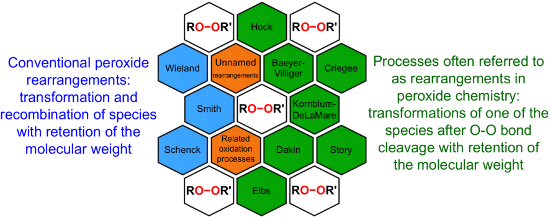
Figure 1: The named transformations considered in this review.
Scheme 1: The Baeyer–Villiger oxidation.
Scheme 2: The general mechanism of the peracid-promoted Baeyer–Villiger oxidation.
Scheme 3: General mechanism of the Lewis acid-catalyzed Baeyer–Villiger rearrangement.
Scheme 4: The theoretically studied mechanism of the BV oxidation reaction promoted by H2O2 and the Lewis aci...
Scheme 5: Proton movements in the transition states of the Baeyer–Villiger oxidation.
Scheme 6: The dependence of the course of the Baeyer–Villiger oxidation on the type of O–O-bond cleavage in t...
Scheme 7: The acid-catalyzed Baeyer–Villiger oxidation of cyclic epoxy ketones 22.
Scheme 8: Oxidation of isophorone oxide 29.
Scheme 9: Synthesis of acyl phosphate 32 from acyl phosphonate 31.
Scheme 10: Synthesis of aflatoxin B2 (36).
Scheme 11: The Baeyer–Villiger rearrangement of ketones 37 to lactones 38.
Scheme 12: Synthesis of 3,4-dimethoxybenzoic acid (40) via Baeyer–Villiger oxidation.
Scheme 13: Oxone transforms α,β-unsaturated ketones 43 into vinyl acetates 44.
Scheme 14: The Baeyer–Villiger oxidation of ketones 45 using diaryl diselenide and hydrogen peroxide.
Scheme 15: Baeyer–Villiger oxidation of (E)-2-methylenecyclobutanones.
Scheme 16: Oxidation of β-ionone (56) by H2O2/(BnSe)2 with formation of (E)-2-(2,6,6-trimethylcyclohex-1-en-1-...
Scheme 17: The mechanism of oxidation of ketones 58a–f by hydrogen peroxide in the presence of arsonated polys...
Scheme 18: Oxidation of ketone (58b) by H2O2 to 6-methylcaprolactone (59b) catalyzed by Pt complex 66·BF4.
Scheme 19: Oxidation of ketones 67 with H2O2 in the presence of [(dppb}Pt(µ-OH)]22+.
Scheme 20: The mechanism of oxidation of ketones 67 in the presence of [(dppb}Pt(µ-OH)]22+ and H2O2.
Scheme 21: Oxidation of benzaldehydes 69 in the presence of the H2O2/MeReO3 system.
Scheme 22: Oxidation of acetophenones 72 in the presence of the H2O2/MeReO3 system.
Scheme 23: Baeyer–Villiger oxidation of 2-adamantanone (45c) in the presence of Sn-containing mesoporous silic...
Scheme 24: Aerobic Baeyer–Villiger oxidation of ketones 76 using metal-free carbon.
Scheme 25: A regioselective Baeyer-Villiger oxidation of functionalized cyclohexenones 78 into a dihydrooxepin...
Scheme 26: The oxidation of aldehydes and ketones 80 by H2O2 catalyzed by Co4HP2Mo15V3O62.
Scheme 27: The cleavage of ketones 82 with hydrogen peroxide in alkaline solution.
Scheme 28: Oxidation of ketones 85 to esters 86 with H2O2–urea in the presence of KHCO3.
Scheme 29: Mechanism of the asymmetric oxidation of cyclopentane-1,2-dione 87a with the Ti(OiPr)4/(+)DET/t-BuO...
Scheme 30: The oxidation of cis-4-tert-butyl-2-fluorocyclohexanone (93) with m-chloroperbenzoic acid.
Scheme 31: The mechanism of the asymmetric oxidation of 3-substituted cyclobutanone 96a in the presence of chi...
Scheme 32: Enantioselective Baeyer–Villiger oxidation of cyclic ketones 98.
Scheme 33: Regio- and enantioselective Baeyer–Villiger oxidation of cyclic ketones 101.
Scheme 34: The proposed mechanism of the Baeyer–Villiger oxidation of acetal 105f.
Scheme 35: Synthesis of hydroxy-10H-acridin-9-one 117 from tetramethoxyanthracene 114.
Scheme 36: The Baeyer–Villiger oxidation of the fully substituted pyrrole 120.
Scheme 37: The Criegee rearrangement.
Scheme 38: The mechanism of the Criegee reaction of a peracid with a tertiary alcohol 122.
Scheme 39: Criegee rearrangement of decaline ethylperoxoate 127 into ketal 128.
Scheme 40: The ionic cleavage of 2-methoxy-2-propyl perester 129.
Scheme 41: The Criegee rearrangement of α-methoxy hydroperoxide 136.
Scheme 42: Synthesis of enol esters and acetals via the Criegee rearrangement.
Scheme 43: Proposed mechanism of the transformation of 1-hydroperoxy-2-oxabicycloalkanones 147a–d.
Scheme 44: Transformation of 3-hydroxy-1,2-dioxolanes 151 into diketone derivatives 152.
Scheme 45: Criegee rearrangement of peroxide 153 with the mono-, di-, and tri-O-insertion.
Scheme 46: The sequential Criegee rearrangements of adamantanes 157a,b.
Scheme 47: Synthesis of diaryl carbonates 160a–d from triarylmethanols 159a–d through successive oxygen insert...
Scheme 48: The synthesis of sesquiterpenes 162 from ketone 161 with a Criegee rearrangement as one key step.
Scheme 49: Synthesis of trans-hydrindan derivatives 164, 165.
Scheme 50: The Hock rearrangement.
Scheme 51: The general scheme of the cumene process.
Scheme 52: The Hock rearrangement of aliphatic hydroperoxides.
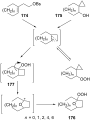
Scheme 53: The mechanism of solvolysis of brosylates 174a–c and spiro cyclopropyl carbinols 175a–c in THF/H2O2....
Scheme 54: The fragmentation mechanism of hydroperoxy acetals 178 to esters 179.
Scheme 55: The acid-catalyzed rearrangement of phenylcyclopentyl hydroperoxide 181.
Scheme 56: The peroxidation of tertiary alcohols in the presence of a catalytic amount of acid.
Scheme 57: The acid-catalyzed reaction of bicyclic secondary alcohols 192 with hydrogen peroxide.
Scheme 58: The photooxidation of 5,6-disubstituted 3,4-dihydro-2H-pyrans 196.
Scheme 59: The oxidation of tertiary alcohols 200a–g, 203a,b, and 206.
Scheme 60: Transformation of functional peroxide 209 leading to 2,3-disubstitued furans 210 in one step.
Scheme 61: The synthesis of carbazoles 213 via peroxide rearrangement.
Scheme 62: The construction of C–N bonds using the Hock rearrangement.
Scheme 63: The synthesis of moiety 218 from 217 which is a structural motif in the antitumor–antibiotic of CC-...
Scheme 64: The in vivo oxidation steps of cholesterol (219) by singlet oxygen.
Scheme 65: The proposed mechanism of the rearrangement of cholesterol-5α-OOH 220.
Scheme 66: Photochemical route to artemisinin via Hock rearrangement of 223.
Scheme 67: The Kornblum–DeLaMare rearrangement.
Scheme 68: Kornblum–DeLaMare transformation of 1-phenylethyl tert-butyl peroxide (225).
Scheme 69: The synthesis 4-hydroxyenones 230 from peroxide 229.
Scheme 70: The Kornblum–DeLaMare rearrangement of peroxide 232.
Scheme 71: The reduction of peroxide 234.
Scheme 72: The Kornblum–DeLaMare rearrangement of endoperoxide 236.
Scheme 73: The rearrangement of peroxide 238 under Kornblum–DeLaMare conditions.
Scheme 74: The proposed mechanism of rearrangement of peroxide 238.
Scheme 75: The Kornblum–DeLaMare rearrangement of peroxides 242a,b.
Scheme 76: The base-catalyzed rearrangements of bicyclic endoperoxides having electron-withdrawing substituent...
Scheme 77: The base-catalyzed rearrangements of bicyclic endoperoxides 249a,b having electron-donating substit...
Scheme 78: The base-catalyzed rearrangements of bridge-head substituted bicyclic endoperoxides 251a,b.
Scheme 79: The Kornblum–DeLaMare rearrangement of hydroperoxide 253.
Scheme 80: Synthesis of β-hydroxy hydroperoxide 254 from endoperoxide 253.
Scheme 81: The amine-catalyzed rearrangement of bicyclic endoperoxide 263.
Scheme 82: The base-catalyzed rearrangement of meso-endoperoxide 268 into 269.
Scheme 83: The photooxidation of 271 and subsequent Kornblum–DeLaMare reaction.
Scheme 84: The Kornblum–DeLaMare rearrangement as one step in the oxidation reaction of enamines.
Scheme 85: The Kornblum–DeLaMare rearrangement of 3,5-dihydro-1,2-dioxenes 284, 1,2-dioxanes 286, and tert-but...
Scheme 86: The Kornblum–DeLaMare rearrangement of epoxy dioxanes 290a–d.
Scheme 87: Rearrangement of prostaglandin H2 292.
Scheme 88: The synthesis of epicoccin G (297).
Scheme 89: The Kornblum–DeLaMare rearrangement used in the synthesis of phomactin A.
Scheme 90: The Kornblum–DeLaMare rearrangement in the synthesis of 3H-quinazolin-4-one 303.
Scheme 91: The Kornblum–DeLaMare rearrangement in the synthesis of dolabriferol (308).
Scheme 92: Sequential transformation of 3-substituted 2-pyridones 309 into 3-hydroxypyridine-2,6-diones 311 in...
Scheme 93: The Kornblum–DeLaMare rearrangement of peroxide 312 into hydroxy enone 313.
Scheme 94: The Kornblum–DeLaMare rearrangement in the synthesis of polyfunctionalized carbonyl compounds 317.
Scheme 95: The Kornblum–DeLaMare rearrangement in the synthesis of (Z)-β-perfluoroalkylenaminones 320.
Scheme 96: The Kornblum–DeLaMare rearrangement in the synthesis of γ-ketoester 322.
Scheme 97: The Kornblum–DeLaMare rearrangement in the synthesis of diterpenoids 326 and 328.
Scheme 98: The synthesis of natural products hainanolidol (331) and harringtonolide (332) from peroxide 329.
Scheme 99: The synthesis of trans-fused butyrolactones 339 and 340.
Scheme 100: The synthesis of leucosceptroid C (343) and leucosceptroid P (344) via the Kornblum–DeLaMare rearra...
Scheme 101: The Dakin oxidation of arylaldehydes or acetophenones.
Scheme 102: The mechanism of the Dakin oxidation.
Scheme 103: A solvent-free Dakin reaction of aromatic aldehydes 356.
Scheme 104: The organocatalytic Dakin oxidation of electron-rich arylaldehydes 358.
Scheme 105: The Dakin oxidation of electron-rich arylaldehydes 361.
Scheme 106: The Dakin oxidation of arylaldehydes 358 in water extract of banana (WEB).
Scheme 107: A one-pot approach towards indolo[2,1-b]quinazolines 364 from indole-3-carbaldehydes 363 through th...
Scheme 108: The synthesis of phenols 367a–c from benzaldehydes 366a-c via acid-catalyzed Dakin oxidation.
Scheme 109: Possible transformation paths of the highly polarized boric acid coordinated H2O2–aldehyde adduct 3...
Scheme 110: The Elbs oxidation of phenols 375 to hydroquinones.
Scheme 111: The mechanism of the Elbs persulfate oxidation of phenols 375 affording p-hydroquinones 376.
Scheme 112: Oxidation of 2-pyridones 380 under Elbs persulfate oxidation conditions.
Scheme 113: Synthesis of 3-hydroxy-4-pyridone (384) via an Elbs oxidation of 4-pyridone (382).
Scheme 114: The Schenck rearrangement.
Scheme 115: The Smith rearrangement.
Scheme 116: Three main pathways of the Schenck rearrangement.
Scheme 117: The isomerization of hydroperoxides 388 and 389.
Scheme 118: Trapping of dioxacyclopentyl radical 392 by oxygen.
Scheme 119: The hypothetical mechanism of the Schenck rearrangement of peroxide 394.
Scheme 120: The autoxidation of oleic acid (397) with the use of labeled isotope 18O2.
Scheme 121: The rearrangement of 18O-labeled hydroperoxide 400 under an atmosphere of 16O2.
Scheme 122: The rearrangement of the oleate-derived allylic hydroperoxides (S)-421 and (R)-425.
Scheme 123: Mechanisms of Schenck and Smith rearrangements.
Scheme 124: The rearrangement and cyclization of 433.
Scheme 125: The Wieland rearrangement.
Scheme 126: The rearrangement of bis(triphenylsilyl) 439 or bis(triphenylgermyl) 441 peroxides.
Scheme 127: The oxidative transformation of cyclic ketones.
Scheme 128: The hydroxylation of cyclohexene (447) in the presence of tungstic acid.
Scheme 129: The oxidation of cyclohexene (447) under the action of hydrogen peroxide.
Scheme 130: The reaction of butenylacetylacetone 455 with hydrogen peroxide.
Scheme 131: The oxidation of bridged 1,2,4,5-tetraoxanes.
Scheme 132: The proposed mechanism for the oxidation of bridged 1,2,4,5-tetraoxanes.
Scheme 133: The rearrangement of ozonides.
Scheme 134: The acid-catalyzed oxidative rearrangement of malondialdehydes 462 under the action of H2O2.
Scheme 135: Pathways of the Lewis acid-catalyzed cleavage of dialkyl peroxides 465 and ozonides 466.
Scheme 136: The mechanism of the transformation of (tert-butyldioxy)cyclohexanedienones 472.
Scheme 137: The synthesis of Vitamin K3 from 472a.
Scheme 138: Proposed mechanism for the transformation of 478d into silylated endoperoxide 479d.
Scheme 139: The rearrangement of hydroperoxide 485 to form diketone 486.
Scheme 140: The base-catalyzed rearrangement of cyclic peroxides 488a–g.
Scheme 141: Synthesis of chiral epoxides and aldols from peroxy hemiketals 491.
Scheme 142: The multistep transformation of (R)-carvone (494) to endoperoxides 496a–e.
Scheme 143: The decomposition of anthracene endoperoxide 499.
Scheme 144: Synthesis of esters 503 from aldehydes 501 via rearrangement of peroxides 502.
Scheme 145: Two possible paths for the base-promoted decomposition of α-azidoperoxides 502.
Scheme 146: The Story decomposition of cyclic diperoxide 506a.
Scheme 147: The Story decomposition of cyclic triperoxide 506b.
Scheme 148: The thermal rearrangement of endoperoxides A into diepoxides B.
Scheme 149: The transformation of peroxide 510 in the synthesis of stemolide (511).
Scheme 150: The possible mechanism of the rearrangement of endoperoxide 261g.
Scheme 151: The photooxidation of indene 517.
Scheme 152: The isomerization of ascaridole (523).
Scheme 153: The isomerization of peroxide 525.
Scheme 154: The thermal transformation of endoperoxide 355.
Scheme 155: The photooxidation of cyclopentadiene (529) at a temperature higher than 0 °C.
Scheme 156: The thermal rearrangement of endoperoxides 538a,b.
Scheme 157: The transformation of peroxides 541.
Scheme 158: The thermal rearrangements of strained cyclic peroxides.
Scheme 159: The thermal rearrangement of diacyl peroxide 551 in the synthesis of C4-epi-lomaiviticin B core 553....
Scheme 160: The 1O2 oxidation of tryptophan (554) and rearrangement of dioxetane intermediate 555.
Scheme 161: The Fe(II)-promoted cleavage of aryl-substituted bicyclic peroxides.
Scheme 162: The proposed mechanism of the Fe(II)-promoted rearrangement of 557a–c.
Scheme 163: The reaction of dioxolane 563 with Fe(II) sulfate.
Scheme 164: Fe(II)-promoted rearrangement of 1,2-dioxane 565.
Scheme 165: Fe(II) cysteinate-promoted rearrangement of 1,2-dioxolane 568.
Scheme 166: The transformation of 1,2-dioxanes 572a–c under the action of FeCl2.
Scheme 167: Fe(II) cysteinate-promoted transformation of tetraoxane 574.
Scheme 168: The CoTPP-catalyzed transformation of bicyclic endoperoxides 600a–d.
Scheme 169: The CoTPP-catalyzed transformation of epoxy-1,2-dioxanes.
Scheme 170: The Ru(II)-catalyzed reactions of 1,4-endoperoxide 261g.
Scheme 171: The Ru(II)-catalyzed transformation as a key step in the synthesis of elyiapyrone A (610) from 1,4-...
Scheme 172: Peroxides with antimalarial activity.
Scheme 173: The interaction of iron ions with artemisinin (616).
Scheme 174: The interaction of FeCl2 with 1,2-dioxanes 623, 624.
Scheme 175: The mechanism of reaction 623 and 624 with Fe(II)Cl2.
Scheme 176: The reaction of bicyclic natural endoperoxides G3-factors 631–633 with FeSO4.
Scheme 177: The transformation of terpene cardamom peroxide 639.
Scheme 178: The different ways of the cleavage of tetraoxane 643.
Scheme 179: The LC–MS analysis of interaction of tetraoxane 646 with iron(II)heme 647.
Scheme 180: The rearrangement of 3,6-epidioxy-1,10-bisaboladiene (EDBD, 649).
Scheme 181: Easily oxidized substrates.
Scheme 182: Biopathway of synthesis of prostaglandins.
Scheme 183: The reduction and rearrangements of isoprostanes.
Scheme 184: The partial mechanism for linoleate 658 oxidation.
Scheme 185: The transformation of lipid hydroperoxide.
Scheme 186: The acid-catalyzed cleavage of the product from free-radical oxidation of cholesterol (667).
Scheme 187: Two pathways of catechols oxidation.
Scheme 188: Criegee-like or Hock-like rearrangement of the intermediate hydroperoxide 675 in dioxygenase enzyme...
Scheme 189: Carotinoides 679 cleavage by carotenoid cleavage dioxygenases.
Beilstein J. Org. Chem. 2016, 12, 1624–1628, doi:10.3762/bjoc.12.159
Graphical Abstract
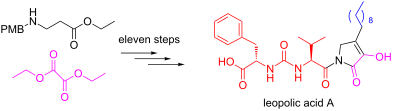
Figure 1: Structure of leopolic acid A.
Scheme 1: Synthesis of leopolic acid A. Reagents and conditions: a) p-methoxybenzylamine, EtOH, rt, 12 h, 98%...
Scheme 2: Synthesis of compound 17. Reagents and conditions: a) Oxalyl chloride, DMSO, CH2Cl2, TEA, −78 °C to...
Beilstein J. Org. Chem. 2016, 12, 1361–1365, doi:10.3762/bjoc.12.129

Graphical Abstract
Scheme 1: Selective bromochlorination and possible disconnections for anverene (1).
Scheme 2: Selective total synthesis of (−)-anverene. Reagents and conditions: a) NBS (1.2 equiv), ClTi(OiPr)3...
Beilstein J. Org. Chem. 2016, 12, 1250–1268, doi:10.3762/bjoc.12.120
Graphical Abstract
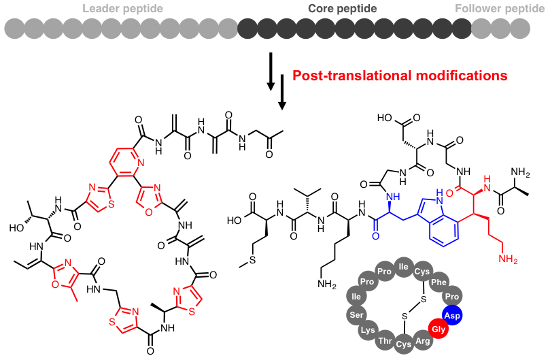
Figure 1: Schematic of RiPP biosynthesis. Thiazole/oxazole formation is represented by the blue heterocycle (...
Figure 2: Examples of heterocycles in RiPPs alongside the precursor peptides that these molecules derive from...
Figure 3: Formation of thiazoles and oxazoles in RiPPs. A) Biosynthesis of microcin B17. B) Mechanistic model...
Figure 4: Lanthionine bond formation. A) Nisin and its precursor peptide. B) Mechanism of lanthionine bond fo...
Figure 5: S-[(Z)-2-Aminovinyl]-D-cysteine (AviCys) formation in the epidermin pathway. A) Mechanisms for deca...
Figure 6: Cyclisation in the biosynthesis of thiopeptides. A) Mechanism of TclM-catalysed heterocyclisation i...
Figure 7: ATP-dependent macrocyclisation. A) General mechanism for ATP-dependent macrolactonisation or macrol...
Figure 8: Peptidase-like macrolactam formation. A) General mechanism. B) Examples of RiPPs cyclised by serine...
Figure 9: Structure of autoinducing peptide AIP-I from Staphylococcus aureus and the sequence of the correspo...
Figure 10: Radical cyclisation in RiPP biosynthesis. A) AlbA-catalysed formation of thioethers in the biosynth...
Figure 11: RiPPs with uncharacterised mechanisms of cyclisation. Unusual heterocycles in ComX and methanobacti...
Beilstein J. Org. Chem. 2016, 12, 969–984, doi:10.3762/bjoc.12.96
Graphical Abstract
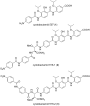
Figure 1: Structures of cystobactamids 507, 919-1 and 919-2.
Figure 2: Structures of aurafuron A and corallopyronin A.
Figure 3: Structures of ixabepilone and capecitabine.
Figure 4: Structures of DKxanthene-534 and myxochelin A.
Figure 5: Phylogenetic tree of halotolerant and halophilic myxobacteria. The neighbor-joining tree is based o...
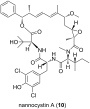
Figure 6: Structure of nannocystin A.
Figure 7: Structure of phenylnannolones A–C.
Figure 8: Structures of the pyrronazols, dihydroxyphenazin and 1-hydroxyphenazin-6-yl-α-D-arabinofuranoside.
Figure 9: Structures of nannozinones A + B and nannochelin A from N. pusilla strain MNa10913.
Figure 10: Structure of haliangicin from H. ochraceum.
Figure 11: Structure of haliamide from H. ochraceum SMP-2.
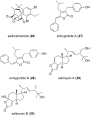
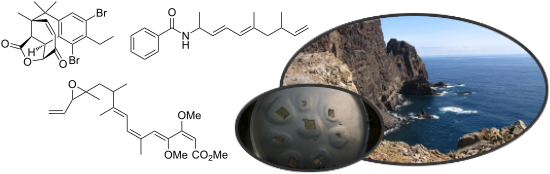
Figure 12: Structures of salimabromide, enhygrolides A + B and salimyxins A + B.
Figure 13: Structures of miuraenamides A–F from P. miuraensis.
Beilstein J. Org. Chem. 2016, 12, 674–683, doi:10.3762/bjoc.12.68
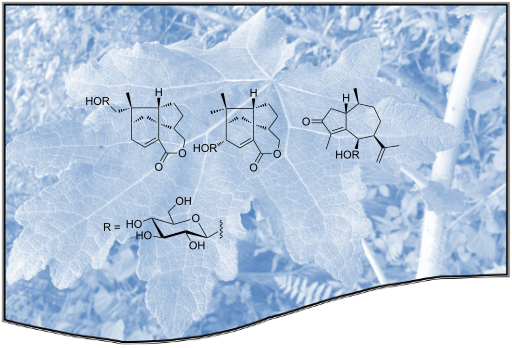
Graphical Abstract
Figure 1: UPLC profile of the butanol fraction of the leaves of Jungia sellowii after shaking the flask with ...
Figure 2: Structures of compounds 1–3.
Figure 3: COSY and HMBC correlations of compounds 1–3.
Figure 4: NOESY correlations of compounds 1–3.
Figure 5: ECD spectra of compounds 1–3.
Beilstein J. Org. Chem. 2016, 12, 594–607, doi:10.3762/bjoc.12.58
Graphical Abstract
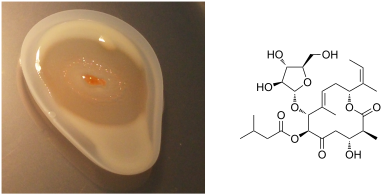
Figure 1: Natural products isolated from M. xanthus DK1622. DKxanthene-534 (1); myxalamid B (2); myxovirescin...
Figure 2: Vegetative cells of P. fallax HKI 727 under a phase-contrast microscope (K. Martin, unpublished). B...
Figure 3: Structures of myxopyronins A (11) and B (12), corallopyronins A (13), B (14) and C (15), as well as...
Figure 4: Structure of althiomycin (17).
Figure 5: Structures of cystobactamids 919-1 (18), 919-2 (19), and 507 (20).
Figure 6: Structures of natural products isolated from Herpetosiphon spp.: siphonazole (21); auriculamide (22...
Beilstein J. Org. Chem. 2016, 12, 571–588, doi:10.3762/bjoc.12.56
Graphical Abstract
Figure 1: Selected monocyclic and monobenzo α-pyrone structures.
Figure 2: The basic core structure of dibenzo-α-pyrones.
Figure 3: Selected dibenzo-α-pyrones.
Figure 4: Structure of ellagic acid and of the urolithins, the latter metabolized from ellagic acid by intest...
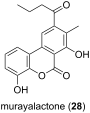
Figure 5: Structure of murayalactone, the only dibenzo-α-pyrone described from bacteria.
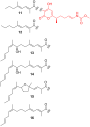
Figure 6: Structures of the 6-pentyl-2-pyrone (29) and of trichopyrone (30). Only 29 showed antifungal activi...
Figure 7: Selected monocyclic α-pyrones.
Figure 8: Structures of the gibepyrones A–F.
Figure 9: Structures of the phomenins A and B.
Figure 10: Structures of monocyclic α-pyrones showing pheromone (47) and antitumor activity (48), respectively....
Figure 11: Structures of 6-alkyl (alkoxy or alkylthio)-4-aryl-3-(4-methanesulfonylphenyl)pyrones.
Figure 12: Structures of kavalactones.
Figure 13: Strutures of germicins.
Figure 14: Structures of the pseudopyronines.
Figure 15: The structures of the monobenzo-α-pyrone anticoagulant drugs warfarin and phenprocoumon.
Figure 16: Structures of selected monobenzo-α-pyrones.
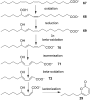
Figure 17: Hypothetical pathway of 29 generation from linoleic acid [34].
Figure 18: Proposed biosynthetic pathway of alternariol (modified from [77]). Malonyl-CoA building blocks are appl...
Figure 19: Structures of phenylnannolones and of enterocin, both biosynthesized via polyketide synthase system...
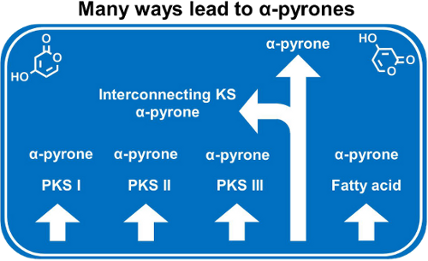
Figure 20: Pyrone ring formation. Examples for the three types of PKS systems are shown in A–C. In D the mecha...
Figure 21: Structures of csypyrones.
Figure 22: Schematic drawing of the T-shaped catalytic cavities of the related enzymes CorB and MxnB. The two ...
Figure 23: Stereo representation of the CorB binding situation (modified from [89]). The substrate mimic (dark vio...
Figure 24: Proposed mechanism for the CsyB enzymatic reaction. A) Coupling reaction of the β-keto fatty acyl i...
Figure 25: Proposed biosynthesis of photopyrone D (37) by the enzyme PpyS from P. luminescens (modified from [63])...
Beilstein J. Org. Chem. 2016, 12, 564–570, doi:10.3762/bjoc.12.55
Graphical Abstract
Scheme 1: Selected examples of oligopeptides bearing dehydroamino acid moieties: myxovalargin (1), argyrin A (...
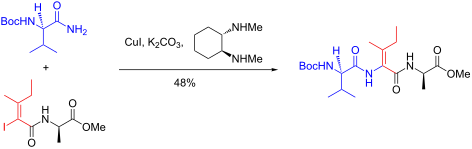
Scheme 2: The Buchwald cross-coupling reaction in the preparation of peptides containing dehydroamino acids 4....
Scheme 3: Syntheses of vinyl iodides 10 and 11.
Scheme 4: Preparation of vinyl iodides 24–29 (Cbz = benzyloxycarbonyl, Alloc = allyloxycarbonyl, Boc = tert-b...
Scheme 5: Copper-mediated C–N cross-coupling of dehydropeptides 31–33, 36, 37, and 39–41.
Scheme 6: C–N coupling reaction between amide 43 and vinyl iodide 42; formation of dehydroisoleucine containi...
Beilstein J. Org. Chem. 2016, 12, 314–327, doi:10.3762/bjoc.12.34
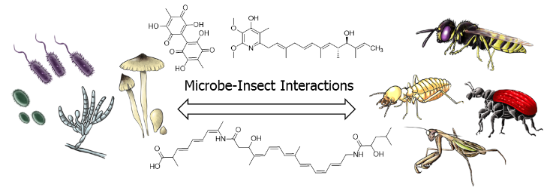
Graphical Abstract
Figure 1: Flow chart of the typical characterization of chemical signals from microbial interactions. (1) Che...
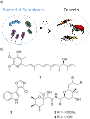
Figure 2: Multilateral microbe–insect interactions. (1) Insect–symbiont interactions with both partners benef...
Figure 3: a) Interactions between bacterial (endo)symbionts and insects with both partners benefiting from th...
Figure 4: Multilateral microbial interactions in fungus-growing insects. (1) Insect cultivar: protects and sh...
Figure 5: Small molecules (chemical mediators) play key roles in maintaining garden homeostasis in fungus-gro...
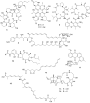
Figure 6: Secondary metabolites isolated from Actinobacteria from fungus-growing termites. Microtermolide A (...
Figure 7: Secondary metabolites from bacterial mutualists of solitary insects. Bafilomycin A1 (21), bafilomyc...
Figure 8: Beneficial interactions (1) between fungal symbionts and insects.
Figure 9: Secondary metabolites isolated from fungal symbionts. Cerulenin (30), helvolic acid (31), lepiochlo...
Figure 10: Predatory interactions, (1) entomopathogenic fungi use insect as prey.
Figure 11: Entomopathogenic fungi use secondary metabolites as insecticidal compounds to kill their prey. Dest...
Beilstein J. Org. Chem. 2015, 11, 2689–2695, doi:10.3762/bjoc.11.289
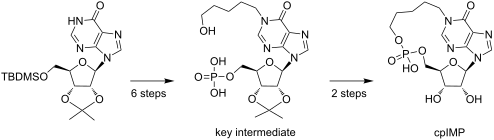
Graphical Abstract
Figure 1: Structures of cADPR (1), cIDPR (2), cpIDP (3) and cpIMP (4).
Figure 2: Synthetic strategies explored in the cyclization step via phosphodiester bond formation.
Scheme 1: i) (iPr)2NP(OCE)Cl, DIPEA, THF, 1 h, rt; ii) 1) 1H-tetrazole, THF, 2) t-BuOOH, 2 h, rt; iii) 1) (iP...
Scheme 2: i) DNCB, K2CO3, DMF, 4 h, 80 °C; ii) 5-aminopentan-1-ol, DMF, 16 h, 50 °C; iii) Ac2O, pyridine, 2 h...
Figure 3: Effect of 3 and 4 on intracellular [Ca2+] in NGF-differentiated PC12 cells. (A) and (B): representa...
Beilstein J. Org. Chem. 2015, 11, 2616–2630, doi:10.3762/bjoc.11.281
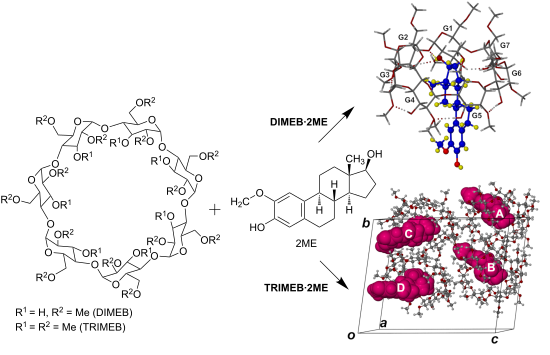
Graphical Abstract
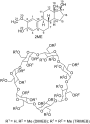
Figure 1: Chemical structures of 2-methoxyestradiol (top) and the derivatised CDs DIMEB and TRIMEB (bottom).
Figure 2: The mode of inclusion of 2ME in the DIMEB cavity (a), space-filling side view of the complex with t...
Figure 3: Stereoview of the asymmetric unit in the crystal of the inclusion complex TRIMEB•2ME, with the host...
Figure 4: Space-filling images of complex unit A (as representative of units A and B) (a) and complex unit C ...
Figure 5: Inclination of the mean plane of the included 2ME molecule relative to the O4-heptagon of the host ...
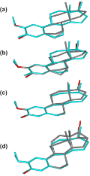
Figure 6: Overlay of the steroid nucleus of 2ME (blue) in its own crystal with the refined models (grey) of t...
Figure 7: The TRIMEB·2ME complex unit D with two distinct (guest)O19-H···O(host) hydrogen bonds highlighted. ...
Figure 8: Dissolution profiles in water at 37 °C for untreated 2ME and various β-CD-containing preparations o...
Beilstein J. Org. Chem. 2015, 11, 2521–2539, doi:10.3762/bjoc.11.273
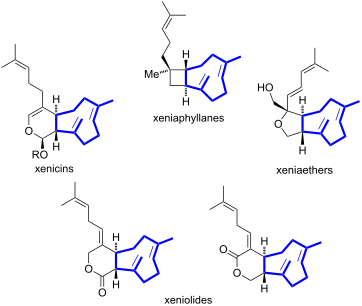
Graphical Abstract
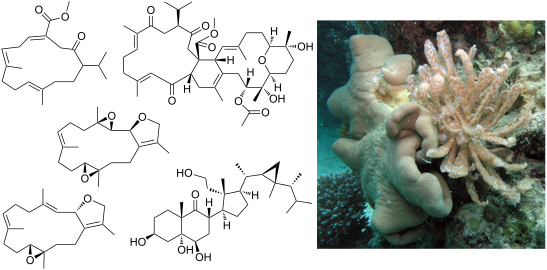
Figure 1: a) Structure of xenicin (1) and b) numbering of the xenicane skeleton according to Schmitz and van ...
Figure 2: Overview of selected Xenia diterpenoids according to the four subclasses [2-20]. The nine-membered carboc...
Figure 3: Representative members of the caryophyllenes, azamilides and Dictyota diterpenes.
Scheme 1: Proposed biosynthesis of Xenia diterpenoids (OPP = pyrophosphate, GGPP = geranylgeranyl pyrophospha...
Scheme 2: Direct synthesis of the nine-membered carbocycle as proposed by Schmitz and van der Helm (E = elect...
Scheme 3: The construction of E- or Z-cyclononenes.
Scheme 4: Total synthesis of racemic β-caryophyllene (22) by Corey.
Scheme 5: Total synthesis of racemic β-caryophyllene (22) by Oishi.
Scheme 6: Total synthesis of coraxeniolide A (10) by Leumann.
Scheme 7: Total synthesis of antheliolide A (18) by Corey.
Scheme 8: a) Synthesis of enantiomer 80, b) total syntheses of coraxeniolide A (10) and c) β-caryophyllene (22...
Scheme 9: Total synthesis of blumiolide C (11) by Altmann.
Scheme 10: Synthesis of a xeniolide F precursor by Hiersemann.
Scheme 11: Synthesis of the xenibellol (15) and the umbellacetal (114) core by Danishefsky.
Scheme 12: Proposed biosynthesis of plumisclerin A (118).
Scheme 13: Synthesis of the tricyclic core structure of plumisclerin A by Yao.
Scheme 14: Total synthesis of 4-hydroxydictyolactone (137) by Williams.
Scheme 15: Photoisomerization of 4-hydroxydictyolactone (137) to 4-hydroxycrenulide (138).
Scheme 16: The total synthesis of (+)-acetoxycrenulide (151) by Paquette.
Beilstein J. Org. Chem. 2015, 11, 2493–2508, doi:10.3762/bjoc.11.271
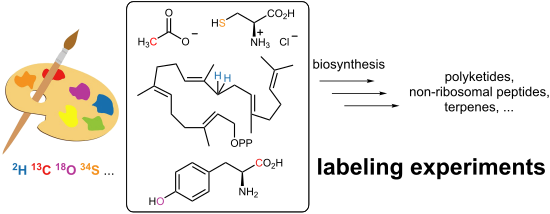
Graphical Abstract
Figure 1: Structures of lovastatin (1), aflatoxin B1 (2) and amphotericin B (3).
Scheme 1: a) Structure of rhizoxin (4). b) Two possible mechanisms of chain branching catalysed by a branchin...
Scheme 2: Structure of coelimycin P1 (8) and proposed biosynthetic formation from the putative PKS produced a...
Scheme 3: Structure of trioxacarcin A (9) with highlighted carbon origins of the polyketide core from acetate...
Scheme 4: Proposed biosynthetic assembly of clostrubin A (12). Bold bonds show intact acetate units.
Figure 2: Structure of forazoline A (13).
Figure 3: Structures of tyrocidine A (14) and teixobactin (15).
Figure 4: Top: Structure of the NRPS product kollosin A (16) with the sequence N-formyl-D-Leu-L-Ala-D-Leu-L-V...
Scheme 5: Proposed biosynthesis of aspirochlorine (20) via 18 and 19.
Scheme 6: Two different macrocyclization mechanisms in the biosynthesis of pyrrocidine A (24).
Figure 5: Structure of thiomarinol A (27). Bold bonds indicate carbon atoms derived from 4-hydroxybutyrate.
Figure 6: Structures of artemisinin (28), ingenol (29) and paclitaxel (30).
Figure 7: The revised (31) and the previously suggested (32) structure of hypodoratoxide and the structure of...
Figure 8: Structure of the two interconvertible conformers of (1(10)E,4E)-germacradien-6-ol (34) studied with...
Scheme 7: Proposed cyclization mechanism of corvol ethers A (42) and B (43) with the investigated reprotonati...
Scheme 8: Predicted (top) and observed (bottom) 13C-labeling pattern in cyclooctatin (45) after feeding of [U-...
Scheme 9: Proposed mechanism of the cyclooctat-9-en-7-ol (52) biosynthesis catalysed by CotB2. Annotated hydr...
Scheme 10: Cyclization mechanism of sesterfisherol (59). Bold lines indicate acetate units; black circles repr...
Scheme 11: Cyclization mechanisms to pentalenene (65) and protoillud-6-ene (67).
Scheme 12: Reactions of chorismate catalyzed by three different enzyme subfamilies. Oxygen atoms originating f...
Scheme 13: Incorporation of sulfur into tropodithietic acid (72) via cysteine.
Scheme 14: Biosynthetic proposal for the starter unit of antimycin biosynthesis. The hydrogens at positions R1...
Beilstein J. Org. Chem. 2015, 11, 2189–2193, doi:10.3762/bjoc.11.237
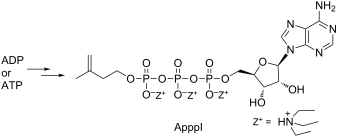
Graphical Abstract
Figure 1: Examples of non-N-BPs and N-BPs.
Scheme 1: Synthesis of ApppI (1).
Scheme 2: Synthesis of 3-methylbut-3-en-1-yl (trimethylsilyl) phosphorochloridate (2).
Beilstein J. Org. Chem. 2015, 11, 2029–2037, doi:10.3762/bjoc.11.220
Graphical Abstract
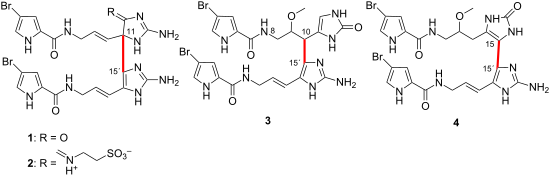
Figure 1: Selected pyrrole-imidazole alkaloids (1–4, 6–11, and 13–20), and agelongine analogues (5, 12, and 21...
Figure 2: Selected 1H,1H-COSY (blue bonds), 1H,1H-NOESY (blue arrows), 1H,13C-HMBC, and 1H,15N-HMBC (both red...
Figure 3: Selected 1H,1H-COSY (blue bonds), 1H,1H-NOESY (blue arrows), 1H,13C-HMBC, and 1H,15N-HMBC (both red...
Figure 4: Selected 1H,1H-COSY (blue bonds), 1H,1H-NOESY (blue arrows), and 1H,13C-HMBC (red arrows) correlati...
Figure 5: Selected 1H,1H-COSY (blue bonds), 1H,1H-NOESY (blue arrows), 1H,13C-HMBC, and 1H,15N-HMBC (both red...
Figure 6: Selected 1H,1H-COSY (blue bonds), 1H,13C-HMBC, and 1H,15N-HMBC (both red arrows) correlations for N...
Beilstein J. Org. Chem. 2015, 11, 1922–1932, doi:10.3762/bjoc.11.208
Graphical Abstract
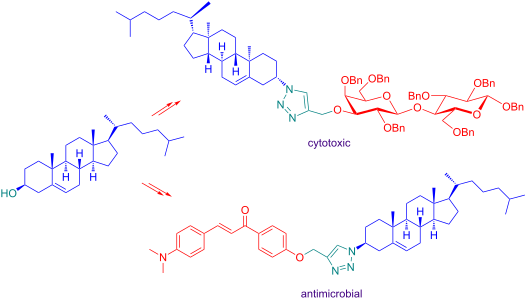
Figure 1: Structure of ceragenin (CSA-8) and selected cholesterol conjugates.
Scheme 1: Reagents and conditions: (a) CBr4, PPh3, DCM (74%); (b) NaN3, DMF, 100 °C (63%); (c) CuSO4·5H2O, L-...
Scheme 2: Reagents and conditions: (a) NaN3, DMF, 100 °C (9b, 47%); (b) CuSO4·5H2O, L-AsAc, THF/H2O [11a, n =...
Scheme 3: Reagents and conditions: CuSO4·5H2O, L-AsAc, THF/H2O (96%).
Scheme 4: Reagents and conditions: (a) 1, TMSOTF, CH3CN, rt (74%); (b) NaOMe, MeOH (84%); (c) NaOH; HCl (pH 5...
Scheme 5: Reagents and conditions: (a) 9a, TMSOTF, DCM, rt (19%); (b) 10, CuSO4·5H2O, L-AsAc, THF/H2O (62%); ...
Scheme 6: Reagents & conditions: (a) Propargyl bromide, NaH, Et2O/DMF (quant. for both 26 and 30); (b) 3, CuSO...
Scheme 7: Reagents and conditions: (a) Bu2SnO, MeOH; propargyl bromide, TBAI, Tol (92%); (b) CuSO4·5H2O, L-As...
Figure 2: In vitro antimicrobial activity of some new cholesterol derivatives against E.coli, S. aureus. A. f...
Figure 3: Cytotoxicity effect of some new cholesterol derivatives on the PC3 cell line. Doxorubicin (Dox) was...
Beilstein J. Org. Chem. 2015, 11, 1667–1699, doi:10.3762/bjoc.11.183
Graphical Abstract
Figure 1: Fragments produced by the FAB–MS of dehydrokuanoniamine B (20) [42].
Figure 2: Fragments produced by the EIMS of sagitol (26) [55].
Figure 3: Fragments produced by the EIMS of styelsamine B (4) [45].
Figure 4: Fragments produced by the EIMS of styelsamine D (6) [45].
Figure 5: Fragments produced by the EIMS of subarine (37) [40].
Scheme 1: Synthesis of styelsamine B (4) and cystodytin J (1) [58].
Scheme 2: Synthesis of sebastianine A (38) and its regioisomer 39 [59].
Scheme 3: Synthesis route A of neoamphimedine (12) [61].
Scheme 4: Synthesis route B of neoamphimedine (12) [62].
Scheme 5: Synthesis of arnoamines A (40) and B (41) [63].
Scheme 6: Synthesis of ascididemin (42) [65].
Scheme 7: Synthesis of subarine (37) [66,67].
Scheme 8: Synthesis of demethyldeoxyamphimedine (9) [68].
Scheme 9: Synthesis of pyridoacridine analogues related to ascididemin (42) [70].
Scheme 10: Synthesis of analogues of meridine (56) [71].
Scheme 11: Synthesis of bulky pyridoacridine as eilatin (58) [72].
Scheme 12: Synthesis of AK37 (59), analogue of kuanoniamine A (60) [73].
Figure 6: Biosynthesis pathway I [74].
Figure 7: Reaction illustrating catechol and kynuramine as possible biosynthetic precursors [75].
Figure 8: Biosynthesis pathway B deduced from the feeding experiment A using labelled precursors [76].
Figure 9: Proposed biosynthesis pathway [47].
Figure 10: 4H-Pyrido[2,3,4-kl]acridin-4-one as a cytotoxic pharmacophore.
Figure 11: 7H-Pyrido[2,3,4-kl]acridine as a cytotoxic pharmacophore.
Figure 12: 9H-Quinolino[4,3,2-de][1,10]phenanthrolin-9-one as a cytotoxic pharmacophore.
Figure 13: 8H-Benzo[b]pyrido[4,3,2-de][1,7]phenanthrolin-8-one as a cytotoxic pharmacophore.
Figure 14: Pyrido[4,3,2-mn]pyrrolo[3,2,1-de]acridine as a cytotoxic pharmacophore.
Figure 15: 9H-Pyrido[4,3,2-mn]thiazolo[4,5-b]acridin-9-one and 8H-pyrido[4,3,2-mn]thiazolo[4,5-b]acridine: cyt...
Figure 16: 9H-quinolino[4,3,2-de][1,10]phenanthrolin-9-one as an anti-mycobacterial pharmacophore.
Figure 17: 9H-Quinolino[4,3,2-de][1,10]phenanthrolin-9-one as an antibacterial pharmacophore.
Figure 18: Saturated and less saturated pyridine moieties as aspartyl inhibitor cores.
Figure 19: Iminobenzoquinone and acridone cores as intercalating and TOPO inhibitor motifs found in pyridoacri...
Beilstein J. Org. Chem. 2015, 11, 1194–1219, doi:10.3762/bjoc.11.134
Graphical Abstract
Figure 1: Pharmaceutical structures targeted in early flow syntheses.
Scheme 1: Flow synthesis of 6-hydroxybuspirone (9). Inserted photograph reprinted with permission from [45]. Copy...
Figure 2: Configuration of a baffled reactor tube (left) and its schematic working principle (right).
Scheme 2: McQuade’s flow synthesis of ibuprofen (16).
Scheme 3: Jamison’s flow synthesis of ibuprofen sodium salt (17).
Scheme 4: Flow synthesis of imatinib (23).
Scheme 5: Flow synthesis of the potent 5HT1B antagonist 28.
Scheme 6: Flow synthesis of a selective δ-opioid receptor agonist 33.
Scheme 7: Flow synthesis of a casein kinase I inhibitor library (38).
Scheme 8: Flow synthesis of fluoxetine (46).
Scheme 9: Flow synthesis of artemisinin (55).
Scheme 10: Telescoped flow synthesis of artemisinin (55) and derivatives (62–64).
Scheme 11: Flow approach towards AZD6906 (65).
Scheme 12: Pilot scale flow synthesis of key intermediate 73.
Scheme 13: Semi-flow synthesis of vildagliptine (77).
Scheme 14: Pilot scale asymmetric flow hydrogenation towards 83. Inserted photograph reprinted with permission...
Figure 3: Schematic representation of the ‘tube-in-tube’ reactor.
Scheme 15: Flow synthesis of fanetizole (87) via tube-in-tube system.
Scheme 16: Flow synthesis of diphenhydramine.HCl (92).
Scheme 17: Flow synthesis of rufinamide (95).
Scheme 18: Large scale flow synthesis of rufinamide precursor 102.
Scheme 19: First stage in the flow synthesis of meclinertant (103).
Scheme 20: Completion of the flow synthesis of meclinertant (103).
Scheme 21: Flow synthesis of olanzapine (121) utilising inductive heating techniques.
Scheme 22: Flow synthesis of amitriptyline·HCl (127).
Scheme 23: Flow synthesis of E/Z-tamoxifen (132) using peristaltic pumping modules.
Figure 4: Container sized portable mini factory (photograph credit: INVITE GmbH, Leverkusen Germany).
Scheme 24: Flow synthesis of imidazo[1,2-a]pyridines 136 linked to frontal affinity chromatography (FAC).
Figure 5: Structures of zolpidem (142) and alpidem (143).
Scheme 25: Synthesis and screening loops in the discovery of new Abl kinase inhibitors.
Figure 6: Schotten–Baumann approach towards LY573636.Na (147).
Scheme 26: Pilot scale flow synthesis of LY2886721 (146).
Scheme 27: Continuous flow manufacture of alikiren hemifumarate 152.
Beilstein J. Org. Chem. 2014, 10, 2844–2857, doi:10.3762/bjoc.10.302
Graphical Abstract
Figure 1: Structure and absolute configuration of hormaomycin (1), its fluoromethyl-substituted analogues 8a–c...
Figure 2: Structures of the Belokon'-type glycine complexes (BGC) (R)- and (S)-10.
Scheme 1: Intended routes to methyl trans-2-(fluormethyl)cyclopropanecarboxylates 14a–c.
Scheme 2: Synthesis of trans-(2-trifluoromethyl)cyclopropanecarboxylic acid (24).
Scheme 3: Preparation of racemic trans-2-(fluoromethyl)cyclopropylmethyl iodides 11a–c and their conversion t...
Figure 3: Structure and absolute configurations of the nickel(II) complexes (2S,1'R,2'S)-26a, (2S,1'R,2'S)-26b...
Figure 4: Structure and absolute configuration of nickel(II) complex (R,R,R)-28 in the crystal. Hydrogen atom...
Scheme 4: Mechanism of epimerization of the threonine nickel(II) complex 29.
Scheme 5: A new general approach to (2S,3R)-β-methylarylalanines 3 by alkylation of the glycine nickel(II) co...
Figure 5: Structure and absolute configuration of nickel(II) complex (2S,3S)-32 in the crystal. Hydrogen atom...
Scheme 6: Synthesis of the cyclohexadepsipeptides 52a–c for the hormaomycin analogues 8a–c with 3-(2'-fluorom...
Scheme 7: Synthesis of hormaomycin analogues with a: trifluoromethyl-, b: difluoromethyl-, c: monofluoromethy...
Figure 6: Two derivatives 58 and 59 of cyclohexadepsipeptide 52a containing the (trifluoromethylcyclopropyl)a...
Beilstein J. Org. Chem. 2014, 10, 2677–2682, doi:10.3762/bjoc.10.282
Graphical Abstract
Figure 1: Structure of aspergiloid I (1) and its novel skeleton.
Figure 2: Selected 1H,1H-COSY and HMBC correlations and key NOEs observed for 1.
Figure 3: X-ray single-crystal structure of 1.
Scheme 1: Proposed biosynthetic pathway of 1.