Search results
Search for "sugars" in Full Text gives 195 result(s) in Beilstein Journal of Organic Chemistry.
Mutagenic activity of quaternary ammonium salt derivatives of carbohydrates
Beilstein J. Org. Chem. 2016, 12, 1434–1439, doi:10.3762/bjoc.12.138
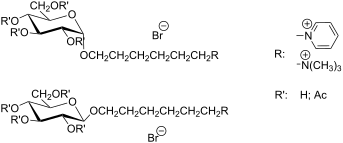
- mutagenicity test; quaternary ammonium salt; Introduction Carbohydrates and alditols occur broadly in nature and possess many biological functions essential to living organisms. Sugars not only contribute as energetic substances, but also serve as building materials for fungi, microbes, plants, and animals
- located at the surface of the cell serve as potential targets for new drugs containing sugars [1][2][4]. Quaternary ammonium salts (QASs) constitute a class of organic compounds with a broad range of applications. A typical QAS consists of a positively charged nitrogen atom with four residues (aliphatic
- [22][23][24]. To overcome many problems associated with QASs, they were combined with sugars. We intended to obtain biologically active compounds – especially antibacterial and antifungal – with high biocompatibility and good biodegradation properties. Some examples of fused molecules containing QASs


Enantioselective carbenoid insertion into C(sp3)–H bonds
Beilstein J. Org. Chem. 2016, 12, 882–902, doi:10.3762/bjoc.12.87
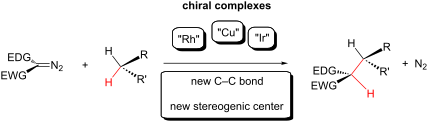
- expensive than the use of other metals such as rhodium, copper and ruthenium, for example. Efforts should be directed toward the development of simpler ligands specially those based on inexpensive chiral building blocks like amino acids and sugars. The examples of works focused on copper-based catalysts are


Muraymycin nucleoside-peptide antibiotics: uridine-derived natural products as lead structures for the development of novel antibacterial agents
Beilstein J. Org. Chem. 2016, 12, 769–795, doi:10.3762/bjoc.12.77
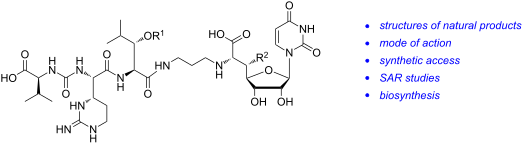
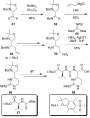
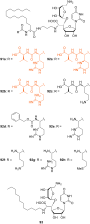
- ]. They contain a uridine moiety, two O-glycosidically linked sugars, the so-called tunicamine and a fatty acid moiety, which typically is terminally branched and unsaturated. Two closely related nucleoside antibiotics were isolated later on and named streptoviridins (isolated in 1975 from Streptomyces









Synthesis and in vitro cytotoxicity of acetylated 3-fluoro, 4-fluoro and 3,4-difluoro analogs of D-glucosamine and D-galactosamine
Beilstein J. Org. Chem. 2016, 12, 750–759, doi:10.3762/bjoc.12.75
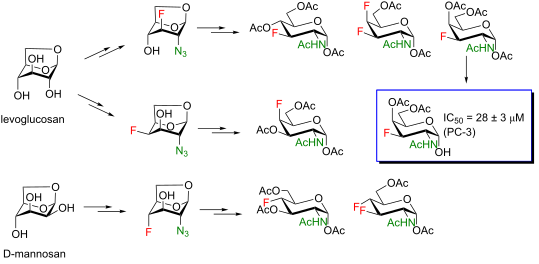
- -2-azido-hexopyranoses have potential as synthons in oligosaccharide assembly. Keywords: amino sugars; cytotoxicity; fluorinated carbohydrates; fluorine; hexosamines; Introduction Derivatives of D-glucosamine (GlcN) and D-galactosamine (GalN) are essential amino sugar components of glycans in
- glycoproteins, glycolipids and proteoglycans. As such, they participate in functions performed by cell-surface glycans including cell adhesion and signaling [1]. Unnatural analogs of these amino sugars prepared by a selective replacement of a hydroxy group by fluorine have proved valuable tools to perturb
- glycan and glycosaminoglycan biosynthesis [2][3], to inhibit amino sugars processing enzymes [4][5], to probe interactions of amino sugars with their target enzymes and lectins [6][7], or to increase the hydrolytic stability of the glycosidic bond in amino sugar glycosides [8][9]. For example, acetylated



A selective and mild glycosylation method of natural phenolic alcohols
Beilstein J. Org. Chem. 2016, 12, 524–530, doi:10.3762/bjoc.12.51
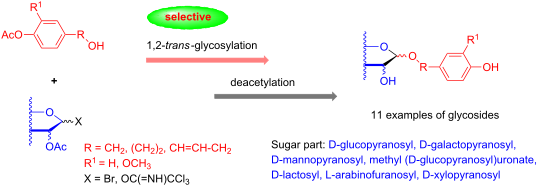
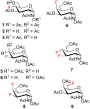
- acetylated glycosyl bromides 13, 15–20 derived from pyranoses, furanoses and a disaccharide (Figure 2) were prepared as glycosyl donors in one step and high yields starting from the peracetylated sugars. The glycosyl bromides depicted in Figure 2 were subsequently examined in the glycosylation of acceptors


Recent advances in N-heterocyclic carbene (NHC)-catalysed benzoin reactions
Beilstein J. Org. Chem. 2016, 12, 444–461, doi:10.3762/bjoc.12.47
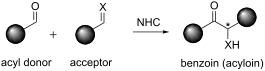
- influence of these catalysts on the diastereoselectivity of the reaction was also studied using NMR techniques. An NHC-catalysed intramolecular benzoin condensation of carbohydrate-derived dialdehydes has been applied for the construction of carbocyclic sugars. Diastereoselective benzoin reactions of manno



Self and directed assembly: people and molecules
Beilstein J. Org. Chem. 2016, 12, 391–405, doi:10.3762/bjoc.12.42
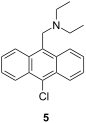
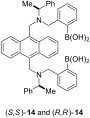
- group were developing carbohydrate receptors from what looked like simple molecules requiring just one or two steps to synthesize. Therefore, while working with the late Takaaki Harada, we developed a simple colorimetric system able to “read-out” the chirality of sugars. The system we developed used the






Mycothiol synthesis by an anomerization reaction through endocyclic cleavage
Beilstein J. Org. Chem. 2016, 12, 328–333, doi:10.3762/bjoc.12.35
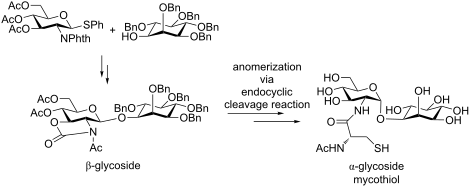
- glycolipids [35][36][37]. Sulfated sugars are isomerized from pyranosides to furanosides [38]. The anomerization reaction would be a useful methodology to prepare 1,2-cis-glycosides such as heparin and glycosylphosphatidylinositol (GPI) anchors. Structure of mycothiol 1. Detoxification pathway mediated by MSH


Enabling technologies and green processes in cyclodextrin chemistry
Beilstein J. Org. Chem. 2016, 12, 278–294, doi:10.3762/bjoc.12.30
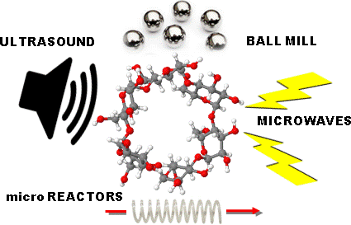
- and a high electrochemical response [74]. CuAAC has been successfully used to immobilize molecules on polymers and biopolymers as well as to join sugars to peptides and proteins. CD-polyglycerol dendron amphiphiles (CD-PG) have also been obtained. This derivative showed high encapsulation efficiency


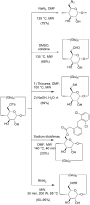


Assembly of synthetic Aβ miniamyloids on polyol templates
Beilstein J. Org. Chem. 2015, 11, 2646–2653, doi:10.3762/bjoc.11.284
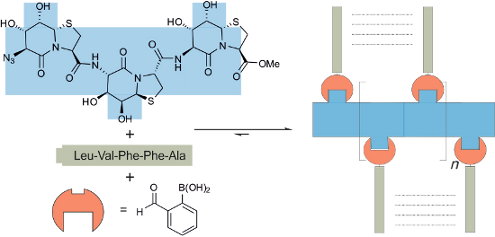
- molecular weights in the region of several kilodalton. Sugars (polyols) were already investigated as templates for peptides [6] and vice versa [7] but both concepts were not yet used for the assembly of monodisperse Aβ miniamyloids. Lehn’s concept of constitutional dynamic chemistry (CDC) [8][9] relies on
- precautions were necessary for peptides of type 2. The template should match the spacing of about 4 Å between the Aβ peptides within the Aβ fibrils [22]. Sugars appear as structurally diverse polyfunctional templates, but the problem of regioselective esterification is shown in Figure 3. The condensation of


Smart molecules for imaging, sensing and health (SMITH)
Beilstein J. Org. Chem. 2015, 11, 2540–2548, doi:10.3762/bjoc.11.274
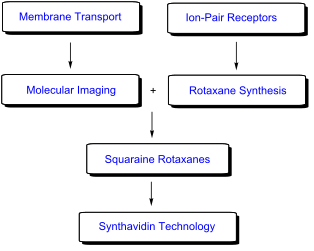
- inexperienced group, we started out looking at synthetic transport carriers for biomolecules such as sugars, nucleotides, amino acids, and catecholamines [5] (Scheme 2). Later on we started looking at chloride transport and we enjoyed a very productive collaboration with the British group of A. P. Davis to


Versatile synthesis and biological evaluation of novel 3’-fluorinated purine nucleosides
Beilstein J. Org. Chem. 2015, 11, 2509–2520, doi:10.3762/bjoc.11.272
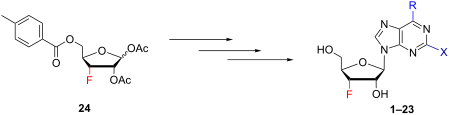
- formation and ring opening as well as reversion of the hydroxy group on the sugar ring. Jeong and co-workers [38][39][40] synthesized fluorine-substituted ribofuranose but isolation required a challenging separation. Therefore, the synthetic challenges for preparing 3’-fluorine modified sugars and



Dicarboxylic esters: Useful tools for the biocatalyzed synthesis of hybrid compounds and polymers
Beilstein J. Org. Chem. 2015, 11, 1583–1595, doi:10.3762/bjoc.11.174

- esterifications of sugars and steroids, using acylating agents different from simple aliphatic acids [7][8][9]. Specifically, years ago Dordick and coworkers proposed the so-called ‘combinatorial biocatalysis’ as an approach to easily produce small libraries of derivatives of bioactive natural compounds using a


Structure and conformational analysis of spiroketals from 6-O-methyl-9(E)-hydroxyiminoerythronolide A
Beilstein J. Org. Chem. 2015, 11, 1447–1457, doi:10.3762/bjoc.11.157
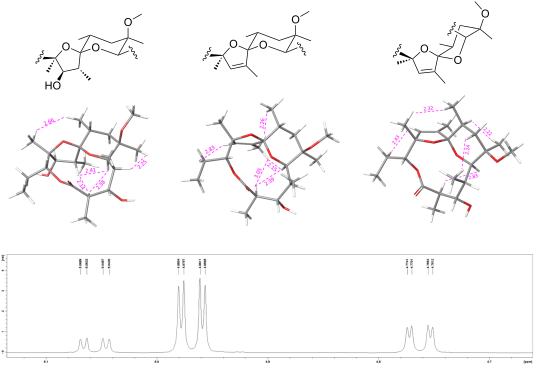
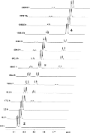
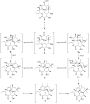
- ; spiroketal; Introduction Macrolide antibiotics are natural or semi-synthetic products of polyketide origin, containing one or more desoxy sugars attached to a macrocyclic lactone aglycon. This large and structurally diverse category of compounds has traditionally been divided into classes based on the




Are D-manno-configured Amadori products ligands of the bacterial lectin FimH?
Beilstein J. Org. Chem. 2015, 11, 1096–1104, doi:10.3762/bjoc.11.123
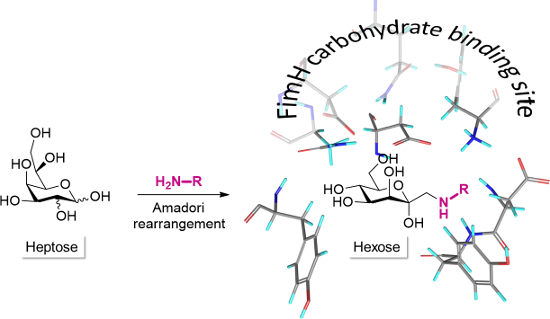
- ligation method for conjugation of unprotected sugars and amines, when applied to suitable sugar substrates. Herein, we evaluated this synthetic method for the preparation of ligands for the α-D-mannose-specific type 1-fimbrial bacterial lectin FimH. The synthesis of heptopyranose 8 as a starting material


N-Alkyl derivatives of diosgenyl 2-amino-2-deoxy-β-D-glucopyranoside; synthesis and antimicrobial activity
Beilstein J. Org. Chem. 2015, 11, 869–874, doi:10.3762/bjoc.11.97
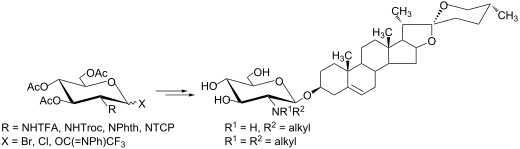
- diosgenin. Very often this D-glucopyranose is substituted with α-L-rhamnopyranose at 2-OH and other sugars at 4-OH. The change of D-glucopyranose into 2-amino-2-deoxy-D-glucopyranose provides diosgenyl 2-amino-2-deoxy-β-D-glucopyranoside (7), a synthetic saponin, first reported by us [39]. It was also
- summarized and presented. We have studied different glycosyl donors, different amine group protections, different solvents and promoters to find the best way to obtain 7. The presented compilation is informative for all those interested in the glycosidation of 2-amino-2-deoxy sugars. Results and Discussion


Peptide–polymer ligands for a tandem WW-domain, an adaptive multivalent protein–protein interaction: lessons on the thermodynamic fitness of flexible ligands
Beilstein J. Org. Chem. 2015, 11, 837–847, doi:10.3762/bjoc.11.93
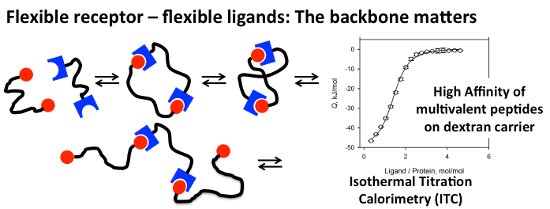
- with an average MW of either 10 kDa (for Dex-1 and Dex-2) or 50 kDa (for Dex-3), both with a polydispersity index of 1.5. Under basic conditions the linear polysaccharide was alkylated with acrylamide selectively in the 2-positions of the sugars. The resulting 2-O-carboxyethyl dextran (2-O-CE-dextran





Orthogonal dual-modification of proteins for the engineering of multivalent protein scaffolds
Beilstein J. Org. Chem. 2015, 11, 784–791, doi:10.3762/bjoc.11.88
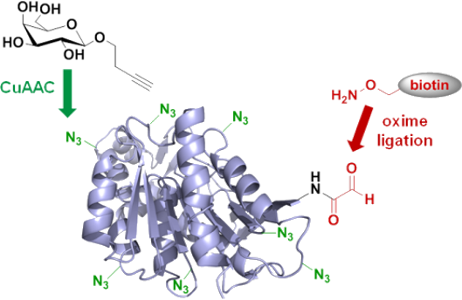
- galactose 2 (see Supporting Information File 1). Lower concentrations of CuSO4 led to higher degrees of functionalization with 3–4 (10 mol %, Gal-3) galactose units, whereas higher amounts of Cu2+ led to lower degrees of functionalization with 1–2 clicked sugars (30 mol %, Gal-1). Further evidence for


Probing multivalency in ligand–receptor-mediated adhesion of soft, biomimetic interfaces
Beilstein J. Org. Chem. 2015, 11, 720–729, doi:10.3762/bjoc.11.82
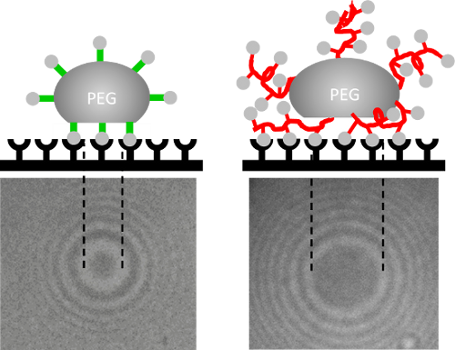
- generally low affinity between sugars and receptors and possibly also by the high flexibility of the polymeric mannose linkers [9]. High molecular flexibility causes a high degree of conformational entropy that negatively affects complex formation between ligands and receptors [23]. Also the design of the


Synthesis of 1,2-cis-2-C-branched aryl-C-glucosides via desulfurization of carbohydrate based hemithioacetals
Beilstein J. Org. Chem. 2015, 11, 583–588, doi:10.3762/bjoc.11.64
- defensive low molecular weight thiol [7]. 2-C-acetamide and 2-C-acetonyl carbohydrate derivatives have also been reported to serve as inhibitors of the biosynthesis of lipids [8][9] and cell surface engineering [10], respectively. The main synthetic protocols for the synthesis of 2-C-branched sugars involve
- the regioselective ring opening of 1,2-cyclopropanated carbohydrates and the radical addition reaction of glycals [11][12][13][14][15]. Although the synthetic methodologies developed for the synthesis of C-glycosides and 2-C-branched sugars are extensively studied, the synthesis of 1,2-cis-2-C
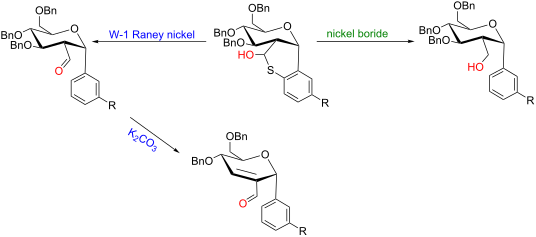
- starting material. Compared to the previously reported protocols, especially via opening of 1,2-cyclopropanated sugars [30][31], the current strategy is superior in stereoselectivity and amenability of the 2-C-branch for further manipulation. The synthetic application of the 2-carbaldehyde of the aryl-C


3α,5α-Cyclocholestan-6β-yl ethers as donors of the cholesterol moiety for the electrochemical synthesis of cholesterol glycoconjugates
Beilstein J. Org. Chem. 2015, 11, 162–168, doi:10.3762/bjoc.11.16
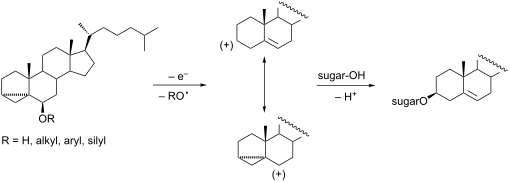
- leads to sterol glycoconjugates. Initially, the reaction of cholesterol (1) with various sugars was studied. During anodic oxidation of cholesterol in dichloromethane (the choice of solvent is crucial as the reaction course may be different in other solvents) [1], splitting of the carbon–oxygen bond in


Release of β-galactosidase from poloxamine/α-cyclodextrin hydrogels
Beilstein J. Org. Chem. 2014, 10, 3127–3135, doi:10.3762/bjoc.10.330
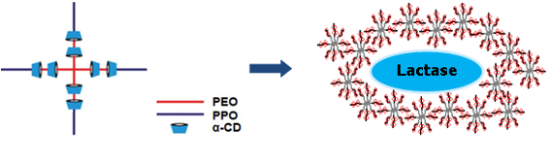
- group. When the galactosyl acceptor is water, a galactose molecule is produced and the hydrolysis of lactose occurs. However, this transfer can be performed onto other acceptors such as sugars, yielding oligosaccharides through a transglycosylation mechanism [5]. Hydrogels are 3D networks capable of


Enantioselective synthesis of polyhydroxyindolizidinone and quinolizidinone derivatives from a common precursor
Beilstein J. Org. Chem. 2014, 10, 3104–3110, doi:10.3762/bjoc.10.327
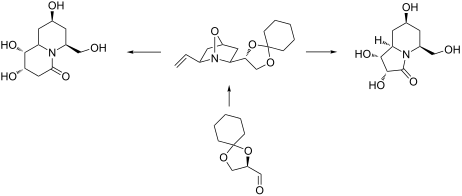
- complement to those existing in the literature. The prepared compounds may also prove to be biologically important. Selected polyhydroxyindolizidine and quinolizidines of importance. Target bicyclic imino sugars Ia and Ib from a common intermediate IV. Selected nOe correlations (A) and coupling constants (B


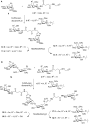
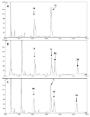
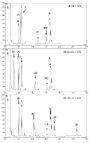
Synthesis of divalent ligands of β-thio- and β-N-galactopyranosides and related lactosides and their evaluation as substrates and inhibitors of Trypanosoma cruzi trans-sialidase
Beilstein J. Org. Chem. 2014, 10, 3073–3086, doi:10.3762/bjoc.10.324
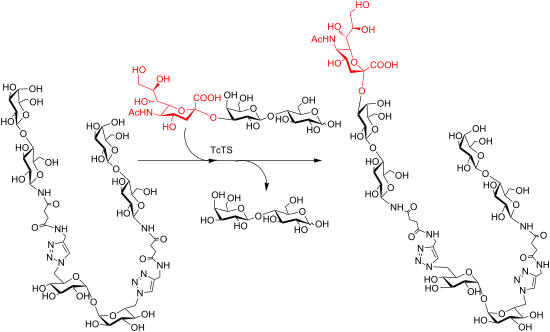
- [32][33]. In the present work, we selected thioglycosidic and N-glycosidic bonds to link the acceptor sugars to a platform by click chemistry, taking into consideration that they are highly resistant to enzymatic hydrolysis [34][35]. We have previously described the synthesis of multivalent β




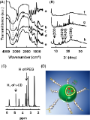
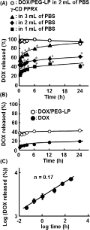
Preparation and evaluation of cyclodextrin polypseudorotaxane with PEGylated liposome as a sustained release drug carrier
Beilstein J. Org. Chem. 2014, 10, 2756–2764, doi:10.3762/bjoc.10.292
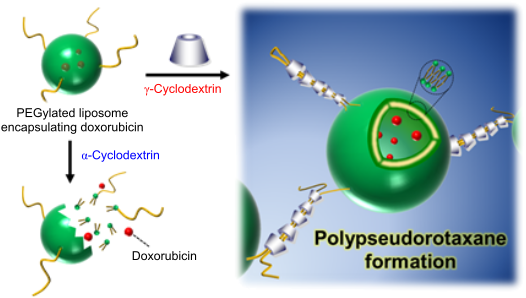
- various targeting-ligands such as antibodies, sugars and folic acid to LPs [30][31][32]. Recently, stimulus responsive LPs such as bubble LPs, pH responsive LPs and thermoresponsive LPs have been developed as smart drug carriers [33][34][35]. PEGylated LP (PEG-LP) is one of the most popular LP products