


Search results
Search for "Sonogashira" in Full Text gives 219 result(s) in Beilstein Journal of Organic Chemistry. Showing first 200.
Synthesis and characterization of fluorinated azadipyrromethene complexes as acceptors for organic photovoltaics
Beilstein J. Org. Chem. 2016, 12, 1925–1938, doi:10.3762/bjoc.12.182
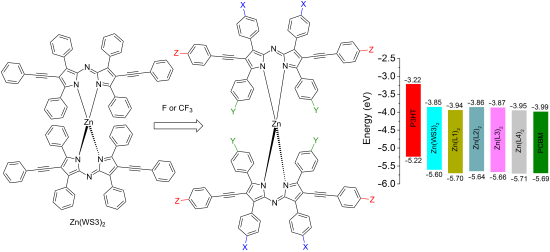
- -phenylacetylene analogs afforded the WS3 derivatives in good yield (Scheme 1). We chose to utilize Stille coupling instead of Sonogashira coupling because we had previously found that this method gives higher yields for installing phenylethynyl pyrrolic substituents [9]. The fluorinated tributyltinphenylacetylene




Practical synthetic strategies towards lipophilic 6-iodotetrahydroquinolines and -dihydroquinolines
Beilstein J. Org. Chem. 2016, 12, 1851–1862, doi:10.3762/bjoc.12.174
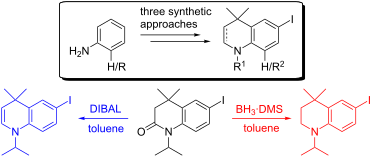
- literature [13]. An initial investigation with the corresponding bromides indicated that these were unreactive towards many cross-coupling methodologies, presumably due to the highly electron-rich arene [14]. Reactions such as the Sonogashira coupling, for example, often required high catalyst loadings


Multicomponent reactions: A simple and efficient route to heterocyclic phosphonates
Beilstein J. Org. Chem. 2016, 12, 1269–1301, doi:10.3762/bjoc.12.121
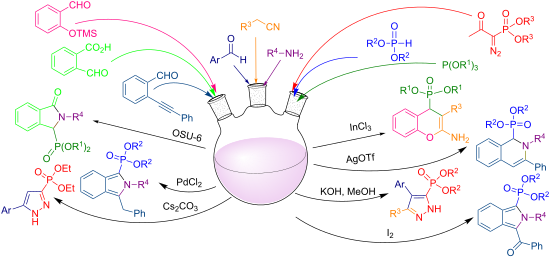
- one-pot reaction of 2-bromobenzaldehydes 169, alkynes 170, amines 171, and diethyl phosphonate under multicatalytic conditions including palladium and copper salts (Scheme 37) [75]. This process presumably involves a sequential Sonogashira coupling/cyclization-nucleophilic addition reaction, which is


Synthesis of highly functionalized 2,2'-bipyridines by cyclocondensation of β-ketoenamides – scope and limitations
Beilstein J. Org. Chem. 2016, 12, 1170–1177, doi:10.3762/bjoc.12.112
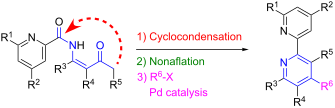
- -nonaflation employing nonafluorobutanesulfonyl fluoride provided the expected 4-nonafloxy-substituted bipyridine derivatives 5a–g in moderate to good overall yields. The bipyridyl nonaflates are excellent precursors for palladium-catalyzed reactions as demonstrated by representative Suzuki and Sonogashira
- conditions (Scheme 6). The untouched chloro substituent in the second pyridine ring was then replaced by another aryl substituent leading to product 12 in 54% yield. Alternatively, a Sonogashira reaction with (cyclopropyl)ethyne transformed intermediate 11 into the alkynyl-substituted 2,2´-bipyridine


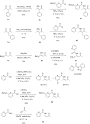


Gold-catalyzed direct alkynylation of tryptophan in peptides using TIPS-EBX
Beilstein J. Org. Chem. 2016, 12, 745–749, doi:10.3762/bjoc.12.74
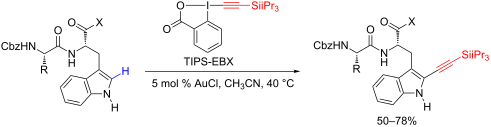
- the Sonogashira reaction, which requires modified non-natural amino acids [32][33]. In 2013, our group reported the alkynylation of thiols using the hypervalent iodine reagent TIPS-EBX (1a, 1-[(triisopropylsilyl)ethynyl]-1,2-benziodoxol-3(1H)-one) (Scheme 1A) [34]. The reaction was almost



Study on the synthesis of the cyclopenta[f]indole core of raputindole A
Beilstein J. Org. Chem. 2016, 12, 334–342, doi:10.3762/bjoc.12.36

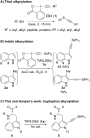
- included the second indole moiety of raputindole A (1). Boc protection of 6-iodoindole (2) [35], Sonogashira reaction of 3 with TMS-acetylene, and desilylation gave the N-protected alkynylindole 4 in excellent yield (Scheme 2). Boc-iodoindole 3 was also the precursor of the coupling partner, ketone 6
- %, three steps, Scheme 3). Sonogashira coupling occurred preferably at the iodinated 6-position affording 6-alkynylindole 20 after desilylation (56%). The reaction with ketone 6 after magnesiation led to propargylic alcohol 23 (50%). Interestingly, the Meyer–Schuster rearrangement of triflated alkyne 23 to
- %) was synthesized by Sonogashira coupling of N-TIPS-6-iodoindoline (39) and 42. Conversion of 43 to the (Z)-allylic alcohol 44 by modified (K2CO3) Lindlar hydrogenation (47%) followed. Treatment of 44 with SnCl4 in DCM afforded cyclopenta[f]indoline 45, albeit in the rather disappointing yield of 11%. A




Hydroquinone–pyrrole dyads with varied linkers
Beilstein J. Org. Chem. 2016, 12, 89–96, doi:10.3762/bjoc.12.10
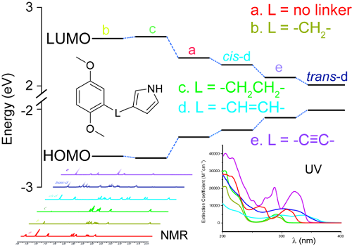
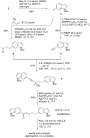
- Sonogashira coupling reaction (Scheme 3). Thus, 2,5-dimethoxyphenyl bromide (8) was converted to ((2,5-dimethoxyphenyl)ethynyl)trimethylsilane (9), which was desilylated by addition of NaOH (aq) to give 2-ethynyl-1,4-dimethoxybenzene (10). Sonogashira conditions were as described by Erdélyi et al. using
- microwave heating [22], allowing the reaction to be completed in half an hour with 95% yield. A second Sonogashira reaction of 10 with 3-iodo-1-(triisopropylsilyl)-1H-pyrrole afforded the protected pyrrole derivative 4d. For this second Sonogashira reaction, these conditions, when attempting to couple 10 to


N-Methylphthalimide-substituted benzimidazolium salts and PEPPSI Pd–NHC complexes: synthesis, characterization and catalytic activity in carbon–carbon bond-forming reactions
Beilstein J. Org. Chem. 2016, 12, 81–88, doi:10.3762/bjoc.12.9
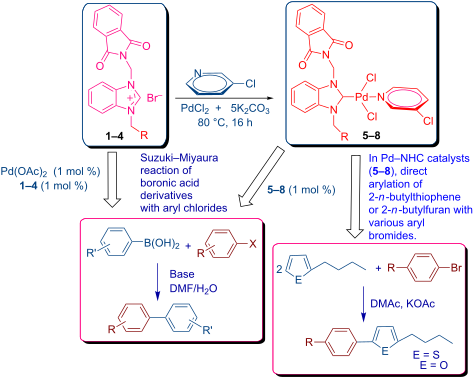
- complexes have been used in different coupling reactions such as Mizoroki–Heck cross-coupling [22][23], Suzuki–Miyaura cross-coupling [24][25], Sonogashira [26] and arylation reactions [27]. There are suitable precatalyst scaffolds, which were developed by Nolan [28], Organ [21] and Buchwald [29]. To find


Solving the puzzling competition of the thermal C2–C6 vs Myers–Saito cyclization of enyne-carbodiimides
Beilstein J. Org. Chem. 2016, 12, 43–49, doi:10.3762/bjoc.12.6
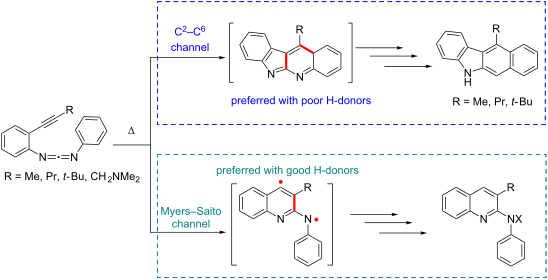
- in the Myers–Saito pathway. The synthetic strategy (Scheme 3) was to first prepare carbodiimide 10 [24] according to a literature procedure. In the next step, a Sonogashira coupling between 10 and N,N-dimethylprop-2-yn-1-amine afforded the desired enyne-carbodiimide 11 in 24% yield. Thermolysis of 11


Asymmetric 1,4-bis(ethynyl)bicyclo[2.2.2]octane rotators via monocarbinol functionalization. Ready access to polyrotors
Beilstein J. Org. Chem. 2015, 11, 1881–1885, doi:10.3762/bjoc.11.202
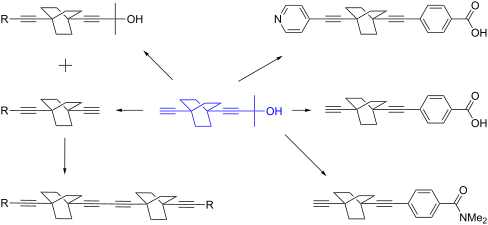
- variety of functionalization sequences of BCO rotators by performing nucleophilic reactions on the terminal alkyne [16] as well as Sonogashira coupling reactions [17]. One way to synthesize 1 is via a catalytic reaction to achieve the deprotection of a single 2-methyl-3-butyn-2-ol and transform the
- or 8 by Sonogashira coupling reactions (Scheme 4). Route 1 was preferred on account of higher yields. The ester function is necessary to purify the intermediate 13 and isolate 14 with excellent purity. These results demonstrate the viability of our approach of the desymmetrization of 1,4-bis(ethynyl




Polythiophene and oligothiophene systems modified by TTF electroactive units for organic electronics
Beilstein J. Org. Chem. 2015, 11, 1749–1766, doi:10.3762/bjoc.11.191
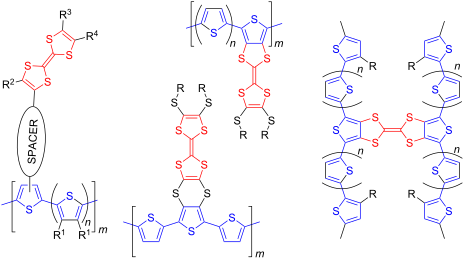
- polymer 1d, which was obtained by Sonogashira coupling of 1b with 1e and exhibited a partial solubility in THF with Mw = 610000 Da (THF soluble fraction) [43] (Scheme 1). Polymer properties in the solid state are hugely important for organic electronics applications, with the electronic properties of




SmI2-mediated dimerization of indolylbutenones and synthesis of the myxobacterial natural product indiacen B
Beilstein J. Org. Chem. 2015, 11, 1700–1706, doi:10.3762/bjoc.11.184
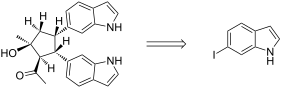
- -configuration were formed by SmI2-mediated reductive dimerization of a 4-(indol-6-yl)butenone, obtained by Heck reaction. The two indolyl units appear to chelate Sm(II)/(III) leading to a gauche-type arrangement at the newly formed bond between the two β-carbons. Through a sequence of Sonogashira cross coupling
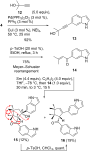
- Nicolaou and Procter [31][32]. The pattern of geometrical [3 + 2] cycloaddition was also obtained with inverted enone moieties. 6-Prenoylindole (14) was synthesized in two steps from 6-iodoindole (4) by Sonogashira coupling with propargylic alcohol 12 and subsequent Meyer–Schuster rearrangement [33





Star-shaped tetrathiafulvalene oligomers towards the construction of conducting supramolecular assembly
Beilstein J. Org. Chem. 2015, 11, 1596–1613, doi:10.3762/bjoc.11.175
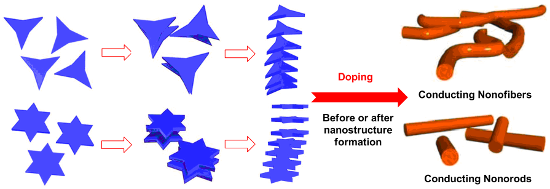
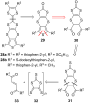
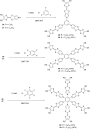
- in solution and in the solid state even in neutral state [18]. Compounds 22 and 23 were synthesized in good yields by Sonogashira coupling reaction of 1,3,5-triethynylbenzene with 20 and 1,3,5-triiodobenzene with 21, respectively (Scheme 1). X-ray analysis of 22 revealed the columnar structure, in
- )[12]annulenes 28 and 29 were pepared by Sonogashira coupling of 26 with 24 and 27 with 25 in 25 and 36% yields, respectively. For the synthesis of 30 and 31, cyclotrimerization of 24 and 25 with a stoichiometric amount of PdCl2(PPh3)2 and CuI in triethylamine–THF was employed to afford 30 and 31 in 32
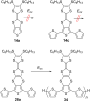
- cyclic conjugation and the interaction of the two TTF units in the neutral and cationic states, TTF-fused annulenes 33 [69] and radiannulenes 34 and 35 [70] were synthesized using a Sonogashira coupling in moderate yields (Figure 9). The thermodynamic study on the self-aggregation of tris(TTF)annulenes




Synthesis and spectroscopic properties of β-triazoloporphyrin–xanthone dyads
Beilstein J. Org. Chem. 2015, 11, 1434–1440, doi:10.3762/bjoc.11.155
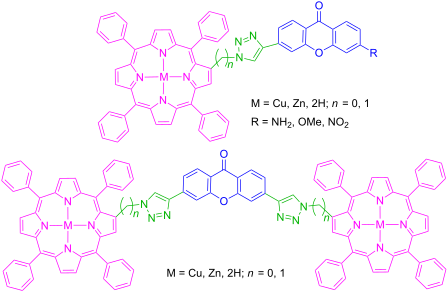
- -diethynylxanthen-9-one (11) was synthesized in three steps from 3,6-dihydroxyxanthen-9-one (8) as a starting material. The first step involved the reaction of xanthone (8) with triflic anhydride in CH2Cl2 containing pyridine at 0 °C to afford 3,6-di-OTf-xanthone [52] (9). Subsequent Sonogashira coupling with


Cross-metathesis reaction of α- and β-vinyl C-glycosides with alkenes
Beilstein J. Org. Chem. 2015, 11, 1392–1397, doi:10.3762/bjoc.11.150

- ][4][5][6][7][8][9][10][11][12][13]. Thus the ethyne moiety was used in [2 + 2 + 2] cyclotrimerization to yield aryl C-deoxyribosides [3] and in a Sonogashira reaction for the synthesis of butenolidyl C-deoxyribosides [4]. Substituted alkynyl C-deoxyribosides [5][10][11] were used in other types of


Selected synthetic strategies to cyclophanes
Beilstein J. Org. Chem. 2015, 11, 1274–1331, doi:10.3762/bjoc.11.142
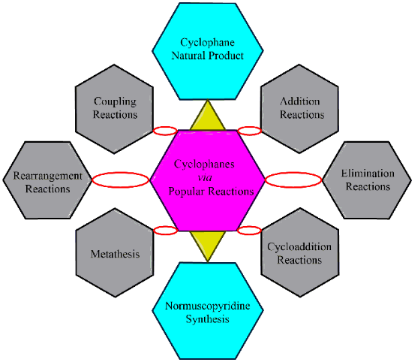
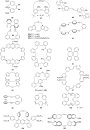
- followed by deoxygenation which finally gave the paracyclophane 108 (85%, Scheme 15). Pinacol coupling: Kanomata and co-workers [123] have reported the synthesis of the cyclophane 112 by using pinacol coupling [124] mediated by SmI2. A double Sonogashira reaction of 1,4-diiodobenzene (109) with 4-pentyn-1
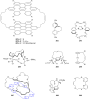
- moderate yield. RCM of the diene derived from the dialdehyde 111 afforded the macrocyclic cyclophane 113 as a less strained product (Scheme 16). Sonogashira coupling: Wegner and co-workers [125] have reported the synthesis of cyclophanes 122a–c via Sonogoshira coupling [126] (Scheme 17). To this end, the
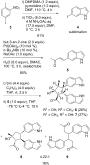
- –c with (3-cyanopropyl)dimethylsilyl chloride (CPDMSCl) (118). This protecting group was chosen to facilitate the separation of the mono- and diprotected products generated in this reaction. The two building blocks 116 and 119a–c were subsequently assembled via the Sonogashira reaction producing






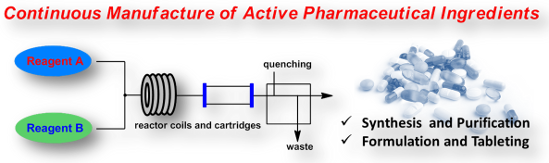
The synthesis of active pharmaceutical ingredients (APIs) using continuous flow chemistry
Beilstein J. Org. Chem. 2015, 11, 1194–1219, doi:10.3762/bjoc.11.134


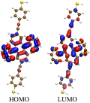
Single-molecule conductance of a chemically modified, π-extended tetrathiafulvalene and its charge-transfer complex with F4TCNQ
Beilstein J. Org. Chem. 2015, 11, 1068–1078, doi:10.3762/bjoc.11.120
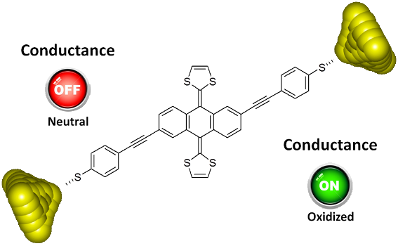
- calculations to understand its electrical transport properties. Results and Discussion Synthesis and characterization of molecular wire 5 The synthesis of the target molecule is shown in Scheme 1 and starts from the previously reported 2,6-diiodo-exTTF 1 [23]. Reaction of 1 under Sonogashira conditions (Pd(II
- groups in 3 is carried out through a second Sonogashira reaction. The coupling of 2,6-diethynyl-exTTF 3 with 1-acetylthio-4-iodobenzene (4), in the presence of Pd(II) and copper iodide and DIPEA in THF, led to the target molecule 5 in moderate yield (35%). Compound 4 was obtained in one step and with




Chiroptical properties of 1,3-diphenylallene-anchored tetrathiafulvalene and its polymer synthesis
Beilstein J. Org. Chem. 2015, 11, 972–979, doi:10.3762/bjoc.11.109
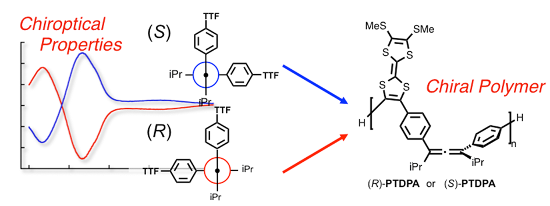
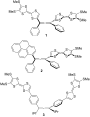
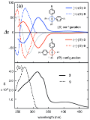
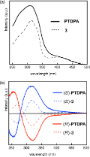
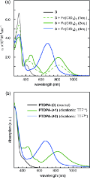
- process as shown in Scheme 1. Thus, starting with 1-(4-bromophenyl)-2-methylpropanone (4), which was prepared from bromobenzaldehyde (see Supporting Information File 1), which upon treatment with lithium acetylide at low temperature gave racemic propargyl alcohol 5 in 94% yield. Sonogashira coupling




Interactions between tetrathiafulvalene units in dimeric structures – the influence of cyclic cores
Beilstein J. Org. Chem. 2015, 11, 930–948, doi:10.3762/bjoc.11.104
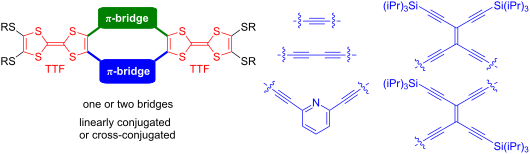
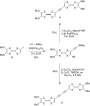
- conjugated buta-1,3-diynediyl bridge between the two TTFs. Results and Discussion Synthesis The synthesis of 4 and 5 was accomplished according to Scheme 1 starting from the known TTF-iodide 9, readily prepared from compound 3b [16]. A Sonogashira coupling with trimethylsilylacetylene gave 10 that after
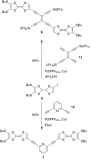
- desilylation was either subjected to a Sonogashira coupling with 9 to give 4 or to an oxidative Hay coupling to give 5 – using recently developed conditions where 4 Å molecular sieves were added to the reaction mixture to remove water [17]. Compounds 6 and 7 were prepared by treating 9 with either the trans
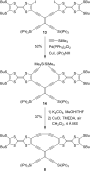
- -TEE 11 [18] or 2,6-diethynylpyridine 12 in Sonogashira coupling reactions (Scheme 2). The unsymmetrical radiaannulene 8 was prepared according to Scheme 3. The TEE-TTF derivative 13 [15] was reacted in a Sonogashira coupling with an excess of trimethylsilylacetylene to furnish the product 14. Removal






Gold-catalyzed formation of pyrrolo- and indolo-oxazin-1-one derivatives: The key structure of some marine natural products
Beilstein J. Org. Chem. 2015, 11, 897–905, doi:10.3762/bjoc.11.101

- and N-propargylindole-2-carboxylic acids 37, 41 and 45, which were synthesized by hydrolysis of the corresponding esters (Table 2). The Sonogashira cross-coupling reaction [56][57][58][59][60][61] was used for the synthesis of the desired starting materials 29 and 33. For the Sonogashira coupling


Discrete multiporphyrin pseudorotaxane assemblies from di- and tetravalent porphyrin building blocks
Beilstein J. Org. Chem. 2015, 11, 748–762, doi:10.3762/bjoc.11.85
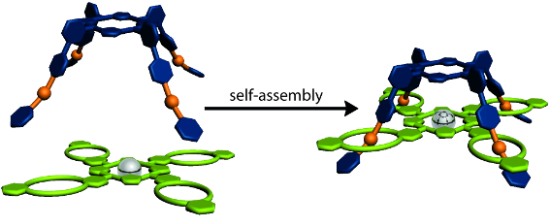
- benzylamine yielding amine 10, which was subsequently Boc-protected, then reacted with trimethylsilylacetylene in a Sonogashira cross-coupling followed by desilylation. Finally, the porphyrin cores 1 and 2 were combined with axle precursor 8 in another two and four-fold Sonogashira cross-coupling reaction





Self-assembly of heteroleptic dinuclear metallosupramolecular kites from multivalent ligands via social self-sorting
Beilstein J. Org. Chem. 2015, 11, 693–700, doi:10.3762/bjoc.11.79
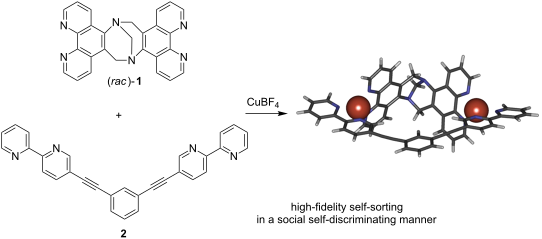
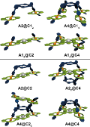
- commercially available 2-aminopyridine (4) (Scheme 4) following mostly literature-known protocols. The electrophilic iodination of aminopyridine 4 gave iodide 5 in good yield. Compound 5 was then subjected to a Sandmeyer-like chlorination to 6 which in turn was transformed in a Sonogashira reaction with
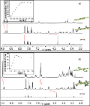
- alkyne 11 in 96% yield [28]. Finally, a two-fold Sonogashira reaction with 1,3-diiodobenzene afforded the desired bis(2,2’-bipyridine) ligand 2 in quantitative yield. Metal coordination After the successful synthesis we prepared a DMSO solution of copper(I) ions, added it to the ligands (rac)-1 and 2


Design, synthesis and photochemical properties of the first examples of iminosugar clusters based on fluorescent cores
Beilstein J. Org. Chem. 2015, 11, 659–667, doi:10.3762/bjoc.11.74
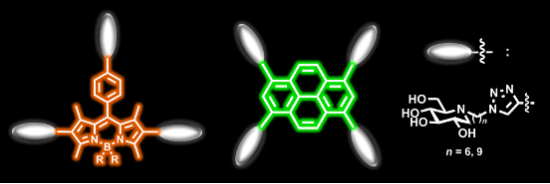
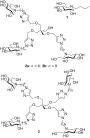
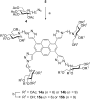
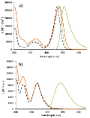
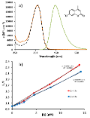
- function to yield the trimethylsilylacetylene derivatives 9 and 11 using standard Sonogashira–Hagihira cross-coupling reactions promoted by low valent palladium precursors [62]. Excellent yields were obtained for the trisubstituted derivatives (88 to 95%). Two diagnostic NMR signals of the poly(ethylene



Synthesis and chemosensing properties of cinnoline-containing poly(arylene ethynylene)s
Beilstein J. Org. Chem. 2015, 11, 373–384, doi:10.3762/bjoc.11.43
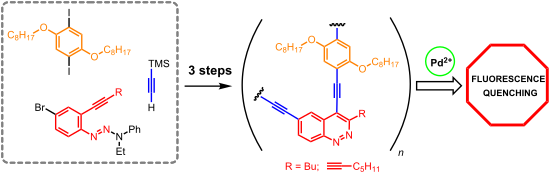
- ethynylene)s comprising a cinnoline core were prepared in high yields via a three-step methodology. A Richter-type cyclization of 2-ethynyl- and 2-(buta-1,3-diynyl)aryltriazenes was used for cinnoline ring formation, followed by a Sonogashira coupling for the introduction of trimethylsilylethynyl moieties
- and a sila-Sonogashira coupling as the polycondensation technique. The fluorescence of the cinnoline-containing polymers in THF was highly sensitive to quenching by Pd2+ ions. Keywords: cinnolines; fluorescence quenching; Pd2+ detection; poly(arylene ethynylene)s; Sonogashira coupling; Introduction
- -dibromocinnolines 4a,b (Table 1). Triazenes 3a,b were synthesized from 4-bromo-2-iodophenyltriazene 1 by the Sonogashira coupling [44][45] with hexyne (2a) and TMS-protected diacetylene 2b using conditions for the one-pot TMS group removal and the Sonogashira coupling developed recently [46]. The last reaction





