


Search results
Search for "cells" in Full Text gives 896 result(s) in Beilstein Journal of Organic Chemistry. Showing first 200.
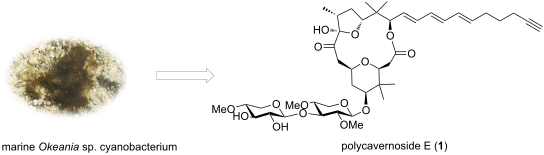
Isolation and structure determination of a new analog of polycavernosides from marine Okeania sp. cyanobacterium
Beilstein J. Org. Chem. 2024, 20, 645–652, doi:10.3762/bjoc.20.57
- , containing 50 μL of culture medium. Subsequently, 50 μL of a parasite suspension with a concentration of 4.0 × 10⁴ cells/mL was introduced into each well. Cultures were incubated for 69 h at 37 °C under a humidified 5% CO2 atmosphere. After this time, 10 μL of resazurin (12.5 mg resazurin (Sigma) dissolved
- in 100 mL phosphate-buffered saline) was added to each well. The plates were incubated for an additional 3 h. The plates were read in a SpectraMax Gemini XS microplate fluorescence scanner (Molecular Devices) using an excitation wavelength of 536 nm and an emission wavelength of 588 nm. WI-38 cells
- assay In a manner analogous to [7], WI-38 cells were cultured at 37 °C with 5% CO2 in DMEM (Nissui) supplemented with 10% heat-inactivated FBS, 100 units/mL penicillin, 100 μg/mL streptomycin, 0.25 μg/mL amphotericin, 300 μg/mL ʟ-glutamine, and 2.25 mg/mL NaHCO3. Cells were seeded at 4 × 10³ cells/well


Introduction of a human- and keyboard-friendly N-glycan nomenclature
Beilstein J. Org. Chem. 2024, 20, 607–620, doi:10.3762/bjoc.20.53
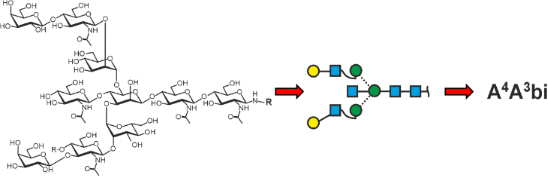
- strictly always in α1,6. If you only work with mammalian samples you may content yourself with this simplification. However, as insect cells and plants are of relevance as biotechnological expression systems for pharmaceutical glycoproteins, we must consider that here fucose may also be found in the α1,3
- “HNK-1” (from human natural killer cells) with sulfated glucuronic acid [47]. Annotating a structure like this requires some form of linear code and the addition of abbreviations for non-sugar substituents, in this case sulfate. Note that the hyphen binds the “su” to “Ga”, which in turn is hyphenated



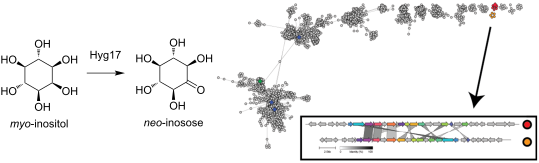
A myo-inositol dehydrogenase involved in aminocyclitol biosynthesis of hygromycin A
Beilstein J. Org. Chem. 2024, 20, 589–596, doi:10.3762/bjoc.20.51
- then induced with 50 µL of 20 mg mL−1 thiostrepton and grown for another 24 h at 30 °C while shaking at 200 rpm. Cells were then harvested by centrifugation, resuspended in binding buffer (500 mM NaCl, 20 mM Tris pH8.0) and disrupted by sonication using a Branson Sonifier 450 (5 rounds of 3 s/3 s on


Synthesis of photo- and ionochromic N-acylated 2-(aminomethylene)benzo[b]thiophene-3(2Н)-ones with a terminal phenanthroline group
Beilstein J. Org. Chem. 2024, 20, 552–560, doi:10.3762/bjoc.20.47
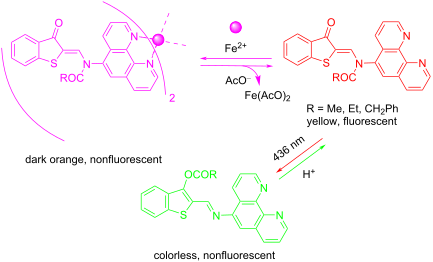
- cells (l = 1 cm, V = 2 mL). Fluorescence quantum yields were determined relatively to (Z)-N-((3-oxobenzo[b]thiophen-2(3H)-ylidene)methyl)-N-phenylacetamide as a standard (φfl = 0.16 ± 0.005) [14][33]. Stock solutions of compounds 2a–c (c 1.0 × 10⁻⁴ mol⋅L−1) and metal perchlorates (c 2.0 × 10⁻⁴ mol⋅L−1


Synthesis and biological profile of 2,3-dihydro[1,3]thiazolo[4,5-b]pyridines, a novel class of acyl-ACP thioesterase inhibitors
Beilstein J. Org. Chem. 2024, 20, 540–551, doi:10.3762/bjoc.20.46
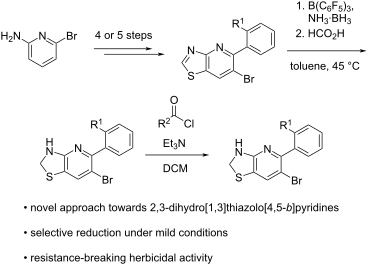
- A protein was expressed in E. coli BL21Star(DE3) cells. 5 mL of an overnight culture of E. coli cells grown in LB medium with 100 µg/mL carbenicillin were used to inoculate 0.5 L of autoinduction medium containing 100 µg/mL carbenicillin [28]. The bacteria were grown at 37 °C and 120 rpm for about


Switchable molecular tweezers: design and applications
Beilstein J. Org. Chem. 2024, 20, 504–539, doi:10.3762/bjoc.20.45





Development of a chemical scaffold for inhibiting nonribosomal peptide synthetases in live bacterial cells
Beilstein J. Org. Chem. 2024, 20, 445–451, doi:10.3762/bjoc.20.39
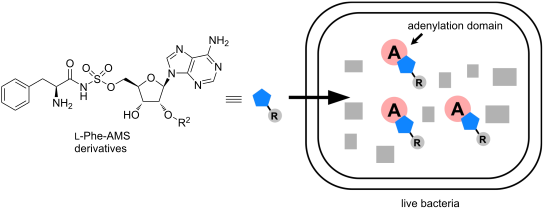
- probes (AA-AMS-BPyne) can selectively label the A-domains corresponding to the amino acid of the ligand in both recombinant enzymes and proteomes. We recently reported that these probes can be used to label the A-domains of endogenous NRPSs in live bacterial cells [17][18][19]. The intracellular labeling
- purified recombinant GrsA, inhibitor 5 moderately inhibited labeling at 100 µM. Finally, we investigated whether the inhibitors could penetrate cells and inhibit intracellular GrsA labeling in A. miglanus ATCC 9999. In this study, A. migulanus ATCC 9999 cells were grown at 37 °C in YPG medium for 24 h
- µM), suggesting that these inhibitors can penetrate cells (Figure 4c). Notably, inhibitors 1 and 7 efficiently inhibited the labeling of GrsA at 10 µM. The incorporation of the nitrile group at the 2’-OH group of the adenosine skeleton is expected to provide chemical properties that would allow the


Green and sustainable approaches for the Friedel–Crafts reaction between aldehydes and indoles
Beilstein J. Org. Chem. 2024, 20, 379–426, doi:10.3762/bjoc.20.36
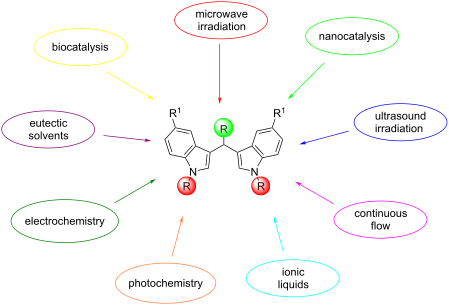
- cruciferous vegetables, as hydrolysis products from the metabolism of glucosinolates [1]. In 2017, Müller and her research team showcased the ability of BIMs to operate as anti-inflammatory drugs by acting as GPR84 agonists [2]. GPR84 is a protein-coupled receptor found in immune cells, which regulates a
- number of inflammatory processes, which can lead to inflammatory bowel disease or Alzheimer’s disease. Therefore, GPR84 agonists are used as medicine for the treatment of various inflammatory diseases, but they have been also linked to the reduction of leukemia cells, since the continuous expression of
- reduction in the concentration of these cytokines, as well as, increased intestinal permeability and improved expression of tight junction proteins that control the polarity of cells when using DIM in Caco-2 human cells [3]. BIMs have also been linked with the therapy of various cancers with one of their




Facile approach to N,O,S-heteropentacycles via condensation of sterically crowded 3H-phenoxazin-3-one with ortho-substituted anilines
Beilstein J. Org. Chem. 2024, 20, 336–345, doi:10.3762/bjoc.20.34
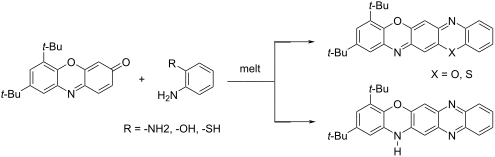
- probes, organic light-emitting diodes, and organic solar cells [2][7][8][9]. The principal way for the preparation of these heterocycles involves the coupling of 3H-phenoxazin-3-ones with variously functionalized aromatic amines. This is followed by the cyclization of the initially formed adducts [10][11
- potential for testing as potential donors for organic solar cells or as dye sensitizers for dye-sensitized solar cells [24][25]. Experimental All reagents and solvents were purchased from commercial sources (Aldrich) and used without additional purification. The compounds were characterized by 1H, 13C, and
- 6a,b) and c = 2⋅10−6 M (compound 10c) in toluene solutions with a Varian Cary Eclipse fluorescence spectrophotometer. UV–vis and fluorescence spectra were recorded using standard 1 cm quartz cells at room temperature. Toluene of spectroscopic grade (Aldrich) was used to prepare the solutions. The


Elucidating the glycan-binding specificity and structure of Cucumis melo agglutinin, a new R-type lectin
Beilstein J. Org. Chem. 2024, 20, 306–320, doi:10.3762/bjoc.20.31
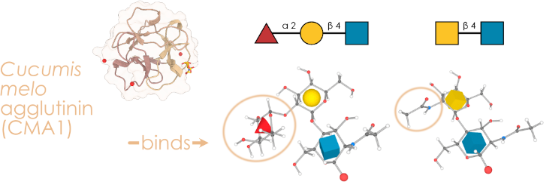
- development, immunity, and stress signaling [2][3]. In light of the burgeoning interest in the intersection of glycobiology and biomedicine, the characterization of new lectins has carved out a significant niche in scientific research. Specifically, lectins have emerged as invaluable tools for staining cells
- and tissues, thereby offering insights into cellular heterogeneity and function. For instance, the use of wheat germ agglutinin (WGA) and concanavalin A (ConA) has been instrumental in selectively staining cells based on their glycan expression [4], including single-cell approaches [5][6]. In the
- realm of therapeutics, lectins such as mistletoe lectins have shown promise in cancer therapy, by virtue of their ability to induce apoptosis in malignant cells [7]. Further, the creation of lectin arrays [8][9], which employ a diverse set of characterized lectins, has enabled high-throughput glycan


Synthesis of π-conjugated polycyclic compounds by late-stage extrusion of chalcogen fragments
Beilstein J. Org. Chem. 2024, 20, 287–305, doi:10.3762/bjoc.20.30
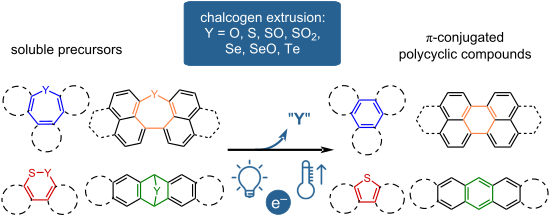
- -conjugated polycyclic compounds appeared as particularly valuable in this field. Indeed, many of them demonstrated excellent performances as active components of electronic devices such as organic field effect transistors (OFETs), organic photovoltaic cells (OPVs) and organic light-emitting diodes (OLEDs




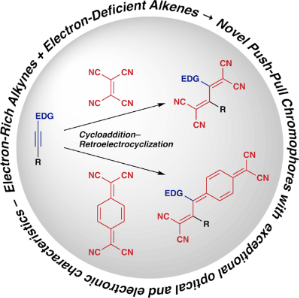
Perspectives on push–pull chromophores derived from click-type [2 + 2] cycloaddition–retroelectrocyclization reactions of electron-rich alkynes and electron-deficient alkenes
Beilstein J. Org. Chem. 2024, 20, 125–154, doi:10.3762/bjoc.20.13


Photoinduced in situ generation of DNA-targeting ligands: DNA-binding and DNA-photodamaging properties of benzo[c]quinolizinium ions
Beilstein J. Org. Chem. 2024, 20, 101–117, doi:10.3762/bjoc.20.11
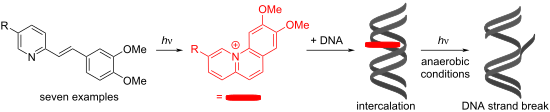
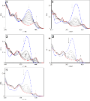
- , unlike type-II photosensitizers. In fact, the representative compound 3f is a more efficient DNA-damaging photosensitizer under anaerobic conditions, which may be an advantage for applications in hypoxic cancer cells. Preliminary investigations of the mechanism of the DNA damage revealed the involvement




Cycloaddition reactions of heterocyclic azides with 2-cyanoacetamidines as a new route to C,N-diheteroarylcarbamidines
Beilstein J. Org. Chem. 2024, 20, 17–24, doi:10.3762/bjoc.20.3
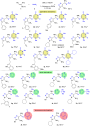
- cells within the concentration range. This indicates the low cytotoxicity of these compounds. Meanwhile, compounds 3m,l are characterized by a borderline inhibition of cell culture viability. Attention is drawn to the increased toxic effect of 3m on cells of tumor origin, in comparison with normal human
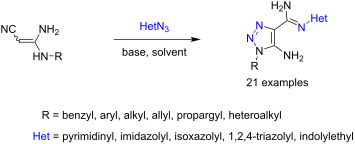
- embryonic cells. Identification of the cause of the registered selective toxicity of the tested compounds requires further study. Conclusion Thus, we have introduced an effective base-catalyzed tandem reaction including a Cornforth-type rearrangement of 1-heteroaryl-1,2,3-triazole-4-carboximidamides and
- -substituted-1,2,3-triazoles, widening the synthetic applications of both azides and derivatives of acrylonitrile. Some of the prepared compounds exhibited a mild toxic effect on tumor cells in comparison with normal human embryonic cells. Experimental 3,3-Diaminoacrylonitriles 1b and 1f were synthesized from



Identification of the p-coumaric acid biosynthetic gene cluster in Kutzneria albida: insights into the diazotization-dependent deamination pathway
Beilstein J. Org. Chem. 2024, 20, 1–11, doi:10.3762/bjoc.20.1
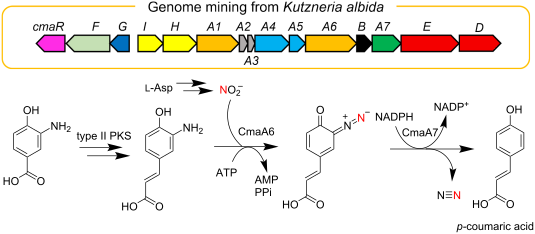
- NAD(P)-dependent oxidoreductase, suggesting that the denitrification activity of AvaA7 is not an artifact and that AvaA7-catalyzed denitrification is a genuine reaction in bacterial cells (Figure S6 in Supporting Information File 1 and Table 2). Discussion In the present study, we showed that the cma
- OD600 reached 0.8. After the culture was cooled on ice for 30 min, isopropyl β-ᴅ-thiogalactopyranoside (IPTG) was added to the culture (for CmaA1 and CmaA3 expression, final concentration was 100 µM; for CmaA6 expression, IPTG was not added) and incubated with shaking (150 rpm) at 15 °C for 20 h. Cells
- were harvested by centrifugation and suspended in lysis buffer (20 mM HEPES-NaOH, 10% glycerol, and 200 mM NaCl2; pH 8.0). The cells were disrupted by sonication on ice, and cell debris was removed by centrifugation. The recombinant protein was purified using His60 Ni Superflow Resin (TaKaRa Bio Inc


Long oligodeoxynucleotides: chemical synthesis, isolation via catching-by-polymerization, verification via sequencing, and gene expression demonstration
Beilstein J. Org. Chem. 2023, 19, 1957–1965, doi:10.3762/bjoc.19.146

- ™4Blunt-TOPO™ vector (step 4, Figure 1), and transformed into NEB® 5-alpha chemically competent cells (step 5). The transformed cells were plated on agar plates containing kanamycin and grown overnight. For each construct, the insert of 32 colonies was amplified with colony PCR using vector M13 forward
- full-length 800 bp GFP gene construct was transformed into NEB® 5-alpha chemically competent cells (step 7', Figure 1). The transformed cells were plated on kanamycin plates and grown at 37 °C overnight. Colony PCR was carried out over selected colonies, and the PCR products were analyzed with agarose
- alignments). Plasmid DNAs from these confirmed clones were used for GFP expression experiments described below. The authentic 800 bp dsODN GFP gene from commercial source was also assembled into the pF1k vector using Gibson assembly and transformed into NEB® 5-alpha cells. Colony PCR and agarose gel


Thienothiophene-based organic light-emitting diode: synthesis, photophysical properties and application
Beilstein J. Org. Chem. 2023, 19, 1849–1857, doi:10.3762/bjoc.19.137
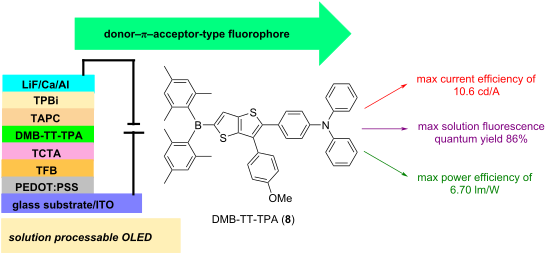
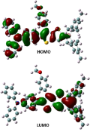
- ) [14][15][16][17][18][19]. These compounds are electron-rich, flat and electron-delocalized systems, properties that make them promising materials for the construction of conjugated energy-based semiconductors for OLEDs [20][21][22][23], perovskite solar cells [24][25], organic field-effect transistors


Synthetic approach to 2-alkyl-4-quinolones and 2-alkyl-4-quinolone-3-carboxamides based on common β-keto amide precursors
Beilstein J. Org. Chem. 2023, 19, 1804–1810, doi:10.3762/bjoc.19.132
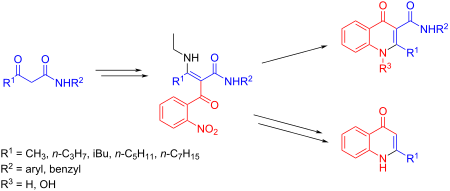
- monoamine oxidase [14], cytotoxicity against cancer cell lines [15], activity against nuclear factor of activated T cells [16], and anti-inflammatory activity [17]. Alkaloids with similar structure and anti-inflammatory activity have been isolated from another member of the Rutaceae family – Zanthoxylum


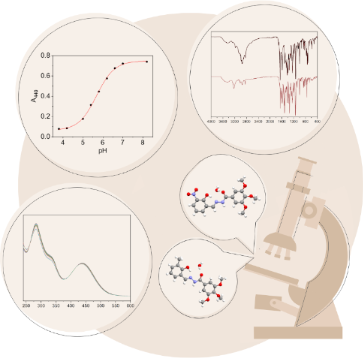
Effects of the aldehyde-derived ring substituent on the properties of two new bioinspired trimethoxybenzoylhydrazones: methyl vs nitro groups
Beilstein J. Org. Chem. 2023, 19, 1713–1727, doi:10.3762/bjoc.19.125
- ]. The study also found that those coordination compounds were selective towards abnormal cells, exhibiting lower toxicity for healthy human hepatocytes. On the other hand, an important development in cancer research is the use of physiological metal ion complexes, which afford more biocompatibility and




Quinoxaline derivatives as attractive electron-transporting materials
Beilstein J. Org. Chem. 2023, 19, 1694–1712, doi:10.3762/bjoc.19.124
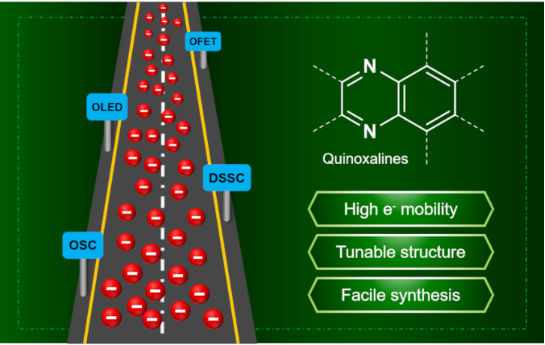
- Abstract This review article provides a comprehensive overview of recent advancements in electron transport materials derived from quinoxaline, along with their applications in various electronic devices. We focus on their utilization in organic solar cells (OSCs), dye-sensitized solar cells (DSSCs
- processability compared to their inorganic counterparts [1][2]. Charge transport in organic semiconductors is a fundamental aspect that governs the performance and functionality of various organic semiconductor devices, such as organic solar cells (OSCs), organic field-effect transistors (OFETs), organic light
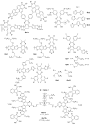
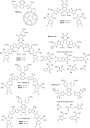
- conversion efficiencies (PCEs) of over 12% in polymer solar cells (PCS) when paired with the IDT acceptor [15], over 16% with the Y6 acceptor [16][17] and a champion PCE of 21.2% in perovskite solar cells [18]. This outstanding performance is attributed to the versatile and tunable nature of the Qx moiety




A series of perylene diimide cathode interlayer materials for green solvent processing in conventional organic photovoltaics
Beilstein J. Org. Chem. 2023, 19, 1620–1629, doi:10.3762/bjoc.19.119
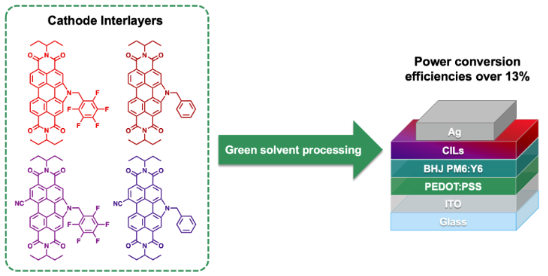
- no barriers between the active layer and the CIL interface, indicating efficient charge extractions. In addition, to further confirm the charge extraction and recombination, the PAIOS (platform for all-in-one characterization of solar cells) tool from Fluxim was used to measure transient photocurrent
- functions of ITO, PEDOT:PSS, and Ag [30], as well as the energy levels of PM6, Y6, and the energy level range for the CILs used in this study. a) Current density-voltage (I–V) characterization under illumination, b) spectral response of the solar cells, c) I–V characteristics under dark, d) photocurrent vs


Sulfur-containing spiroketals from Breynia disticha and evaluations of their anti-inflammatory effect
Beilstein J. Org. Chem. 2023, 19, 1604–1614, doi:10.3762/bjoc.19.117
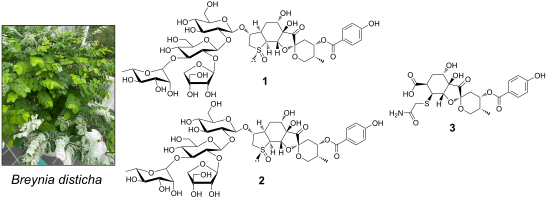
- effects of the isolated compounds were evaluated based on the mRNA levels of proinflammatory cytokines in lipopolysaccharide (LPS)-stimulated RAW 264.7 murine macrophage cells. Compounds 1, 2, 6, and 7 inhibited the increase in interleukin (IL)-1β and IL-6 mRNA levels stimulated by LPS. Moreover, the most
- potent compound 7 was found to significantly inhibit the production of IL-1β and IL-6 proteins, as revealed by the analysis of culture supernatants. Keywords: anti-inflammatory; Breynia disticha; RAW 264.7 cells; sesquiterpenoids; sulfur-containing compounds; Introduction Breynia disticha J.R.Forst
- compounds 1–3 and known spiroketal 4, which has not been fully characterized in previous reports [13]. Furthermore, the anti-inflammatory effects of compounds 1–3, 6, and 7 are evaluated using RAW 264.7 murine macrophage cells. Results and Discussion B. disticha roots were extracted with methanol (MeOH



Cyclodextrins permeabilize DPPC liposome membranes: a focus on cholesterol content, cyclodextrin type, and concentration
Beilstein J. Org. Chem. 2023, 19, 1570–1579, doi:10.3762/bjoc.19.115
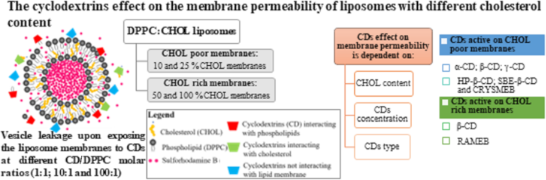
- can subsequently achieve the highest solubilization of CHOL [27], while the low-substituted derivatives (CRYSMEB in our case) were less cytotoxic and maintained the integrity of endothelial cells assuming a lower affinity to CHOL membrane compared to the other derivatives [23]. Furthermore, the


Synthesis and biological evaluation of Argemone mexicana-inspired antimicrobials
Beilstein J. Org. Chem. 2023, 19, 1511–1524, doi:10.3762/bjoc.19.108
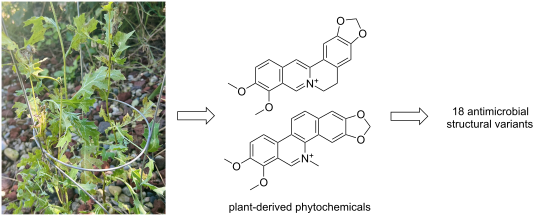
- cells [9]. The quantification of c-MYC (oncogene) and APC (tumor suppressor) mRNA levels helped begin to elucidate how the A. mexicana root methanol extract may be affecting colon cancer cells. After chromatographic separations, UPLC–MS, and subsequent nuclear magnetic resonance analysis of the root and
- markedly less potent towards fungi. Though antifungal properties are desirable, selectivity for prokaryotic over eukaryotic cells would be beneficial for a selective antibacterial treatment. A two-tailed T-test analysis (with significance set at P ≤ 0.05). revealed that these differences in activity for
- , though it may be partially responsible for why variant B14 was significantly more potent. Having preliminarily explored the antimicrobial activity of these variants, we next turned to investigating their effects on tumor cells, given our previous research had identified antitumor properties for the crude


Visible-light-induced nickel-catalyzed α-hydroxytrifluoroethylation of alkyl carboxylic acids: Access to trifluoromethyl alkyl acyloins
Beilstein J. Org. Chem. 2023, 19, 1372–1378, doi:10.3762/bjoc.19.98
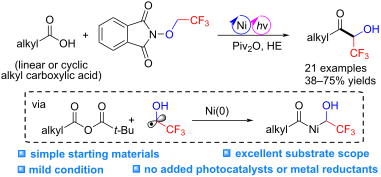
- experiments showed that trifluoromethyl acyloins can selectively induce apoptosis in human oral cancer cells [22][23] and have therefore attracted much more attention. However, trifluoromethyl acyloins were not widely used due to the challenge associated with their synthesis. Certain progress has been made in





