


Search results
Search for "gas phase" in Full Text gives 247 result(s) in Beilstein Journal of Organic Chemistry. Showing first 200.
New electroactive asymmetrical chalcones and therefrom derived 2-amino- / 2-(1H-pyrrol-1-yl)pyrimidines, containing an N-[ω-(4-methoxyphenoxy)alkyl]carbazole fragment: synthesis, optical and electrochemical properties
Beilstein J. Org. Chem. 2017, 13, 1583–1595, doi:10.3762/bjoc.13.158
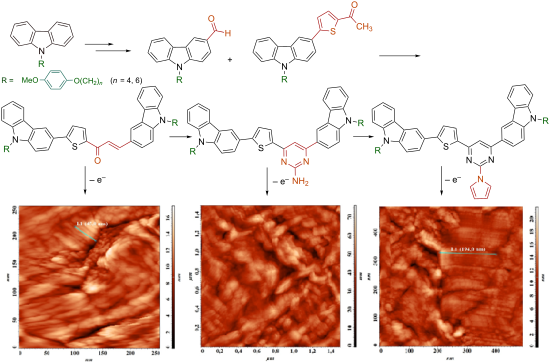
- comparison with the ground state takes place, as evidenced by the quantum-chemical calculations carried out with the help of the Fire Fly package [30][31] on a PGU Tesla supercomputer. All calculations of the dipole moments, HOMO and LUMO energies were performed on the B3LYP/6-31G* level for the gas phase
- -carbaldehydes 2a,b and 1-(5-arylthiophen-2-yl)ethanones 5a,b. Synthesis of quadrupolar chromophores 6a,b−8a,b. Physicochemical characteristics of compounds 2a,b−8a,b. The values of the dipole moments in the ground (μ0) and excited (μ*) states, the frontier orbitals energies and the absorption maxima in the gas
- phase and in various solvents calculated by B3LYP/6-31G* and TD-B3LYP/6-31G* methods for compound 6a. Electrochemical characteristics of compounds 6–8 versus Fc/Fc+. Supporting Information Supporting Information File 134: Synthetic procedures and characterization data for all compounds 1–8 (a,b


Correlation of surface pressure and hue of planarizable push–pull chromophores at the air/water interface
Beilstein J. Org. Chem. 2017, 13, 1099–1105, doi:10.3762/bjoc.13.109
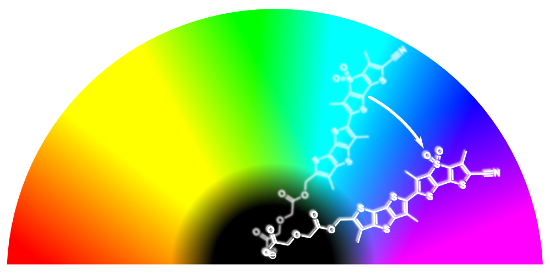
- values as before depicting a stably organized monolayer film with possible long-range order. The area per molecule of about 38 Å2 is comparable to that observed for cholesterol monolayers [21][22]. Simulation The molecular geometry of the mechanosensitive flipper probe was simulated in the gas phase at
- . Computational simulations Geometry optimization, as well as frequency calculations for the flipper mechanophore, were performed in the gas phase at the density functional level of theory with the Gaussian 03 program package [35] using the hybrid B3LYP functional [36] in conjunction with the LanL2DZ basis set
- groups (h) and b) measuring the distance d between centroids of planes defined by the outmost external atoms with A = π(d/2)2. In the gas phase optimized geometry d = 6.88 Å giving A = 37.2 Å2. However, by assuming free rotation around the C–C bond connecting the two dithienothiophene units a maximum


Conformational study of L-methionine and L-cysteine derivatives through quantum chemical calculations and 3JHH coupling constant analyses
Beilstein J. Org. Chem. 2017, 13, 925–937, doi:10.3762/bjoc.13.94
- been more widely reported, mainly in gas phase [3][4][5][6][7][8]. Among the 20 amino acids incorporated into proteins, L-methionine (L-Met) and L-cysteine (L-Cys) are the only two containing sulfur. The former is an initiator amino acid in the protein synthesis of all eukaryotics cells [9], whereas
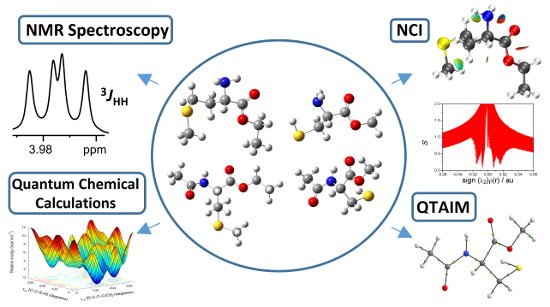
- (NCI) analyses were used. Results and Discussion Esterified derivatives of L-Met and L-Cys The lowest-energy conformers of 1 and 2 and their calculated parameters (ωB97X-D/aug-cc-pVTZ) in gas phase and in solution (IEF−PCM) are shown in the Figure 1 and Table 2, respectively. Each conformer of 1 and 2
- total population of 1, in all different studied media. Although the global minimum of 1 is in the form b in gas phase and also in solution, the three more stable geometries (1-IXb, 1-Xb and 1-XIb) in the former are substituted by three new structures (1-Ib, 1-VIIb and 1-VIIIb) when the solvent is




Continuous-flow processes for the catalytic partial hydrogenation reaction of alkynes
Beilstein J. Org. Chem. 2017, 13, 734–754, doi:10.3762/bjoc.13.73
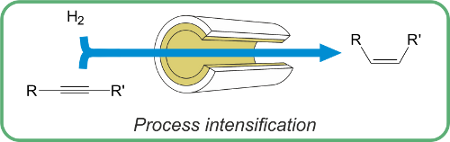
- , which may result in improved selectivity, with no need of additives [76]. Reactor and catalyst design In contrast to unselective processes in the gas phase (e.g., for bulk chemicals production), whose fast interaction with the catalyst may ensure satisfactory conversions under the reaction conditions
- surface and containing precious metal sites (washcoat) [98][99]. They are largely reported in the chemical engineering literature for gas-phase, unselective thermal processes [100][101]. A monolith is “a shaped, fabricated intractable article with a homogeneous microstructure that does not exhibit any








New approaches to organocatalysis based on C–H and C–X bonding for electrophilic substrate activation
Beilstein J. Org. Chem. 2016, 12, 2834–2848, doi:10.3762/bjoc.12.283
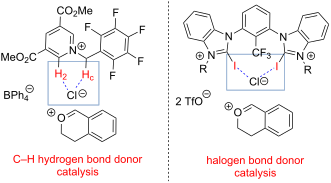
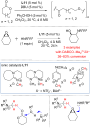
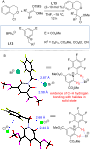
- (Figure 1) have been utilized to enhance the electrophilicity of organic molecules. Recent spectroscopic and computational studies provided evidence that arenes might form strong hydrogen bonds between aryl C–H groups and anions (Cl−, NO3−, ClO4−, etc.) in the gas phase [28]. In addition, the introduction
- of an electron-withdrawing group into the aryl ring (i.e., NO2, CN, CF3, etc.) could significantly enhance this binding and result in stronger hydrogen bonds between the arene and the anion. Thus, the gas-phase binding energy of the nitrobenzene and chloride anion complex containing two C–H hydrogen
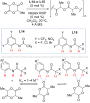
- (calculated) gas phase were further investigated by Huber [89]. Following the aforementioned studies, the Huber group has designed structurally rigid electron-deficient cationic catalysts L22 based on the bis(halobenzimidazolium) scaffold [87]. These catalysts were found to be particularly active, and the








Enzymatic synthesis and phosphorolysis of 4(2)-thioxo- and 6(5)-azapyrimidine nucleosides by E. coli nucleoside phosphorylases
Beilstein J. Org. Chem. 2016, 12, 2588–2601, doi:10.3762/bjoc.12.254
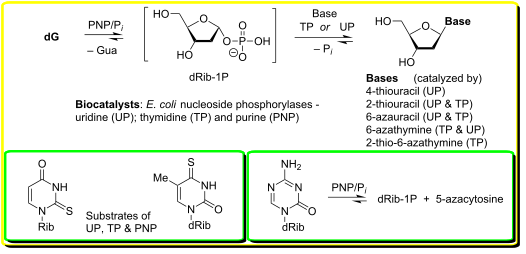
- that natural pyrimidine bases exist in the gas phase and in water solution in the canonical 2,4-diketo form (e.g. [42][43]). The tautomeric structures of 4- and 2-thioanalogues of thymine and uracil have been also investigated by diverse methods and the predominant population of the oxo/thioxo


Combined experimental and theoretical studies of regio- and stereoselectivity in reactions of β-isoxazolyl- and β-imidazolyl enamines with nitrile oxides
Beilstein J. Org. Chem. 2016, 12, 2390–2401, doi:10.3762/bjoc.12.233

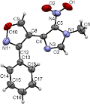
- energies at 298.15 K in gas phase conditions. Structures of the localized transition states. Lengths of the forming bonds are given in Å. Summary of the calculated pathways of the cycloaddition reaction between enamine 1a and benzonitrile oxide 6a. The pathway leading to the observed product is highlighted




Experimental and theoretical investigations into the stability of cyclic aminals
Beilstein J. Org. Chem. 2016, 12, 2280–2292, doi:10.3762/bjoc.12.221
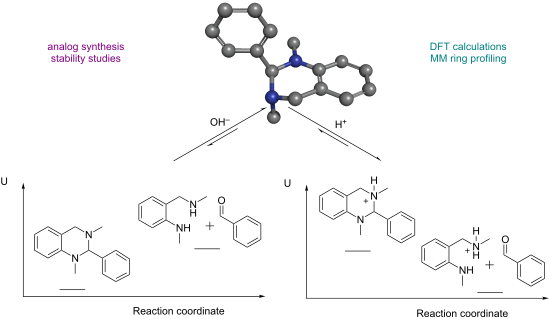
- of the reaction. Interestingly, plotting the data in water (Figure 5) as well as in the gas phase (cf. Supporting Information File 1) for all relevant fragments revealed an exothermic reaction (−6.7 kcal/mol in water) for the hydrolysis of 8a’ (II in Figure 5a) into the protonated fragments (III in





Elongated and substituted triazine-based tricarboxylic acid linkers for MOFs
Beilstein J. Org. Chem. 2016, 12, 2267–2273, doi:10.3762/bjoc.12.219
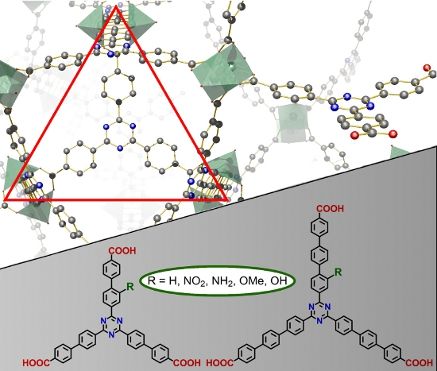
- carboxylate plane relative to the central six-membered ring is in the same plane in the TATB based MOF PCN-6, the BTB analogue MOF-14 shows a tilt angle of ca. 35°. B3LYP//6-31G* calculations of the isolated linkers in the gas phase result in dihedral angles of 38.5° for BTB and 0.006° for TATB, respectively


Varioloid A, a new indolyl-6,10b-dihydro-5aH-[1]benzofuro[2,3-b]indole derivative from the marine alga-derived endophytic fungus Paecilomyces variotii EN-291
Beilstein J. Org. Chem. 2016, 12, 2012–2018, doi:10.3762/bjoc.12.188
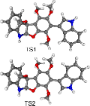
- order to explore the possibility of axial chirality, torsional angle scans were performed on the lowest-energy M (conformer A) and P (conformer B) helicity gas-phase conformers or atropodiastereomers. Rotational energy barriers between the two isomers were estimated to be ca. 35–42 kJ/mol for TS1 (ωC12
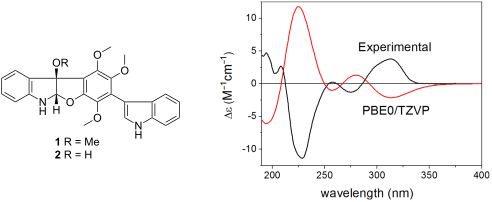
- showed that there is no axial chirality in 1, and equilibrating conformers with M and P helicity are present in solution as obtained in the conformational analysis. The Boltzmann-weighted ECD spectra calculated for both the gas-phase and the solvent model conformers of (2R,3R)-1 at B3LYP/TZVP, BH&HLYP
- ), using dipole-velocity-computed rotational strengths. Boltzmann distributions were estimated from the ZPVE-corrected B3LYP/6-31G(d) energies in the gas-phase calculations and from the B97D/TZVP energies in the PCM model ones. Torsional energy scans and TS calculations were carried out at the B3LYP/6-31G



Synthesis and properties of fluorescent 4′-azulenyl-functionalized 2,2′:6′,2″-terpyridines
Beilstein J. Org. Chem. 2016, 12, 1812–1825, doi:10.3762/bjoc.12.171
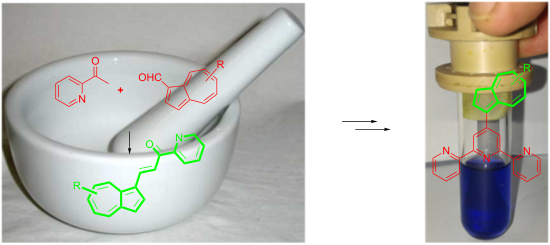
- central pyridine ring. The three pyridine rings are calculated to have higher coplanarity in comparison to the crystal structure, showing the easy rotation of pyridine rings about the interanullar axis in gas phase, in contrast to constraints imposed by the solid crystal. The electronic excitations and


A flow reactor setup for photochemistry of biphasic gas/liquid reactions
Beilstein J. Org. Chem. 2016, 12, 1798–1811, doi:10.3762/bjoc.12.170
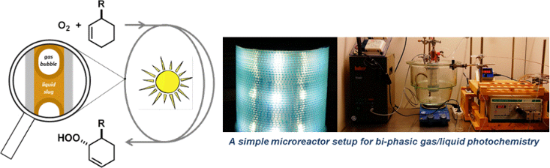
- operation of various other reactions at light/liquid/gas interfaces in student, research, and industrial laboratories. Keywords: biphasic reactions; flow chemistry; gas phase; microreactor; oxygen; photochemistry; Introduction The recent developments of microreactor technologies have significantly
- phase, a gas phase, and an electromagnetic radiation field, where an effective interaction of three quasi mobile phases of different physical states is required for high selectivities and conversion rates. Such scenarios are highly relevant for photochemical reactions with reactive gases (e.g., air, O2
- possibly additives, the gas phase, containing the gaseous reagents, and the light (Figure 1). Only very few microreactor setups for such “quasi tri-phasic” processes have been reported [33][34]; most of them are film/falling film [22], microchannel [23][35] or simple tube reactors [35][36][37]. The reactor


Unusual traits of cis and trans-2,3-dibromo-1,1-dimethylindane on the way from 1,1-dimethylindene to 2-bromo-, 3-bromo-, and 2,3-dibromo-1,1-dimethylindene
Beilstein J. Org. Chem. 2016, 12, 1178–1184, doi:10.3762/bjoc.12.113
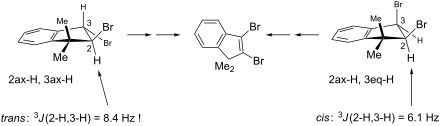
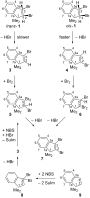
- added Br2 to generate the thermolabile tribromide 5, whose HBr elimination gave 7; the required Br2 was visible in the weakly brownish gas phase and had been provided through the well-known reaction of HBr with the accompanying NBS. Consequently, three equivalents of NBS would be necessary for obtaining
- gas phase and was cooled in an ice bath (15 min). A 1H NMR spectrum of the solution revealed that the starting material 9 was completely consumed and that a mixture containing three gem-dimethyl compounds had been generated: 2,3-dibromo-1,1-dimethylindene (7, 76%), 1 (1%, trans/cis ca. 3:2), and an



Efficient syntheses of climate relevant isoprene nitrates and (1R,5S)-(−)-myrtenol nitrate
Beilstein J. Org. Chem. 2016, 12, 1081–1095, doi:10.3762/bjoc.12.103
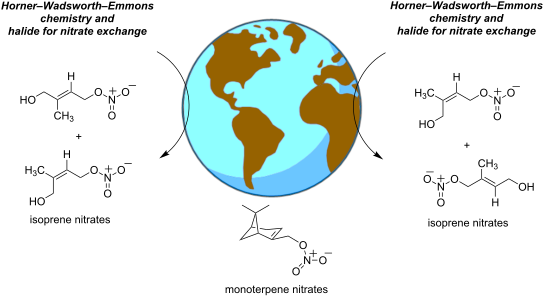
- Pye et al. recently developed a system to study the formation and subsequent aerosol-phase partitioning of organic nitrates derived from both isoprene and monoterpenes. Their studies indicated the concentrations of organic aerosol and gas-phase organic nitrates increased when particulate organic


Scope and mechanism of the highly stereoselective metal-mediated domino aldol reactions of enolates with aldehydes
Beilstein J. Org. Chem. 2016, 12, 813–824, doi:10.3762/bjoc.12.80
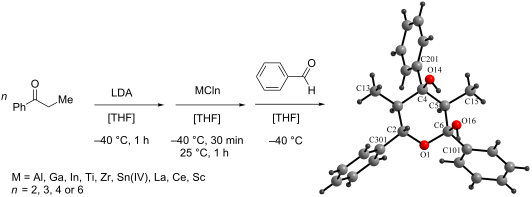
- calculations were carried out using the Gaussian 09 program [44]. Gas-phase optimization of geometries was performed by using the B3LYP [45][46][47] method with Pople’s split-valence 6-31G(d) basis set on C, H, O atoms and double-ζ quality basis set (LANL2DZ) [48][49][50] containing Hay and Wadt’s effective


Is conformation a fundamental descriptor in QSAR? A case for halogenated anesthetics
Beilstein J. Org. Chem. 2016, 12, 760–768, doi:10.3762/bjoc.12.76
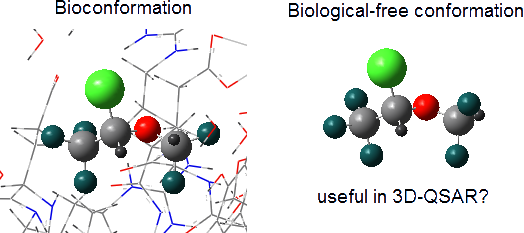
- can cause misinterpretation of the QSAR model. The present computational work reports the conformational analysis of the volatile anesthetic isoflurane (2-chloro-2-(difluoromethoxy)-1,1,1-trifluoroethane) in the gas phase and also in polar and nonpolar implicit and explicit solvents to show that
- possible for isoflurane. However, geometry optimization at the MP2/6-311++g(d,p) and ωB97X-D/6-311++g(d,p) (a DTF method which includes dispersion effects) levels converged to five energy minima for the gas phase, implicit solvents (cyclohexane, DMSO and water, using the polarizable continuum model), and
- using one explicit water molecule as solvent to mimic a physiological medium (Figure 1). The results for the gas phase are in agreement with previous calculations [14] and microwave experiments [15], where five conformations were found, but only three could be experimentally detected, due to their lower


From steroids to aqueous supramolecular chemistry: an autobiographical career review
Beilstein J. Org. Chem. 2016, 12, 684–701, doi:10.3762/bjoc.12.69
- capsule formed by octa-acid is also capable of bringing about physical separations. One facile way to examine this is to consider the absorption of gases from the gas phase into a solution phase. We therefore examined the uptake of butane into an aqueous solution of octa-acid to form the corresponding 2:2




Creating molecular macrocycles for anion recognition
Beilstein J. Org. Chem. 2016, 12, 611–627, doi:10.3762/bjoc.12.60
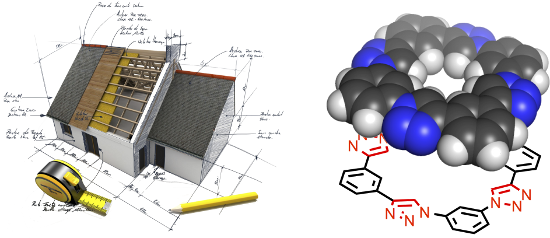
- , to diatomic cyanide, and triatomic bifluoride. The halides fluoride, chloride and bromide largely follow experiment [29]. However, the cyanide study [30] produced some surprising results. We found in gas-phase calculations and solution-phase experiments that cyanide binds as well as chloride (Figure
- chloride and bifluoride had the same affinity in gas-phase calculations, they differed experimentally in solution (Figure 11b). Judging from the calculated geometry, we wagered that the bifluoride anion did not fit very well and that solvent was pulling it out of the binding pocket. We went through a few
- cycles of computer-aided receptor design to optimize the geometry of the complex. Out targets were to equalize chloride and bifluoride affinities in the gas phase, and to optimize geometries with the anions located in-plane with the macrocycle in order to avoid solvation effects. The hypothesis was that




Effective in silico prediction of new oxazolidinone antibiotics: force field simulations of the antibiotic–ribosome complex supervised by experiment and electronic structure methods
Beilstein J. Org. Chem. 2016, 12, 415–428, doi:10.3762/bjoc.12.45
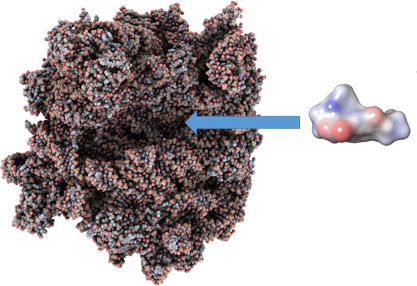
- particular potential function is able to reproduce a) the unbound and b) the bioactive structure of linezolid. Although the gas phase or solvent minimum structure of unbound linezolid is not known experimentally, we assume that it is very similar to the bioactive conformation [36][37]. Our strategy is based
- . Only the S-enantiomer is active. Superposition of all low energy minima of linezolid applying AMBER (left) and OPLS-AA (right) force field. Superposition of the found global linezolid gas phase minimum (AMBER on the left and OPLS-AA on the right) with the linezolid bioactive conformation (green). The
- OPLS-AA force field reproduces the conformation linezolid adopts in the solid state [38] or complexed by a transporter protein [39]. RMSD/Potential energy plots for linezolid in the gas phase. The OPLS-AA plot is characterized by an absence of conformers roughly between 25–34 kJ/mol. Model building


Dynamic behavior of rearranging carbocations – implications for terpene biosynthesis
Beilstein J. Org. Chem. 2016, 12, 377–390, doi:10.3762/bjoc.12.41
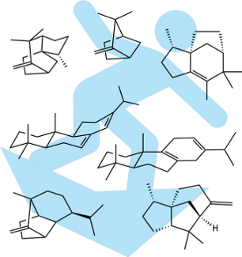
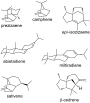
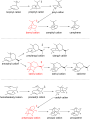
- by Mosley et al. to study the experimental IR spectrum of the 2-norbornyl cation in the gas phase revealed a structural rearrangement to DMCP+, Jalife et al. set out to determine the isomerization mechanism using modern computational methods [64]. BOMD simulations using DFT were employed, with



Tandem processes promoted by a hydrogen shift in 6-arylfulvenes bearing acetalic units at ortho position: a combined experimental and computational study
Beilstein J. Org. Chem. 2016, 12, 260–270, doi:10.3762/bjoc.12.28
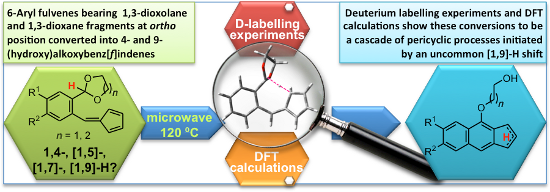
- ring through transient intermediate 27a. As a final point, we have also explored the potential energy surface associated to these conversions by considering the effect of the solvent used in the experimental study, DMSO. The computed energy barriers in the gas phase and in DMSO are depicted in Table 3
- . In general, the values of the energy barriers do not vary noticeably in DMSO when compared with those in gas phase. Only ΔE8 and ΔE9 are appreciably lower in DMSO with respect to those in gas phase by 3.9 and 3.5 kcal·mol−1, respectively (Table 3). Consequently, according to these calculations, the
- rate determining step in the transformations 3a → 5a and 3a → 6a in DMSO should be the first one, i.e. the [1,9]-H shift, with an energy barrier slightly lower than that calculated in the gas phase. In summary, this computational study shows that the conversion of fulvene 3a into the benzindenes 5a and


Versatile deprotonated NHC: C,N-bridged dinuclear iridium and rhodium complexes
Beilstein J. Org. Chem. 2016, 12, 117–124, doi:10.3762/bjoc.12.13
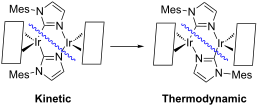
- of Martin et al. [85] which consists of thermal corrections and entropy effects evaluated at 1354 atm [86][87][88][89], with the BP86-d3/TZVP method in the gas phase [90][91]. %VBur calculations: The buried volume calculations were performed with the SambVca package developed by Cavallo et al. [90


Physical properties and biological activities of hesperetin and naringenin in complex with methylated β-cyclodextrin
Beilstein J. Org. Chem. 2015, 11, 2763–2773, doi:10.3762/bjoc.11.297
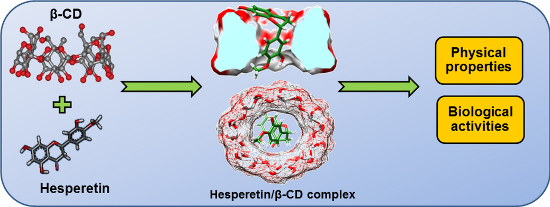
- binding free energies, or calculate the free energies of molecules in solution (∆Gbind) using the MM-PBSA/GBSA method. The free energy decomposition of each complex in terms of gas phase energy (∆EMM) including ∆Eele and ∆Evdw energies, solvation free energy (∆Gsol) and entropic term (T∆S) is shown in


Co-solvation effect on the binding mode of the α-mangostin/β-cyclodextrin inclusion complex
Beilstein J. Org. Chem. 2015, 11, 2306–2317, doi:10.3762/bjoc.11.251
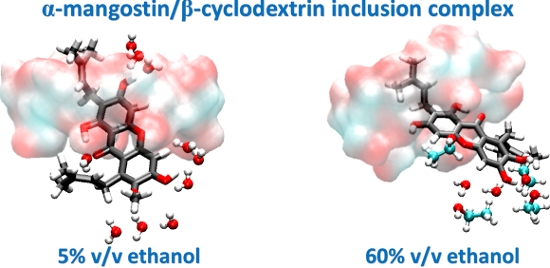
- The gas phase energy, ΔEMM, is a summation of bonded and non-bonded (electrostatic and van der Waals (vdW)) energies obtained from molecular mechanics calculation. The ΔGsolv is solvation free energy. In general, there are several methods for ΔGsolv prediction. Some methods calculate the ΔGsolv using



2-Hetaryl-1,3-tropolones based on five-membered nitrogen heterocycles: synthesis, structure and properties
Beilstein J. Org. Chem. 2015, 11, 2179–2188, doi:10.3762/bjoc.11.236
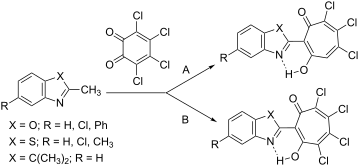
- estimation of relative stabilities of the tautomeric NH and OH forms of the representative derivatives of 1,3-tropolones 5 and 6 in the gas phase and in a polar solvent (DMSO, Table 2) revealed that the decrease in the electronegativity of the fragment X in the row 6a, 6d, 6g (X = O, S, C(CH3)2) shifts the
- energy correction (Etot + ZPE, а.u.) and relative energies (ΔE, kcal/mol) of the intermediates and corresponding transition states (Ts) occurring along the reaction path of the formation of 1,3-tropolones 5, and 6a,d,g calculated using the PBE0/6-311+G** method in the gas phase. Total energies with zero
- -point energy correction (Etot + ZPE, а.u.) and relative energies (ΔE, kcal/mol) of the NH and OH tautomeric forms of compounds 5 and 6 calculated using the PBE0/6-311+G** method in the gas phase and in DMSO solution. Optical properties of 2-(2-alkoxycarbonyl-6-hydroxyphenyl)benzoxazoles 11a–f in heptane


![[Graphic 3]](/bjoc/content/inline/1860-5397-11-236-i8.png?max-width=637&scale=1.18182) N···H–O equilibrium in solutions of 2-hetaryl-5,6,7-trichloro- and 4,...
N···H–O equilibrium in solutions of 2-hetaryl-5,6,7-trichloro- and 4,...





