


Search results
Search for "organocatalysts" in Full Text gives 187 result(s) in Beilstein Journal of Organic Chemistry.
Stereoselective amine-thiourea-catalysed sulfa-Michael/nitroaldol cascade approach to 3,4,5-substituted tetrahydrothiophenes bearing a quaternary stereocenter
Beilstein J. Org. Chem. 2016, 12, 643–647, doi:10.3762/bjoc.12.63
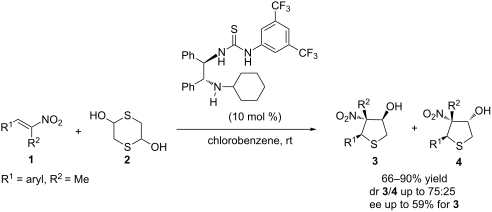
- [22] with 1,4-dithiane-2,5-diol. Based on all above considerations and prompted by our interest in asymmetric synthesis of functionalized tetrahydrothiophenes [14], we wondered whether we could use bifunctional organocatalysts to develop a diastereo- and enantioselective cascade sulfa-Michael
- -dithiane-2,5-diol as precursor of mercaptoacetaldehyde, using 10 mol % loading of different bifunctional organocatalysts (Scheme 1, Table 1). In the case of trans-β-nitrostyrene (1), a mixture of diastereoisomers 5 and 6 were rapidly formed, irrespective of the catalyst used, with a poor level of diastereo
- the bifunctional organocatalyst structure and reaction conditions will be required for further improvements of the challenging cascade process. Organocatalysts screened in the cascade reaction. Synthesis of catalyst VIII. Asymmetric sulfa-Michael/nitroaldol reaction of nitroalkenes 1–3 with 1,4


Supported bifunctional thioureas as recoverable and reusable catalysts for enantioselective nitro-Michael reactions
Beilstein J. Org. Chem. 2016, 12, 628–635, doi:10.3762/bjoc.12.61
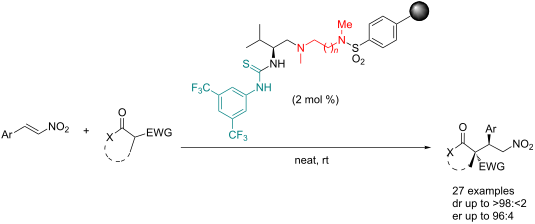
- the thiourea derived from (L)-valine and 1,6-hexanediamine. The catalysts can be used in only 2 mol % loading, and reused for at least four cycles in neat conditions. The ball milling promoted additions also worked very well. Keywords: bifunctional organocatalysts; organocatalysis; stereoselective
- [12]. Cinchona-derived thioureas have been also prepared by co-polymerization of polyfunctionalized thiols with olefins [23]. Our interest in the search for novel bifunctional thioureas as organocatalysts [24][25][26][27] lead us to consider the preparation of different polymeric materials decorated
- organocatalysts in the stereoselective aza-Henry reaction [31]. Now we describe the results obtained in different stereoselective nitro-Michael additions promoted by these materials. Results and Discussion The ability of the supported catalysts (II–V) to promote the stereoselective nitro-Michael reaction was


The aminoindanol core as a key scaffold in bifunctional organocatalysts
Beilstein J. Org. Chem. 2016, 12, 505–523, doi:10.3762/bjoc.12.50
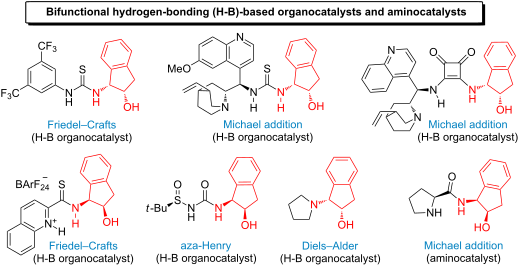
- The 1,2-aminoindanol scaffold has been found to be very efficient, enhancing the enantioselectivity when present in organocatalysts. This may be explained by its ability to induce a bifunctional activation of the substrates involved in the reaction. Thus, it is easy to find hydrogen-bonding
- organocatalysts ((thio)ureas, squaramides, quinolinium thioamide, etc.) in the literature containing this favored structural core. They have been successfully employed in reactions such as Friedel–Crafts alkylation, Michael addition, Diels–Alder and aza-Henry reactions. However, the 1,2-aminoindanol core
- incorporated into proline derivatives has been scarcely explored. Herein, the most representative and illustrative examples are compiled and this review will be mainly focused on the cases where the aminoindanol moiety confers bifunctionality to the organocatalysts. Keywords: aminocatalysis; 1,2-aminoindanol


(Thio)urea-mediated synthesis of functionalized six-membered rings with multiple chiral centers
Beilstein J. Org. Chem. 2016, 12, 462–495, doi:10.3762/bjoc.12.48
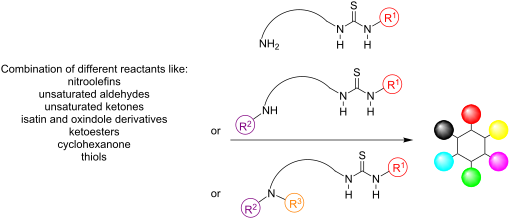
- will be summarized. Initially, the use of primary amine-thioureas as organocatalysts for the above transformation is being discussed, followed by the examples employing secondary amine-thioureas. Finally, the use of tertiary amine-thioureas and miscellaneous examples are presented. Keywords: multiple
- of intermediates have been proposed to be the reactive intermediates in many reactions such as aldol, Michael, Mannich, and α-functionalization (α-chlorination, α-amination, α-fluorination) reactions. Proline-type organocatalysts are considered priviliged, because their corresponding enamines exist
- depicted in the left, in Scheme 2, seems to be operative, when the R group of the organocatalyst possesses a moiety, that is able to form hydrogen bonds, being the hydrogen bond donor. Employing this logic, many organocatalysts have been developed, possessing various groups, that are able to form hydrogen


Recent advances in N-heterocyclic carbene (NHC)-catalysed benzoin reactions
Beilstein J. Org. Chem. 2016, 12, 444–461, doi:10.3762/bjoc.12.47
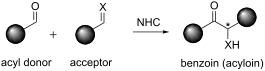
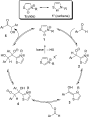
- Interdisciplinary Science and Technology,Trivandrum 695 019, India.; Fax: +91 471 2491712; Tel: +91 471 2490406 10.3762/bjoc.12.47 Abstract N-Heterocyclic carbenes (NHCs) have emerged as a powerful class of organocatalysts that mediate a variety of organic transformations. The Benzoin reaction constitutes one of



Cupreines and cupreidines: an established class of bifunctional cinchona organocatalysts
Beilstein J. Org. Chem. 2016, 12, 429–443, doi:10.3762/bjoc.12.46
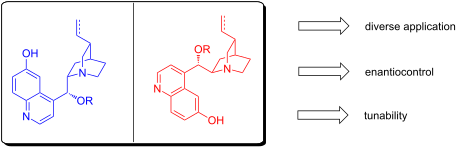
- asymmetric organocatalysis. This fascinating class of bifunctional catalyst offers a genuine alternative to the more commonly used thiourea systems and because of the different spacing between the functional groups, can control enantioselectivity where other organocatalysts have failed. In the main, this
- review covers the highlights from the last five years and attempts to show the diversity of reactions that these systems can control. It is hoped that chemists developing asymmetric methodologies will see the value in adding these easily accessible, but underused organocatalysts to their screens


Organocatalytic asymmetric Henry reaction of 1H-pyrrole-2,3-diones with bifunctional amine-thiourea catalysts bearing multiple hydrogen-bond donors
Beilstein J. Org. Chem. 2016, 12, 295–300, doi:10.3762/bjoc.12.31
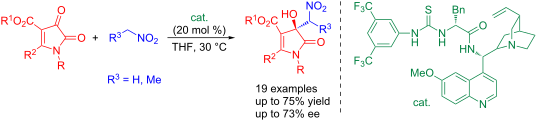
- successfully used as chiral organocatalysts for the asymmetric Michael addition and Mannich reactions [12][13][14]. Meanwhile, the Henry reaction is one of the most important carbon–carbon bond-forming reactions that provides straightforward access to β-nitroalcohols, which can be further transformed into
- -carboxylate (1a) and nitromethane (2a) in the presence of various chiral bifunctional organocatalysts 3a–e in dichloromethane (Table 1). As expected, the reaction proceeded and gave the desired product 4a in 18% yield and 28% ee with cinchonidine and L-valine-based catalyst 3a (Table 1, entry 1). The


Asymmetric α-amination of β-keto esters using a guanidine–bisurea bifunctional organocatalyst
Beilstein J. Org. Chem. 2016, 12, 198–203, doi:10.3762/bjoc.12.22
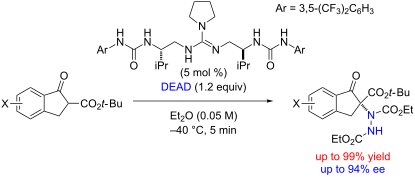
- particular, catalytic asymmetric α-amination of β-keto esters has been widely explored, using both metal catalysts and organocatalysts [5][6][7][8][9][10][11][12][13][14][15][16][17][18]. We have developed a series of guanidine–bis(thio)urea bifunctional organocatalysts, and have used them in a variety of
- procedures, copies of NMR spectra and HPLC chromatograms. Acknowledgements This work was supported in part by a Grant-in-Aid for Scientific Research on Innovative Areas “Advanced Molecular Transformations by Organocatalysts” (no. 23105013) from The Ministry of Education, Culture, Sports, Science and


Base metal-catalyzed benzylic oxidation of (aryl)(heteroaryl)methanes with molecular oxygen
Beilstein J. Org. Chem. 2016, 12, 144–153, doi:10.3762/bjoc.12.16
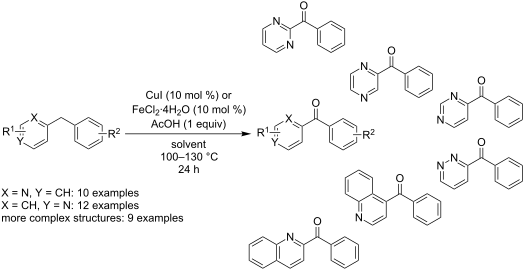
- conditions. Oxidations of this kind using Oxone® [10][11], NaOCl [12] or especially peroxides [13][14][15][16][17][18][19] as the terminal oxidant are quite numerous. However, transformations using molecular oxygen are rare. Ishii showed that organocatalysts such as N-hydroxyphthalimide (NHPI) in combination
- , they can also be used to synthesize the 1st and 2nd generation antihistamines Carbinoxamine, Bepotastine and Triprolidine through an alternative synthetic route. In addition to these synthetic examples it has been shown by Kamijo that 4-benzoylpyridines can act as efficient organocatalysts in the



Diastereoselective Ugi reaction of chiral 1,3-aminoalcohols derived from an organocatalytic Mannich reaction
Beilstein J. Org. Chem. 2016, 12, 139–143, doi:10.3762/bjoc.12.15

- -selective organocatalysts. We prepared two known carbamoyl sulfones 1 [30][31] and transformed them without isolation of intermediates into a series of five Boc-protected β-aminoalcohols 4a–e (Scheme 2). Using caesium carbonate, carbamoyl sulfones were converted into the corresponding N-Boc-protected imines


Catalytic asymmetric formal synthesis of beraprost
Beilstein J. Org. Chem. 2015, 11, 2654–2660, doi:10.3762/bjoc.11.285
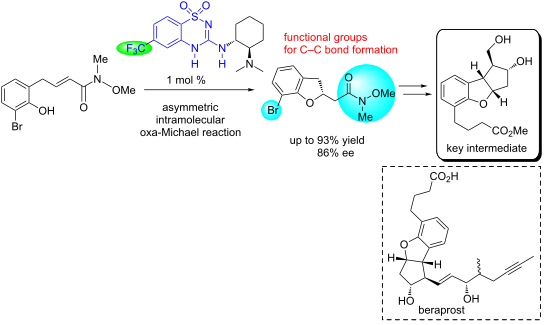
- : Experimental procedures and characterization data. Acknowledgements We gratefully acknowledged a Grant-in-Aid for Scientific Research (YT) on Innovative Areas ‘Advanced Molecular Transformations by Organocatalysts’ from MEXT, Japan. We thank Dr. Taryn March (Kyoto University) for editing and proofreading of



Bifunctional phase-transfer catalysis in the asymmetric synthesis of biologically active isoindolinones
Beilstein J. Org. Chem. 2015, 11, 2591–2599, doi:10.3762/bjoc.11.279
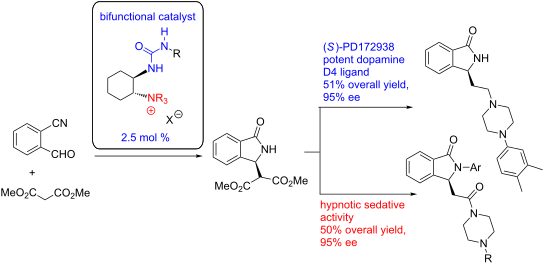
- elaborations en route to the targets of medicinal interest (Figure 1). A high yield (usually >95%) and a maximum level of enantioselectivity of 74% ee were obtained but only in the presence of large amounts of cinchona alkaloid-based thiourea-containing organocatalysts (15 mol %) and after an unacceptably long
- already discussed [21][22][23], the bifunctional nature of organocatalysts plays an important role in this reaction to attain satisfactory levels of enantioselectivity. The presence of additional hydrogen donors such as urea groups positively affected the enantioselectivity both in the presence of chiral
- reaction times were required to achieve a somewhat comparable selectivity and yield with organocatalysts found in the literature [21][22][23], these results encouraged us to use this methodology to access larger quantities of 8 next. Thus, under the conditions of entry 9 in Table 2, the reaction was


Organocatalytic and enantioselective Michael reaction between α-nitroesters and nitroalkenes. Syn/anti-selectivity control using catalysts with the same absolute backbone chirality
Beilstein J. Org. Chem. 2015, 11, 2577–2583, doi:10.3762/bjoc.11.277
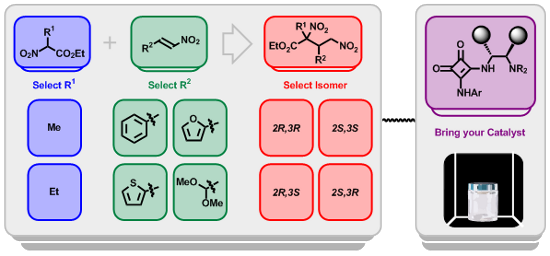
- facial stereoselection of those versions in which two stereocentres are generated in the reaction become of special utility to synthetic chemists. In this case, using two different bifunctional tertiary amine/squaramide organocatalysts [36][37][38][39][40][41][42][43][44][45][46][47][48][49][50][51][52


Iron complexes of tetramine ligands catalyse allylic hydroxyamination via a nitroso–ene mechanism
Beilstein J. Org. Chem. 2015, 11, 2549–2556, doi:10.3762/bjoc.11.275
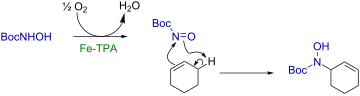
- situ along with chiral oxazolines [16][17], N-oxides [19] or amines [18][20][21] as ligands or organocatalysts. In these nitrosoaldol contexts, the chiral agents induce asymmetry by virtue of their influence over the enolate reaction partner. Achieving asymmetric induction in the nitroso–ene reaction


N-Heterocyclic carbenes
Beilstein J. Org. Chem. 2015, 11, 2474–2475, doi:10.3762/bjoc.11.268
- ligands on metals. The field continues to experience tremendous development, with a considerable number of publications still reporting new reactions that are catalyzed and controlled by the carbenes as ligands or as organocatalysts. The action of state-of-the-art catalysts are nowadays better understood
Efficient synthetic protocols for the preparation of common N-heterocyclic carbene precursors
Beilstein J. Org. Chem. 2015, 11, 2318–2325, doi:10.3762/bjoc.11.252
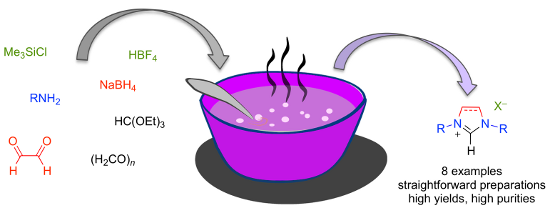
- just a single example, NHC ligands played a crucial role in the development of highly efficient ruthenium initiators for olefin metathesis and related reactions [18][19][20][21]. Lately, these divalent carbon species have also emerged as powerful nucleophilic organocatalysts for polymer chemistry [22


Multivalent polyglycerol supported imidazolidin-4-one organocatalysts for enantioselective Friedel–Crafts alkylations
Beilstein J. Org. Chem. 2015, 11, 730–738, doi:10.3762/bjoc.11.83
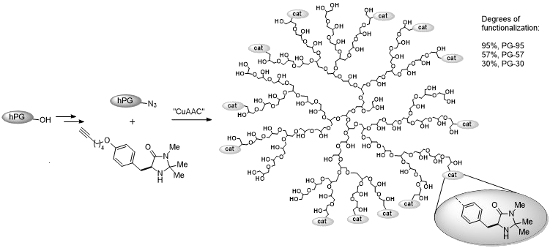
- described. A modified tyrosine-based imidazolidin-4-one was grafted to a soluble high-loading hyperbranched polyglycerol via a copper-catalyzed alkyne–azide cycloaddition (CuAAC) reaction and readily purified by dialysis. The efficiency of differently functionalized multivalent organocatalysts 4a–c was
- organocatalysis has allowed for selective C–C bond formation by using small organic molecules [25][26][27][28][29][30][31]. In contrast to metal complexes, chiral or achiral organocatalysts are easily attached on supports. They do not suffer from metal leaching and they can be reused more readily [32][33][34][35
- decorated dendron-hybrids [47], the presence of water was crucial for aldol and Baylis–Hillman reactions, as recently reported by Miller and Portnoy [48]. To the best of our knowledge, the immobilization of chiral organocatalysts on hyperbranched polymeric support has remained unexplored. Therefore, we


Diastereoselective and enantioselective conjugate addition reactions utilizing α,β-unsaturated amides and lactams
Beilstein J. Org. Chem. 2015, 11, 530–562, doi:10.3762/bjoc.11.60
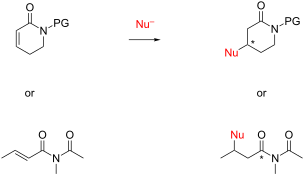
- enantioselectivity. In 2010, Wang and co-workers expanded their methodology to the 1,4-addition of phosphine oxides. Similar to their previous work, this reaction provided the products in high yields and enantioselecitives [266] (Scheme 40). 2.5 ECA employing organocatalysts Organocatalysts have become powerful
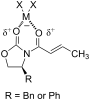
- available materials. Organocatalysts can be placed into two catagories: 1) catalysts that covalently attach themselves to the starting materials (e.g., enamine [269] and iminium [270] catalysis) and 2) catalysts that interact with the starting materials through non-covalent interactions (e.g., hydrogen




Chemoselective O-acylation of hydroxyamino acids and amino alcohols under acidic reaction conditions: History, scope and applications
Beilstein J. Org. Chem. 2015, 11, 446–468, doi:10.3762/bjoc.11.51
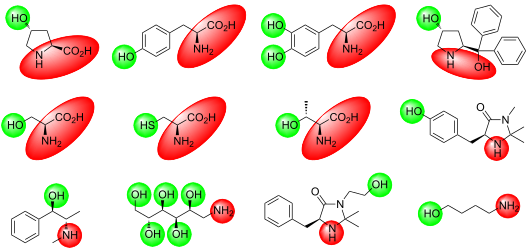
- related compounds, such as various amino alcohols and the thiol-functional amino acid cysteine. While the basic methodology underlying this approach has been known for decades, it has evolved through recent developments connected to amino acid-derived chiral organocatalysts to become a more widely
- group chemistry, much due to the pervasive role of flash column chromatography in modern organic synthesis. The revitalization of enantioselective organocatalysis during the early 2000s [41], with a number of the most important organocatalysts ultimately descending from chiral amino acids, opened for
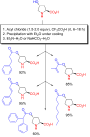
- such as immobilized organocatalysts, water-compatible or water-dependent catalytic systems and finally nanoparticulate catalytic systems [41]. This eventually dictated a renewed interest in acidic O-acylation methodologies and set in motion events that would result in enhanced procedures




One-pot stereoselective synthesis of α,β-differentiated diamino esters via the sequence of aminochlorination, aziridination and intermolecular SN2 reaction
Beilstein J. Org. Chem. 2014, 10, 1802–1807, doi:10.3762/bjoc.10.189
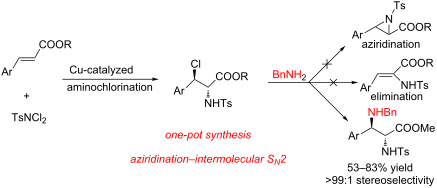
- corresponding β,γ-amino alcohols and vicinal diamines. α,β-Diamino acid derivatives have been served as organocatalysts, chiral ligands, chiral auxiliaries for asymmertric synthesis [10][11][12], as well as synthetic fragments for peptides and natural products [13]. Mannich-type addition reactions of α-amino


Rasta resin–triphenylphosphine oxides and their use as recyclable heterogeneous reagent precursors in halogenation reactions
Beilstein J. Org. Chem. 2014, 10, 1397–1405, doi:10.3762/bjoc.10.143
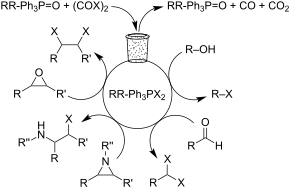
- ], and have reported the use of various polymer-supported phosphines as reagents, organocatalysts, and ligands in order to simplify product isolation [14][15][16][17][18]. Most recently we have studied the use of the rasta resin polystyrene architecture [19][20][21][22][23][24][25][26] as a platform for
- , which generally require slow addition of the oxalyl halide and chromatographic purification of the product. In order to assess the overall utility of 16 and 18, we are currently examining their applications as organocatalysts [39][40][41][42][43], and will report results of these studies in due course


Atherton–Todd reaction: mechanism, scope and applications
Beilstein J. Org. Chem. 2014, 10, 1166–1196, doi:10.3762/bjoc.10.117

- phosphates or phosphoramidates which are important intermediates for a variety of subsequent transformations or can be used as organocatalysts. Aryl dialkyl phosphates, prepared by the AT reaction from phenol derivatives, were employed to reduce phenol functional groups. It is noteworthy that phenol
- reaction [102], Michael addition [103], Diels–Alder reaction [104], Friedel–Crafts alkylation [105]) illustrate the use of phosphoramidates as organocatalysts. These phosphoramidates were not synthesized by an AT reaction. Instead, the reaction of an amine with an electrophilic phosphorus species (P–Cl




Primary-tertiary diamine-catalyzed Michael addition of ketones to isatylidenemalononitrile derivatives
Beilstein J. Org. Chem. 2014, 10, 929–935, doi:10.3762/bjoc.10.91
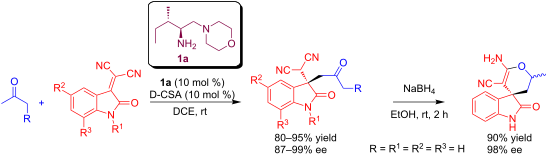
- serve as important precursors to procure various structurally diverse spirooxindoles [23][24]. Over the years, many chiral organocatalysts have been developed and explored for Michael reactions [1][2][3][4][5][6][7][8]. Recently, aminocatalysts – in particular those bearing a primary amine moiety – have
- -tertiary diamine organocatalysts for Michael reaction via enamine activation has not been investigated so far [38]. With readily available and inexpensive natural amino acids as a chiral source, we developed very simple primary-tertiary diamine organocatalysts (Figure 2) for asymmetric aldol reactions [44
- component process involving a domino Knoevenagel–Michael sequence was developed. 3,3'-Disubstituted oxindole could be transformed into spirooxindoles by reduction with NaBH4. Oxindole based Michael acceptors. Primary-tertiary diamine organocatalysts. Diamine catalyzed Michael addition of acetone to


Dimerisation, rhodium complex formation and rearrangements of N-heterocyclic carbenes of indazoles
Beilstein J. Org. Chem. 2014, 10, 832–840, doi:10.3762/bjoc.10.79
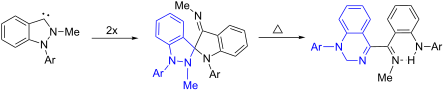
- organocatalysts [15][16]. The N-heterocyclic carbenes of indazole (and pyrazole [17][18]), however, have a chemistry of their own which set them apart from the NHCs of the aforementioned ring systems. Portions of that field have been covered in recent review articles [18][19]. The N-heterocyclic carbene of


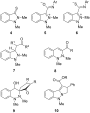


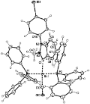


New hydrogen-bonding organocatalysts: Chiral cyclophosphazanes and phosphorus amides as catalysts for asymmetric Michael additions
Beilstein J. Org. Chem. 2014, 10, 224–236, doi:10.3762/bjoc.10.18
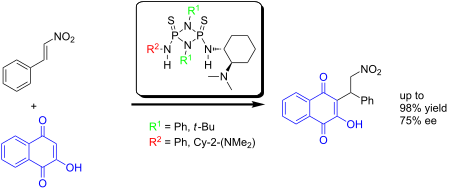
- characteristics and the increased steric bulk of “3-D”-PV compared to “2-D” urea or squaramides make phosphorus triamides excellent candidates for asymmetric (HB) organocatalysts. However, the tetrahedral structure of PV-amides also enables a higher degree of conformational freedom combined with a less rigid
- lower accuracy of the employed SVP-basis set in describing H-bonded systems. Conclusion A series of new phosphorus (tri)amides, which includes the first chiral PV-cyclodiphosphazane, is synthesized and is successfully employed as HB organocatalysts in the Michael addition reaction of 2





