


Search results
Search for "platinum" in Full Text gives 207 result(s) in Beilstein Journal of Organic Chemistry. Showing first 200.
Reactivity studies of pincer bis-protic N-heterocyclic carbene complexes of platinum and palladium under basic conditions
Beilstein J. Org. Chem. 2016, 12, 1334–1339, doi:10.3762/bjoc.12.126
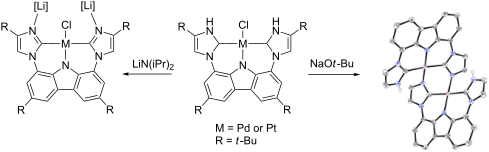
- .12.126 Abstract Bis-protic N-heterocyclic carbene complexes of platinum and palladium (4) yield dimeric structures 6 when treated with sodium tert-butoxide in CH2Cl2. The use of a more polar solvent (THF) and a strong base (LiN(iPr)2) gave the lithium chloride adducts monobasic complex 7 or analogous
- dibasic complex 8. Keywords: NHC; 15N NMR spectroscopy; palladium; platinum; protic N-heterocyclic carbene; Introduction N-Heterocyclic carbenes (NHCs) have been extensively researched for a number of purposes since 1991 when Arduengo first isolated free NHCs [1][2][3]. NHCs as ligands have been known
- occupied by an imidazolyl nitrogen from a second complex (Figure 2). The palladium and platinum dimer complexes, 6-Pd and 6-Pt, could be formed by addition of sodium tert-butoxide to the chloride analogs (Scheme 1), and isolated in 50–56% yields. The examination of the dimer crystal structure (see Figure 2


On the mechanism of imine elimination from Fischer tungsten carbene complexes
Beilstein J. Org. Chem. 2016, 12, 1322–1333, doi:10.3762/bjoc.12.125
- versus external H3PO4 (85%) (31P: δ = 0 ppm). IR spectra were recorded with a BioRad Excalibur FTS 3100 spectrometer as KBr disks or by using KBr cells in CH2Cl2 or in CD2Cl2. Electrochemical experiments were carried out on a BioLogic SP-50 voltammetric analyzer by using a platinum working electrode, a
- platinum wire as counter electrode and a 0.01 M Ag/AgNO3 electrode as reference electrode. The measurements were carried out at a scan rate of 100 mV s−1 for cyclic voltammetry experiments and at 50 mV s−1 for square wave voltammetry experiments in 0.1 M [n-Bu4N][B(C6F5)4] as supporting electrolyte in THF




Conjugate addition–enantioselective protonation reactions
Beilstein J. Org. Chem. 2016, 12, 1203–1228, doi:10.3762/bjoc.12.116
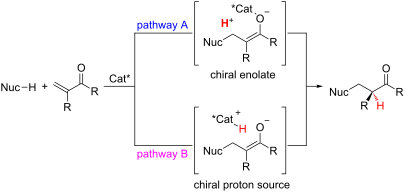
- methacrylonitrile (Figure 4) [70][71][72][73][74]. Other researchers have reported platinum [75], nickel [76], and zirconium [77] catalysts for the hydrophosphination and hydroamination of methacrylonitrile; however, these examples provided product with significantly lower enantioselectivity. In 2004, the Togni lab


The synthesis of functionalized bridged polycycles via C–H bond insertion
Beilstein J. Org. Chem. 2016, 12, 985–999, doi:10.3762/bjoc.12.97
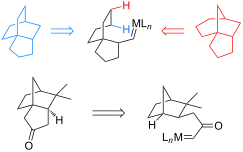
- ) [98]. Here, a single gold species was used that contained a sterically bulky t-Bu-XPhos ligand. Many examples of the synthesis of ring-fused bridged bicycles were shown in a very nice demonstration of the reaction. Platinum Recent examples have used less common metals as catalysts for C–H bond
- insertion. Oh used platinum to generate intermediate 1,3-dipoles like 118 and 122, which then undergo a cycloaddition to generate 119 or 123, respectively (Scheme 26) [99][100][101]. Here, the reactivity of those carbenes diverges. Carbene 119, which has a distal benzyl ether, undergoes a methine C–H bond
- . Platinum cascades. Tungsten cascade. Acknowledgements The authors are grateful to the Welch Foundation (grant E-1744) and the NSF (grant CHE-1352439) for financial support. J-L.S. is grateful for support by CBIP (UH) and the Studying Abroad Scholarship of Taiwan.




Bi- and trinuclear copper(I) complexes of 1,2,3-triazole-tethered NHC ligands: synthesis, structure, and catalytic properties
Beilstein J. Org. Chem. 2016, 12, 863–873, doi:10.3762/bjoc.12.85
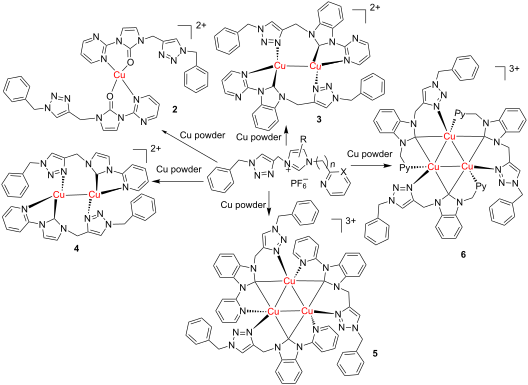
- and platinum complexes containing 1,2,3-triazole-tethered NHC ligands. The obtained palladium complexes displayed high activity in aqueous Suzuki–Miyaura cross-coupling reactions. We are interested in the synthesis and use of functionalized NHC ligands [20][28][29][30][31]. Herein, the synthesis



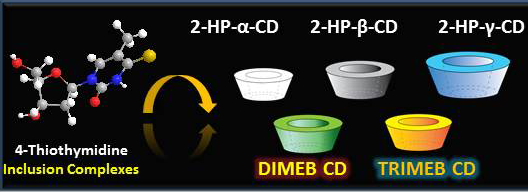
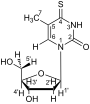
Interactions between 4-thiothymidine and water-soluble cyclodextrins: Evidence for supramolecular structures in aqueous solutions
Beilstein J. Org. Chem. 2016, 12, 549–563, doi:10.3762/bjoc.12.54
- /AgCl, Cl− (saturated KCl) and a platinum wire. In our experiments, the working electrode was polished with alumina and washed with water before each experiment. In detail, the glassy carbon electrode was first rinsed with tap water, followed by a methanol rinse and carefully wiped dry with a fresh lab



Study on the synthesis of the cyclopenta[f]indole core of raputindole A
Beilstein J. Org. Chem. 2016, 12, 334–342, doi:10.3762/bjoc.12.36

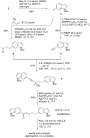
- indoline and changing the N-protecting group significantly improved the yield for the cyclocitral adduct, but this still does not appear to be sufficient for a strategy towards raputindole A (1). Cyclization of propargylacetates. Key progress came when applying platinum and gold chemistry to




Supramolecular polymer assembly in aqueous solution arising from cyclodextrin host–guest complexation
Beilstein J. Org. Chem. 2016, 12, 50–72, doi:10.3762/bjoc.12.7
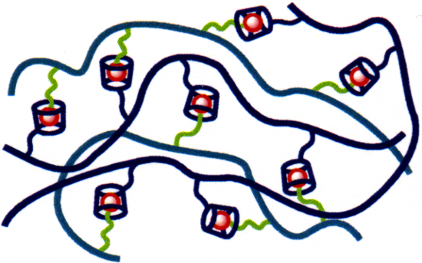
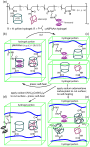
- ]. In the first stage, the two chloro ligands on the four-coordinate square-planar platinum(II) center of cisplatin are displaced by PEG-b-PAA carboxylate groups to produce PEG-b-PAA-cisplatin micelles. Addition of α-CD results in host–guest complexation of the PEG segments of PEG-b-PAA and subsequent


Copper-catalyzed intermolecular oxyamination of olefins using carboxylic acids and O-benzoylhydroxylamines
Beilstein J. Org. Chem. 2016, 12, 22–28, doi:10.3762/bjoc.12.4
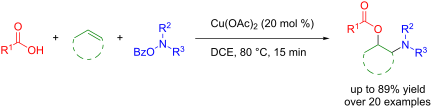
- olefins with a tethered amino or oxygen functionality has been achieved for the construction of a variety of 1,2-oxyamino products, using palladium [19][20], platinum [21], gold [22], copper [23][24][25][26], free-radical initiators [27][28][29], hypervalent iodine [30], and electrochemical oxidation [31


Synthesis, structure, and mechanical properties of silica nanocomposite polyrotaxane gels
Beilstein J. Org. Chem. 2015, 11, 2194–2201, doi:10.3762/bjoc.11.238
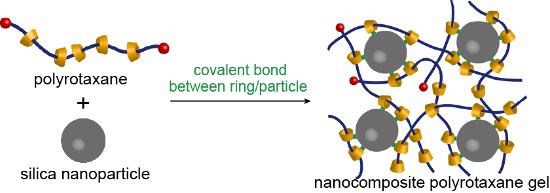
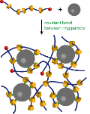
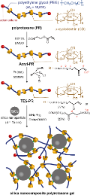
- chromatography (SEC) were purchased from Polymer Source, Inc. Solutions of silica nanoparticle with 15 nm of diameter in N,N-dimethylacetamide was kindly supplied by Nissan Chemical Industries, Ltd. 2-Isocyanatoethyl acrylate was purchased from Showa Denko K.K. Xylene solutions of platinum(0)-1,3-divinyl-1,1,3,3
- triethoxysilyl modified polyrotaxane (TES-PR) Two grams of Acryl-PR previously dried under vacuum was dissolved in anhydrous acetone (40 mL). Triethoxysilane (600 μL) and a xylene solution of platinum(0)-1,3-divinyl-1,1,3,3-tetramethyldisiloxane dibutyltin dilaurate (200 μL) were added followed by refluxing at




The simple production of nonsymmetric quaterpyridines through Kröhnke pyridine synthesis
Beilstein J. Org. Chem. 2015, 11, 1781–1785, doi:10.3762/bjoc.11.193

- pyridine synthesis; Mannich bases; platinum; X-ray diffraction; Findings Polypyridines have been demonstrated to be useful building blocks in metallo-supramolecular chemistry [1][2][3]. In particular, polypyridines joined at the 2,6-position have the ability to accommodate different coordination numbers
- is easily introduced on the 2,2’-bipyridine or 2,2’:6’,2”:6”-terpyridine moieties [31][32]. In fact, the use of a chiral enone (i.e., (−)-myrtenal) led to the chiral 5,6-substituted quaterpyridine 8. The corresponding platinum complex 9 was obtained by a classical synthesis, which entails the
- reaction of the platinum salt in the presence of the ligand in a mixture of acetonitrile and water under reflux for some hours (see Supporting Information File 1). The quaterpyridines and the platinum complex 9 were fully characterized by NMR, EIMS, and elemental analysis. In particular, for 5, 8 and 9


Tetrathiafulvalene-based azine ligands for anion and metal cation coordination
Beilstein J. Org. Chem. 2015, 11, 1379–1391, doi:10.3762/bjoc.11.149
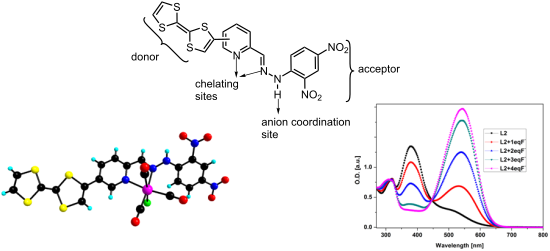
- were performed in a three-electrode cell equipped with a platinum millielectrode as the working electrode , a platinum wire as a counter electrode and a silver wire Ag/Ag+ used as a reference electrode. The electrolytic media involved a 0.1 mol/L solution of (n-Bu4N)PF6 in dichloromethane/acetonitrile


Selected synthetic strategies to cyclophanes
Beilstein J. Org. Chem. 2015, 11, 1274–1331, doi:10.3762/bjoc.11.142
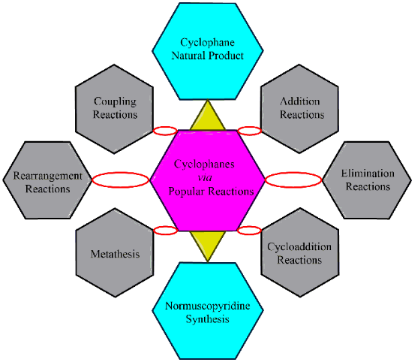
- followed by cross metathesis. The molecule shows a hypsochromic shift which indicates rigidity in the molecule compared with the other linear molecules. Enyne metathesis: In 1998, Fürstner and co-workers [147] have employed platinum(II)-catalyzed enyne metathesis as a key step to form cyclophane ring
- bromide gave the enyne product 166 (92%), which on further acylation of terminal alkyne with butanoyl chloride delivered compound 167 (82%). Then, it was subjected to an enyne metathesis with simple platinum salts such as PtCl2 and PtCl4 to give product 168 (79%). A subsequent reduction of the α,β






Regioselective synthesis of chiral dimethyl-bis(ethylenedithio)tetrathiafulvalene sulfones
Beilstein J. Org. Chem. 2015, 11, 1105–1111, doi:10.3762/bjoc.11.124

- . Electrochemical studies: Cyclic voltammetry measurements were carried out with a Biologic SP-150 potentiostat in a glove box containing dry, oxygen-free (<1 ppm) argon at 293 K, by using a three-electrode cell equipped with a platinum millielectrode of 0.126 cm2 area, an Ag/Ag+ pseudo-reference electrode and a
- platinum-wire counter electrode. The potential values were then re-adjusted with respect to the saturated calomel electrode (SCE). The electrolytic media involved a 0.1 mol/L solution of (n-Bu4N)PF6 in CH2Cl2/acetonitrile 1:1. All experiments were performed at room temperature at 0.1 V/s. Molecular


A hybrid electron donor comprising cyclopentadithiophene and dithiafulvenyl for dye-sensitized solar cells
Beilstein J. Org. Chem. 2015, 11, 1052–1059, doi:10.3762/bjoc.11.118
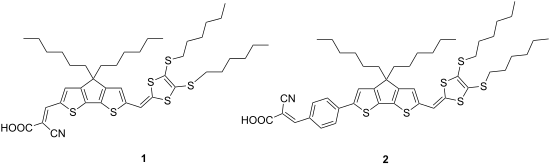
- , multiplet. HRMS data were obtained with electrospray ionization (ESI). Cyclic voltammetry was performed in a three-electrode cell equipped with a platinum-disk working electrode, a glassy carbon counter electrode, and Ag/AgCl was used as the reference electrode. The electrochemical experiments were carried


Glycoluril–tetrathiafulvalene molecular clips: on the influence of electronic and spatial properties for binding neutral accepting guests
Beilstein J. Org. Chem. 2015, 11, 1023–1036, doi:10.3762/bjoc.11.115
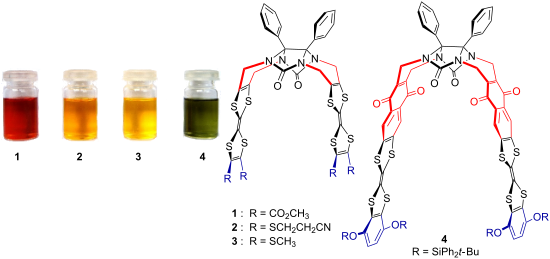
- ]. Electrochemical measurements were carried out using a platinum wire counter electrode and a silver wire as a quasi-reference electrode with a Biologic SP-150 potentiostat driven by the EC-Lab software including ohmic drop compensation. Experiments were recorded in dry HPLC-grade acetonitrile and dichloromethane




Synthesis and characterization of the cyanobenzene-ethylenedithio-TTF donor
Beilstein J. Org. Chem. 2015, 11, 951–956, doi:10.3762/bjoc.11.106
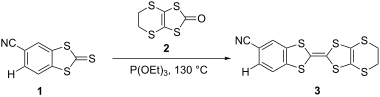
- as solvents respectively and TMS the internal reference. UV–vis spectra were recorded on an UV-1800 Shimadzu spectrophotometer. Cyclic voltammetry data were obtained using a BAS C3 Cell Stand. The voltammograms were obtained at room temperature with a scan rate of 100 mV/s, platinum wire working and


Interactions between tetrathiafulvalene units in dimeric structures – the influence of cyclic cores
Beilstein J. Org. Chem. 2015, 11, 930–948, doi:10.3762/bjoc.11.104
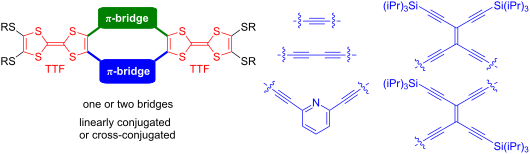
- Supporting Information File 1, Figure S4) using cyclic voltammetry (with a platinum-wire working electrode in the presence of internal ferrocene potential marker). They are very close to 1a and 2a, respectively, as expected. Using 3b as a reference compound, it is seen that all the other compounds are
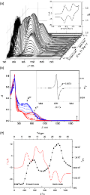
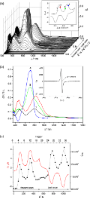
- acyclic components, 1a and 5 (−1.65 V and −2.35 V vs Fc/Fc+). UV–vis–NIR and EPR spectra of oxidized species The EPR and optical (UV–vis–NIR) properties of the oxidized species were studied by in situ spectroelectrochemistry in CH2Cl2 (Bu4NPF6) at a platinum mesh electrode. Even at low scan rate of 2 mV s
- spectrolectrochemical response found for sample 2b in CH2Cl2 (Bu4NPF6) at a platinum mesh electrode. A new dominating absorption band with maximum at 842 nm having a rich vibronic pattern was observed during the in situ reduction in the region of the first cathodic voltammetric peak (a similar absorption at λmax 845 nm








TTFs nonsymmetrically fused with alkylthiophenic moieties
Beilstein J. Org. Chem. 2015, 11, 628–637, doi:10.3762/bjoc.11.71
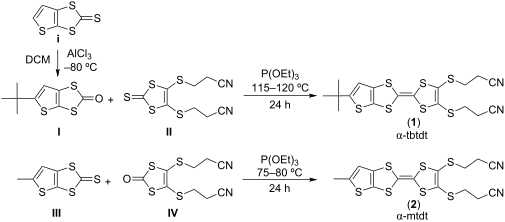
- voltammograms were obtained at room temperature with a scan rate of 100 mV/s, platinum wire working and counter electrodes and a Ag/AgNO3 reference electrode. The measurements were performed on fresh solutions with a concentration of 10−3 M, in CH2Cl2, that contained n-Bu4NPF6 (10−1 M) as the supporting


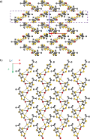

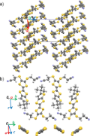


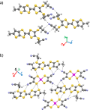
Electrochemical oxidation of cholesterol
Beilstein J. Org. Chem. 2015, 11, 392–402, doi:10.3762/bjoc.11.45
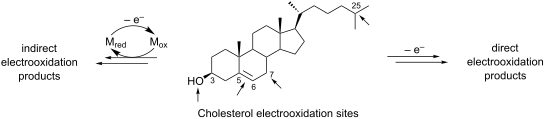
- activated oxygen species that regioselectively oxidized the tertiary C–H bonds. The reactions were carried out under constant current conditions in aqueous acetonitrile with Tl(TFA)3, HMP, LiClO4 and by bubbling with O2 gas with platinum electrodes in an undivided cell. The starting cholesterol was
- -compartment glass cell equipped with platinum mesh electrodes (cathode and anode) was filled with a cholesteryl acetate (1a) solution in acetonitrile containing ammonium tetrafluoroborate as a supporting electrolyte. The constant potential technique mainly afforded 7-hydroxylated products (7a and 8a; 19–38
- galvanostatic conditions at a platinum electrode in DMF containing 6% water with NaBr as a supporting electrolyte. A mixture of products was formed, among them “3,5,6-trihydroxycholesterol” (probably cholesta-3β,5ξ,6ξ-triol), 7-oxocholesterol (9), 5,6-epoxycholesterol (10), and 7-ketocholesterol were identified


IR and electrochemical synthesis and characterization of thin films of PEDOT grown on platinum single crystal electrodes in [EMMIM]Tf2N ionic liquid
Beilstein J. Org. Chem. 2015, 11, 348–357, doi:10.3762/bjoc.11.40
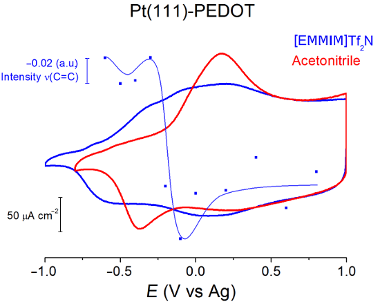
- , E-03080 Alicante, Spain 10.3762/bjoc.11.40 Abstract Thin films of PEDOT synthesized on platinum single electrodes in contact with the ionic liquid 1-ethyl-2,3-dimethylimidazolium triflimide ([EMMIM]Tf2N) were studied by cyclic voltammetry, chronoamperometry, infrared spectroscopy and atomic force
- electrochemical properties, as the ionic resistance or the electrocatalytic activity, of PEDOT are affected by the surface energy state of the electrode [6]. For example, it was found that the ionic resistance of the PEDOT films electrochemically synthesized on platinum electrodes increases in the order Pt(100
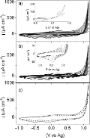
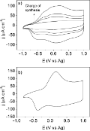
- ) during the first cycles. Figure 1 clearly shows that the electrochemical polymerization of EDOT on platinum electrodes is a surface sensitive reaction. It was found that Pt(111) has the highest electrocatalytic activity for the EDOT oxidation reaction followed by Pt(110) and finally Pt(100). Taking into




Stereoselective cathodic synthesis of 8-substituted (1R,3R,4S)-menthylamines
Beilstein J. Org. Chem. 2015, 11, 294–301, doi:10.3762/bjoc.11.34
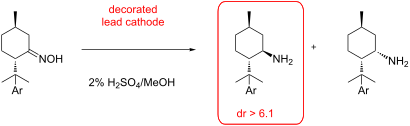
- (6c and 7c, R2 = Ph) require prolonged reaction times and render slightly lower yields. Electrochemical reduction of 8-substituted menthone oximes The electrolyses were carried out in a divided cell using a Nafion® sheet as separator and platinum as anodic material. Since previous studies revealed


Photovoltaic-driven organic electrosynthesis and efforts toward more sustainable oxidation reactions
Beilstein J. Org. Chem. 2015, 11, 280–287, doi:10.3762/bjoc.11.32
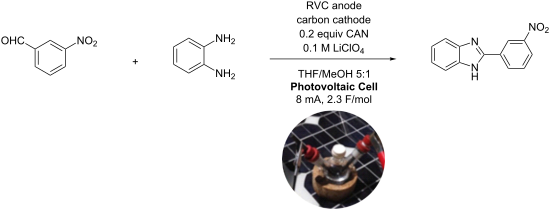
- MeOH (0.03 M) with lithium perchlorate (0.03 M, 1.0 equiv) in a flame-dried three-necked round-bottomed flask at room temperature under an argon atmosphere. The flask was equipped with a RVC anode and platinum wire cathode using two of the three necks of the flask. The photovoltaic system was inserted


Cathodic reductive coupling of methyl cinnamate on boron-doped diamond electrodes and synthesis of new neolignan-type products
Beilstein J. Org. Chem. 2015, 11, 200–203, doi:10.3762/bjoc.11.21
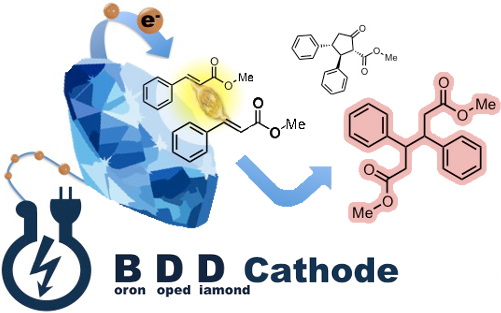
- –11), and finally the optimized conditions for the synthesis of 2 (85% yield, racemate/meso = 74:26) were acquired in the case of 2.5 F/mol current (Table 1, entry 11). To check for a different behavior of the BDD electrode, several electrode materials, including glassy carbon (GC), platinum (Pt), and


Electrochemical selenium- and iodonium-initiated cyclisation of hydroxy-functionalised 1,4-dienes
Beilstein J. Org. Chem. 2015, 11, 174–183, doi:10.3762/bjoc.11.18

- undivided cell, using platinum foil electrodes (constant current 10 mA). In this investigation only diphenyl diselenide was used as selenium source. These reaction conditions led to the formation of products of type 3 as exclusive diastereomers (Scheme 2). The cyclisation of 2 could lead to a number of
- acetonitrile. Then, the cell was equipped with a platinum plate anode and cathode and electrolysed under a constant current (10 mA, 6.67 mA/cm2) at 20 °C until completion was detected by TLC and GC–MS analysis. Then, 15 mL water were added, the mixture was extracted with diethyl ether (three times 15 mL





