


Search results
Search for "silicon" in Full Text gives 203 result(s) in Beilstein Journal of Organic Chemistry. Showing first 200.
Polythiophene and oligothiophene systems modified by TTF electroactive units for organic electronics
Beilstein J. Org. Chem. 2015, 11, 1749–1766, doi:10.3762/bjoc.11.191
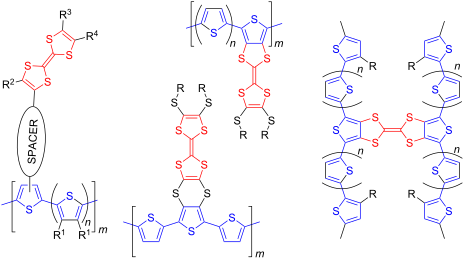
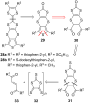
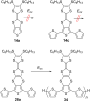
- -type semiconductor in OFETs using two solvents for spin-coating – chloroform and chlorobenzene [93]. A bottom contact, bottom gate device configuration was used with an n-doped silicon gate and a SiO2 dielectric layer. After annealing at 120 °C, AFM imaging indicated a closely packed grain-like surface




A hybrid electron donor comprising cyclopentadithiophene and dithiafulvenyl for dye-sensitized solar cells
Beilstein J. Org. Chem. 2015, 11, 1052–1059, doi:10.3762/bjoc.11.118
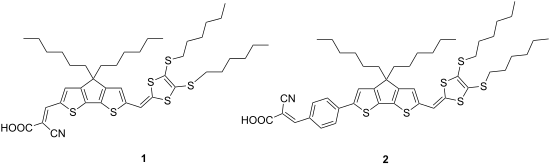
- unit. Keywords: donor–acceptor systems; dye-sensitized solar cells; electrochemistry; intramolecular charge transfer; Knoevenagel reaction; tetrathiafulvalene; Introduction Dye-sensitized solar cells (DSSCs) have been intensively investigated as an alternative to silicon-based solar cells [1][2][3][4


Is organic chemistry science – and does this question make any sense at all?
Beilstein J. Org. Chem. 2015, 11, 893–896, doi:10.3762/bjoc.11.100
- origin of chirality in bio(macro)molecules and thus in life [12]; the question why biomolecules on earth are based on carbon backbones and not on silicon; the question whether one could imagine other forms of molecular architectures that make up self-repeating systems that develop under evolutionary
Adsorption mechanism and valency of catechol-functionalized hyperbranched polyglycerols
Beilstein J. Org. Chem. 2015, 11, 828–836, doi:10.3762/bjoc.11.92
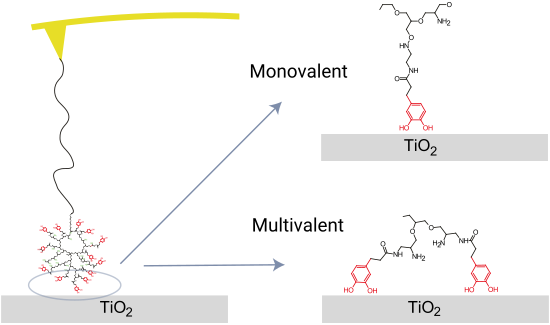
- backbone), 39.13 (COCH2CH2C), 37.57 (COCH2CH2C), 32.31 (COCH2CH2C), 31.30 (COCH2CH2C), 24.46 (CCH2CH3 of starter), 7.26 (CCH2CH3 of starter) ppm. TiO2 surface TiO2 slides were prepared by sputtering titanium onto silicon wafers. The sputter process was performed using a commercially available radio
- GMBH, Kirchheim, Germany) and afterwards rinsed with ultrapure water. Tip functionalization The molecule is functionalized to the tip through covalent bonds in a similar manner as previously described [2]. Silicon nitride cantilevers (MLCT, Bruker SPM probes, Camarillo, USA) were first activated in an



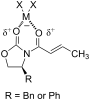
Diastereoselective and enantioselective conjugate addition reactions utilizing α,β-unsaturated amides and lactams
Beilstein J. Org. Chem. 2015, 11, 530–562, doi:10.3762/bjoc.11.60
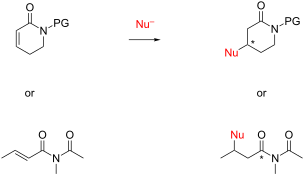
- high enantioselectivities. Though carbon nucleophiles are used in the majority of the copper-catalyzed ECA reactions of α,β-unsaturated amides and lactams, Procter and co-workers have expanded this methodology to the addition of silicon [96]. This reaction is particularly useful because the silyl group
- can be transformed into a number of functional groups [97]. In Procter’s work, they used a Cu(I)–NHC (N-heterocyclic carbene) system to catalyze the asymmetric transfer of silicon from PhMe2SiBpin [98][99] to α,β-unsaturated amides and lactams through activation of the Si–B bond [96] (Scheme 10
- ). Scheme 10 shows selected examples of the α,β-unsaturated lactams and amides that were used for the 1,4-silylation. Overall, the reactions were achieved in both high yields and enantioselectivities with a variety of substrates. In addition to silicon, much work has been done on the asymmetric 1,4-additon




Synthesis and surface grafting of a β-cyclodextrin dimer facilitating cooperative inclusion of 2,6-ANS
Beilstein J. Org. Chem. 2015, 11, 514–523, doi:10.3762/bjoc.11.58
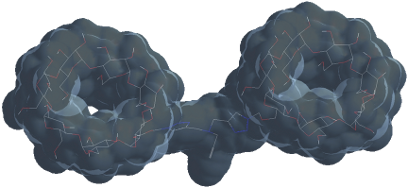
- fluorescence spectroscopy that the inclusion of the fluorescent guest into both cavities of the β-CD dimer is maintained when grafted onto a solid surface. Keywords: 2,6-ANS; β-cyclodextrin dimer; silicon dioxide; surface grafting; total internal reflection fluorescence spectroscopy; Introduction Since the
- accessibility for inclusion-complex formation [13]. The research presented here aims to bring the cooperative effects of β-CD dimers to solid silicon dioxide surfaces. Modification of these surfaces allows the introduction of the extraordinary binding affinity and selectivity of CD dimers to silicon wafer
- technology and allows the potential cooperative effects to be exploited within chromatographic applications by grafting to silica gels. Further, silicon dioxide surfaces in the form of quartz and glass allow the detection and monitoring of binding events by optical techniques such as fluorescence


The Shono-type electroorganic oxidation of unfunctionalised amides. Carbon–carbon bond formation via electrogenerated N-acyliminium ions
Beilstein J. Org. Chem. 2014, 10, 3056–3072, doi:10.3762/bjoc.10.323
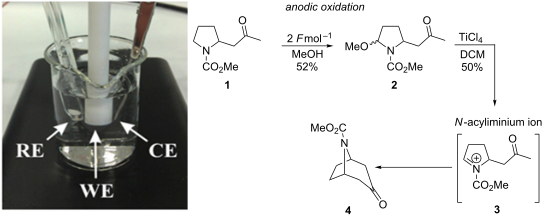
- of the generated reactive intermediates and assist in the formation of the desired products. Tin, silicon or sulfur-based electroauxiliaries have proved useful in this endeavour. Yoshida and co-workers developed an organothio electroauxiliary that is selectively cleaved under anodic oxidation
- conditions [32][33]. Although the introduction of an electroauxiliary requires an additional synthetic step to prepare, the resulting carbon–tin, carbon–silicon or carbon–sulfur bond has a less positive oxidation potential than an unfunctionalised carbamate. Therefore, exquisite control can be exerted on the
- –silicon bond (when an electroauxiliary is present) or direct carbon–hydrogen bond fission to afford the α-methoxylated product (Scheme 10) [67][68]. The direct anodic oxidation reaction to afford the N-acyliminium ion can be intercepted with a carbon nucleophile enantioselectively when a chiral auxiliary


Organic chemistry on surfaces: Direct cyclopropanation by dihalocarbene addition to vinyl terminated self-assembled monolayers (SAMs)
Beilstein J. Org. Chem. 2014, 10, 2897–2902, doi:10.3762/bjoc.10.307
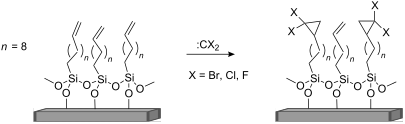
- -SiCl3 and silicon substrate). In the latter chemical modification of the reactive groups of the pre-coated SAM has to be efficient enough such that a reasonable conversion can be obtained, with chemical specificity and lack of surface degradation. In this respect ‘click’ reactions have become attractive
- reported the formation of high quality vinyl-terminated SAMs generated from the vapour phase by adsorption of octadecyltrichlorosilanes onto silicon wafers [16]. With access to these SAMs it became an objective to explore functional group modification of the vinyl double bond. Carbon–carbon bond formation
- characterised by XPS, contact angle measurements and ellipsometry (see Supporting Information File 1). With XPS elements such as silicon, carbon and oxygen were expected in all cases [16]. In each case control reactions were also carried out on the C18-methyl (Me)-terminated SAMs, to ensure that only the vinyl


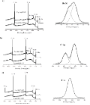


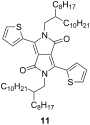
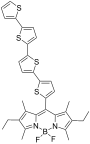
Solution processable diketopyrrolopyrrole (DPP) cored small molecules with BODIPY end groups as novel donors for organic solar cells
Beilstein J. Org. Chem. 2014, 10, 2683–2695, doi:10.3762/bjoc.10.283
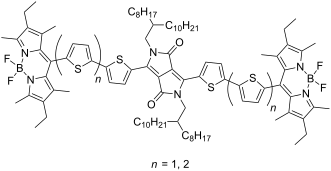
- Keithley 2400 source-measure unit and a Steuernagel AM 1.5 G solar simulator at 100 mW cm−2. The illumination intensity was verified and calibrated with an NREL calibrated mono-silicon detector with KG5 filter. External quantum efficiency (EQE) measurements were performed with an incident photon to charge




The effect of permodified cyclodextrins encapsulation on the photophysical properties of a polyfluorene with randomly distributed electron-donor and rotaxane electron-acceptor units
Beilstein J. Org. Chem. 2014, 10, 2145–2156, doi:10.3762/bjoc.10.222
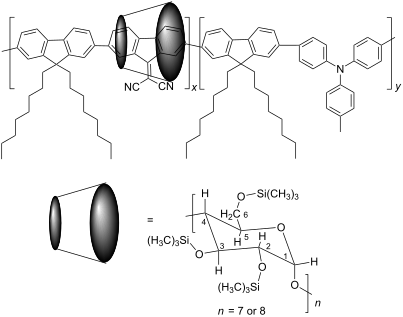
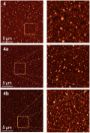
- -shaped silicon cantilever with a resonance peak of 88 kHz. For image acquisition from different areas (squares with scanning length, Lsc, ranging from 1 μm to 20 μm), the Nova v.1.26.0.1443 for Solver software was used. The root mean square roughness (Sq) was calculated for all the investigated areas


Scalable synthesis of 5,11-diethynylated indeno[1,2-b]fluorene-6,12-diones and exploration of their solid state packing
Beilstein J. Org. Chem. 2014, 10, 2122–2130, doi:10.3762/bjoc.10.219
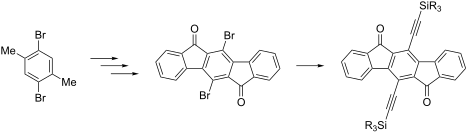
- with symmetry (three mirror symmetry planes about the silicon), (2) bulky alkyl groups with symmetry, and (3) dimethyl-substituted possessing only one mirror plane of symmetry about the silicon. When looking further for trends, we compared two parameters to see if any of them ultimately yielded packing


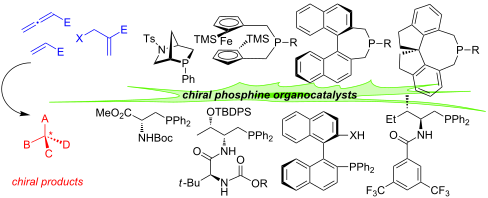
Chiral phosphines in nucleophilic organocatalysis
Beilstein J. Org. Chem. 2014, 10, 2089–2121, doi:10.3762/bjoc.10.218


Influence of cyclodextrin on the UCST- and LCST-behavior of poly(2-methacrylamido-caprolactam)-co-(N,N-dimethylacrylamide)
Beilstein J. Org. Chem. 2014, 10, 1951–1958, doi:10.3762/bjoc.10.203
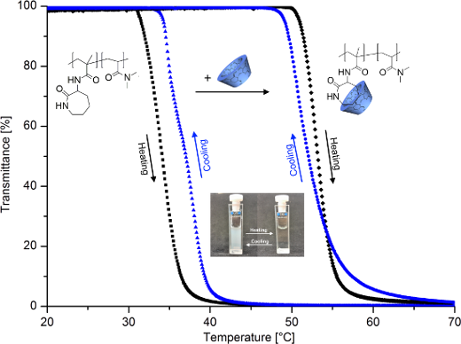
- accomplished using a TP1 turbidity photometer in a temperature range of 5 to 70 °C. During continuous stirring, the transparency of the sample was determined by a voltage-controlled semiconductor or laser and a silicon photodiode at a wavelength of 590 nm and a heating or cooling rate of 1 °C min−1. The


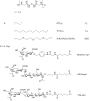
Biantennary oligoglycines and glyco-oligoglycines self-associating in aqueous medium
Beilstein J. Org. Chem. 2014, 10, 1372–1382, doi:10.3762/bjoc.10.140
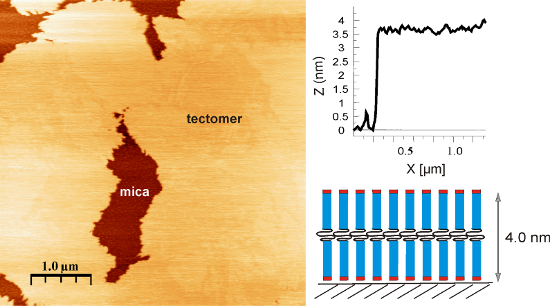
- (Digital Instruments, USA). Commercial silicon nitride cantilevers with force constants of 0.06, 0.12, and 0.32 Nm−1 were used for the measurements in contact mode in liquid cell. Cantilevers with a resonance frequency of about 300 kHz and a force constant of 42 Nm−1 were used for the SFM tapping mode in





Molecular recognition of surface-immobilized carbohydrates by a synthetic lectin
Beilstein J. Org. Chem. 2014, 10, 1354–1364, doi:10.3762/bjoc.10.138
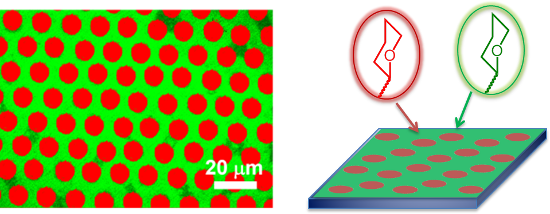
- HisHis towards immobilized NANA in comparison with the glycosides of glucose (Glc), galactose (Gal) and mannose (Man) (Figure 1). In this study, we exploit the epoxide ring opening reaction of amine-tethered carbohydrates on epoxide-terminated SAMs [42] to print carbohydrate microarrays on silicon and
- silicon oxide surfaces can be obtained in only one step from an epoxy-terminated trimethoxysilane. The most common approaches to fabricate epoxide SAMs is by dip-coating or vapor condensation. However, this leads to the formation of thick films of aggregated molecular layers with undefined surface
- morphology [47][48][49][50]. Therefore, the epoxide SAMs were prepared by the method of Julthongpiput et al. because well-defined monolayers of epoxides on glass and silicon substrates can be obtained by using (3-glycidoxypropyl)trimethoxysilane in toluene [42]. The successful surface modification was


Amino acid motifs in natural products: synthesis of O-acylated derivatives of (2S,3S)-3-hydroxyleucine
Beilstein J. Org. Chem. 2014, 10, 1135–1142, doi:10.3762/bjoc.10.113
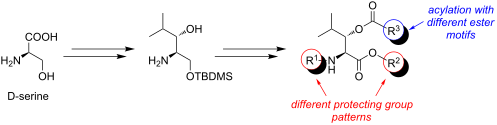
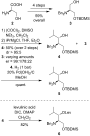
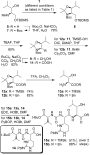
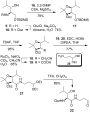
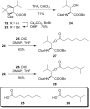
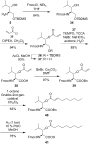
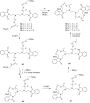
- , nitrogen = blue, silicon = grey, and hydrogen = white. The other hydrogen atoms are omitted for clarity. Synthesis of stereoisomerically pure amino alcohol 5 [32] and of derivative 6 suitable for X-ray crystallography. Synthesis of (2S,3S)-3-hydroxyleucine building blocks 13a,b useful for N-derivatization




Integration of enabling methods for the automated flow preparation of piperazine-2-carboxamide
Beilstein J. Org. Chem. 2014, 10, 641–652, doi:10.3762/bjoc.10.56
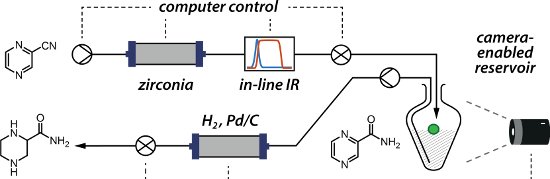
- product. Using a Mettler–Toledo FlowIR™ fitted with a detector with a silicon window (required for visualising the nitrile region of the spectrum, which is blocked by the standard diamond window) the change from nitrile to amide can be observed, providing real-time feedback on the state of the reaction




Direct and indirect single electron transfer (SET)-photochemical approaches for the preparation of novel phthalimide and naphthalimide-based lariat-type crown ethers
Beilstein J. Org. Chem. 2014, 10, 514–527, doi:10.3762/bjoc.10.47
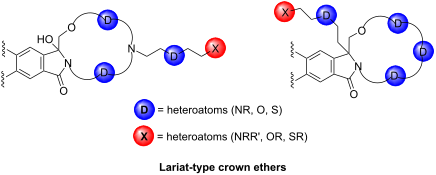
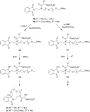
- organosilanes. Among a number of n-electron donors, those that contain α-trialkylsilyl substituents 17 have been observed to undergo ready SET oxidation to generate silicon stabilized cation radicals 18 (Scheme 4). Studies by Yoshida and coworkers [55][56][57][58][59][60][61] have shown that α-silyl cation
- delocalization arising by the orbital overlap, lowers the σC-Si bond dissociation energy and makes the silicon center more electropositive. Consequently, short-lived α-silyl cation radicals typically undergo fast, silophile-promoted desilylation to form the carbon centered free radicals 19 (Scheme 4). Based on




Continuous flow nitration in miniaturized devices
Beilstein J. Org. Chem. 2014, 10, 405–424, doi:10.3762/bjoc.10.38
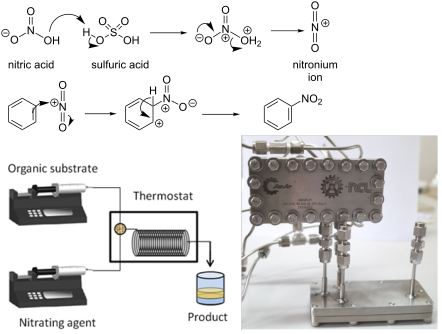
- ). The selectivity of the desired product 37 was improved under flow conditions. A continuous flow silicon-glass microreactor equipped with multiple functionalities such as multistream micromixer, reaction channel, large-area cooling chamber, and five integrated miniature temperature sensors was used
- the mixed acids in the conventional approach, the authors used fuming nitric acid. The experimental setup comprised three independent pumps for toluene, fuming nitric acid, and ice-water. The reaction took place in a silicon microreactor consisting of nine reaction channels in parallel (0.25 mm


Deoxygenative gem-difluoroolefination of carbonyl compounds with (chlorodifluoromethyl)trimethylsilane and triphenylphosphine
Beilstein J. Org. Chem. 2014, 10, 344–351, doi:10.3762/bjoc.10.32
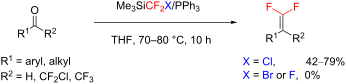
- activation of the C–Cl bond by PPh3 (Path B). In Path A, PPh3 firstly coordinates the silicon atom of TMSCF2Cl to form activated penta-coordinated silicon species 8 [41] and activates both the C–Si and the C–Cl bond. Next, the release of CF2 leads to silylphosphonium salt 9. Finally, the fragmentation of 9


Synthesis of five- and six-membered cyclic organic peroxides: Key transformations into peroxide ring-retaining products
Beilstein J. Org. Chem. 2014, 10, 34–114, doi:10.3762/bjoc.10.6
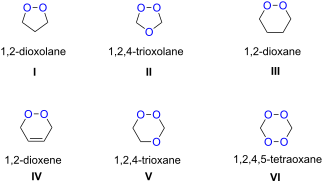
- obtained as the by-product (Scheme 15, Table 6) [249]. The desilylation of the initially formed silicon peroxide followed by cyclization of the hydroperoxide accompanied by the attack on the electrophilic center is another example of the use of the Isayama–Mukaiyama reaction for the synthesis of cyclic
- ) from 2-(3,5,5-trimethyl-1,2-dioxolan-3-yl)acetic acid (151) (Scheme 37) [267]. Dioxolane 155 that contains a free hydroxy group was synthesized by the oxidative desilylation of silicon-containing peroxide 124 with n-Bu4NF and H2O2 (Scheme 38) [259]. Dioxolane 158 with the aminoquinoline antimalarial






Flow microreactor synthesis in organo-fluorine chemistry
Beilstein J. Org. Chem. 2013, 9, 2793–2802, doi:10.3762/bjoc.9.314
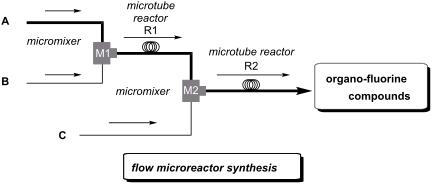
- most efficient reagents for peptide bond formation. Seeberger and co-workers demonstrated the use of a silicon-based microreactor for the effective synthesis of peptides (Scheme 8) [68]. The condensation reaction completed in only 3 min at 90 °C to afford the dipeptide in high yield. Under the


Gallium-containing polymer brush film as efficient supported Lewis acid catalyst in a glass microreactor
Beilstein J. Org. Chem. 2013, 9, 1698–1704, doi:10.3762/bjoc.9.194
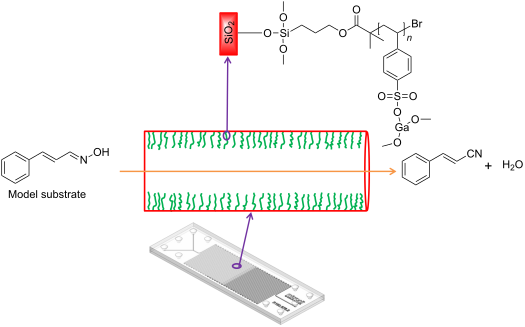
- Polystyrene sulfonate polymer brushes, grown on the interior of the microchannels in a microreactor, have been used for the anchoring of gallium as a Lewis acid catalyst. Initially, gallium-containing polymer brushes were grown on a flat silicon oxide surface and were characterized by FTIR, ellipsometry, and
- a flat silicon oxide surface in order to optimize the reaction conditions before attempting the functionalization of a microreactor. Polystyrene sulfonate (PSS) polymer brushes [19] were synthesized according to the procedure summarized in Scheme 2. First, a monolayer of atom transfer radical
- polymerization (ATRP) initiator was covalently anchored on silicon oxide substrates [20]. Then, a solution of styrene sulfonate in methanol/water (1:3) in the presence of 2-2’-bipyridyl and CuBr, was used to grow the PSS polymer brushes by means of ATRP. After activation of the polymer brushes with 1 M HCl, they


Organocatalyzed enantioselective desymmetrization of aziridines and epoxides
Beilstein J. Org. Chem. 2013, 9, 1677–1695, doi:10.3762/bjoc.9.192
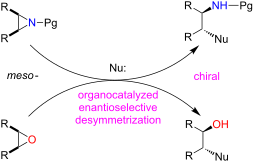
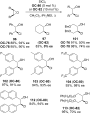
- the enantioselective desymmetrization of meso-epoxides. Organocatalyzed enantioselective ring-opening of epoxides in early stage In 1981, Andrews [78] and co-workers have found that the ring-opening of cyclohexene and cyclopentene oxides with silicon halides was facilitated by the addition of
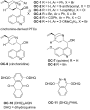
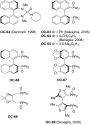
- was 87% ee. The proposed reaction mechanism is depicted in Figure 14. The first step of the catalytic cycle is the activation of SiCl4 by chiral phosphoramide OC-62 to form a complex, which was ionized to produce a highly reactive silicon cation and a chloride ion. The epoxide was activated by the
- chiral complexation of the phosphorus/silicon cation, and then followed by an attack with the chloride ion in an SN2 fashion to furnish chlorohydrin enantioselectively (Figure 14). From this description, the activation of SiCl4 was depending on the formation of the chiral complexation of the phosphorus








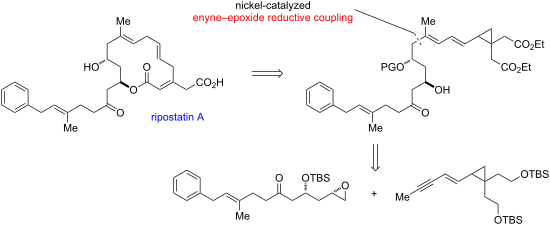
A reductive coupling strategy towards ripostatin A
Beilstein J. Org. Chem. 2013, 9, 1533–1550, doi:10.3762/bjoc.9.175
- configuration in the product (Scheme 3, reaction 1). Berson has quantified the energetic preference in this transformation, while Turos has shown that the presence of a silicon substituent on the “donor carbon” facilitates the hydrogen migration [23][24][25][26]. In contrast, Wilson has reported formation of





