Search results
Search for "small molecule" in Full Text gives 226 result(s) in Beilstein Journal of Organic Chemistry. Showing first 200.
Mechanochemical synthesis of thioureas, ureas and guanidines
Beilstein J. Org. Chem. 2017, 13, 1828–1849, doi:10.3762/bjoc.13.178
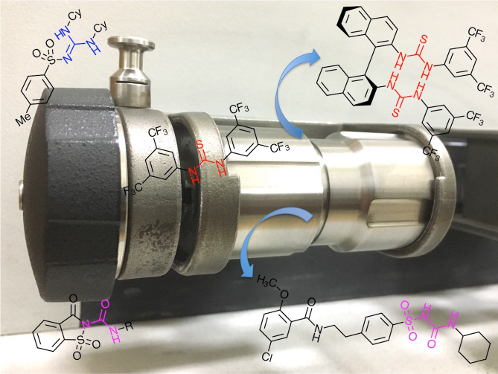
- enabled the quantitative synthesis of (thio)ureas and guanidines without using bulk solvents and the generation of byproducts, but it has also been established as a means to develop "click-type" chemistry for these classes of compounds and the concept of small molecule desymmetrization. Moreover




Bifunctional organocatalysts for the asymmetric synthesis of axially chiral benzamides
Beilstein J. Org. Chem. 2017, 13, 1518–1523, doi:10.3762/bjoc.13.151
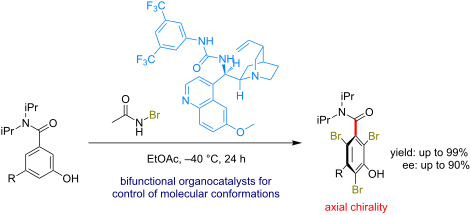
- resolution [42][43][44][45][46][47], desymmetrization [48][49][50][51][52][53][54], de novo annulation [55][56][57][58][59][60][61], and point-to-axial chirality transfer [58][59] (for reviews, see references [31][62][63]), motivated us to expand on the utility of this class of small-molecule catalysts. We




2-Methyl-2,4-pentanediol (MPD) boosts as detergent-substitute the performance of ß-barrel hybrid catalyst for phenylacetylene polymerization
Beilstein J. Org. Chem. 2017, 13, 1498–1506, doi:10.3762/bjoc.13.148
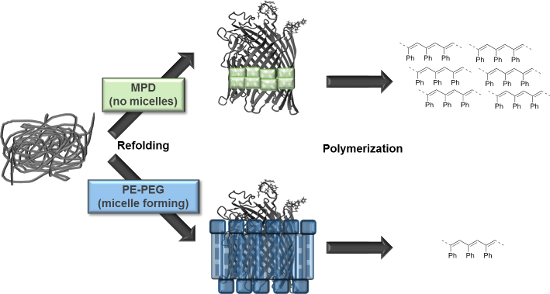
- stabilization agents to solubilize purified transmembrane proteins is crucial for their application in aqueous media. The small molecule 2-methyl-2,4-pentanediol (MPD) was used to stabilize the transmembrane protein Ferric hydroxamate uptake protein component A (FhuA) utilized as host for the construction of a
- selectivity [13]. The membrane protein FhuA ΔCVFtev in MPD shows stability for more than three days under the reaction conditions and therefore is leading to significantly increased yields. Conclusion In conclusion, we successfully demonstrated the use of MPD as small-molecule stabilizer for utilization of


Synthesis of oligonucleotides on a soluble support
Beilstein J. Org. Chem. 2017, 13, 1368–1387, doi:10.3762/bjoc.13.134
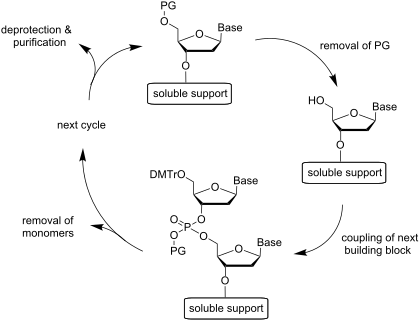
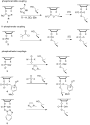
- phosphotriester chemistry The pioneering syntheses of ONs on a soluble support were carried out by the phosphotriester strategy. Although this coupling chemistry is seldom used on a solid support where small molecule reagents and wastes can be removed by simple washing, the avoidance of the oxidation step due to
- coupling was carried out in dioxane in the presence of NMI. Precipitations were achieved by 10-fold dilution with MeOH. All small-molecule compounds remained in solution. Removal of the 2-chlorophenyl protections with the tetramethylguanidium salt of (E)-2-nitrobenzaldoxime in aqueous dioxane, followed by
- elongation. Ethylthiotetrazole-activated coupling (3 equiv per OH) in MeCN was followed by sulfurization with phenylacetyl disulfide in pyridine. All small molecule compounds were removed by the so-called diafiltration through a polybenzimidazole-based membrane PBI-17DBX [71][72]. In other words, the volume






Biomimetic molecular design tools that learn, evolve, and adapt
Beilstein J. Org. Chem. 2017, 13, 1288–1302, doi:10.3762/bjoc.13.125
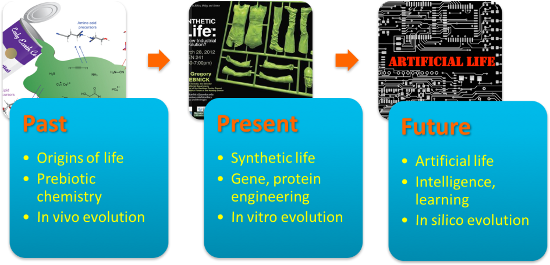
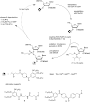
- purity of a chemical synthesis. Reprinted with permission from [36]; copyright 2016 Macmillan Publishers Ltd. (Top) Photograph of a small-molecule synthesizer comprised of three modules for deprotection, coupling, and purification steps. (Bottom) Natural products, materials, pharmaceuticals, and
- synthesis and analysis under computer control [35]. Another very recent and important step towards general automated chemical synthesis was reported in Science in 2015 (Figure 9) [37]. This platform provided a proof of concept of a general and broadly accessible automated solution to the problems of small
- -molecule synthesis. These technologies have now made practical the autonomous evolution of materials, where the design-synthesis-testing cycle is run by algorithmic evolutionary control and implemented robotically. In order to achieve autonomous algorithmic control, it is necessary to translate the





Glycoscience@Synchrotron: Synchrotron radiation applied to structural glycoscience
Beilstein J. Org. Chem. 2017, 13, 1145–1167, doi:10.3762/bjoc.13.114
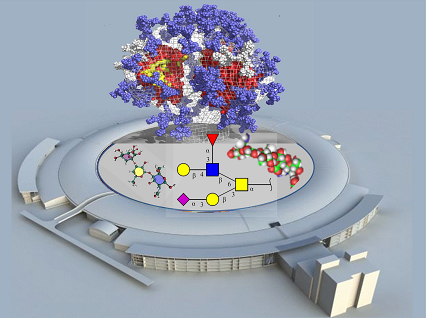
- molecular crystals of micrometric dimensions or in the form of polycrystalline materials. Small molecule crystals In the quest to solve the crystal structures of cello-oligosaccharides, as model compounds of cellulose, several attempts to grow crystals of β-D-cellotetraose of a size suitable for X-ray




From chemical metabolism to life: the origin of the genetic coding process
Beilstein J. Org. Chem. 2017, 13, 1119–1135, doi:10.3762/bjoc.13.111
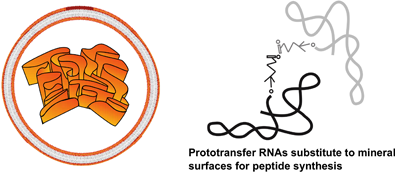
- organise and rule the flow of information that is key to life. The synthesis of macromolecules requires an abundant supply of basic building blocks produced by metabolism. Up to this point, we have followed Dyson’s reasoning. We have assumed that small-molecule metabolism progressively improved


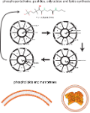

Dynamics and interactions of ibuprofen in cyclodextrin nanosponges by solid-state NMR spectroscopy
Beilstein J. Org. Chem. 2017, 13, 182–194, doi:10.3762/bjoc.13.21
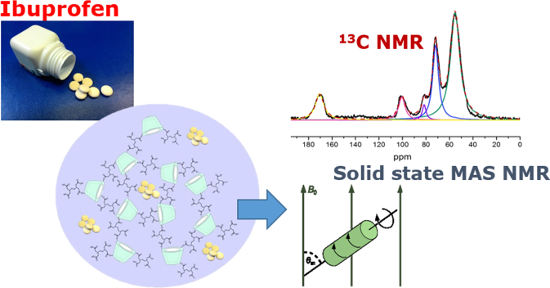
- . Ibuprofen is a small molecule characterized by an interesting internal dynamic behaviour due to two main molecular fragments: the alkyl chain and the aromatic ring. The internal motion was studied in detail using solid-state 13C NMR spectroscopy at different temperatures by Carignani et al. [25]. The


A new class of organogelators based on triphenylmethyl derivatives of primary alcohols: hydrophobic interactions alone can mediate gelation
Beilstein J. Org. Chem. 2017, 13, 138–149, doi:10.3762/bjoc.13.17
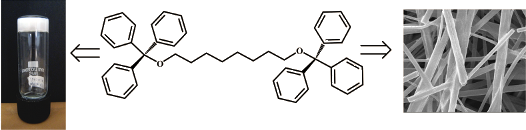
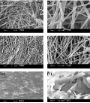
- unit which may be further exploited in the design of small molecule based gelators. Keywords: hydrophobic interactions; organogelator; SEM; triphenylmethyl group; xerogel; Introduction Small organic molecules capable of forming gels are called low molecular weight gelators (LMWGs) [1][2][3]. These





New approaches to organocatalysis based on C–H and C–X bonding for electrophilic substrate activation
Beilstein J. Org. Chem. 2016, 12, 2834–2848, doi:10.3762/bjoc.12.283
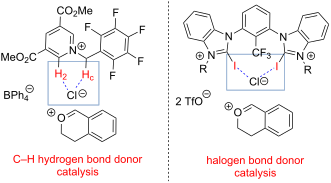
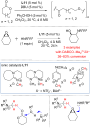
- design of small molecule-based catalysts mimicking enzymatic function. A significant number of such efforts has been dedicated to designing new catalysts to enhance the electrophilicity of organic molecules through non-covalent interactions, and many important areas of organocatalysis have emerged from
- examples demonstrate the effectiveness of such interactions for organocatalyst design. While C–H···A hydrogen bonds have been invoked in biological processes, halogen bonding is not commonly observed in natural enzyme-catalyzed reactions. Therefore, application of these new interactions for small molecule








Synthesis of spiro[isoindole-1,5’-isoxazolidin]-3(2H)-ones as potential inhibitors of the MDM2-p53 interaction
Beilstein J. Org. Chem. 2016, 12, 2793–2807, doi:10.3762/bjoc.12.278
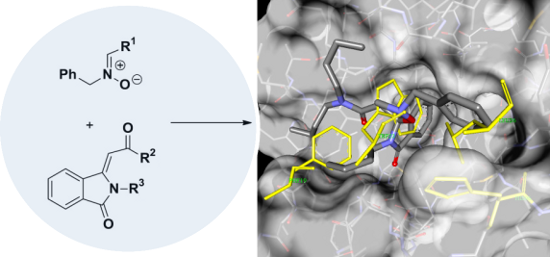
- overexpression of MDM2 which suppresses the functions of the p53 protein [5][6][7][8]. The design of non-peptide, small-molecule inhibitors that block the MDM2-p53 interaction has been sought as an attractive strategy to activate p53 for the treatment of cancer and other human diseases [9][10][11]. Major
- advances have been made in the design of lipophilic small-molecule inhibitors of the MDM2-p53 interaction in recent years, and several compounds have moved into advanced preclinical development or clinical trials [12][13][14]. Potent MDM2-p53 inhibitors, such as Nutlin-3 [12] and the spirooxindoles, for


Chemical probes for competitive profiling of the quorum sensing signal synthase PqsD of Pseudomonas aeruginosa
Beilstein J. Org. Chem. 2016, 12, 2784–2792, doi:10.3762/bjoc.12.277
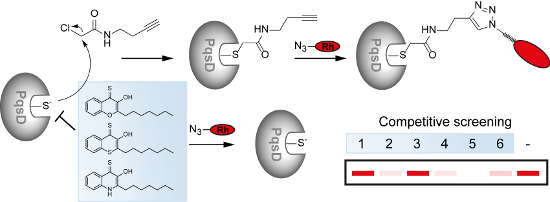
- fibrosis patients [2][3]. P. aeruginosa deploys numerous virulence factors such as toxins, extracellular enzymes, and small molecule factors that are responsible for the bacterium’s ability to invade the host and cause a broad spectrum of different diseases [4][5]. The production of these virulence factors



Computational methods in drug discovery
Beilstein J. Org. Chem. 2016, 12, 2694–2718, doi:10.3762/bjoc.12.267
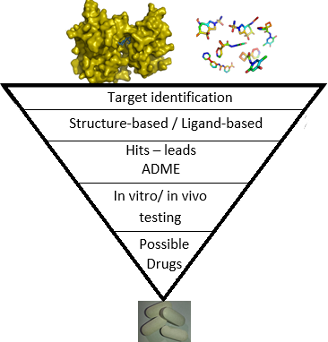
- resonance (EPR) spectroscopy data has also been used in high-resolution de novo structure prediction [75][76][77]. Protein and small molecule databases Information about drug molecules and target structures is critical in using SBDD tools and many repositories collect and store such information about small
- molecules and target proteins. PubChem, a small molecule repository is available through NIH which contains millions of biologically relevant small molecules [78]. ZINC is a virtual high-throughput screening compound library which is a free public resource [79][80]. This database contains over 35 million
- protease. Another energy-based method, FTMAP, uses 16 probes in identifying hot spots in structures and was more recently extended to include any user provided small molecule as an additional probe [93][94]. Many other binding pocket finding programs exist. PEP-SiteFinder [95], SiteMap available through



Effects of solvent additive on “s-shaped” curves in solution-processed small molecule solar cells
Beilstein J. Org. Chem. 2016, 12, 2543–2555, doi:10.3762/bjoc.12.249
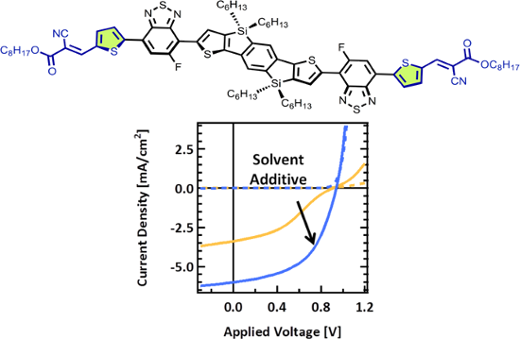
- multidisciplinary research efforts have led to consistent increases in the efficiency of organic solar cells, making the technology a bright prospect in the quest for alternative energy [1][2][3][4]. In particular the rapid development of solution-processed small molecule materials over the last several years has
- counterparts [5][6]. Also of import stands the fact that easily modified, modular structures lead to finely-tunable energy levels and optical properties through molecular design [7][8]. Most high-performing small molecule electron-donor materials are configured such that the conjugated backbone consists of
- , reduced surface recombination, and interfacial defects leading to traps; device simulations have shown that all of these could indeed result in the s-shape behavior [23][24][25][26][27][28][29][30]. Herein we describe the development of a novel small molecule system with nearly ideal optoelectronic


Synthesis, dynamic NMR characterization and XRD studies of novel N,N’-substituted piperazines for bioorthogonal labeling
Beilstein J. Org. Chem. 2016, 12, 2478–2489, doi:10.3762/bjoc.12.242
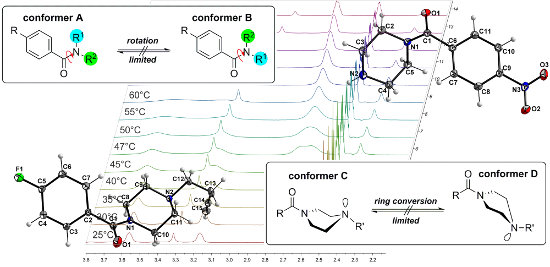
- benzoyl moiety. Furthermore, a proof of concept was accomplished with a pharmacologically active peptide using the Huisgen-click reaction and compound 4b. Additionally, 5b was introduced in a small molecule using the traceless Staudinger ligation. The synthesis of the 18F-labeled building blocks [18F]4b




High performance p-type molecular electron donors for OPV applications via alkylthiophene catenation chromophore extension
Beilstein J. Org. Chem. 2016, 12, 2298–2314, doi:10.3762/bjoc.12.223
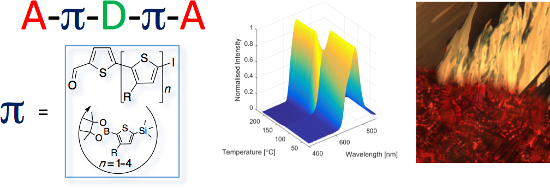
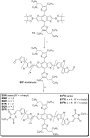
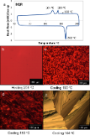
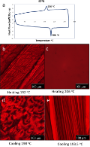
- devices with PTB7-Th resulting in high-performance OPV devices with up to 10.7% PCE. Keywords: molecular materials; nematic liquid crystal; organic solar cells; organic synthesis; p-type organic semiconductors; small molecule; Introduction Bulk heterojunction (BHJ) organic solar cells (OSC), a blend of




Effect of the π-conjugation length on the properties and photovoltaic performance of A–π–D–π–A type oligothiophenes with a 4,8-bis(thienyl)benzo[1,2-b:4,5-b′]dithiophene core
Beilstein J. Org. Chem. 2016, 12, 1788–1797, doi:10.3762/bjoc.12.169
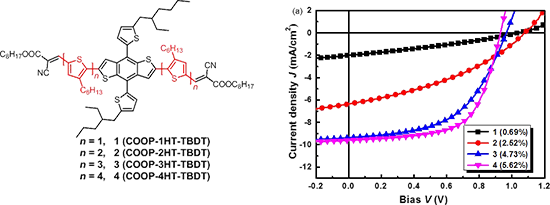
- variation, and good reproducibility in photovoltaic performance [5][6][7]. To date, PCEs of more than 9% for small molecule OSCs (SMOSCs) have been reported [8][9][10][11][12]. Among various electron-donating moieties, benzo[1,2-b:4,5-b′]dithiophene (BDT) has been widely used as the central building block
- terthiophene-bridged small molecule with a BDT core [8]. Currently, there are three main structure modifications of A–π–D–π–A-type molecules with a BDT core. One is the substitution on the 4,8-positions of the BDT core with aromatic units, including alkyl/alkoxyl/alkylthiol-substituted phenyl groups [15



Dinuclear thiazolylidene copper complex as highly active catalyst for azid–alkyne cycloadditions
Beilstein J. Org. Chem. 2016, 12, 1566–1572, doi:10.3762/bjoc.12.151
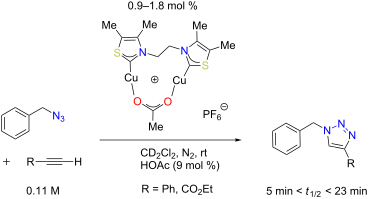
- bioactive surfaces [8][14], imaging of biochemical processes [15], localization of bioactive compounds inside living cells [16], syntheses of small-molecule screening libraries [17], catenane and rotaxane syntheses [18], in reactions under continuous flow processing [19], polymer and surface science [20][21


Star-shaped and linear π-conjugated oligomers consisting of a tetrathienoanthracene core and multiple diketopyrrolopyrrole arms for organic solar cells
Beilstein J. Org. Chem. 2016, 12, 1459–1466, doi:10.3762/bjoc.12.142
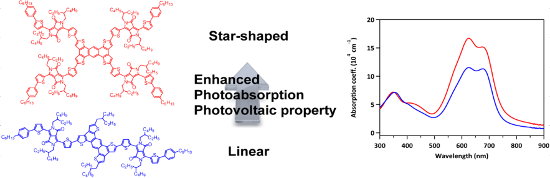
- highly different from that of the reported general polymer- and small-molecule-based OSCs. A star-shaped molecular structure containing a two-dimensionally extended π-conjugated system is a promising electronic system for designing photovoltaic organic materials, as a result of its excellent


Discovery of an inhibitor of the production of the Pseudomonas aeruginosa virulence factor pyocyanin in wild-type cells
Beilstein J. Org. Chem. 2016, 12, 1428–1433, doi:10.3762/bjoc.12.137
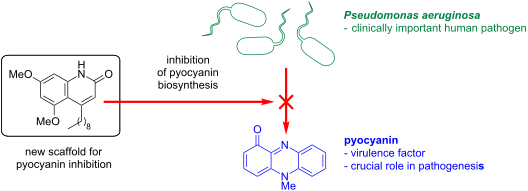
- , UK Bioinformatics Institute, A*STAR, 30 Biopolis Street, #07-01 Matrix, Singapore 138671 10.3762/bjoc.12.137 Abstract Pyocyanin is a small molecule produced by Pseudomonas aeruginosa that plays a crucial role in the pathogenesis of infections by this notorious opportunistic pathogen. The inhibition
- ]. Pyocyanin is an important redox active small molecule virulence factor which is widely considered to play a crucial role in the pathogenesis of P. aeruginosa infections (Figure 1) [8][9][17][18]. The inhibition of pyocyanin production has been identified as an attractive antivirulence strategy for the
- compounds with the ability to reduce pyocyanin production, there are several well-documented problems associated with the potential use of molecules based on the AHL framework in a therapeutic context [9][12][20]. Thus, there is interest in the identification of new structural classes of small-molecule


3,6-Carbazole vs 2,7-carbazole: A comparative study of hole-transporting polymeric materials for inorganic–organic hybrid perovskite solar cells
Beilstein J. Org. Chem. 2016, 12, 1401–1409, doi:10.3762/bjoc.12.134
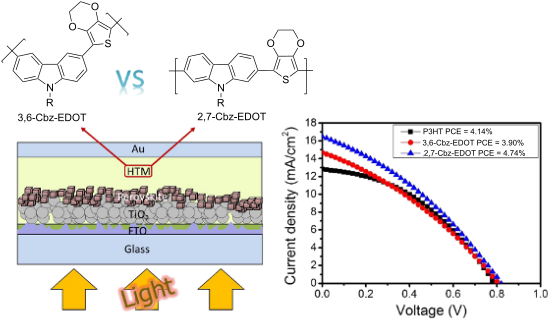
- as its complicated multistep synthesis, low hole mobility in its pristine form, and expensive fabrication costs of the PSCs due to the sublimable small molecule. Accordingly, solution-processable hole-transporting polymers with simple structures have also been pursued as HTMs in the PSCs. Common p


The role of alkyl substituents in deazaadenine-based diarylethene photoswitches
Beilstein J. Org. Chem. 2016, 12, 1103–1110, doi:10.3762/bjoc.12.106
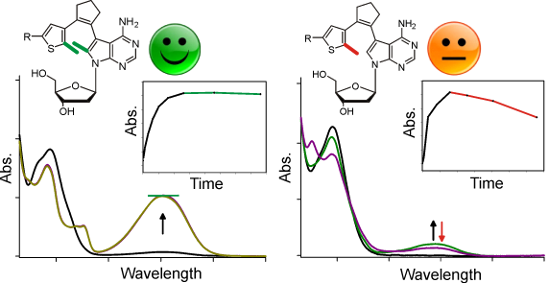
- and function, as it is non-invasive, provides high spatio-temporal resolution, and offers the option of orthogonality [13][14]. One of the common approaches for introducing photoresponsiveness into biomolecules is their covalent functionalization with small-molecule photoswitches [1][2][13][15][16][17


Catalytic asymmetric synthesis of biologically important 3-hydroxyoxindoles: an update
Beilstein J. Org. Chem. 2016, 12, 1000–1039, doi:10.3762/bjoc.12.98
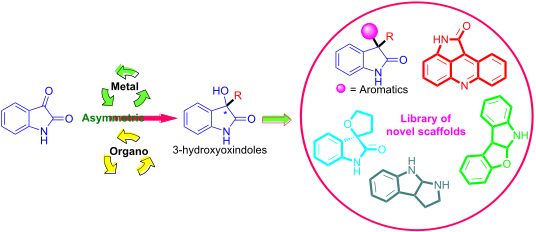
- has been reported to be able to inhibit the EWS-FLI1/RHA interactions specifically, significantly more potent than its (R)-enantiomer and racemic compound [12]. Additionally, the 3-hydroxyoxindoles as versatile intermediates have also been used to construct small-molecule libraries for drug screening




Opportunities and challenges for direct C–H functionalization of piperazines
Beilstein J. Org. Chem. 2016, 12, 702–715, doi:10.3762/bjoc.12.70
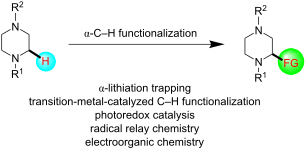
- Zhishi Ye Kristen E. Gettys Mingji Dai Department of Chemistry and Center for Cancer Research, Purdue University, West Lafayette, Indiana 47907, United States 10.3762/bjoc.12.70 Abstract Piperazine ranks within the top three most utilized N-heterocyclic moieties in FDA-approved small-molecule
- : α-lithiation; C–H functionalization; heterocycle; photoredox catalysis; piperazine; Introduction Piperazine is one of the most important saturated N-heterocycles frequently found in life-saving small-molecule pharmaceuticals [1]. In a recent statistical study done by Njardarson and co-workers
- used to treat HIV/AIDS [5]. Gatifloxacin is an important fluoroquinolone antibiotic [6]. Despite the high frequency appearance of piperazines in small-molecule pharmaceuticals, over 80% only contain substituents at the two nitrogen atoms and a very small fraction of them have simple carbon




From steroids to aqueous supramolecular chemistry: an autobiographical career review
Beilstein J. Org. Chem. 2016, 12, 684–701, doi:10.3762/bjoc.12.69
- dimethylbenzil is irradiated, the encapsulated sensitizer is excited and can transfer its energy to an oxygen molecule adventitiously entering the capsule. (Although guest exchange is slow on the NMR timescale, there is a much faster dynamic breathing of the capsule that allows small molecule entry and egress