Search results
Search for "Pd/C" in Full Text gives 318 result(s) in Beilstein Journal of Organic Chemistry. Showing first 200.
Effective immobilisation of a metathesis catalyst bearing an ammonium-tagged NHC ligand on various solid supports
Beilstein J. Org. Chem. 2016, 12, 5–15, doi:10.3762/bjoc.12.2
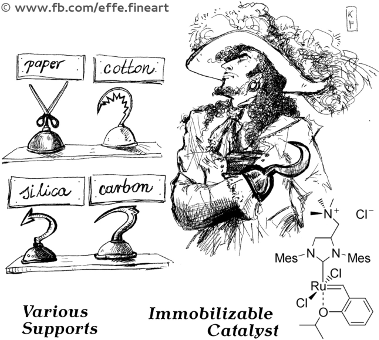
- on commercially available palladium on carbon (10 wt % Pd/C) [62]. The resulting bimetallic Ru–Pd heterogeneous catalyst 8-Pd/C exhibited the same activity in metathesis as catalyst deposited on activated carbon. Interestingly, the E/Z selectivity in reaction carried out with 8-C* was significantly


Selectively fluorinated cyclohexane building blocks: Derivatives of carbonylated all-cis-3-phenyl-1,2,4,5-tetrafluorocyclohexane
Beilstein J. Org. Chem. 2015, 11, 2671–2676, doi:10.3762/bjoc.11.287
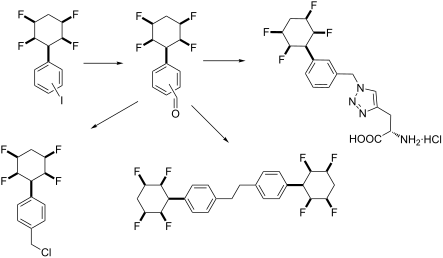
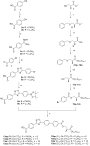
- TFA/H2O (9:1), 100 °C, 24 h. Synthesis of benzaldehyde derivatives 14 and 15: i. Pd(PPh3)4, Bu3SnH, THF, CO (1 atm), 50 °C, 2–3 h, 70%. Olefination reactions of 15 and the X-ray structure of 17 (CCDC number 1432194): i. Zn, TiCl4, THF, 0 °C to reflux, 12 h; ii. Pd/C, H2, EtOAc, 20 °C, 16 h, 76% over 2


Versatile synthesis and biological evaluation of novel 3’-fluorinated purine nucleosides
Beilstein J. Org. Chem. 2015, 11, 2509–2520, doi:10.3762/bjoc.11.272
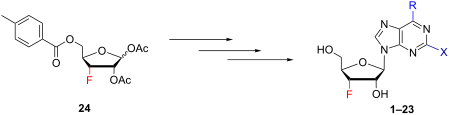
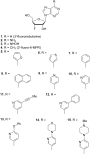
- protecting groups to yield N6-hydroxy-3’-fluoro-3’-deoxyadenosine (3). Hydrogenation of compound 26 under hydrogen pressure (50 psi) over 10% Pd/C resulted in the de-chlorinated compound 27, which was further deprotected in a saturated solution of ammonia in methanol providing the desired 6-deaminated 3
- . Deprotection of compound 48 with a saturated solution of ammonia in methanol at 0 °C resulted in the desired product 22 in 85% yield. In addition, the 6-chlorine atom was left untouched during the deprotection. Compound 48 was hydrogenated over 10% Pd/C under hydrogen pressure (50 psi) giving the de



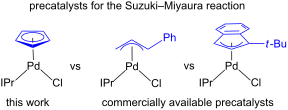
Comparison of the catalytic activity for the Suzuki–Miyaura reaction of (η5-Cp)Pd(IPr)Cl with (η3-cinnamyl)Pd(IPr)(Cl) and (η3-1-t-Bu-indenyl)Pd(IPr)(Cl)
Beilstein J. Org. Chem. 2015, 11, 2476–2486, doi:10.3762/bjoc.11.269
- ][33][34][35][36][37][38][39]. The two Pd centers are bound to three carbon atoms of the bridging Cp ligand. Two of the three carbon atoms are bound to only one Pd center, while the central carbon atom binds to both Pd centers. Pd–C bond distances of almost 3 Å clearly indicate that there is no
- -systems [40]. Strong evidence for a Pd–Pd single bond is provided by the Pd–Pd distance of 2.5669(4) Å [41]. Presumably for steric reasons the NHC ligands are bent away from the bridging Cp ligand and the C–Pd–Pd (C of IPr) bond angles are significantly less than 180° (Pd(1)–Pd(2)–C(7) 164.9(1) and Pd(2




Synthesis of D-fructose-derived spirocyclic 2-substituted-2-oxazoline ribosides
Beilstein J. Org. Chem. 2015, 11, 2289–2296, doi:10.3762/bjoc.11.249
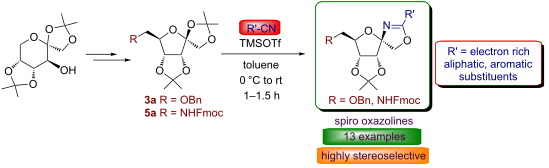
- rotation values of 2a and 4a are in accordance with the previously reported data [42][47][48]. In the next step, hydrogenation of the azide with 10% Pd/C in EtOAc afforded the primary amine, which was protected using Fmoc-OSu/NaHCO3 in THF/H2O to afford 5a. Finally, the C6–OBn- and C6–NHFmoc-protected


Beyond catalyst deactivation: cross-metathesis involving olefins containing N-heteroaromatics
Beilstein J. Org. Chem. 2015, 11, 2223–2241, doi:10.3762/bjoc.11.241
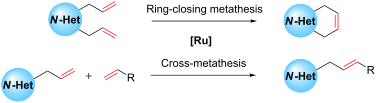
- pyridinium salts in the presence of the GII catalyst (Scheme 11) [47]. The formation of seven- and eight-membered rings required high dilution. Few years later, the same authors showed that it was possible to oxidize 3,4-dihydroquinolizinium salts into their quinolizinium counterparts using Pd/C at high


Total synthesis of panicein A2
Beilstein J. Org. Chem. 2015, 11, 1991–1996, doi:10.3762/bjoc.11.215
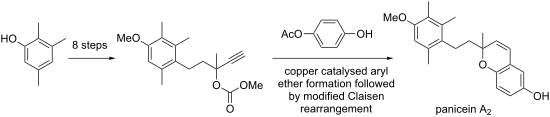
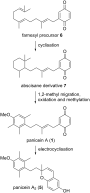
- the double bond in the presence of the α,β-unsaturated ketone, including Pd/C and H2, NaBH4 and Pd/C in the presence of acetic acid [9], and NaBH4 with CoCl2 [10]; all of these reductive conditions gave complex, inseparable mixtures of overreduction products of the ketone functionality. We therefore
- minutes, giving 14 in an excellent 94% yield. Hydrogenolysis of the alkene in 14 using Pd/C in MeOH proceeded in 2 hours, providing alcohol 15 which was then oxidised to the desired ketone 13 with Dess–Martin periodinane in 75% yield over two steps. Although this approach was ultimately two steps longer



Synthesis, antimicrobial and cytotoxicity evaluation of new cholesterol congeners
Beilstein J. Org. Chem. 2015, 11, 1922–1932, doi:10.3762/bjoc.11.208
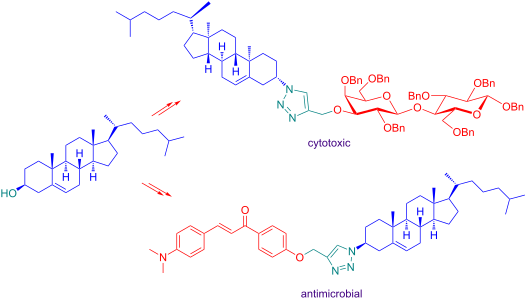
- involved in tumorigenesis [42][43]. To this endeavor, 3β-O-propargylated lactose derivative 26 was reacted with compound 3 to afford intermediate triazole bridged conjugate 27 in 89% yield. This intermediate was attempted to be debenzylated by treatment with H2 and Pd/C 10% but the benzyl groups could not
- : (a) Propargyl bromide, NaH, Et2O/DMF (quant. for both 26 and 30); (b) 3, CuSO4·5H2O, L-AsAc, THF/H2O (89% for 27 and 74% for 31); (c) H2, Pd/C 10%, MeOH. A: Ring A of the lactose moiety, B: Ring B of the lactose moiety. Reagents and conditions: (a) Bu2SnO, MeOH; propargyl bromide, TBAI, Tol (92%); (b
- ) CuSO4·5H2O, L-AsAc, THF/H2O (76%); (c) H2, Pd/C 10%, MeOH (0% for 37 and 62% for 40); (d) 9b, CuSO4·5H2O, L-AsAc, THF/H2O (71%); (e) Ac2O/Pyr (90%). A: Ring A of the lactose moiety, B: Ring B of the lactose moiety. Supporting Information Supporting Information File 352: Experimental section




Cross metathesis of unsaturated epoxides for the synthesis of polyfunctional building blocks
Beilstein J. Org. Chem. 2015, 11, 1876–1880, doi:10.3762/bjoc.11.201
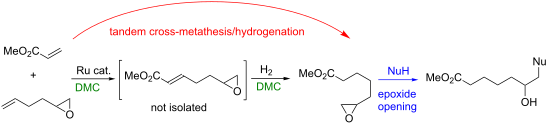
- consists in the Pd/C catalyzed hydrogenation of the isolated product. This method presents the advantage of being effective at room temperature under a low hydrogen pressure [37][38]. However, such hydrogenations are in general carried out on purified products but more importantly in the present case, such


Fe(II)/Et3N-Relay-catalyzed domino reaction of isoxazoles with imidazolium salts in the synthesis of methyl 4-imidazolylpyrrole-2-carboxylates, its ylide and betaine derivatives
Beilstein J. Org. Chem. 2015, 11, 1732–1740, doi:10.3762/bjoc.11.189
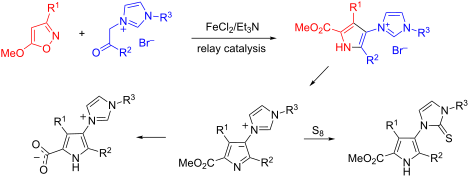
- for 6–7 h at 45 °C, gave 5-alkoxycarbonylpyrrol-3-ylimidazolium bromides 1 in reasonable yields (Table 1). All new compounds were characterized by 1H and 13C NMR, IR spectroscopy, and mass spectrometry. 1-Benzyl-3-(1H-pyrrol-3-yl)-1H-imidazol-3-ium bromides 1 can be easily debenzylated on Pd/C, with
- hydrolyzing the ester group. Ylides 2 can also be debenzylated, affording the corresponding pyrrolyl imidazoles 12. Thus, ylide 2h was debenzylated on Pd/C with hydrogen to produce methyl 5-(4-fluorophenyl)-4-(1H-imidazol-1-yl)-3-phenyl-1H-pyrrole-2-carboxylate (12d) in quantitive yield. As mentioned above
- for debenzylation of 1-benzyl-3-pyrrol-3-yl-1H-imidazol-3-ium bromides 1j,k,n. 1-Benzyl-1H-imidazol-3-ium bromide 1 (100 mg) was dissolved in MeOH (10 mL), Pd/C (10 mg, 10 wt %) and ammonium formate (10 equiv) were added. The suspension was stirred under reflux for 1 h (monitored by TLC). The reaction


Pyridinoacridine alkaloids of marine origin: NMR and MS spectral data, synthesis, biosynthesis and biological activity
Beilstein J. Org. Chem. 2015, 11, 1667–1699, doi:10.3762/bjoc.11.183
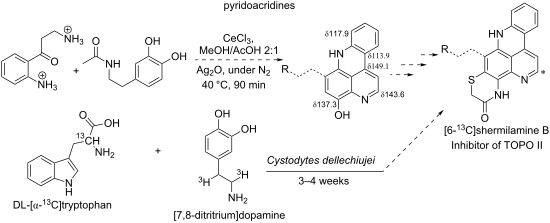
- the amine by using palladium on carbon (Pd/C) as a catalyst. The N-acetyl group was further introduced by treating the product from the reduction with acetic acid and acetic anhydride. Furthermore, a second reduction with Pd/C was performed followed by the reaction of the obtained amine with ethyl (2










Robust bifunctional aluminium–salen catalysts for the preparation of cyclic carbonates from carbon dioxide and epoxides
Beilstein J. Org. Chem. 2015, 11, 1614–1623, doi:10.3762/bjoc.11.176
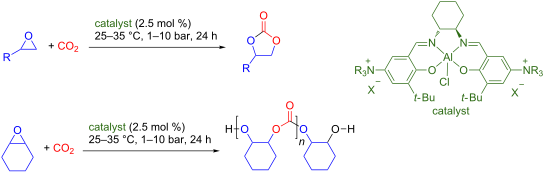
- ). 3-(tert-Butyl)-5-(dimethylamino)-2-hydroxybenzaldehyde (6) Prepared by a modified literature procedure [28]. Pd/C (10%, 100 mg) was added to a solution of 3-(tert-butyl)-2-hydroxy-5-nitrobenzaldehyde 5 (200 mg, 0.9 mmol) and 40% aqueous formaldehyde (4.5 mL) in ethanol (20 mL). The reaction mixture
- was stirred under 1 bar of hydrogen at room temperature for 24 hours. Then, the Pd/C was removed by filtration on celite, the volume of the filtrate was reduced by half under reduced pressure. Distilled water was added to the solution, resulting in formation of an orange precipitate (140 mg, 70


Qualitative evaluation of regioselectivity in the formation of di- and tri-6-O-tritylates of α-cyclodextrin
Beilstein J. Org. Chem. 2015, 11, 1530–1540, doi:10.3762/bjoc.11.168
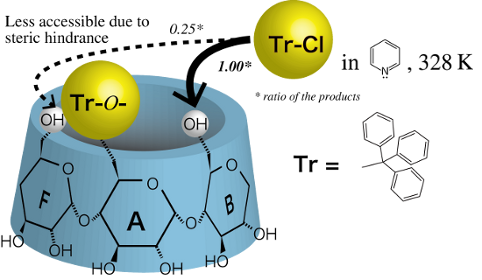
- , and finally, the benzyl groups were removed by hydrogenation with Pd/C to form tri-6-O-mesitylenesulfonyl-α-CD. The retention time in UFLC and the 1H NMR spectrum of the obtained mesitylenesulfonylate coincided with those of authentic 6A,6B,6E-tri-6-O-mesitylenesulfonyl-α-CD, respectively. Similar
- Industry Co., Ltd.), benzyl bromide and mesitylenesulfonyl chloride (Wako Pure Chemical Industries Ltd.) were used without further purification. Commercially available NaH in oil (50–77%) and Pd/C (Pd 10%) were used for the conversion of tri-6-O-trityl-α-CD to tri-6-O-mesitylenesulfonyl-α-CD. Reagent-grade
- dryness. The residue was chromatographed over silica gel, using hexane/ethyl acetate (2:1) as an eluent to give a fairly pure tri-6-O-mesitylenesulfonyl-per-O-benzyl-α-CD (0.51 g). The product was dissolved in 5 mL of acetic acid and hydrogenated in the presence of Pd/C (0.21 g) to remove the benzyl



Cross-metathesis reaction of α- and β-vinyl C-glycosides with alkenes
Beilstein J. Org. Chem. 2015, 11, 1392–1397, doi:10.3762/bjoc.11.150

- -deoxyribosides on hand, the feasibility of catalytic hydrogenation was also briefly explored. Compounds possessing the heptenyl side chain (β-4b), tridecafluorononenyl side chain (β-4c), and the styryl side chain (β-4d) were chosen as substrates. In all cases the hydrogenation by using Pd/C under low pressure of


Selected synthetic strategies to cyclophanes
Beilstein J. Org. Chem. 2015, 11, 1274–1331, doi:10.3762/bjoc.11.142
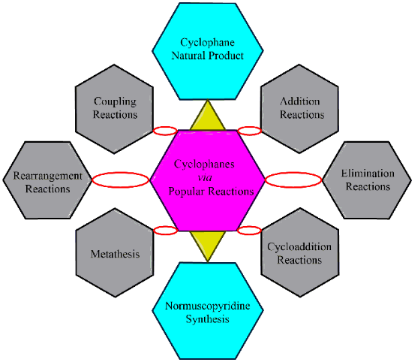
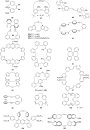
- to a Glaser–Eglinton coupling to generate the macrocyclic bisacetylene derivative 52 in 94% yield. Finally, diyne 52 was subjected to a hydrogenation sequence with 10% Pd/C under 1 atm pressure of H2 to generate cyclophane derivative 53 (92%). Alternatively, cyclophane 53 was also obtained by
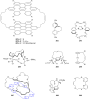
- dimeric cyclophane 242 (20%, Scheme 39) [174]. The reduction of the sulfonyl group with Mg/ethanol in the presence of 1,2-dibromoethane aided by TMSCl afforded cyclophane derivative 244 (80%). Subsequently, the hydrogenation of the double bond with Pd/C under a H2 atmosphere gave normuscopyridine (223, 84






The chemical behavior of terminally tert-butylated polyolefins
Beilstein J. Org. Chem. 2015, 11, 1246–1258, doi:10.3762/bjoc.11.139
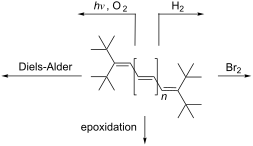
- of the hydrocarbons 2. Results and Discussion Catalytic hydrogenation We started our studies on the reactive behavior of polyolefins 2 with one of the formally simplest alkene reactions: catalytic hydrogenation. When diene 3 was hydrogenated under relatively mild conditions (Pd/C, EtOH, room temp
- . Even under mild conditions (Pd/C, EtOH/hexane, room temp.) it is readily reduced (Scheme 3). After 5 minutes of hydrogenation, three products were detected: the 1,6-adduct 8, a diene (main product); the mono olefin 9; and the fully saturated hydrocarbon 10. When the reaction time was increased, the


Synthesis of icariin from kaempferol through regioselective methylation and para-Claisen–Cope rearrangement
Beilstein J. Org. Chem. 2015, 11, 1220–1225, doi:10.3762/bjoc.11.135
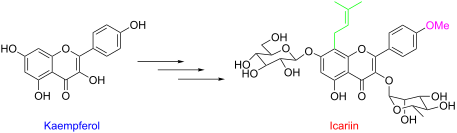
- resulting in 3 without affecting the double bond of the prenyl residue was another challenge. The hydrogenation of 10 with H2–Pd/C using EtOAc/MeOH (1:1) as solvent at 10 °C for 3 h, followed by column chromatography and recrystallization, provided 3 in 39% yield along with a large amount of the byproduct
- with reduced double bond. Then we tried a transfer hydrogenolysis method using ammonium formate/10% Pd/C [27], but the result was not improved. The desired product icaritin (3) was finally obtained in 84% yield from 10 when we used 1,4-cyclohexadiene/10% Pd/C in MeOH [28]. Hence, we optimized a
- ), reflux, 95%; (h) Pd/C, 1,4-cyclohexadiene, MeOH, 84%. Decomposition of 8. Claisen rearrangement of flavonol 8. Reagents and conditions: (a) 15, DMF/CHCl3, Ag2CO3, molecular sieves (4 Å, powder); (b) 16, CH2Cl2, Ag2O, molecular sieves (4 Å powder), 31% for 2 steps; (c) NH3 (g), MeOH, 94%; (d) NH3 (g


Hybrid macrocycle formation and spiro annulation on cis-syn-cis-tricyclo[6.3.0.02,6]undeca-3,11-dione and its congeners via ring-closing metathesis
Beilstein J. Org. Chem. 2015, 11, 1123–1128, doi:10.3762/bjoc.11.126

- compound 11 (84%). Subsequently, the macrocyclic diindole derivative 11 was hydrogenated in the presence of H2/Pd/C to afford the saturated compound 6 (Scheme 3). To assemble the intricate spiro-polyquinane 7 via RCM as a key step [59][60][61][62], we started with the triquinane derivative 2. To this end
- , treatment of the hexacyclic dione 13 with Pd/C in EtOAc under hydrogen atmosphere (1 atm) gave the saturated spiro-polyquinane 7 in 90% yield (Scheme 4). Very few examples are known in the literature where multiple RCM was performed in a single operation to generate the molecules of medium molecular weight
- subjected to the hydrogenation protocol in the presence of H2/Pd/C to deliver the saturated bis-spiro-polyquinane derivatives 16a, 16b and 16a in an excellent yield (Table 1). Similarly, the dione 3a in the presence of an excess amount of NaH and allyl bromide gave the pentaallyl dione 14d in 67% yield


A new and convenient synthetic way to 2-substituted thieno[2,3-b]indoles
Beilstein J. Org. Chem. 2015, 11, 1000–1007, doi:10.3762/bjoc.11.112
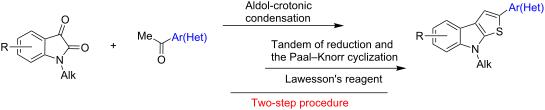
- adducts can be dehydrated easily by acidic agents to form crotonic condensation products, namely 3-(2-oxo-2-(hetero)arylethylidene)indolin-2-ones 10, which can undergo reduction of the C=C double bond in the presence of Na2S2O4 [29], H2/Pd(C) [30], or Me3P–H2O [31] (Scheme 2) into the corresponding


Mechanical stability of bivalent transition metal complexes analyzed by single-molecule force spectroscopy
Beilstein J. Org. Chem. 2015, 11, 817–827, doi:10.3762/bjoc.11.91
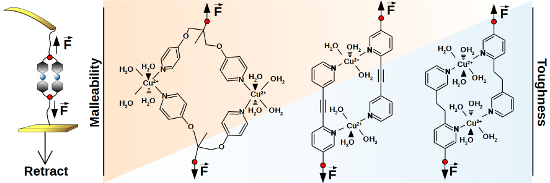
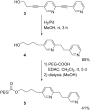
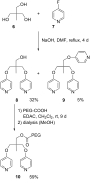
- }butan-1-ol (4): A suspension of 4-{[2-(pyridin-3-yl)ethynyl]pyridin-5-yl}but-3-yn-1-ol (3) [27] (45 mg, 0.18 mmol) and Pd/C (45 mg, 100 wt %) in MeOH (3 mL) was stirred under an atmosphere of hydrogen (balloon) for 3 h until complete consumption of the starting material (by TLC). The mixture was




Novel stereocontrolled syntheses of tashiromine and epitashiromine
Beilstein J. Org. Chem. 2015, 11, 596–603, doi:10.3762/bjoc.11.66

- diluted with H2O (50 mL) and extracted with CH2Cl2 (3 × 20 mL). The organic layer was dried (Na2SO4) and concentrated under reduced pressure. The crude mixture was dissolved in EtOAc (30 mL), Pd/C (150 mg) was added and the mixture was stirred at 20 °C for 16 h. The catalyst was next filtered off through


Sequence-specific RNA cleavage by PNA conjugates of the metal-free artificial ribonuclease tris(2-aminobenzimidazole)
Beilstein J. Org. Chem. 2015, 11, 493–498, doi:10.3762/bjoc.11.55
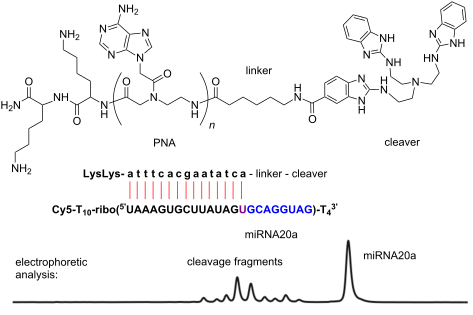
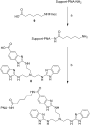
- : 45 bar H2, Pd/C (10%), MeOH sat. with NH3, 60 °C, 5 h, rt, overnight, 37%; f: Mukaiyama’s reagent, NEt3, DMF, 22 h, rt, 56%. Boc-ON: 2-(tert-butoxycarbonyloxyimino)-2-phenylacetonitrile. Synthesis of PNA conjugates. Conditions: a: 1) 9, HOBt, DIC, DMF, rt, 24 h; 2) piperidine, DMF, rt, 30 min; b: 1




Selective methylation of kaempferol via benzylation and deacetylation of kaempferol acetates
Beilstein J. Org. Chem. 2015, 11, 288–293, doi:10.3762/bjoc.11.33
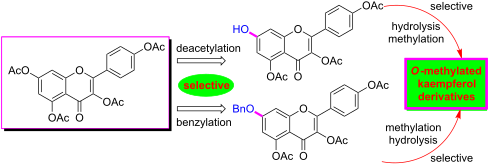
- equiv), K2CO3, acetone, rt, ii: NH3 (g), MeOH, 84%. Reagents and conditions: (a) BnBr (1.9 equiv), KI, K2CO3, acetone, 85%; (b) i: AlCl3, CH2Cl2, CH3CN, reflux, ii: 1 M HCl (aq), 86%; (c) Me2SO4 (1.3 equiv), K2CO3, acetone, rt, 85%; (d) NH3 (g), MeOH, 96%; (e) Pd/C, H2, 91%; (f) MeOH, acetone, 1 M HCl
- (aq), reflux, 82%; (g) Me2SO4 (3.3 equiv), K2CO3, acetone, 30 °C, 92%; (h) Pd/C, H2, 92%; (i) NH3 (g), MeOH, 94%; (j) Me2SO4 (1.5 equiv), K2CO3, acetone, MeOH, reflux, 82%; (k) Pd/C, H2, 93%. Reagents and conditions: (a) NH3 (g), MeOH, 95%; (b) Me2SO4 (2.6 equiv), K2CO3, acetone, rt, 87%; (c) Me2SO4
- (4.6 equiv), K2CO3, acetone, 30 °C, 95%; (d) Pd/C, H2, 91%; (e) Pd/C, H2, 89%. Direct methylation of kaempferol in acetone (yield, %). Supporting Information Supporting Information File 46: Experimental section; NMR and ESI-HRMS spectra of 1–23; NOESY spectra of 4 and 13; HMBC spectra of 4, 5, 7, 9


Synthesis of the furo[2,3-b]chromene ring system of hyperaspindols A and B
Beilstein J. Org. Chem. 2015, 11, 265–270, doi:10.3762/bjoc.11.29
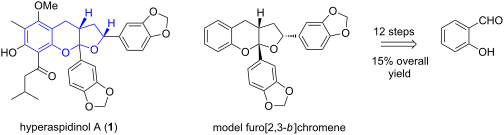
- representation of 7a. 3D representation of 7b. Possible mechanism for the formation of furo[2,3-b]chromenes 7a and 7b. Reagents and conditions: (i) triethylphosphonoacetate, DBU, THF, 48 h, 94%; (ii) H2, 10% Pd/C, EtOAc, 3 h, quant; (iii) BnBr, K2CO3, DMF, 3 h, 88%; (iv) LDA, THF, −78 °C, then allyl bromide, 24
- , 65 h, 80%; (vi) NaIO4, MeOH, H2O, 3 h, quant; (vii) 1-bromo-3,4-methylenedioxybenzene, t-BuLi, THF, −78 °C, 19 h, 87% 1:1 diastereoisomers; (viii) H2, 10% Pd/C, MeOH, 4 h, quant; (ix) 1:1 2 M HCl (aq):THF, 22 h, 7a 52%, 7b 32%. Supporting Information Supporting Information File 131: Experimental




Novel biphenyl-substituted 1,2,4-oxadiazole ferroelectric liquid crystals: synthesis and characterization
Beilstein J. Org. Chem. 2015, 11, 233–241, doi:10.3762/bjoc.11.26
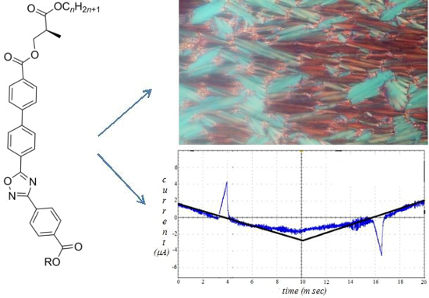
- , (v) benzyl 2,2,2-trichloroacetimidate, CF3SO3H, n-hexane, rt, (vi) LiOH, MeOH, H2O, (vii) alkyl alcohol, DCC, DMAP, DCM, (viii) Pd/C, EtOAc, H2 (1 atm), (ix) 4-bromobenzoic acid, DCC, DMAP, DCM, (x) Pd(PPh3)2, Na2CO3, 1,2-DME, H2O, MW, 120 °C, 20 min. Phase transition temperatures (°C), enthalpy