Search results
Search for "Sonogashira" in Full Text gives 219 result(s) in Beilstein Journal of Organic Chemistry. Showing first 200.
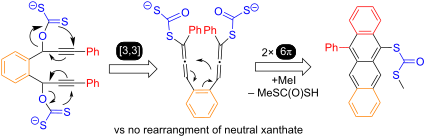
Anionic sigmatropic-electrocyclic-Chugaev cascades: accessing 12-aryl-5-(methylthiocarbonylthio)tetracenes and a related anthra[2,3-b]thiophene
Beilstein J. Org. Chem. 2015, 11, 273–279, doi:10.3762/bjoc.11.31
- meso:rac 8a. We assign this transformation to an equilibrium between dialkoxide 9 and the benzylic anion 10. Intramolecular proton delivery via cyclic transition state 11 is proposed to favour the meso dialkoxide prior to protonic quench. Samples of rac enriched 8a were prepared from Sonogashira coupling


Scalable synthesis of 5,11-diethynylated indeno[1,2-b]fluorene-6,12-diones and exploration of their solid state packing
Beilstein J. Org. Chem. 2014, 10, 2122–2130, doi:10.3762/bjoc.10.219
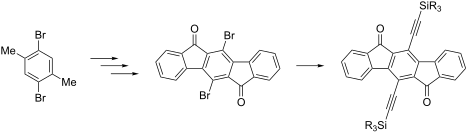
- dramatically alter the intermolecular electronic coupling, which is what ultimately dictates performance of the device [18][19]. Results and Discussion Synthesis. Our initial studies [20] toward 8 (Scheme 1) focused on the Sonogashira cross-coupling of known diiodo intermediate 9, which was prepared by double
- Kitamura gave tetrahalide 12 in good yield on >10 g scale [25]. Suzuki cross-coupling with 12 furnished p-terphenyl 14, followed by oxidation of the methyl groups to produce diacid 15. Intramolecular Friedel–Crafts acylation then afforded 5,11-dibromo-IF-dione 11. The yields for the Sonogashira cross
- . Black lines represent the molecules with circles denoting the centroid. Transannular cyclization route to diethynyl-IF-diones 8. Suzuki/Friedel-Crafts route to diethynyl-IF-diones 8. Diethynyl-IF-diones synthesized and yields for Sonogashira cross-coupling. Electrochemical and optical data for ID-diones


Building complex carbon skeletons with ethynyl[2.2]paracyclophanes
Beilstein J. Org. Chem. 2014, 10, 2013–2020, doi:10.3762/bjoc.10.209

- Sonogashira coupling) [7]. For the smaller oligomers (dimers, trimers) the ortho-isomer with its opening angle of 60° between the ethynyl functions leads preferentially to (mono)cyclic hydrocarbons. For the meta-compound 3 we can expect both cyclic and acyclic (linear) products, and when the two ethynyl
- ] appears simple, we always obtained complex mixtures of products when 13 and excess 1,2-diiodobenzene (14) were subjected to Sonogashira coupling. The main product of this coupling process was the monoaldehyde 15 (i.e., the 1:1-coupling product of 13 and 14). The desired 2:1-product 16 was always isolated
- following pathway. Sonogashira coupling of iodide 15 with trimethylsilylacetylene furnished the TMS-protected aldehyde 23 in good yield. Deprotection and conversion of its formyl function into an ethynyl group by the Bestmann–Ohira protocol took place readily and provided the triacetylene 24, again in good




Synthesis of trifluoromethyl-substituted pyrazolo[4,3-c]pyridines – sequential versus multicomponent reaction approach
Beilstein J. Org. Chem. 2014, 10, 1759–1764, doi:10.3762/bjoc.10.183

- is presented. Hence, microwave-assisted treatment of 5-chloro-1-phenyl-3-trifluoromethylpyrazole-4-carbaldehyde with various terminal alkynes in the presence of tert-butylamine under Sonogashira-type cross-coupling conditions affords the former title compounds in a one-pot multicomponent procedure
- all obtained products. Keywords: microwave-assisted reactions; multicomponent reactions; NMR (1H; 13C; 15N; 19F); Sonogashira coupling; trifluoromethylpyrazoles; Introduction Fluorine-containing compounds play an important role in medicinal and pharmaceutical chemistry as well as in agrochemistry [1
- pyrazole precursor. Employing the latter approach we recently presented a novel method for the synthesis of the pyrazolo[4,3-c]pyridine system by Sonogashira-type cross-coupling reaction of easily obtainable 5-chloro-1-phenyl-1H-pyrazole-4-carbaldehydes with various alkynes and subsequent ring-closure


Synthesis of rigid p-terphenyl-linked carbohydrate mimetics
Beilstein J. Org. Chem. 2014, 10, 1749–1758, doi:10.3762/bjoc.10.182
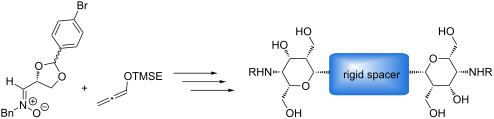
- prepared p-bromophenyl-substituted bicyclic 1,2-oxazine derivatives 12, 13, 15 and 16 provide options to perform cross-coupling reactions such as Buchwald/Hartwig, Heck, Hiyama, Kumada, Sonogashira or Stille couplings. In order to examine the conditions for Suzuki cross-couplings we subjected bicyclic


Improving the reactivity of phenylacetylene macrocycles toward topochemical polymerization by side chains modification
Beilstein J. Org. Chem. 2014, 10, 1613–1619, doi:10.3762/bjoc.10.167
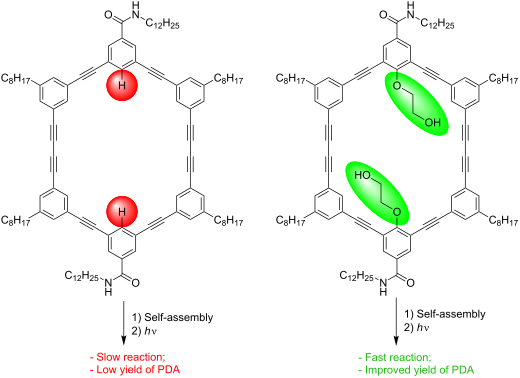
- protection of the hydroxy moiety with TBS in order to facilitate the further synthetic steps by increasing the solubility of the compound (57% yield over 2 steps). Then, by using a standard Castro–Stephens–Sonogashira coupling, TMS protecting groups were installed (73% yield). After basic removal of the
- alkyne protective group, the half-macrocycle 5 was obtained by Castro–Stephens–Sonogashira coupling with previously reported 3,5-diiodooctylbenzene [39] in good yields despite of the possible polymerization side reaction (54% yield). TMS-protected alkynes were, then, installed on the half-macrocycle to
- approach was used for PAM3. Starting from previously synthesized compound 3, the half-macrocycle 9 was obtained by standard Castro–Stephens–Sonogashira coupling with dialkyne 8 in good yield (59%). It is noteworthy that compound 8 was obtained from oxidative deprotection of compound 7. After installing TMS


Synthesis, characterization and DNA interaction studies of new triptycene derivatives
Beilstein J. Org. Chem. 2014, 10, 1290–1298, doi:10.3762/bjoc.10.130
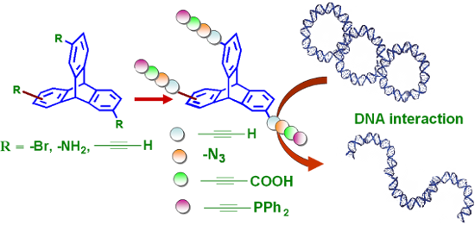
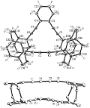
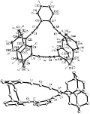
- tribromotriptycenes as synthons [36], syntheses of triethynyltriptycenes (TETs) 1 and 2 were efficiently realized in two steps (Scheme 1). In the presence of Pd(0) catalyst and cuprous iodide (cocatalyst), Sonogashira cross-coupling reaction of 2,6,14-tribromotriptycene with 3.0 equiv of (trimethylsilyl)acetylene in


A new building block for DNA network formation by self-assembly and polymerase chain reaction
Beilstein J. Org. Chem. 2014, 10, 1037–1046, doi:10.3762/bjoc.10.104
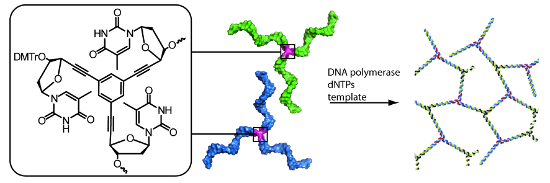
- branching molecules. The synthesis strategy was designed to meet the requirements of standard DNA solid support synthesis. Stepwise Sonogashira reaction was employed using the higher reactivity of iodide in the presence of bromide within 1,3-dibromo-5-iodobenzene (1) employing the known compounds 2 [41] and


The influence of intraannular templates on the liquid crystallinity of shape-persistent macrocycles
Beilstein J. Org. Chem. 2014, 10, 910–920, doi:10.3762/bjoc.10.89
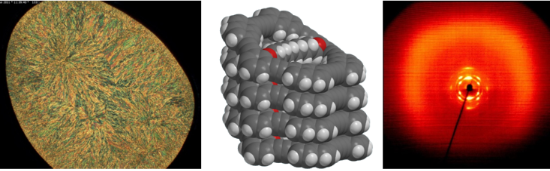
- Supporting Information File 1). Then 6 is attached to 5 in a fourfold Sonogashira–Hagihara reaction. To compensate the acetylene dimerization side reaction, the acetylene is added in 25% excess. Fluoride-induced removal of the silyl protecting groups yields the precursor 7. With Pd(PPh3)2Cl2 and CuI as


Molecular recognition of isomeric protonated amino acid esters monitored by ESI-mass spectrometry
Beilstein J. Org. Chem. 2014, 10, 825–831, doi:10.3762/bjoc.10.78
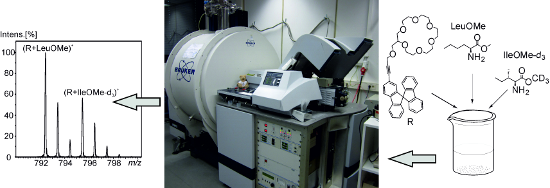
- , followed by hydrolysis to afford phenol 6 which was finally transferred into the corresponding triflate 7 in 64% yield (Scheme 1). Triflate 7 was then subjected to a Sonogashira cross-coupling reaction and a Suzuki cross-coupling reaction followed by treatment with boron tribromide to obtain the


Staudinger ligation towards cyclodextrin dimers in aqueous/organic media. Synthesis, conformations and guest-encapsulation ability
Beilstein J. Org. Chem. 2014, 10, 774–783, doi:10.3762/bjoc.10.73
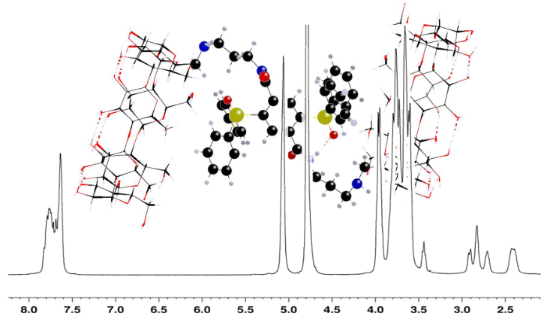
- . These include the well-known copper-catalyzed azide–alkyne cyclization (CuAAC, “click” reaction) between an azido-CD derivative and an alkyne linker [19][22][23][24] [22], or vice versa, the metal catalyzed reactions between propargyl-CDs and aryl dihalides such as the Sonogashira and Glaser–Hay



Rapid pseudo five-component synthesis of intensively blue luminescent 2,5-di(hetero)arylfurans via a Sonogashira–Glaser cyclization sequence
Beilstein J. Org. Chem. 2014, 10, 672–679, doi:10.3762/bjoc.10.60
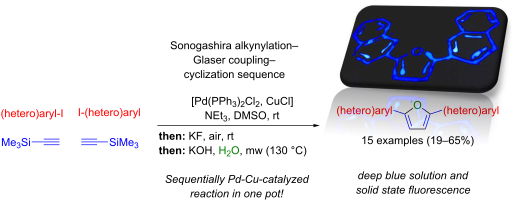
- in a pseudo five-component reaction via a Sonogashira–Glaser coupling sequence followed by a superbase-mediated (KOH/DMSO) cyclization in a consecutive one-pot fashion. Besides the straightforward synthesis of natural products and biologically active molecules all representatives are particularly
- approach are clearly the extended reaction times (3–6 d) and the removal of the catalyst after the coupling step. Recently, we became particularly interested in sequentially Pd-catalyzed processes [35] starting from (hetero)aryl iodides [36]. In particular, the Pd–Cu-catalyzed Sonogashira–Glaser sequence
- Sonogashira–Glaser sequence we recently presented a straightforward one-pot sequence for the synthesis of 2,5-di(hetero)arylthiophenes [38]. Here, we report the methodological development of a novel multicomponent synthesis of symmetrical 2,5-(hetero)arylfurans in the sense of a consecutive one-pot sequence




One-pot three-component synthesis and photophysical characteristics of novel triene merocyanines
Beilstein J. Org. Chem. 2014, 10, 599–612, doi:10.3762/bjoc.10.51
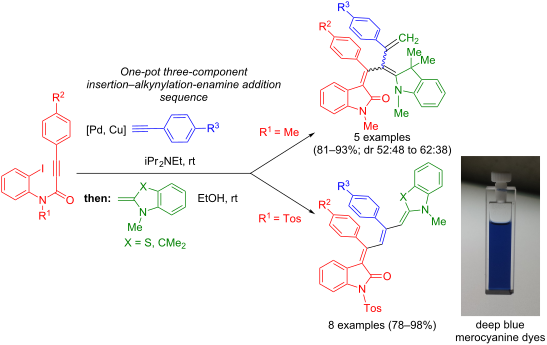
- -enylidene and 4-(1,3,3-trimethylindolin-2-ylidene)but-2-en-1-ylideneindolones are obtained in good to excellent yields in a consecutive three-component insertion Sonogashira coupling–addition sequence. The selectivity of either series is remarkable and has its origin in the stepwise character of the
- -iodoanilides 5a and terminal arylalkynes 6 at room temperature under Sonogashira conditions forming ynylideneindolones as intermediates (the reaction was monitored by TLC to ensure complete conversion) [30][31][32], which were not isolated, an ethanolic solution of Fischer’s base (7) was added and reacted at
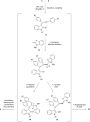
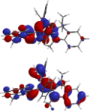
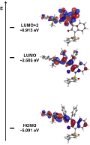
- experimentally determined very similar diastereomeric distribution of the 1-styryleth-2-enylideneindolones 8. Interestingly, upon coupling of the N-tosyl-substituted alkynoyl o-iodoanilides 5b and 5c with terminal arylalkynes 6 at room temperature under Sonogashira conditions and reacting the ynylideneindolone




Practical synthesis of aryl-2-methyl-3-butyn-2-ols from aryl bromides via conventional and decarboxylative copper-free Sonogashira coupling reactions
Beilstein J. Org. Chem. 2014, 10, 384–393, doi:10.3762/bjoc.10.36
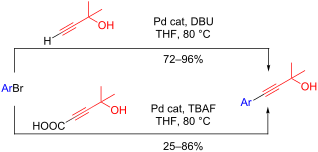
- bromides rather than expensive iodides and using 4 or propiolic acid rather than TMS-acetylene as inexpensive alkyne sources are described. Keywords: alkynes; decarboxylative couplings; Erlotinib; palladium; propiolic acid; Introduction The Sonogashira coupling reaction of aryl or alkenyl halides with
- ][11][12][13]. The Sonogashira coupling reaction is usually carried out under Pd/Cu catalysis, in which the palladium has the function to promote the cross-coupling of an aryl fragment, added via oxidative addition of the corresponding halide, with an alkynyl residue to provide a disubstituted
- complicates the recycling of the palladium catalyst since the two metals are difficult to separate. Sonogashira reactions can be used for the syntheses of terminal alkynes from aryl halides through the coupling with an alkyne source such as trimethylsilylacetylene (TMSA) or 2-methyl-3-butyn-2-ol (4) in


Synthesis of 3,4-dihydro-1,8-naphthyridin-2(1H)-ones via microwave-activated inverse electron-demand Diels–Alder reactions
Beilstein J. Org. Chem. 2014, 10, 282–286, doi:10.3762/bjoc.10.24
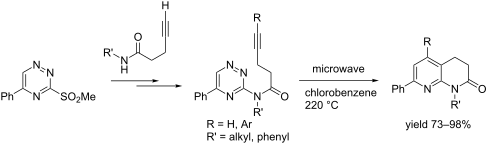
- electron-demand Diels–Alder reaction from 1,2,4-triazines bearing an acylamino group with a terminal alkyne side chain. Alkynes were first subjected to the Sonogashira cross-coupling reaction with aryl halides, the product of which then underwent an intramolecular inverse electron-demand Diels–Alder
- reaction to yield 5-aryl-3,4-dihydro-1,8-naphthyridin-2(1H)-ones by an efficient synthetic route. Keywords: inverse-electron-demand Diels–Alder reaction; microwave irradiation; naphthyridin-2(1H)-ones; Sonogashira cross-coupling; 1,2,4-triazine; Introduction 1,8-Naphthyridine derivatives are an important
- envisaged to evaluate the reactivity of internal alkynes towards the inverse electron-demand Diels–Alder reaction. To reach this goal, we decided to functionalize the alkynes 6–9 employing the Sonogashira cross-coupling reaction. Preparation of aryl-N-triazinylpentynamides The terminal alkynes 6–9 were then


Synthesis of new enantiopure poly(hydroxy)aminooxepanes as building blocks for multivalent carbohydrate mimetics
Beilstein J. Org. Chem. 2014, 10, 213–223, doi:10.3762/bjoc.10.17
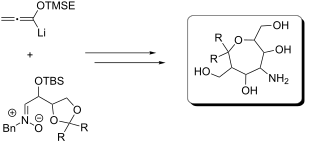
- reduction of the carbonyl group [43] and TBS cleavage, propargylic ether 18 was obtained (88% yield over two steps) [44]. The alkyne moiety provides options for further transformations, e.g. Sonogashira reactions, Glaser couplings or 1,3-dipolar cycloadditions (click reactions) [45]. We were also interested


Total synthesis of the endogenous inflammation resolving lipid resolvin D2 using a common lynchpin
Beilstein J. Org. Chem. 2013, 9, 2762–2766, doi:10.3762/bjoc.9.310
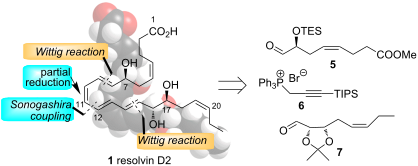
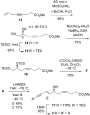
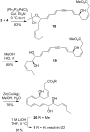
- . Desilylation of 11 followed by hydrozirconation and iodination gave the vinyl iodide 4 and Sonogashira coupling between this compound and enyne 3 provided alkyne 18. Acetonide deprotection, partial reduction and ester hydrolysis then gave resolvin D2 (1). Keywords: catalysis; eicosanoid; natural product
- ; resolvin D2; Sonogashira coupling; total synthesis; Wittig reaction; Introduction The resolution of inflammation is a tightly governed active process effectively mediated by a range of bioactive polyunsaturated fatty acids, peptides and proteins. In 2002, a new family of endogenously generated lipid
- can produce useful amounts of this important compound as well as novel isomers. Results and Discussion Retrosynthetic analysis A retrosynthetic analysis of RvD2 (1) is shown in Scheme 1. It was envisaged that the target compound 1 could be secured via a Sonogashira coupling to form the C11–C12 bond


Synthesis of enones, pyrazolines and pyrrolines with gem-difluoroalkyl side chains
Beilstein J. Org. Chem. 2013, 9, 1943–1948, doi:10.3762/bjoc.9.230
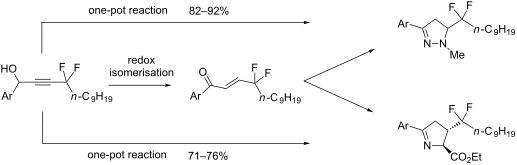
- –Miyaura coupling [35] gave biphenyl derivative 7e in 82% yield, while the Heck [36] and Sonogashira [37] reactions afforded also the desired targets 8e and 9e in 72% and 77% yield respectively. Similar results were obtained in Pd-mediated reactions starting from pyrroline 6e, as indicated in Scheme 8. The


A reductive coupling strategy towards ripostatin A
Beilstein J. Org. Chem. 2013, 9, 1533–1550, doi:10.3762/bjoc.9.175
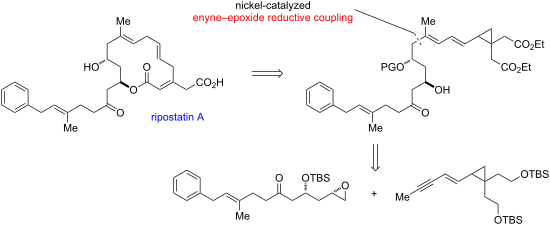
- Takai olefination [36] was used to generate the E-vinyl iodide. The vinyl iodide was sufficiently stable for purification by silica gel chromatography but, following purification, was immediately carried forward to a Sonogashira reaction with propyne [37]. The enyne could be obtained in 15:1 E/Z


Practical synthesis of indoles and benzofurans in water using a heterogeneous bimetallic catalyst
Beilstein J. Org. Chem. 2013, 9, 1426–1431, doi:10.3762/bjoc.9.160
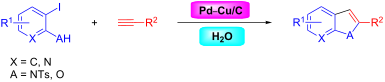
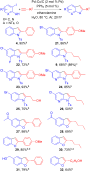
- /bjoc.9.160 Abstract This paper describes the preparation of indoles, azaindoles and benzofurans in pure water by using a new heterogeneous Pd–Cu/C catalyst through a cascade Sonogashira alkynylation–cyclization sequence. Details of the optimization studies and the substrate scope are discussed. This
- ][7]. A detailed survey of the recent literature revealed that both indoles and benzofurans can be attained by a cascade Sonogashira alkynylation–cyclization sequence (Scheme 1). Many efficient catalytic systems have been reported since the pioneering studies of Yamanaka [8] and this approach is now a
- describe the use of a readily available heterobimetallic Pd–Cu/C catalyst for cascade Sonogashira alkynylation–cyclization sequences in pure water leading to indoles, azaindoles and benzofurans. Results and Discussion We recently reported a simple and efficient procedure for preparing a very active


Synthesis, photophysical and electrochemical characterization of terpyridine-functionalized dendritic oligothiophenes and their Ru(II) complexes
Beilstein J. Org. Chem. 2013, 9, 866–876, doi:10.3762/bjoc.9.100
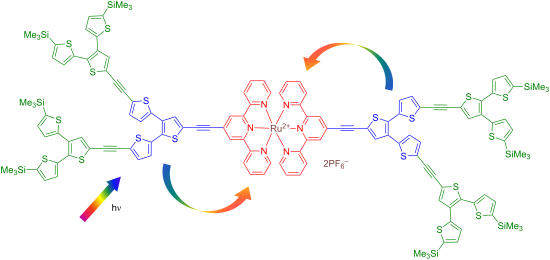
- Amaresh Mishra Elena Mena-Osteritz Peter Bauerle Institute of Organic Chemistry II and Advanced Materials, Ulm University, Albert-Einstein-Allee 11, 89081 Ulm, Germany 10.3762/bjoc.9.100 Abstract Pd-catalyzed Sonogashira cross-coupling reactions were used to synthesize novel π-conjugated
- Syntheses. A modular approach was selected for the synthesis of the targeted metallodendrimers, consisting of (1) the preparation of dendrons by employing Sonogashira cross-coupling reactions, (2) their functionalization with tpy-ligands, and (3) formation of the corresponding homoleptic Ru(II) complexes
- ':6',2''-terpyridine (4) [47], which was readily deprotected by CsF in methanol to give the targeted 4'-ethynyl-2,2':6',2''-terpyridine (5) (Scheme 1). Cross-coupling of ethynylated tpy building block 5 with iodinated G1-dendron 6 and G2-dendron 7 [42] under standard Sonogashira-type coupling


Some aspects of radical chemistry in the assembly of complex molecular architectures
Beilstein J. Org. Chem. 2013, 9, 557–576, doi:10.3762/bjoc.9.61

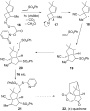
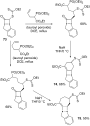
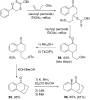
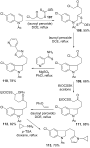
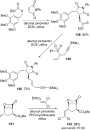
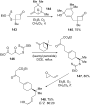
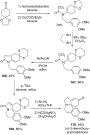
- starting xanthate. For instance, a regioselective Sonogashira coupling leading to compound 57 may be performed without affecting the less reactive chlorine substituent. The annelation commencing with xanthate 58 and furnishing indole derivative 59, an advanced intermediate in the formal synthesis of













Efficient synthesis of phenylene-ethynylene rods and their use as rigid spacers in divalent inhibitors
Beilstein J. Org. Chem. 2013, 9, 215–222, doi:10.3762/bjoc.9.25
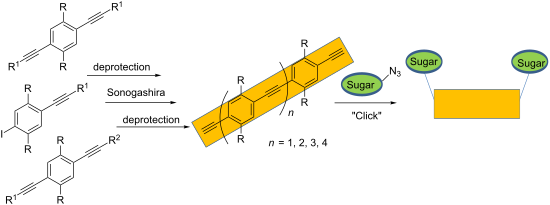
- , Universita’ degli Studi di Milano, via Golgi 19, 20133 Milano, Italy 10.3762/bjoc.9.25 Abstract The synthesis of phenylene-ethynylene rods and their use as rigid spacers is described. Alternation of a Sonogashira reaction and silyl group cleavage was used to obtain rigid spacers with even and odd numbers of
- ; rigid spacers; Sonogashira reaction; Introduction Linker or spacer molecules have a wide range of applications in many areas of chemistry as bridging molecules between separate functional units. Spacers are often flexible but depending on the nature of the application, efforts have been made to make
- deprotection needed to make B. Its free alkyne moiety can undergo a Sonogashira reaction with C to give D. At this point the removal of the protecting group R1 and R2 can be performed, to either couple the ligands or elongate the system by a double Sonogashira reaction. The strategy to prepare spacers


Dipyrazolo[1,5-a:4',3'-c]pyridines – a new heterocyclic system accessed via multicomponent reaction
Beilstein J. Org. Chem. 2012, 8, 2223–2229, doi:10.3762/bjoc.8.251
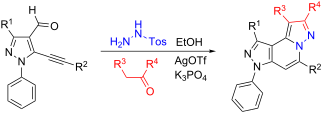
- formylation (with concomitant transformation of the oxygen into a chlorine substituent), followed by Sonogashira cross-coupling reaction of the obtained 5-chloropyrazole-4-carbaldehydes with appropriate alkynes, has been described by us in a former publication [21]. Compounds 1 containing an alkyne function


Highly stereocontrolled synthesis of trans-enediynes via carbocupration of fluoroalkylated diynes
Beilstein J. Org. Chem. 2012, 8, 2207–2213, doi:10.3762/bjoc.8.249
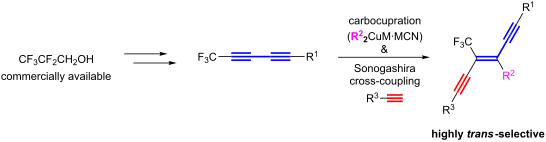
- in situ generated vinylcuprates could react very smoothly with an excess amount of iodine, the vinyl iodides being obtained in high yields. Thus-obtained iodides underwent a very smooth Sonogashira cross-coupling reaction to afford various trans-enediynes in high yields. Keywords: carbocupration
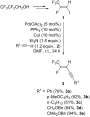
- PPh3 and CuI in DMF at room temperature for 24 h, gave the corresponding Sonogashira cross-coupling products 3a–e in good to high yields [24][25][26] (Scheme 2). Subsequently, 3a was subjected to the usual β-elimination conditions according to the literature [23][27][28][29], i.e., treatment of 3a with
- stereoselective manner. Finally, we attempted the Sonogashira cross-coupling reaction of the obtained iodide 13a (Scheme 4). Thus, treatment of 13a with 1.2 equiv of terminal alkynes and 40 equiv of Et3N in the presence of 10 mol % each of Pd(PPh3)4 and CuI in THF at 70 °C for 2–5 h gave the corresponding