Search results
Search for "conformer" in Full Text gives 201 result(s) in Beilstein Journal of Organic Chemistry. Showing first 200.
Chromatographically separable rotamers of an unhindered amide
Beilstein J. Org. Chem. 2014, 10, 701–706, doi:10.3762/bjoc.10.63
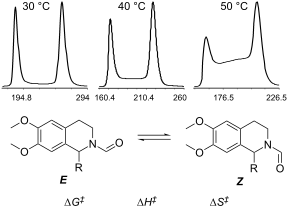
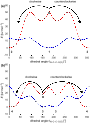
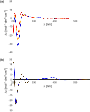
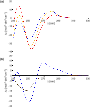
- conformer, a potential energy surface (PES) scan for the rotation around the C–N bond in steps of 10° was done. This scan provided two local minima as well as two maxima (Figure 5). The asymmetric peak shape is caused by the inversion of the pyramidal nitrogen between = 110° and = 120° as well as = 280


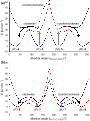
![[Graphic 2]](/bjoc/content/inline/1860-5397-10-63-i3.png?max-width=637&scale=1.18182) ) in 4 (BP-D3/def2-SVP).
) in 4 (BP-D3/def2-SVP).

New hydrogen-bonding organocatalysts: Chiral cyclophosphazanes and phosphorus amides as catalysts for asymmetric Michael additions
Beilstein J. Org. Chem. 2014, 10, 224–236, doi:10.3762/bjoc.10.18
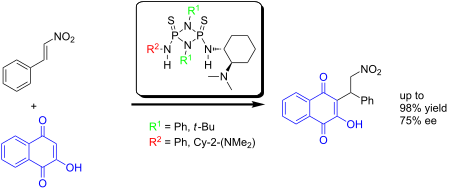
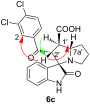
- nitrogen N1, which is significantly shorter in 7a (2.194/2.110 Å respectively). The intramolecular hydrogen bond is probably also the cause for the occurrence of conformational isomers when inverting the configuration at C9. While catalyst (S)-4 solely exists as one conformer on the NMR timescale, its


The regioselective synthesis of spirooxindolo pyrrolidines and pyrrolizidines via three-component reactions of acrylamides and aroylacrylic acids with isatins and α-amino acids
Beilstein J. Org. Chem. 2014, 10, 117–126, doi:10.3762/bjoc.10.8
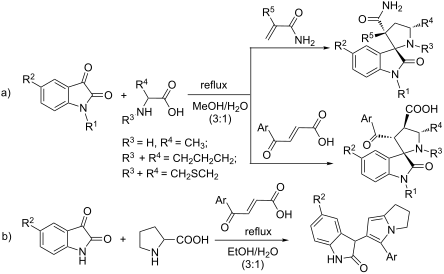
- verified by calculations of vibrational frequencies within the harmonic approximation, using analytical second derivatives at the same level of theory. All stationary points possess zero imaginary frequencies. It was found that the acrylamide conformer I was more stable than conformer II by 1.24 kcal/mol




Stereoselectively fluorinated N-heterocycles: a brief survey
Beilstein J. Org. Chem. 2013, 9, 2696–2708, doi:10.3762/bjoc.9.306
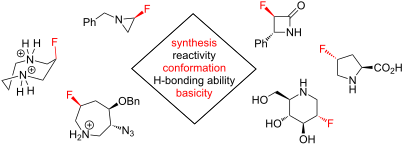
- contrast however, introduction of a (6R)-fluorine atom (compound 23) greatly rigidified the ring system, to the extent that a single conformer of 23 dominated in solution. This work highlights the subtleties that can arise when fluorine atoms are incorporated into highly flexible molecules with pre


Dipolar addition to cyclic vinyl sulfones leading to dual conformation tricycles
Beilstein J. Org. Chem. 2013, 9, 1419–1425, doi:10.3762/bjoc.9.159
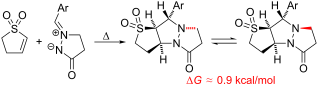
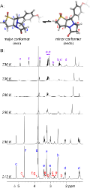
- (HSQC, HMBC, ROESY, TOCSY and EXSY). The most significant difference between the NMR data for the two conformations was the substantial upfield shift for the two protons adjacent to the carbonyl (‘d’ in Figure 2) in the major conformer. This was consistent with this methylene group being substantially
- shielded by the electron-rich aromatic ring, as would be expected for the conformation observed in the X-ray structure (Figure 1). This upfield shift was not present in the minor conformer, suggesting that the pyrazolidinone ring had moved away from the aromatic ring’s magnetic influence. Analysis of
- the two lowest-energy structures shown in Figure 2A. Compellingly, the difference in ΔHf between these two structures (0.93 kcal/mol in favor of the exo conformer) agrees very well with the experimental difference in energy calculated from NMR integration of the two conformations at 213 K (0.8 kcal


Conformational analysis and intramolecular interactions in monosubstituted phenylboranes and phenylboronic acids
Beilstein J. Org. Chem. 2013, 9, 1127–1134, doi:10.3762/bjoc.9.125
- to evaluate the difference in affinity of boron towards oxygen and nitrogen electron pairs in 2-aminocarbonylphenylboronic acid (2-AC-PBA) and its corresponding ester, ethanediol(2-aminocarbonyl)phenylboronate (ED-2-AC-PB), that has been identified for some conformer interactions of type B–N and B–O
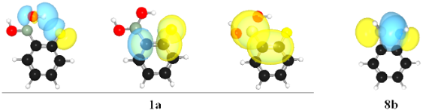
- 1a and 1b relative to 2a. Conformer 1c was found to be stabilized by a nonbonding F∙∙∙O interaction, which contributes to the formation of pseudo five-membered rings. This would be possible because of an nF→π*CC interaction (Figure 3), which contributes to a resonance structure with positive fluorine
- capable of interacting attractively with oxygen. Table 1 shows that the nF→π*CC interaction in 1c is ca. 3 kcal mol−1 stronger than in 1a and 1b, but not strong enough to make this conformer appreciably populated. Overall, 1a was calculated to be practically the only existing conformer, because of its


4-Pyridylnitrene and 2-pyrazinylcarbene
Beilstein J. Org. Chem. 2013, 9, 754–760, doi:10.3762/bjoc.9.85
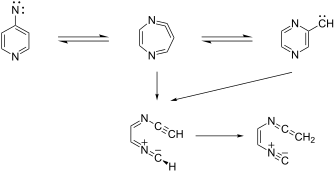
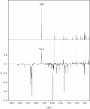
- liquid N2 at −196 °C, or at 2092 cm−1 upon isolation in an Ar matrix at 10 K. The diazo compound is also formed on matrix photolysis of the triazole (Figure 1). Compound 22 can exist as s-Z and s-E conformers. One conformer dominates, absorbing strongly at 2092 cm−1; the other, minor absorption is at
- 2092 cm−1 (major conformer) and 2076 cm−1 (minor conformer) (Figure 1): IR (Ar, 7 K) 795, 835, 918, 1009, 1056, 1150, 1299, 1434, 1476, 1574, 2076, 2092 cm−1. A small amount of the photoproduct 20 also appeared (1872 cm−1; Figure 1). Further photolysis afforded the product spectrum shown in Figure 2






Chemoenzymatic synthesis and biological evaluation of enantiomerically enriched 1-(β-hydroxypropyl)imidazolium- and triazolium-based ionic liquids
Beilstein J. Org. Chem. 2013, 9, 516–525, doi:10.3762/bjoc.9.56
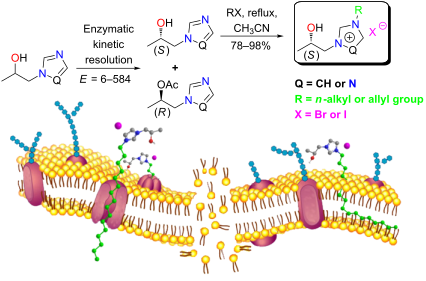
- previously [58]. The absolute configuration of the substrate is deduced by interpretation of the signs of the ΔδRS values, by using an empirical model that assumes that in MPA esters of secondary alcohols, the most representative conformer has the methoxy group of MPA, the carbonyl group, and a proton bonded


Thermotropic and lyotropic behaviour of new liquid-crystalline materials with different hydrophilic groups: synthesis and mesomorphic properties
Beilstein J. Org. Chem. 2013, 9, 425–436, doi:10.3762/bjoc.9.45
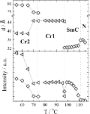
- scattering. As an example, the temperature dependence of the smectic layer spacing d, for TL1 is shown in Figure 4. The MOPAC/AM1 model has been used to calculate the length of TL1 in the energy-optimized conformation, which gives 41 Å for the most extended conformer. In X-ray data taken at small scattering
- conformer. This fact gives evidence for the bent-like conformation of the molecule, i.e., the molecule core is rigid but the flexible chains are bent and not extended at all. The increase of scattered X-ray signal intensity on cooling also confirms the increase of the order with temperature decrease (Figure






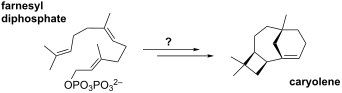
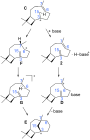
Caryolene-forming carbocation rearrangements
Beilstein J. Org. Chem. 2013, 9, 323–331, doi:10.3762/bjoc.9.37
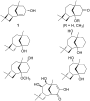
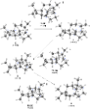
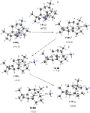
- -energy conformer found); see Experimental for details. Computed minima and transition-state structure involved in the single-step conversion of A to C. Relative energies shown (kcal/mol) were calculated at the mPW1PW91/6-31+G(d,p)//B3LYP/6-31+G(d,p) level. IRC from TS-AC toward C. Relative energies were





Synthesis of 5-(ethylsulfonyl)-2-methoxyaniline: An important pharmacological fragment of VEGFR2 and other inhibitors
Beilstein J. Org. Chem. 2013, 9, 173–179, doi:10.3762/bjoc.9.20
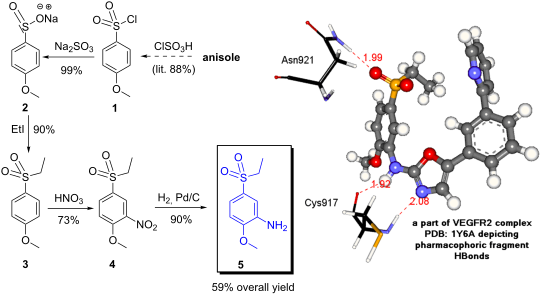
- ; S, 14.77%. The AAZ ligand conformer from PDB complex 1Y6A and its VEGFR2 intermolecular interaction map depicting three hydrogen bonds and two stacked (π,π) interactions. No lipophilic interactions are shown here. The part of the skeleton AAZ in bold represents the fragment originating from the


The diketopiperazine-fused tetrahydro-β-carboline scaffold as a model peptidomimetic with an unusual α-turn secondary structure
Beilstein J. Org. Chem. 2013, 9, 147–154, doi:10.3762/bjoc.9.17
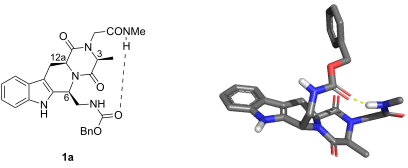
- molecular modeling and these experimental results, for 1a we can presume the presence in solution of conformers bearing a 13-membered intramolecular hydrogen bond involving the NHMe proton and the Cbz carbonyl group, as visualized in the perspective view of the low energy conformer of 1a. Conclusion In


The β-cyclodextrin/benzene complex and its hydrogen bonds – a theoretical study using molecular dynamics, quantum mechanics and COSMO-RS
Beilstein J. Org. Chem. 2013, 9, 118–134, doi:10.3762/bjoc.9.15
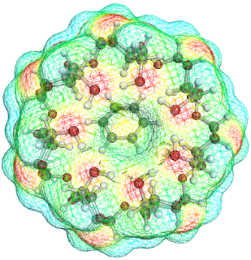
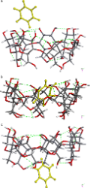
- , 290, 280, and 273 K for 500 ps each, and their release of the guest was analysed from these trajectories. Results and Discussion AM1 Calculations The four conformers of empty β-CD The BCDO23rO6l structure turned out to be the lowest energy conformer, also having the lowest dipole moment of only 0.5618
- about 6 kcal mol−1 above, was conformer BCDO23rO6r. This oval structure has the highest dipole moment of 2.5639 D (x = +0.0268; y = +0.0236; z = −2.5637) and its O6 atomic charges display a range from −0.340 to −0.349 (average −0.344), but all O2 atoms still have the same charge of 0.325, and O3 and O4
- oxygen charges vary very little (−0.337 to −0.338 and −0.300 to −0.301, respectively). The third conformer BCDO23lO6l, lying about 7 kcal mol−1 above, was again total symmetric as shown by its dipole moment components of x = 0.0; y = 0.0; z = −1.0687 and also with respect to all its oxygen charge values



The chemistry of bisallenes
Beilstein J. Org. Chem. 2012, 8, 1936–1998, doi:10.3762/bjoc.8.225
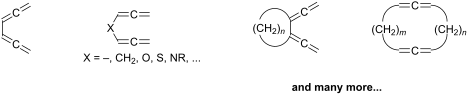
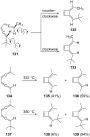
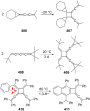
- analysis of the transformation, including its study in the solid state [105], revealed that it begins with a rotation around the central single bond, thus converting the transoid structure into the cisoid conformer 140. Conrotatory ring closure subsequently leads to the bismethylenecyclobutene 141. The
















Determination of the relative configuration of tropinone and granatanone aldols by using TBDMS ethers
Beilstein J. Org. Chem. 2012, 8, 1877–1883, doi:10.3762/bjoc.8.216

- preliminary synthetic report the major isomeric products accessible under these conditions were assigned the exo,syn configuration. DFT calculations suggest that selectivity in the solventless reaction results from equilibration and the higher stability of the O–H…N-hydrogen-bond-stabilized conformer of the


Asymmetric desymmetrization of meso-diols by C2-symmetric chiral 4-pyrrolidinopyridines
Beilstein J. Org. Chem. 2012, 8, 1778–1787, doi:10.3762/bjoc.8.203
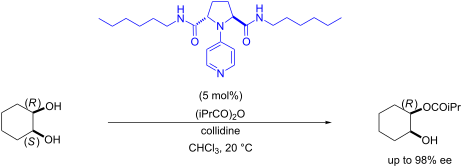
- responsible for the asymmetric acylation. The most stable conformer A of the acylpyridinium ion was generated by a molecular modeling search (AMBER* force field with the GB/SA solvation model for chloroform using MacroModel V 9.0 (50,000 steps MCMM)) and shown in Figure 2a and Figure 2b. Since the amide


Synthesis and evaluation of new guanidine-thiourea organocatalyst for the nitro-Michael reaction: Theoretical studies on mechanism and enantioselectivity
Beilstein J. Org. Chem. 2012, 8, 1485–1498, doi:10.3762/bjoc.8.168
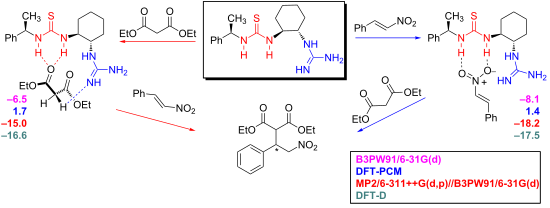
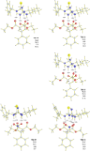
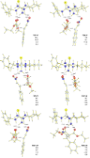
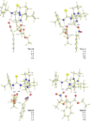
- the further optimization at the B3PW91/6–31G(d) level. Conformer 7a is the only one with two hydrogen bonds between a nitrogen atom in the guanidine moiety and hydrogen atoms from the thiourea fragment. While inclusion of the solvent effect (DFT-PCM) gives a preference of 3.1 kcal·mol−1 for 7b over 7a



The preferred conformation of erythro- and threo-1,2-difluorocyclododecanes
Beilstein J. Org. Chem. 2012, 8, 1271–1278, doi:10.3762/bjoc.8.143
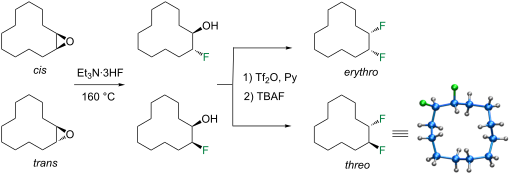
- a transition state. This may arise as a result of desolvation for this isomer. Computational study In order to explore conformer energies further, a theoretical study MP2/6-311+G(2d,p)//B3LYP/6-311+G(2d,p)+ZPE) [16] was carried out to assess relative ground-state energies of candidate conformers
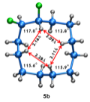
- conformer III, the lowest in energy. For the threo stereoisomer 5b, four conformers, IV–VII were considered. Conformers IV and V, which have two and one endo fluorine, respectively, are highest in energy. In particular, conformer IV with two endo fluorines has a ground-state energy of 6.65 kcal·mol−1, the
- highest of all of those examined, illustrating the additive and negative impact of placing fluorines into endo orientations. Conformers VI and VII are lower in energy. It was anticipated at the outset that conformer VI may be the most favoured for the threo isomer; however, this does not appear to be the




Conformational analysis, stereoelectronic interactions and NMR properties of 2-fluorobicyclo[2.2.1]heptan-7-ols
Beilstein J. Org. Chem. 2012, 8, 1227–1232, doi:10.3762/bjoc.8.137
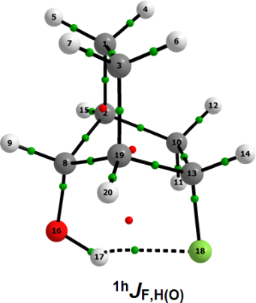
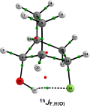
- ) in steps of 10° at the HF/6-31g(d,p) level, using the Gaussian09 package of programs [13]. Each minimum was subsequently optimized at the MP2/aug-cc-pVDZ level, and the respective energies are given in Table 1, which shows that the conformer of 5 with the hydroxy hydrogen directed toward the fluorine
- hydroxy group do not exhibit such an interaction and are highly stable [6][8]. This can be either due to other attractive interactions present in the referred conformer or prevalent repulsive interactions (e.g., between fluorine and oxygen lone pairs) in the other conformer(s). In the present study
- , comparison of 5 with three diastereoisomers (6–8) gives insight into the role of F∙∙∙HO intramolecular HB for the conformer stabilization, since the simple observation that the conformational energy in 5 is ca. 2.9 kcal mol−1 does not warrant that F∙∙∙HO intramolecular HB is the dominating, or even an


Synthesis of a library of tricyclic azepinoisoindolinones
Beilstein J. Org. Chem. 2012, 8, 1091–1097, doi:10.3762/bjoc.8.120
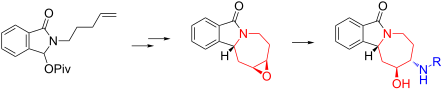
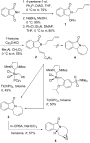
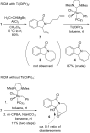
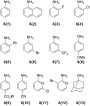
- steric bulk of the adamantyl group: molecular mechanics calculations indicate that the aminolysis of 5 to regioisomer 10 proceeds with minimal isomerization of the seven-membered ring geometry in the lowest-energy product conformer, whereas the formation of 9 requires a substantial ring flip [41






Toward unidirectional switches: 2-(2-Hydroxyphenyl)pyridine and 2-(2-methoxyphenyl)pyridine derivatives as pH-triggered pivots
Beilstein J. Org. Chem. 2012, 8, 977–985, doi:10.3762/bjoc.8.110
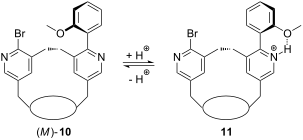
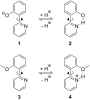
- repulsive interaction between the free electron pairs of the nitrogen and the oxygen atoms, should be the more stable one (Scheme 1). A protonation of the nitrogen inverts the relative energies of the two conformers. Due to the internal hydrogen bridge the conformer of 4 having a dihedral angle of 0° is the
- . Unfortunately, there is no hint toward a preference for the M conformer of 13 in solution: For example, in the 1H NMR spectrum of 13 signals for only one conformer were found, even at lower temperatures, which means that the diastereomers are rapidly interconverting and the ratio between them cannot be




On the bromination of the dihydroazulene/vinylheptafulvene photo-/thermoswitch
Beilstein J. Org. Chem. 2012, 8, 958–966, doi:10.3762/bjoc.8.108
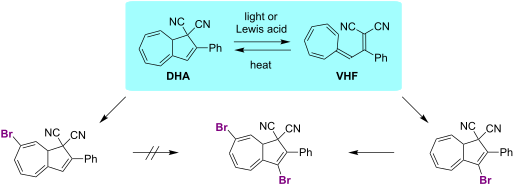
- ; photoswitch; vinylheptafulvene; Introduction 1,8a-Dihydroazulene-1,1-dicarbonitrile (DHA, 1) is a yellow photochromic compound, which undergoes a light-induced 10-electron retro-electrocyclization to a red-colored vinylheptafulvene (VHF) (Scheme 1) [1][2][3]. The VHF compound is formed as the s-cis conformer
- , which, however, is in equilibrium with the more stable s-trans conformer. The s-cis VHF undergoes a thermally induced cyclization to regenerate the original DHA. The significant structural difference between the DHA and VHF forms, as reflected in their different colors and hence electronic properties


An easy α-glycosylation methodology for the synthesis and stereochemistry of mycoplasma α-glycolipid antigens
Beilstein J. Org. Chem. 2012, 8, 629–639, doi:10.3762/bjoc.8.70
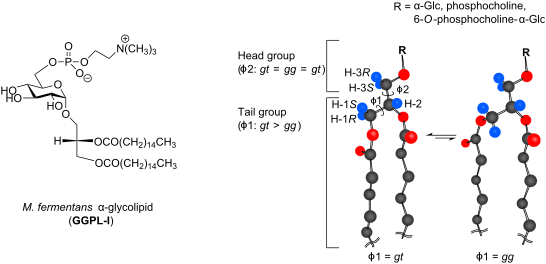
- + gt + tg = 1. In this equation, a perfect staggering (Φ1 and Φ2 = +60, −60 or 180 degree) is assumed for every conformer. Figure 3 summarizes the results for a series of 3-substituted 1,2-di-O-palmitoyl-sn-glycerols, which involve tripalmitin (Figure 3, entry 1), DPPC (1,2-di-O
- symmetric lipid, the asymmetric phospholipid (DPPC) favors the gt-conformer more strongly around the tail lipid moiety along the sn-1,2 position, while disfavoring the tg-conformer, in the ratio of gt (59%), gg (34%) and tg (7%). The head phosphate moiety along the sn-2,3 position adopts the three
- conformation. Here, it should be mentioned that the conformer distribution coincides between I-a (Figure 3, entry 5) and DPPC (Figure 3, entry 2) at the head moiety [gt (33%), gg (34%) and tg (33%)]. The above analysis was carried out also for the stereoisomer I-b and the related glycolipids (Figure 4, entries


Fifty years of oxacalix[3]arenes: A review
Beilstein J. Org. Chem. 2012, 8, 201–226, doi:10.3762/bjoc.8.22
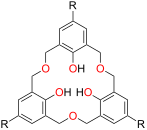
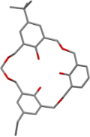
- , the presence of a hydrogen-bond motif in the cone conformer makes it the more stable form. In 1985, Gutsche investigated the conformational flexibility of parent calix[n]arenes (n = 4–8) and oxacalixarenes by temperature-dependent 1H NMR [5]. The through-the-annulus rotation barrier for oxacalix[3
- inversion in CDCl3 was <38 kJ mol−1, in contrast with 66 kJ mol−1 for the calix[4]arene analogue. To freeze the oxacalix[3]arene conformer, through-the-annulus rotation must be prevented. This can be achieved by the introduction of sufficiently large groups on the lower rim of the macrocycle. Upper-rim
- conformation only. When the reaction was performed in the presence of t-BuOK a 1:4 mixture of cone and partial-cone was obtained and even with Cs2CO3 the cone conformer could be detected. It seems that K+ and Cs+ favourably interact with the three phenolic oxygen atoms placed on the same side, whereas Na












The interplay of configuration and conformation in helical perylenequinones: Insights from chirality induction in liquid crystals and calculations
Beilstein J. Org. Chem. 2012, 8, 155–163, doi:10.3762/bjoc.8.16
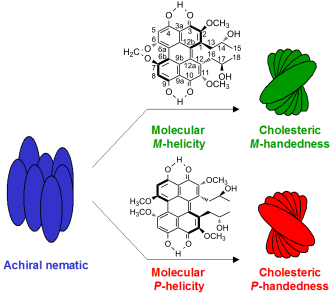
- instance, g+ t is a conformer with one chain in the gauche+ and the other in the trans state. The conformers with side chains in different states are two-fold degenerate: g+ t (= t g+), g+ g− (= g− g+) and g− t (= t g−). For the conformational study, we used DFT calculations in vacuum as implemented in the
- butterfly” by Falk and co-workers [37]. The two geometries, as obtained for the g+ g+ conformer of 1, are shown in Figure 3. Table 1 reports the twist angles χ1 [C(1)–C(12b)–C(12a)–C(12)] and χ2 [C(6)–C(6a)–C(6b)–C(7)], which characterize the helical shape of the core of 1 and 2. Not surprisingly, in view
- considered in our systematic analysis of the effects of side-chain conformations. Very similar structures were obtained by geometry optimization at the B3LYP/6-31g(d,p) and at the M06-2X/6-31+g(d,p) level; the latter are shown in Figure 4. On the contrary, the conformer energies were found to depend strongly