Search results
Search for "conjugate addition" in Full Text gives 168 result(s) in Beilstein Journal of Organic Chemistry.
Asymmetric one-pot sequential Friedel–Crafts-type alkylation and α-oxyamination catalyzed by a peptide and an enzyme
Beilstein J. Org. Chem. 2012, 8, 1333–1337, doi:10.3762/bjoc.8.152
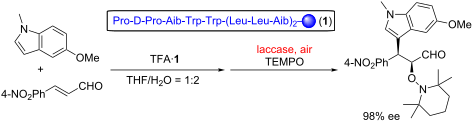
- ][19][20]. Indoles with an oxygenated stereogenic carbon at the β-position of the ring, such as indolmycin [21][22] and diolmycin [23], are known as antibiotics (Figure 1). The framework of these compounds could be constructed though the conjugate addition of an indole to α,β-unsaturated aldehydes


Two-directional synthesis as a tool for diversity-oriented synthesis: Synthesis of alkaloid scaffolds
Beilstein J. Org. Chem. 2012, 8, 850–860, doi:10.3762/bjoc.8.95
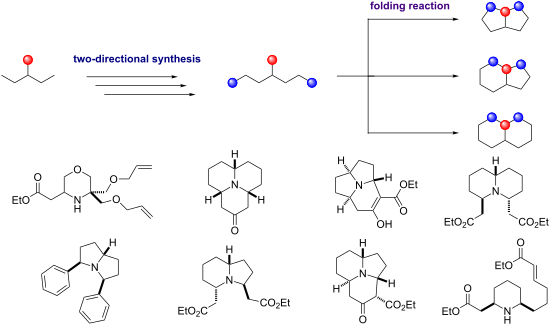
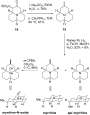
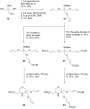
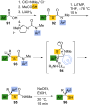
- intramolecular conjugate addition. Three of these compounds (1–3) were obtained from the corresponding alcohols [19][20] in three steps: Mitsunobu reaction with NH-Boc-tosylate, followed by tosyl deprotection with magnesium, and finally two-directional cross metathesis with ethyl acrylate to install the desired
- (Scheme 3b). It seems in our case that, under the correct conditions, a Dieckmann reaction can be made to occur in tandem with the Boc-deprotection and double-conjugate addition processes. This one-pot, four-step reaction process is extremely interesting for the amount of molecular complexity generated in
- detected in reactions in which 10 was not formed. In all of the earlier experiments the only bicycle detected was trans-8, implying that the double-conjugate addition process heavily favours the formation of this compound. Therefore it was considered that cis-8 could be forming from 10; suggesting



Enantioselective Michael addition of 2-hydroxy-1,4-naphthoquinones to nitroalkenes catalyzed by binaphthyl-derived organocatalysts
Beilstein J. Org. Chem. 2012, 8, 699–704, doi:10.3762/bjoc.8.78
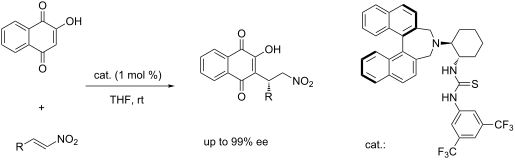
- synthesis [12], and intensive research efforts have been directed toward the development of enantioselective catalytic protocols for this reaction [13][14][15]. The organocatalyst-mediated enantioselective conjugate addition reactions, which are both powerful and environmentally friendly, have been
- the selectivity of the reaction. Aprotic solvents, such as acetonitrile, toluene, dichloromethane, THF, diethyl ether, were well tolerated in this conjugate addition without a significant decrease of enantioselectivities (89–99% ee, Table 1, entries 3 and 9–12). Remarkably, water and brine also


Directed aromatic functionalization in natural-product synthesis: Fredericamycin A, nothapodytine B, and topopyrones B and D
Beilstein J. Org. Chem. 2011, 7, 1475–1485, doi:10.3762/bjoc.7.171
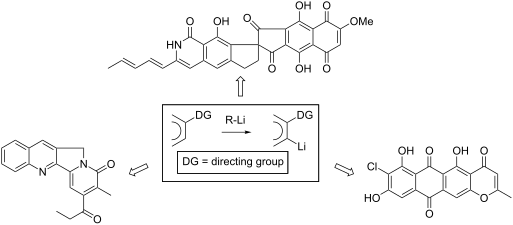
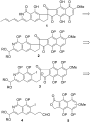
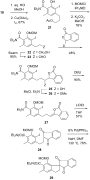
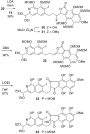
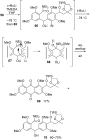
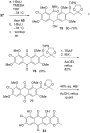
- more electrophilic quinolyl ketone would direct an initial conjugate addition of the anion of a suitable cyanoacetamide to its own β-position. A particularly direct way to produce 41 seemed to be the oxidative cleavage of the furan ring in 42, which thus became the first subgoal of our study. In that
- ] upon the resultant 42 delivered the requisite 41 in 87% yield. Happily, it transpired that the conjugate addition chemistry of 41 is indeed controlled exclusively by the quinolyl ketone. This enabled the conduct of our pyridone-forming sequence, which in the present case, however, had to be implemented







Cyclization of 5-hexynoic acid to 3-alkoxy-2-cyclohexenones
Beilstein J. Org. Chem. 2011, 7, 1323–1326, doi:10.3762/bjoc.7.155
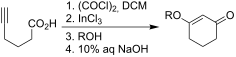
- 1. Related examples by Forsyth [2] and Clausen [4] support our proposed mechanism. They reported conjugate addition of alcohol nucleophiles to 3-chloro-2-cyclohexenone substrates under basic conditions followed by elimination of the chloride. The key difference between their reported conditions and


One-pot Diels–Alder cycloaddition/gold(I)-catalyzed 6-endo-dig cyclization for the synthesis of the complex bicyclo[3.3.1]alkenone framework
Beilstein J. Org. Chem. 2011, 7, 1007–1013, doi:10.3762/bjoc.7.114
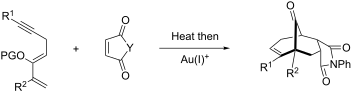
- mixture of diastereomers (dr = 3:1). Subsequently, conjugate addition of methylmagnesium bromide in the presence of a catalytic amount of CuI provided the corresponding ketone in 53% yield. The ketone was then treated with TBSCl, NaI and triethylamine to give the desired silylenol ether 10 in 46% yield


Single enantiomer synthesis of α-(trifluoromethyl)-β-lactam
Beilstein J. Org. Chem. 2011, 7, 759–766, doi:10.3762/bjoc.7.86
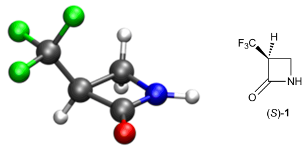
- starts from α-(trifluoromethyl)acrylic acid (2). Conjugate addition of α-(p-methoxyphenyl)ethylamine ((S)-3b), generated an addition adduct 4b which was cyclised to β-lactam 5b. Separation of the diastereoisomers by chromatography gave ((αS,3S)-5b). N-Debenzylation afforded the desired α-(trifluoromethyl
- -(trifluoromethyl)acrylic acid (2) which offered a commercially available source of the CF3 group. It was envisaged that conjugate addition of an enantiomerically pure amide such as (R)- or (S)-3 would generate the addition adducts, carboxylate salts 4, as a mixture of diastereoisomers. Cyclisation to the N


Asymmetric synthesis of tertiary thiols and thioethers
Beilstein J. Org. Chem. 2011, 7, 582–595, doi:10.3762/bjoc.7.68
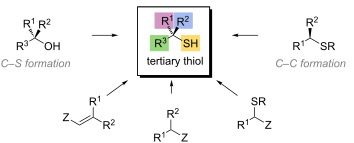
- product 6 (Scheme 2). The low yields can be attributed to the formation of β-phenylthioesters 7 by elimination followed by conjugate addition. Even in the presence of the adjacent carbonyl group, competing SN1 dissociation of the benzylic leaving group leads to a loss of enantiomeric purity in some cases
- Mitsunobu-type procedures is not straightforward. Mitsunobu reactions also suffer from atom inefficiency due to the stoichiometric quantities of phosphorus-containing by-products produced by the reaction. 1.2 Conjugate addition The carbon–sulfur bond of enantiomerically pure tertiary organosulfur compounds
- 42 may be constructed by facially selective addition of a sulfur nucleophile to the disubstituted terminus of a conjugated alkene 41 (Scheme 15). There are several examples of such facially selective addition of thiols to substituted sp2 carbon atoms, including intramolecular conjugate addition in








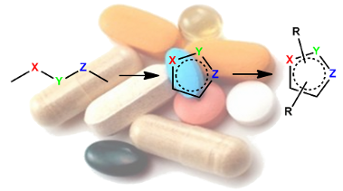
An overview of the key routes to the best selling 5-membered ring heterocyclic pharmaceuticals
Beilstein J. Org. Chem. 2011, 7, 442–495, doi:10.3762/bjoc.7.57
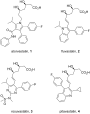
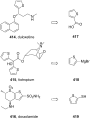
- ) with cyclohexan-1,3-dione (Scheme 38). Classical N-methylation with dimethyl sulfate followed by introduction of an exocyclic double bond using paraformaldehyde in DMF under acidic conditions furnishes the Michael acceptor 189, which then undergoes conjugate addition with various amines (Scheme 38





The preparation of 3-substituted-1,5-dibromopentanes as precursors to heteracyclohexanes
Beilstein J. Org. Chem. 2011, 7, 386–393, doi:10.3762/bjoc.7.49
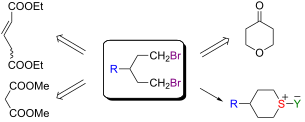
- ]. The second route (Method 1B) consists of a Knoevenagel condensation of malonate diester and an aldehyde followed by conjugate addition of a second equivalent of malonate diester. The tetraester is hydrolyzed, decarboxylated, esterified, and then reduced to give the diol. Yields for tetraesters are in
- efficient and the product is crystalline, which simplifies its purification. Another route to VII involves a two-step sequence of conjugate addition of an organocopper reagent to glutaconate diester [38] followed by reduction (Method 1C, Scheme 1). Yield of diols from this sequence are typically around 70
- overall yields (Method 2B, Scheme 2). Attempts at conserving the alkylating reagent by using a stoichiometric Wittig olefination rather than conjugate addition of excess Grignard reagent to glutaconate did not give the expected result. It is possible that the aldehyde/cyanoacetamide method (Method 1B) [36


Mitomycins syntheses: a recent update
Beilstein J. Org. Chem. 2009, 5, No. 33, doi:10.3762/bjoc.5.33
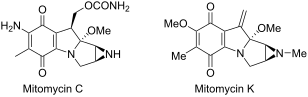
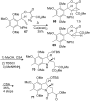
- limitation [146]. The study showed that while mitomycins are stable to these conditions, their aziridinomitosane equivalents are not and proved that the C9a methoxy/hydroxyl group is important for the stability of mitomycins. 7. The C9-aromatic disconnection 7.1. Johnston. Enamine conjugate addition Johnston






The role of an aromatic group in remote chiral induction during conjugate addition of α-sulfonylallylic carbanions to ethyl crotonate
Beilstein J. Org. Chem. 2008, 4, No. 32, doi:10.3762/bjoc.4.32
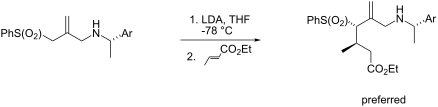
- Shlomo Levinger Ranjeet Nair Alfred Hassner Department of Chemistry, Bar-Ilan University, Ramat-Gan 52900, Israel 10.3762/bjoc.4.32 Abstract The impact of a remote aromatic nucleus on the stereochemical outcome of the conjugate addition of α-sulfonylallylic carbanions to an α,β-unsaturated ester
- as decisive for the remote transmission of chirality. Keywords: cation–π interaction; conjugate addition; diastereoselectivity; regioselectivity; remote chiral induction; Introduction Recently we have disclosed a pathway for remote asymmetric induction in conjugate additions involving lithiated α
- observed (dr 1:1). We had proposed that π–Li+ interaction may be responsible for this phenomenon. We had shown earlier [2] that conjugate addition of lithiated allyl sulfone 5 to unsaturated esters of type 2 takes place α-regioselectively and almost exclusively in an anti fashion (where the syn and anti


Sordarin, an antifungal agent with a unique mode of action
Beilstein J. Org. Chem. 2008, 4, No. 31, doi:10.3762/bjoc.4.31
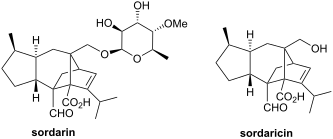
- synthesis of compound 22 began with double alkylation of (+)-21 through a cuprate conjugate addition followed by treatment of the resulting enolate with methyl iodide (Scheme 5). Retro-Diels-Alder reaction of 22 in refluxing 1,2-dichlorobenzene gave α,β-unsaturated ketone 23. Trisubstituted cyclopentanone
- dioxenone 47. This allowed the Knoevenagel condensation to be performed directly. In both the racemic and asymmetric syntheses, tricyclic compound 48 was prepared by Cu(I)-catalyzed conjugate addition of vinylmagnesium chloride to 45 in the presence of TMSCl, followed by enol acetylation (Scheme 10


Flexible synthetic routes to poison- frog alkaloids of the 5,8-disubstituted indolizidine- class I: synthesis of common lactam chiral building blocks and application to the synthesis of (-)-203A, (-)-205A, and (-)-219F
Beilstein J. Org. Chem. 2007, 3, No. 29, doi:10.1186/1860-5397-3-29
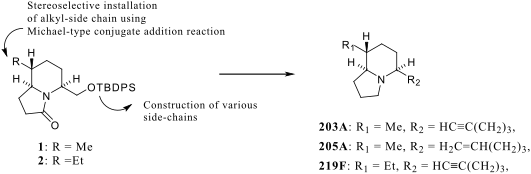
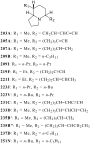
- Michael-type conjugate addition reaction to a chiral cyclic enamine ester as the key step in constructing the trisubstituted piperidine ring system. To demonstrate the usefulness of these chiral building blocks, syntheses of (-)-203A, (-)-205A from 1, and (-)-219F from 2 have been achieved. Conclusion The
- -disubstituted indolizidine class of poison-frog alkaloids, we designed two lactam chiral building blocks (1, 2). The substituent at the 8-position is stereoselectively created by our original Michael-type conjugate addition reaction. [13][14] Various substituents at the 5-position would be introduced using the
- enoltriflate 5 in good yield. The palladium-catalyzed carbon monoxide insertion reaction [17] in the presence of MeOH afforded the enaminoester 6. The key Michael-type conjugate addition reaction of 6 with lithium dimethylcuprate or divinylcuprate proceeded smoothly to provide the trisubstituted piperidines (7



An efficient synthesis of tetramic acid derivatives with extended conjugation from L-Ascorbic Acid
Beilstein J. Org. Chem. 2006, 2, No. 24, doi:10.1186/1860-5397-2-24

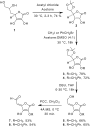
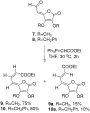
- at δ 6.81. The exchangeable C5-OH appeared as a singlet at δ 1.9, while H-8 appeared at its usual chemical shift of δ 5.87 as a doublet. The geometry of the double bond between C-7/C-8 was unaffected and it was Z only. Furthermore, we did not observe any conjugate addition product in the above



Do α-acyloxy and α-alkoxycarbonyloxy radicals fragment to form acyl and alkoxycarbonyl radicals?
Beilstein J. Org. Chem. 2006, 2, No. 10, doi:10.1186/1860-5397-2-10
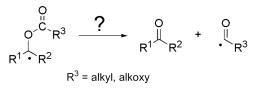
- reaction because the precursors are readily available and stable (α-halo acetates and carbonates are not stable) and because the intermediate radicals resemble Wille's typical intermediates. The syntheses of precursors 11a and 11b are summarized in Scheme 1. Copper-mediated conjugate addition of 3
- Scheme 2. Copper-mediated conjugate addition of propyl magnesium bromide to 3-methylcyclohexenone followed by quenching with acetyl chloride or methyl chloroformate provided reduced, uncyclized products 18a,b. These products were not detected in any of the subsequent cyclization experiments. Preparative





A convenient synthesis of γ-functionalized cyclopentenones
Beilstein J. Org. Chem. 2005, 1, No. 11, doi:10.1186/1860-5397-1-11
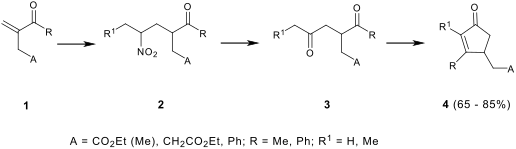
- conjugate addition of nitroalkanes to α,β-unsaturated ketones 1 leading to the nitroalkanes derivatives 2 which may be converted into their γ-diketone homologues 3 using Nef reaction. The intramolecular cyclization of 1,4-diketones 3 led to the corresponding cyclopentenones 4. Results and discussion As


Methods for the synthesis of polyhydroxylated piperidines by diastereoselective dihydroxylation: Exploitation in the two-directional synthesis of aza-C-linked disaccharide derivatives
Beilstein J. Org. Chem. 2005, 1, No. 2, doi:10.1186/1860-5397-1-2
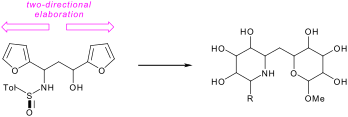
- from oxidation to the corresponding α,β-unsaturated ketone,[47] followed by conjugate addition. The dihydroxyation of the anti allylic alcohol 19 under Upjohn conditions was not synthetically useful (entry 8a, Table 1). Although dihydroxyation of the remote allyl group was rapid, the dihydroxylation of