Search results
Search for "polymer" in Full Text gives 637 result(s) in Beilstein Journal of Organic Chemistry. Showing first 200.
Mechanochemical green synthesis of hyper-crosslinked cyclodextrin polymers
Beilstein J. Org. Chem. 2020, 16, 1554–1563, doi:10.3762/bjoc.16.127
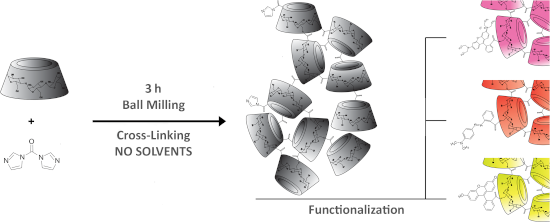
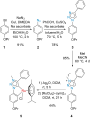
- crosslinker. The polymer obtained exhibited the same characteristics as a CD-based carbonate NS synthesized in a solvent. Moreover, after the synthesis, the polymer was easily functionalized through the reaction of the nucleophilic carboxylic group with three different organic dyes (fluorescein, methyl red
- allow them to act as polyfunctional monomers, permitting the crosslinking with bi- or multifunctional chemicals, such as dianhydrides, diisocyanates, diepoxides, and dicarboxylic acids, etc. The polarity and size of the polymer network can be easily tuned by varying the type of the crosslinker and
- CD nanosponges, after crosslinking, comprise carbonate bonds between the cyclodextrin monomers. If this reaction is carried out under classical conditions in a N,N-dimethylformamide (DMF) solution, an amorphous crosslinked insoluble polymer is obtained. In general, carbonate nanosponges are insoluble




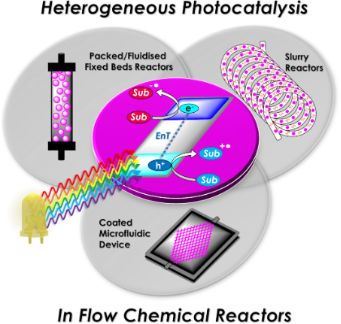
Heterogeneous photocatalysis in flow chemical reactors
Beilstein J. Org. Chem. 2020, 16, 1495–1549, doi:10.3762/bjoc.16.125
- electrostatic repulsion that prevents the dye adsorption. 2.2 Organic semiconductor photocatalysis Polyaniline was the first conductive polymer reported by Henry Letheby in 1862 [99][100], but the potential of organic electronics was not realised until the 1960s, and the seminal work of Heeger, MacDiarmid, and
- polymer chains, charge transport is limited to intraplanar transport along the conjugated network. In crystalline and graphitic organic materials, the close packing of two-dimensional sheets permits interplanar charge transport in the third dimension, allowing the delocalisation of charge over several
- ]. Organic polymer materials, such poly(p-phenylene vinylene, εr(ω) = 2), typically have low εr(ω) values, which prevents the screening of excitons and leads to much stronger binding energies of 0.1–1 eV, which greatly exceeds the available thermal energy at room temperature [111][112][113]. This is










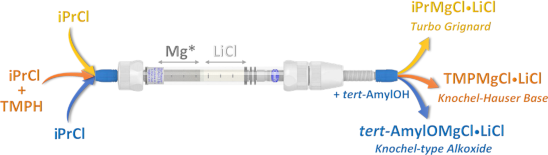
Disposable cartridge concept for the on-demand synthesis of turbo Grignards, Knochel–Hauser amides, and magnesium alkoxides
Beilstein J. Org. Chem. 2020, 16, 1343–1356, doi:10.3762/bjoc.16.115
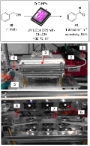
- with perfluorinated polymer film (PFA), and the bags are filled with the fluid to dispense. The pumping is accomplished by enclosing the bag in a metal clamshell, with contact surfaces made with an elastomer (Figure 3A). When compressed air is pumped in the clamshell, it squeezes the bag through the
- elastomer, and thus dispensing fluid. The elastomer sheets fully embrace the reagent bag, providing mechanical support. In this way, a soft polymer bag can be squeezed at a relatively high pressure: our prototype achieved pumping pressures up to about 1 MPa (10 bar). This type of pressure-driven pump, where


Activated carbon as catalyst support: precursors, preparation, modification and characterization
Beilstein J. Org. Chem. 2020, 16, 1188–1202, doi:10.3762/bjoc.16.104
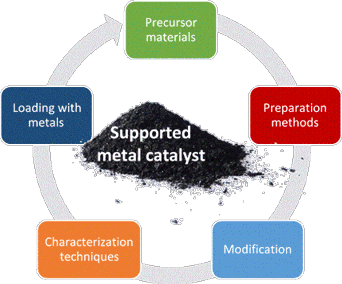
- with a production of 1011–1012 tons per year, followed by lignin as second most abundant raw material [16]. Lignin is a three-dimensional phenolic polymer and is responsible for the cementation of cellulose fibres in plants [17]. Hemicelluloses, predominantly xylan, are non-cellulosic polysaccharides


Synthesis and properties of quinazoline-based versatile exciplex-forming compounds
Beilstein J. Org. Chem. 2020, 16, 1142–1153, doi:10.3762/bjoc.16.101
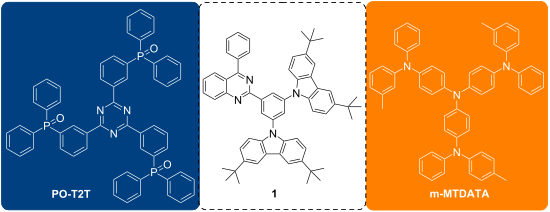
- Rasa Keruckiene Simona Vekteryte Ervinas Urbonas Matas Guzauskas Eigirdas Skuodis Dmytro Volyniuk Juozas V. Grazulevicius Department of Polymer Chemistry and Technology, Kaunas University of Technology, K. Baršausko g. 59, Kaunas 51423, Lithuania 10.3762/bjoc.16.101 Abstract Three compounds


Synthesis of esters of diaminotruxillic bis-amino acids by Pd-mediated photocycloaddition of analogs of the Kaede protein chromophore
Beilstein J. Org. Chem. 2020, 16, 1111–1123, doi:10.3762/bjoc.16.98
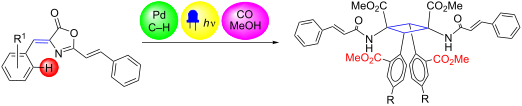
- applications as internal donors in Ziegler–Natta catalysts for polymerization [14] or as building blocks in polymer chemistry [15]. A very closely related group of cyclobutanes are the 1,3-diaminotruxillic ester derivatives (Figure 1b). This type of bis-amino esters also shows remarkable pharmacological


Aryl-substituted acridanes as hosts for TADF-based OLEDs
Beilstein J. Org. Chem. 2020, 16, 989–1000, doi:10.3762/bjoc.16.88
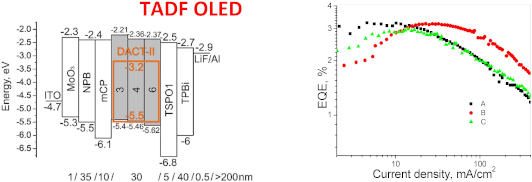
- Naveen Masimukku Dalius Gudeika Oleksandr Bezvikonnyi Ihor Syvorotka Rasa Keruckiene Dmytro Volyniuk Juozas V. Grazulevicius Department of Polymer Chemistry and Technology, Kaunas University of Technology, Radvilenu pl. 19, LT-50254, Kaunas, Lithuania Scientific Research Company “Electron-Carat


Recent applications of porphyrins as photocatalysts in organic synthesis: batch and continuous flow approaches
Beilstein J. Org. Chem. 2020, 16, 917–955, doi:10.3762/bjoc.16.83
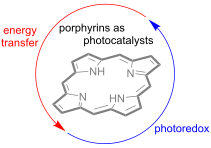
- thermal decomposition of urea at 550 °C for 2 h afforded the CN polymer, which possesses abundant –NH2 functional groups. The heterogeneous photocatalyst carbon nitride-hemin (CNH) was prepared after an amidation reaction between a carboxyl group of Fe(III) protoporphyrin IX and an amino group of the CN






Recent advances in Cu-catalyzed C(sp3)–Si and C(sp3)–B bond formation
Beilstein J. Org. Chem. 2020, 16, 691–737, doi:10.3762/bjoc.16.67
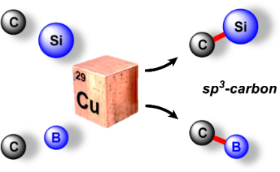
- interesting class of substrates for medicinal and polymer chemistry. Nevertheless, they can be transformed into a variety of building blocks for subsequent use in complex molecule synthesis. The first example of a copper-catalyzed C(sp3)–Si bond formation was reported by Oshima and co-workers in 1984 [25]. In


A systematic review on silica-, carbon-, and magnetic materials-supported copper species as efficient heterogeneous nanocatalysts in “click” reactions
Beilstein J. Org. Chem. 2020, 16, 551–586, doi:10.3762/bjoc.16.52
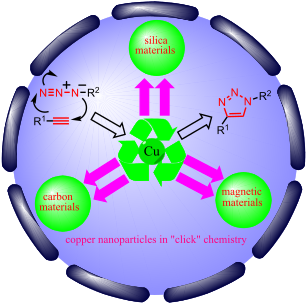
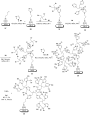
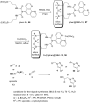
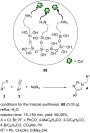
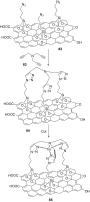
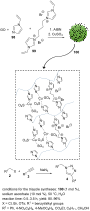
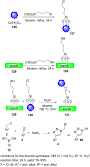
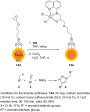
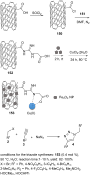
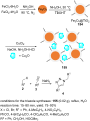
- . This solid material was washed with MeOH and dried. The resulting GO/intrinsically microporous polymer (Pim) material and CuSO4 were added into water and heated at 50 °C overnight to afford the material GO/Pim/Cu (100, Scheme 22). The powder was collected by filtration and washed by water/methanol. The
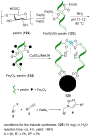
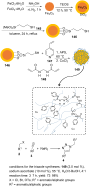
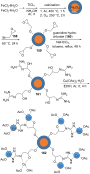
- polymer that contains many carboxylate groups. These functional groups can chelate Fe3O4 nanoparticles (i.e., pectin includes the Fe3O4 nanoparticles as a shell). Generally, 122 is a branched macromolecule that is found broadly in nature. The promising aspects associated with pectin are biodegradability

















Photophysics and photochemistry of NIR absorbers derived from cyanines: key to new technologies based on chemistry 4.0
Beilstein J. Org. Chem. 2020, 16, 415–444, doi:10.3762/bjoc.16.40
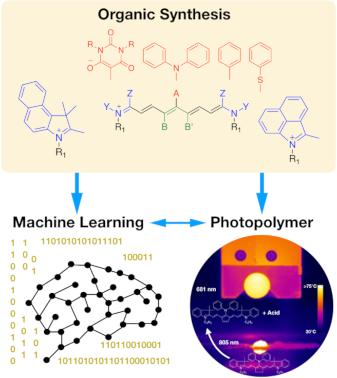
- processes requesting heat to initiate either chemical (activated reactions) or physical (melting, evaporation) events. Keywords: chemistry 4.0; cyanine; near infrared; photopolymer; polymer synthesis; sensitizer; Introduction Cyanines have received in the class of polymethines big attention within the
- received remarkable attention in the academic community although industrial applications use this reaction to pattern imaged areas [97][98]. The structure was confirmed by direct synthesis following a procedure using MnO2[63]. Polymer synthesis NIR sensitized radical photopolymerization Photosensitized
- been in progress. Tailor-made synthesis by photo-ATRP with NIR sensitizers NIR absorbers/sensitizers have also reached the field of polymer synthesis; that is controlled/living radical polymerization (CLRP). This facilitates well-defined polymeric materials with pre-design architectures, predetermined


Room-temperature Pd/Ag direct arylation enabled by a radical pathway
Beilstein J. Org. Chem. 2020, 16, 384–390, doi:10.3762/bjoc.16.36
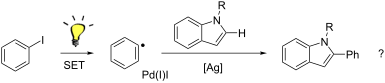
- growth are the expensive, toxic, and energy-intensive methods in which these materials are typically prepared [1]. Direct arylation is one solution to these problems, which allows improved atom and step economy in polymer synthesis. Traditional coupling methods form a new C–C bond using a reactive C–M
- number average molecular weight of 14 kg/mol, although in 9% yield [7]. Room-temperature DArP would improve the simplicity of conjugated polymer synthesis, and reduce the energy requirements. Small molecule reactions can help predict a method’s utility in polymerizations, as DArP proceeds through a step
- paper, we investigated the mechanism of room-temperature direct arylation and DArP by extending the method reported by Larrosa to synthesize a conjugated polymer, polyindole (PIn). Small molecule mechanistic studies were undertaken that will help future development of mild, efficient DArP conditions




Oligomeric ricinoleic acid preparation promoted by an efficient and recoverable Brønsted acidic ionic liquid
Beilstein J. Org. Chem. 2020, 16, 351–361, doi:10.3762/bjoc.16.34
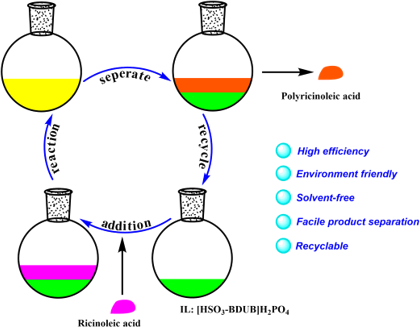
- biomass provides an alternative avenue to liberate us from the reliance on petroleum resource [1]. Nowadays, fuels, fine chemicals and functional molecules/materials can be derived from biomass such as lignocellulose and plant oils [2][3], wherein the plant oils play an important role in the polymer


p-Pyridinyl oxime carbamates: synthesis, DNA binding, DNA photocleaving activity and theoretical photodegradation studies
Beilstein J. Org. Chem. 2020, 16, 337–350, doi:10.3762/bjoc.16.33
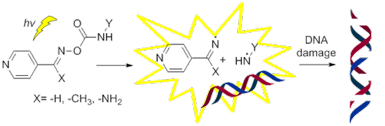
- under reflux were identical, meaning that no isomerization or decomposition occurred and that the delivered product in both cases is the more thermodynamically stable. Interestingly, although carbamates are important in both medicinal and polymer chemistry, besides compound 23 [61], all the rest were


Formal preparation of regioregular and alternating thiophene–thiophene copolymers bearing different substituents
Beilstein J. Org. Chem. 2020, 16, 317–324, doi:10.3762/bjoc.16.31
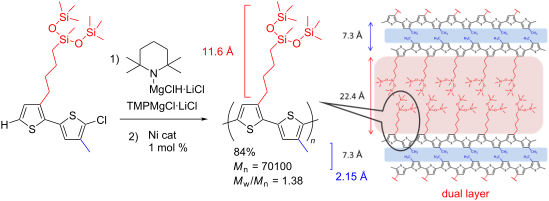
- and KF-404HQ. Molecular weights and molecular weight distributions were estimated on the basis of the calibration curve obtained by 6 standard polystyrenes. UV–vis absorption spectra of the polymer films were measured with a Shimadzu UV-3150 spectrometer. XRD analysis was carried out with a Rigaku
- , 1134, 1052, 840, 801, 773, 754, 720, 700 cm−1. Solubility tests of alternating copolymer 6 (1 mg of material dissolved in 1 mL of the solvent). XRD measurement and prediction of the bilayer lamellar structure of polymer 6c. a) XRD analysis. b) Suggested bilayer lamellar structure. c) Side chain length


Halogen-bonding-induced diverse aggregation of 4,5-diiodo-1,2,3-triazolium salts with different anions
Beilstein J. Org. Chem. 2020, 16, 78–87, doi:10.3762/bjoc.16.10
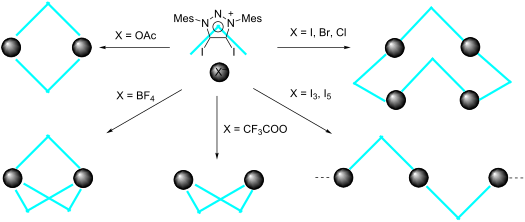
- dimers, respectively, while the former shows boat conformation and the latter forms rectangle conformation. Triazolium salts form a linear polymer with polyiodide. Keywords: aggregation; 4,5-diiodo-1,2,3-triazolium salts; halogen bond; non-covalent interaction; Introduction The halogen bond (XB) is a
- acetate exist as dimers, respectively, while the former shows a boat conformation and the latter forms a rectangle conformation. Triazolium salts form a linear polymer with polyiodide. Results and Discussion Recently, we found that 4-iodotriazolylidene can be prepared by the treatment of a 4,5
- the former shows a boat conformation and the latter forms a rectangle conformation. Triazolium salts form a linear polymer with polyiodide. 2-BF4 forms co-crystals with 4,4'-bipyridine via halogen bonding. DFT calculation results show that the σ holes of 4,5-diiodo-1,2,3-triazolium is similar to the σ




Carbazole-functionalized hyper-cross-linked polymers for CO2 uptake based on Friedel–Crafts polymerization on 9-phenylcarbazole
Beilstein J. Org. Chem. 2019, 15, 2856–2863, doi:10.3762/bjoc.15.279
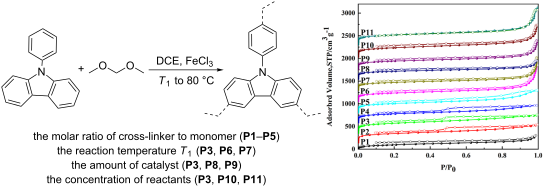
- , as well as the C/N ratio, which has been confirmed by elemental analysis. Elemental analyses were measured to compare the degree of crosslinking of P1–P11 (Table 3), because the C/N ratio of the polymer will increase as the degree of crosslinking increases. The effect of molar ratio of cross-linker
- the polymer CZB (with similar carbazole monomer) [18]. All that reveal that enough and suitable cross-linker amount was the premise of superior specific surface areas. The effect of reaction temperature T1 on the porosity of HCPs (P3, P6, P7) The reaction temperature can mainly influence the
- than many carbazole-based HCPs with similar BET specific surface area [19][20][24]. We conjecture that the concentration of FDA can affect the formation process and morphology of the polymers, when polymer particles agglomerate and stack together (Figure 4). We reached the conclusion that when varying


Progress in metathesis chemistry
Beilstein J. Org. Chem. 2019, 15, 2765–2766, doi:10.3762/bjoc.15.267
- reflected by a growing number of new industrial openings. No new metathesis-based biorefineries have been built, while the traditional polymer industry seems to prefer ill-definied catalysts, and sadly, no new drugs are being produced by metathesis. On the contrary, Janssen Therapeutics recently announced
A review of asymmetric synthetic organic electrochemistry and electrocatalysis: concepts, applications, recent developments and future directions
Beilstein J. Org. Chem. 2019, 15, 2710–2746, doi:10.3762/bjoc.15.264
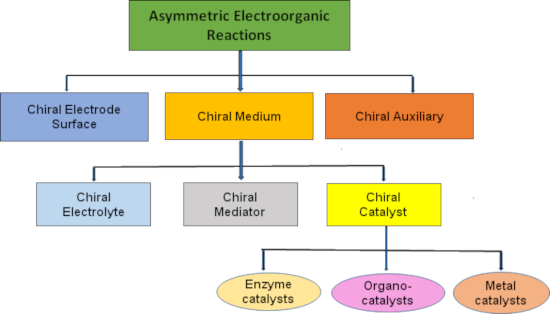
- a small amount of inducing agents. However, poor coverage of the electrode surface with the chiral species was soon noted as one of the major disadvantages of this method, and chemists started developing polymer-coated electrodes as an alternative. In 1983, Nonaka et al. explored the applicability






Fluorinated maleimide-substituted porphyrins and chlorins: synthesis and characterization
Beilstein J. Org. Chem. 2019, 15, 2704–2709, doi:10.3762/bjoc.15.263
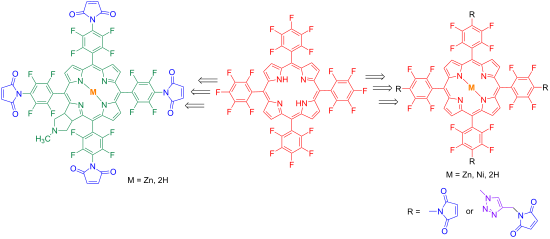
- ; porphyrin; spectral characteristics; synthesis; Introduction Porphyrins belong to a broad class of the natural and synthetic macroheterocyclic compounds with unique properties. They play an important role in photosynthesis [1], catalysis [2][3], nonlinear optics [4][5], polymer synthesis [6] and energy


Probing of local polarity in poly(methyl methacrylate) with the charge transfer transition in Nile red
Beilstein J. Org. Chem. 2019, 15, 2552–2562, doi:10.3762/bjoc.15.248

- permittivity of polymers and its spatial distribution play a crucial role in the behavior of thin films, such as those used, e.g., as sensor coatings. In an attempt to develop a conclusive approach to determine these quantities, the polarity of the model polymer poly(methyl methacrylate) (PMMA) in 600 nm thin
- NR molecules in the ground state and slow sub-glass transition (Tg) relaxations in PMMA. Keywords: charge transfer; dipole moment; fluorescence; inhomogeneous broadening; oxazine dye; polarity probe; polymer permittivity; Introduction The chain and segment mobility as well as the permittivity of
- polymers possess an enormous impact on the properties of polymers and polymer thin films. For ultrathin films, in which the film thickness is in the order of the radius of gyration, special effects of confinement have been observed. Prominent examples are the properties of substrate-supported ultrathin




Formation of alkyne-bridged ferrocenophanes using ring-closing alkyne metathesis on 1,1’-diacetylenic ferrocenes
Beilstein J. Org. Chem. 2019, 15, 2534–2543, doi:10.3762/bjoc.15.246
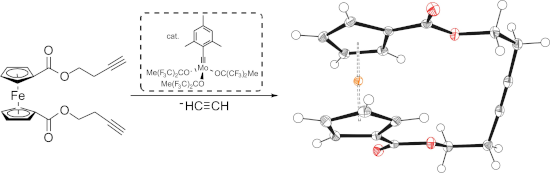
- with high yields whilst giving full conversion of the terminal alkynes. Furthermore, the solvent-dependant reactivity of 2a towards Ag(SbF6) is investigated, leading to oxidation and formation of the ferrocenium hexafluoroantimonate 4 in dichloromethane, whereas the silver(I) coordination polymer 5 was
- can be seen in Figure 9. Single crystals of the silver complex 5 suitable for X-ray diffraction analysis could be obtained after layering a THF solution with hexane. The resulting ORTEP drawing is shown in Figure 10. The molecular structure of 5 turned out to be a coordination polymer with a rather
- reactivity of 2a towards Ag(SbF6) was investigated. It was found that this reaction is solvent dependant, and 2a was readily oxidized in DCM solution to the corresponding ferrocenium hexafluoroantimonate 4, whereas the silver(I) coordination polymer 5 was isolated from the reaction in THF solution. This


Thermal stability of N-heterocycle-stabilized iodanes – a systematic investigation
Beilstein J. Org. Chem. 2019, 15, 2311–2318, doi:10.3762/bjoc.15.223
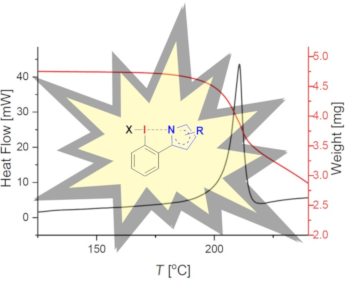
- alkyl and aryl radicals through thermogravimetry [16][17]. In 2013 Kumar and co-workers compared the thermal properties of open-chained aryl-λ3-iodanes with their polymer bound derivatives and found an endothermic decomposition behavior [18]. In the same year Haller and co-workers investigated the


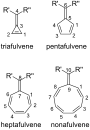
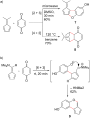
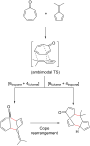
An overview of the cycloaddition chemistry of fulvenes and emerging applications
Beilstein J. Org. Chem. 2019, 15, 2113–2132, doi:10.3762/bjoc.15.209
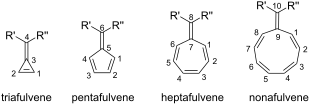
- , allowing continuous modification through bond formation and/or breaking. This dynamic nature facilitates reorganisation through the exchange of building blocks, or incorporation of new substituents, even after the initial polymer has been formed [192]. The fulvene DAC is a good candidate for dynamer





Attempted synthesis of a meta-metalated calix[4]arene
Beilstein J. Org. Chem. 2019, 15, 1996–2002, doi:10.3762/bjoc.15.195
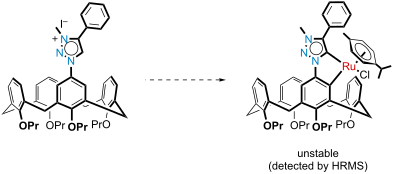
- Christopher D. Jurisch Gareth E. Arnott Department of Chemistry and Polymer Science, Stellenbosch University, Private Bag X1, Matieland, 7602, South Africa 10.3762/bjoc.15.195 Abstract An evidence for the formation of a rare meta-metalated inherently chiral calix[4]arene is described. Our