


Search results
Search for "acetal" in Full Text gives 284 result(s) in Beilstein Journal of Organic Chemistry. Showing first 200.
Study on the synthesis of the cyclopenta[f]indole core of raputindole A
Beilstein J. Org. Chem. 2016, 12, 334–342, doi:10.3762/bjoc.12.36

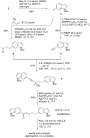
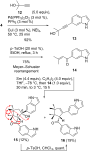
- , obtained via Au-catalyzed Meyer–Schuster rearrangement. Assembly of 5-oxygenated bisindolylpentenones. DMB: 3,4-dimethoxybenzyl, DMFDMA: N,N-dimethylformaldehyde dimethyl acetal. Benzylic oxidation as side reaction of DMB removal. Hydroxyalkylation of N-protected indoles with β-cyclocitral and SnCl4




Tandem processes promoted by a hydrogen shift in 6-arylfulvenes bearing acetalic units at ortho position: a combined experimental and computational study
Beilstein J. Org. Chem. 2016, 12, 260–270, doi:10.3762/bjoc.12.28
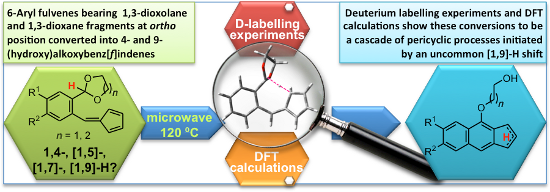
- rate-determining one and that the [1,9]-H shift is the one with the lowest energy barrier. Keywords: acetal; benzindenes; DFT calculations; fulvene; hydrogen shift; Introduction Fulvenes (also known as pentafulvenes), [1][2][3][4] a unique class of trienes, have intrigued chemists for decades due to
- wondered whether acetalic functions could be employed as internal H donors in intramolecular hydride-like shifts, analogous to that highlighted in Scheme 1, toward fulvene frameworks. With this goal in mind we designed the unknown acetal-fulvenes 3 (Scheme 2) as potential candidates for assaying the [1,4
- Experimental study The starting acetal-fulvenes 3 were prepared by the condensation of substituted 2-(1,3-dioxolan-2-yl)benzaldehydes 4 with cyclopentadiene following a well-established synthetic methodology [33]. With the aim of promoting the desired hydride transfer by thermal activation, we first heated the


Enantioselective additions of copper acetylides to cyclic iminium and oxocarbenium ions
Beilstein J. Org. Chem. 2015, 11, 2696–2706, doi:10.3762/bjoc.11.290
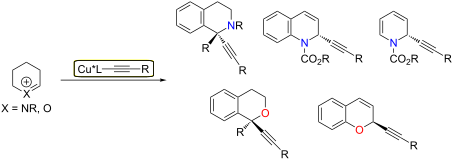
- alkynylations in good yields and ee’s. In 2011, we reported the first example of enantioselective alkynylation of a cyclic oxocarbenium ion intermediate (Scheme 15) [55]. Isochroman oxocarbenium ion 41 was formed in situ via Lewis acid-mediated ionization of a racemic acetal precursor. By using a Cu(MeCN)4PF6





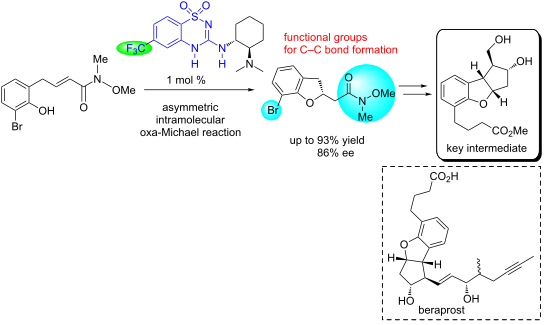
Catalytic asymmetric formal synthesis of beraprost
Beilstein J. Org. Chem. 2015, 11, 2654–2660, doi:10.3762/bjoc.11.285
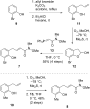
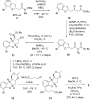
- benzylic bromination followed by elongation of the C3 unit [22]. To this end, the ester group at the C1 position of 15 was reduced by lithium borohydride, and the resultant 1,3-diol protected to give acetal 16 [16]. After various experiments, selective bromination of the methyl group on the aromatic ring
- % yield (dr > 10:1) via the method established in Scheme 3. After derivatization to acetal 22 in 2 steps, we then turned our attention to the introduction of the C4 ester substituents. Amongst various different conditions investigated – including Pd-catalyzed coupling reactions – a halogen-lithium



Assembly of synthetic Aβ miniamyloids on polyol templates
Beilstein J. Org. Chem. 2015, 11, 2646–2653, doi:10.3762/bjoc.11.284
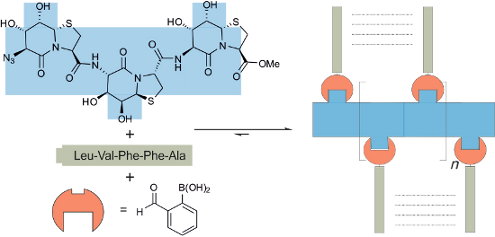
- example, disulfide [10], acetal [11], imine [12] and boronates [13][14][15][16], to allow the generation of new covalent structures under thermodynamic control. Complete esterification is observed for boronate esters bearing ortho-amines [17]. The conceptual advantage compared to traditional irreversible


Exploring architectures displaying multimeric presentations of a trihydroxypiperidine iminosugar
Beilstein J. Org. Chem. 2015, 11, 2631–2640, doi:10.3762/bjoc.11.282

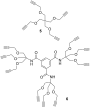
- , J = 12.0, 5.3 Hz, 4H, 2-Ha), 2.59 (dd, J = 11.7, 2.9 Hz, 4H, 6-Ha), 2.47–2.41 (m, 8H, 2-Hb + 6-Hb), 2.36 (t, J = 6.6 Hz, 8H, 1’-H), 2.11–2.03 (m, 8H, 2’-H), 1.49 (s, 12H, Me), 1.35 (s, 12H, Me) ppm; 13C NMR (50 MHz, CDCl3) δ 145.1 (s, 4C, C-triazole), 123.3 (d, 4C, C-triazole), 109,0 (s, 4C, acetal
- + OCH2CNH), 2.60–2.43 (m, 27H, 2-H + 1’-Ha), 2.82–2.51 (m, 27H, 6-H + 1’-Hb), 1.99–1.95 (m, 18H, 2’-H), 1.43 (s, 27H, Me), 1.35 (s, 27H, Me) ppm; 13C NMR (100 MHz, CDCl3) δ 166.5 (s, 3C, C=O), 144.4 (s, 9C, C-triazole), 135.6 (s, 3C, Ar), 128.6 (d, 3C, Ar), 123.7 (d, 9C, C-triazole), 109,0 (s, 9C, acetal
- , 1H, 2-Ha), 2.70–2.64 (m, 1H, 6-Ha), 2.51–2.43 (m, 1H, 2-Hb), 2.40–2.30 (m, 2H, 1’-H), 2.11–2.03 (m, 3H, 6-Hb + 2’-H), 1.48 (s, 3H, Me), 1.33 (s, 3H, Me) ppm; 13C NMR (100 MHz, CD3OD) δ 146.8 (s, C-triazole), 122.6 (d, C-triazole), 108.7 (s, acetal), 78.7 (d, C-4), 73.1 (d, C-3), 69.0 (d, C-5), 56.0




Synthesis of Xenia diterpenoids and related metabolites isolated from marine organisms
Beilstein J. Org. Chem. 2015, 11, 2521–2539, doi:10.3762/bjoc.11.273
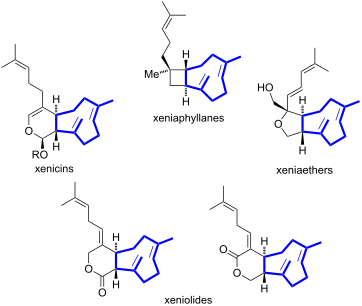
- subfamilies: the xenicins (containing an 11-oxabicyclo[7.4.0]tridecane ring system with an acetal functionality) [2], the xeniolides (containing an 11-oxabicyclo[7.4.0]tridecane ring system with a lactone functionality) [3] and the xeniaphyllanes (with a bicyclo[7.2.0]undecane ring system) [4]. Later, an
- . Addition of lithium acetylide 41 to the keto group led to acetal 42. Hydrogenation of the triple bond under basic conditions resulted in cleavage of the acetal and ring closure to the corresponding lactol which was oxidized with chromic acid to furnish γ-lactone 43. An ensuing Dieckmann condensation [32
- -catalyzed and base-mediated cyclization of carbonate 71 [45]. Reductive cleavage of the sulfone using aluminium amalgam afforded a ketone, which was converted to an exocyclic double bond by treatment with Tebbe’s reagent [42]. In order to convert the methoxy acetal to the corresponding lactone, without


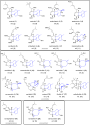


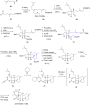


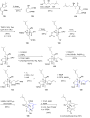

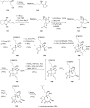
Continuous formation of N-chloro-N,N-dialkylamine solutions in well-mixed meso-scale flow reactors
Beilstein J. Org. Chem. 2015, 11, 2408–2417, doi:10.3762/bjoc.11.262
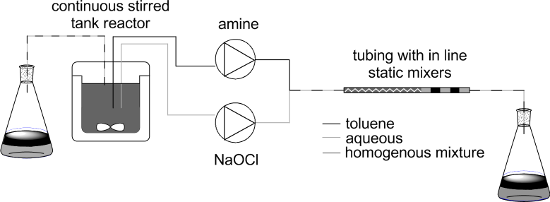
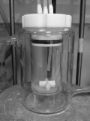
- employed in this work, with increased surface area-to-volume ratio, allows effective heat dissipation under ambient conditions. Continuous reactor A nylon/PTFE tubular reactor was constructed that incorporates static mixers for enhanced mixing of the biphasic reaction solution, made of the acetal


SmI2-mediated dimerization of indolylbutenones and synthesis of the myxobacterial natural product indiacen B
Beilstein J. Org. Chem. 2015, 11, 1700–1706, doi:10.3762/bjoc.11.184
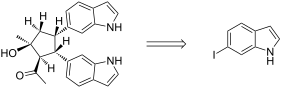
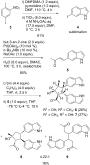
- -Iodoindole (4) was prepared from 1-iodo-4-methyl-3-nitrobenzene (3, accessible from the corresponding nitroaniline via Sandmeyer reaction) via the Batcho–Leimgruber protocol employing dimethylformamide dimethyl acetal (DMFDMA) and TiCl3 in one step. It should be noted that, after initial column filtration of





Pyridinoacridine alkaloids of marine origin: NMR and MS spectral data, synthesis, biosynthesis and biological activity
Beilstein J. Org. Chem. 2015, 11, 1667–1699, doi:10.3762/bjoc.11.183
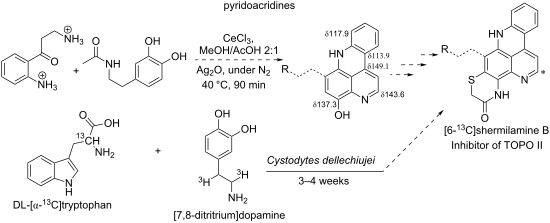
- synthesis [65]. This preparation started with a Knoevenagel condensation of 2-fluoroacetophenone with malononitrile. The product of the condensation reacted with an excess of N,N-dimethylformamide dimethyl acetal to afford an enamine. This latter was treated with hydrochloric acid in acetic acid gave 4-aryl






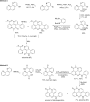


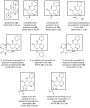


Structure and conformational analysis of spiroketals from 6-O-methyl-9(E)-hydroxyiminoerythronolide A
Beilstein J. Org. Chem. 2015, 11, 1447–1457, doi:10.3762/bjoc.11.157
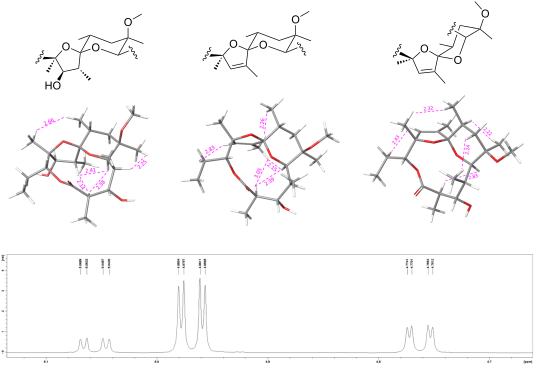
- , with the structure and stereochemistry confirmed by X-ray crystallography. The two others were obtained during a total synthesis of erythronolide Al [55][56], as a result of deprotection of the 3,5-benzylidene acetal of erythronolide A (with or without a triethylsilyl protecting group on 6-O). However




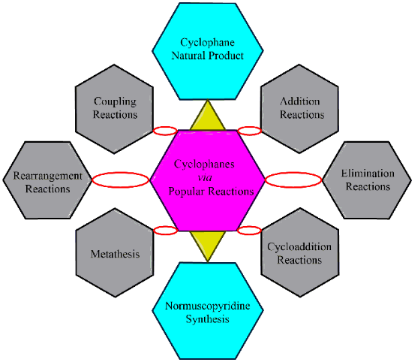
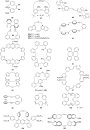
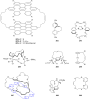
Selected synthetic strategies to cyclophanes
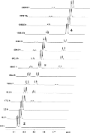
Beilstein J. Org. Chem. 2015, 11, 1274–1331, doi:10.3762/bjoc.11.142






A hybrid electron donor comprising cyclopentadithiophene and dithiafulvenyl for dye-sensitized solar cells
Beilstein J. Org. Chem. 2015, 11, 1052–1059, doi:10.3762/bjoc.11.118
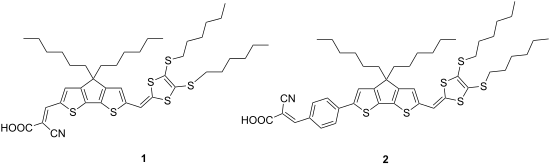
- , the synthesis of the key intermediate 7 involves the protection of one aldehyde group as an acetal using pinacol prior to HWE reaction of 5 with 4,5-bis(hexylthio)-1,3-dithiole-2-thione, followed by deprotection under acidic conditions. Aldehyde 5 was readily obtained by palladium-catalyzed Suzuki


Diastereoselective and enantioselective conjugate addition reactions utilizing α,β-unsaturated amides and lactams
Beilstein J. Org. Chem. 2015, 11, 530–562, doi:10.3762/bjoc.11.60




Synthesis and biological evaluation of a novel MUC1 glycopeptide conjugate vaccine candidate comprising a 4’-deoxy-4’-fluoro-Thomsen–Friedenreich epitope
Beilstein J. Org. Chem. 2015, 11, 155–161, doi:10.3762/bjoc.11.15
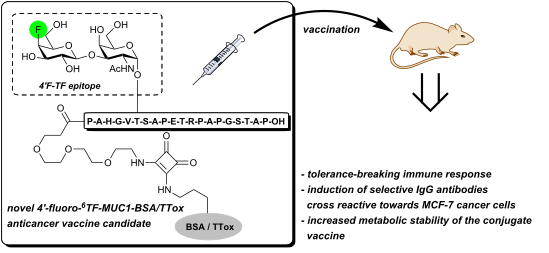
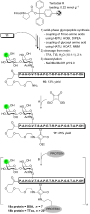
- ’-fluoro-TF SPPS building block 11 started by conversion of peracetylated D-glucose 1 into β-thio-glycoside 2 [45][46] under Lewis acid catalysis in 81% yield (Scheme 1). Subsequent Zemplén deacetylation [47], followed by 4,6-benzylidene acetal formation and acetylation provided fully protected precursor 3




Synthesis and characterization of pH responsive D-glucosamine based molecular gelators
Beilstein J. Org. Chem. 2014, 10, 3111–3121, doi:10.3762/bjoc.10.328
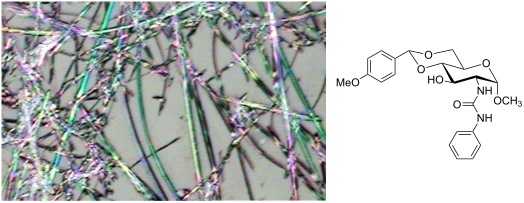
- for soft biomaterials. Low molecular weight hydrogelators are especially useful for exploring biomedical applications. Previously, we found that 4,6-O-benzylidene acetal protected D-glucose and D-glucosamine are well-suited as building blocks for the construction of low molecular weight gelators. To
- better understand the scope of D-glucosamine derivatives as gelators, we synthesized and screened a novel class of N-acetylglucosamine derivatives with a p-methoxybenzylidene acetal protective group. This modification did not exert a negative influence on the gelation. On the contrary, it actually
- ]. Previously we mostly focused on the modification of the C-2 position of the benzylidene acetal protected headgroups 1 and 2 (Figure 1). We obtained the general structural requirements for acyl derivatives at the 2-position. In this study, we explore the substituent effect at the benzylidene acetal protective




Enantioselective synthesis of polyhydroxyindolizidinone and quinolizidinone derivatives from a common precursor
Beilstein J. Org. Chem. 2014, 10, 3104–3110, doi:10.3762/bjoc.10.327
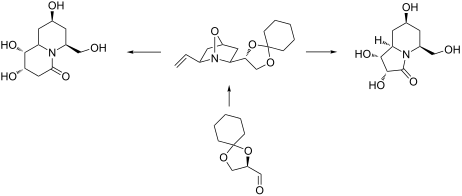
- . The O-benzylated compound 14, however, proved to be more useful in the subsequent synthetic sequence. Thus, HCl-mediated deprotection of the acetal unit in 14 resulted in simultaneous removal of the silyl protecting group leading to the triol derivative 16 in an impressive yield of 89%. One-pot
- (95% yield, Scheme 3). Repetition of the synthetic sequence on 19 detailed for the conversion 13→18, i.e., protection of the diol as its dibenzylic ether 20, acid-mediated one-pot deprotection of the acetal and silyl moieties leading to the triol 21, redox manipulation of the vicinal diol unit in the


Recent advances in the electrochemical construction of heterocycles
Beilstein J. Org. Chem. 2014, 10, 2858–2873, doi:10.3762/bjoc.10.303
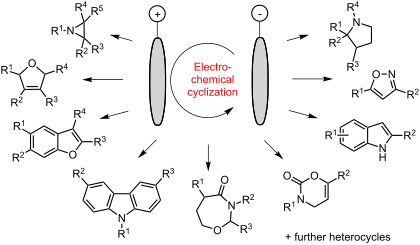
- 24 [72]. In this example, 1,2-benzoquinone derivatives are generated in the presence of ketene N,O-acetals 70. Out of four possible regioisomers, 71a and 71b are exclusively formed (in ratios 71a/71b between 1:1 and 1:2). In a follow-up study, unreacted α-arylated ketene N,O-acetal intermediates (63




Synthesis of the pentasaccharide repeating unit of the O-antigen of E. coli O117:K98:H4
Beilstein J. Org. Chem. 2014, 10, 2724–2728, doi:10.3762/bjoc.10.287
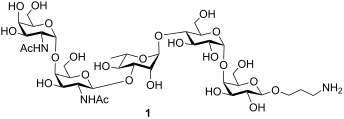
- reductive opening of the benzylidene acetal on treatment with sodium cyanoborohydride in the presence of HCl/Et2O [25] furnished p-methoxyphenyl 3-O-acetyl-6-O-benzyl-2-deoxy-2-phthalimido-β-D-galactopyranoside (5) in 77% yield over two steps (Scheme 1). Trisaccharide acceptor 11 could be synthesized
- % yield. NMR spectroscopy confirmed the formation of compound 8 [δ 5.04 (d, J = 3.6 Hz, 1H, H-1B), 4.38 (d, J = 7.6 Hz, 1H, H-1A) in 1H NMR and at δ 103.9 (C-1A), 100.5 (C-1B) in 13C NMR spectra]. Following an earlier report [28], cleavage of the benzylidene acetal from compound 8 catalyzed by perchloric


Galactan synthesis in a single step via oligomerization of monosaccharides
Beilstein J. Org. Chem. 2014, 10, 2658–2663, doi:10.3762/bjoc.10.279
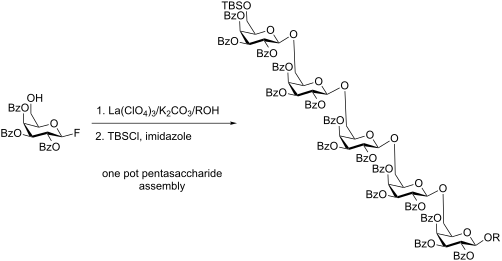
- assembly is the construction of the acetal or ketal glycosidic bond that links individual sugar residues together. The synthesis of an n-mer oligosaccharide generally requires at least n−1 separate glycosylation reactions, regardless of whether the molecule is assembled in a linear or convergent manner
- by HF followed by chromatographic separation afforded chito-oligosaccharides as long as hexasaccharides in reasonable yields [13]. In most of these oligomerizations the reducing end of the oligomer is a hemi-acetal, or a reduced or protected derivative thereof, and both anomers are present [14]. An


Synthesis and immunological evaluation of protein conjugates of Neisseria meningitidis X capsular polysaccharide fragments
Beilstein J. Org. Chem. 2014, 10, 2367–2376, doi:10.3762/bjoc.10.247
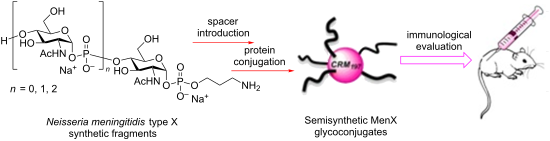
- derivative very similar to 5 but protected as a 4,6-O-benzylidene acetal also led to an anomeric mixture, suggesting that conformational factors might be also involved. In addition, the treatment of this mixture with salicylchlorophosphite produced a mixture of anomeric H-phosphonates, indicating that no


Indium-mediated allylation in carbohydrate synthesis: A short and efficient approach towards higher 2-acetamido-2-deoxy sugars
Beilstein J. Org. Chem. 2014, 10, 2230–2234, doi:10.3762/bjoc.10.231
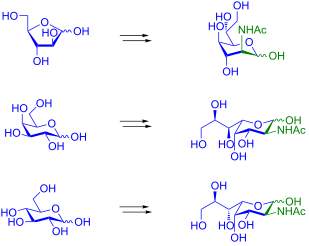
- decomposition of these labile compounds. Conversion of the carbonyl moiety to an acetal group followed by treatment with azide nucleophiles also failed to yield any desired products. Therefore we decided to mask the aldehyde as an olefin. A Wittig reaction with methyl (triphenylphosphoranylidene)acetate (Ph3P


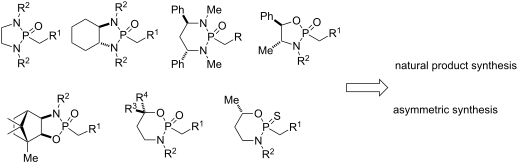
Application of cyclic phosphonamide reagents in the total synthesis of natural products and biologically active molecules
Beilstein J. Org. Chem. 2014, 10, 1848–1877, doi:10.3762/bjoc.10.195
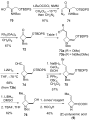
- ozonolysis, protection of the resulting aldehyde, reduction of the lactone ring to the lactol, and treatment with methylenetriphenylphosphorane delivered 89. Mild acidic hydrolysis of the acetal followed by oxidation then yielded 90 with the γ-lactone unit that constitutes ring A of acetoxycrenulide
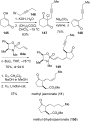
- primary alcohol of the side chain was oxidized with Dess–Martin periodinane (DMP) to give aldehyde 183. The latter was subsequently reacted with trimethylsilyl ketene acetal 184 in the presence of oxazaborolidinone 185 to afford aldol product 186 and the C22-epimer as only isomers in a 1:1 mixture. Dess








Synthesis of rigid p-terphenyl-linked carbohydrate mimetics
Beilstein J. Org. Chem. 2014, 10, 1749–1758, doi:10.3762/bjoc.10.182
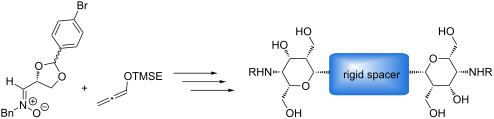
- °C; b) 1. THF, 2 h, −78 °C; 2. H2O, 1 h, −78 °C → rt. Synthesis of 1,2-oxazine 4 by acetal formation from 10. Conditions: a) 1-bromo-4-(dimethoxymethyl)benzene (10 equiv.), CAN, CH2Cl2, 3 d, rt. Synthesis of bicyclic ketone 11 by Lewis acid-induced rearrangement and reduction to alcohols 12a and 12b


Hindered aryl bromides for regioselective palladium-catalysed direct arylation at less favourable C5-carbon of 3-substituted thiophenes
Beilstein J. Org. Chem. 2014, 10, 1239–1245, doi:10.3762/bjoc.10.123
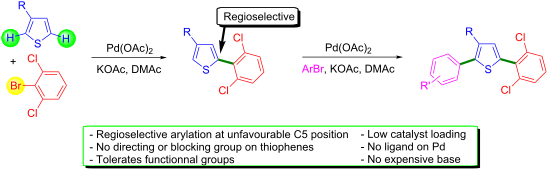
- than with 2-bromonitrobenzene was obtained, as 4a, 4b and 4c were formed in a 24:31:45 ratio. The use of 2-bromobenzaldehyde was not successful, as the desired product 5b was only obtained with 10% selectivity. From more hindered 2-bromobenzaldehyde diethyl acetal, the selectivity in favour of desired





