


Search results
Search for "bifunctional" in Full Text gives 250 result(s) in Beilstein Journal of Organic Chemistry. Showing first 200.
Bifunctional phase-transfer catalysis in the asymmetric synthesis of biologically active isoindolinones
Beilstein J. Org. Chem. 2015, 11, 2591–2599, doi:10.3762/bjoc.11.279
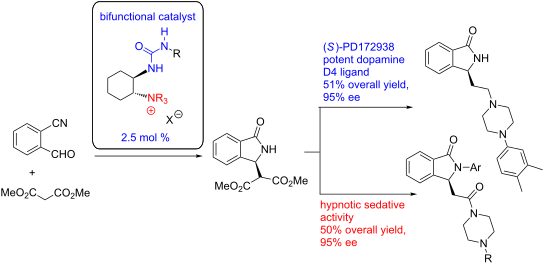
- Salerno, Via Giovanni Paolo II, 132, 84084-Fisciano, SA, Italy Institute of Organic Chemistry, Johannes Kepler University Linz Altenbergerstraße 69, 4040 Linz, Austria Dipartimento di Medicina Sperimentale, Università di Napoli, Napoli, Italy 10.3762/bjoc.11.279 Abstract New bifunctional chiral ammonium
- cascade reaction, investigating novel trans-1,2-cyclohexane diamine-based bifunctional ammonium salts 8. These catalysts were recently introduced by our groups in a variety of different reactions [27][28][29], as exemplified by a related aldol-initiated cascade reaction of glycine Schiff base with 2
- already discussed [21][22][23], the bifunctional nature of organocatalysts plays an important role in this reaction to attain satisfactory levels of enantioselectivity. The presence of additional hydrogen donors such as urea groups positively affected the enantioselectivity both in the presence of chiral


Organocatalytic and enantioselective Michael reaction between α-nitroesters and nitroalkenes. Syn/anti-selectivity control using catalysts with the same absolute backbone chirality
Beilstein J. Org. Chem. 2015, 11, 2577–2583, doi:10.3762/bjoc.11.277
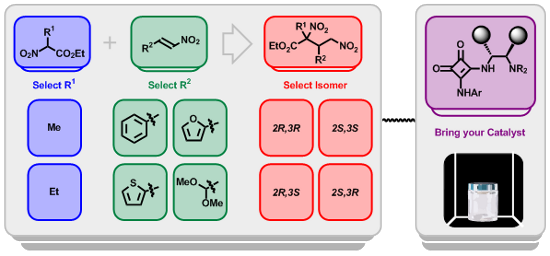
- nitroalkenes has been studied in the presence of two bifunctional catalysts both containing the same absolute chirality at the carbon backbone. The reaction performed in similar conditions allows us to control the syn or anti selectivity of the Michael adduct obtaining good yields and high enantiocontrol in
- of bifunctional tertiary amine/squaramide catalysts [28][29][30][31][32] and, interestingly, we found that catalysts containing the same backbone chirality provided different diastereoisomers, thus allowing the development of a diastereodivergent process. In this report, we wish to present the
- facial stereoselection of those versions in which two stereocentres are generated in the reaction become of special utility to synthetic chemists. In this case, using two different bifunctional tertiary amine/squaramide organocatalysts [36][37][38][39][40][41][42][43][44][45][46][47][48][49][50][51][52


Synthesis of bi- and bis-1,2,3-triazoles by copper-catalyzed Huisgen cycloaddition: A family of valuable products by click chemistry
Beilstein J. Org. Chem. 2015, 11, 2557–2576, doi:10.3762/bjoc.11.276
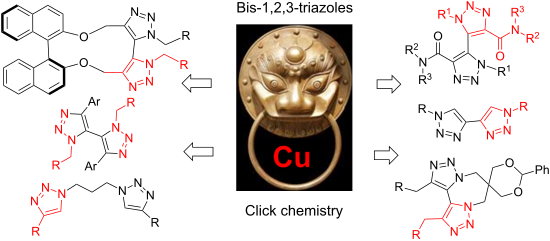
- (OAc)2) could catalyze the Huisgen alkyne-azide cycloaddition reactions without the addition of the reducing agents and could be produced in high yield when the substrate contains the chelating azide group [67]. Then they synthesized the bifunctional compounds with chelating azide groups and




Recent highlights in biosynthesis research using stable isotopes
Beilstein J. Org. Chem. 2015, 11, 2493–2508, doi:10.3762/bjoc.11.271
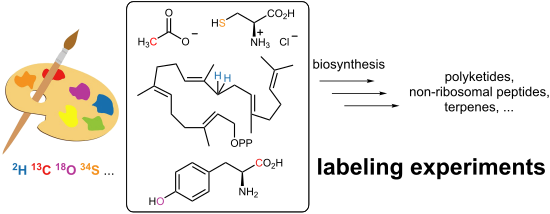
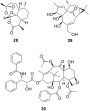
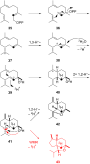
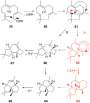
- sesterfisherol (59, Scheme 10), the product of a bifunctional sesterterpene cyclase (C25) from Neosartorya fischeri [69]. In this case, [1-13C,2H3]acetate was fed and the resulting labeling pattern of an epoxidation product was analyzed by 13C NMR, revealing a loss of deuterium from carbons C-2, C-6 and C-10 by
- signals mentioned above. To investigate the 1,5-hydride shift, (8,8-2H2)GGPP and IPP were used for an in vitro reaction with the recombinant terpene synthase, utilizing the bifunctional character of the enzyme to form (12,12-2H2)GFPP and its subsequent cyclization to (2H2)-59. NMR data of the obtained











Biocatalysis for the application of CO2 as a chemical feedstock
Beilstein J. Org. Chem. 2015, 11, 2370–2387, doi:10.3762/bjoc.11.259
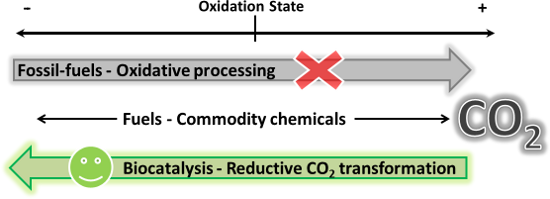
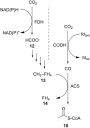
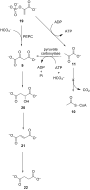
- 10 is fed to central metabolism while the other is used in a subsequent cycle. As seen in Scheme 4, acetyl-CoA (10) is carboxylated by a bifunctional acetyl-CoA/propionyl-CoA carboxylase to malonyl-CoA (15) with HCO3− and hydrolysis of ATP. The malonate 15 is reduced to 3-hydroxypropionate (16), in
- two steps catalysed by NAD(P)H dependent dehydrogenases. Later in the pathway, propionyl-CoA (17) is the substrate for a second carboxylation with HCO3− to methylmalonyl-CoA (18), performed by the same ATP-dependent bifunctional carboxylase that carries out the first step [71][72]. Succinyl-CoA (5) is
- increased rates of carbon fixation under higher CO2 partial pressures [93][94]. Acyl-CoA carboxylases Though acetyl-CoA carboxylases are widely distributed in living organisms, the existence of bifunctional variants with a role in autotrophy has attracted further interest for their biotechnological






Cross metathesis of unsaturated epoxides for the synthesis of polyfunctional building blocks
Beilstein J. Org. Chem. 2015, 11, 1876–1880, doi:10.3762/bjoc.11.201
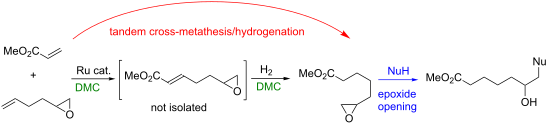
- performances (Table 1, entries 7 and 8). Similarly, the cross metathesis of 1 with acrylonitrile was conducted to furnish the bifunctional derivative 3 in 71% yield as a mixture of stereoisomers. In that case, high conversions and yields could only be obtained by means of slow addition of the catalyst and high


Robust bifunctional aluminium–salen catalysts for the preparation of cyclic carbonates from carbon dioxide and epoxides
Beilstein J. Org. Chem. 2015, 11, 1614–1623, doi:10.3762/bjoc.11.176
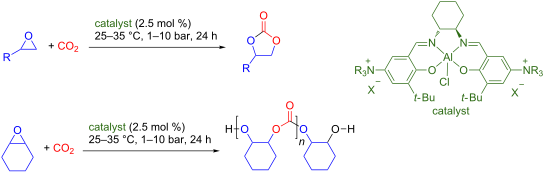
- efficient for polycarbonate production [12]. Further modification of the salen moiety by the introduction of basic or ammonium salts through alkyl spacers attached to the salen aromatic rings led to the formation of a family of bifunctional catalysts possessing both Lewis acid and nucleophilic catalysis
- of these catalysts was also greatly improved by the introduction of bifunctional versions of the catalyst system, combining an electrophilic aluminium centre with an ammonium cation/nucleophilic-counteranion combination within the framework of a single catalytic species as reported by North [15], Liu
- and Darensbourg [14], and Lu [16] (Figure 1). Unfortunately, the bifunctional derivatives with an alkyl spacer are not very stable at higher temperatures because of the well-known ammonium salt decomposition pathways including: Zaitsev and Hoffman type eliminations [17][18][19] and retro-Menschutkin


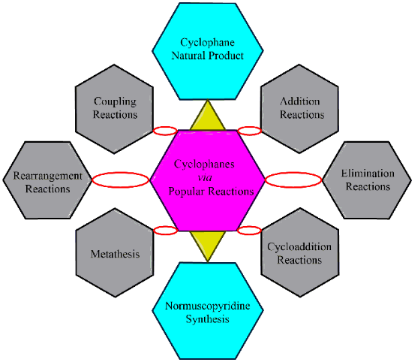
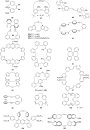
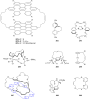
Selected synthetic strategies to cyclophanes
Beilstein J. Org. Chem. 2015, 11, 1274–1331, doi:10.3762/bjoc.11.142






Mechanical stability of bivalent transition metal complexes analyzed by single-molecule force spectroscopy
Beilstein J. Org. Chem. 2015, 11, 817–827, doi:10.3762/bjoc.11.91
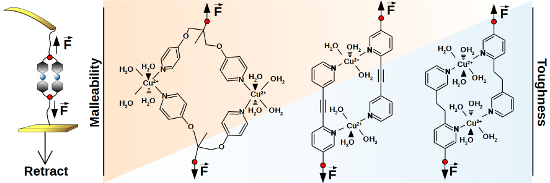
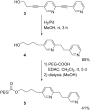
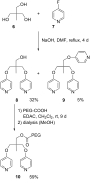
- rupture. Results and Discussion Regarding the synthesis, pyridine nanorod 3, which was also precursor for the synthesis of complex 2a [27], was hydrogenated to receive intermediate 4 (Scheme 1). Subsequent coupling with bifunctional poly(ethylene glycol) (PEG) and purification by dialysis gave compound 5
- bifunctional PEG as written above. Figure 1 shows the expected coordination complexes of our mono- and bivalent model systems with Cu2+ in aqueous solution. In the present work, we analyzed the bivalent systems 2b and 2c by DFS, similarly as for the recently published reference case of 2a [27]. We modified
- , 136.3, 136.8, 147.2, 149.3, 149.7 (7 d, pyr), 157.6 (s, pyr) ppm; IR (ATR) ν: 3305 (OH), 3030–2860 (=C-H, -C-H), 1600–1570 (C=C) cm−1; HRMS (ESI–TOF): m/z [M + H]+ calcd for C16H21N2O, 257.1648, found, 257.1634. Synthesis of pyridine-PEG conjugate 5, ligand of 2b: To a solution of the bifunctional poly




Synthesis of tripodal catecholates and their immobilization on zinc oxide nanoparticles
Beilstein J. Org. Chem. 2015, 11, 678–686, doi:10.3762/bjoc.11.77
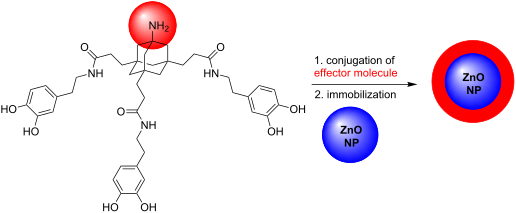
- formation of molecular monolayers by chemisorption of bifunctional anchor molecules. This approach depends critically on the choice of a suitable anchor group. Recently, bifunctional catecholates, inspired by mussel-adhesive proteins (MAPs) and bacterial siderophores, have received considerable interest as
- . Keywords: bifunctional anchors; catecholates; multivalency; poly(ethylene glycol); ZnO nanoparticles; Introduction An elegant approach to generate tailored materials and nanoparticles is the formation of molecular monolayers by chemisorption of bifunctional anchor molecules (Figure 1A) [1]. The
- needs to form a stable (in most cases covalent) connection to the target surface. Various bifunctional anchors have been reported for immobilization on different materials and nanoparticles. Basically, silane derivatives are used for glass surfaces [2][3], thiols for noble metal surfaces [4


CO2 Chemistry
Beilstein J. Org. Chem. 2015, 11, 675–677, doi:10.3762/bjoc.11.76
- fixation of CO2, which can be applied in the synthesis of carboxylic acids [8]. Also highly interesting is the combination of enzymatic and photocatalytic approaches for activating CO2 [9]. Bifunctional catalyst systems are frequently needed and well-understood in the synthesis of cyclic carbonates [10


Diastereoselective and enantioselective conjugate addition reactions utilizing α,β-unsaturated amides and lactams
Beilstein J. Org. Chem. 2015, 11, 530–562, doi:10.3762/bjoc.11.60
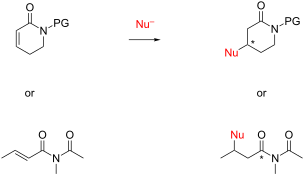
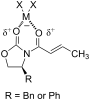
- -acylpyrroles [265] (Scheme 39). In their work, diethylzinc and 147 acts as a bifunctional catalyst system where the α,β-unsaturated system is activated through Lewis acid coordination and the catalyst acts as a directing group for the phosphite. Overall the reaction proceeds in both high yield and




Sequential decarboxylative azide–alkyne cycloaddition and dehydrogenative coupling reactions: one-pot synthesis of polycyclic fused triazoles
Beilstein J. Org. Chem. 2014, 10, 3031–3037, doi:10.3762/bjoc.10.321
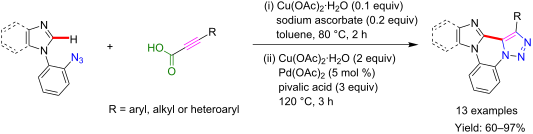
- bifunctional behavior of Cu(OAc)2∙H2O in the reaction sequence. Experimental General procedure for the synthesis of fused triazoloquinoxaline derivatives 4 Substituted phenylpropiolic acids (2) were prepared by the literature procedure [50]. To a mixture of 1-(2-azidophenyl)-1H-benzo[d]imidazole (1a) or 1-(2


The unexpected influence of aryl substituents in N-aryl-3-oxobutanamides on the behavior of their multicomponent reactions with 5-amino-3-methylisoxazole and salicylaldehyde
Beilstein J. Org. Chem. 2014, 10, 3019–3030, doi:10.3762/bjoc.10.320
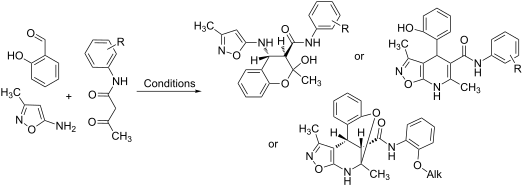
- studies on multicomponent heterocyclizations involving different N-containing polynucleophiles and salicylaldehyde are of particular interest due to the bifunctional reactivity of the latter component. The presence of both electrophilic and nucleophilic reaction centers in salicylaldehyde enables


Galactan synthesis in a single step via oligomerization of monosaccharides
Beilstein J. Org. Chem. 2014, 10, 2658–2663, doi:10.3762/bjoc.10.279
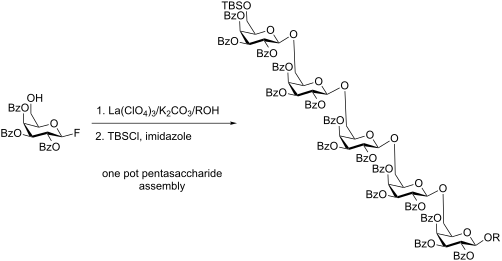
- that oligogalactans as long as pentamers can be generated in a single reaction by the activation of a bifunctional galactosyl donor/acceptor in the presence of an initiating alcohol. While isolated yields of the tri-, tetra-, and pentasaccharides are modest, the obtained yields of 19%, 10%, and 4


Synthesis and characterization of a hyper-branched water-soluble β-cyclodextrin polymer
Beilstein J. Org. Chem. 2014, 10, 2586–2593, doi:10.3762/bjoc.10.271
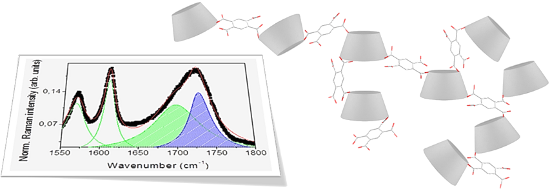
- following equation: where f is the number of functional groups in the polyfunctional monomer. For β-CDs, αc is 0.05, meaning that the branching coefficient must be kept lower than 0.05 in order to avoid gelation. In simple systems involving a trifunctional and a bifunctional monomer the branching
- monomer and B the bifunctional one. At the gelation point p = pc and c = cc, which means that gelation can be prevented by stopping the reaction after a short time, when p < pc. However, in the case of complex polyfunctional monomers, such as CDs, the critical branching coefficient differs significantly




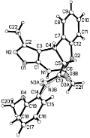
Facile synthesis of 1H-imidazo[1,2-b]pyrazoles via a sequential one-pot synthetic approach
Beilstein J. Org. Chem. 2014, 10, 2338–2344, doi:10.3762/bjoc.10.243
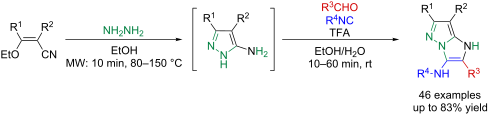
- conventional U-4CR protocol in three-component fashion by the incorporation of bifunctional 2-amino-substituted heterocycles provides an alternative route via an intramolecular N-trapping procedure, leading to various N,N-heterobicyclic systems [5][6][7][8][9][10][11][12]. A number of bifunctional 2


Chiral phosphines in nucleophilic organocatalysis
Beilstein J. Org. Chem. 2014, 10, 2089–2121, doi:10.3762/bjoc.10.218
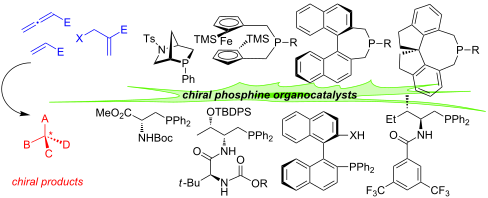
- alkenes and MBH adducts, albeit in slightly diminished yields. Shi and co-workers also studied this reaction, but using the chiral bifunctional thiourea-phosphine catalyst G7. The [3 + 2] annulation of MBH carbonate with an activated isatin-based alkene in toluene at room temperature gave the
- . Using the bifunctional N-acylaminophosphine H5, Zhao and co-workers also achieved enantioselective [4 + 2] annulations of allenoates with N-tosylaldimines (Scheme 44) [85]. In the presence of 4 Å molecular sieves and with PhCF3 and CH2Cl2 as the mixed solvent, H5-catalzyed enantioselective [4 + 2
- ] annulations between α-substituted allenoates and N-tosylaldimines afforded a wide range of tetrahydropyridines in high yields and with good to excellent enantioselectivities. For some imines, the bifunctional phosphine displayed catalytic capability superior to that of Fu’s monophosphine system [84] in terms


Synthesis of a bifunctional cytidine derivative and its conjugation to RNA for in vitro selection of a cytidine deaminase ribozyme
Beilstein J. Org. Chem. 2014, 10, 1906–1913, doi:10.3762/bjoc.10.198
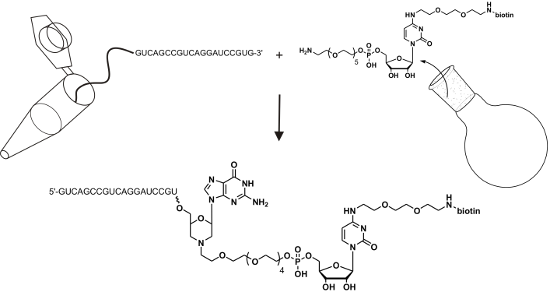
- the aim of selecting a ribozyme for deamination of cytidine, we have set up a selection scheme involving the attachment of the cytidine acting as deamination substrate to the 3'-terminus of the RNAs in the library, and library immobilization. Here, we report the synthesis of a bifunctional cytidine
- bifunctionalized cytidine derivative and its successful conjugation to RNA. Results and Discussion Synthesis of the bifunctional cytidine derivative 1 started from uridine making use of four synthons: a protected hexaethylene glycol linker phosphoramidite 2 bearing a primary amine to be used later for RNA
- bifunctionalized cytidine derivative 1 as the final product was isolated by reversed-phase chromatography with a yield of 83% over the last three steps (Figure 6). To set-up conditions for conjugation of the bifunctional cytidine derivative 1 to RNA, we synthesized a short model oligonucleotide (GUC AGC CGU CAG


Comparing kinetic profiles between bifunctional and binary type of Zn(salen)-based catalysts for organic carbonate formation
Beilstein J. Org. Chem. 2014, 10, 1817–1825, doi:10.3762/bjoc.10.191
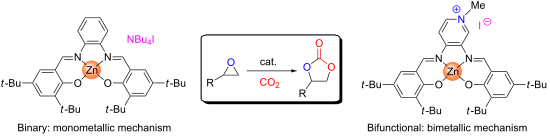
- was done between the binary catalyst system Zn(salphen)/NBu4I and a bifunctional system Zn(salpyr)·MeI with a built-in nucleophile. The latter system demonstrates an apparent second-order dependence on the bifunctional catalyst concentration and thus follows a different, bimetallic mechanism as
- [salphen = N,N’-phenylene-1,2-bis[salicylidene]imine] (Figure 1, 1) combined with a nucleophilic ammonium halide salt [26][27], or an analogous bifunctional system (Figure 1, 2) containing a Lewis acidic and nucleophilic center within the same molecule [29]. Mechanistic investigations for these CO2/epoxide
- (Figure 1) employed by Coates and first-order behavior in the case of the dinuclear Zn complex 8 (Figure 1). However, to the best of our knowledge, reports on comparative kinetic studies between structurally related binary and bifunctional systems are rare [43]. Herein we describe such a kinetic


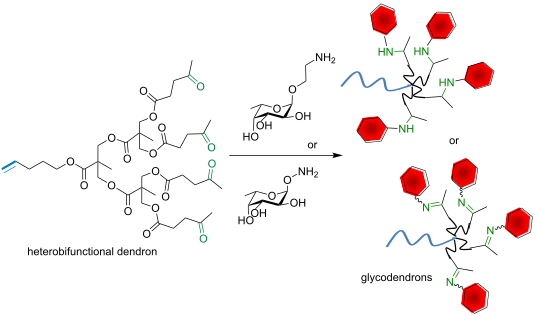
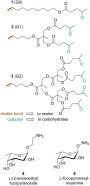
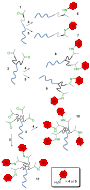
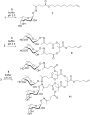
Bifunctional dendrons for multiple carbohydrate presentation via carbonyl chemistry
Beilstein J. Org. Chem. 2014, 10, 1686–1691, doi:10.3762/bjoc.10.177



Multichromophoric sugar for fluorescence photoswitching
Beilstein J. Org. Chem. 2014, 10, 1471–1481, doi:10.3762/bjoc.10.151
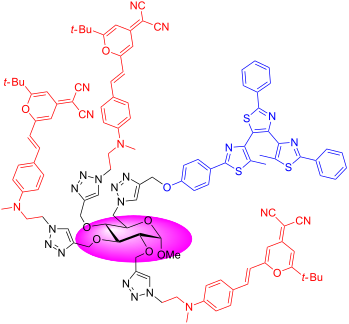
- -dicyanomethylene-2-tert-butyl-6-(p-dialkylaminostyryl)-4H-pyran) [3] with a photochromic diarylethene (DAE) which showed a photoreversible two-way FRET controlled by the state of the photochromic moiety, and 49% quenching of the fluorescence upon UV irradiation [4]. Bifunctional molecules built on two distinct
- (photochrome and fluorophore) moieties have also been reported by other groups [5][6][7][8][9]. The fluorophore vs photochrome ratio in reported bifunctional systems is 1:1 [4][5][6][7] or 2:1 [8][9]. Other strategies to assemble interacting fluorophores and photochromes (supramolecular systems, nanoparticles
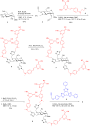
- fluorescence photoswitching by energy transfer process (FRET). Bifunctional fluorescent-photochromic molecules 1 and 2. Absorption and fluorescence spectra of compounds 6, 9, and 2 in CH3CN: (a) absorption spectrum of 6; (b) emission spectrum of 6 (λexc = 450 nm); (c) absorption spectra of 9-OF, 9 at the




Carbohydrate PEGylation, an approach to improve pharmacological potency
Beilstein J. Org. Chem. 2014, 10, 1433–1444, doi:10.3762/bjoc.10.147
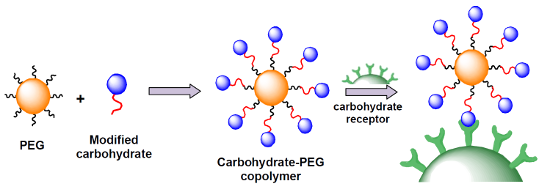
- been PEGylated and introduced in the surface of polystyrene nanoparticles in order to increase the interaction with galactose receptors. p-Aminophenyl β-D-galactopyranoside was coupled with a bifunctional PEG activated on one end with NHS for the combination with the aniline and a FMOC-protected amino
- with activated hydrophilic PEG to enhance its stability (Figure 5) [61]. Bifunctional PEGs were used to introduce a bioactive molecule, for instance biotine, coumarin, cholesterol or mannose into the distal end of a PEG-chitosan complex (Figure 6) [62]. Fructans have been PEGylated by reaction of







Rasta resin–triphenylphosphine oxides and their use as recyclable heterogeneous reagent precursors in halogenation reactions
Beilstein J. Org. Chem. 2014, 10, 1397–1405, doi:10.3762/bjoc.10.143
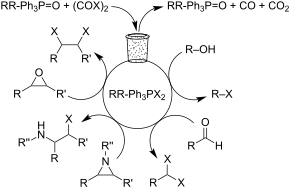
- halogenation reactions With the versatility and excellent reactivity of 16 established, we were encouraged to examine our method in the epoxide halogenation reactions shown in Scheme 2. Since these reactions require the use of a base, we designed a bifunctional rasta resin, RR-NBniPr2-PPh3=O 18 (Scheme 5
- previously used as a bifunctional reagent in one-pot Wittig reactions [29]. Gel-phase 31P NMR spectroscopic analysis of 18 indicated that oxidation of the phosphine groups was complete, and elemental analysis was used to determine the loading level of phosphine oxide and amine groups to be 1.07 mmol/g and
- and 4), and alkyl substutients (Table 6, entries 5–8) all proceeded to completion, and afforded the corresponding 1,2-dihalides in excellent yields. We also examined the recyclability of 18 in the halogenation of epoxide 10C (Table 7). As was the case for 16, bifunctional polymer 18 could be


Molecular recognition of surface-immobilized carbohydrates by a synthetic lectin
Beilstein J. Org. Chem. 2014, 10, 1354–1364, doi:10.3762/bjoc.10.138
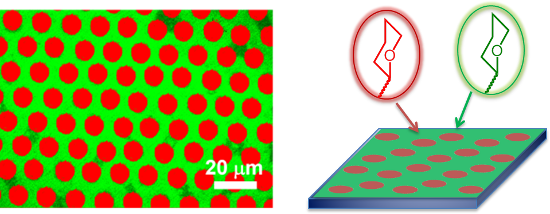
- synthetic and natural lectins with the immobilized carbohydrates. To this end, bifunctional surfaces were fabricated by µCP of a the first ink in a dot pattern (10 μm dots spaced by a 5 μm gap) and filling up the interspaces with the second ink by using µCP with a flat stamp. In a first set of experiments
- black line shown in (A); (C) AFM height image of Glc ink and Gal ink cross printed in 5 μm stripes on an epoxide-terminated SAM; (D) Height profile of the black line shown in (C). Fluorescence images of bifunctional carbohydrate microarrays incubated with FITC-HisHis. (A) NANA (dots 10 × 5 μm) and Man
- (background); (B) Man (dots 10 × 5 μm) and NANA (background); (C) Gal (dots 10 × 5 μm) and Man (background); (D) Man (dots 10 × 5 μm) and Gal (background). Overlay of fluorescence images of bifunctional carbohydrate microarrays; (A) NANA (dots 10 × 5 μm) and Man (background) incubated with FITC-HisHis and





