


Search results
Search for "conformers" in Full Text gives 245 result(s) in Beilstein Journal of Organic Chemistry. Showing first 200.
Conformation of dehydropentapeptides containing four achiral amino acid residues – controlling the role of L-valine
Beilstein J. Org. Chem. 2014, 10, 660–666, doi:10.3762/bjoc.10.58
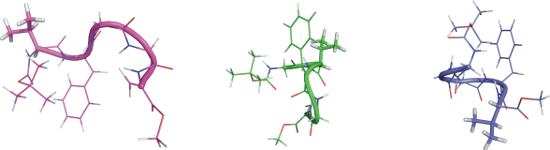
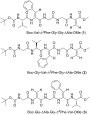
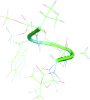
- investigated peptides were defined by using the XPLOR-NIH [32] program. The average values obtained for dihedral angles after the clustering of received conformers are presented in Table 3. In the case of peptides 1 and 2 the results of the calculations suggest that peptides could adopt two types of bent
- conformations, whereas for peptide 3 only one well-defined bent conformation could be found. Selected φ and ψ dihedral angles were excluded during clustering analysis for all investigated peptides. When we tried to group the obtained conformers according to all torsion angles of the main chain, the analysis did
- structural constraints were employed to calculate 1000 conformers by using the XPLOR-NIH [32] program. Structural preferences of the studied peptide were determined on the basis of 20% of the lowest energy conformers (200 conformers). Analysis of the obtained conformations and their clustering were done with



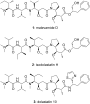
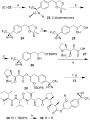
Total synthesis and cytotoxicity of the marine natural product malevamide D and a photoreactive analog
Beilstein J. Org. Chem. 2014, 10, 316–322, doi:10.3762/bjoc.10.29
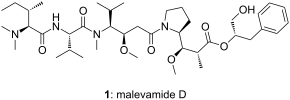
- separated in the 13C NMR spectrum are, for instance, the ester carbonyl signals of the conformers (174.0 and 173.3 ppm), the carbonyl signals of the pyrrolidine amide (170.5 and 170.6 ppm), and all phenyl carbon signals. Of the eastern section, only three of the four pyrrolidine carbon signals are broad
- belonging to different signal sets are located at δH 3.84 (one of the diastereotopic OCH2 signals) and 5.21 ppm (acylated carbinol). The two sets of signals are probably caused by the presence of both conformers of the acyl pyrrolidine. An assignment of the data sets to either of the two conformers was not
- possible. The occurrence of conformers has been mentioned by Scheuer and co-workers and is also known for dolastatin 10 [12] and symplostatin 1 [13]. As an alternative route to the N-terminal tripeptide 11, we also investigated the coupling of the N-terminal dipeptide 15 with MMMAH tert-butyl ester (16




Decandrinin, an unprecedented C9-spiro-fused 7,8-seco-ent-abietane from the Godavari mangrove Ceriops decandra
Beilstein J. Org. Chem. 2014, 10, 276–281, doi:10.3762/bjoc.10.23
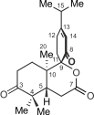
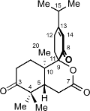
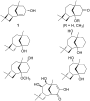
- calculations. The conformational analysis of 1 by using RI-SCS-MP2/def2-TZVP//B97D/TZVP yielded six relevant conformers within the energetical range of 3 kcal/mol above the global minimum. For each of the six conformers thus identified, TDB2PLYP/def2-TZVP calculations were performed providing single UV and CD


The regioselective synthesis of spirooxindolo pyrrolidines and pyrrolizidines via three-component reactions of acrylamides and aroylacrylic acids with isatins and α-amino acids
Beilstein J. Org. Chem. 2014, 10, 117–126, doi:10.3762/bjoc.10.8
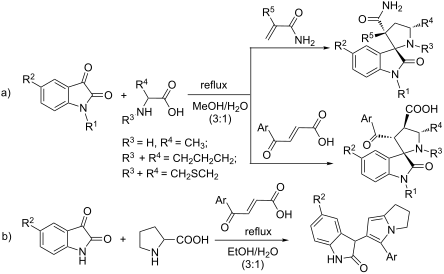
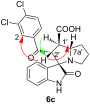
- benzoylacrylic acid) – were investigated computationally. The geometrical structures of all possible conformers of the reacting systems were optimized using M06-2X [37] theory with the cc-pVTZ basis set [38] in the GAUSSIAN09 program [39]. The character of stationary points on the potential energy surface was




Plakilactones G and H from a marine sponge. Stereochemical determination of highly flexible systems by quantitative NMR-derived interproton distances combined with quantum mechanical calculations of 13C chemical shifts
Beilstein J. Org. Chem. 2013, 9, 2940–2949, doi:10.3762/bjoc.9.331
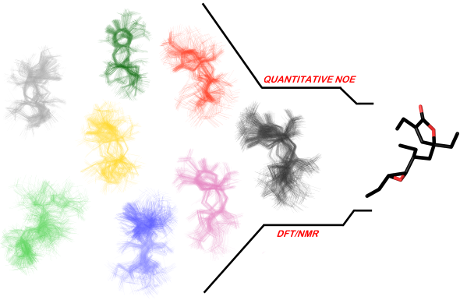
- due to equilibriums between multiple conformers, which are present in highly flexible molecules. Recently, the quantitative NOE-based method has been extended to relatively flexible compounds, and the reliability of the approach for the analysis of multiconformational systems was shown [19][20]. Due
- ). Over 200 conformers were found for each of the stereoisomers for 2a–h (see Experimental), and their geometries were optimized at the DFT theoretical level by using the MPW1PW91 functional and 6-31G(d) [26] basis set (Gaussian 09 Software Package [27]). From the DFT-optimized geometries interproton
- distances were calculated, accounting the Boltzmann-weighted average derived from the energies of the single conformers. For the analysis, we applied the previously described method [18][19][20][21], firstly recording different 1D NOESY spectra, irradiating at diverse resonances. In particular, the NOE


Stereoselectively fluorinated N-heterocycles: a brief survey
Beilstein J. Org. Chem. 2013, 9, 2696–2708, doi:10.3762/bjoc.9.306
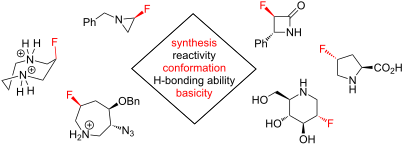
- axial conformers are preferred by a substantial ~5.0 kcal/mol over the equatorial conformers (not shown) [28][29]. This pioneering work constituted the original discovery of the C–F…N+ interaction which has already been discussed above in the context of azetidines and pyrrolidines. Interestingly, Lankin


Synthesis and antibacterial activity of monocyclic 3-carboxamide tetramic acids
Beilstein J. Org. Chem. 2013, 9, 1899–1906, doi:10.3762/bjoc.9.224

- ) tetramic acids (Figure 2) have been found to exist as a pair of external conformers (AB and CD) in slow equilibrium (ABCD), each consisting of a pair of internal tautomers in rapid equilibrium (AB and CD). The tautomerisation of 3-acyltetramic acids has been shown to be mainly affected by substitution on N


Thermochemistry and photochemistry of spiroketals derived from indan-2-one: Stepwise processes versus coarctate fragmentations
Beilstein J. Org. Chem. 2013, 9, 1668–1676, doi:10.3762/bjoc.9.191
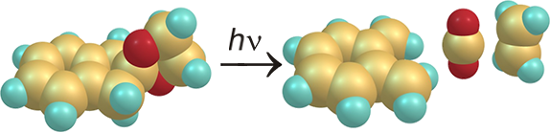
- pyrolysis products are as follows: [CO] = 13.5, [IN] = 9.1, [ET] = 15.4, [BC] = 19.4, [XY] = 1.2, [FA] = 12.2. Flash vacuum pyrolysis of indan-2-one cis-2-butene-1,4-diol ketal (3) again gave rise to a complex mixture of products (Figure 6). Among them, the two conformers of 1,3-butadiene (tBD and cBD


Mechanistic studies on the CAN-mediated intramolecular cyclization of δ-aryl-β-dicarbonyl compounds
Beilstein J. Org. Chem. 2013, 9, 1472–1479, doi:10.3762/bjoc.9.167
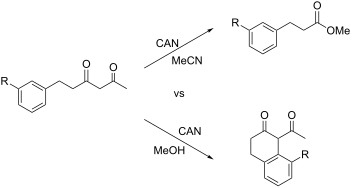
- obtain the minima. For the aryl diketone radical, two conformers for the ketones were considered, one with the carbonyl groups syn to each other and the other with the carbonyl groups in the anti orientation. For every substrate, two transition structures were identified on the energy surface along the


Dipolar addition to cyclic vinyl sulfones leading to dual conformation tricycles
Beilstein J. Org. Chem. 2013, 9, 1419–1425, doi:10.3762/bjoc.9.159
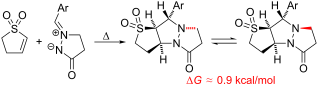
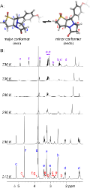
- 1H NMR signals below 330 K, with a coalescence temperature of approximately 280 K. At lower temperatures, two distinct conformations could be identified; by 213 K these were sufficiently well-resolved to permit integration (revealing a ≈7:1 ratio of the two conformers) and more extensive NMR analysis
- conformers, we calculated the 13C NMR shifts for our geometry-optimized structures, and compared these to the shifts obtained experimentally for the two conformations (Table 2). These agreed exceptionally well for those carbons not connected to the sulfone (relativistic effects were not well handled by our
- application in supramolecular or medicinal chemistry. DFT- and NMR-based studies agreed remarkably well in implicating the two interconverting species as the “endo” and “exo” conformers shown in Figure 2. Experimental General methods. Unless otherwise stated, all reagents were purchased from commercial


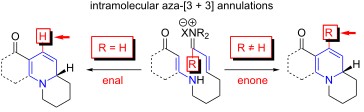
Establishing the concept of aza-[3 + 3] annulations using enones as a key expansion of this unified strategy in alkaloid synthesis
Beilstein J. Org. Chem. 2013, 9, 1170–1178, doi:10.3762/bjoc.9.131
- stable conformers and their corresponding energies are shown in Figure 3. To our surprise, propyleine (12) is 2.59 kcal mol−1 more stable than isopropyleine (14), which is the opposite of the Mueller–Thompson postulation [48]. Our calculations suggest that the ratio obtained from the Mueller–Thompson


Conformational analysis and intramolecular interactions in monosubstituted phenylboranes and phenylboronic acids
Beilstein J. Org. Chem. 2013, 9, 1127–1134, doi:10.3762/bjoc.9.125
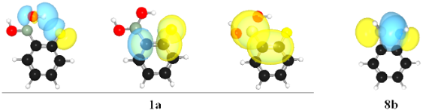
- corresponding conformers appreciably populated, because of steric effects and the loss of πCC→pB resonance. Thus, the results found earlier for 2-fluorophenol about the lack of intramolecular hydrogen bonding are now corroborated. Keywords: conformational analysis; hydrogen bond; interactions with boron
- analysis. The trans–cis form found elsewhere [24] was characterized here as a saddle point rather than a minimum (an imaginary frequency was found). Conformers 1a and 1b exhibit intramolecular hydrogen bonds, which is described in quantum terms as an nF→σ*OH interaction (example for 1a in Figure 3
- hydrogen bond, since the σOH is also oriented toward the fluorine substituent, giving rise to a repulsion (4-electron/2-orbital interaction). Thus, AIM calculations were performed to check for the predominant attractive interaction between F and OH rather than a repulsive one. Both 1a and 1b conformers


Tandem dinucleophilic cyclization of cyclohexane-1,3-diones with pyridinium salts
Beilstein J. Org. Chem. 2013, 9, 1119–1126, doi:10.3762/bjoc.9.124
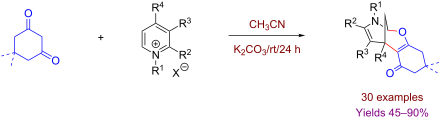
- to be unimportant, because in both cases reactions run again through TS 22a (rate limiting), as was shown by additional computations. On the other hand, we have computed four conformers of TS 22: the conformation of the cyclohexane ring and that of the acetyl group were changed. While the cyclohexane




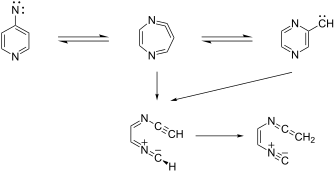
4-Pyridylnitrene and 2-pyrazinylcarbene
Beilstein J. Org. Chem. 2013, 9, 754–760, doi:10.3762/bjoc.9.85
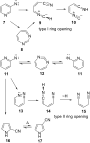
- liquid N2 at −196 °C, or at 2092 cm−1 upon isolation in an Ar matrix at 10 K. The diazo compound is also formed on matrix photolysis of the triazole (Figure 1). Compound 22 can exist as s-Z and s-E conformers. One conformer dominates, absorbing strongly at 2092 cm−1; the other, minor absorption is at
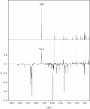
- evolution of the azide photolysis reveals that the cyclic ketenimine 20 is formed first, followed by the open chain ketenimine 27 (Figure S3, Supporting Information File 1). It should be noted that ketenimine 27 can exist as four different s-E and s-Z conformers, with slightly different IR absorptions (the
- calculated spectra are shown in Figure 4 and Figure S6 and Figure S7, Supporting Information File 1). The experimental spectra indicate that all four conformers of 27 are formed, giving rise to bands at 2028–2060 cm−1, i.e., there is enough energy available to effect E–Z and s-E–s-Z isomerization in the






High-spin intermediates of the photolysis of 2,4,6-triazido-3-chloro-5-fluoropyridine
Beilstein J. Org. Chem. 2013, 9, 733–742, doi:10.3762/bjoc.9.83
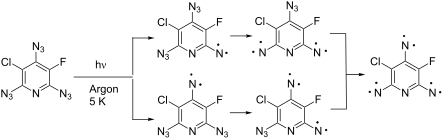
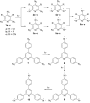
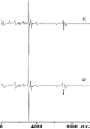
- when an additional line-broadening parameter Γ(E) was used in the spin-Hamiltonian calculations [24]. The necessity of the use of this parameter in calculations is due to the presence in matrices of numerous conformational isomers of the starting azides. Upon UV irradiation, these conformers decompose




Caryolene-forming carbocation rearrangements
Beilstein J. Org. Chem. 2013, 9, 323–331, doi:10.3762/bjoc.9.37
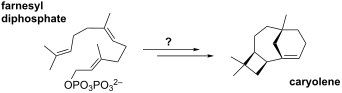
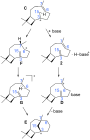
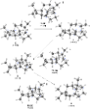
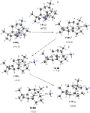
- encountered in the very first step involving carbocations. We were unable to locate a minimum for B in a productive conformation, despite the fact that alternative conformers of this secondary carbocation had been found to be involved in pathways to pentalenene and presilphiperfolanol [18][19][20][21][22
- a hybrid of the tertiary cation C and a resonance structure with two 4-membered rings [22]. We performed a conformational search for C to assess whether other conformers lacking this close contact were possible, but all starting geometries examined in which the two methyl groups pointed to the same





Inter- and intramolecular enantioselective carbolithiation reactions
Beilstein J. Org. Chem. 2013, 9, 313–322, doi:10.3762/bjoc.9.36

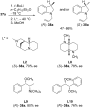
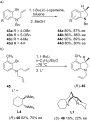
- to 58% ee) (Scheme 5) [16]. The enantiofacial differentiation can be explained through the formation of the complexed conformers by the coordination of the organolithium and the chiral ligand, which will react with the double bond in an intramolecular syn-addition to form benzyllithium derivatives 15
- . These secondary α-carbamoyloxybenzyllithiums are configurationally stable and can be trapped. The authors assume that the problem of these enantioselective carbolithiations is due to the interconversion of the conformers, formed by coordination of n-BuLi and the chiral ligand, being too slow, and that





Synthesis of 5-(ethylsulfonyl)-2-methoxyaniline: An important pharmacological fragment of VEGFR2 and other inhibitors
Beilstein J. Org. Chem. 2013, 9, 173–179, doi:10.3762/bjoc.9.20
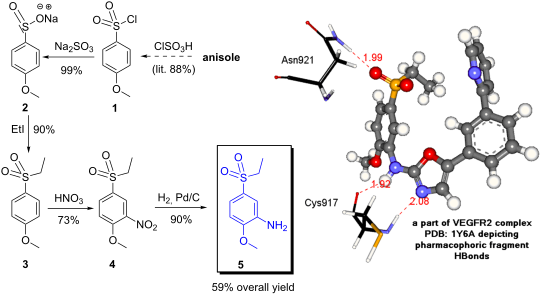
- VEGFR2 receptor has been solved by X-ray crystallography and is available in the Protein Data Bank (PDB: 1Y6A). The complex 1Y6A contains the intracellular tyrosine kinase domain of the VEGFR2 receptor, which accommodates two conformers of the AAZ ligand [5]. Compound 5 is an important precursor for the


The diketopiperazine-fused tetrahydro-β-carboline scaffold as a model peptidomimetic with an unusual α-turn secondary structure
Beilstein J. Org. Chem. 2013, 9, 147–154, doi:10.3762/bjoc.9.17
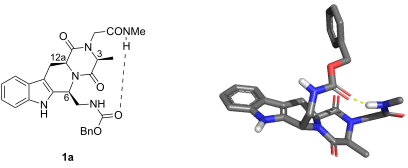
- -turn conformation. The synthesis is based on a diastereoselective Pictet–Spengler condensation to give the THBC core, followed by an intramolecular lactamization to complete the tetracyclic THBC-DKP fused ring system. The presence of conformers bearing the intramolecular thirteen-membered hydrogen bond
- interatomic distance dα between the terminal Cα5 atom and the benzyl oxygen of the Cbz (which emulates the Cα1 atom), assuming a value dα < 7 Å as a probe of a generic reverse turn. Results are reported as the number of conformers that meet the geometric requirements. The most frequently observed is the 5→3 H
- -bond (H-bond A), which is related to a classical γ-turn around these residues, and a 5→1 H-bond (H-bond B), which can be identified as an α-turn (this conformation is present in four conformers for compound 1a). Inspection of the global minima showed the α-turn conformation only for compound 1a. For


The β-cyclodextrin/benzene complex and its hydrogen bonds – a theoretical study using molecular dynamics, quantum mechanics and COSMO-RS
Beilstein J. Org. Chem. 2013, 9, 118–134, doi:10.3762/bjoc.9.15
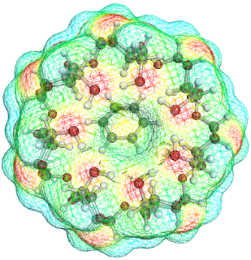
- started with such manually constructed models and their AM1 optimisations. Step 1: Our four β-CD models are conformers; all the hydrogen bonds of each rim are oriented in the same direction. We named them BCDO23lO6l, BCDO23rO6l, BCDO23lO6r and BCDO23rO6r, referring to their manually constructed hydrogen
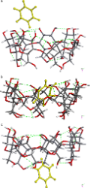
- molecular structures with COSMO-RS on DMOL, BP/SVP or BP/TZVP level of approximation. Our trial to optimise the β-CD complexes with BP/TZVP failed: not always but in several cases, here, for example, the benzene guest was expelled for the BCDbenzeneO23lO6r conformers. Now, however, the current version of
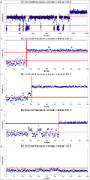
- , 290, 280, and 273 K for 500 ps each, and their release of the guest was analysed from these trajectories. Results and Discussion AM1 Calculations The four conformers of empty β-CD The BCDO23rO6l structure turned out to be the lowest energy conformer, also having the lowest dipole moment of only 0.5618



Theoretical study on β-cyclodextrin inclusion complexes with propiconazole and protonated propiconazole
Beilstein J. Org. Chem. 2012, 8, 2191–2201, doi:10.3762/bjoc.8.247
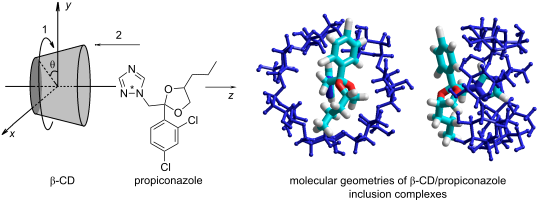
- be subjected to PM3 calculations, without any constraints, to obtain the heats of formation and to compare the stability of the conformers. Looking at Figure 2 it is obvious that all structures are stable since, in all cases, negative binding energies were obtained. It can also be observed that the






Antifreeze glycopeptide diastereomers
Beilstein J. Org. Chem. 2012, 8, 1657–1667, doi:10.3762/bjoc.8.190
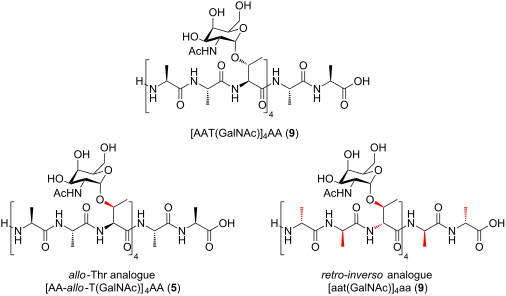
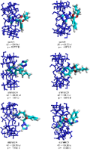
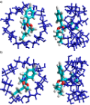
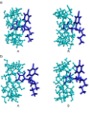
- (Figure 1) [16]. The difference in configuration at Cβ of the threonine residue seems to reduce the propensity for β-strand formation. In the φ/ψ-energy map the conformers PPII and β-strand are very close, and the energy barrier is quite low, facilitating the transition between the conformers [31][32


Synthesis and evaluation of new guanidine-thiourea organocatalyst for the nitro-Michael reaction: Theoretical studies on mechanism and enantioselectivity
Beilstein J. Org. Chem. 2012, 8, 1485–1498, doi:10.3762/bjoc.8.168
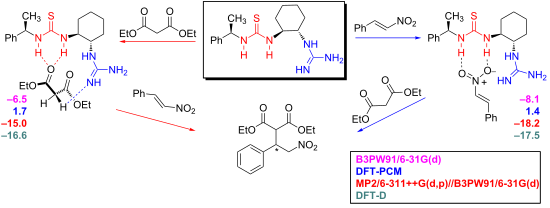
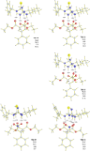
- (Figure 1), gas-phase DFT, MP2 and DFT-D with van der Waals correction predict 7a to be more stable than 7b by between 1.8 and 7.4 kcal·mol−1 (Figure 1). The MP2 and DFT-D energies agree very well. The two other conformers, 7c and 7d, are less stable than 7a/7b at all levels employed and were therefore
- flexible. On the other hand, modification of the guanidine moiety by introducing a rigid aza-heterocycle (1,5,7-triazabicyclo[4.4.0]dec-5-ene (TABD)) gave promising results. For the modified 7-TABD catalyst, we found only two conformers that differ by ca. 6–8 kcal·mol−1 (Figure 5). Assuming that the first
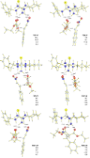
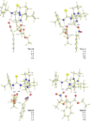
- performed with the ORCA program [85]. Optimized geometries of four conformers of catalyst 7. Energies are in kcal·mol−1, B3PW91/6–31G(d) (first entry), DFT-PCM (second entry), MP2/6–311++G(d,p)// B3PW91/6–31G(d) (third entry), DFT-D (fourth entry). Bond lengths are in Å. Complexes (CatN1–CatN5) between



Organocatalytic asymmetric addition of malonates to unsaturated 1,4-diketones
Beilstein J. Org. Chem. 2012, 8, 1452–1457, doi:10.3762/bjoc.8.165
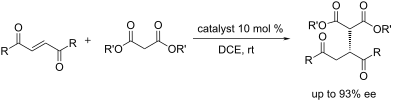
- configuration of the product 3a was determined by a comparison of the experimental and calculated vibrational circular dichroism (VCD) spectra. DFT calculations (method B3PW91/6-311G**) of a series of conformers of compound 3a with R-configuration were performed. Calculations of harmonic vibrational frequencies
- were carried out for all favored conformers to verify their stability. The Boltzmann distribution of the Gibbs energy showed that one conformation out of six is dominant (84%). The experimental and calculated IR spectra match well in the range 1500–1800 cm−1 (both experimental and calculated spectra


Cation affinity numbers of Lewis bases
Beilstein J. Org. Chem. 2012, 8, 1406–1442, doi:10.3762/bjoc.8.163
- (120) and 601 (120Me) conformations. Some of these conformations are eliminated on geometry optimizations at DFT level, but the final low-energy window of 10 kJ/mol for "good" structures still contains 139 (120) and 94 (120Me) structures (after the elimination of mirror-image conformers). A reliable
- calculation of Boltzmann-averaged thermochemical data and the identification of the best conformers thus requires frequency calculations and MP2 single point calculations for all of these structures. It should be added that the energetically best structure varies on moving from Etot(DFT) to H298(DFT) to H298





