Search results
Search for "cytotoxicity" in Full Text gives 292 result(s) in Beilstein Journal of Organic Chemistry. Showing first 200.
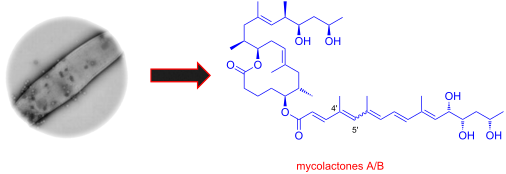
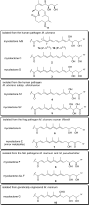
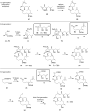
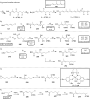
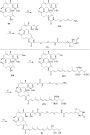
The chemistry and biology of mycolactones
Beilstein J. Org. Chem. 2017, 13, 1596–1660, doi:10.3762/bjoc.13.159









A novel approach to oxoisoaporphine alkaloids via regioselective metalation of alkoxy isoquinolines
Beilstein J. Org. Chem. 2017, 13, 1564–1571, doi:10.3762/bjoc.13.156
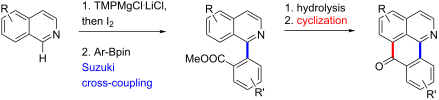
- cytotoxicity against the HL-60 tumor cell line. Keywords: directed ortho/remote metalation; Eaton’s reagent; isoquinolines; Suzuki cross-coupling; Introduction Benzylisoquinoline alkaloids represent a very large group of plant secondary metabolites, which includes about 2,500 known structures. Besides simple
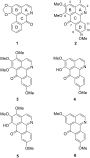
- , and is of considerable pharmacological interest due to the significant cytotoxicity of numerous representatives [3]. A unique subclass of the aporphinoid alkaloids are the oxoisoaporphines (7H-dibenzo[de,h]quinolin-7-ones, e.g., menisporphine, (2)), which at the first glance appear to be not derived
- synthetic, oxoisoaporphine-like analogues were found to have strong DNA binding affinity and therefore high cytotoxicity [5] as well as antiplasmodial activity [6]. Besides menisporphine (2), the related oxoisoaporphine alkaloids dauriporphine (3), 6-O-demethylmenisporphine (4), dauriporphinoline (5) and



Total synthesis of elansolids B1 and B2
Beilstein J. Org. Chem. 2017, 13, 1280–1287, doi:10.3762/bjoc.13.124
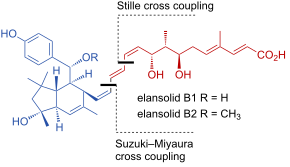
- Flexibacter spec.) (Figure 1) [1][2]. Elansolid A2 (1*), an atropisomer of elansolid A1 (1), showed antibiotic activity against Gram-positive bacteria in the range of 0.2 to 64 µg/mL and cytotoxicity against L929 mouse fibroblast cells with an IC50 value of 12 µg/mL. Besides these two macrocylic members also


An eco-compatible strategy for the diversity-oriented synthesis of macrocycles exploiting carbohydrate-derived building blocks
Beilstein J. Org. Chem. 2017, 13, 1106–1118, doi:10.3762/bjoc.13.110
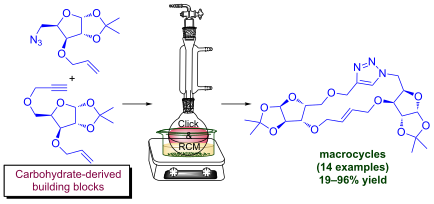
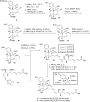
- , macrocyclic glycolipids have shown phosphatase inhibition, cytotoxicity and antiviral activities [12][14]. Generally, the synthesis of these molecules involves a multi-step construction of linear precursors incorporating synthetically compatible functional groups followed by a cyclization in the late stage of


Cycloheximide congeners produced by Streptomyces sp. SC0581 and photoinduced interconversion between (E)- and (Z)-2,3-dehydroanhydrocycloheximides
Beilstein J. Org. Chem. 2017, 13, 1039–1049, doi:10.3762/bjoc.13.103
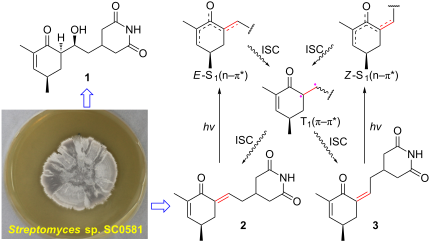
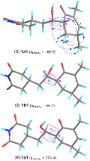
- photoisomerization (not observed in the present study) can be attributable mainly to its higher vertical excitation energy (87.1 kcal/mol in 4a) relative to those of 2 (81.6 kcal/mol in 2a) and 3 (79.5 kcal/mol in 3a). Antifungal activity and cytotoxicity Compounds 1 and 4–6 and the mixture of 2 and 3 were evaluated
- of cycloheximide derivatives (4 vs 6) [21][22], and suggested that 2,3-dehydrogenation might result in the loss of the activity (1 vs 5, 6). The cytotoxicity of these isolates against human lung epithelial carcinoma (A549), human cervical epithelial adenocarcinoma (HeLa), and human breast carcinoma
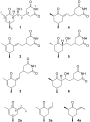
- energies and selected geometrical parameters of key stationary points in S0, S1, and T1 potential energy surfaces of 2a/3a and 4a. Antifungal activity and cytotoxicity of 1–6a. Supporting Information Supporting Information File 176: HRESIMS, 1D and 2D NMR spectra of compounds 1–3; energies, populations




Use of costic acid, a natural extract from Dittrichia viscosa, for the control of Varroa destructor, a parasite of the European honey bee
Beilstein J. Org. Chem. 2017, 13, 952–959, doi:10.3762/bjoc.13.96
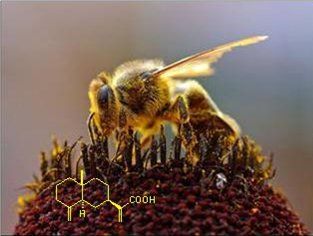
- Neuman-Keuls test) were performed with GraphPad Prism (v. 5.03) [52]. Cytotoxicity assays. The cytotoxicity of costic acid was investigated in human umbilical vein endothelial (HUVE) cells (PromoCell) by incubation with the cell proliferation reagent WST-1 (Roche, Mannheim, Germany) as previously


Fluorescent carbon dots from mono- and polysaccharides: synthesis, properties and applications
Beilstein J. Org. Chem. 2017, 13, 675–693, doi:10.3762/bjoc.13.67
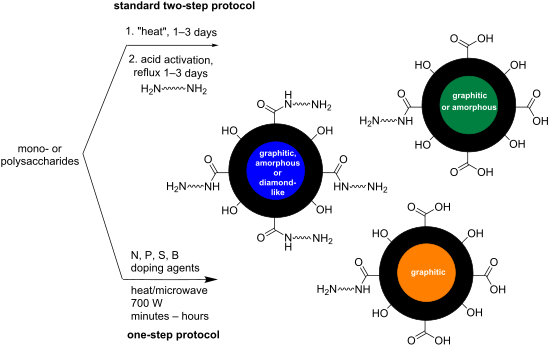
- , demonstrating that in addition to N-dopant agents, Cl sources such as HCl, are key as SPAs that can improve the PL properties of FCDs. The Cl/N-doped CDs were incubated with WI38 and HeLa cell lines and the cell viability was studied by an MTT assay. It was found that no cytotoxicity was observed up to CD


Synthesis of 1-indanones with a broad range of biological activity
Beilstein J. Org. Chem. 2017, 13, 451–494, doi:10.3762/bjoc.13.48
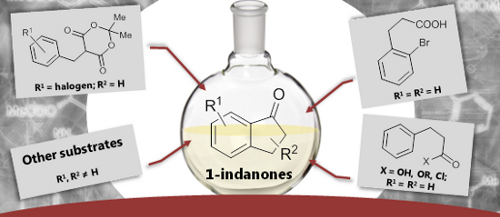
- . Nakiterpiosin (117) is a marine sponge metabolite which demonstrates a potent cytotoxicity against the P388 leukemic cell line. The photo-variant of the Nazarov cyclization has been applied as one of the steps in the total synthesis of nakiterpiosin (117, Scheme 37) [63]. Starting from substrate 115, 1-indanone
- tirelessly exploring for better anticancer pharmaceuticals. Negi et al. have joined these efforts and proposed a synthesis of 2-benzylidene-1-indanones, which exhibited a strong cytotoxicity against four human cancer cell lines: breast (MCF-7), colon (HCT), leukemia (THP-1) and lung (A549) with IC50 values
- -indanones 132a–s were also investigated on the K562 human chronic myelogenous leukaemia cell line. The strongest cytotoxicity against the K562 cell line showed the following compounds: 132a, 132b, 132d, 132f, 132g, 132i, 132k, 132m, 132n, 132o with IC50 values in the range of 0.08–2.8 µM. The compound 132b


Revaluation of biomass-derived furfuryl alcohol derivatives for the synthesis of carbocyclic nucleoside phosphonate analogues
Beilstein J. Org. Chem. 2017, 13, 251–256, doi:10.3762/bjoc.13.28
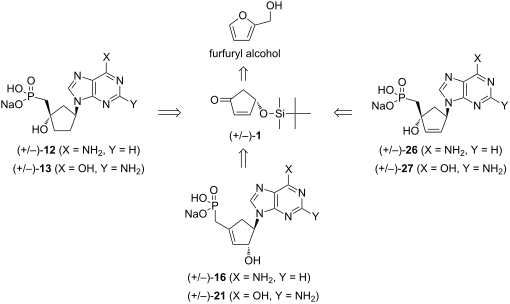
- compounds were evaluated for their activity against a large number of viruses. However, none of them showed significant antiviral activity or cytotoxicity. Keywords: analogue; antiviral; carbocyclic; nucleoside; phosphonate; Introduction Biomass is a valuable resource in search of renewable organic carbon




A postsynthetically 2’-“clickable” uridine with arabino configuration and its application for fluorescent labeling and imaging of DNA
Beilstein J. Org. Chem. 2017, 13, 127–137, doi:10.3762/bjoc.13.16
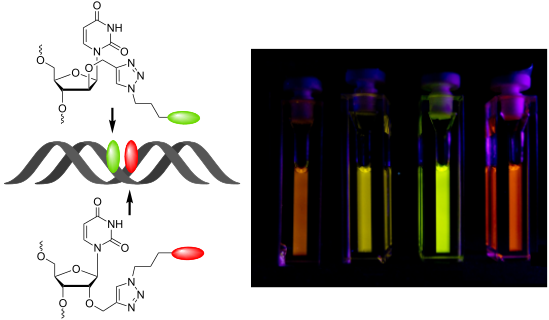
- transfected with 15 pmol of the above mentioned DNA duplexes and Screenfect®, for 24 hours at a concentration, which was not toxic for the cells (see cytotoxicity test in Supporting Information File 1), and imaged by confocal fluorescent microscopy using the excitation wavelength of the energy donor (D1, λexc


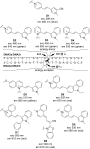


Synthesis and evaluation of anti-oxidant and cytotoxic activities of novel 10-undecenoic acid methyl ester based lipoconjugates of phenolic acids
Beilstein J. Org. Chem. 2017, 13, 26–32, doi:10.3762/bjoc.13.4
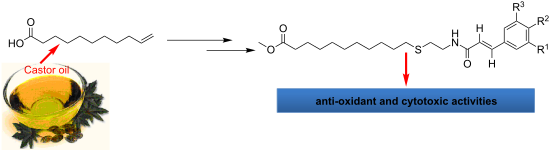
- due to different media used for the assays; the DPPH assay is conducted in a polar medium but the linoleic acid oxidation study is conducted in a non-polar environment. Cytotoxic activity As there were studies reported on the cytotoxicity of phenolic lipids, we have further screened the prepared
- first exothermal peak of the plot of heat flow (mW/g) vs temperature. All measurements for each compound were run in triplicate and the results were averaged. Cytotoxicity test (MTT assay) The cytotoxicity assay (MTT) was evaluated for all test compounds as described in our earlier work [25]. Five


Synthesis of multi-lactose-appended β-cyclodextrin and its cholesterol-lowering effects in Niemann–Pick type C disease-like HepG2 cells
Beilstein J. Org. Chem. 2017, 13, 10–18, doi:10.3762/bjoc.13.2
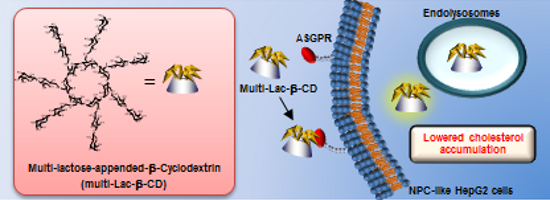
- -Lac-β-CD had an average degree of substitution of lactose (DSL) of 5.6. This newly synthesized multi-Lac-β-CD was found to significantly decrease the concentration of intracellular cholesterol with negligible cytotoxicity as compared to HP-β-CD. An increased internalization of TRITC-multi-Lac-β-CD
- (Figure 2B). These results indicate the successful synthesis of multi-Lac-β-CD (DSL5.6). Cytotoxicity of multi-Lac-β-CD (DSL5.6) To evaluate the cytotoxicity of multi-Lac-β-CD (DSL5.6), cell viability was examined after treatment with multi-Lac-β-CD (DSL5.6) by the water-soluble tetrazolium (WST)-1 method
- (Figure 3). U18666A-treated HepG2 cells were used as NPC-like cells in this experiment because U18666A can inhibit cholesterol trafficking in cells and simulate NPC disease phenotypes [18]. No significant changes in cytotoxicity were observed in NPC-like HepG2 cells after treatment with 0.01–1 mM multi





Synthesis of spiro[isoindole-1,5’-isoxazolidin]-3(2H)-ones as potential inhibitors of the MDM2-p53 interaction
Beilstein J. Org. Chem. 2016, 12, 2793–2807, doi:10.3762/bjoc.12.278
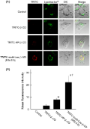
- . Assessment of cell proliferation was also performed cytofluorimetrically by the BrdU assay, [48] obtaining results that reflect data from MTS test (Figure 7b). Cytotoxic effect The cytotoxic effect induced by 6a–f was evaluated by an LDH assay [49], revealing that significant cytotoxicity was exerted only at


Interactions between cyclodextrins and cellular components: Towards greener medical applications?
Beilstein J. Org. Chem. 2016, 12, 2644–2662, doi:10.3762/bjoc.12.261
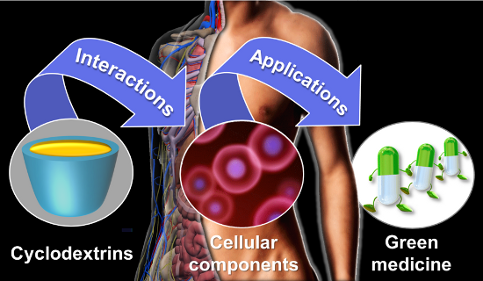
- , the final effect is the same (i.e., hemolysis). It should be noted that this cholesterol and/or phospholipids extraction is not limited to erythrocytes. Indeed, all eukaryotic or prokaryotic cells are affected by the presence of CDs. For instance, the cytotoxicity of native, methylated, and
- cholesterol content in blood–brain barrier cells compared to erythrocytes. Indeed, the cholesterol fraction is markedly higher in erythrocytes than in other cells. As for hemolysis, the presence of hydrophilic substituents (e.g., 2-hydroxypropyl and sulfobutyl ether) annihilates the cytotoxicity while the
- consequences of this phenomenon (e.g., hemolysis or cytotoxicity, see section above). Since the nineties, β-CDs are known to have a high affinity, in vitro, for sterols as compared to other lipids [58][115]. Consequently, these molecules can be used to manipulate the cellular cholesterol content, to modify


A self-assembled cyclodextrin nanocarrier for photoreactive squaraine
Beilstein J. Org. Chem. 2016, 12, 2535–2542, doi:10.3762/bjoc.12.248
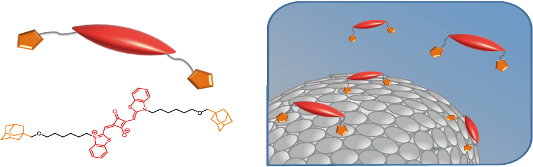
- cytotoxicity. Santos et al. postulated the production of singlet oxygen as a result of interaction between the squaraines and the ground state of oxygen [19][20]. A few years later, Salice et al. showed that squaraines are not efficient singlet oxygen producing agents, but can be applied successfully as




Biomimetic synthesis and HPLC–ECD analysis of the isomers of dracocephins A and B
Beilstein J. Org. Chem. 2016, 12, 2523–2534, doi:10.3762/bjoc.12.247
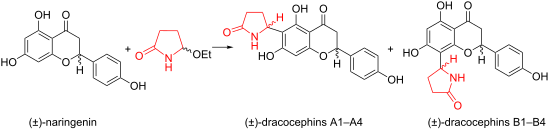
- towards CNS cytotoxic activity on undifferentiated SH-SY5Y neuroblastoma cells. None of the two isomeric compounds exerted cytotoxicity on this cell line (IC50 > 150 μM for both compounds), which rules out their potential CNS antitumor activity and it also suggests them as non-neurotoxic substances. On


Facile synthesis of indolo[3,2-a]carbazoles via Pd-catalyzed twofold oxidative cyclization
Beilstein J. Org. Chem. 2016, 12, 2490–2494, doi:10.3762/bjoc.12.243
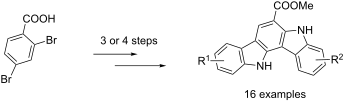
- in 2002 [1]. Up to now, four members of this family were isolated from marine organisms (Figure 1) [1][2][3]. Preliminary results of the antimicrobial and cytotoxicity assays indicated that these compounds have medicinal potentiality to target neurological and psychiatric disorders [1][2]. Several


Enduracididine, a rare amino acid component of peptide antibiotics: Natural products and synthesis
Beilstein J. Org. Chem. 2016, 12, 2325–2342, doi:10.3762/bjoc.12.226
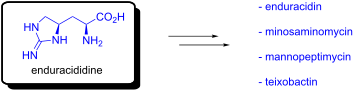
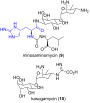
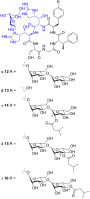
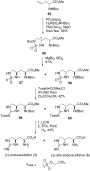
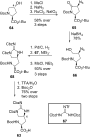
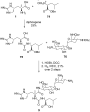
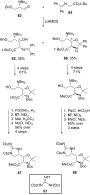
- the unique enduracididine-containing bromoindole metabolite 11 (Figure 4). This was the first time the enduracididine motif had been isolated from a marine source. The exact compound responsible for the observed cytotoxicity was not determined. Mannopeptimycins Mannopeptimycins α–ε (12–16, Figure 5












An effective one-pot access to polynuclear dispiroheterocyclic structures comprising pyrrolidinyloxindole and imidazothiazolotriazine moieties via a 1,3-dipolar cycloaddition strategy
Beilstein J. Org. Chem. 2016, 12, 2240–2249, doi:10.3762/bjoc.12.216

- viruses [35], anti-HIV and anticancer [36][37], antimicrobial and antifungal activities as well as cytotoxicity to MCF-7 cells [38][39]. Based on these observations we therefore aimed at combining the spiropyrrolidinyloxindole motif with hetero-annelated 1,2,4-triazine scaffolds. Recently, we have already


The direct oxidative diene cyclization and related reactions in natural product synthesis
Beilstein J. Org. Chem. 2016, 12, 2104–2123, doi:10.3762/bjoc.12.200
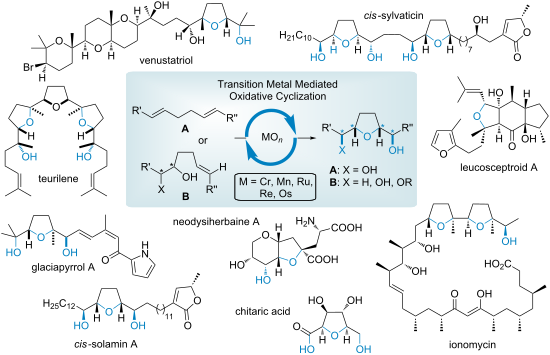
- contrast to other representatives of this subgroup of acetogenins they are lacking one of the secondary alcohols usually framing the bis-THF core (Scheme 14). They were isolated from the leaves of Rollinia mucosa [108] and shown to exhibit cytotoxicity against six human tumor cell lines. Rollidecin C (69






Varioloid A, a new indolyl-6,10b-dihydro-5aH-[1]benzofuro[2,3-b]indole derivative from the marine alga-derived endophytic fungus Paecilomyces variotii EN-291
Beilstein J. Org. Chem. 2016, 12, 2012–2018, doi:10.3762/bjoc.12.188
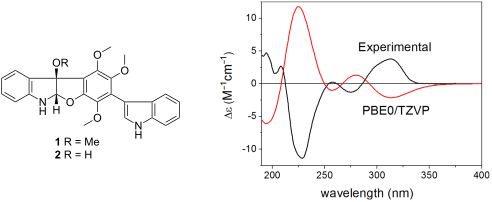
- varioloid B (2). Both compounds 1 and 2 exhibited cytotoxicity against A549, HCT116, and HepG2 cell lines, with IC50 values ranging from 2.6 to 8.2 µg/mL. Keywords: bisindolyl benzenoid derivatives; cytotoxicity; marine alga-derived fungus; Paecilomyces variotii; TDDFT-ECD calculation; Introduction The
- elucidation including the assignment of the absolute configuration, and the cytotoxicity studies of these compounds. Results and Discussion Varioloid A (1), obtained as a light brown solid, has the molecular formula C26H24N2O5 as established from a prominent pseudomolecular ion peak at m/z 445.1766 [M + H
- the same as that of 1. Both compounds 1 and 2 were evaluated for their cytotoxic activity using a panel of three tumor cell lines, A549 (human lung adenocarcinoma cells), HCT116 (human colon carcinoma cells), and HepG2 (human hepatoma cells). Both compounds exhibited relevant cytotoxicity. Compound 1



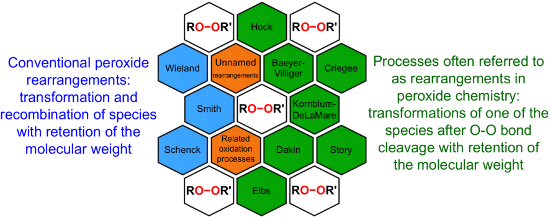
Rearrangements of organic peroxides and related processes
Beilstein J. Org. Chem. 2016, 12, 1647–1748, doi:10.3762/bjoc.12.162









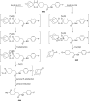


Synthesis, fluorescence properties and the promising cytotoxicity of pyrene–derived aminophosphonates
Beilstein J. Org. Chem. 2016, 12, 1229–1235, doi:10.3762/bjoc.12.117
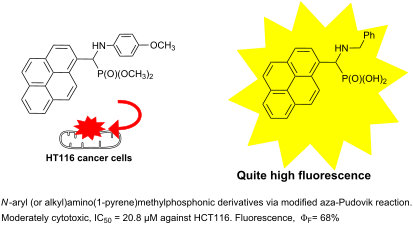
- normal lymphocytes (IC50 = 230.8 µM). Keywords: aminophosphonic derivatives; cytotoxicity; fluorescence properties; MTT test; pyrene-1-carboxaldehyde; Introduction The biological activity of aminophosphonic systems is very well known and described, in aspect of their crop protective [1], antibacterial
- cytotoxicity against both tested cancer cell lines HT29 (IC50 = 24.2 µM) as well as HCT116 (IC50 = 20.8 µM) cells, and it simultaneously was not strongly toxic for normal human lymphocytes (IC50 = 230.8 µM). However, HT29 cells were more resistant to 3Ad than HCT116 cells. Therefore, the aminophosphonate 3Ad
- showed a carcinoma-specific cytotoxicity against human colon cancer cells. A similar correlation was observed for the aminophosphonic derivative 3Ac, which was strongly cytotoxic against both colon cancer cell lines, but in contrast to 3Ad, was also toxic for lymphocytes. Paradoxally, compound 3Ac


Antibacterial structure–activity relationship studies of several tricyclic sulfur-containing flavonoids
Beilstein J. Org. Chem. 2016, 12, 1065–1071, doi:10.3762/bjoc.12.100
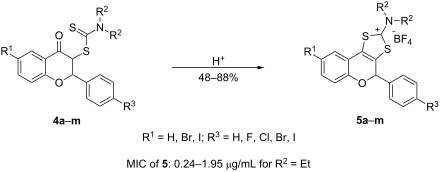
- indicated that the newly synthesized tricyclic flavanoids exhibit similar or even better antimicrobial properties. However, due to the lack of cytotoxicity results one may assume that the investigated structures represent a promising class of compounds. In summary, the newly synthesized compounds exhibit


Marine-derived myxobacteria of the suborder Nannocystineae: An underexplored source of structurally intriguing and biologically active metabolites
Beilstein J. Org. Chem. 2016, 12, 969–984, doi:10.3762/bjoc.12.96
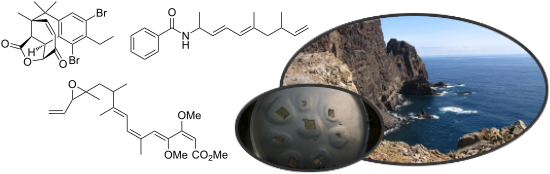
- ), Candida albicans (DSM 1665) and Mucor hiemalis (DSM 2656, 33.3 μg mL−1 in each case). Significant cytotoxic activity was revealed for 22 towards SKOV-3 (IC50 = 2.4 μM), KB3-1 (IC50 = 5.3 μM), as well as A431 (IC50 = 8.45 μM), while 23 showed remarkable cytotoxicity against cell lines HUVEC and KB3-1 (IC50