


Search results
Search for "macrocycles" in Full Text gives 210 result(s) in Beilstein Journal of Organic Chemistry. Showing first 200.
Homochiral BINOL-based macrocycles with π-electron-rich, electron-withdrawing or extended spacing units as receptors for C60
Beilstein J. Org. Chem. 2014, 10, 1308–1316, doi:10.3762/bjoc.10.132
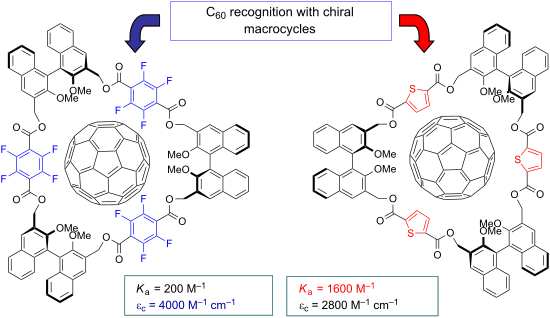
- several homochiral macrocycles has been achieved by using π-electron-rich, electron-deficient or extended aromatic dicarboxylic acids in combination with an axially-chiral dibenzylic alcohol, derived from enantiomerically-pure BINOL. Two series of cyclic adducts with average molecular D2 and D3 molecular
- cyclic adducts exhibit recognition properties towards C60 in toluene solutions (up to log Ka = 3.2) with variable stoichiometries and variable intensities of the charge-tranfer band upon complexation. Keywords: BINOL; C60; carbon nanomaterials; carbon nanostructures; chirality; macrocycles; sensors
- ; supramolecular chemistry; Introduction Shape persistent macrocycles are carbon-based nanomaterials and are more and more in demand. They enrich the molecular toolkit available to a variety of disciplines, e.g., supramolecular chemistry and materials science [1][2][3][4]. Shape persistency properties are


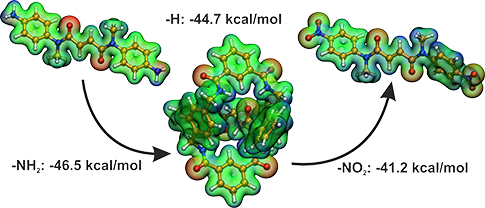
Substitution effect and effect of axle’s flexibility at (pseudo-)rotaxanes
Beilstein J. Org. Chem. 2014, 10, 1299–1307, doi:10.3762/bjoc.10.131
- low-barrier molecular rotary motors with rotaxane architecture [24]. The co-conformational selectivity of two dibenzo-24-crown-8 macrocycles to ammonia binding sites in a [3]rotaxane [25], and the hydrogen bonding strength in polymeric urethane rotaxanes in a mean-field model [26] were investigated by


Synthesis of a sucrose dimer with enone tether; a study on its functionalization
Beilstein J. Org. Chem. 2014, 10, 1246–1254, doi:10.3762/bjoc.10.124
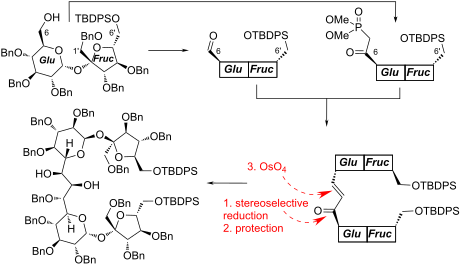
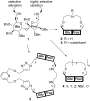
- become engaged in the preparation of the analogs of crown and aza-crown ethers with sucrose scaffold. It is based on a selective protection of 1’,2,3,3’,4,4’-hexa-O-benzylsucrose (1) either at the glucose (C-6) [8] or fructose (C-6’) [9] end and further transformations to a variety of macrocycles (2–4
- ; Figure 1). Such receptors exhibit interesting complexing properties towards chiral ammonium salts including amino acids [10][11][12][13][14]. More complex sucrose macrocycles, such as 5, are available, although in rather low yield [15]. In this paper we present an approach to other derivatives containing
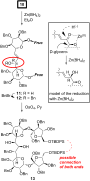
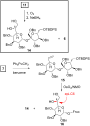
- two sucrose units. This type of dimers may be eventually used for the construction of macrocycles by (simple) connecting their C-6’ (fructose) ends. Results and Discussion Coupling of two sugar units can be performed by a number of methods. The best one in our hands was the Wittig-type methodology




Consecutive isocyanide-based multicomponent reactions: synthesis of cyclic pentadepsipeptoids
Beilstein J. Org. Chem. 2014, 10, 1017–1022, doi:10.3762/bjoc.10.101
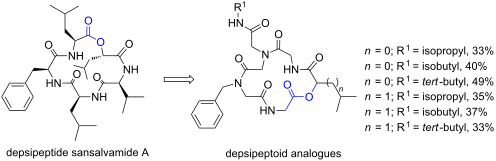
- 11a,b. Synthesis of macrocycles 2a-f. Supporting Information Supporting Information File 34: General procedures, NMR and mass spectra of all compounds. Acknowledgements The authors thank the Instituto de Química, Universidade de Brasília, FINEP-CT INFRA nº 970/01, CAPES, CNPq, and DAAD for financial


The influence of intraannular templates on the liquid crystallinity of shape-persistent macrocycles
Beilstein J. Org. Chem. 2014, 10, 910–920, doi:10.3762/bjoc.10.89
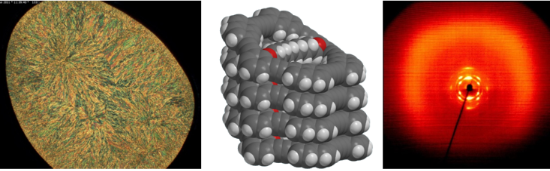
- 4, 06120 Halle (Saale), Germany 10.3762/bjoc.10.89 Abstract A series of shape-persistent phenylene–ethynylene–naphthylene–butadiynylene macrocycles with different extraannular alkyl groups and intraannular bridges is synthesized by oxidative Glaser-coupling of the appropriate precursors. The
- chains at the periphery, the macrocycles exhibit liquid crystalline (lc) phases when the interior is empty or when the length of the alkyl bridge is just right to cross the ring. With a longer alkyl or an oligoethylene oxide bridge no lc phase is observed, most probably because the mesogene is no longer
- planar. Keywords: discotic liquid crystals; shape-persistent macrocycles; templates; X-ray scattering; Introduction The supramolecular chemistry of shape-persistent macrocycles has enormously expanded during the past several years [1][2][3][4][5][6]. It covers the non-covalent interaction between the


Staudinger ligation towards cyclodextrin dimers in aqueous/organic media. Synthesis, conformations and guest-encapsulation ability
Beilstein J. Org. Chem. 2014, 10, 774–783, doi:10.3762/bjoc.10.73
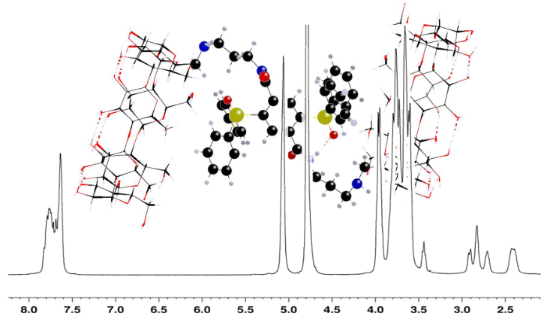
- increasingly important applications [11]. A specific category of modified CDs are the CD oligomers, compounds with two or three CD macrocycles linked together at different positions (2–2’, 3–3’, 3–2’, 6–2’ etc) via selected spacers. The multicavity structures can, in principle, be precisely tailored to fit



From porphyrin benzylphosphoramidate conjugates to the catalytic hydrogenation of 5,10,15,20-tetrakis(pentafluorophenyl)porphyrin
Beilstein J. Org. Chem. 2014, 10, 628–633, doi:10.3762/bjoc.10.54
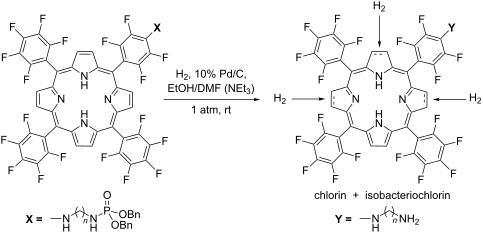
- the integrals of selected aromatic β-pyrrolic protons of the three macrocycles [19] in the region between 7 and 9 ppm (Table 1). Entries 1 and 2 show that, in spite of the amount of nonreacted porphyrin after 48 hours, its conversion into TPCF20 is considerable. Complementary experiments were carried


Isocyanide-based multicomponent reactions towards cyclic constrained peptidomimetics
Beilstein J. Org. Chem. 2014, 10, 544–598, doi:10.3762/bjoc.10.50

- cyclic peptide mimics (ranging from four- to seven-membered rings), medium-sized cyclic constructs or peptidic macrocycles (>12 membered rings). This review describes the developments since 2002 of IMCRs-cyclization strategies towards a wide variety of small cyclic mimics, medium sized cyclic constructs
- and macrocyclic peptidomimetics. Keywords: heterocycles; isocyanides; macrocycles; multicomponent reaction; medicinal chemistry; organic synthesis; peptidomimetics; Introduction Peptides and proteins fulfill a key role in many biological and physiological functions of living organisms. Therefore
- rings (9–12 membered) to macrocycles. Isocyanide-based multicomponent reactions for cyclic peptidomimetics Multicomponent reactions that include isocyanide or isocyanide derivatives (e.g. isocyanoacetates) have been widely applied for the synthesis of peptidomimetics. The main advantage of these


New tridecapeptides of the theonellapeptolide family from the Indonesian sponge Theonella swinhoei
Beilstein J. Org. Chem. 2013, 9, 1643–1651, doi:10.3762/bjoc.9.188
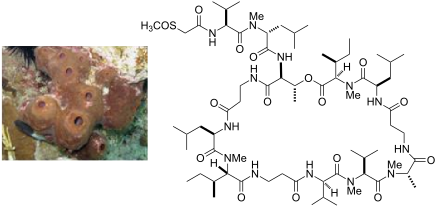
- D- or L-configurations at the α-carbons, and the formation of macrocycles through amide or ester bonds. To categorize the plethora of Theonella polypeptides we could identify at least eight structural types: theonellamides (glycosylated imidazole-containing macrocycles) [9], keramamides (including


Linkage of α-cyclodextrin-terminated poly(dimethylsiloxanes) by inclusion of quasi bifunctional ferrocene
Beilstein J. Org. Chem. 2013, 9, 1278–1284, doi:10.3762/bjoc.9.144
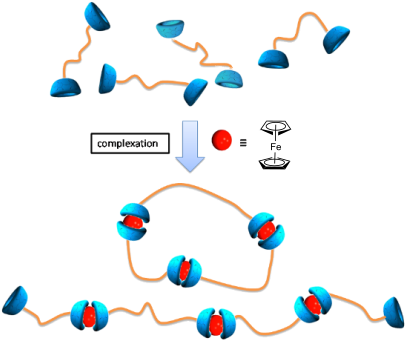
- macrocycles. The size of the ferrocene molecule is too large to penetrate completely into the α-CD cavity. Only a single cyclopentadienyl ring of the ferrocene is included. The binding mode, thermal stability, formation constants, and dielectric properties [7] of this inclusion complex were also investigated
- significantly shifts from 343 nm to 615 and 5489 nm. The hydrodynamic diameter of 615 nm can be explained by the formation of some macrocycles and oligomers by noncovalent interactions of the host and guest molecules. This phenomenon might also explain the almost unchanged viscosity increase of the complex in


Synthesis of meso-substituted dihydro-1,3-oxazinoporphyrins
Beilstein J. Org. Chem. 2013, 9, 496–502, doi:10.3762/bjoc.9.53
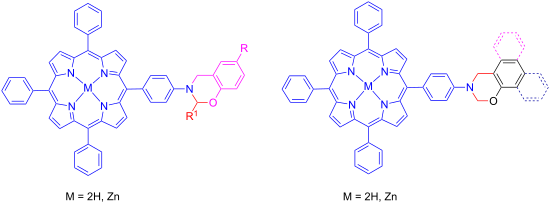
- type reaction; synthesis; Introduction Porphyrin macrocycles are of crucial interest for their potential applications in diverse fields such as biomimetic models for photosynthesis [1][2], electronic materials [3], catalysis [4] and medicine [5][6]. In the past few decades, the synthesis of porphyrin


















Synthesis and characterization of low-molecular-weight π-conjugated polymers covered by persilylated β-cyclodextrin
Beilstein J. Org. Chem. 2012, 8, 1505–1514, doi:10.3762/bjoc.8.170
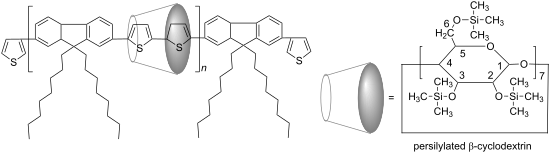
- bulkier silylated groups, affecting the ability of the diborate groups from the DOF molecule to partially penetrate the PS-βCD cavity. Keywords: alternating fluorene-bithiophene copolymer; cyclodextrins; interlocked molecules; macrocycles; persilylated β-cyclodextrin; polyrotaxanes; Introduction Organic
- mixture of PS-βCD and BT in acetone was isolated, purified and characterized by 1H NMR, as can be seen in Figure 1. The average number of PS-βCD macrocycles per BT unit was calculated by using the ratio of the integrated area of the peak assigned to the H from –CH3 groups of PS-βCD (0.09–0.11 ppm, IH-CH3
- ) and the proton peaks of BT (6.85–7.97 ppm, IBT), Figure 1. The average number of PS-βCD macrocycles per BT unit was calculated as (IBT/4)/(IH-CH3/63) and found to be 0.95 (i.e., ca. 95% coverage). Not surprisingly, due to the presence of PS-βCD the rotaxane PDOF-BTc copolymer showed a marked contrast



Superstructures with cyclodextrins: Chemistry and applications
Beilstein J. Org. Chem. 2012, 8, 1303–1304, doi:10.3762/bjoc.8.148
- covalent attachment of CDs to macromolecules and threading of CD molecules onto suitable macromolecular chains could be demonstrated. Unlike other macrocycles such as crown ethers or calixarenes, the cavity of CDs is big enough to include more or less hydrophobic molecules completely. In contrast to
Similarity analysis, synthesis, and bioassay of antibacterial cyclic peptidomimetics
Beilstein J. Org. Chem. 2012, 8, 1146–1160, doi:10.3762/bjoc.8.128
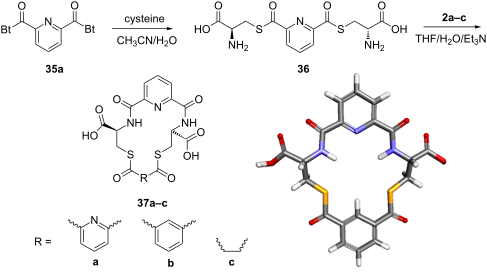
- studied in order to identify new promising cyclic scaffolds. A large descriptor space coupled with cluster analysis was employed to digitize known antibacterial structures and to gauge the potential of new peptidomimetic macrocycles, which were conveniently synthesized by acylbenzotriazole methodology
- direction of the two chains attached to the cysteine residue. For example, one of the early cysteine-containing macrocycles was designed to mimic the cation binding ability of valinomycin [24]. Numerous literature approaches to the synthesis of 17-, 18- and 24-membered rings utilize: (i) acyl chlorides, (ii
- and axis Y denotes linkage distance); the red oval, blue rectangle, and green oval represent cluster 1, cluster 2, and cluster 3, respectively. Preparation of dicarboxylic benzotriazole derivatives. Preparation of pyridine-based cysteine-containing macrocycles. Preparation of pyridine–cysteine


Synthesis and anion recognition properties of shape-persistent binaphthyl-containing chiral macrocyclic amides
Beilstein J. Org. Chem. 2012, 8, 967–976, doi:10.3762/bjoc.8.109
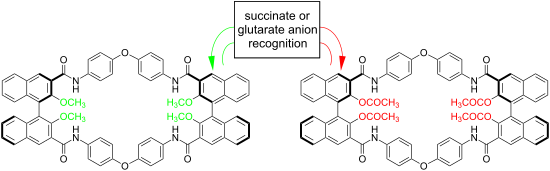
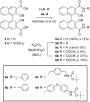
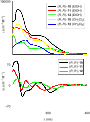
- , Italy INSTM Research Unit, Department of Chemistry, University of Pavia, 27100 Pavia, Italy 10.3762/bjoc.8.109 Abstract We report on the synthesis and characterization of novel shape-persistent, optically active arylamide macrocycles, which can be obtained using a one-pot methodology. Resolved, axially
- differing shapes, to give homochiral tetraamidic macrocycles. The recognition properties of these supramolecular receptors have been analyzed, and the results indicate a modulation of binding affinities towards dicarboxylate anions, with a drastic change of binding mode depending on the steric and
- electronic features of the functional groups in the 2,2' positions. Keywords: amides; anion recognition; chirality; macrocycles; molecular switches; supramolecular chemistry; Introduction Macrocyclic molecules possessing a high degree of shape persistency act as molecular cages, and the scientific interest





Molecular switches and cages
Beilstein J. Org. Chem. 2012, 8, 870–871, doi:10.3762/bjoc.8.97
- , optically active macrocycles (Pasini). Molecular switches that respond to changes in pH are covered as well (Haberhauer and Aprahamian), reflecting their importance in biology and in materials science. Finally, switching is highlighted as a synthetic strategy for building advanced materials that are useful
Synthesis of functionalized macrocyclic derivatives of trioxabicyclo[3.3.0]nonadiene
Beilstein J. Org. Chem. 2012, 8, 738–743, doi:10.3762/bjoc.8.83
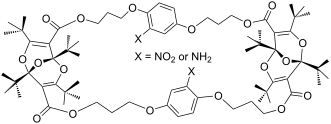
- the bisdioxine-derived macrocycles. Okazaki and co-workers designed bowl-shaped [8] and lantern-shaped [9] molecules containing a functionalized aryl group, which allowed the preparation of, among other things, stable simple enols [8] and a variety of unusual sulfur [9], selenium [10][11] and
- germanium [12] species. Clearly, the bisdioxine macrocycles such as 4 and 5 will not be nearly as rigid, but they may nevertheless exert some steric protection. Herein we report the realisation of the first step toward this end, the preparation of functionalized macrocyclic bisdioxine derivatives. Results
- triethylamine to afford the 2:2 adducts 8 and 11, respectively (Scheme 2 and Scheme 3). These compounds were characterized by elemental analysis and their 1H- and 13C NMR spectra. All proton and carbon resonances could be assigned by comparison with data for other, related, macrocycles [1][2][3][4][5][6][7


Enantioselective supramolecular devices in the gas phase. Resorcin[4]arene as a model system
Beilstein J. Org. Chem. 2012, 8, 539–550, doi:10.3762/bjoc.8.62
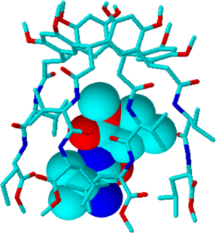
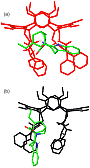
- of tunable macrocycles largely studied in the context of host–guest chemistry, as cavitands [5] and capsules [6]. The great ability of resorcin[4]arenes to trap several classes of compounds makes them very suitable for the subtle study of the chemicophysical properties of their host–guest systems




Self-assembly of Ru4 and Ru8 assemblies by coordination using organometallic Ru(II)2 precursors: Synthesis, characterization and properties
Beilstein J. Org. Chem. 2012, 8, 313–322, doi:10.3762/bjoc.8.34
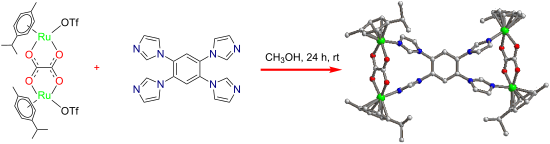
- . Conversely, the similar combination of L with 2,5-dihydroxy-1,4-benzoquinonato (dhbq) bridged binuclear complex [Ru2(μ-η4-C6H2O4)(MeOH)2(η6-p-cymene)2](O3SCF3)2 (1c) in 1:2 molar ratio resulted in an octanuclear macrocyclic cage 2c. All the self-assembled macrocycles 2a–2c were isolated as their triflate
- tetranuclear rectangular geometry with the dimensions of 5.53 Å × 12.39 Å. Furthermore, the photo- and electrochemical properties of these newly synthesized assemblies have been studied by using UV–vis absorption and cyclic voltammetry analysis. Keywords: cages; macrocycles; ruthenium(II); self-assembly; self
- , we and others have recently reported several shape-persistent discrete macrocycles/cages using half-sandwich octanuclear Ru(II) piano-stool complexes in combination with polypyridyl or polycarboxylate donors [6][7][8][9][10]. Ligands with an imidazole functionality are of considerable interest due to


A ferrocene redox-active triazolium macrocycle that binds and senses chloride
Beilstein J. Org. Chem. 2012, 8, 246–252, doi:10.3762/bjoc.8.25
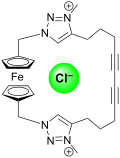
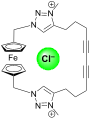
- Information File 18: X-ray data of macrocycles 3 and 4. Acknowledgements We thank the Clarendon Fund and Trinity College, Oxford for funding and Diamond Light Source for the award of beam time on Beamline I19. Ben Mullaney is thanked for assistance with electrochemistry experiments.


Synthesis of multivalent host and guest molecules for the construction of multithreaded diamide pseudorotaxanes
Beilstein J. Org. Chem. 2012, 8, 234–245, doi:10.3762/bjoc.8.24
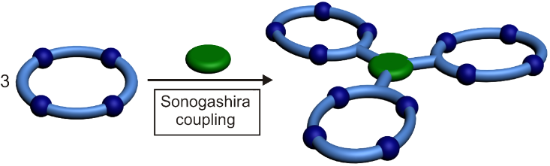
- wheel precursors. Keywords: multivalency; pseudorotaxanes; Sonogashira coupling; supramolecular chemistry; tetralactam macrocycles; Introduction Synthetic supramolecular complexes have the great potential to put those concepts to the test that govern much of the noncovalent chemistry in nature. Among
- this case to acids and bases, which induce motion of the wheel and axle components relative to each other. Tetralactam macrocycles (TLMs) [65][66] have widely been used in the synthesis of amide catenanes and rotaxanes [85][86][87][88][89][90][91][92] and represent excellent hosts for dicarbonyl
- rise to divalent axle 22, which was isolated as a side product in 37% yield. This molecule may be useful for other divalent hosts, such as two macrocycles connected through a butadiyne spacer or a thiophene unit. Such hosts have been reported previously [103] and are not included here. Formation of


Fifty years of oxacalix[3]arenes: A review
Beilstein J. Org. Chem. 2012, 8, 201–226, doi:10.3762/bjoc.8.22
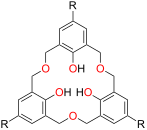
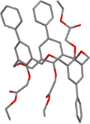
- has been expanded to include numerous derivatives and complexes. This review describes the syntheses of the parent compounds, their derivatives, and their complexation behaviour towards cations. Extraction data are presented, as are crystal structures of the macrocycles and their complexes with guest
- species. Applications in fields as diverse as ion selective electrode modifiers, fluorescence sensors, fullerene separations and biomimetic chemistry are described. Keywords: calixarenes; host–guest chemistry; macrocycles; oxacalixarenes; Introduction Calixarenes, macrocycles which are widely used in
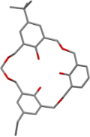
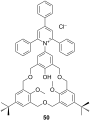
- ]. When one or more CH2 bridges are replaced by CH2OCH2 groups the macrocycles are known as homooxacalixarenes, or simply oxacalixarenes. The presence of the heteroatom is reflected in the name of the compound, for example, p-tert-butylcalix[4]arene (1) with a CH2OCH2 group instead of a CH2 bridge is p












Binding of group 15 and group 16 oxides by a concave host containing an isophthalamide unit
Beilstein J. Org. Chem. 2012, 8, 11–17, doi:10.3762/bjoc.8.2
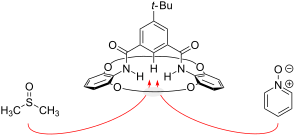
- ; macrocycle; molecular recognition; Introduction In the last decade, isophthalamide derivatives have become attractive neutral hosts as anion receptors [1][2]. Some of these derivatives show a high selectivity for one anion over others [3]. Isophthalamide units have also been incorporated into macrocycles [4
- ][5] or bi-macrocycles for ion-pair and ion-triplet recognition [6][7][8][9]. During the last few years, it was also shown that the orientation of the amide bonds of the isophthalamides plays an important role in the effectiveness of anion binding and subsequently in applications such as transmembrane


The allylic chalcogen effect in olefin metathesis
Beilstein J. Org. Chem. 2010, 6, 1219–1228, doi:10.3762/bjoc.6.140
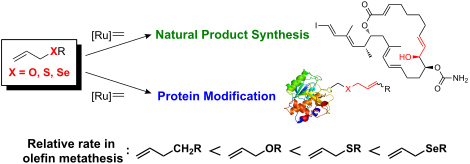
- dibenzylamine (24), but the allyl sulfide analogue 22 remained the most reactive substrate in aqueous media (Scheme 7b) [17]. We considered these observation in the light of the early work by Fürstner in the synthesis of macrocycles by RCM [33], in which a “carbonyl-relayed” mechanism was proposed as the





