Search results
Search for "origin" in Full Text gives 358 result(s) in Beilstein Journal of Organic Chemistry. Showing first 200.
Intramolecular glycosylation
Beilstein J. Org. Chem. 2017, 13, 2028–2048, doi:10.3762/bjoc.13.201
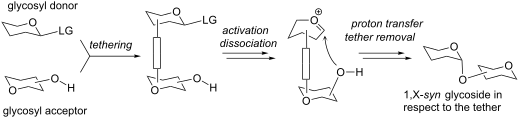
- range IAD via dimethylsilane. Allyl-mediated tethering strategy in the IAD. IAD using tethering via the 2-naphthylmethyl group. Origin of selectivity in boronic ester mediated IAD. Arylborinic acid approach to the synthesis of β-mannosides. Possible mechanisms to explain α and β selectivity in palladium


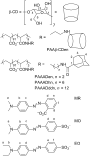
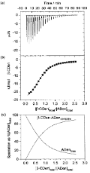
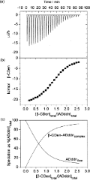
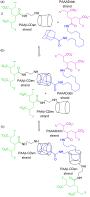
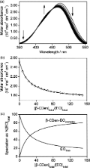
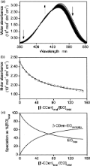
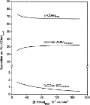
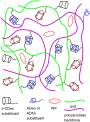
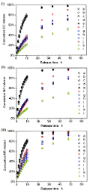
β-Cyclodextrin- and adamantyl-substituted poly(acrylate) self-assembling aqueous networks designed for controlled complexation and release of small molecules
Beilstein J. Org. Chem. 2017, 13, 1879–1892, doi:10.3762/bjoc.13.183
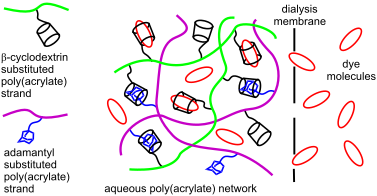
- heats of dilution were subtracted from the total heats evolved to give the heats of host–guest complexation from which the complexation constant, K, and the corresponding ΔH, TΔS and N were calculated using the Origin 7.0 MicroCal protocol [53] as described in the Results and Discussion section. UV–vis




Conformational impact of structural modifications in 2-fluorocyclohexanone
Beilstein J. Org. Chem. 2017, 13, 1781–1787, doi:10.3762/bjoc.13.172

- organofluorine compounds affects conformational properties, since it can induce stereoelectronic effects, such as σC–H to σ*C–F hyperconjugative interactions in case of an antiparallel oriented C–H bond. This is the origin of the so-called 'gauche effect', because electronegative C–X bonds do not participate in


Theoretical simulation of the infrared signature of mechanically stressed polymer solids
Beilstein J. Org. Chem. 2017, 13, 1710–1716, doi:10.3762/bjoc.13.165
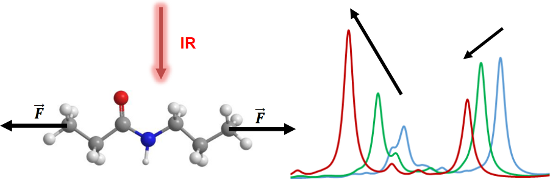
- property of the applied force, the change of the vibrational modes with increasing force depends on the orientation of the normal mode displacement of each atom relative to the force vector. To illustrate the molecular origin of the changes in the calculated infrared spectrum due to force, the four


A recursive microfluidic platform to explore the emergence of chemical evolution
Beilstein J. Org. Chem. 2017, 13, 1702–1709, doi:10.3762/bjoc.13.164
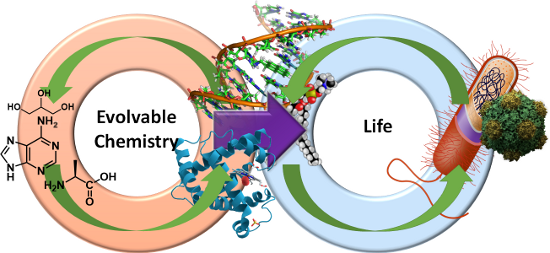
- David Doran Marc Rodriguez-Garcia Rebecca Turk-MacLeod Geoffrey J. T. Cooper Leroy Cronin WestCHEM, School of Chemistry, University of Glasgow, University Avenue, Glasgow G12 8QQ, UK 10.3762/bjoc.13.164 Abstract We propose that a chemically agnostic approach to explore the origin of life, using
- the origin of life under very constrained conditions [6]. Many heated debates in the field of prebiotic chemistry have raged over which precise historical environment(s) gave rise to the first lifeforms. However, it is unlikely that this question can ever be answered with reasonable certainty [7
- ]. Therefore, the puzzle most ripe for scientific inquiry is not how did life first arise, but what kind of processes can facilitate the origin of life? Identification of processes that produce complex, autocatalytic chemical networks [8] from simple inputs via gradual, step-wise complexification could go some




The chemistry and biology of mycolactones
Beilstein J. Org. Chem. 2017, 13, 1596–1660, doi:10.3762/bjoc.13.159
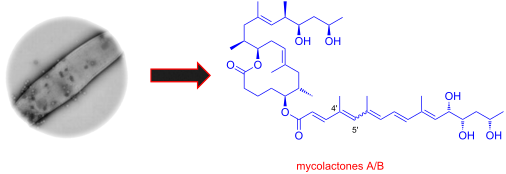
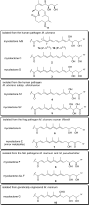
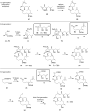
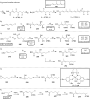
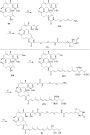
- origin and its chemical structure, this compound was named mycolactone. It is worth noting that mycolactone represented the first polyketide macrolide isolated from a mycobacterial species and was also the first example of a polyketide acting as the virulence factor of a human pathogen [34]. The purified
- [47]. Finally, Asian strains seem to be less virulent than their African complements [48][49][50]. These observations led the Small group to analyze partially purified mycolactones from M. ulcerans isolates of different geographical origin by TLC, (LC–)MS and in a cytopathogenicity assay [47][51









Molecular recognition of N-acetyltryptophan enantiomers by β-cyclodextrin
Beilstein J. Org. Chem. 2017, 13, 1572–1582, doi:10.3762/bjoc.13.157
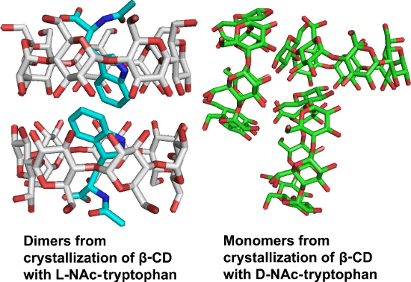
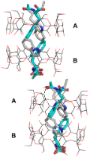
- (after the appropriate transformation of coordinates due to different origin and axes; Supporting Information File 1, Figures S4 and S5) that the hydrated β-CD macrocycle does not superpose exactly in the lattice of “β-CD–D-NAcTrp”, which may render the two structures not quite isomorphous. It is worth
- noting that many of the hydrated β-CD structures [29][33][34][35], as well as several monomeric β-CD complexes [32][36][37] are determined in lattices with different origin or interchanged crystallographic axes or even inverse coordinates (Supporting Information File 1, Figure S4). Further, by
- -CD dimer; NMR data (Job plots and 2D maps of the observed dipolar interactions); packing, origin selection and comparison of monomeric β-CD complexes; modeling results of D-NAcTrp/β-CD. Acknowledgements The financial support of the following programs is kindly acknowledged: European Program FP7




Chemical systems, chemical contiguity and the emergence of life
Beilstein J. Org. Chem. 2017, 13, 1551–1563, doi:10.3762/bjoc.13.155
- towards a simpler origin, is used, the fact that contemporary biomolecules and biochemical molecular assemblies, and their precursors themselves are likely optimized products of a long evolutionary process [4] renders this endeavor quite difficult. Hence, researchers in the field have tended to pursue
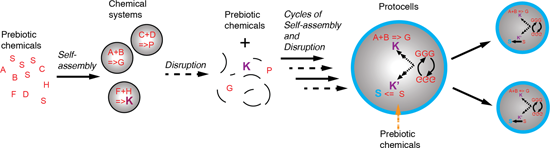
- these experiments. This short, necessarily selective, overview clearly underscores the necessity of new approaches, a fact that has led many researchers to propose the concept of chemical systems [22][23]. That is, the origin(s) of life, which is(are) hallmarked by the appearances of emergent properties
- reports on chemical systems, we will highlight the potential of the “chemical system” approach for the investigation of the origin of pre-cellular systems and protocells. What are chemical systems? Chemical systems are defined here as chemical mixtures comprising a network or set of interacting molecules


Photocatalyzed synthesis of isochromanones and isobenzofuranones under batch and flow conditions
Beilstein J. Org. Chem. 2017, 13, 1456–1462, doi:10.3762/bjoc.13.143
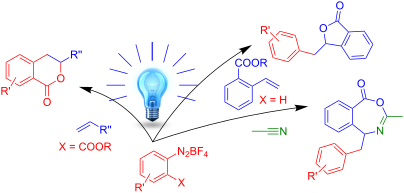
- -diphenylethanol was isolated, although the origin of water was not clear (possibly trapped by the diazonium salts during crystallization since, due to their potential explosivity in the dry state, they were not dried under vacuum). At this stage we postulated that A could be more favourably attacked in an


Framing major prebiotic transitions as stages of protocell development: three challenges for origins-of-life research
Beilstein J. Org. Chem. 2017, 13, 1388–1395, doi:10.3762/bjoc.13.135
- success of molecular biology led a whole generation of origin-of-life researchers to believe that the initial steps towards life could be performed by molecules of a single kind (not embedded in a wider chemical organisation). Then, for years, a strong debate was established in the field about, precisely
- coupling chemistry with the constrained spatial diffusion of the molecules involved [10][11]. Therefore, given the cellular nature of all life known on our planet, and given the importance of compartmentalized chemistries for understanding many biological phenomena, it may be productive to try origin-of

Biomimetic molecular design tools that learn, evolve, and adapt
Beilstein J. Org. Chem. 2017, 13, 1288–1302, doi:10.3762/bjoc.13.125
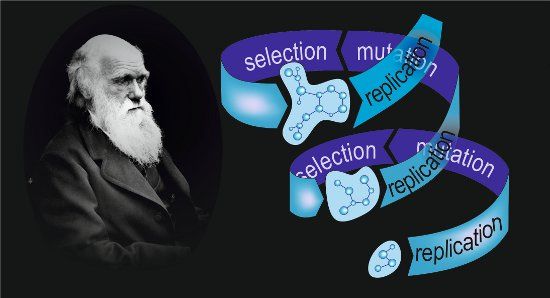
- for the design and discovery of novel technologies, materials, and molecules has its origin in two seemingly unrelated historical figures. Charles Darwin and Josiah Wedgwood Many are not aware that, arguably, one of the first ‘combinatorial’ materials scientists was Josiah Wedgwood. His ultimate





Towards open-ended evolution in self-replicating molecular systems
Beilstein J. Org. Chem. 2017, 13, 1189–1203, doi:10.3762/bjoc.13.118
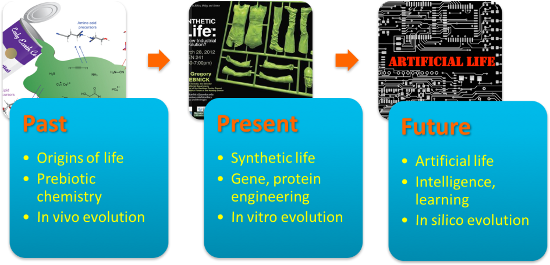
- discuss systems of self-replicating molecules in the context of the origin of life and the synthesis of de novo life. One of the important aspects of life is the ability to reproduce and evolve continuously. In this review we consider some of the prerequisites for obtaining unbounded evolution of self
- understanding of how life could have emerged from molecular building blocks and what is needed to create a minimal form of life in the laboratory. Keywords: autocatalysis; open-ended evolution; origin of life; self-replication; synthetic life; Introduction Mankind has always pondered upon its own existence
- and has sought to understand the origin of life. This led us to trace back our roots, from the great apes to a last universal common ancestor, a simple cellular lifeform from which all other present-day organisms have descended. Ultimately this leads us to one of the great questions in science; how




Characterization of non-heme iron aliphatic halogenase WelO5* from Hapalosiphon welwitschii IC-52-3: Identification of a minimal protein sequence motif that confers enzymatic chlorination specificity in the biosynthesis of welwitindolelinones
Beilstein J. Org. Chem. 2017, 13, 1168–1173, doi:10.3762/bjoc.13.115
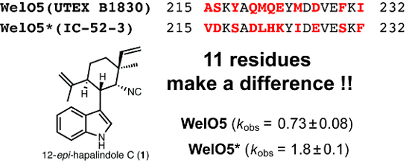
- -52-3 has an enhanced substrate specificity towards 12-epi-hapalindole C (1) in comparison to WelO5 in H. welwitschii UTEX B1830. This allowed us to define the origin of the varied chlorinated versus dechlorinated alkaloid structural diversity between the two welwitindolinone producers. Furthermore
- chimera revealed that a C-terminal sequence motif plays a role in the substrate tolerance and provided insights into the origin of substrate promiscuity in this family of proteins [18]. In this work, we report the characterization of the third WelO5-type protein, WelO5*, for the biogenesis of
- basis for the altered structural diversity of hapalindole-type alkaloids between the two welwitindolinone producers. The extreme sequence similarity (95% identical) between WelO5* and WelO5 allowed us to trace the origin of this observed specificity difference to 11 amino acid residues at a C-terminal


Glycoscience@Synchrotron: Synchrotron radiation applied to structural glycoscience
Beilstein J. Org. Chem. 2017, 13, 1145–1167, doi:10.3762/bjoc.13.114
- that bind to internal carbohydrate motifs. This is a mechanism typically found in bacterial polysaccharides. There is an occurrence of very large cavities which are open at both ends. The “side-on” entry of the antigen is often at the origin of the occurrence of conformational antigens
- complexity of starch in terms of the nature and size of its macromolecular components (amylopectin, amylose) has always been an obstacle to the elucidation of the structural components and their arrangements, which are at the origin of the birefringence of a starch granule. The structure of the crystalline
- cellular material, which indicated the occurrence of “two-dimensional’ crystals that could be further investigated by wide-angle X-ray diffraction [90]. Starch: Depending upon their botanical origin, starch granules display an elliptical shape with dimensions ranging from 0.1 to 100 µm. The advent of micro


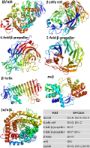


From chemical metabolism to life: the origin of the genetic coding process
Beilstein J. Org. Chem. 2017, 13, 1119–1135, doi:10.3762/bjoc.13.111
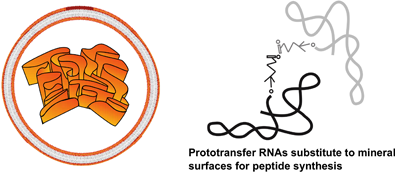
- that envelops us. Conjectures about the origins of life do not escape this unfortunate shortcoming. Even the quest for our own origin is far from settled: There is no Adam or Eve in the origin of mankind. If you doubt, just try to work out a single-step process that would account for a change from a
- set of 48 chromosomes (their number in apes) to 46 (their number in man) in a sexed species. Starting with accidental fusion of two chromosomes, a ratchet-like continuum of changes must have distanced us from our ape ancestors. In the same way, it is implausible that there was only one origin of life
- , as unfortunately many still try to call forth. Thirty years ago, Freeman Dyson provided a convincing demonstration that, contrary to the widespread "adamist" view, which looks for a single origin to all things, there were at least two origins of life [1]. He established that before the emergence of



Aggregation behaviour of a single-chain, phenylene-modified bolalipid and its miscibility with classical phospholipids
Beilstein J. Org. Chem. 2017, 13, 995–1007, doi:10.3762/bjoc.13.99
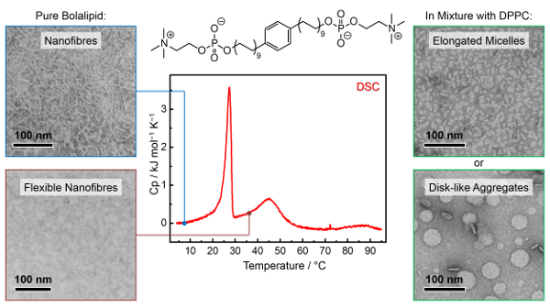
- subtracted from the thermogram of the sample, and the DSC scans were evaluated using MicroCal Origin 8.0 software. Fourier-transform infrared spectroscopy (FTIR) Infrared spectra were collected using a Bruker Vector 22 Fourier transform spectrometer with DTGS detector operating at 2 cm−1 resolution. The



Total synthesis of TMG-chitotriomycin based on an automated electrochemical assembly of a disaccharide building block
Beilstein J. Org. Chem. 2017, 13, 919–924, doi:10.3762/bjoc.13.93
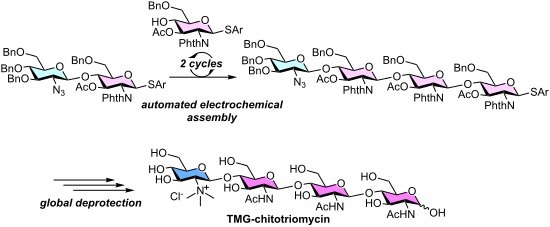
- . Proposed mechanism and origin of the selectivity. Synthesis of TMG-chitotriomycin precursor 7. Synthess of TMG-chitotriomycin (1). Synthesis of disaccharide donors. Supporting Information Supporting Information File 120: Experimental details of electrochemical glycosylation, global deprotection, and NMR


Synthesis of tetrasubstituted pyrazoles containing pyridinyl substituents
Beilstein J. Org. Chem. 2017, 13, 895–902, doi:10.3762/bjoc.13.90
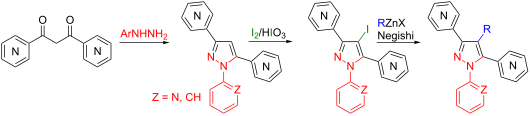
- [3,4-a]quinolizin-6-ium structure 12 was established, which was confirmed by single crystal X-ray structure analysis (see Supporting Information File 1), proving also iodide as the corresponding anion [39] which acts as a leaving group in the coupling reaction and also could origin from the CuI co


Expression, purification and structural analysis of functional GABA transporter 1 using the baculovirus expression system
Beilstein J. Org. Chem. 2017, 13, 874–882, doi:10.3762/bjoc.13.88
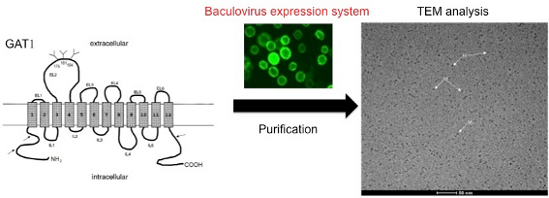
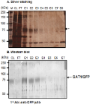
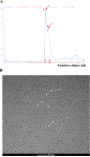
- peptides from primary sequence databases with Mascot (http://www.matrixscience.com/). The biological function of recombinant proteins of mammalian origin expressed in insect cells may be altered by different N-glycan status. We observed that the terminal sialic acid residues are essential for the GABA



Lipids: fatty acids and derivatives, polyketides and isoprenoids
Beilstein J. Org. Chem. 2017, 13, 793–794, doi:10.3762/bjoc.13.78
- was likely a crucial process for the origin of life – and certainly still is for all existing living systems that necessarily contain lipid membranes with their interesting and finely balanced biophysical properties. In prokaryotes, these membranes define the outer surface of individual cells, while
- fundamentally different biosynthetic origin from fatty acids since they are made via terpene biosynthetic pathways. Nevertheless, steroids are highly apolar yet may contain a polar headgroup such as a 3-hydroxy function (as in lanosterol). Besides membrane formation, the highly apolar character of lipids has
Fluorescent carbon dots from mono- and polysaccharides: synthesis, properties and applications
Beilstein J. Org. Chem. 2017, 13, 675–693, doi:10.3762/bjoc.13.67
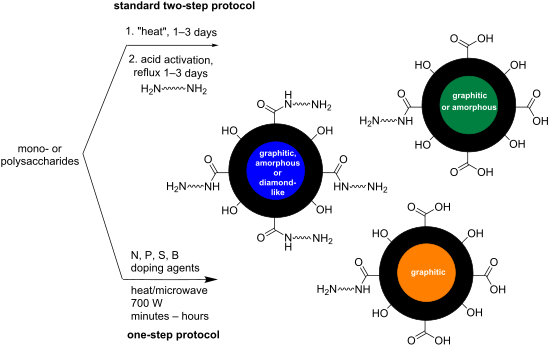
- gave blue-green emission, whereas phosphoric acid-mediated CD formation gave particles with red-shifted emission profiles (Red-CD). Interestingly, Red-CDs only had stable red emission in strong acidic conditions; changing to green emission in neutral or basic pH. The origin of the tuneable fluorescence


How and why kinetics, thermodynamics, and chemistry induce the logic of biological evolution
Beilstein J. Org. Chem. 2017, 13, 665–674, doi:10.3762/bjoc.13.66
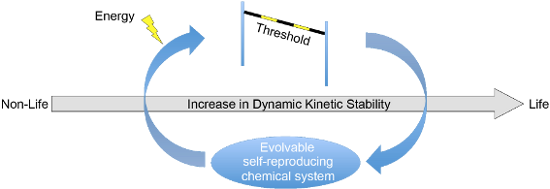
- origin of life constitutes a well-established field of research in chemical science [1] even though identifying the actual pathway by which life emerged on the early Earth will likely forever remain out of reach. The corresponding historical events left no record owing to the instability of the chemical
- hypothesis failed to eliminate the fundamental dilemma, as it led to conflicting so-called genetic and metabolic approaches to the origin of life [15]. Actually, as early as 1922, Lotka’s pioneering work, through two consecutive articles published in the same issue of PNAS and entitled “Contribution to the
- energetics of evolution” [16] and “Natural selection as a physical principle” [17], respectively, considered both approaches to the problem in order to account for the specificity of life (though the issue of the origin was not mentioned). This simple fact demonstrates how intimately bound he considered the



Conjecture and hypothesis: The importance of reality checks
Beilstein J. Org. Chem. 2017, 13, 620–624, doi:10.3762/bjoc.13.60
- alternative hypotheses as a way to advance our understanding of how life can begin on the Earth and other habitable planets. As an example of how this approach can be used, two conditions have been proposed for sites conducive to the origin of life: hydrothermal vents in salty seawater, and fresh water
- hydrothermal fields associated with volcanic landmasses. These are considered as alternative hypotheses and the accumulating weight of evidence for each site is described and analyzed. Keywords: hydrothermal fields; hydrothermal vents; origin of life; polymerization by condensation; protocells; Introduction
- thousands of scientists investigating health related research or chemistry and physics having applications in industry. Another reason is that the origin of life is best understood in interdisciplinary terms involving knowledge of astronomy, planetary science, biophysics, chemistry and biochemistry
Secondary metabolome and its defensive role in the aeolidoidean Phyllodesmium longicirrum, (Gastropoda, Heterobranchia, Nudibranchia)
Beilstein J. Org. Chem. 2017, 13, 502–519, doi:10.3762/bjoc.13.50
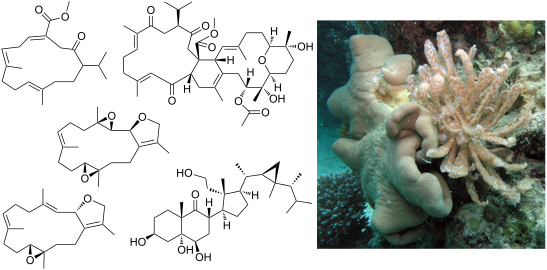
- carbon assignments were done according to correlations obtained in a HSQC experiment. The absence of 13C NMR resonances for sp2 hybridized carbons for C=C bonds, together with a RDE of five indicated the presence of several rings in 1, likely of steroid origin. The latter is supported by
- against omnivorous fish, it is possible that some of the numerous secondary metabolites found in this study could be useful against a wider range of predators. In summary, chemical investigation of a single large P. longicirrum specimen resulted in isolation of 19 secondary metabolites of terpenoid origin



Biosynthetic origin of butyrolactol A, an antifungal polyketide produced by a marine-derived Streptomyces
Beilstein J. Org. Chem. 2017, 13, 441–450, doi:10.3762/bjoc.13.47
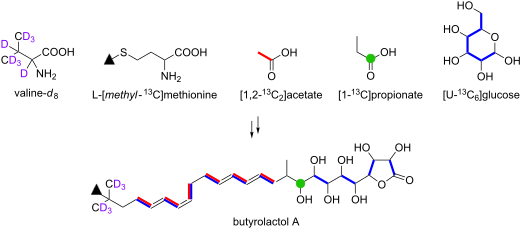
- predicted as the origin of the methyl-branched three-carbon fragment (C-9/C-10/C-28). Actually, intense enhancement of the C-9 carbon signal was observed by feeding of [1-13C]propionate (Table 1). The remaining carbons not labeled by malonate-type precursors were the terminal tert-butyl carbons (C-23 to C
- -27). The origin of the tert-butyl group in polyketide biosynthesis is still unknown, however, the tert-butyl functionality of bottromycin and polytheonamide was shown to be produced by radical C-methylation of the isopropyl group of valine [31][32]. By analogy, the tert-butyl portion of 1 was most
- coding for C-methyltransferase are not present near the butyrolactol PKS genes. Further enzymatic studies are necessary to establish the order of the starter loading/C-methylation events. Conclusion In summary, we elucidated the biosynthetic origin of butyrolactol A (1) on the basis of the feeding