


Search results
Search for "pyrrolidine" in Full Text gives 267 result(s) in Beilstein Journal of Organic Chemistry. Showing first 200.
Development of variously functionalized nitrile oxides
Beilstein J. Org. Chem. 2015, 11, 1241–1245, doi:10.3762/bjoc.11.138
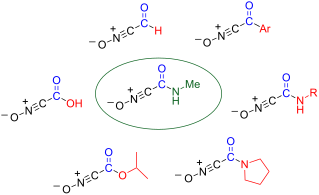
- °C was required for the substitution reaction by sec-butylamine. However, in the case of tert-butylamine, even when the reaction was conducted in a sealed tube at 120 °C, only a small amount of amide was observed (Table 2, entries 7–10). On the other hand, a cyclic secondary amine, pyrrolidine


Synthesis of multivalent carbohydrate mimetics with aminopolyol end groups and their evaluation as L-selectin inhibitors
Beilstein J. Org. Chem. 2015, 11, 638–646, doi:10.3762/bjoc.11.72
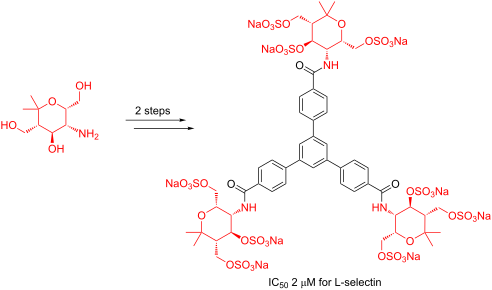
- attempts changing reaction time and equivalents of protected aminopyran 3 and succinic acid dichloride, neither the desired product 6 nor the corresponding pyrrolidine-2,5-dione resulting from an intramolecular reaction were formed. It was quite unexpected that we could not achieve this transformation


Novel stereocontrolled syntheses of tashiromine and epitashiromine
Beilstein J. Org. Chem. 2015, 11, 596–603, doi:10.3762/bjoc.11.66

- –cyclization [27], or electrophilic pyrolidinone alkylation followed by ring closure [28][29]. Pyrrolidine alkylation and nucleophilic ring closure followed by C–C double bond hydroboration [30] leads to racemic epitashiromine, as does the N-alkylated succinimide transformation through the corresponding
- intramolecular cyclization of a chiral alkenylated pyrrolidinone, followed by hydroxylation [32], or by the intramolecular ring closure of chiral pyrrolidine diesters followed by ester and oxo group reduction [33], while the syntheses of (+)-epitashiromine starts from a chiral morpholine derivative, with nitrone
- pyrrole, followed by saturation [37]. The transformation of chiral functionalized pyrrole or pyrrolidine derivatives has served as the basis of the construction of (−)-epitashiromine [38][39] (Figure 4). The oxidative functionalization of cyclic β-amino acid derivatives has been reported to be a


Attempts to prepare an all-carbon indigoid system
Beilstein J. Org. Chem. 2015, 11, 363–372, doi:10.3762/bjoc.11.42

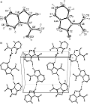
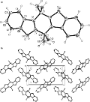
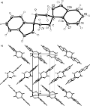
- mirror symmetry (rmsd 0.04 Å). Our final attempt for the present to prepare a precursor hydrocarbon for an all-carbon indigoid system rests on the observation that the Thiele condensation of indene (6) with acetone in pyrrolidine/methanol yields the benzofulvene 29 (Scheme 6). A suitable methylene







The Shono-type electroorganic oxidation of unfunctionalised amides. Carbon–carbon bond formation via electrogenerated N-acyliminium ions
Beilstein J. Org. Chem. 2014, 10, 3056–3072, doi:10.3762/bjoc.10.323
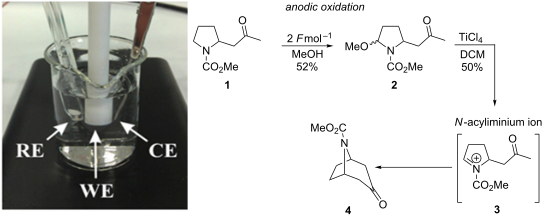
- functionalise a pyrrolidine or piperidine carbamate [86][87]. A lithium perchlorate–nitromethane system was used to prepare electrochemically azanucleoside derivatives [88]. Unactivated prolinol derivatives underwent anodic oxidation to generate N-acyliminium ions that were intercepted by nucleophilic bases
- into the synthesis of functionalised peptides and peptidomimetics using the anode oxidation strategy [91][92][93][94][95]. The anodic oxidation of pyrrolidine derivatives and silylated peptides afforded a variety of bicyclic lactam peptidomimetics and functionalised peptides (Scheme 22) [91][92][94


Recent advances in the electrochemical construction of heterocycles
Beilstein J. Org. Chem. 2014, 10, 2858–2873, doi:10.3762/bjoc.10.303
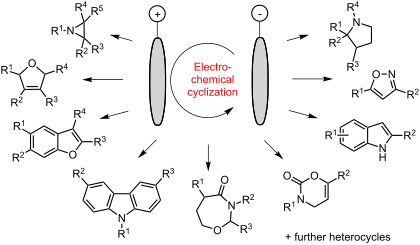
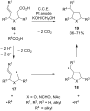
- , resulting in N-tosylated pyrrolidine products (Scheme 2, X = NHTs) [35][36]. The reactions can be carried out under galvanostatic conditions (C.C.E. = constant current electrolysis) at room temperature in an undivided cell using a vitreous carbon anode. The presence of a proton scavenger is necessary in




A new charge-tagged proline-based organocatalyst for mechanistic studies using electrospray mass spectrometry
Beilstein J. Org. Chem. 2014, 10, 2027–2037, doi:10.3762/bjoc.10.211
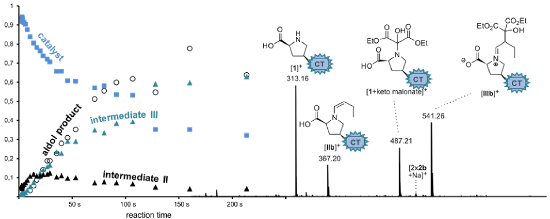
- -((3S,5S)-1,5-Bis(tert-butoxycarbonyl)pyrrolidine-3-yloxy)phenyl)-1-ethylpyridinium bromide (9): (2S,4S)-tert-Butyl N-tert-butoxycarbonyl-4-(4-(pyridine-4-yl)phenoxy)prolinate (8, 0.22 g, 0.5 mmol) was dissolved in bromoethane (13.0 mL, 174.2 mmol), heated to 43 °C and stirred for 5 d. Bromoethane was



Pyrrolidine nucleotide analogs with a tunable conformation
Beilstein J. Org. Chem. 2014, 10, 1967–1980, doi:10.3762/bjoc.10.205
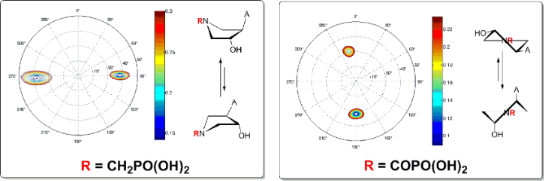
- Lenka Postova Slavetinska Dominik Rejman Radek Pohl Institute of Organic Chemistry and Biochemistry, Academy of Sciences of the Czech Republic, Flemingovo nám. 2, 166 10 Prague 6, Czech Republic 10.3762/bjoc.10.205 Abstract Conformational preferences of the pyrrolidine ring in nucleotide analogs
- 7–14 were investigated by means of NMR and molecular modeling. The effect of the relative configuration of hydroxy and nucleobase substituents as well as the effect of the alkylation or acylation of the pyrrolidine nitrogen atom on the conformation of the pyrrolidine ring were studied. The results
- of a conformational analysis show that the alkylation/acylation can be effectively used for tuning the pyrrolidine conformation over the whole pseudorotation cycle. Keywords: conformation; NMR; nucleic acids; nucleotide analog; phosphonic acid; pseudorotation; pyrrolidine; Introduction Nucleotides


Facile synthesis of 1-alkoxy-1H-benzo- and 7-azabenzotriazoles from peptide coupling agents, mechanistic studies, and synthetic applications
Beilstein J. Org. Chem. 2014, 10, 1919–1932, doi:10.3762/bjoc.10.200
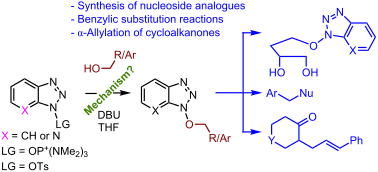
- ][1,2,3]triazole, via in situ formation of pyrrolidine enamines and Pd catalysis. Keywords: alkoxy; azabenzotriazole; benzotriazole; peptide-coupling; phosphonium; Introduction Benzotriazole derivatives are of importance in diverse contexts. As examples, in medicinal chemistry substituted benzotriazoles
- ]. Exposure of 1.5 molar equiv each of cyclohexanone, N-benzylpiperidone, and 4-tert-butylcyclohexanone to compound 1g, Pd(PPh3)4 (5 mol %), and pyrrolidine (30 mol %) in DMSO at room temperature, led to the corresponding γ,δ-unsaturated cycloalkanones (Figure 4). Good yields of products 18 and 19 were
- , the enamine was formed in situ in this study, with catalytic pyrrolidine. These results appear to indicate that the easily synthesized allylic benzotriazolyl derivatives described herein may be promising reagents for the α-allylation of carbonyl compounds. As a final note, while this work was in


Synthesis of rigid p-terphenyl-linked carbohydrate mimetics
Beilstein J. Org. Chem. 2014, 10, 1749–1758, doi:10.3762/bjoc.10.182
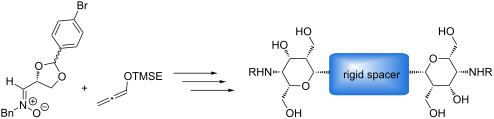
- close proximity to the C-5 hydroxy group and leads to a nucleophilic substitution under formation of the pyrrolidine moiety. This process is possibly promoted by samarium(III) which can act as Lewis acid and by the steric demanding TBS group which decreases the distance between the two functional groups
- hydrogenolysis, zinc/acid or samarium diiodide were tested. For each of the substrates the suitable method has to be found. By the N–O bond cleavage of compound 12a with samarium diiodide an unexpected bicyclic pyrrolidine derivative 24 was isolated. The prepared unnatural C-aryl glycosides could find


Multicomponent reactions in nucleoside chemistry
Beilstein J. Org. Chem. 2014, 10, 1706–1732, doi:10.3762/bjoc.10.179
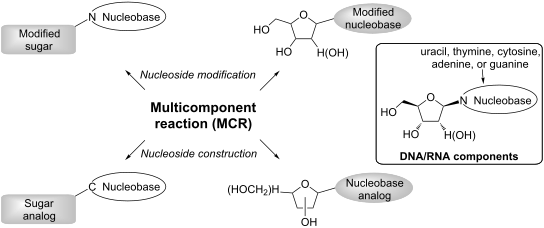
- a secondary amine (i.e., dimethylamine [49][50], diethylamine [51][52], N-methylbenzylamine [49], pyrrolidine [53][54], or piperidine [55][56]) at temperatures ranging from 60 °C to 100 °C afforded the corresponding 5-(alkylaminomethyl)pyrimidine nucleosides 2 (Scheme 2). Compounds 2 served as
- non-nucleoside substrates (Schemes 7–9). Filichev et al. used pyrrolidine 16, paraformaldehyde and uracil for the preparation of the Mannich base 17, which is considered as an 1'-aza-analog of pseudouridine (Scheme 7) [66]. Information on application of compound 17 was not given. By employing
- pyrrolidine hydrochlorides 16*HCl or 20a–c*HCl (Scheme 8), Evans et al. developed a concise synthesis of 1'-aza-analogs of immucilins, compounds 19 and 21 [67]. The amine hydrochlorides were treated in aq acetate buffer with aq formaldehyde and 9-deazaguanine 18a or a variety of deazapurines 18b–e. The


Solid-phase-supported synthesis of morpholinoglycine oligonucleotide mimics
Beilstein J. Org. Chem. 2014, 10, 1151–1158, doi:10.3762/bjoc.10.115
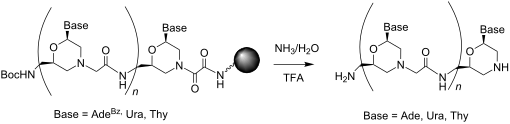
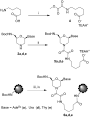
- positively charged centers in oligonucleotide analogues results in increased water solubility and higher thermal stability of complementary duplexes of such oligonucleotide mimics with nucleic acids [14][15]. Some conformationally restricted protonated PNA or pyrrolidine oligonucleotide mimics exhibit



Preparation of phosphines through C–P bond formation
Beilstein J. Org. Chem. 2014, 10, 1064–1096, doi:10.3762/bjoc.10.106
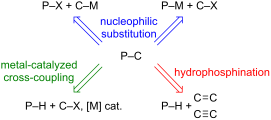
- reaction with chiral pyrrolidine 62 derivatives and acid (Scheme 16). Subsequent treatment with sodium borohydride forms the air-stable phosphine–borane product and also reduces the aldehyde. The method gives compounds 61 in high yields and enantioselectivities (ee up to 99%) for α,β-unsaturated aldehydes


Site-selective covalent functionalization at interior carbon atoms and on the rim of circumtrindene, a C36H12 open geodesic polyarene
Beilstein J. Org. Chem. 2014, 10, 956–968, doi:10.3762/bjoc.10.94
- ] cycloadditions, the reaction with azomethine ylides has found great popularity, because it leads to versatile pyrrolidine derivatives of C60. The sources of the ylide can be iminium salts, aziridines, oxazolidines or silylated iminium compounds. In 1993, Prato and coworkers developed the protocol that is now
- used most commonly [31][32]. In the first step, an N-substituted amino acid (e.g., N-methylglycine) reacts with an aldehyde or ketone to generate an azomethine ylides in situ. Trapping of the ylide by a fullerene provides a fullerene-pyrrolidine derivative (8), as illustrated in Scheme 1. In light of
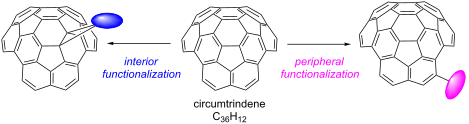
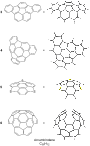
- circumtrindene in refluxing benzene to give the pyrrolidine derivative 24 (Scheme 7). As in the Bingel–Hirsch reaction, the 1,3-dipole reacts exclusively with the 6:6-bond in circumtrindene that contains the most pyramidalized carbon atoms in the molecule. Considering the [3 + 2] cycloaddition processes in terms




Molecular architecture with carbohydrate functionalized β-peptides adopting 314-helical conformation
Beilstein J. Org. Chem. 2014, 10, 948–955, doi:10.3762/bjoc.10.93
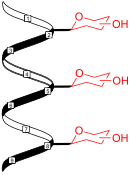
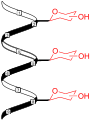
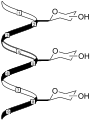
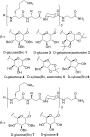
- conformationally constrained and well-defined scaffold for sugar presentation on a 314-helix [18][19][20] as well as on a β-peptide 312-helical scaffold obtained by oligomerization of glycosylated pyrrolidine β-amino acids [35]. Glycopeptide or glycoprotein synthesis is challenged by different conditions required


Aza-Diels–Alder reaction between N-aryl-1-oxo-1H-isoindolium ions and tert-enamides: Steric effects on reaction outcome
Beilstein J. Org. Chem. 2014, 10, 848–857, doi:10.3762/bjoc.10.81
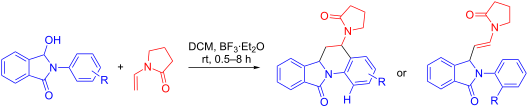
- and strongly basic conditions [19]. Kang et al. achieved a highly enantioselective synthesis of an isoindolo[2,1-a]quinoline derivative by affecting an intramolecular ring closure on (E)-3-(2-(isoindolin-2-yl)phenyl)acrylaldehyde using camphorsulfonic acid and a chiral pyrrolidine organocatalyst [20


Copper–phenanthroline catalysts for regioselective synthesis of pyrrolo[3′,4′:3,4]pyrrolo[1,2-a]furoquinolines/phenanthrolines and of pyrrolo[1,2-a]phenanthrolines under mild conditions
Beilstein J. Org. Chem. 2014, 10, 692–700, doi:10.3762/bjoc.10.62
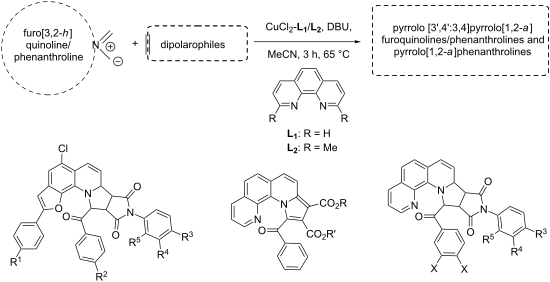
- [1][2][3][4][5][6][7][8][9]. These ylides, both stabilized or non-stabilized 1,3-dipoles, can easily enter the reaction independent of their stability and lead to the formation of a pyrrolidine core, a structural motif of immense interest from both chemical and pharmacological points of view [10]. In
- structure of 10a was deduced from the appearance of a new doublet of doublets at δ 5.50 and δ 6.20. Another doublet at δ 3.90 and a new multiplet at δ 3.50 also indicated the success of the reaction, as these signals could be attributed to the new pyrrolidine core. Besides, the cluster in the aromatic
- region (δ 6.60–8.50) indicated the presence of 19 aromatic protons in the cycloadduct 10a. This interpretation was also well supported by the 13C NMR of 10a. Peaks for the four sp3-methine carbons of the newly formed pyrrolidine motif appeared at δ 47.2, 47.4, 61.0 and 66.5 as expected. Two methine


Isocyanide-based multicomponent reactions towards cyclic constrained peptidomimetics
Beilstein J. Org. Chem. 2014, 10, 544–598, doi:10.3762/bjoc.10.50

- , oxazoles, thiazoles and triazoles incorporated into peptide structures will be described. Pyrrolidines 2-substituted pyrrolidine-based dipeptide mimics were obtained from an Ugi-4CR followed by a Pd-catalyzed Sn2 cyclization as described by Banfi et al. [51] . Herein, the Ugi reaction provided a small
- library of acyclic products (Scheme 11), in which the isocyanide input 30 was derived from the corresponding amine via an N-formylation/dehydration sequence [52]. An additional palladium-catalyzed cyclization gave the pyrrolidine mimics 32 in excellent yields and modest to good selectivities (de 8–78
- %). In addition, the mild conditions tolerate a wide range of Ugi-substrates, resulting in a broad range of different pyrrolidine mimics 32. A more straightforward method [53] includes a single Joullié-Ugi 3CR using previously described alkyl substituted cyclic imines [54] giving the cyclic constraint


Concise, stereodivergent and highly stereoselective synthesis of cis- and trans-2-substituted 3-hydroxypiperidines – development of a phosphite-driven cyclodehydration
Beilstein J. Org. Chem. 2014, 10, 369–383, doi:10.3762/bjoc.10.35
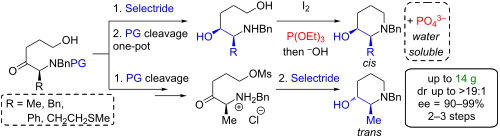
- ring expansions of 2-(α-hydroxyalkyl)pyrrolidines deduced to proline. 3. Based on the ring expansion of Cossy and Pardo [37], O´Brien [39] realized the synthesis of L-733,060 (80% ee). The 2-(α-hydroxyalkyl)pyrrolidine precursor was prepared from a protected pyrrolidine through sparteine-mediated
- : Pyrrolidine 13a was formed in 80% yield after hydrolysis of the phosphate and in 81% yield after extraction of triethylphosphate with EtOAc (×5) while keeping the product 13a as the hydrochloride salt in the aqueous phase (Table 3, entries 1 and 2). Surprisingly, with the higher homologue 12b the piperidine


Additive-assisted regioselective 1,3-dipolar cycloaddition of azomethine ylides with benzylideneacetone
Beilstein J. Org. Chem. 2014, 10, 352–360, doi:10.3762/bjoc.10.33
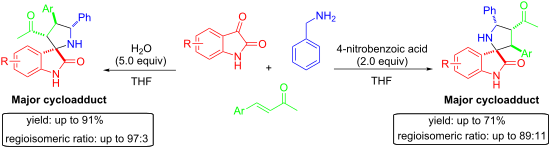
- prepare a series of novel spiropyrrolidine-oxindoles – 4′-acetyl-3′,5′-diarylspiro[indoline-3,2′-pyrrolidin]-2-ones and 3′-acetyl-4′,5′-diarylspiro[indoline-3,2′-pyrrolidine]-2-ones in good yields of up to 94% and with good regioselectivities. Regioselectivities are reversible by the addition of water or
- -constructed pyrrolidine. However, unsaturated ketones with α-hydrogens such as benzylideneacetone, which have attracted great interest due to their synthetic potential [40][41][42], have not been exhaustively studied as suitable dipolarophiles for 1,3-dipolar cycloadditions of azomethine ylides to prepare




Tuning the interactions between electron spins in fullerene-based triad systems
Beilstein J. Org. Chem. 2014, 10, 332–343, doi:10.3762/bjoc.10.31
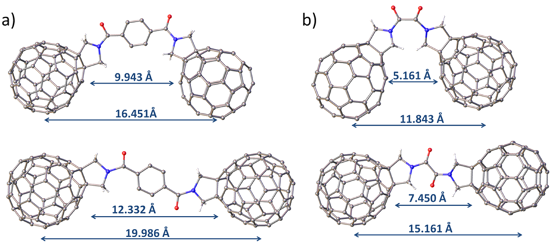
- the nature of the fullerene cages resulting in the preparation of six fullerene–linker–fullerene (triad) compounds (Figure 1). The fullerenes were functionalised via Prato reaction chemistry forming a pyrrolidine ring across the [6.6] bond of the cage [21]. The resulting pyrrolidine functionalised
- suggest that this difference alone is too small to explain the position of these features. We note also that 2 and 5 are mixtures of two regioisomers of the pyrrolidine functionalised C70 [19], in a ratio of 6:4 as determined by 1H NMR spectroscopy (see Experimental section). It is possible that these
- range (26–29 G) as that observed for other triplet biradicals of pyrrolidine-functionalised C60 derivatives in C60–bridge–C60 triads [15][28] and gives an average distance of 10 Å between the unpaired electrons [16], a distance well within the range predicted by models of 4 (Figure S4b, Supporting


Organocatalytic asymmetric fluorination of α-chloroaldehydes involving kinetic resolution
Beilstein J. Org. Chem. 2014, 10, 323–331, doi:10.3762/bjoc.10.30
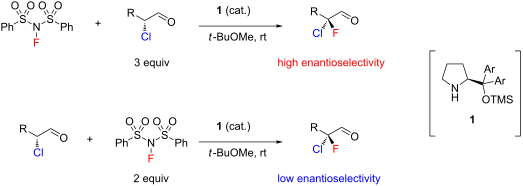
- to form iminium intermediate I, which undergoes deprotonation from the side opposite to the bulky substituent X (X = CAr2OTMS) of the pyrrolidine ring to afford enamine intermediate (Z)-11 (path A). Then, NFSI attacks (Z)-11 from the side opposite to X to yield (R)-3a. Although deprotonation may also
- steric repulsion between the methylene group on the pyrrolidine ring and the benzyl substituent on 2a. Alternatively, (S)-2a reacts with (S)-1 to form iminium intermediate II, which also undergoes deprotonation to form (E)- or (Z)-11. In these cases, deprotonation from the side opposite to X (path C) is


Total synthesis and cytotoxicity of the marine natural product malevamide D and a photoreactive analog
Beilstein J. Org. Chem. 2014, 10, 316–322, doi:10.3762/bjoc.10.29
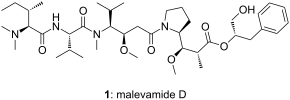
- separated in the 13C NMR spectrum are, for instance, the ester carbonyl signals of the conformers (174.0 and 173.3 ppm), the carbonyl signals of the pyrrolidine amide (170.5 and 170.6 ppm), and all phenyl carbon signals. Of the eastern section, only three of the four pyrrolidine carbon signals are broad
- belonging to different signal sets are located at δH 3.84 (one of the diastereotopic OCH2 signals) and 5.21 ppm (acylated carbinol). The two sets of signals are probably caused by the presence of both conformers of the acyl pyrrolidine. An assignment of the data sets to either of the two conformers was not
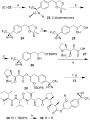
- afforded building block 26. Coupling with Boc-protected dolaproine (27, DCC/DMAP/CSA) yielded ester 28 as a mixture of two diastereomers. After deprotection of the pyrrolidine, coupling with tripeptide 12 afforded O-silylated diazirinyl-substituted malevamide D (29, 68%). Desilylation (TBAF, THF/H2O 19:1




The regioselective synthesis of spirooxindolo pyrrolidines and pyrrolizidines via three-component reactions of acrylamides and aroylacrylic acids with isatins and α-amino acids
Beilstein J. Org. Chem. 2014, 10, 117–126, doi:10.3762/bjoc.10.8
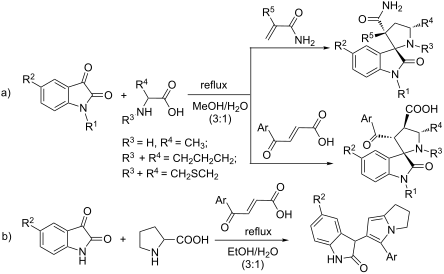
- their inherent rigid chiral structure. The spirooxindolo pyrrolidine and pyrrolizidine frameworks form core units of many naturally occurring molecules possess significant pharmacological activities. Among them are alkaloids such as horsfiline from Horsfieldia superbа [1][2][3], elacomine from Elaeagnus
- inhibitors there are compounds containing a pyrrolidine-2-one as a part of the spirocyclic system [34]. In the present work we report the synthesis of spirooxindolo pyrrolidines and pyrrolizidines by utilizing a 1,3-dipolar cycloaddition of hitherto uninvestigated acrylamides and aroylacrylic acids with
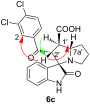
- pyrrolidine/pyrrolizidine ring give singlets at 10.25 and 12.67 ppm, respectively. Therefore, the correct stereochemistry can be drawn as shown in Figure 3. The 13C NMR spectrum of compound 6c shows a characteristic peak at 73 ppm due to the spiro carbon nucleus. A single crystal X-ray study of compound 6a




Studies on the interaction of isocyanides with imines: reaction scope and mechanistic variations
Beilstein J. Org. Chem. 2014, 10, 12–17, doi:10.3762/bjoc.10.3
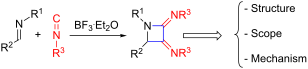
- ]. In a different experiment, the addition of a 9-fold excess of isocyanide 2a to the imine 1a under the usual conditions led to detection of tris(imino)pyrrolidine 5 (9%) as the minor product, and azetidine 3a as the major component (24%, Scheme 2). Structural elucidation Although we could confirm the
- insertion of the isocyanide moiety has been observed, the adduct being the tris(imino)pyrrolidine 5 (Scheme 4, route v). Conclusion As a summary, we have described structural and mechanistic features for the bis(imino)azetidines arising from the imine–isocyanide interaction, finding that the process





