


Search results
Search for "Kabachnik–Fields reaction" in Full Text gives 8 result(s) in Beilstein Journal of Organic Chemistry.
C2 to C6 biobased carbonyl platforms for fine chemistry
- Jingjing Jiang,
- Muhammad Noman Haider Tariq,
- Florence Popowycz,
- Yanlong Gu and
- Yves Queneau
Beilstein J. Org. Chem. 2025, 21, 2103–2172, doi:10.3762/bjoc.21.165

Graphical Abstract

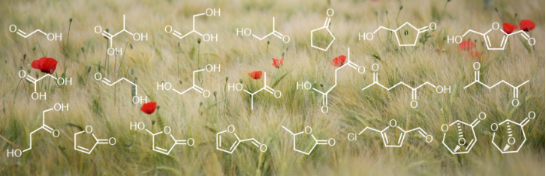
Figure 1: C2–C6 biobased carbonyl building blocks.

Scheme 1: Proposed (2 + 2) route to glycolaldehyde and glycolic acid from erythritol by Cu/AC catalyst (AC = ...

Scheme 2: Reductive amination of GCA.

Scheme 3: N-Formylation of secondary amines by reaction with GCA.

Scheme 4: Synthesis and conversion of hydroxy acetals to cyclic acetals.

Scheme 5: Synthesis of 3-(indol-3-yl)-2,3-dihydrofurans via three-component reaction of glycolaldehyde, indol...

Scheme 6: BiCl3-catalyzed synthesis of benzo[a]carbazoles from 2-arylindoles and α-bromoacetaldehyde ethylene...

Scheme 7: Cu/NCNSs-based conversion of glycerol to glycolic acid and other short biobased acids.

Scheme 8: E. coli-based biotransformation of C1 source molecules (CH4, CO2 and CO) towards C2 glycolic acid.

Scheme 9: N-Formylation of amines with C2 (a) or C3 (b) biomass-based feedstocks.

Scheme 10: Methods for the formation of propanoic acid (PA) from lactic acid (LA).

Scheme 11: Co-polymerization of biobased lactic acid and glycolic acid via a bicatalytic process.

Scheme 12: Oxidation of α-hydroxy acids by tetrachloroaurate(III) in acetic acid–sodium acetate buffer medium.

Figure 2: Selective catalytic pathways for the conversion of lactic acid (LA).

Scheme 13: Synthesis of 1,3-PDO via cross-aldol reaction between formaldehyde and acetaldehyde to 3-hydroxypro...

Scheme 14: Hydrothermal conversion of 1,3-dihydroxy-2-propane and 2,3-dihydroxypropanal to methylglyoxal.

Scheme 15: FLS-catalyzed formose reaction to synthesize GA and DHA.

Scheme 16: GCA and DHA oxidation products of glycerol and isomerization of GCA to DHA under flow conditions us...

Scheme 17: Acid-catalyzed reactions of DHA with alcohols.

Scheme 18: Synthesis of dihydroxyacetone phosphate from dihydroxyacetone.

Scheme 19: Bifunctional acid–base catalyst DHA conversion into lactic acid via pyruvaldehyde or fructose forma...

Scheme 20: Catalytic one-pot synthesis of GA and co-synthesis of formamides and formates from DHA.

Scheme 21: (a) Synthesis of furan derivatives and (b) synthesis of thiophene derivative by cascade [3 + 2] ann...

Scheme 22: Brønsted acidic ionic liquid catalyzed synthesis of benzo[a]carbazole from renewable acetol and 2-p...

Scheme 23: Asymmetric hydrogenation of α-hydroxy ketones to 1,2-diols.

Scheme 24: Synthesis of novel 6-(substituted benzylidene)-2-methylthiazolo [2,3-b]oxazol-5(6H)-one from 1-hydr...

Scheme 25: ʟ-Proline-catalyzed synthesis of anti-diols from hydroxyacetone and aldehydes.

Scheme 26: C–C-bond-formation reactions of a biomass-based feedstock aromatic aldehyde (C5) and hydroxyacetone...

Scheme 27: Ethanol upgrading to C4 bulk chemicals via the thiamine (VB1)-catalyzed acetoin condensation.

Scheme 28: One-pot sequential chemoenzymatic synthesis of 2-aminobutane-1,4-diol and 1,2,4-butanetriol via 1,4...

Scheme 29: Synthesis of 1,4-dihydroxybutan-2-one by microbial transformation.

Scheme 30: Conversion of polyols by [neocuproine)Pd(OAc)]2(OTf)2] to α-hydroxy ketones.

Scheme 31: Chemoselective oxidation of alcohols with chiral palladium-based catalyst 2.

Scheme 32: Electrochemical transformation of furfural to 5-hydroxy-2(5H)-furanone (HFO).

Scheme 33: Selective hydrodeoxygenation of HFO and oxidation to γ-butyrolactone (GBL).

Scheme 34: Photosensitized oxygenation of furan towards HFO via ozonide intermediates.

Scheme 35: Conversion of furfural to HFO and MAN by using mesoporous carbon nitride (SGCN) as photocatalyst.

Scheme 36: Synthesis of HFO from furan derivatives.

Scheme 37: Photooxidation of furfural to 5-hydroxy-2(5H)-furanone (HFO).

Scheme 38: Synthesis of Friedel–Crafts indole adduct from HFO.

Scheme 39: Conversion of HFO to α,γ-substituted chiral γ-lactones.

Scheme 40: Tautomeric transformation of HFO to formylacrylic acid.

Scheme 41: Hydrolysis of HFO to succinic acid in aqueous solution.

Scheme 42: Substitution and condensation reactions of 5-hydroxy-2(5H)-furanone (HFO).

Scheme 43: (a) Conversion of HFO towards valuable C4 chemicals and (b) anodic oxidation of 5-hydroxy-2(5H)-fur...

Figure 3: Conversion of HFO towards other natural and synthetic substances.

Scheme 44: Conversion of furfural to maleic anhydride (reaction a: VOx/Al2O3; reaction b: VPO).

Scheme 45: Conversion of furfural into succinic acid.

Scheme 46: Electro‑, photo‑, and biocatalysis for one-pot selective conversions of furfural into C4 chemicals.

Scheme 47: Production route of furfural from hemicellulose.

Scheme 48: Mechanism for xylose dehydration to furfural through a choline xyloside intermediate.

Scheme 49: Conversion of furfural to furfuryl alcohol and its derivatives.

Scheme 50: Conversion of furfural to furfuryl alcohol and 3-(2-furyl)acrolein.

Scheme 51: The aerobic oxidative condensation of biomass-derived furfural and linear alcohols.

Scheme 52: The single-step synthesis of 2-pentanone from furfural.

Scheme 53: Electrocatalytic coupling reaction of furfural and levulinic acid.

Scheme 54: Conversion of furfural to m-xylylenediamine.

Scheme 55: Conversion of furfural to tetrahydrofuran-derived amines.

Scheme 56: Formation of trans-4,5-diamino-cyclopent-2-enones from furfural.

Scheme 57: Production of pyrrole and proline from furfural.

Scheme 58: Synthesis of 1‑(trifluoromethyl)-8-oxabicyclo[3.2.1]oct-3-en-2-ones from furfural.

Scheme 59: Conversion of furfural to furfural-derived diacids.

Scheme 60: A telescope protocol derived from furfural and glycerol.

Scheme 61: A tandem cyclization of furfural and 5,5-dimethyl-1,3-cyclohexanedione.

Scheme 62: A Ugi four-component reaction to construct furfural-based polyamides.

Scheme 63: One-pot synthesis of γ-acyloxy-Cy7 from furfural.

Scheme 64: Dimerization–Piancatelli sequence toward humins precursors from furfural.

Scheme 65: Conversion of furfural to CPN.

Scheme 66: Synthesis of jet fuels range cycloalkanes from CPN and lignin-derived vanillin.

Scheme 67: Solar-energy-driven synthesis of high-density biofuels from CPN.

Scheme 68: Reductive amination of CPN to cyclopentylamine.

Scheme 69: Asymmetric hydrogenation of C=O bonds of exocyclic α,β-unsaturated cyclopentanones.

Scheme 70: Preparation of levulinic acid via the C5 route (route a) or C6 route (routes b1 and b2).

Scheme 71: Mechanism of the rehydration of HMF to levulinic acid and formic acid.

Scheme 72: Important levulinic acid-derived chemicals.

Scheme 73: Direct conversion of levulinic acid to pentanoic acid.

Scheme 74: Catalytic aerobic oxidation of levulinic acid to citramalic acid.

Scheme 75: Conversion of levulinic acid to 1,4-pentanediol (a) see ref. [236]; b) see ref. [237]; c) see ref. [238]; d) see r...

Scheme 76: Selective production of 2-butanol through hydrogenolysis of levulinic acid.

Scheme 77: General reaction pathways proposed for the formation of 5MPs from levulinic acid.

Scheme 78: Selective reductive amination of levulinic acid to N-substituted pyrroles.

Scheme 79: Reductive amination of levulinic acid to chiral pyrrolidinone.

Scheme 80: Reductive amination of levulinic acid to non-natural chiral γ-amino acid.

Scheme 81: Nitrogen-containing chemicals derived from levulinic acid.

Scheme 82: Preparation of GVL from levulinic acid by dehydration and hydrogenation.

Scheme 83: Ruthenium-catalyzed levulinic acid to chiral γ-valerolactone.

Scheme 84: Catalytic asymmetric hydrogenation of levulinic acid to chiral GVL.

Scheme 85: Three steps synthesis of ε-caprolactam from GVL.

Scheme 86: Multistep synthesis of nylon 6,6 from GVL.

Scheme 87: Preparation of MeGVL by α-alkylation of GVL.

Scheme 88: Ring-opening polymerization of five-membered lactones.

Scheme 89: Synthesis of GVL-based ionic liquids.

Scheme 90: Preparation of butene isomers from GVL under Lewis acid conditions.

Scheme 91: Construction of C5–C12 fuels from GVL over nano-HZSM-5 catalysts.

Scheme 92: Preparation of alkyl valerate from GVL via ring opening/reduction/esterification sequence.

Scheme 93: Construction of 4-acyloxypentanoic acids from GVL.

Scheme 94: Synthesis of 1,4-pentanediol (PDO) from GVL.

Scheme 95: Construction of novel cyclic hemiketal platforms via self-Claisen condensation of GVL.

Scheme 96: Copper-catalyzed lactamization of GVL.

Figure 4: Main scaffolds obtained from HMF.

Scheme 97: Biginelli reactions towards HMF-containing dihydropyrimidinones.

Scheme 98: Hantzsch dihydropyridine synthesis involving HMF.

Scheme 99: The Kabachnik–Fields reaction involving HMF.

Scheme 100: Construction of oxazolidinone from HMF.

Scheme 101: Construction of rhodamine-furan hybrids from HMF.

Scheme 102: A Groebke–Blackburn–Bienaymé reaction involving HMF.

Scheme 103: HMF-containing benzodiazepines by [4 + 2 + 1] cycloadditions.

Scheme 104: Synthesis of fluorinated analogues of α-aryl ketones.

Scheme 105: Synthesis of HMF derived disubstituted γ-butyrolactone.

Scheme 106: Functionalized aromatics from furfural and HMF.

Scheme 107: Diels–Alder adducts from HMF or furfural with N-methylmaleimide.

Scheme 108: Pathway of the one-pot conversion of HMF into phthalic anhydride.

Scheme 109: Photocatalyzed preparation of humins (L-H) from HMF mixed with spoiled HMF residues (LMW-H) and fur...

Scheme 110: Asymmetric dipolar cycloadditions on HMF.

Scheme 111: Dipolar cycloadditions of HMF based nitrones to 3,4- and 3,5-substituted isoxazolidines.

Scheme 112: Production of δ-lactone-fused cyclopenten-2-ones from HMF.

Scheme 113: Aza-Piancatelli access to aza-spirocycles from HMF-derived intermediates.

Scheme 114: Cross-condensation of furfural, acetone and HMF into C13, C14 and C15 products.

Scheme 115: Base-catalyzed aldol condensation/dehydration sequences from HMF.

Scheme 116: Condensation of HMF and active methylene nitrile.

Scheme 117: MBH reactions involving HMF.

Scheme 118: Synthesis of HMF-derived ionic liquids.

Scheme 119: Reductive amination/enzymatic acylation sequence towards HMF-based surfactants.

Scheme 120: The formation of 5-chloromethylfurfural (CMF).

Scheme 121: Conversion of CMF to HMF, levulinic acid, and alkyl levulinates.

Scheme 122: Conversion of CMF to CMFCC and FDCC.

Scheme 123: Conversion of CMF to BHMF.

Scheme 124: Conversion of CMF to DMF.

Scheme 125: CMF chlorine atom substitutions toward HMF ethers and esters.

Scheme 126: Introduction of carbon nucleophiles in CMF.

Scheme 127: NHC-catalyzed remote enantioselective Mannich-type reactions of CMF.

Scheme 128: Conversion of CMF to promising biomass-derived dyes.

Scheme 129: Radical transformation of CMF with styrenes.

Scheme 130: Synthesis of natural herbicide δ-aminolevulinic acid from CMF.

Scheme 131: Four step synthesis of the drug ranitidine from CMF.

Scheme 132: Pd/CO2 cooperative catalysis for the production of HHD and HXD.

Scheme 133: Different ruthenium (Ru) catalysts for the ring-opening of 5-HMF to HHD.

Scheme 134: Proposed pathways for preparing HXD from HMF.

Scheme 135: MCP formation and uses.

Scheme 136: Cu(I)-catalyzed highly selective oxidation of HHD to 2,5-dioxohexanal.

Scheme 137: Synthesis of N‑substituted 3‑hydroxypyridinium salts from 2,5-dioxohexanal.

Scheme 138: Ru catalyzed hydrogenations of HHD to 1,2,5-hexanetriol (a) see ref. [396]; b) see ref. [397]).

Scheme 139: Aviation fuel range quadricyclanes produced by HXD.

Scheme 140: Synthesis of HDGK from HXD and glycerol as a chain extender.

Scheme 141: Synthesis of serinol pyrrole from HXD and serinol.

Scheme 142: Synthesis of pyrroles from HXD and nitroarenes.

Scheme 143: Two-step production of PX from cellulose via HXD.

Scheme 144: Preparation of HCPN from HMF via hydrogenation and ring rearrangement.

Scheme 145: Suggested pathways from HMF to HCPN.

Scheme 146: α-Alkylation of HCPN with ethylene gas.

Scheme 147: Synthesis of 3-(hydroxymethyl)cyclopentylamine from HMF via reductive amination of HCPN.

Scheme 148: Production of LGO and Cyrene® from biomass.

Scheme 149: Synthesis of HBO from LGO and other applications.

Scheme 150: Construction of m-Cyrene® homopolymer.

Scheme 151: Conversion of Cyrene® to THFDM and 1,6-hexanediol.

Scheme 152: RAFT co-polymerization of LGO and butadienes.

Scheme 153: Polycondensation of HO-LGOL and diols with dimethyl adipate.

Scheme 154: Self-condensation of Cyrene® and Claisen–Schmidt reactions.

Scheme 155: Synthesis of 5-amino-2-(hydroxymethyl)tetrahydropyran from Cyrene®.
Formaldehyde surrogates in multicomponent reactions
- Cecilia I. Attorresi,
- Javier A. Ramírez and
- Bernhard Westermann
Beilstein J. Org. Chem. 2025, 21, 564–595, doi:10.3762/bjoc.21.45
- for obtaining propargylamines. Synthesis of α-aminophosphonates One of the most robust methods for the synthesis of α-aminophosphonates is the Pudovik reaction, along with its multicomponent version, the Kabachnik–Fields reaction (Scheme 25) [72][73]. In the Pudovik reaction, a dialkyl phosphite 31
- containing a PH bond adds to the C=N bond of a preformed imine 30, while in the three-component Kabachnik–Fields reaction, the imine, which is generated in situ from a carbonyl compound and an amine, reacts with the dialkyl phosphite to produce the desired α-aminophosphonates 32 (Scheme 25) [72][74]. This
- reaction has been reported to proceed with a wide variety of aliphatic aldehydes, in particular formaldehyde, under different reaction conditions with or without solvent or catalysis [72][74][75][76]. However, a significant problem with the Kabachnik–Fields reaction arises from the fact that dialkyl

Graphical Abstract

Scheme 1: Features of the ideal reaction (redrawn from P. A. Wender et al. [1]).

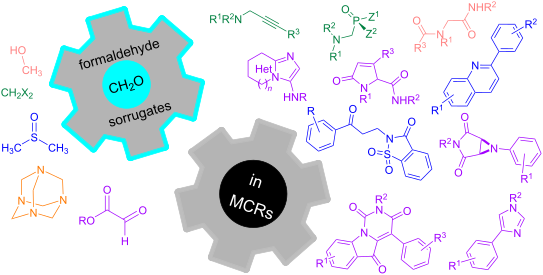
Scheme 2: Some of the most popular MCRs with formaldehyde as the carbonyl component.

Scheme 3: Ugi reaction under a catalyzed electro-oxidation process using TEMPO (2,2,6,6-tetramethyl-1-piperid...

Scheme 4: Examples of different products obtained by MCRs in which DMSO serves as -SCH3 source.

Scheme 5: Mechanism of the decomposition of DMSO under acidic or thermal conditions. a) In situ generation of...

Scheme 6: Povarov multicomponent reaction to quinolines.

Scheme 7: Example of the Povarov reaction with formaldehyde with a julolidine derivative as main product.

Scheme 8: Povarov multicomponent reaction to quinoline derivatives I and II using DMSO as formaldehyde surrog...

Scheme 9: Example of a Povarov three-component reaction with change of catalyst, yielding regioisomer III. In...

Scheme 10: The Povarov three-component reactions carried out under acidic catalysis to afford quinoline regios...

Scheme 11: Different MCR routes involving DMSO to synthesize complex heterocycles such as diarylpyridines and ...

Scheme 12: Pyrazole synthesis by a three-component reaction using DMSO as a source of a C-1 unit.

Scheme 13: Three-component reactions for the synthesis of aliphatic heterocycles 13 and 14 using DMSO as a for...

Scheme 14: Proposed mechanism for the 3CR between homoallylic amines, disulfides, and DMSO.

Scheme 15: Mannich-type reaction using DMSO as formaldehyde surrogate.

Scheme 16: Mechanism for the 3CR-Mannich-type reaction between aryl ketone 18, saccharine (19), and DMSO. The ...

Scheme 17: Mannich-type reaction using DMSO as formaldehyde surrogate and under oxidative activation.

Scheme 18: Three-component reaction between an indazole, a carboxylic acid, and DMSO.

Scheme 19: Amine–aldehyde–alkyne (AAA) coupling reaction and plausible mechanism.

Scheme 20: AHA coupling for the synthesis of propargylamines using dihalomethanes as C1 building blocks.

Scheme 21: AHA coupling using CH2Cl2 as both solvent and methylene source.

Scheme 22: Examples of propargylamines synthesized under catalytic AHA protocols.

Scheme 23: Proposed mechanism for the synthesis of propargylamines using dichloromethane as a C1 source.

Scheme 24: Mechanism proposed for the generation of the aminal intermediate E by Buckley et al. [68].

Scheme 25: Pudovic and Kabachnik–Fields reactions for the synthesis of α-aminophosphonates.

Scheme 26: a) Abramov side reaction that generates α-hydroxy phosphonate as a byproduct during the Kabachnik-F...

Scheme 27: Catalyst-free three component reaction to afford α-amino phosphorus product 35 using 1,1-dihaloalka...

Scheme 28: a) Proposed mechanism for the three-component reaction of dichloromethane, amine and phosphorus com...

Scheme 29: Ugi-ammonia strategy using HMTA as a formaldehyde surrogate.

Scheme 30: Glyoxylate and its derivatives as C1 building blocks.

Scheme 31: The Groebke–Blackburn–Bienaymé multicomponent reaction (GBB) and its mechanism.

Scheme 32: a) Byproducts in the GBB multicomponent reaction (GBB) when formaldehyde is used as the carbonyl co...

Scheme 33: Possible regioisomers in the GBB multicomponent reaction when formaldehyde is used as the carbonyl ...

Scheme 34: The multicomponent GBB reaction yields 2-unsubstituted 3-aminoimidazo heterocycles 42a using MP-gly...

Scheme 35: GBB multicomponent reaction to 2-unsubstituted 3-amino imidazo heterocycles 42a using glyoxylic aci...

Scheme 36: GBB reaction using glyoxylic acid immobilized on silica as formaldehyde surrogate.

Scheme 37: Bioactive products synthesized by the GBB reaction using glyoxylic acid.

Scheme 38: van Leusen three-component reaction to imidazoles.

Scheme 39: Side reaction during the synthesis of imidazoles with formaldehyde as the carbonyl compound.

Scheme 40: Optimization of the van Leusen three component reaction to 1,4-disubstituted imidazoles 43 using gl...

Scheme 41: Application of the Sisko strategy [96] for the synthesis of CB1 receptor antagonist compounds [97].

Scheme 42: Side reaction, when NH4OH is used as amine component.

Scheme 43: Ugi-type adducts with the ester moiety and the acidic CH to be used for post-cyclization sequences.

Scheme 44: Ugi/cycloisomerization process to pyrrolones 51, butenolides 52, and pyrroline 53.

Scheme 45: Radical cyclization reactions from Ugi adducts promoted by TEMPO.

Scheme 46: Hydrolysis and decarboxylation reactions to products with incorporation of a C1 unit of ethyl glyox...

Scheme 47: One-step synthetic route to pyrrolones 60 using phenylglyoxal.

Scheme 48: Ugi-pseudo-Knoevenagel-pseudo-Dieckmann cascade sequence for the synthesis of fused heterocycles.

Scheme 49: Ugi-pseudo-Knoevenagel reaction from ethyl glyoxylate.
Microwave-assisted synthesis of N,N-bis(phosphinoylmethyl)amines and N,N,N-tris(phosphinoylmethyl)amines bearing different substituents on the phosphorus atoms
- Erika Bálint,
- Anna Tripolszky,
- László Hegedűs and
- György Keglevich
Beilstein J. Org. Chem. 2019, 15, 469–473, doi:10.3762/bjoc.15.40
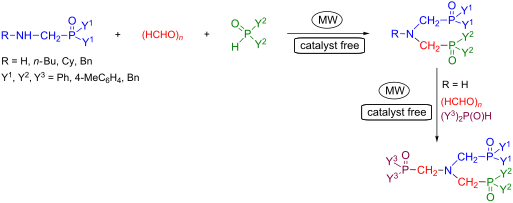
- phosphorus atoms was synthesized by the microwave-assisted and catalyst-free Kabachnik–Fields reaction of (aminomethyl)phosphine oxides with paraformaldehyde and diphenylphosphine oxide. The three-component condensation of N,N-bis(phosphinoylmethyl)amine, paraformaldehyde and a secondary phosphine oxide
- affording N,N,N-tris(phosphinoylmethyl)amine derivatives was also elaborated. This method is a novel approach for the synthesis of the target products. Keywords: (aminomethyl)phosphine oxides; Kabachnik–Fields reaction; ligand; microwave; N,N-bis(phosphinoylmethyl)amines; N,N,N-tris(phosphinoylmethyl
- of alkylphenylphosphine oxides and the corresponding aldimine derivatives of thiazole 1 (Scheme 1) [12]. Cherkasov and his group applied the Kabachnik–Fields reaction to synthesize a P-chiral aminophosphine oxide with a 2-pyridyl substituent 3 (Scheme 2) [13]. Bis(aminophosphine oxide) derivatives

Graphical Abstract

Scheme 1: Synthesis of chiral thiazole-substituted aminophosphine oxides.

Scheme 2: Synthesis of a P-chiral aminophosphine oxide containing a 2-pyridyl moiety.

Scheme 3: Condensation of (octylaminomethyl)dihexylphosphine oxide with paraformaldehyde and di(p-tolyl)phosp...

Scheme 4: Synthesis of (aminomethyl)phosphine oxides 5–7.

Scheme 5: Synthesis of (aminomethyl)diphenylphosphine oxide (9).

Scheme 6: Synthesis of N,N-bis(phosphinoylmethyl)amines 10a,b, 11a,b and 12a,b bearing different substituents...

Scheme 7: Synthesis of N,N-bis(phosphinoylmethyl)amines 13a–c.

Scheme 8: Synthesis of N,N,N-tris(phosphinoylmethyl)amines 14–17.
Multicomponent reactions: A simple and efficient route to heterocyclic phosphonates
- Mohammad Haji
Beilstein J. Org. Chem. 2016, 12, 1269–1301, doi:10.3762/bjoc.12.121
- better yields than in protic solvents. When diethyl (2-oxopropyl)phosphonate and 4-nitrobenzaldehyde were treated in the presence of 50 mol % TsOH in acetonitrile, 5-phosphonato-3,4-dihydropyrimidin-2-one 18 was obtained in excellent yield (Scheme 5). 2 Kabachnik−Fields reaction and its post-condensation
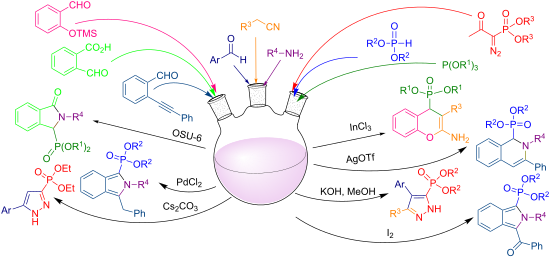
- modifications The one-pot three-component reaction between aldehydes 19 (or ketones), amines 20 and dialkyl phosphonates 21 to afford α-aminophosphonates 22 is traditionally known as the Kabachnik–Fields reaction. This reaction was first reported in 1952 by Kabachnik, Medved and Fields (Scheme 6) [29][30]. Due
- to their wide range of biological activities, α-aminophosphonates have been extensively investigated and several reviews about their syntheses through the Kabachnik–Fields reaction have been reported [31][32][33]. However, an important feature of this reaction is that it provides an efficient route

Graphical Abstract

Scheme 1: The Biginelli condensation.

Scheme 2: The Biginelli reaction of β-ketophosphonates catalyzed by ytterbium triflate.

Scheme 3: Trimethylchlorosilane-mediated Biginelli reaction of diethyl (3,3,3-trifluoropropyl-2-oxo)phosphona...

Scheme 4: Biginelli reaction of dialkyl (3,3,3-trifluoropropyl-2-oxo)phosphonate with trialkyl orthoformates ...

Scheme 5: p-Toluenesulfonic acid-promoted Biginelli reaction of β-ketophosphonates, aryl aldehydes and urea.

Scheme 6: General Kabachnik–Fields reaction for the synthesis of α-aminophosphonates.

Scheme 7: Phthalocyanine–AlCl catalyzed Kabachnik–Fields reaction of N-Boc-piperidin-4-one with diethyl phosp...

Scheme 8: Kabachnik–Fields reaction of isatin with diethyl phosphite and benzylamine.

Scheme 9: Magnetic Fe3O4 nanoparticle-supported phosphotungstic acid-catalyzed Kabachnik–Fields reaction of i...

Scheme 10: The Mg(ClO4)2-catalyzed Kabachnik–Fields reaction of 1-tosylpiperidine-4-one.

Scheme 11: An asymmetric version of the Kabachnik–Fields reaction for the synthesis of α-amino-3-piperidinylph...

Scheme 12: A classical Kabachnik–Fields reaction followed by an intramolecular ring-closing reaction for the s...

Scheme 13: Synthesis of (S)-piperidin-2-phosphonic acid through an asymmetric Kabachnik–Fields reaction.

Scheme 14: A modified diastereoselective Kabachnik–Fields reaction for the synthesis of isoindolin-1-one-3-pho...

Scheme 15: A microwave-assisted Kabachnik–Fields reaction toward isoindolin-1-ones.

Scheme 16: The synthesis of 3-arylmethyleneisoindolin-1-ones through a Horner–Wadsworth–Emmons reaction of Kab...

Scheme 17: An efficient one-pot method for the synthesis of ethyl (2-alkyl- and 2-aryl-3-oxoisoindolin-1-yl)ph...

Scheme 18: FeCl3 and PdCl2 co-catalyzed three-component reaction of 2-alkynylbenzaldehydes, anilines, and diet...

Scheme 19: Three-component reaction of 6-methyl-3-formylchromone (75) with hydrazine derivatives or hydroxylam...

Scheme 20: Three-component reaction of 6-methyl-3-formylchromone (75) with thiourea, guanidinium carbonate or ...

Scheme 21: Three-component reaction of 6-methyl-3-formylchromone (75) with 1,4-bi-nucleophiles in the presence...

Scheme 22: One-pot three-component reaction of 2-alkynylbenzaldehydes, amines, and diethyl phosphonate.

Scheme 23: Lewis acid–surfactant combined catalysts for the one-pot three-component reaction of 2-alkynylbenza...

Scheme 24: Lewis acid catalyzed cyclization of different Kabachnik–Fields adducts.

Scheme 25: Three-component synthesis of N-arylisoquinolone-1-phosphonates 119.

Scheme 26: CuI-catalyzed three-component tandem reaction of 2-(2-formylphenyl)ethanones with aromatic amines a...

Scheme 27: Synthesis of 1,5-benzodiazepin-2-ylphosphonates via ytterbium chloride-catalyzed three-component re...

Scheme 28: FeCl3-catalyzed four-component reaction for the synthesis of 1,5-benzodiazepin-2-ylphosphonates.

Scheme 29: Synthesis of indole bisphosphonates through a modified Kabachnik–Fields reaction.

Scheme 30: Synthesis of heterocyclic bisphosphonates via Kabachnik–Fields reaction of triethyl orthoformate.

Scheme 31: A domino Knoevenagel/phospha-Michael process for the synthesis of 2-oxoindolin-3-ylphosphonates.

Scheme 32: Intramolecular cyclization of phospha-Michael adducts to give dihydropyridinylphosphonates.

Scheme 33: Synthesis of fused phosphonylpyrans via intramolecular cyclization of phospha-Michael adducts.

Scheme 34: InCl3-catalyzed three-component synthesis of (2-amino-3-cyano-4H-chromen-4-yl)phosphonates.

Scheme 35: Synthesis of phosphonodihydropyrans via a domino Knoevenagel/hetero-Diels–Alder process.

Scheme 36: Multicomponent synthesis of phosphonodihydrothiopyrans via a domino Knoevenagel/hetero-Diels–Alder ...

Scheme 37: One-pot four-component synthesis of 1,2-dihydroisoquinolin-1-ylphosphonates under multicatalytic co...

Scheme 38: CuI-catalyzed four-component reactions of methyleneaziridines towards alkylphosphonates.

Scheme 39: Ruthenium–porphyrin complex-catalyzed three-component synthesis of aziridinylphosphonates and its p...

Scheme 40: Copper(I)-catalyzed three-component reaction towards 1,2,3-triazolyl-5-phosphonates.

Scheme 41: Three-component reaction of acylphosphonates, isocyanides and dialkyl acetylenedicarboxylate to aff...

Scheme 42: Synthesis of (4-imino-3,4-dihydroquinazolin-2-yl)phosphonates via an isocyanide-based three-compone...

Scheme 43: Silver-catalyzed three-component synthesis of (2-imidazolin-4-yl)phosphonates.

Scheme 44: Three-component synthesis of phosphonylpyrazoles.

Scheme 45: One-pot three-component synthesis of 3-carbo-5-phosphonylpyrazoles.

Scheme 46: A one-pot two-step method for the synthesis of phosphonylpyrazoles.

Scheme 47: A one-pot method for the synthesis of (5-vinylpyrazolyl)phosphonates.

Scheme 48: Synthesis of 1H-pyrrol-2-ylphosphonates via the [3 + 2] cycloaddition of phosphonate azomethine yli...

Scheme 49: Three-component synthesis of 1H-pyrrol-2-ylphosphonates.

Scheme 50: The classical Reissert reaction.

Scheme 51: One-pot three-component synthesis of N-phosphorylated isoquinolines.

Scheme 52: One-pot three-component synthesis of 1-acyl-1,2-dihydroquinoline-2-phosphonates and 2-acyl-1,2-dihy...

Scheme 53: Three-component reaction of pyridine derivatives with ethyl propiolate and dialkyl phosphonates.

Scheme 54: Three-component reactions for the phosphorylation of benzothiazole and isoquinoline.

Scheme 55: Three-component synthesis of diphenyl [2-(aminocarbonyl)- or [2-(aminothioxomethyl)-1,2-dihydroisoq...

Scheme 56: Three-component stereoselective synthesis of 1,2-dihydroquinolin-2-ylphosphonates and 1,2-dihydrois...

Scheme 57: Diphosphorylation of diazaheterocyclic compounds via a tandem 1,4–1,2 addition of dimethyl trimethy...

Scheme 58: Multicomponent reaction of alkanedials, acetamide and acetyl chloride in the presence of PCl3 and a...

Scheme 59: An oxidative domino three-component synthesis of polyfunctionalized pyridines.

Scheme 60: A sequential one-pot three-component synthesis of polysubstituted pyrroles.

Scheme 61: Three-component decarboxylative coupling of proline with aldehydes and dialkyl phosphites for the s...

Scheme 62: Three-component domino aza-Wittig/phospha-Mannich sequence for the phosphorylation of isatin deriva...

Scheme 63: Stereoselective synthesis of phosphorylated trans-1,5-benzodiazepines via a one-pot three-component...

Scheme 64: One-pot three-component synthesis of phosphorylated 2,6-dioxohexahydropyrimidines.
Synthesis, fluorescence properties and the promising cytotoxicity of pyrene–derived aminophosphonates
- Jarosław Lewkowski,
- Maria Rodriguez Moya,
- Anna Wrona-Piotrowicz,
- Janusz Zakrzewski,
- Renata Kontek and
- Gabriela Gajek
Beilstein J. Org. Chem. 2016, 12, 1229–1235, doi:10.3762/bjoc.12.117
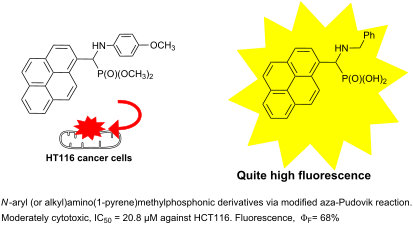
- conditions to prepare N-(pyren-1-ylidene)-tert-butylamine (1j) and dimethyl N-(tert-butyl)amino(pyren-1-yl)methylphosphonate (3Aj) via the aza-Pudovik reaction, the Kabachnik–Fields reaction was used as an alternative method [23]. The three-component reaction without any catalyst was carried out first in
- (3Ai) was obtained, when the Kabachnik–Fields reaction was carried out in the presence of a catalytic amount of trifluoroacetic acid in refluxing acetonitrile. The same procedure, i.e., the Kabachnik–Fields reaction in the presence of trifluoroacetic acid, but in refluxing methanol has been
- attributed to each nucleus. Compounds were also characterized by melting point measurements. Jayaprakash et al. [9] reported the synthesis of several pyrene-derived aminophosphonates via a silica-catalyzed Kabachnik–Fields reaction. Among others, they synthesized three amino-phosphonates 3Bb–d, reporting

Graphical Abstract

Scheme 1: Synthesis of aminophosphonates 3Aa–j, 3Ba–e, 3Ca–d, 3Cg, aminophosphonic acids 4a, 4c and hydroxyph...

Figure 1: Normalized electronic absorption and emission spectra of 3Aj and pyrene in chloroform (c = 1 μM).

Figure 2: Emission spectra of compound 3Aj in various solvents. The spectra are normalized at ≈378 nm (pyrene...

Figure 3: IC50 values of studied compounds.
Multicomponent reactions in nucleoside chemistry
- Mariola Koszytkowska-Stawińska and
- Włodzimierz Buchowicz
Beilstein J. Org. Chem. 2014, 10, 1706–1732, doi:10.3762/bjoc.10.179
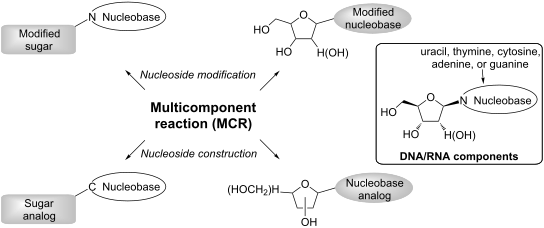
- group has developed the synthesis of D-glucopyranose-derived counterparts of compounds 25 and 26 [73]. The formation of an intermediate imine from a sugar azide and an aldehyde by Staudinger/aza-Wittig reaction was the key step of the synthesis. 2. The Kabachnik–Fields reaction The Kabachnik–Fields
- . An example of the application of the Kabachnik–Fields reaction in nucleoside chemistry represents the preparation of α-arylaminophosphonates 28 and 29 by Zhang et al. (Scheme 12) [76]. The reactions between 5-formyl-2'-deoxyuridine 27 (or its 3',5'-di-O-acetyl derivative 14), an aniline and dimethyl
- . Reagents and reaction conditions: i. a. 37% aq HCl, MeOH; b. NaOAc, 1,4-dioxane, H2O, 100 °C, overnight. Reagents and reaction conditions: i. DMAP, DCC, MeOH, rt, 1 h. The Kabachnik–Fields reaction. Reagents and reaction conditions: i. 60 °C, 3 h; ii. 80 °C, 2 h. The four-component Ugi reaction. Reagents

Graphical Abstract

Figure 1: Selected chemical modifications of natural ribose or 2'-deoxyribose nucleosides leading to the deve...

Scheme 1: (a) Classical Mannich reaction; (b) general structures of selected hydrogen active components and s...

Scheme 2: Reagents and reaction conditions: i. H2O or H2O/EtOH, 60–100 °C, 7 h–10 d; ii. H2, Pd/C or PtO2; ii...

Scheme 3: Reagents and reaction conditions: i. H2O, 90 °C, overnight.

Scheme 4: Reagents and reaction conditions: i. AcOH, H2O, 60 °C, 12 h-5 d; ii. AcOH, H2O, 60 °C, 8 h.

Scheme 5: Reagents and reaction conditions: i. CuBr, THF, reflux, 0.5 h; ii. n-Bu4NF·3H2O, THF, rt, 2 h.

Scheme 6: Reagents and reaction conditions: i. [bmim][PF6], 80 °C, 5–8 h.

Scheme 7: Reagents and reaction conditions: i. EtOH, reflux, 24 h.

Scheme 8: Reagents and reaction conditions: i. NaOAc, H2O, 95 °C, 1–16 h; ii. NaOAc, H2O, 95 °C, 1 h.

Scheme 9: Reagents and reaction conditions: i. a. 37% aq HCl, MeOH; b. NaOAc, 1,4-dioxane, H2O, 100 °C, overn...

Scheme 10: Reagents and reaction conditions: i. DMAP, DCC, MeOH, rt, 1 h.

Scheme 11: The Kabachnik–Fields reaction.

Scheme 12: Reagents and reaction conditions: i. 60 °C, 3 h; ii. 80 °C, 2 h.

Scheme 13: The four-component Ugi reaction.

Scheme 14: Reagents and reaction conditions: i. MeOH, rt, 2–3 d, yields not given.

Scheme 15: Reagents and reaction conditions: i. MeOH/CH2Cl2 (1:1), rt, 24 h, yield not given; ii. 6 N aq HCl, ...

Scheme 16: Reagents and reaction conditions: i. MeOH/H2O, rt, 26 h; ii. aq AcOH, reflux, 50%; iii. reversed ph...

Scheme 17: Reagents and reaction conditions: i. MeOH, rt, 24 h; ii. HCl, MeOH, 0 °C to rt, 6 h, then H2O, rt, ...

Scheme 18: Reagents and reaction conditions: i. DMF/Py/MeOH (1:1:1), rt, 48 h; ii. 10% HCl/MeOH, rt, 30 min.

Scheme 19: Reagents and reaction conditions (R = CH3 or H): i. CH2Cl2/MeOH (2:1), 35–40 °C, 2 d; ii. HF/pyridi...

Scheme 20: Reagents and reaction conditions: i. MeOH, 76%; ii. 80% aq TFA, 100%.

Scheme 21: Reagents and reaction conditions: i. EtOH, rt, 72 h; ii. Zn, aq NaH2PO4, THF, rt, 1 week; then 80% ...

Scheme 22: Reagents and reaction conditions: i. EtOH, rt, 48 h, then silica gel chromatography, 33% for 57 (30...

Scheme 23: Reagents and reaction conditions: i. [bmim]BF4, 80 °C, 4 h; ii. [bmim]BF4, 80 °C, 3 h; iii. [bmim]BF...

Scheme 24: Reagents and reaction conditions: i. [bmim]BF4, 80 °C.

Scheme 25: Reagents and reaction conditions: i. H3PW12O40 (2 mol %), EtOH, 50 °C, 2–15 h; ii. H3PW12O40 (2 mol...

Scheme 26: General scheme of the Biginelli reaction.

Scheme 27: Reagents and reaction conditions: i. EtOH, reflux.

Scheme 28: Reagents and reaction conditions: i. Bu4N+HSO4−, diethylene glycol, 120 °C, 1.5–3 h.

Scheme 29: Reagents and reaction conditions: i. BF3·Et2O, CuCl, AcOH, THF, 65 °C, 24 h; ii. Yb(OTf)3, THF, ref...

Scheme 30: Reagents and reaction conditions: TCT (10 mol %), rt: i. 100 min; ii. 150 min; iii. 140 min.

Scheme 31: Reagents and reaction conditions: i. EtOH, microwave irradiation (300 W), 10 min; ii. EtOH, 75 °C, ...

Scheme 32: The Hantzsch reaction.

Scheme 33: Reagents and reaction conditions: TCT (10 mol %), rt, 80–150 min.

Scheme 34: Reagents and reaction conditions: i. Yb(OTf)3, THF, 90 °C, 12 h; ii. 4 Å molecular sieves, EtOH, 90...

Scheme 35: Reagents and reaction conditions: i. MeOH, 50 °C, 48 h.

Scheme 36: Reagents and reaction conditions: i. MeOH, 25 °C, 5 d.

Scheme 37: Bu4N+HSO4−, diethylene glycol, 80 °C, 1–2 h.

Scheme 38: The three-component carbopalladation of dienes on the example of buta-1,3-diene.

Scheme 39: Reagents and reaction conditions: i. 5 mol % Pd(dba)2, Bu4NCl, ZnCl2, acetonitrile or DMSO, 80 °C o...

Scheme 40: Reagents and reaction conditions: i. 2.5 mol % Pd2(dba)3, tris(2-furyl)phosphine, K2CO3, MeCN or DM...

Scheme 41: Reagents and reaction conditions: i. 2.5 mol % Pd2(dba)3, tris(2-furyl)phosphine, K2CO3, MeCN or DM...

Scheme 42: The three-component Bucherer–Bergs reaction.

Scheme 43: Reagents and reaction conditions: i. MeOH, H2O, 70 °C, 4.5 h; ii. (1) H2, 5% Pd/C, MeOH, 55 °C, 5 h...

Scheme 44: Reagents and reaction conditions: i. pyridine, MgSO4, 100 °C, 28 h, N2; ii. DMF, 70–90 °C, 22–30 h,...

Scheme 45: Reagents and reaction conditions: i. Montmorillonite K-10 clay, microwave irradiation (600 W), 6–10...

Scheme 46: Reagents and reaction conditions: i. Montmorillonite K-10 clay, microwave irradiation (560 W), 6–10...

Scheme 47: Reagents and reaction conditions: i. CeCl3·7H2O (20 mol %), NaI (20 mol %), microwave irradiation (...

Scheme 48: Reagents and reaction conditions: i. PhI(OAc)2 (3 mol %), microwave irradiation (45 °C), 6–9 min.

Scheme 49: Reagents and reaction conditions: i. 117, ethyl pyruvate, TiCl4, dichloromethane, −78 °C, 1 h; then ...
Phosphinate-containing heterocycles: A mini-review
- Olivier Berger and
- Jean-Luc Montchamp
Beilstein J. Org. Chem. 2014, 10, 732–740, doi:10.3762/bjoc.10.67
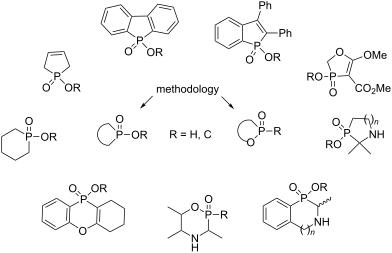
- malonate anion. Tandem hydrophosphinylation/Michael/Michael reaction of allenyl-H-phosphinates. 5-Membered “cyclo-PALA” via intramolecular Mitsunobu reaction. 6-Membered “cyclo-PALA” via intramolecular Mitsunobu reaction. Intramolecular Kabachnik–Fields reaction. Tandem Kabachnik–Fields/alkylation reaction

Graphical Abstract

Scheme 1: McCormack synthesis.

Scheme 2: Ring-closing metathesis.

Scheme 3: Phospha-Dieckmann condensation.

Scheme 4: Palladium-catalyzed oxidative arylation.

Scheme 5: Tandem cross-coupling/Dieckmann condensation.

Scheme 6: Rhodium-catalyzed double [2 + 2 + 2] cycloaddition.

Scheme 7: Silver oxide-mediated alkyne–arene annulation.

Scheme 8: Silver acetate-mediated alkyne–arene annulation.

Scheme 9: Cyclization through phosphinylation/alkylation of malonate anion.

Scheme 10: Tandem hydrophosphinylation/Michael/Michael reaction of allenyl-H-phosphinates.

Scheme 11: 5-Membered “cyclo-PALA” via intramolecular Mitsunobu reaction.

Scheme 12: 6-Membered “cyclo-PALA” via intramolecular Mitsunobu reaction.

Scheme 13: Intramolecular Kabachnik–Fields reaction.

Scheme 14: Tandem Kabachnik–Fields/alkylation reaction.

Scheme 15: Tandem Kabacknik–Fields/C–N cross-coupling reaction.

Scheme 16: Tandem Kabacknik–Fields/C-P cross-coupling reaction.

Scheme 17: Heterocyclization via amide formation.

Scheme 18: Cyclization via reductive amination.

Scheme 19: H-Phosphinate alkylation.

Scheme 20: Cyclization through intramolecular Michael addition.

Scheme 21: Double Arbuzov reaction of bis(trimethylsiloxy)phosphine.

Scheme 22: Diastereoselective ring-closing metathesis.

Scheme 23: 2-Ketophosphonate/benzene annulation.

Scheme 24: Tandem Kabachnik–Fields/transesterification reaction.

Scheme 25: Tandem Kabachnik–Fields/transesterification reaction with oxazolidine.
A novel family of (1-aminoalkyl)(trifluoromethyl)- and -(difluoromethyl)phosphinic acids – analogues of α-amino acids
- Natalia V. Pavlenko,
- Tatiana I. Oos,
- Yurii L. Yagupolskii,
- Igor I. Gerus,
- Uwe Doeller and
- Lothar Willms
Beilstein J. Org. Chem. 2014, 10, 722–731, doi:10.3762/bjoc.10.66
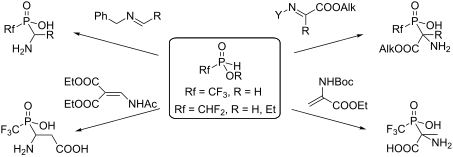
- overnight, argon atmosphere, mixture 3:4 ~ 10:1, ~70%. Three-component Kabachnik–Fields reaction of CF3(H)P(O)(OiPr) (2) with formaldehyde and dibenzylamine. Reagents and conditions: i) an equimolar mixture of reagents, H2O, 80 °C, 3 h, argon atmosphere, yield 10 ~80% or an equimolar mixture of reagents

Graphical Abstract

Scheme 1: Synthesis of (trifluoromethyl)phosphinic acid (1) and ethyl and isopropyl esters 2–4. Reagents and ...

Scheme 2: Three-component Kabachnik–Fields reaction of CF3(H)P(O)(OiPr) (2) with formaldehyde and dibenzylami...

Scheme 3: Three-component synthesis of CF3 containing α-aminophosphinic acids 14a,b. Reagents and conditions:...

Scheme 4: Interaction of the acid 1 with tert-butyl benzylidenecarbamate (21). Reagents and conditions: i) an...

Scheme 5: Interaction of the acids 1 and 6 with ethyl 2-[(tert-butoxycarbonyl)imino]acetate (22). Reagents an...

Scheme 6: Transformation of the ester 24 into the appropriate free acid 25. Reagents and conditions: i) two f...

Scheme 7: Reaction of the acids (1) and (6) with methyl 2-imino-3-methylbutanoate (26). Reagents and conditio...

Scheme 8: Interaction of the acid 1 with ethyl 2-(tert-butoxycarbonylamino)acrylate (29). Reagents and condit...

Scheme 9: Interaction of a mixture of the esters 3 and 4 with 2-acetamidoacrylic acid (33). Reagents and cond...

Scheme 10: Interaction of a mixture of the acid 1 with diethyl acetaminomethylenemalonate (38). Reagents and c...



