


Search results
Search for "efficiency" in Full Text gives 1250 result(s) in Beilstein Journal of Organic Chemistry. Showing first 200.
Construction of CF2 moieties in FDA-approved drugs (2016–2025): industrial routes, mechanisms, and scale-up considerations
Beilstein J. Org. Chem. 2026, 22, 1122–1150, doi:10.3762/bjoc.22.91
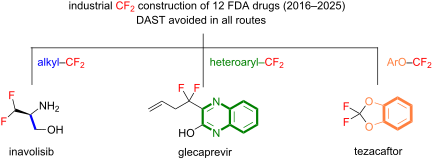
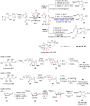
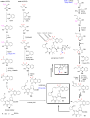
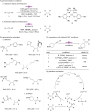
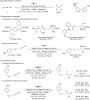
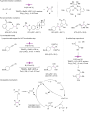
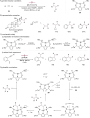
- group relies on the asymmetric Reformatsky reaction induced by the chiral substrate 45. The stereoselectivity of the product has always been a challenge in this type of synthesis, and developing more efficient asymmetric Reformatsky methods would undoubtedly improve production efficiency. Lv et al. [23
- carbonyl group to give 62, followed by hydrolysis to afford 63. For the difluorination of β-keto esters, synthetic methods using SF4 have been reported [29], and safety and efficiency evaluations indicate that SF4 holds promise for such transformations. However, whether the continuous-flow difluorination






Amino acid-based surfactants: sustainable synthesis and antimicrobial mechanisms
Beilstein J. Org. Chem. 2026, 22, 1067–1085, doi:10.3762/bjoc.22.85
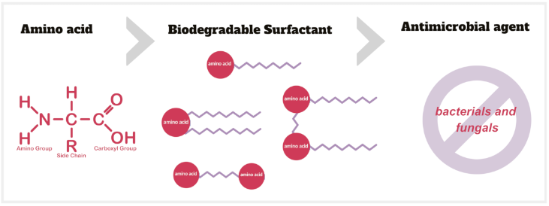
- structures (charge density, alkyl chain length/position and presence of aromatic groups) on the antimicrobial efficiency of these amphiphilic small molecules (Table 1) [4]. These structural classes are typically obtained through complementary synthetic strategies involving N-acylation and N-alkylation
- these hurdles, their unmatched efficiency and versatility have driven their assimilation in pharmaceuticals (e.g., antimicrobials, gene delivery) and cosmetics, where their ability to destabilize microbial membranes and stabilize formulations aligns with the demands for high-performance, resistance


One-pot four-component sequential synthesis of S-alkyl dithiocarbamates using lipase as a biocatalyst
Beilstein J. Org. Chem. 2026, 22, 1048–1056, doi:10.3762/bjoc.22.83
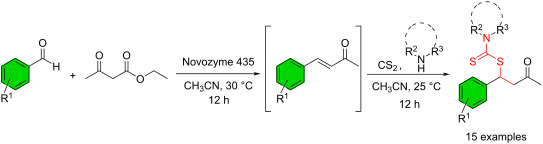
- , in previously reported lipase-catalyzed promiscuous reactions, significant stereochemical induction has generally not been observed or discussed [36][37][38]. To investigate the reaction mechanism and the catalytic role of the enzyme in enhancing the efficiency of the second step, control reactions
- efficiency in the absence of the enzyme. This result highlights the crucial catalytic role of lipase in the second step (Scheme 5a). Additionally, for the thia-Michael reaction step, the dithiocarbamate anion 7 was prepared separately and added to the reaction vessel. However, this did not affect the
- reaction efficiency when compared to the optimized method (Scheme 5b). Based on the control reactions and previous studies a mechanism is proposed (Scheme 6). The reaction begins with a nucleophilic attack by the activated ketoester, facilitated by the triad amino acids of lipase, on the carbonyl group of


Synthesis of novel 1,2,4-oxadiazole-isoxazoline hybrids and their in silico potential with adenosine receptors
Beilstein J. Org. Chem. 2026, 22, 1033–1047, doi:10.3762/bjoc.22.82
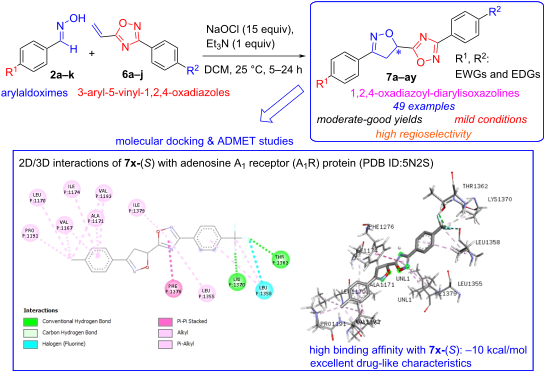
- –97%) and fully characterized by IR, NMR, and HRMS analyses. The reactions exhibited high regioselectivity, exclusively affording 5-isoxazoline derivatives, while substituent effects played a decisive role in modulating reaction efficiency. In silico studies revealed that all hybrids 7a–ay display
- purification by flash column chromatography using ethyl acetate/hexanes. Evaluation of the nitrile oxide cycloaddition results revealed that reactions involving p-chlorobenzaldoxime (2b), p-isopropylbenzaldoxime (2c), and p-tolylaldoxime (2f) proceeded with moderate to high efficiency, affording the
- displayed only moderate efficiency, providing yields of 44–60% (entries 3, 8, 13, 17, and 22, Table 3). All reactions involving N,N-dimethylaminobenzaldoxime (2e) and vinyl-1,2,4-oxadiazoles 6a–d predominantly afforded lower yields (32–40%) (entries 1, 7, 11, and 20, Table 3). Moreover, the cycloaddition of


Z-Selective semihydrogenation of alkynes via Ni/Lewis acid synergistic catalyzed system using DMF as hydrogen source and solvent
Beilstein J. Org. Chem. 2026, 22, 1004–1012, doi:10.3762/bjoc.22.79
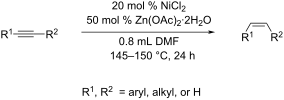
- intermediates, yet their combination with nickel catalysts has been little explored in alkyne semihydrogenation. We envisioned that merging nickel’s competence in alkyne activation and hydrogen transfer with a Lewis acid’s capacity to modulate reaction pathways could enhance both selectivity and efficiency
- ₂, dramatically enhancing both the efficiency and stereoselectivity of the transformation. With Zn(OAc)2·2H2O established as the optimal Lewis acid (Table 2), we proceeded to optimize the remaining reaction parameters, keeping the Lewis acid loading fixed at 50 mol %. The outcomes of this study are summarized in



Novel macrocycles: from synthesis to supramolecular function
Beilstein J. Org. Chem. 2026, 22, 982–985, doi:10.3762/bjoc.22.76
- extraction efficiency even when flooded with competing anions. Furthermore, by evaluating the recyclability and solvent stability of covalent versus noncovalent immobilization, the study offers key design rules for building durable separation materials. While solid-supported systems demonstrate the
Electrochemical reduction of unsaturated carbon–carbon bonds via 3d transition-metal catalysis
Beilstein J. Org. Chem. 2026, 22, 955–981, doi:10.3762/bjoc.22.75
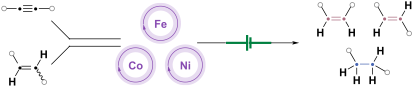
- improving the efficiency and practicality of unsaturated C–C bond hydrogenation processes. This review explores recent advances in the electrochemical reduction of unsaturated C–C bonds mediated by 3d transition metals, with a particular focus on iron, cobalt, and nickel-based molecular catalysts, while
- through a silane-mediated hydrogen-transfer pathway, thereby circumventing the direct use of water in hydrogen-transfer processes. Notably, the addition of a catalytic amount of a nickel complex was found to improve the reaction efficiency, which is attributed to the electroreductive generation of a Ni(0
- catalytic efficiency. Notably, the transformation proceeds with exceptionally high Faradaic efficiency (up to ≈99%), indicative of highly effective suppression of competing hydrogen evolution under mediator-governed electrochemical conditions. Mechanistic interrogation by cyclic voltammetry revealed two








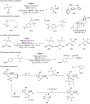
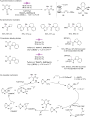
Recent advances in copper-catalyzed direct hydroamination of alkenes with (hetero)aromatic amines
Beilstein J. Org. Chem. 2026, 22, 925–947, doi:10.3762/bjoc.22.73
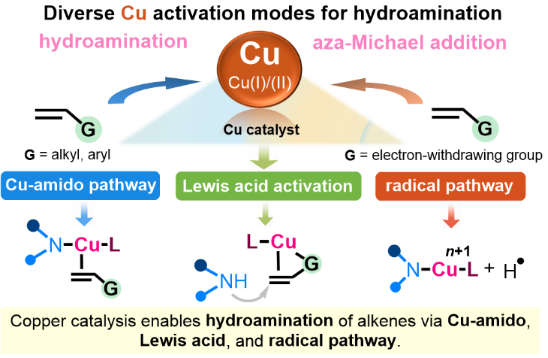
- -amino products 1a–d with excellent regioselectivity. These reactions proceeded exclusively in an anti-Markovnikov manner with high efficiency. For example, the addition of aniline to acrylonitrile afforded 1a with >95% conversion after 12 h using IPrCu–NHPh (II), whereas methyl vinyl ketone was rapidly
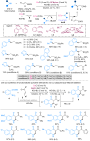
- significantly affecting the reaction efficiency. In addition to simple anilines, diverse heteroaromatic amines including indole, pyrrole, triazole, carbazole, and imidazole derivatives participated effectively in the copper-catalyzed conjugate addition, providing the corresponding β-amino products 3 in high
- efficiency, enabled easy recovery by filtration, and allowed recycling for up to five cycles without a significant loss of activity. Structural and spectroscopic analyses confirmed the successful immobilization of Cu NPs on the biodegradable support, and the catalytic activity was attributed to Lewis acid







A practical CO2-mediated synthesis of 5,6-carboxylated silicon-rhodamines for targeted probe development
Beilstein J. Org. Chem. 2026, 22, 915–924, doi:10.3762/bjoc.22.72
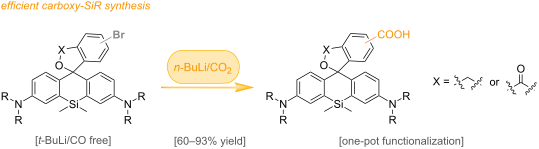
- substituent reduces substrate reactivity, thereby diminishing the efficiency of the key ring-closing step and often resulting in low overall yields [45]. Moreover, these methods commonly rely on strongly basic conditions, particularly the use of highly reactive tert-butyllithium, which further reduces their
- -catalyzed carbonylation using in situ-generated CO then furnished the corresponding carboxylated SiRs in 50–90% yields. Although this approach significantly improved synthetic efficiency, it still relies on specialized setups for CO generation and expensive palladium catalysts, thereby increasing
- proton sources in the reaction system. Improving the CO2-trapping efficiency and maintaining strictly anhydrous conditions may help suppress this side reaction. Similar uncarboxylated rhodamine byproducts were also present in the reaction mixtures of the other two precursors, although in lower amounts


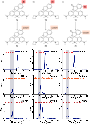
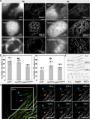

Palladium-catalyzed benzocyclization reactions of quinoline-2-carboxamides via sequential C–H/N–H functionalization
Beilstein J. Org. Chem. 2026, 22, 905–914, doi:10.3762/bjoc.22.71
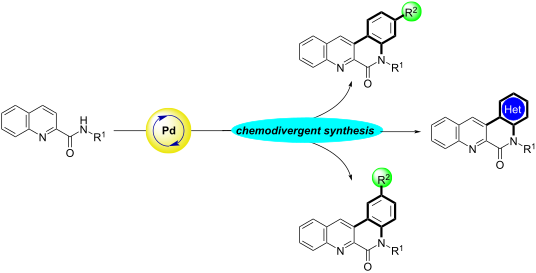
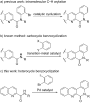
- preparation of annulation precursors through o-brominated aniline derivatives [36][37][38][39][40][41]. Furthermore, the reported methodologies for synthesizing N-heterocycle-fused lactams are characterized by either low efficiency or protracted processes [42][43]. On the other hand, benzocyclization




Site-specific labelling of native peptides and proteins: chemical and enzymatic strategies
Beilstein J. Org. Chem. 2026, 22, 857–881, doi:10.3762/bjoc.22.67
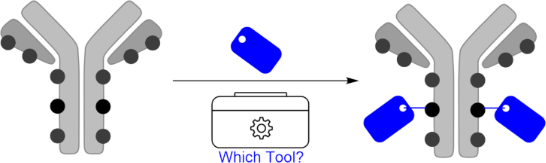
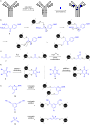
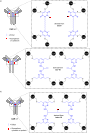
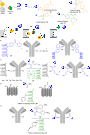
- , including IgG (trastuzumab) [56], EGFR [57], the adenosine A1 receptor [58] and P2X7 [59], have been labelled in vitro and/or in cellular systems. Catalytic approaches generate reactive species in situ, thus enhancing both selectivity and efficiency. A notable example involves rhodium (Rh)-based catalysis
- sortase. Optimisations using depsipeptides or coupling strategies have further improved conversion efficiency and reduced reagent consumption [144]. Due to its ease of preparation, large libraries of sortase variants have been generated and screened to expand substrate scope [143]. In one example, sortase
- sortase variant engineered to recognise amyloid proteins was highly selective for the altered sequence (KM = 128 µM) but achieved only modest catalytic efficiency (143 M−1 s−1, compared with 103–104 M−1 s−1 in wild-type), likely because the FACS-based screening was based on single-turnover events. The









Unsymmetrical sulfoxides with sterically hindered catechol fragment: synthesis, structure, electrochemical properties, and antiradical activity
Beilstein J. Org. Chem. 2026, 22, 828–837, doi:10.3762/bjoc.22.65
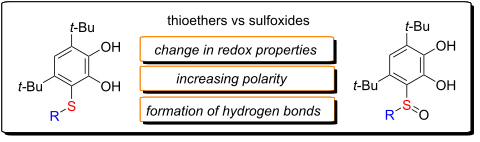
- antiradical efficiency (AE). This complex parameter captures both the hydrogen-atom-donating ability of a compound and the kinetics of its reaction with the DPPH radical. Among catechol thioethers 1, 2, and 7, compound 2, bearing a tert-butyl substituent on the sulfur atom, exhibited the highest activity
- , indicating low radical scavenging activity. For sulfoxides 1a–7a, the TEC50 ranged from 30 to 70 min, which was longer than that for thioethers 1–7 (20–40 min). The antiradical efficiency (AE = 1/(IC50·TEC50)) values point out a moderate neutralizing capacity for catechol sulfoxide 1a (AE = 3.56) and its
- (7/7a) substituents, where an increase in the IC50(ABTS∙+) was observed upon going from the thioethers to the sulfoxides. Furthermore, sulfoxides 5a and 7a showed a decreased efficiency in the ABTS assay relative to 3,5-DTBC. Overall, all studied catechols possessed antioxidant activity comparable to


Knoevenagel condensation of 4,5- and 1,8-diazafluorenes
Beilstein J. Org. Chem. 2026, 22, 803–812, doi:10.3762/bjoc.22.62
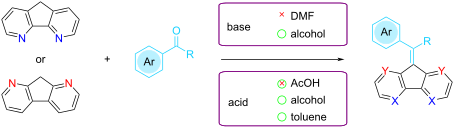
- the smelly solvent pyridine, moisture-sensitive environmentally aggressive reagent (TiCl4) and subsequent complicated treatment of the resulting reaction mixture making it inapplicable for large-scale high-efficiency production of functional materials. Therefore, analyzing the literature examples we




Halogenated azobenzene acrylates: from efficient solution photoswitching to stable solid-state photochromic materials
Beilstein J. Org. Chem. 2026, 22, 782–794, doi:10.3762/bjoc.22.60
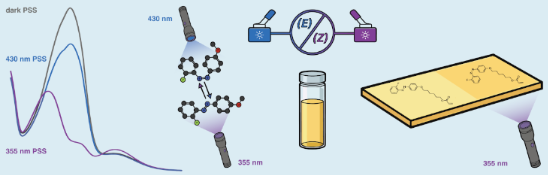
- a very useful tool to tune the thermal and optical properties, light-induced switching in particular. Monohalogen derivatives exhibited up to 93% E → Z photoconversion efficiency in solution, whereas the efficiency of dihalogen analogues is lower by 20%, which is ascribed to their nonplanar
- derivatives 1a, 1c, and 1e exhibited superior photoswitching in solution, reaching the Z-isomer with 92–93% efficiency. In contrast, dihalogen analogues showed ≈20% lower efficiency of the photoconversion rate. It has been shown that planarity of the E-isomers depends on the substitution. While monohalogen
- derivatives are planar, nonplanar disubstituted derivatives with diminished conjugation possess blue-shifted absorption and lower conversion efficiency. The stability of the resulting Z-isomers ( values) can be tuned similarly. In solution, the difluoro derivative 1b was identified as the most stable and


Synthesis and biological evaluation of new brassinosteroid analogs with C-22 benzoate function
Beilstein J. Org. Chem. 2026, 22, 753–762, doi:10.3762/bjoc.22.57
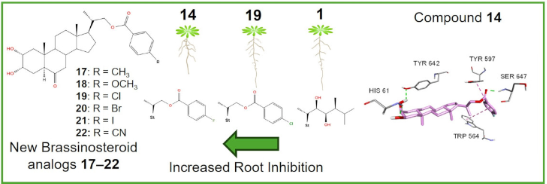
- highest relative accumulation in dBES1, are exhibited by analogs 12 and 19. On the other hand, analogue 19 forms the most stable complex in the active site. From these results it can be concluded that the efficiency of BR analogs to initiate the signaling process is not a determining factor in the final


Synthesis of heterocycles based on azomethine ylides from α-amino acids (or amines) and carbonyl compounds
Beilstein J. Org. Chem. 2026, 22, 705–741, doi:10.3762/bjoc.22.55
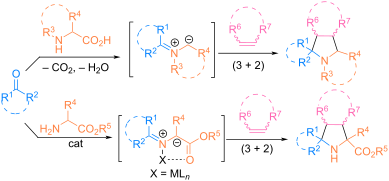
- the catalytic precursor and chiral bis-ferrocenyl amide phosphine (FAP) (L1) as ligand [36] (Scheme 2). The obtained results demonstrated the high efficiency of the Ag(I)-FAP catalytic system for this transformation. In particular, most α-(arylimino)esters yielded cycloaddition products 3 in excellent
- , acetoxy, benzyloxy, etc. It was established that the reaction of glycine methyl ester arylimines 1 with racemic cyclopentene-1,3-diones 28 leads to bicyclic pyrrolidines 29 and enantiomerically enriched cyclopentenediones (R)-28 in moderate yields. The Ag(I)/L3 catalytic system also showed high efficiency
- /bisoxazoline L19 as a chiral catalyst system, high enantioselectivity (up to 97% ee) and moderate to high exo-selectivity were achieved in the reactions with N-methylmaleimide. The high efficiency of iminoesters as azomethine precursors is due to the high acidity at the enolizable Cα position and the formation


Harnessing light energy with molecules
Beilstein J. Org. Chem. 2026, 22, 680–682, doi:10.3762/bjoc.22.52
- approaches of optimization with regard to their light harnessing efficiency, energy storage capacity, and storage time. Structural modifications and studies of the norbornadiene/quadricyclane (NBD/QC) photo-/thermoswitch couple are covered in several articles. In a publication by Kerzig, Ihmels, and co
- a key property for characterizing the light harnessing efficiency of a photoswitch. In the article by Volker, Steen, and Crespi [18], a convenient and reliable fiber optic spectroscopic setup for determining this quantum yield is reported and was benchmarked for azobenzene against other methods
Photoorganocatalytic trifluoromethylation of (het)arenes in green conditions
Beilstein J. Org. Chem. 2026, 22, 662–671, doi:10.3762/bjoc.22.50
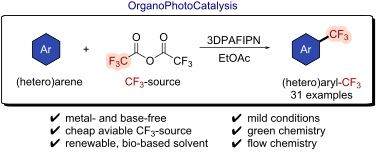
- -catalyzed [8], organic photocatalyst-mediated, or electrochemical transformations [9], and also include continuous-flow processes [6][10][11][12][13]. Given that photocatalytic reactions align with the principles of green chemistry, particularly energy efficiency and the use of catalytic pathways, such
- ; however, this 2.5-fold increase in catalyst loading did not provide a commensurate improvement in efficiency. Moreover, owing to the high molecular weight of 3DPAFIPN, a 5 mol % loading cannot be considered compatible with the development of a green methodology. Consequently, 2 mol % 3DPAFIPN under blue
- substrates are shown in Supporting Information File 1. Radical trapping reactions. Proposed mechanism. Addition of CF3 radical to benzene and TMB. Comparison of atom efficiency and prices of the CF3 sources.a Optimization of reaction conditions. Scaling-up of the trifluoromethylation of TMB. Supporting




Advantages of PROTACs in achieving selective degradation of homologous protein families
Beilstein J. Org. Chem. 2026, 22, 628–661, doi:10.3762/bjoc.22.49
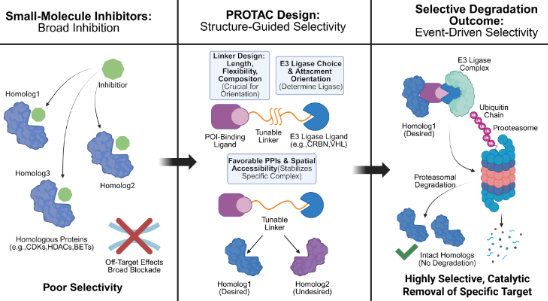
- inhibitors that rely on sustained occupancy of conserved ATP-binding pockets, PROTACs induce transient yet specific protein–protein interactions that dictate ubiquitination efficiency. By fine-tuning the length and composition of the linker, as well as the choice of E3 ligase and its attachment geometry
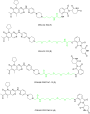
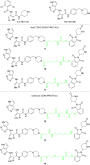
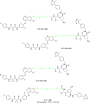
- -length linker (n = 5, m = 1) within the C4-linker series achieved the most potent selective degradation (compared to HDAC1, 3, 4) in the subseries 20a–e (m = 1, n = 2–6). For the subseries 20f–h (m = 2, n = 2–4), when the linker length increased, the molecular degradation efficiency increases, and 20h (n
- -containing compound 33 can almost completely degrade p38δ, but in the degradation of p38α, it is restricted. In contrast, the structure of compound 30 having additional carbon atoms added to the linker, resulted in less than 50% degradation of both subtypes at the maximum efficiency. It can be seen that the









Hydrogen production from formic acid catalyzed by NHC–Cu complexes
Beilstein J. Org. Chem. 2026, 22, 620–627, doi:10.3762/bjoc.22.48
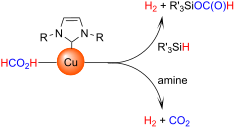
- equimolar mixture of H2 and CO2. The efficiency of the catalysis showed to be strongly dependent on the nature of the amine. Keywords: copper N-heterocyclic carbene; formic acid dehydrogenation; hydrogen storage; metal hydride; silanes; Introduction The discovery and utilization of alternative and
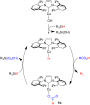
- our delight, upon reacting in toluene equimolar amounts of FA and PhSiH3, efficiency increased (Figure 2). Indeed, by using 1a and its tert-butoxide congener 1c ([Cu] = 10 mol %) a violent evolution of gas was observed at room temperature, resulting into a considerable increase of pressure which



Design and synthesis of an erdafitinib-based selective FGFR2 degrader
Beilstein J. Org. Chem. 2026, 22, 583–591, doi:10.3762/bjoc.22.44
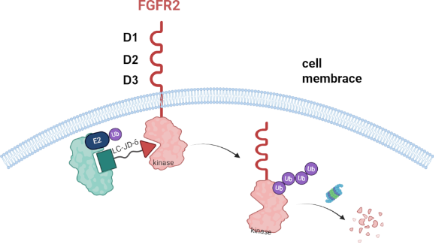
- effectively degrade FGFR2 via the proteasomal pathway, while the VHL E3 ligase-based degrader DGY-09-192 is capable of degrading both FGFR1 and FGFR2 simultaneously [40]. These findings suggest that different E3 ligase ligands may influence the selectivity and efficiency of degradation [41]. Nevertheless, due



Experimental and DFT studies on the regioselective methanolysis of 5-azido-9-oxabicyclo[6.1.0]nonan-4-yl 4-nitrobenzoate isomers
Beilstein J. Org. Chem. 2026, 22, 547–556, doi:10.3762/bjoc.22.40
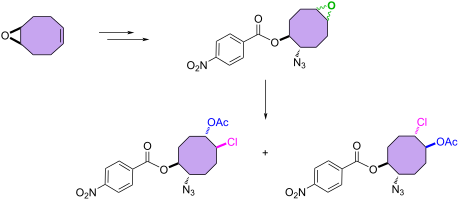
- process, highlighting its precision and efficiency. Keywords: azides; 8-azidocyclooct-4-en-1-yl 4-nitrobenzoate; DFT; epoxycyclooctane azide; methanolysis; Introduction Organic azides are very important precursors for the preparation and synthesis of various nitrogen-containing compounds, as well as


Modern synthetic pathways towards eribulin and its subunits
Beilstein J. Org. Chem. 2026, 22, 495–526, doi:10.3762/bjoc.22.37
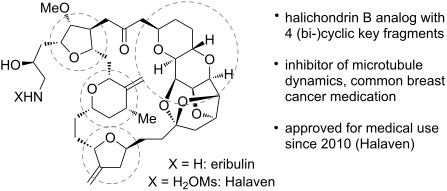
- C1–C13 fragment 11 with C14–C35 fragment 12 [66][67][68]. Despite these great advances, still, the research on improving synthetic efficiency, reducing production costs, omitting toxic chemicals, as well as on new pathways towards 1`s 4 heterocyclic precursor fragments is rigorously ongoing [69][70
- . Here, 121 bears the right configuration needed for Halaven synthesis, but the authors also showed that 122 was easily converted to 121 via Mitsunobu inversion. Although 121 only represents a small building block for the total assembly of 1, this method especially stands out for its cost-efficiency and
- competitive reaction sequence for the large-scale process currently applied by Eisai [66]. Furthermore, this method stands out for its cost-efficiency, since only an enantiomeric pair of ruthenium catalysts is needed in addition to other standard chemicals. A similar building block as from Kaghad and co








Synthesis and uranyl(VI) extraction performance of a calix[4]pyrrole–tetrahydroxamic acid receptor
Beilstein J. Org. Chem. 2026, 22, 486–494, doi:10.3762/bjoc.22.36
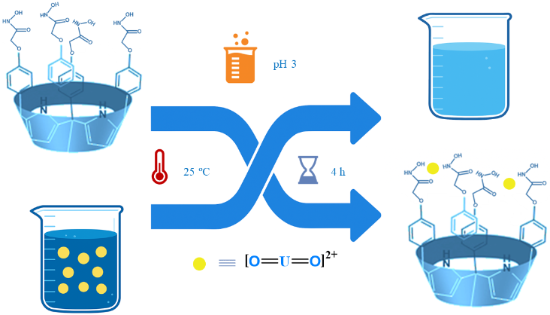
- % yield. Its structure was confirmed by 1H NMR, 13C NMR, and HRMS. The uranium(VI) extraction efficiency of PCP HA was evaluated by solid–liquid extraction experiments, using uranyl acetate as the uranium source, with measurements performed by gamma spectroscopy. PCP HA demonstrated good performance
- , removing up to 95% of uranyl(VI) from aqueous solutions (1 mM) at acidic pH, likely due to the strong coordination provided by its hydroxamic acid groups. Further studies revealed that the extraction efficiency also depends on the ligand-to-metal molar ratio. These findings establish PCP HA as a promising
- solid–liquid approach as previously described for calixarenes [58]. Extraction experiments In this study, two parameters that can influence the solid-liquid extraction efficiency of PCP-HA toward uranyl, namely pH and ligand-to-metal ratio, were studied. To ensure comparison between extraction


Recent advances in the stereoselective synthesis of distal biaxially chiral molecules
Beilstein J. Org. Chem. 2026, 22, 461–479, doi:10.3762/bjoc.22.34
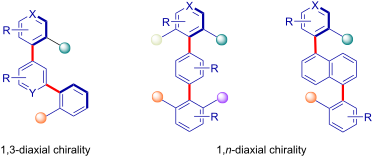
- one chiral axis followed by the second, and transformation from central chirality to axial chirality. We anticipate that this review will facilitate the development of novel synthetic strategies for remote biaxial chiral molecules, improve asymmetric synthesis efficiency, and expand their applications
- [41]. This strategy delivered excellent enantioselectivity, diastereoselectivity, and overall efficiency, underscoring its unique advantages in the synthesis of multiaxially chiral scaffolds. In parallel, Tanaka and co-workers advanced a [2 + 2 + 2] cycloaddition strategy to realize an asymmetric
- diastereoselectivity. Notably, this system overcame the limitations of previous methodologies that required elevated temperatures and suffered from poor efficiency and narrow substrate scope. Later, in 2011, the group extended this approach using a bisphosphine-ligated rhodium complex to efficiently synthesize





