Search results
Search for "optical properties" in Full Text gives 160 result(s) in Beilstein Journal of Organic Chemistry.
Halogenated azobenzene acrylates: from efficient solution photoswitching to stable solid-state photochromic materials
Beilstein J. Org. Chem. 2026, 22, 782–794, doi:10.3762/bjoc.22.60
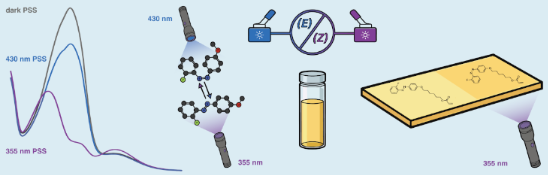
- a very useful tool to tune the thermal and optical properties, light-induced switching in particular. Monohalogen derivatives exhibited up to 93% E → Z photoconversion efficiency in solution, whereas the efficiency of dihalogen analogues is lower by 20%, which is ascribed to their nonplanar
- the E-isomers as compared to the Z-isomers. Linear optical properties Fundamental optical properties of the target azobenzenes 1a–f in solution were investigated by electronic absorption spectra at 20 °C in DCE at a concentration of 4 × 10⁻⁵ M. The absorption maxima for both isomers (λE/Zmax) and the
- supported by DFT results. The electrochemical differences are rather minor, and the type and the number of the appended halogens do not play a significant role. However, the optical properties and particularly the forward E → Z switch induced by 355 nm light, depends on the substitution pattern. Monohalogen


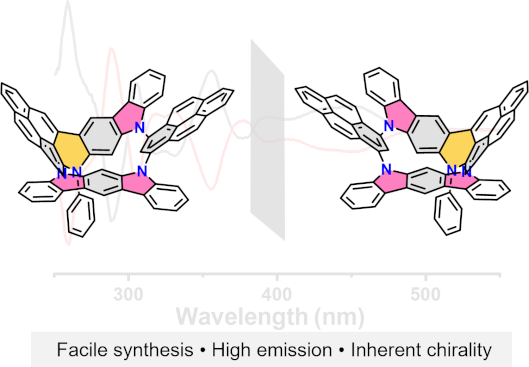
Electrosynthetic access to unsymmetrical oxaza[8]helicenes with high chiral stability and strong circularly polarized luminescence (CPL)
Beilstein J. Org. Chem. 2026, 22, 372–382, doi:10.3762/bjoc.22.25
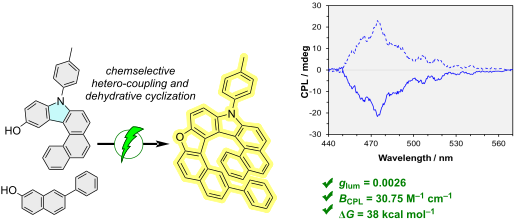
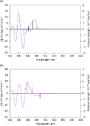
- barriers of 5a and 5b translate into excellent configurational robustness, as demonstrated by the absence of detectable enantiomerization when solutions of (M)-5a were heated at 130 °C for 2.5 h. Optical properties of oxaza[8]helicenes Photophysical features The absorption and emission spectra of oxaza[8




Symmetrical D–π–A–π–D indanone dyes: a new design for nonlinear optics and cyanide detection
Beilstein J. Org. Chem. 2026, 22, 131–142, doi:10.3762/bjoc.22.6
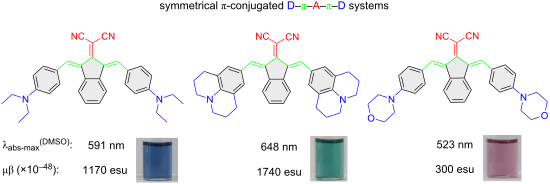
- can be shifted in the deep red/NIR region by changing the donor group with increased conjugated systems [19][20][21][22]. Gupta et al. studied optical properties of D–π–A system-based indan-2-one derivatives, and symmetric derivatives showed a significant bathochromic shift (≈300 nm) compared to
- spectrometry methods (Figures S1–S10 in Supporting Information File 1). Optical properties of dyes Photophysical properties of dyes 2a–c were assessed in four different organic solvents with various polarities (DMSO, acetone, chloroform, and THF) via absorption spectra and DFT calculations (Table 2). Figure 2a
- extinction coefficient Also, dyes exhibit positive solvatochromism, consistent with their ICT characteristics. Moreover, synthesized symmetric dyes containing D–π–A–π–D systems were analyzed using experimental and computational methods for second-order nonlinear optical properties. NLO measurements conducted


C2 to C6 biobased carbonyl platforms for fine chemistry
Beilstein J. Org. Chem. 2025, 21, 2103–2172, doi:10.3762/bjoc.21.165

- introduction of substituents to the seven-methine carbon chain of Cy7 influences its optical properties and ability to interact with biomolecules. A one-pot synthesis of γ-acyloxy-Cy7 from renewable furfural, simple anhydrides, and a quaternary ammonium salt under smooth conditions was reported (Scheme 63


Synthesis of N-doped chiral macrocycles by regioselective palladium-catalyzed arylation
Beilstein J. Org. Chem. 2025, 21, 1917–1923, doi:10.3762/bjoc.21.149
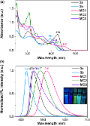
- side. The energy barrier was calculated to be 66.7 kcal mol−1, indicating MC3 is highly conformationally stable. The optical properties of the synthesized macrocycles were investigated in dichloromethane (Figure 3). The precursors 3a,b show intense absorptions with maxima at 425 nm and 395 nm




Photoswitches beyond azobenzene: a beginner’s guide
Beilstein J. Org. Chem. 2025, 21, 1808–1853, doi:10.3762/bjoc.21.143
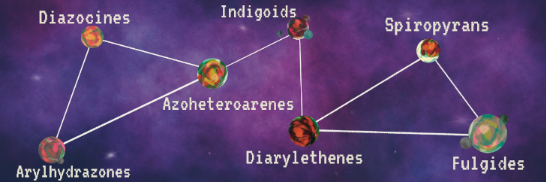
- -linear optical properties, switching with two-photon absorption of near-IR wavelengths [3][27]. This could open the way to laser-storage devices and to application in biological systems, where longer wavelengths are preferred due to improved tissue penetration [28]. When the push–pull character is not so


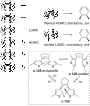


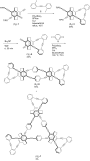
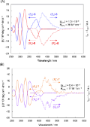
Synthesis of optically active folded cyclic dimers and trimers
Beilstein J. Org. Chem. 2025, 21, 1603–1612, doi:10.3762/bjoc.21.124

- oligomers using planar chiral tetrasubstituted [2.2]paracyclophane as chiral crossing units were prepared, in which π-extended conjugated systems were folded in either two or three places. The oligomers exhibited good optical properties such as PL and CPL properties with good ΦPL values (>0.6) and |glum



Thermodynamic equilibrium between locally excited and charge transfer states in perylene–phenothiazine dyads
Beilstein J. Org. Chem. 2025, 21, 1577–1586, doi:10.3762/bjoc.21.121
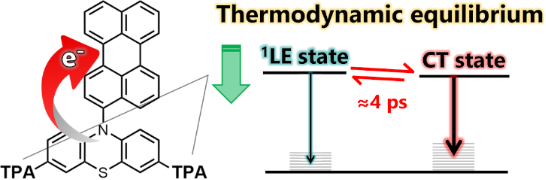
- shown in Supporting Information File 1. Energy levels and steady-state optical properties Time-dependent density functional theory (TD-DFT) calculations were performed to gain insights into the electronic structures of Pe–PTZ derivatives at B3LYP/6-31+G(d,p) level of theory (Figure 2) [18]. The





Synthesis of an aza[5]helicene-incorporated macrocyclic heteroarene via oxidation of an o-phenylene-pyrrole-thiophene icosamer
Beilstein J. Org. Chem. 2025, 21, 1561–1567, doi:10.3762/bjoc.21.119
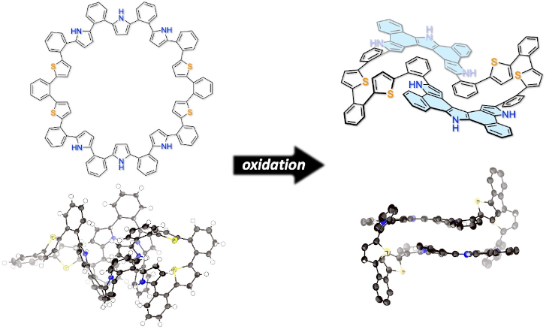
- largest cyclic array in the series. The oxidative fusion reaction with [bis(trifluoroacetoxy)iodo]benzene (PIFA) afforded a cyclophane-type aza[5]helicene-incorporated macrocycle, the structure of which was unambiguously revealed by X-ray diffraction analysis. Its optical properties have been investigated
- an aza[5]helicene-incorporated macrocycle. The resulting cyclophane-like structure and its optical properties have been analyzed in detail. Results and Discussion Synthesis and characterization Synthesis We obtained o-phenylene-pyrrole-thiophene hybrid icosamer 4 during our attempt to synthesize
- two NH sites remained uncoordinated due to steric hindrance. Non-covalent interaction (NCI) plot analysis revealed distinct intramolecular π–π dispersion interactions between the two aza[5]helicene moieties (green surface in Figure 4b) [29][30][31]. Optical properties The electronic absorption and


Highly distinguishable isomeric states of a tripodal arylazopyrazole derivative on graphite through electron/hole-induced switching at ambient conditions
Beilstein J. Org. Chem. 2025, 21, 1496–1507, doi:10.3762/bjoc.21.112
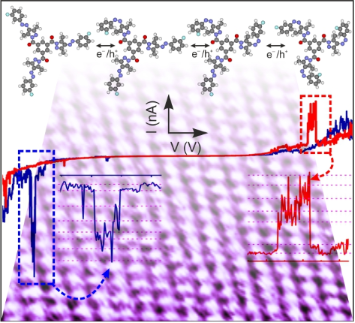
- electronic and optical properties of switchable states. The applicability of molecular switches relies on the efficiency, reversibility, and the half-life associated with different non-equilibrium states. Typically, the half-life of the Z isomer of AB is a few days [17]. Chemical modifications of AB




Advances in nitrogen-containing helicenes: synthesis, chiroptical properties, and optoelectronic applications
Beilstein J. Org. Chem. 2025, 21, 1422–1453, doi:10.3762/bjoc.21.106
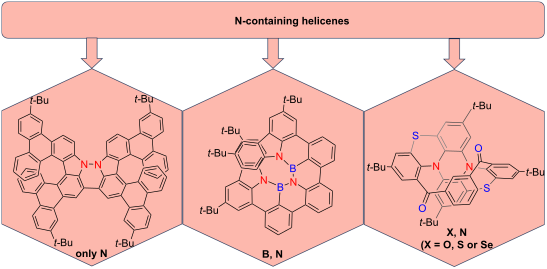
- design strategies for constructing helically twisted or planarized chiral π-conjugated systems with tunable optical properties, thereby paving the way for the development of multifunctional materials in advanced photonic and electronic technologies. In 2021, Viglianisi’s group synthesized a series of

Tautomerism and switching in 7-hydroxy-8-(azophenyl)quinoline and similar compounds
Beilstein J. Org. Chem. 2025, 21, 1404–1421, doi:10.3762/bjoc.21.105
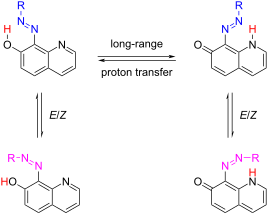
- resistance [1][2][3][4]. In addition to their conventional use, azodyes have unique optical properties, defined by the E/Z isomerization [5][6] and by the tautomeric proton exchange [3][7][8][9][10][11], when a OH or NH group is present on a suitable position in the molecule. Both processes are strongly




Biobased carbon dots as photoreductants – an investigation by using triarylsulfonium salts
Beilstein J. Org. Chem. 2025, 21, 1024–1030, doi:10.3762/bjoc.21.84
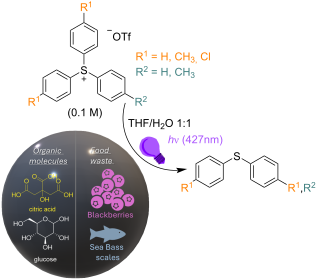
- their size, surface defects, and functional groups, which can be engineered to tune their optical properties. Accordingly, their emission spans a broad range of wavelengths, from ultraviolet to the visible region, allowing for the potential application in an impressive range of applications, such as
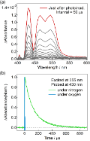
- via hydrothermal treatments have an amorphous structure. The optical properties of the prepared CDs were thus investigated by UV–vis absorption spectroscopy. The obtained spectra (Figure 1) showed three main absorption bands located at 225–235 nm (assigned to, according to the literature, the π–π


Synthesis of pyrrolo[3,2-d]pyrimidine-2,4(3H)-diones by domino C–N coupling/hydroamination reactions
Beilstein J. Org. Chem. 2025, 21, 1010–1017, doi:10.3762/bjoc.21.82
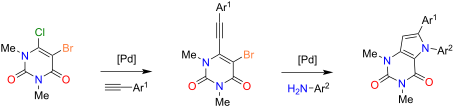
- Abstract A variety of pyrrolo[3,2-d]pyrimidine-2,4(3H)-diones were prepared by a combination of Sonogashira reaction and subsequent cyclization by domino C–N coupling/hydroamination reaction. The optical properties (UV–vis absorption and fluorescence) depend on the substitution pattern of the compounds



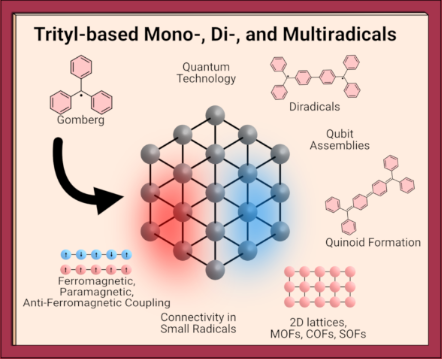
On the photoluminescence in triarylmethyl-centered mono-, di-, and multiradicals
Beilstein J. Org. Chem. 2025, 21, 964–998, doi:10.3762/bjoc.21.80


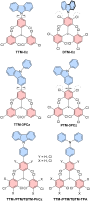

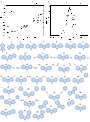


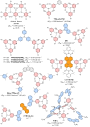


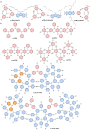



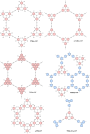
Unprecedented visible light-initiated topochemical [2 + 2] cycloaddition in a functionalized bimane dye
Beilstein J. Org. Chem. 2025, 21, 500–509, doi:10.3762/bjoc.21.37
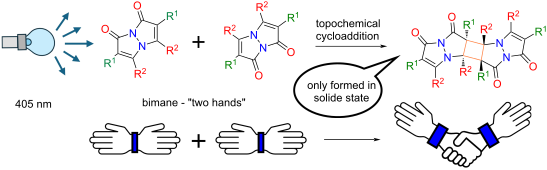
- )bimane (DMOCDO10) and syn-(Me,Me)bimane (DXABIM10) [26], a room temperature structure of Me4B (TNZBCO10) [27], and a planar syn-(H,ethynyl)bimane (WAYHEJ) [28]. Optical properties The optical properties of the three bimanes were measured to investigate differences in their excited state properties, as


Red light excitation: illuminating photocatalysis in a new spectrum
Beilstein J. Org. Chem. 2025, 21, 296–326, doi:10.3762/bjoc.21.22

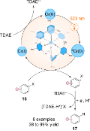
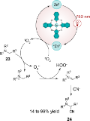
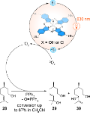
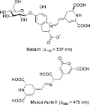
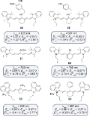
- have been extensively studied in the literature such as bridged Eosin Y 37 [44], BODIPY 38 [45], and dibenzothiazole 39 (Figure 5) [46]. Indeed, organic dyes, with their inherent advantages of low toxicity, environmental friendliness, and tunable optical properties, represent a promising alternative

















Synthesis and characterizations of highly luminescent 5-isopropoxybenzo[rst]pentaphene
Beilstein J. Org. Chem. 2025, 21, 270–276, doi:10.3762/bjoc.21.19
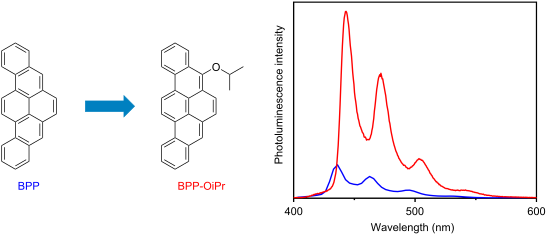
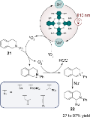
- by scanning electron microscopy. The intriguing optical properties of BPP and its derivatives may lead to their application as fluorophores. Keywords: benzo[rst]pentaphene; intramolecular charge transfer; nanocrystals; photoluminescence; polycyclic aromatic hydrocarbon; Introduction Polycyclic
- improving the stability of inverted perovskite solar cells [23]. On the other hand, benzo[rst]pentaphene-5,8-dione (BPP-dione) is known as an oxidation product of BPP [24][25], but to the best of our knowledge, the detailed optical properties of this BPP derivative have not been previously described in the
- Supporting Information File 1), suggesting that the BPP core can lead to such rod-shaped crystals and nanowires. Conclusion In summary, we achieved a facile synthesis of BPP-OiPr 3 and studied its optical properties in comparison to pristine BPP 2 and its oxidation product BPP-dione 4. Both BPP-OiPr 3 and




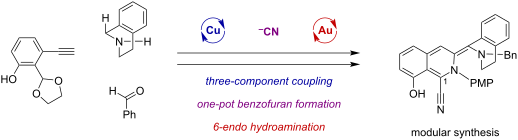
Streamlined modular synthesis of saframycin substructure via copper-catalyzed three-component assembly and gold-promoted 6-endo cyclization
Beilstein J. Org. Chem. 2025, 21, 226–233, doi:10.3762/bjoc.21.14
- the optical properties of 18 in CHCl3 (c = 100 μM) by measuring its UV–vis absorption spectrum as well as its excitation and emission spectra. The UV–vis spectrum of 18 showed two absorption peaks at 334 nm and around 375 nm (gray solid line). When excited at 375 nm, the emission spectra of 18


Efficient synthesis of fluorinated triphenylenes with enhanced arene–perfluoroarene interactions in columnar mesophases
Beilstein J. Org. Chem. 2024, 20, 3263–3273, doi:10.3762/bjoc.20.270
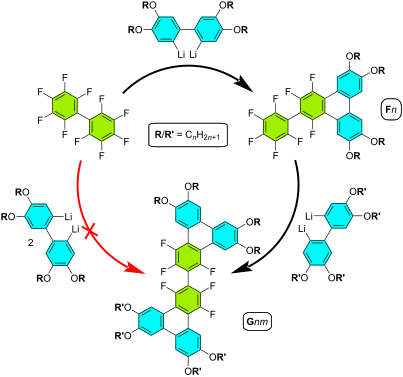
- new, structurally-related series of π-conjugated aromatic compounds (Figure 1) based on a simple triphenylene core and evaluating the mesomorphic and optical properties. Specifically 1,2,4-trifluoro-6,7,10,11-tetraalkoxy-3-(perfluorophenyl)triphenylenes (Fn, Figure 1), bearing a terminal fluoroarene
- optical properties of these compounds by comparing the properties of Fn with those of partially fluorinated PHn and non-fluorinated BTPn. Such comparison is critical for optimizing materials for specific applications. Second, the presence of this terminal fluoroarene group provides a basic platform to
- , Tables S1–S3), TGA (Figure S35, Table S4), POM (Figure S36), DSC (Figures S37, S38, Table S5), S/WAXS (Figures S39–S43, Table S6), optical properties (Table S7), and DFT (Figure S44, Table S8). Supporting Information File 50: Experimental part. Acknowledgements B.D. thanks the CNRS and the University of




Cyclodextrin-based rotaxanes for polymer materials: challenge on simultaneous realization of inexpensive production and defined structures
Beilstein J. Org. Chem. 2024, 20, 3026–3049, doi:10.3762/bjoc.20.252
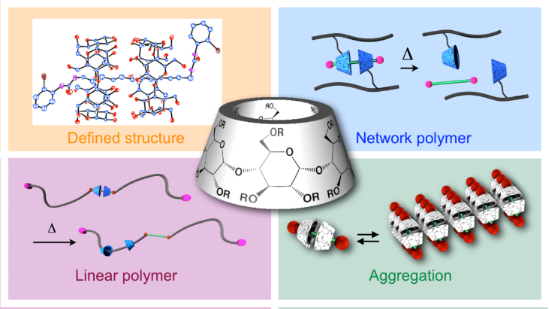
- featuring the CD-based rotaxane framework by implementing a certain level of structural control at the same time. In 2013, Anderson and co-workers synthesized a conjugative polymer, which was included by β-CDs, and investigated their optical properties and thermal stabilities (Figure 13A) [81






Tunable full-color dual-state (solution and solid) emission of push–pull molecules containing the 1-pyrindane moiety
Beilstein J. Org. Chem. 2024, 20, 3016–3025, doi:10.3762/bjoc.20.251

- pyridine as an acceptor. The introduction of additional substituents to stilbazole makes it possible to change the optical properties of this molecular framework within a wide range [16][17][18][19]. This approach has found many applications in the synthesis of compounds that are used in various optical


The charge transport properties of dicyanomethylene-functionalised violanthrone derivatives
Beilstein J. Org. Chem. 2024, 20, 2921–2930, doi:10.3762/bjoc.20.244
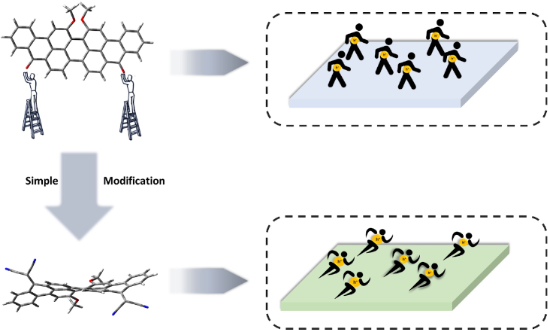
- values of absorption (λonset), and little difference was found with values of 1.47 eV for 3b and 1.46 eV for 3a and 3c. It is noted that the optical properties did not show a significant change upon altering the alkyl chains which indicates that different alkyl substituents have a minimal effect on the


Synthesis of benzo[f]quinazoline-1,3(2H,4H)-diones
Beilstein J. Org. Chem. 2024, 20, 2708–2719, doi:10.3762/bjoc.20.228
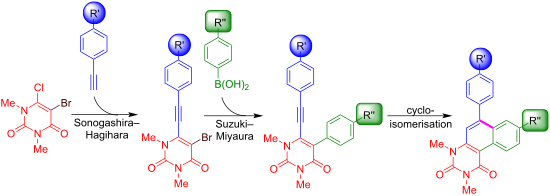
- and Suzuki–Miyaura cross-coupling reactions followed by Brønsted acid-mediated cycloisomerisation. The developed methodology tolerates various functional groups and leads to moderate up to quantitative yields of the final products. The impact of different functional groups on the optical properties
- -based benzo[f]quinazoline-1,3(2H,4H)-diones C [65]. Furthermore, optical properties were analysed by UV–vis and fluorescence spectroscopy. Results and Discussion Synthesis Our strategy for the synthesis of benzo[f]quinazoline-1,3(2H,4H)-diones is based on a four-step sequence and relies on a combination
- various functional groups. The optical properties of as-prepared derivatives were investigated by steady-state absorption and photoluminescence spectroscopy. The photophysical properties are strongly altered by the presence N,N-dimethylaniline functional groups on the scaffold, which leads to strongly




Transition-metal-free decarbonylation–oxidation of 3-arylbenzofuran-2(3H)-ones: access to 2-hydroxybenzophenones
Beilstein J. Org. Chem. 2024, 20, 2655–2667, doi:10.3762/bjoc.20.223
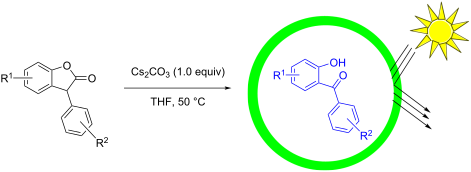
- . Synthesis of 3-arylbenzofuran-2(3H)-ones. Synthesis of 2-hydroxybenzophenones. Gram-scale experiment. Control experiments. Optimization of reaction conditions.a Optical properties of the compounds 4aa–ma. Values of [EE(λ) × I(λ)] used in calculating the SPF. Supporting Information Supporting Information
- File 10: Characterization data of compounds 3aa–ma, 4aa–ma, and 5. 1H and 13C NMR spectra of 3aa–ma, 4aa–ma, and 5; single crystal data of 4ja, 4fb, and 4ma; UV–vis absorption spectra and optical properties of 4aa–ma. Acknowledgements The authors acknowledge Dr. Sudip Gorai, BARC, for his help in