


Search results
Search for "spectral changes" in Full Text gives 51 result(s) in Beilstein Journal of Organic Chemistry.
The role of spacer length and flexibility in peptide self-assembly
Beilstein J. Org. Chem. 2026, 22, 986–996, doi:10.3762/bjoc.22.77
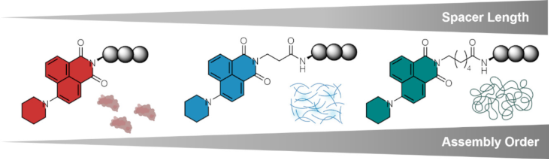
- behavior of molecules by monitoring spectral changes upon increasing the fraction of an organic co-solvent. A gradual, linear change in signal intensity or chemical shift with increasing co-solvent content is indicative of simple dissolution and bulk solvent effects. In contrast, a pronounced transition


Effect of a photoswitchable rotaxane on membrane permeabilization across lipid compositions
Beilstein J. Org. Chem. 2025, 21, 2498–2512, doi:10.3762/bjoc.21.192
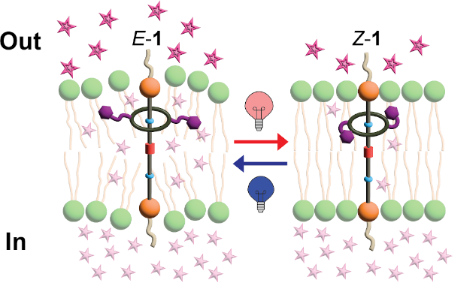
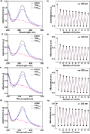
- photoswitching of rotaxane 1 in LUVs with varying lipid compositions. Left column: UV–vis spectral changes of rotaxane 1 after one cycle of photoisomerization – irradiation at 370 nm (PSS370) for 1 minute, followed by irradiation at 467 nm (PSS467) for 1 minute. Spectra are shown for a) EYPC c) EYPC/Chol 8:2, e




Azobenzene protonation as a tool for temperature sensing
Beilstein J. Org. Chem. 2025, 21, 1528–1534, doi:10.3762/bjoc.21.115
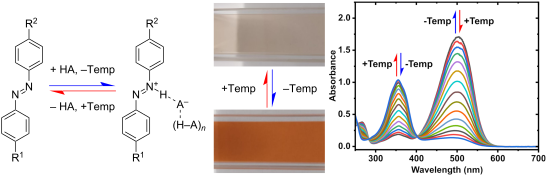
- . Keywords: azobenzene; protonation; sensing; spectral changes; temperature; Introduction Molecular switches are molecules that can reversibly shift between distinct (meta)stable states in response to external stimuli such as light, pH changes, or electric fields [1]. Over the past decades, they have
- spectral changes caused by azobenzene protonation is a well-established concept, with methyl orange-based pH indicators dating back to the late 1800s [22]. Early studies primarily focused on characterizing these spectral changes, determining pKa values, and elucidating the protonation mechanism of
- modification. By combining a medium with temperature-dependent proton activity and an indicator molecule with systematic spectral changes, the system can be utilised for temperature sensing. Figure 2A shows the drastic change in the relative proportion of the neutral and protonated absorption peaks of 3 in DCE


Tautomerism and switching in 7-hydroxy-8-(azophenyl)quinoline and similar compounds
Beilstein J. Org. Chem. 2025, 21, 1404–1421, doi:10.3762/bjoc.21.105
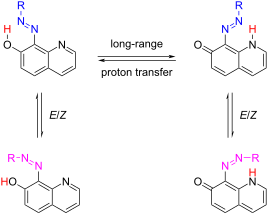
- and KK (both below 5%) could be observed in amounts around the detection limit of optical spectroscopy, which finally should not lead to substantial spectral changes comparing to toluene. The absorption spectra, shown in Figure S10 (Supporting Information File 1), suggest a different story. The
- switching to KK. According to the PESs in Figure 6, the excited KK behaves in a way similar to KE and the spectral changes cannot be distinguished from these of KE due to the similarities in the absorption spectra. Compound 2 does not emit in the studied solvents and its absorption spectra in toluene do not
- . Changes in the absorption spectrum of 2 in acetonitrile upon addition of trifluoroacetic acid (TFA) and triethylamine (TEA). The addition of more TFA or TE does not cause further spectral changes. Ground (M06-2X/TZVP) and excited (CAM-B3LYP/TZVP) state potential energy surface of compound 1 in toluene




Supramolecular assembly of hypervalent iodine macrocycles and alkali metals
Beilstein J. Org. Chem. 2025, 21, 1095–1103, doi:10.3762/bjoc.21.87
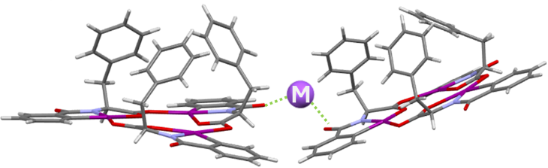
- Information File 1, Figures S6 and S7). These results suggest that there are new associative processes occurring in the presence of both LiBArF20 and NaBArF24. The NMR spectral changes observed are mainly due to the binding of metals (lithium and sodium) to HIM 1. Additionally, some of these changes could be


Effect of substitution position of aryl groups on the thermal back reactivity of aza-diarylethene photoswitches and prediction by density functional theory
Beilstein J. Org. Chem. 2025, 21, 242–252, doi:10.3762/bjoc.21.16
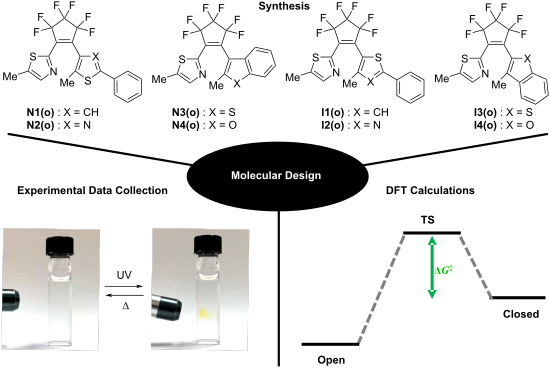
- Information File 1. The photochromic properties of N3, N4, and I1–I4 were investigated in n-hexane. Figure 1a,b and Figure S1 in Supporting Information File 1 show the absorption spectral changes of N3, N4, and I1–I4 in n-hexane upon UV light irradiation. Compounds N3(o), N4(o), and I1(o)–I4(o) have
- closed-ring isomers was carried out to confirm that there is no imaginary frequencies. Various functionals (B3LYP, BMK, CAMB3LYP, M05, M06, M05-2X, M06-2X, MPW1PW91, and ωB97X-D) in combination with a 6-31G(d) basis set were used for the calculations. Absorption spectral changes of (a) N3 and (b) I3 in n


Supramolecular assemblies of amphiphilic donor–acceptor Stenhouse adducts as macroscopic soft scaffolds
Beilstein J. Org. Chem. 2024, 20, 1590–1603, doi:10.3762/bjoc.20.142
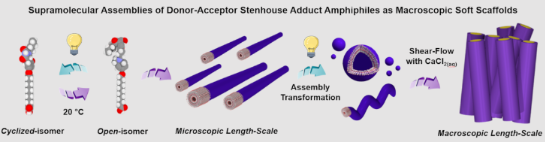
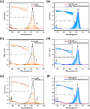
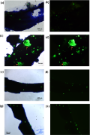
- (Gibco). Then, hBM-MSCs (Lonza) were added to the culture dish and cultured for 3 days at 37 °C and 5% CO2 in an incubator. After incubation, the DAn macroscopic scaffold with cells attached was used directly for fluorescent microscopy measurements. UV–vis-absorption-spectral changes of DAn in THF




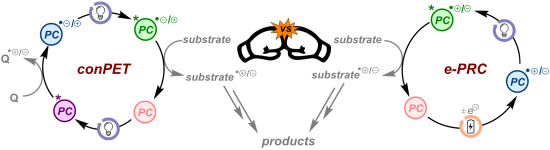
Photoredox catalysis harvesting multiple photon or electrochemical energies
Beilstein J. Org. Chem. 2023, 19, 1055–1145, doi:10.3762/bjoc.19.81




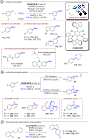

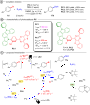
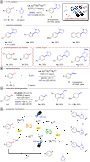


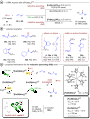
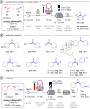
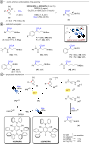
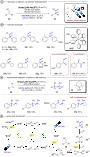
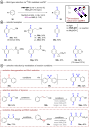


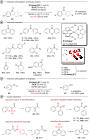

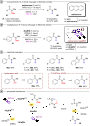
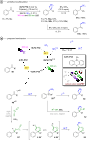
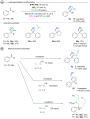
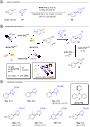


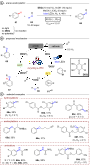

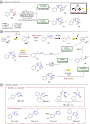
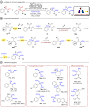












Phenanthridine–pyrene conjugates as fluorescent probes for DNA/RNA and an inactive mutant of dipeptidyl peptidase enzyme
Beilstein J. Org. Chem. 2023, 19, 550–565, doi:10.3762/bjoc.19.40
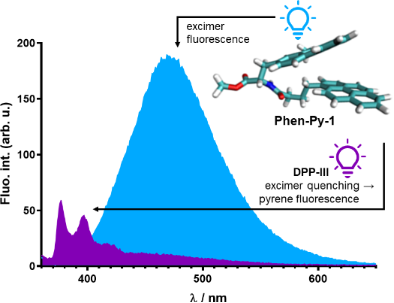
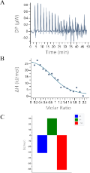
- ), spectral changes could be attributed to a single dominant binding mode. Titration data were processed by the Scatchard equation [38][39] and Global Fit procedure [40] to calculate the association constants and ratio n [bound compound]/[polynucleotide] (Table 2, Figure 4 and Figures S15–S18, Supporting




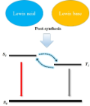
Post-synthesis from Lewis acid–base interaction: an alternative way to generate light and harvest triplet excitons
Beilstein J. Org. Chem. 2022, 18, 825–836, doi:10.3762/bjoc.18.83
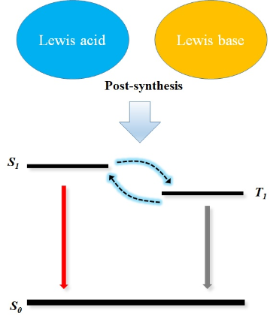
- spectral changes [38]. This demonstrates that stronger Lewis acids and Lewis bases will result in stronger charge transfer. Moreover, stronger electron donors or more accessible nitrogen-containing groups would interact easily via Lewis acid coordination. As shown in Figure 13b, the energy levels


Syntheses of novel pyridine-based low-molecular-weight luminogens possessing aggregation-induced emission enhancement (AIEE) properties
Beilstein J. Org. Chem. 2022, 18, 580–587, doi:10.3762/bjoc.18.60
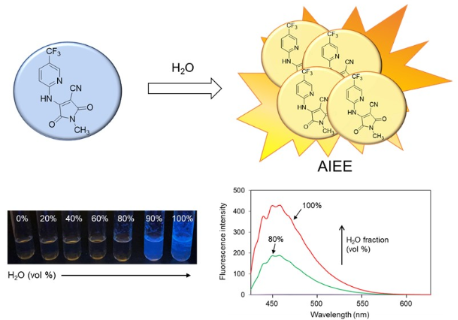
- fractions. Fluorescence spectral changes of (a) 4a (10−5 M, Exmax = 413 nm) and (b) 4e (10−5 M, Exmax = 415 nm) upon addition of 0.1 M HCl. Protonation of N-methyl-4-((pyridin-2-yl)amino)-substituted maleimides 4 by 0.1 M HCl. Frontier molecular orbitals and HOMO–LUMO energy gaps of compounds 3a, 4a, and 4e


Multiswitchable photoacid–hydroxyflavylium–polyelectrolyte nano-assemblies
Beilstein J. Org. Chem. 2021, 17, 166–185, doi:10.3762/bjoc.17.17
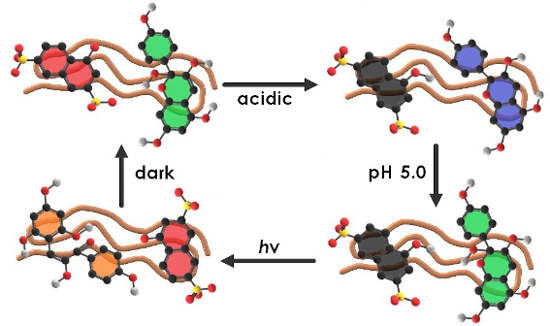
- nm completely disappeared, while at the same time the intensity of the band at λ = 300 nm increased. These spectral changes correspond to the transformation of the remaining AH+ to the B form of Flavy, which is also due to the decrease of the pH value from pH 7.0 to pH 4.8 after irradiation of the




Selective recognition of ATP by multivalent nano-assemblies of bisimidazolium amphiphiles through “turn-on” fluorescence response
Beilstein J. Org. Chem. 2020, 16, 2728–2738, doi:10.3762/bjoc.16.223
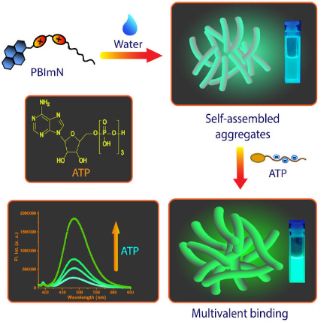
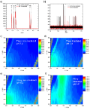
- . (a) Absorption and (b) emission spectra of PBImN (50 µM) derivatives in buffer. (c) Absorption and (d) emission spectra of PBIm12 at different concentrations in buffer. FESEM images of PBIm12 (a) without and (b) with ATP. (c) Emission spectral changes of PBIm12 (75 µM) in buffer upon addition of ATP


Optical detection of di- and triphosphate anions with mixed monolayer-protected gold nanoparticles containing zinc(II)–dipicolylamine complexes
Beilstein J. Org. Chem. 2020, 16, 2687–2700, doi:10.3762/bjoc.16.219
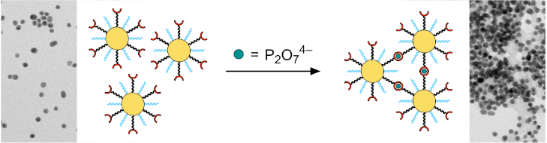
- , this signal became smaller and two doublets appeared at lower ppm values. Once the concentration of the zinc salt exceeded a certain value, only these doublets were still visible. In addition, zinc complexation also affected the aromatic signals of the DPA ligands. The spectral changes observed in the


A dynamic combinatorial library for biomimetic recognition of dipeptides in water
Beilstein J. Org. Chem. 2020, 16, 1588–1595, doi:10.3762/bjoc.16.131
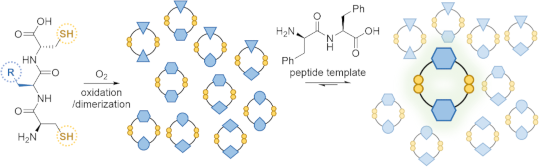
- developed a DCL composed of Cu2+, Ni2+ complexes. The addition of dipeptides caused characteristic spectral changes by ligand-exchange reactions [18]. We previously used a peptide derived DCL for the development of artificial carbohydrate receptors [19][20]. An intriguing example derived from that work is


[3 + 2] Cycloaddition with photogenerated azomethine ylides in β-cyclodextrin
Beilstein J. Org. Chem. 2020, 16, 1296–1304, doi:10.3762/bjoc.16.110
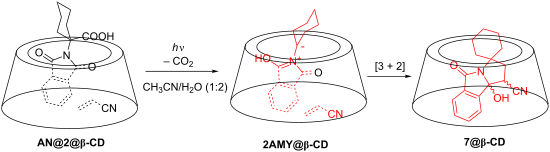
- of the phthalimide, which changed from a singlet to a multiplet (Figure S1 in Supporting Information File 1). The spectral changes are in accordance with the formation of an inclusion complex 2@β-CD, with the dynamics for the complexation faster than the NMR time-scale (millisecond). Nonlinear
- in the inclusion complex 2@β-CD or 3@β-CD, respectively. The addition of AN to the CD3CN/D2O (3:7 v/v) solution of 2@β-CD induced changes in the spectra, opposite to those observed upon formation of 2@β-CD (compare Figures S1 and S6 in Supporting Information File 1). The spectral changes are in
- . Therefore, we titrated the solution of 3@β-CD in CD3CN/D2O (3:7 v/v) with AN, whereupon spectral changes were observed (Figure S8 in Supporting Information File 1). The signal of the adamantane H-atom at the adamantane position 6 experienced a downfield shift, whereas the phthalimide signals experienced an


Cation-induced ring-opening and oxidation reaction of photoreluctant spirooxazine–quinolizinium conjugates
Beilstein J. Org. Chem. 2020, 16, 904–916, doi:10.3762/bjoc.16.82
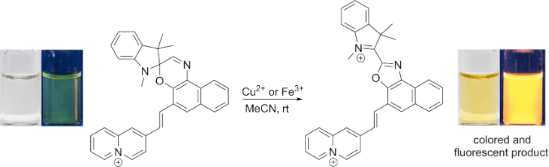
- mM, F: 4.0 mM) in CD3CN (cf. Scheme 3). The green asterisks highlight the clearly distinguishable signals of the third signal set of a reaction intermediate (B) in addition to the signal sets of 3a (A) and 4a (F). Spectral changes of 3a (c = 20 µM) upon the addition of Cu2+ (A) and Fe3+ (B) (cM+ = 60


Direct borylation of terrylene and quaterrylene
Beilstein J. Org. Chem. 2020, 16, 621–627, doi:10.3762/bjoc.16.58
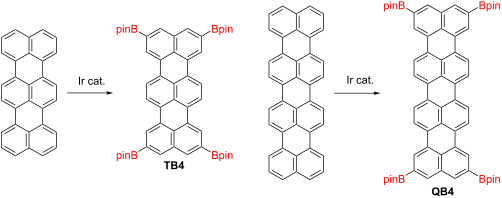
- QB4 are pretty high among electron-rich compounds. Thus we tested the stability of TB4 and QB4 under air by means of UV–vis absorption spectroscopy. Surprisingly almost no spectral changes for both compounds were observed after 12 h, probably because the most reactive sites are protected by the steric





Photophysics and photochemistry of NIR absorbers derived from cyanines: key to new technologies based on chemistry 4.0
Beilstein J. Org. Chem. 2020, 16, 415–444, doi:10.3762/bjoc.16.40


Design, synthesis and investigation of water-soluble hemi-indigo photoswitches for bioapplications
Beilstein J. Org. Chem. 2019, 15, 2822–2829, doi:10.3762/bjoc.15.275
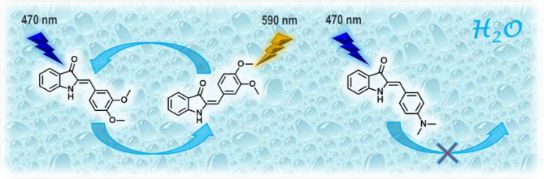
- biological studies, the dimethylamino derivative Z-1a was excluded from further studies. In contrast, mono- and dimethoxy-substituted hemi-indigo derivatives Z-1b and Z-1c showed pronounced spectral changes upon irradiation indicating an efficient Z–E isomerization of the C–C-double bond (Figure 1B and


Photoreversible stretching of a BAPTA chelator marshalling Ca2+-binding in aqueous media
Beilstein J. Org. Chem. 2019, 15, 2801–2811, doi:10.3762/bjoc.15.273
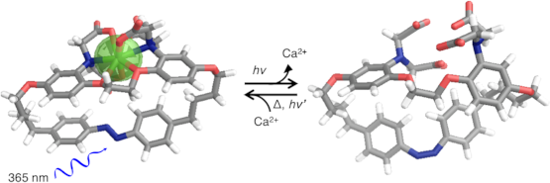
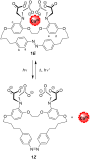
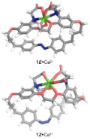
- : 2700 M−1 cm−1). The complexation of Ca2+ (Figure 6b) induced blue-shifting and a decrease of the absorption band intensities of 1E at 297 nm (ε: 4900 M−1 cm−1) and 345 nm (ε: 3000 M−1 cm−1). After linearizing the spectral changes via a Hill plot, a 1:1 binding with a Kd of 0.102 μM in the case of 1E




Experimental and computational electrochemistry of quinazolinespirohexadienone molecular switches – differential electrochromic vs photochromic behavior
Beilstein J. Org. Chem. 2019, 15, 2473–2485, doi:10.3762/bjoc.15.240
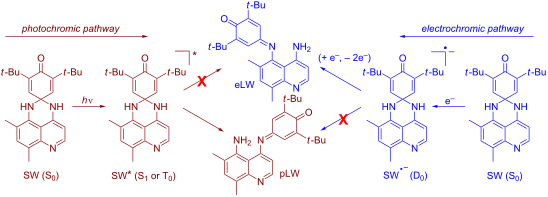
- attributing the small spectral changes to the presence of electrolyte in the electrolyzed solutions, to an interaction with air, or to a side reaction in solution. The shorter wavelength for electrogenerated 5a,b may result from slightly less planarity and decreased conjugation versus the photogenerated 4a,b




Ultrafast processes triggered by one- and two-photon excitation of a photochromic and luminescent hydrazone
Beilstein J. Org. Chem. 2019, 15, 2438–2446, doi:10.3762/bjoc.15.236
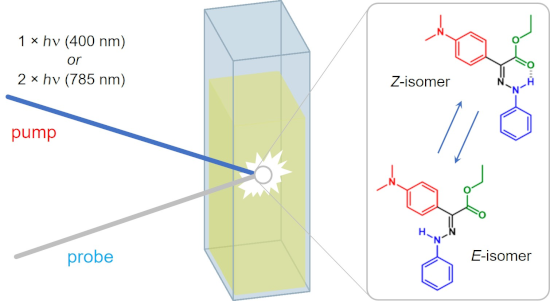
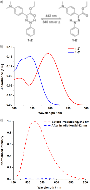
- 50 ps timescale and recovers almost completely in about 500 ps. In methanol, although the spectral evolution is qualitatively similar to that observed in acetonitrile, the kinetics associated with the detected spectral changes differ substantially. The initial evolution, corresponding to the recovery



Targeted photoswitchable imaging of intracellular glutathione by a photochromic glycosheet sensor
Beilstein J. Org. Chem. 2019, 15, 2380–2389, doi:10.3762/bjoc.15.230
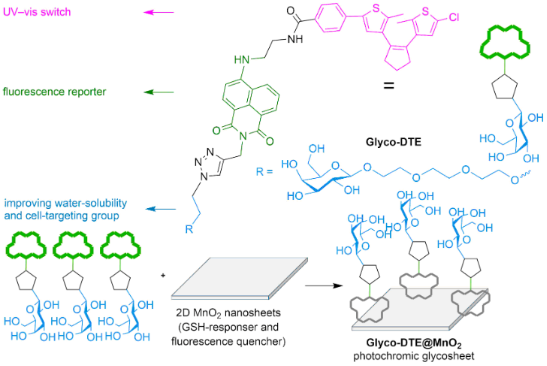
- photochromic sensors in various physiological scenarios. These findings not only enable promising applications in targeted-cell imaging but also provide a new sensor platform useful for multiple fluorescence signaling and improving the detection precision. Absorption spectral changes (A), absorption fatigue
- resistance (B), emission spectral changes (C) and emission fatigue resistance (D) of reporter Glyco-DTE (1 × 10⁻⁵ mol/L) in PBS buffer (pH 7.4, 0.25‰ Triton X-100) upon alternating irradiation with UV (254 nm) and visible light (>500 nm). Emission spectra were produced upon excitation at 448 nm. (A) The
- absorbance spectrum and (B) high resolution TEM image of 2D MnO2 nanosheets (1 × 10⁻⁵ g/mL) in ultrapure water; (C) DLS and Zeta potential characterizations of 2D MnO2 photochromic glycosheet. (A) Emission spectral changes of reporter Glyco-DTE (1 × 10⁻⁵ mol/L in PBS buffer, 0.25‰ Triton X-100) upon addition



Small anion-assisted electrochemical potential splitting in a new series of bistriarylamine derivatives: organic mixed valency across a urea bridge and zwitterionization
Beilstein J. Org. Chem. 2019, 15, 2277–2286, doi:10.3762/bjoc.15.220
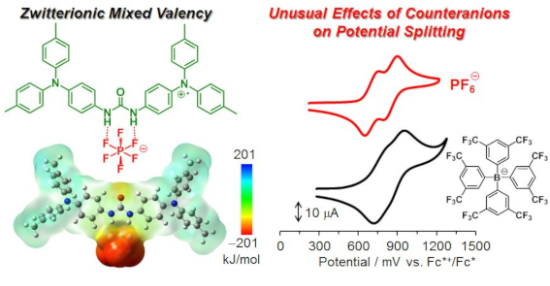
- of peripheral tolyl groups (gray), nitrogen centers and bridging moieties (blue), and PF6− (red) (middle), and electrostatic potential maps (isosurface value 0.0004 au) of 1b, 1b+, and 1b+–PF6– (bottom). UV–vis-NIR spectral changes of CH2Cl2/n-Bu4NPF6 (0.10 M) solutions containing (a) 1b (4.5 × 10⁻⁴





