Search results
Search for "synthetic methods" in Full Text gives 377 result(s) in Beilstein Journal of Organic Chemistry. Showing first 200.
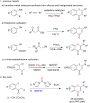
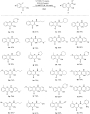
A cascade synthesis of 2-aminothiochromones from 2-fluorophenyl ketone and thiocarbonyldiimidazole
Beilstein J. Org. Chem. 2026, 22, 1151–1159, doi:10.3762/bjoc.22.92
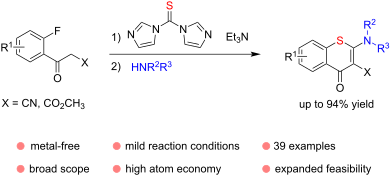
- considerable interest [14]. This has spurred the development of synthetic approaches and driven sustained investigations into their synthesis over recent decades. Despite the structural similarity of the sulfur-containing thiochromone scaffold to the extensively developed chromones, synthetic methods for



Construction of CF2 moieties in FDA-approved drugs (2016–2025): industrial routes, mechanisms, and scale-up considerations
Beilstein J. Org. Chem. 2026, 22, 1122–1150, doi:10.3762/bjoc.22.91
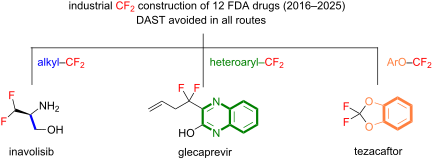
- ten-year period), a comprehensive search revealed that no CF2-containing drugs received FDA approval in 2016 or 2025. Consequently, the drugs shown in Figure 1 are concentrated in the 2017–2024 timeframe. The review summarizes the synthetic methods used to construct the CF2 moieties in these 12 drugs
- ). The drugs are categorized according to the chemical environment of the CF2 group (alkyl-CF2, heteroaryl-CF2, and ArO–CF2). Their synthetic methods are presented in section 1 following the same classification, while the mechanistic discussion is reserved for section 2. This review is primarily intended
- containing an heteroaryl-CF2 and an alkyl-CF2 group. The synthetic methods are summarized below according to these three structural types. Within each subsection, the drugs are presented in chronological order based on their year of approval. In evaluating the reported routes, multiple dimensions were taken






Synthesis of novel 1,2,4-oxadiazole-isoxazoline hybrids and their in silico potential with adenosine receptors
Beilstein J. Org. Chem. 2026, 22, 1033–1047, doi:10.3762/bjoc.22.82
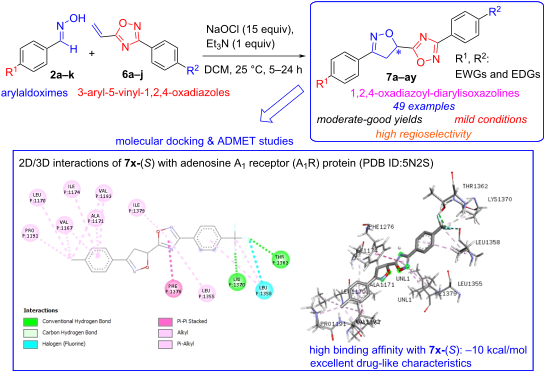
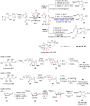
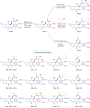
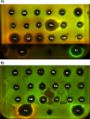
- –hydrogen bond; dark-pink region: pi–pi stacked connections. Recent studies for the synthesis of 1,2,4-oxadiazole-isoxazoline hybrids. Synthesis of novel 1,2,4-oxadiazole-isoxazoline lead compounds by 1,3-DC. Synthetic methods for accessing the starting compounds (2a–k, 6a–j). Reagents and conditions: a


Synthesis of heterocycles based on azomethine ylides from α-amino acids (or amines) and carbonyl compounds
Beilstein J. Org. Chem. 2026, 22, 705–741, doi:10.3762/bjoc.22.55
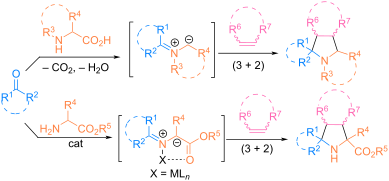
- biologically active oxindoles spiro-fused with pyrrolidines. Naturally, the task arises of developing synthetic methods for the organocatalytic 1,3-dipolar cycloaddition of isatin-derived azomethine ylides and exploring their further application in the enantioselective synthesis of spiro-oxindoles. Azomethine


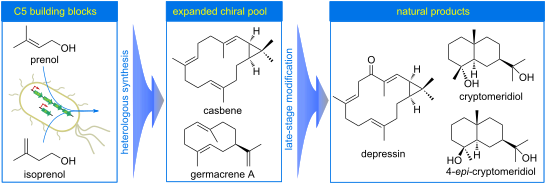
Synthesis of depressin, cryptomeridiol and 4-epi-cryptomeridiol enabled by a terpenoid chiral pool-producing platform
Beilstein J. Org. Chem. 2026, 22, 683–690, doi:10.3762/bjoc.22.53
- ). Supporting Information Supporting Information File 5: Materials, synthetic methods and copies of NMR spectra for all compounds. Supporting Information File 6: X-ray crystal structure of 16. Funding We are grateful to the National Natural Science Foundation of China (No. 82574274) for the financial support.


Arene activation via π-bond localization: concepts and opportunities
Beilstein J. Org. Chem. 2026, 22, 257–273, doi:10.3762/bjoc.22.19
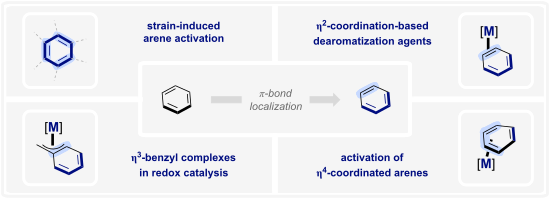
- aromaticity and unveiling the latent double-bond character within the aromatic ring. This dramatically increases reactivity, enabling alkene-like transformations with aromatic molecules that are inaccessible by conventional synthetic methods, thereby complementing traditional arene chemistry. Other modes of




A mild and atom-efficient four-component cascade strategy for the construction of biologically relevant 4-hydroxyquinolin-2(1H)-one derivatives
Beilstein J. Org. Chem. 2026, 22, 244–256, doi:10.3762/bjoc.22.18
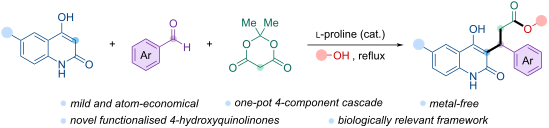
- ; Introduction Contemporary organic chemistry focuses on the development of universal, efficient, and environmentally benign synthetic methods that address the challenges of constructing complex molecular architectures [1][2][3]. Among these, multicomponent reactions (MCRs) have emerged as powerful tools


Synthesis of diaryl phosphates using phytic acid as a phosphorus source
Beilstein J. Org. Chem. 2026, 22, 213–223, doi:10.3762/bjoc.22.15
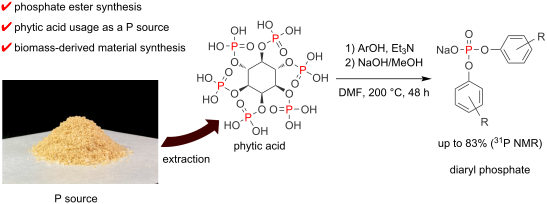
- -free synthetic methods have been reported for the synthesis of phosphorus compounds (Figure 2A) [35][36][37][38][39][40][41]. Cummins’s group demonstrated that phosphoric acid and condensed phosphoric acid can be reduced using trichlorosilane. The resulting intermediate, the bis(trichlorosilyl
- Supporting Information File 1. Structures of representative phosphate esters. Synthetic methods for phosphorus compounds bypassing white phosphorus or phosphorus chloride. Conditions for the syntheses of diaryl phosphates using phytic acid as a phosphorus source and scope of substrate applications. Each
- phosphate rocks, a practice that has evoked concerns due to the natural resource depletion through a refining process called the Wöhler process [34]. It incurs extremely high energy costs of approximately 12.5–14 MWh per 1 t (1 metric ton = 1000 kg) of white phosphorus [34]. In recent years, synthetic


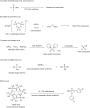


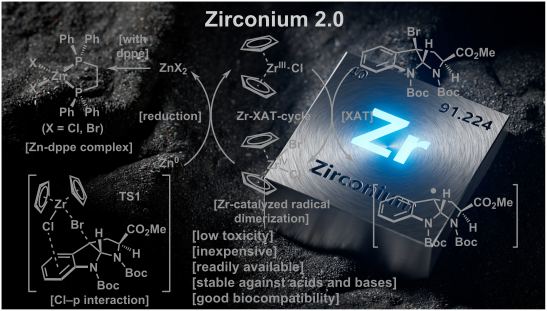
Advances in Zr-mediated radical transformations and applications to total synthesis
Beilstein J. Org. Chem. 2026, 22, 71–87, doi:10.3762/bjoc.22.3
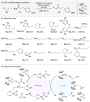
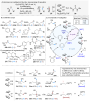
- development of efficient synthetic methods for its construction remains in high demand. Benzyl chlorides, which are inexpensive and readily available, have attracted attention as promising feedstocks. Against this background, Ota and Yamaguchi et al. in 2025 reported the dimerization of benzyl chlorides using








Total synthesis of asperdinones B, C, D, E and terezine D
Beilstein J. Org. Chem. 2025, 21, 2730–2738, doi:10.3762/bjoc.21.210
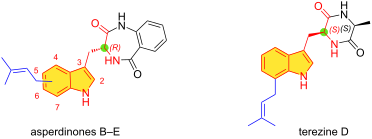
- conditions that would be incompatible with the presence of an amino acid appendage at C-3. 7-Prenylindole has been prepared from N-Boc-indoline in the presence of sec-BuLi, TMEDA, and prenyl bromide at −78 °C, followed by oxidation with MnO2 [51]. We deemed it necessary to explore alternative synthetic
- methods to prenyl- and allylindoles as starting points toward the synthesis of asperdinones B, C, D, and E (1–4) as well as to terezine D (6). To access 4-prenylindole, we adopted a Pd-catalyzed Suzuki coupling of 3,3-dimethyl-1-butene-3-pinacol boronate with bromoindoles [52]. Unfortunately, despite the


Recent advancements in the synthesis of Veratrum alkaloids
Beilstein J. Org. Chem. 2025, 21, 2657–2693, doi:10.3762/bjoc.21.206
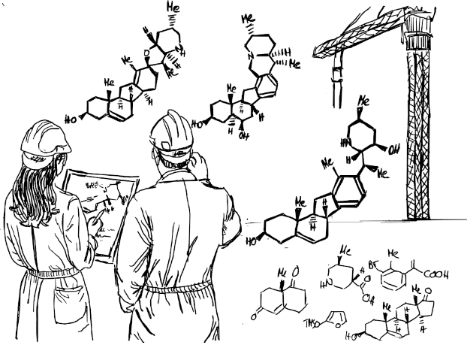
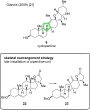
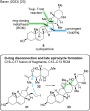
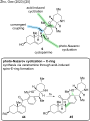
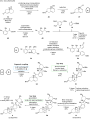
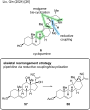
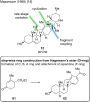
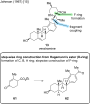
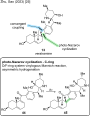
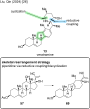
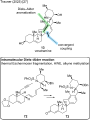
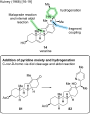
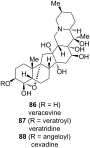
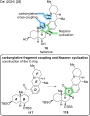
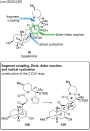
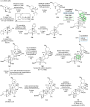
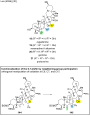
- cores through modular and strategic bond connections, but they also give a reflection on the advancement of modern synthetic methods and retrosynthetic logic. This review will cover recent syntheses, highlighting the convergence of modern strategic disconnections, stereocontrol, and late-stage
- embedded in A–E rings, thus, adding to their complexity in total synthesis efforts [9]. This review will cover synthetic approaches from the last decades, showcasing the evolution of Veratrum alkaloids synthesis and by that, providing an impression of the evolution of synthetic methods in general. For a
















Visible-light-driven NHC and organophotoredox dual catalysis for the synthesis of carbonyl compounds
Beilstein J. Org. Chem. 2025, 21, 2584–2603, doi:10.3762/bjoc.21.200
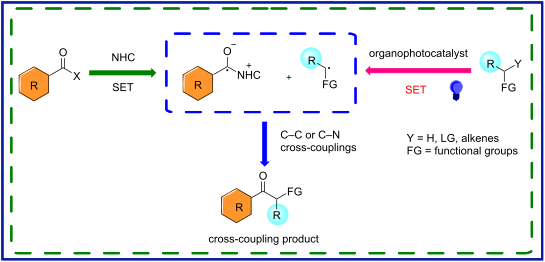
- para-selectivity observed in Friedel–Crafts acylation. The authors anticipate expanding this strategy to other reaction processes, allowing the efficient development of transformative synthetic methods, constructing new chemical spaces for drug discovery, and modifying bioactive molecules (Scheme 13





Total syntheses of highly oxidative Ryania diterpenoids facilitated by innovations in synthetic strategies
Beilstein J. Org. Chem. 2025, 21, 2553–2570, doi:10.3762/bjoc.21.198
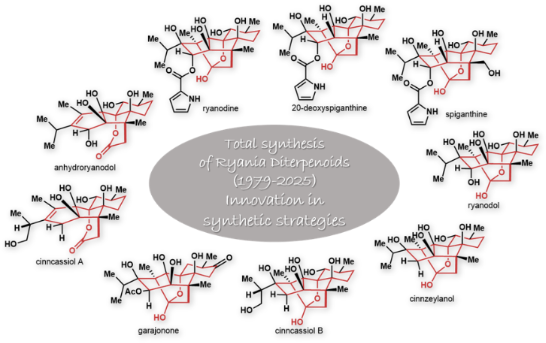
- Zhi-Qi Cao Jin-Bao Qiao Yu-Ming Zhao Key Laboratory of Applied Surface and Colloid Chemistry of MOE & School of Chemistry and Chemical Engineering, Shaanxi Normal University, Xi’an, 710119, China 10.3762/bjoc.21.198 Abstract Innovations in synthetic methods and strategic design serve as the
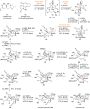
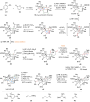
- focuses on reviewing the efficient application of ring-construction methods and synthetic strategies in the total synthesis of highly oxidized Ryania diterpenoid natural products, emphasizing the pivotal role of novel synthetic methods and strategic innovations. Keywords: natural products; Ryania
- leveraging these complex molecular architectures continues to be a primary objective for synthetic chemists. Achieving this goal will require persistent innovation to transcend conventional synthetic paradigms and advance synthetic methods toward enhanced efficiency, precision, and sustainability







Transformation of the cyclohexane ring to the cyclopentane fragment of biologically active compounds
Beilstein J. Org. Chem. 2025, 21, 2416–2446, doi:10.3762/bjoc.21.185
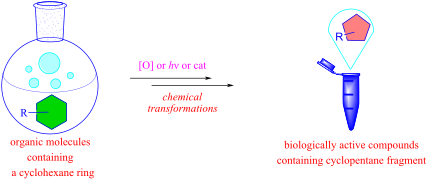
- contraction of six-membered cycles in the synthesis of functionalized cyclopentane/enones, which are biologically active compounds. The main synthetic methods of ring contraction (ozonolysis–aldol condensation, ozonolysis–Dieckmann reaction, Baeyer–Villiger cleavage–Dieckmann reaction) and rearrangements


The high potential of methyl laurate as a recyclable competitor to conventional toxic solvents in [3 + 2] cycloaddition reactions
Beilstein J. Org. Chem. 2025, 21, 2389–2415, doi:10.3762/bjoc.21.184
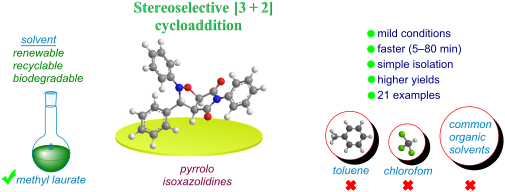
- synthetic methods for cycloaddition reactions. In this study, a series of natural organic compounds from diverse classes and an acetonide [129] derivative were selected for investigation, with a focus on their potential catalytic effects in relation to the alteration of cis/trans product distribution under







An Fe(II)-catalyzed synthesis of spiro[indoline-3,2'-pyrrolidine] derivatives
Beilstein J. Org. Chem. 2025, 21, 2383–2388, doi:10.3762/bjoc.21.183
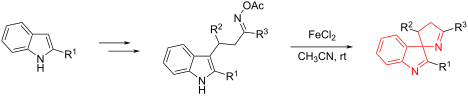
- e) [12]. The second category of synthetic methods relies on more accessible, non-pre-functionalized starting materials and stepwise assembly of the spirocyclic core. This strategy enables the synthesis of functionalized 3H-indoles, which can be further elaborated into structurally diverse products




Enantioselective radical chemistry: a bright future ahead
Beilstein J. Org. Chem. 2025, 21, 2283–2296, doi:10.3762/bjoc.21.174
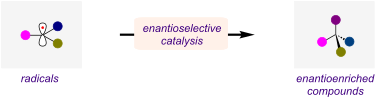
- catalysis is discussed initially. This is followed by the recently emerging areas of transition-metal catalysis, photoenzymatic catalysis, and electrochemistry. Perspective Radical generation and reactions Synthetic methods based on free radical chemistry are some of the most efficient and powerful tools


Pd-catalyzed dehydrogenative arylation of arylhydrazines to access non-symmetric azobenzenes, including tetra-ortho derivatives
Beilstein J. Org. Chem. 2025, 21, 2234–2242, doi:10.3762/bjoc.21.170
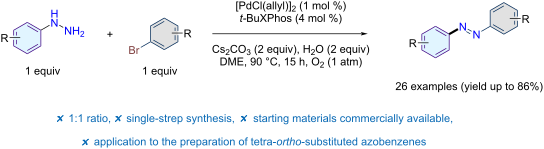
- , most synthetic methods have focused on the preparation of symmetric derivatives [12][13]. Traditional approaches, such as oxidative coupling of anilines [14][15][16][17][18][19], reductive coupling of nitroarenes [20][21][22][23], or cross-coupling between anilines and nitroarenes have proven


Asymmetric total synthesis of tricyclic prostaglandin D2 metabolite methyl ester via oxidative radical cyclization
Beilstein J. Org. Chem. 2025, 21, 1964–1972, doi:10.3762/bjoc.21.152
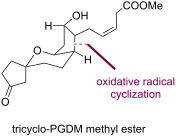
- ester Although the efficiency of the first-generation asymmetric total synthesis strategy was limited, the development of synthetic methods during this work, particularly the transition-metal-mediated oxidative radical cyclization for stereoselective assembly of the cyclopentanol scaffold bearing the C8



Photoswitches beyond azobenzene: a beginner’s guide
Beilstein J. Org. Chem. 2025, 21, 1808–1853, doi:10.3762/bjoc.21.143
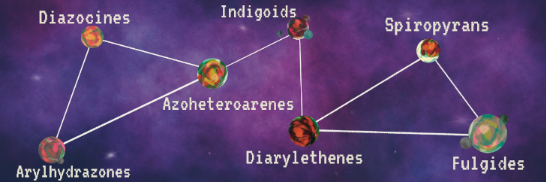
- properties and tuneability while also outlining the most common synthetic methods for these compounds. Additionally, each chapter presents exemplary applications of the illustrated photoswitch classes, highlighting their practical relevance while inspiring the reader with new ideas in this field. For a more
- condensed with a (hetero)aromatic aldehyde in the presence of a base to yield 86 (Scheme 26) [81]. Iminothioindoxyl can be synthesised in the same way, using nitrosoarenes instead of aldehydes [90]. For several other synthetic methods, we refer to the excellent reviews by Konieczny and Konieczny [92] and




Catalytic asymmetric reactions of isocyanides for constructing non-central chirality
Beilstein J. Org. Chem. 2025, 21, 1648–1660, doi:10.3762/bjoc.21.129
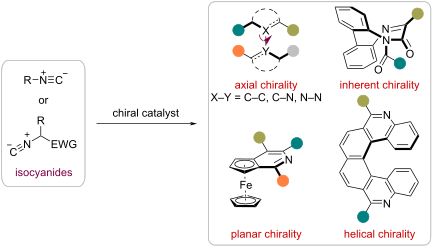
- these notable accomplishments, this research field remains in its nascent stage with ample room for further exploration. First, existing studies have predominantly focused on the construction of axial chirality, while synthetic methods for other forms of non-central chirality, such as planar, helical




Calcium waste as a catalyst in the transesterification for demanding esters: scalability perspective
Beilstein J. Org. Chem. 2025, 21, 1520–1527, doi:10.3762/bjoc.21.114
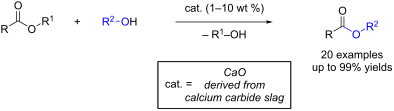
- industrial wastes not only contributes to reducing environmental impact, but also provides new opportunities for the development of sustainable synthetic methods in the chemical industry. Further research can be focused on optimizing the process and exploring the applicability of this catalyst in other


Reactions of acryl thioamides with iminoiodinanes as a one-step synthesis of N-sulfonyl-2,3-dihydro-1,2-thiazoles
Beilstein J. Org. Chem. 2025, 21, 1397–1403, doi:10.3762/bjoc.21.104
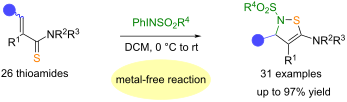
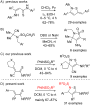
- ]. These data [1][2][3][4][5] inspired researchers to expand the chemistry of these compounds and to search for new synthetic methods and chemical transformations [14][15]. Unlike the aromatic congeners, the chemistry of non-aromatic dihydro-1,2-thiazoles is less represented in the literature [16][17][18



High-pressure activation for the solvent- and catalyst-free syntheses of heterocycles, pharmaceuticals and esters
Beilstein J. Org. Chem. 2025, 21, 1374–1387, doi:10.3762/bjoc.21.102
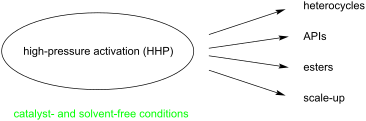
- protocol was even applied in the elegant syntheses of platencin [30], and steroid derivatives [31]. Despite these encouraging applications, there is a broad area to be developed for the advancement of green synthesis efforts. Continuing our program on developing environmentally benign synthetic methods [32


Recent advances and future challenges in the bottom-up synthesis of azulene-embedded nanographenes
Beilstein J. Org. Chem. 2025, 21, 1272–1305, doi:10.3762/bjoc.21.99
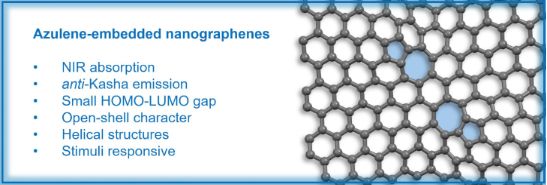
- heteroaromatics are rare due to the limited synthetic methods available, although some N- or BN-nanographenes are known. An efficient synthesis of azulene−pyridine-fused heteroaromatics was reported by Swager and co-workers (Scheme 23) [105]. A series of monoazulene PAHs 174a–e was obtained from 1-nitroazulene