Search results
Search for "damping" in Full Text gives 196 result(s) in Beilstein Journal of Nanotechnology.
Tailoring Ag–Pt nanoalloys through solid-state dewetting: structural and optical insights
Beilstein J. Nanotechnol. 2026, 17, 748–759, doi:10.3762/bjnano.17.52

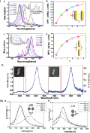
- properties, and thus, the application potential of the fabricated nanosystem. Moreover, when designing plasmonic devices based on Ag–Pt nanoalloys, one must take into account the damping of the plasmon resonance in platinum alloys. This phenomenon was theoretically investigated [36][37][38][39] and supported
- from the intrinsic electronic properties of platinum, whose Fermi level lies close to partially filled d-states. These d-electron transitions strongly enhance interband absorption, leading to damping of interband sp excitations and broadening of the resonance band. In consequence, it causes an increase




Fast vortex dynamics and relaxation times in NbRe-based heterostructures
Beilstein J. Nanotechnol. 2026, 17, 292–302, doi:10.3762/bjnano.17.20
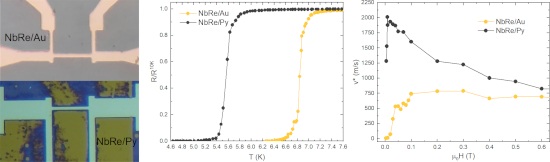
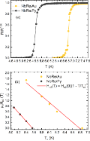
- /N [26][27][28][29][30] or S/F [31][32][33][34] systems, different mechanisms can influence the vortex dynamics depending on the thickness and conductivity of the capping layer. In particular, a sufficiently thick metallic overlayer may lead to a damping of vortex motion due to eddy currents induced
- ultrathin thickness of the metallic overlayers, electromagnetic damping effects due to eddy currents are expected to be strongly reduced, placing the present samples in the thin-layer regime where proximity-induced effects are dominant [29][30]. The samples were patterned into a four-probe geometry by


Multifrequency AFM integrating PeakForce tapping and higher eigenmodes for heterogeneous surface characterization
Beilstein J. Nanotechnol. 2025, 16, 2077–2085, doi:10.3762/bjnano.16.142
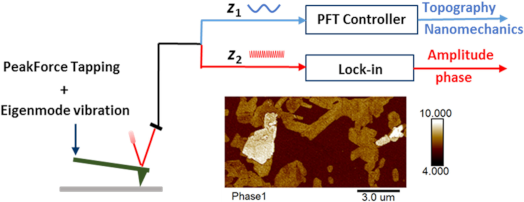
- (Figure 2B–D). With the free vibration amplitude of the eigenmode being low, this inherent damping mechanism ensures that superimposed vibrations do not significantly perturb the peak force magnitude during tip–sample interaction. Second, the dedicated signal processing scheme detailed in Section
- “Experimental setup” effectively separates the composite cantilever deflection signal into two independent channels. The low-frequency path secures stable topographic feedback, while the high-frequency path preserves the eigenmode signals for material-sensitive detection. This combination of physical damping
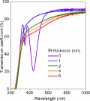
- interaction forces, as supported by studies on multimodal AFM [26]. The higher dynamic stiffness of the third eigenmode, compared to the second, makes it less susceptible to damping by long-range surface forces (e.g., van der Waals forces). This allows it to sense the sharper gradients of short-range


Mechanical property measurements enabled by short-term Fourier-transform of atomic force microscopy thermal deflection analysis
Beilstein J. Nanotechnol. 2025, 16, 1952–1962, doi:10.3762/bjnano.16.136
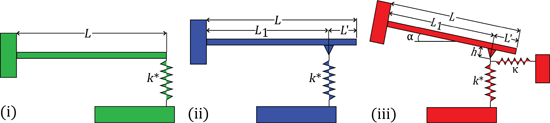
- damping from the ambient environment is not accounted for in Equation 1 and may also be responsible for a small percentage of the difference between the two calculations of the spring constants. However, our results highlight that the measurement of the cantilever’s plan-view dimensions and using these




Programmable soliton dynamics in all-Josephson-junction logic cells and networks
Beilstein J. Nanotechnol. 2025, 16, 1883–1893, doi:10.3762/bjnano.16.131

- respect to τ. The dimensionless damping coefficient is . The term represents the voltage normalized by the characteristic voltage . The parameter is the normalized amplitude of the critical current for junctions with the critical current Ic that differs from the reference normalization value . To
- series with one of its Josephson junctions connected to the ground plane. There are some operational regimes inherent to such a KICK governed by the value of this inductance and by the damping parameter of junctions within the transmission line. The damping parameter is a critical factor as it dictates
- the kinetic soliton’s propagation rate. As a preliminary step, we characterized the dependence of the kinetic soliton propagation velocity on the damping parameter of the connecting junctions, α (see Figure 1b). We define the velocity as the number of grounded junctions traversed per unit of


Low-temperature AFM with a microwave cavity optomechanical transducer
Beilstein J. Nanotechnol. 2025, 16, 1873–1882, doi:10.3762/bjnano.16.130
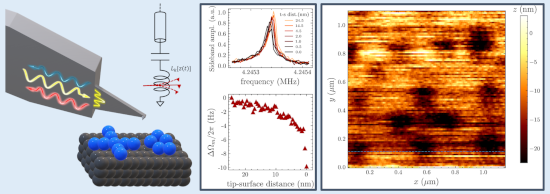
- deflection ζ in response to a force F at the frequency Ω: where is the resonance frequency and Γ = η/meff the damping rate, with meff, k and η being, respectively, effective mass, stiffness, and damping coefficient of the eigenmode. A key figure of merit of a force transducer is its force sensitivity
- sensor design, this detection principle will be capable of operating at the fundamental limit of minimum added noise. Achieving this performance limit is a prerequisite for improved force sensitivity with ultralow temperature and ultralow damping mechanical modes. Alternatively, the lower noise of the
- LC resonator realized from a single layer of Nb–Ti–N and a Pt–C tip deposited at the cantilever apex. (d) Experimental setup. The scanner box is suspended from the 10 mK stage with soft springs. Folded copper braids provide thermalization and additional mechanical damping. The digital synthesizer and


Bioinspired polypropylene-based functionally graded materials and metamaterials modeling the mistletoe–host interface
Beilstein J. Nanotechnol. 2025, 16, 1592–1606, doi:10.3762/bjnano.16.113
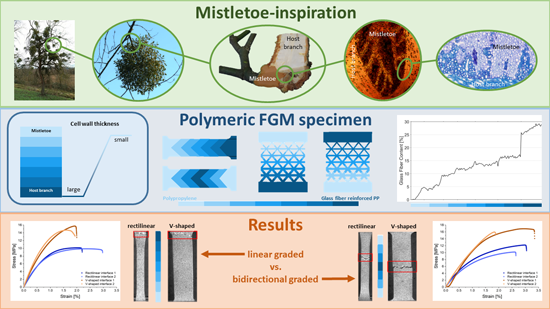
- metamaterials, even more complex and tailored mechanical properties can be achieved at multiple length scales [15]. This integration enables the creation of materials with unprecedented combinations of stiffness, strength, damping, and other mechanical characteristics, offering enhanced performance and


Modeling magnetic properties of cobalt nanofilms used as a component of spin hybrid superconductor–ferromagnetic structures
Beilstein J. Nanotechnol. 2025, 16, 1557–1566, doi:10.3762/bjnano.16.110
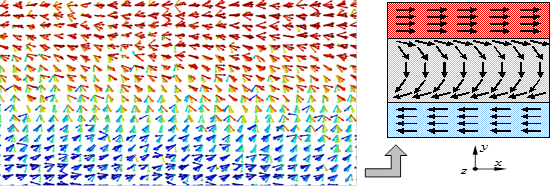
- force parameter and damping spin coefficient, respectively; χ(t), η(t) are white noise present in the description of atom motion processes and the behavior of their spins, respectively; and ωi is the multiplication value of the gyromagnetic ratio and the local magnetic field [22]. It has been known for
- equilibrated cobalt nanofilm were investigated. The duration of the second stage was 10 ps. In both stages, there were no external influences on the system. The thermodynamic and spin temperatures were maintained at 300 K, with temperature damping parameters of τt = τs = 0.01 ps. Magnetic energy and reduced


Time-resolved probing of laser-induced nanostructuring processes in liquids
Beilstein J. Nanotechnol. 2025, 16, 968–1002, doi:10.3762/bjnano.16.74
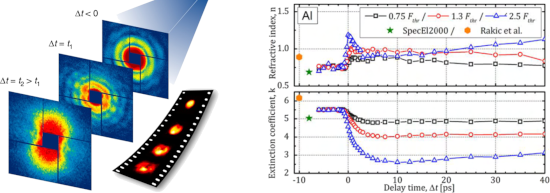
- ). The molecular structural change can be retrieved through a differential pair distribution function (ΔPDF) given by: where , and exp(−kq2) with k a constant is a damping function to suppress high-frequency artifacts generated by the truncation of ΔsM(q, t) at qmin and qmax. What ΔPDF essentially


Synchrotron X-ray photoelectron spectroscopy study of sodium adsorption on vertically arranged MoS2 layers coated with pyrolytic carbon
Beilstein J. Nanotechnol. 2025, 16, 847–859, doi:10.3762/bjnano.16.64
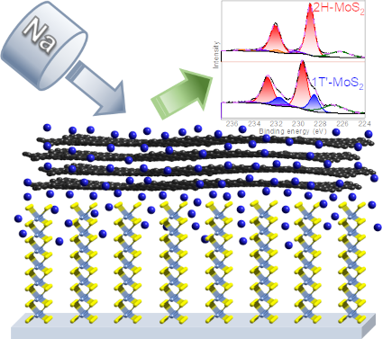
- shape with tail damping, convoluted with a Gaussian function, which closely approximates a Gaussian/Lorentzian product function. Energy position, full width at half maximum, and area for fitted components of the XPS spectra of initial samples are collected in Table S1, Supporting Information File 1. (a


Nanoscale capacitance spectroscopy based on multifrequency electrostatic force microscopy
Beilstein J. Nanotechnol. 2025, 16, 637–651, doi:10.3762/bjnano.16.49

- electrical drive frequencies. Thus, the experiments can be performed at almost arbitrarily high AC frequencies. The lower limit for the frequency range is given by the second resonance of the cantilever. Towards higher frequencies, the impedance of the electrical connection will introduce a damping of the




Feasibility analysis of carbon nanofiber synthesis and morphology control using a LPG premixed flame
Beilstein J. Nanotechnol. 2025, 16, 581–590, doi:10.3762/bjnano.16.45
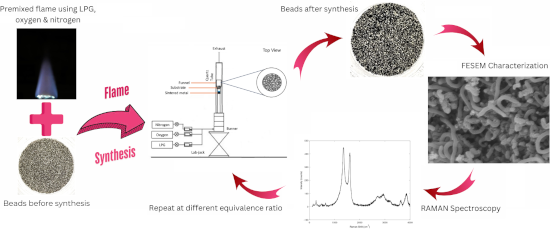
- great importance. Defective CNFs are utilized to build composites with specific thermal conductivities as part of thermal insulation materials. They can also be used to make materials that combine strength and flexibility, for example, in electronics or damping devices. The presence of defects in CNFs



ReactorAFM/STM – dynamic reactions on surfaces at elevated temperature and atmospheric pressure
Beilstein J. Nanotechnol. 2025, 16, 397–406, doi:10.3762/bjnano.16.30
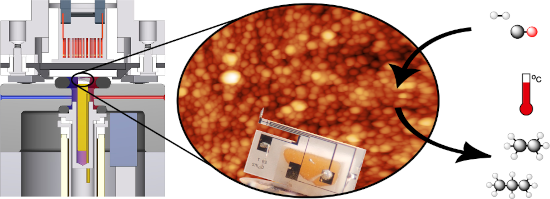
- damping for vibration isolation. The sample holder (highlighted in blue in Figure 2a is inserted by locking the spring mechanism with the locking bellow and then fixed to the microscope by inflating the “reactor” bellow. The substrate can be heated from behind by electron bombardment using a tungsten


Nanocarriers and macrophage interaction: from a potential hurdle to an alternative therapeutic strategy
Beilstein J. Nanotechnol. 2025, 16, 97–118, doi:10.3762/bjnano.16.10



The role of a tantalum interlayer in enhancing the properties of Fe3O4 thin films
Beilstein J. Nanotechnol. 2024, 15, 1253–1259, doi:10.3762/bjnano.15.101

- in significant changes in the film’s characteristics [19][20]. Roy et al. conducted a study on polycrystalline Fe3O4 films on Si and SiO2/Si substrates. Their findings revealed that the value of the Gilbert damping parameter is significantly higher in Fe3O4/Si films compared to Fe3O4/SiO2/Si films


Local work function on graphene nanoribbons
Beilstein J. Nanotechnol. 2024, 15, 1125–1131, doi:10.3762/bjnano.15.91
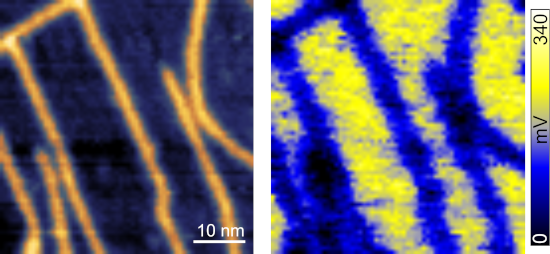
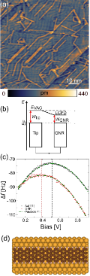
- -augmented plane-wave basis (PAW) [31][32]. Dispersion forces are included through Grimmes D3 method [33] with Becke–Jonson damping [34] (IVDW = 12). Further, we include non-spherical contributions from the gradient corrections inside the PAW spheres (LASPH = .TRUE.). For all slab calculations, the lowest

![[Graphic 1]](/bjnano/content/inline/2190-4286-15-91-i4.svg?max-width=637&scale=1.18182)
Beyond biomimicry – next generation applications of bioinspired adhesives from microfluidics to composites
Beilstein J. Nanotechnol. 2024, 15, 965–976, doi:10.3762/bjnano.15.79
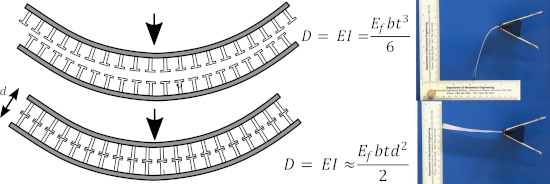
- state for long durations and only need to be reformed occasionally. Energy damping: Depending on the structural layers for the biomimetic adhesives, there could be significant internal energy damping for energy absorption, that is, highly viscoelastic fibers and energy dissipation as heat during


The effect of age on the attachment ability of stick insects (Phasmatodea)
Beilstein J. Nanotechnol. 2024, 15, 867–883, doi:10.3762/bjnano.15.72

- investigation using fluorescence microscopy. Resilin-containing structures within the claws could potentially work as damping mechanisms to reduce wear and risk of damage [69]. Claws are presumed to be more resistant to wear than the soft and pliable adhesive pads [68][71]. Most claw breakages were observed at


Enhancing higher-order modal response in multifrequency atomic force microscopy with a coupled cantilever system
Beilstein J. Nanotechnol. 2024, 15, 694–703, doi:10.3762/bjnano.15.57

- . More details about the derivation process can be found in [19]. The final result for the transfer function G of the infinite product expansion is obtained as: where s is the (complex) Laplace variable, and m is the mass per unit length. EI and c are the flexural stiffness and the damping coefficient
- the coupling ability of the coupled system. In addition, it is inevitable that environmental damping has an effect on the results. Experimental exploration of optimal conditions Through preliminary sweeping experiments, we obtained the frequencies of the left-side length l at 1.50, 2.00, 2.50, 2.75


Modulated critical currents of spin-transfer torque-induced resistance changes in NiCu/Cu multilayered nanowires
Beilstein J. Nanotechnol. 2024, 15, 360–366, doi:10.3762/bjnano.15.32
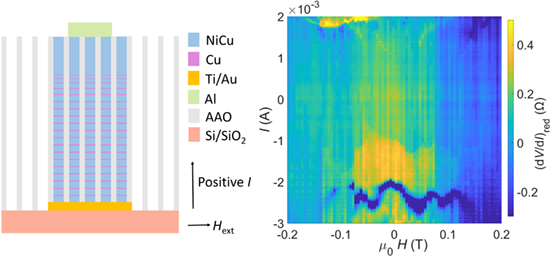
- opposite direction (negative magnetic fields) It makes Heff on layer 2 negative even when µ0H is slightly positive; it becomes more negative during the downward sweep of µ0H. The damping term in the Landau–Lifshitz–Gilbert–Slonczewski equation increases as Heff becomes larger. Therefore, as long as


Design, fabrication, and characterization of kinetic-inductive force sensors for scanning probe applications
Beilstein J. Nanotechnol. 2024, 15, 242–255, doi:10.3762/bjnano.15.23
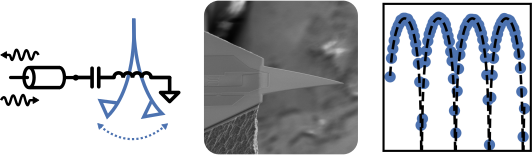
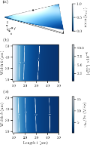
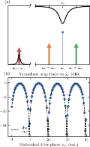
- interferometric and beam-deflection detectors of motion are sufficient to resolve the thermal noise force determined by the damping of the cantilever eigenmode in thermal equilibrium with its environment. Operation in high vacuum and at cryogenic temperatures reduces this force noise, improving sensitivity to the
- temperature of the mechanical mode, and the damping coefficient is expressed as the product of the effective mass meff and the linewidth γm of the mechanical resonance. Decreasing temperature and damping improves force sensitivity. It is important to understand the sources of damping for cryogenic AFM, where
- cantilevers oscillate in vacuum. Force sensitivity will improve with smaller meff only if mechanisms of damping, such as clamping loss and surface effects, do not increase disproportionately. The detection scheme imprints the mechanical motion into the field of the microwave resonator, leading to motional



Ferromagnetic resonance spectra of linear magnetosome chains
Beilstein J. Nanotechnol. 2024, 15, 157–167, doi:10.3762/bjnano.15.15
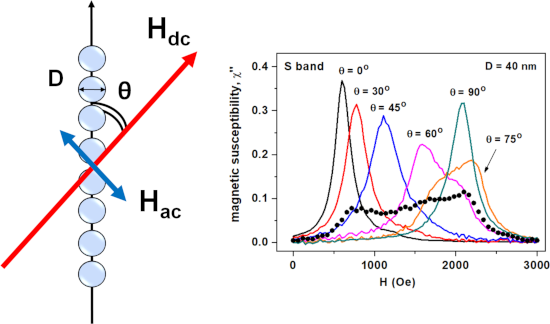
- chain, the distance between the centers of neighboring particles, the mutual orientation of the cubic axes of particle anisotropy, and the value of the magnetic damping constant is studied. It is shown that FMR spectra of non-oriented chain assemblies depend on the average particle diameter at a fixed
- thickness of the lipid magnetosome membrane, as well as on the value of the magnetic damping constant. At the same time, they are practically independent of the number Np of particles in the chain under the condition Np ≥ 10. The FMR spectra of non-oriented assemblies of magnetosome chains are compared with
- of the i-th single-domain nanoparticle of the chain is governed by the stochastic Landau–Lifshitz equation [29][30][31][32], where γ is the gyromagnetic ratio, γ1 = γ/(1 + κ2), κ is the magnetic damping constant, is the effective magnetic field, and is the thermal field. The effective magnetic


Current-induced mechanical torque in chiral molecular rotors
Beilstein J. Nanotechnol. 2023, 14, 711–721, doi:10.3762/bjnano.14.57
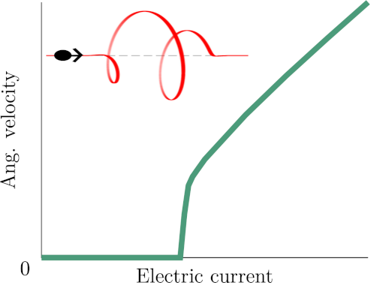
- delivers the equation for a rotor in the limit m = 0. We have added a phenomenological damping term to the EOM (which does not follow from the conservative Lagrangian formalism). The damping term is zero in all numerical results of this work unless stated explicitly. When V = γ = 0, the equation expresses
- EOM dimensionless, where now the dots indicate differentiation with respect to and we defined , which is a quantity of the order of unity, and is a dimensionless damping rate. Notice the appearance of the small parameter , which, however, is here often multiplied by the large velocity . EOM for the




![[Graphic 29]](/bjnano/content/inline/2190-4286-14-57-i54.svg?max-width=637&scale=1.18182)


Suspension feeding in Copepoda (Crustacea) – a numerical model of setae acting in concert
Beilstein J. Nanotechnol. 2023, 14, 603–615, doi:10.3762/bjnano.14.50
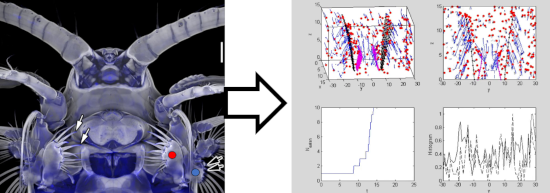
- practically independently of one another. Thus, particles do not interact directly with each other in our model. However, each particle interacts with the setae via the liquid. Due to strong damping, each particle tends to equilibrate its speed with the local velocity of the liquid. This velocity, in turn, is


Plasmonic nanotechnology for photothermal applications – an evaluation
Beilstein J. Nanotechnol. 2023, 14, 380–419, doi:10.3762/bjnano.14.33
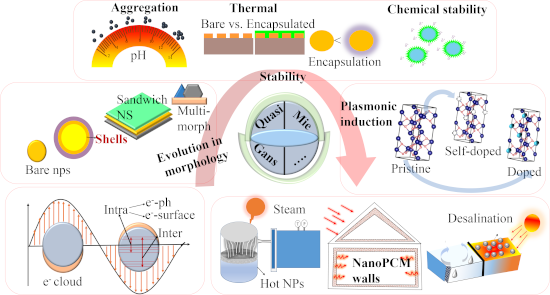
- contributions to the plasmon damping of different scattering phenomena, the different scattering processes of the oscillating plasmons, and the screening between the plasmons and the restoring nuclear forces [33][34]. The proximity among LSPR-active nanoparticles is also a major factor. Indeed, combined effects
- Equation 3 to the general constitutive relation for a linear isotropic material given by Equation 4, we get the relation in Equation 5. εr is the relative permittivity of the material and ε0 the permittivity of free space. For frequencies close to ωp, the temporal duration of damping (quantified by the
- product of ωτ, where τ is the relaxation time of the free electron gas) is much higher than unity, thus leading to an approximation that there is no damping. Hence ignoring the damping term in Equation 5, we get It follows also that under plasmon resonance conditions ε1 < −εm, εm is the dielectric