Search results
Search for "calibration" in Full Text gives 358 result(s) in Beilstein Journal of Nanotechnology. Showing first 200.
Aprepitant-loaded solid lipid nanoparticles: a novel approach to enhance oral bioavailability
Beilstein J. Nanotechnol. 2025, 16, 652–663, doi:10.3762/bjnano.16.50
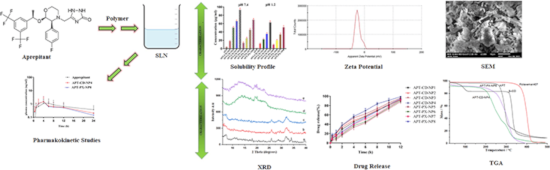
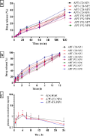
- absorbance of the filtered solution was determined at λmax = 210 nm. The experiment was performed in triplicate. The quantity of APT was measured by using a calibration curve of increasing concentrations of APT [10]. The encapsulation efficiency (EE) was calculated as follows: Physicochemical



Retrieval of B1 phase from high-pressure B2 phase for CdO nanoparticles by electronic excitations in CdxZn1−xO composite thin films
Beilstein J. Nanotechnol. 2025, 16, 551–560, doi:10.3762/bjnano.16.43

- illustrates the Cd 3d5/2, Zn 2p3/2, O 1s, and Si 2p3/2 peaks in XPS spectra for both pristine and irradiated thin films. The calibration of all peaks was conducted using the C 1s peak, situated at 284.6 eV. The peak deconvolution was performed using Gaussian (70%) and Lorentzian (30%) (GL) functions within


Functionalized gold nanoflowers on carbon screen-printed electrodes: an electrochemical platform for biosensing hemagglutinin protein of influenza A H1N1 virus
Beilstein J. Nanotechnol. 2025, 16, 540–550, doi:10.3762/bjnano.16.42
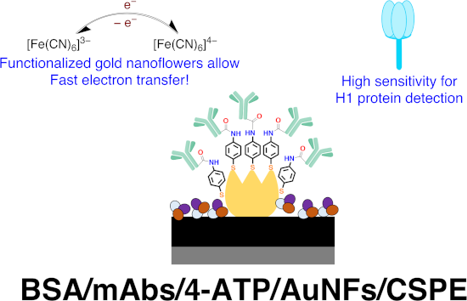
- . Subsequently, 50 μL of a 5 mM [Fe(CN)6]3−/4− in 0.1 M KCl solution were used to cover the electrode, and a DPV experiment was performed to characterize the surface of the electrode. The obtained voltammograms were used to generate a calibration curve, in which the change in current is proportional to the
- standard solutions of H1 protein. (b) Calibration curve determined as the dependence of the change in current on the logarithm of the H1 protein concentration. DPV measurement of the BSA/mAbs/4-ATP/AuNFs/CSPE recorded in 0.1 M KCl containing 5 mM [Fe(CN)6]3−/4−. Microfluidics design for point-of-care


Quantification of lead through rod-shaped silver-doped zinc oxide nanoparticles using an electrochemical approach
Beilstein J. Nanotechnol. 2025, 16, 422–434, doi:10.3762/bjnano.16.33
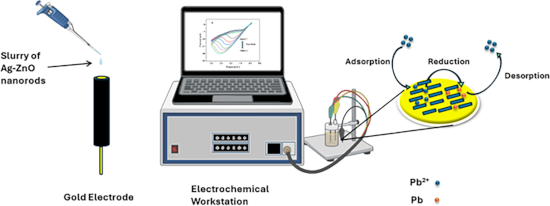
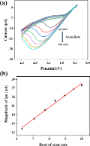
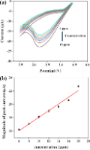
- ). Clearly, the cathodic peak current demonstrates a linear connection with v1/2, demonstrating diffusion-controlled kinetics [29]. Concentration effect on the peak current or calibration curve Figure 12a illustrates a steady increase in peak current as lead concentration increases. A standard calibration





Engineered PEG–PCL nanoparticles enable sensitive and selective detection of sodium dodecyl sulfate: a qualitative and quantitative analysis
Beilstein J. Nanotechnol. 2025, 16, 385–396, doi:10.3762/bjnano.16.29
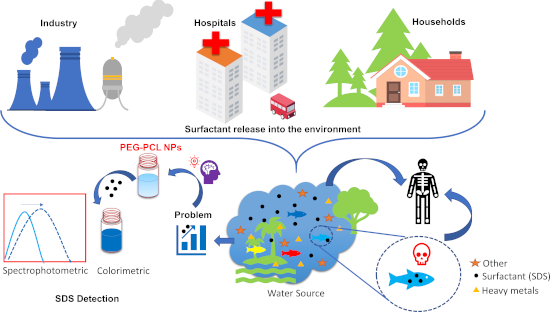
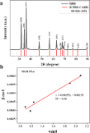
- to quantitatively measure SDS concentrations. The limit of detection (LOD) and limit of quantification (LOQ) were determined through a linear calibration plot, wherein varying concentrations of SDS were mixed with PEG–PCL NPs. As shown in Figure 6c, the plot demonstrated excellent linearity, with a


Development of a mucoadhesive drug delivery system and its interaction with gastric cells
Beilstein J. Nanotechnol. 2025, 16, 371–384, doi:10.3762/bjnano.16.28

- peptide within the nanoparticles by using fluorescence measurements. The properties and the emission spectrum of the peptide are provided in Supporting Information File 2. For the calculation of encapsulation efficiency, a calibration curve with the known concentrations of labeled peptide and the
- in ddH2O and fluorescence measurements were carried out (λex = 485 nm, λem = 530 nm) with a black-bottom 96-well plate (BioTek Synergy H1 microplate reader). The amount of encapsulated peptide within the nanoparticles was calculated by using a calibration curve from known amounts of the same FAM
- calculated by using the calibration curve and subtracted from the initial value to obtain the amount of adsorbed mucin onto the nanoparticles. The data is presented as percent of adsorbed mucin with respect to the reference. Interaction of nanoparticles with artificial mucus as a simple model Diffusion of F


Pulsed laser in liquid grafting of gold nanoparticle–carbon support composites
Beilstein J. Nanotechnol. 2025, 16, 349–361, doi:10.3762/bjnano.16.26
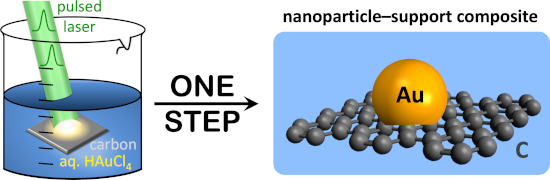
- collect a chromatogram every 20 min. A certified standard calibration gas (Airgas) was used to calibrate the gas chromatograph. Schematic of pulsed laser grafting vs conventional preparation of gold nanoparticle–carbon support composites. Photographs of the actual pulsed laser grafting setup are shown in


Graphene oxide–chloroquine conjugate induces DNA damage in A549 lung cancer cells through autophagy modulation
Beilstein J. Nanotechnol. 2025, 16, 316–332, doi:10.3762/bjnano.16.24
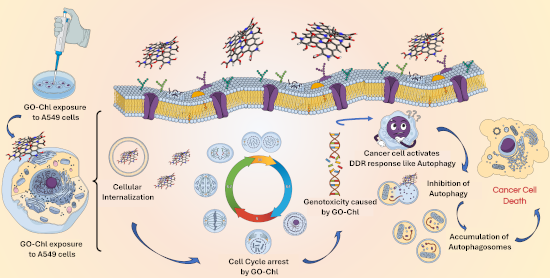
- two ways viz. entrapment efficacy (EE, % Chl that has been successfully absorbed onto GO) and % drug content or drug loading efficiency (DLE, amount of Chl loaded per unit weight of GO) using UV–vis spectroscopy. Firstly, a standard calibration curve of Chl was plotted by monitoring the optical
- density at 343 nm (as shown in Figure 3a) and the concentration of Chl present in the GO–Chl nanoconjugate was calculated using the calibration curve. The values for EE and DLE were calculated using Equation 1 and 2 and the results are summarized in Table 1. where A and B are the total amount of drug used
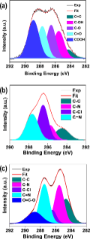
- ), and deconvoluted fitting components (multicolored regions) are also shown here. Quantitative estimation of Chl binding onto GO nanosheets using UV–vis spectroscopy: (a) Optical density measurement of various concentrations (2.5–25 µg/mL) of Chl for the preparation of a standard calibration curve. (b



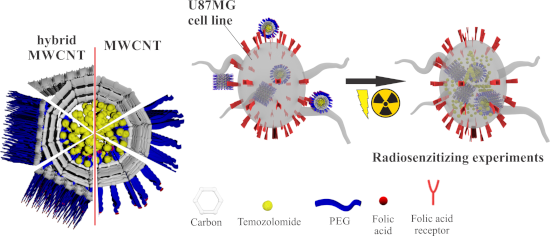
Radiosensitizing properties of dual-functionalized carbon nanostructures loaded with temozolomide
Beilstein J. Nanotechnol. 2025, 16, 229–251, doi:10.3762/bjnano.16.18




Clays enhanced with niobium: potential in wastewater treatment and reuse as pigment with antibacterial activity
Beilstein J. Nanotechnol. 2025, 16, 141–154, doi:10.3762/bjnano.16.13
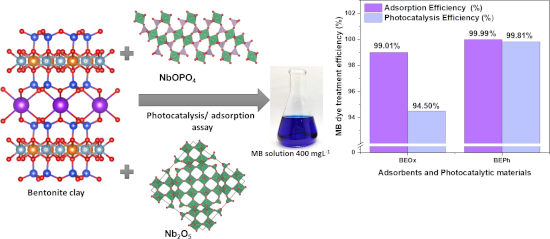
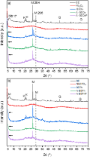
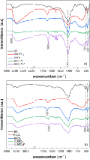
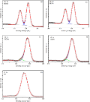
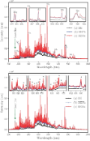
- samples were named BEPh and BEOx for modification with NbOPO4 and Nb2O5, respectively. Adsorption and photocatalysis tests Before the adsorption and photocatalysis assessments, a stock solution of the MB dye was prepared at a concentration of 1 g·L−1. The calibration analytical curve was established using



Advanced atomic force microscopy techniques V
Beilstein J. Nanotechnol. 2025, 16, 54–56, doi:10.3762/bjnano.16.6

- parameters can precisely be determined regardless of the oscillation amplitude. As the periodicity of the cavity light field scales with the length standard given by the laser light wavelength, this specifically facilitates a calibration of the oscillation amplitude with unprecedented accuracy and precision
A nanocarrier containing carboxylic and histamine groups with dual action: acetylcholine hydrolysis and antidote atropine delivery
Beilstein J. Nanotechnol. 2025, 16, 11–24, doi:10.3762/bjnano.16.2

- Aesar, Acros, and Aldrich, respectively) were used for column calibration. The data was analyzed by Agilent GPC/SEC software. Synthesis of Hist-RA Histamine dihydrochloride (Hist×HCl, 0.66 g, 4.47 mmol) was dissolved in 10 mL of double-distilled water and adjusted to pH 10.75. The solvent was evaporated


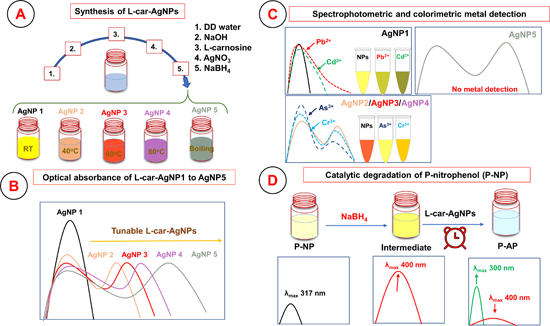
Facile synthesis of size-tunable L-carnosine-capped silver nanoparticles and their role in metal ion sensing and catalytic degradation of p-nitrophenol
Beilstein J. Nanotechnol. 2024, 15, 1576–1592, doi:10.3762/bjnano.15.124
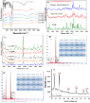
- edge filter using 532 nm as an excitation source. The Raman signal of the silicon wafer at 520 cm−1 was considered the reference point for spectrometer calibration, ensuring a spectral measurement accuracy better than 1 cm−1. The Raman spectra acquisition times were approximately 25 s for solid ʟ




The round-robin approach applied to nanoinformatics: consensus prediction of nanomaterials zeta potential
Beilstein J. Nanotechnol. 2024, 15, 1536–1553, doi:10.3762/bjnano.15.121
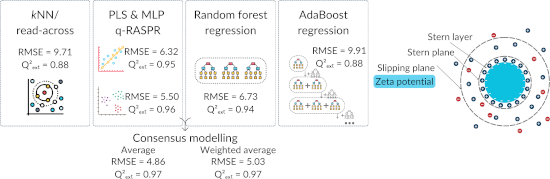
- calibration and validation sets, which were supplied as inputs for the tool Auto_RA_Optimizer-v1.0 available from https://sites.google.com/jadavpuruniversity.in/dtc-lab-software/home. The combination of hyperparameters that generated the best predictions for the validation set was selected as the optimized
- -software/home#h.x3k58bv4frb9). The corresponding hyperparameter (similarity based on Euclidean distance with the number of close source compounds equal to 5) settings were obtained from the optimized read-across-based predictions for the validation set, using the calibration set as the source set (the
- calibration and validation sets were obtained by the division of the training compounds). This read-across hyperparameter optimization was done using the tool Auto_RA_Optimizer-v1.0, freely available from the DTC Lab tools supplementary site (https://sites.google.com/jadavpuruniversity.in/dtc-lab-software


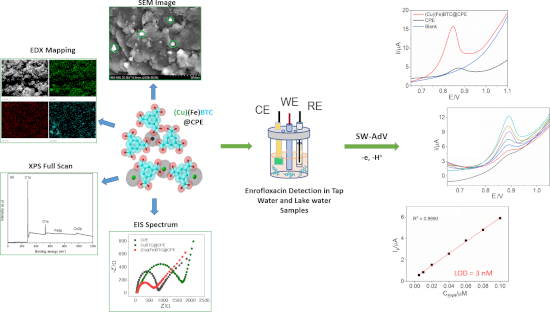
Electrochemical nanostructured CuBTC/FeBTC MOF composite sensor for enrofloxacin detection
Beilstein J. Nanotechnol. 2024, 15, 1522–1535, doi:10.3762/bjnano.15.120
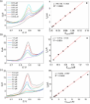
- (RSD) of 3.83%. These results demonstrate good reproducibility of the developed electrodes. Calibration curve Under the above optimal conditions, a calibration curve was established in the ENR concentration range from 0.005 to 0.100 µM at tacc of 600 s (Figure 12a). Increasing SWV peaks as a function
- of the concentration were observed, and a linear relationship was established, described by the regression equation Ip (µA) = 56.136 × CENR (µM) + 0.340. SW-AdSV measurements were carried out with ENR concentrations from 0.1 to 1.0 µM to build the calibration curve at tacc of 90 s. The obtained
- signals, as shown in Figure 12b, exhibit a linear correlation between the ENR oxidation peak height and ENR concentration, described by the regression equation Ip (µA) = 11.373 × CENR (µM) + 0.128 (R2 = 0.9954). Figure 12c illustrates the calibration curve established for ENR in the concentration range





Integrating high-performance computing, machine learning, data management workflows, and infrastructures for multiscale simulations and nanomaterials technologies
Beilstein J. Nanotechnol. 2024, 15, 1498–1521, doi:10.3762/bjnano.15.119

- calibration and validation of models and providing a more comprehensive understanding of materials behavior [10]. The automation of various modelling tasks, such as data preprocessing, model generation, and parameter optimization, through the use of advanced algorithms and software tools, streamlines
- the material, capturing real-world behavior and enabling better calibration and validation of the models. This integration allows researchers to refine and improve the models, making them more accurate and reliable in predicting material properties, performance, and behavior under different scenarios


Signal generation in dynamic interferometric displacement detection
Beilstein J. Nanotechnol. 2024, 15, 1070–1076, doi:10.3762/bjnano.15.87
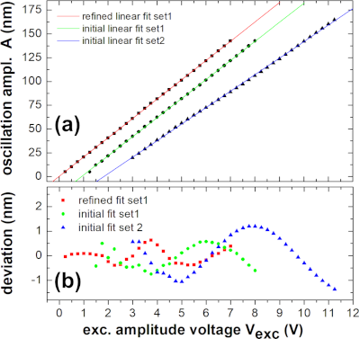
- structure. By the fit of a model to the measured time-domain signal, all parameters governing the interferometric displacement signal can precisely be determined. It is demonstrated, that such an analysis specifically allows for the calibration of the cantilever oscillation amplitude with 2% accuracy
- . Keywords: amplitude calibration; displacement detection; force microscopy; interferometer signal; NC-AFM; Introduction Optical interferometry is a reliable technique utilizing light waves to measure distance and displacement with high precision [1][2]. With the light wavelength as the length standard, a
- the calibration of the cantilever oscillation amplitude, we exemplify the fit procedure and accuracy limits for the fit parameter A. Amplitude calibration means to relate the cantilever oscillation amplitude A to the voltage Vexc to yield the calibration factor S = A/Vexc [18]. An accurate calibration


Electrospun polysuccinimide scaffolds containing different salts as potential wound dressing material
Beilstein J. Nanotechnol. 2024, 15, 781–796, doi:10.3762/bjnano.15.65
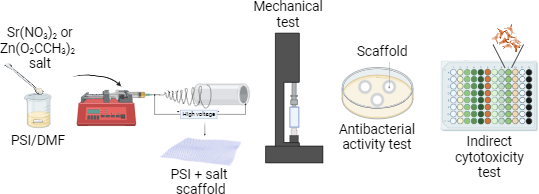
- (O2CCH3)2 salts with distilled water. Then, by dilution, a concentration series was made for the calibration: 2.5, 1, 0.5, 0.2, 0.1, 0.05, and 0.01% (w/v). The conductivity of these solutions with different salt contents was determined using a conductivity meter and the belonging sensor (SevenCompact Duo



Simultaneous electrochemical determination of uric acid and hypoxanthine at a TiO2/graphene quantum dot-modified electrode
Beilstein J. Nanotechnol. 2024, 15, 719–732, doi:10.3762/bjnano.15.60
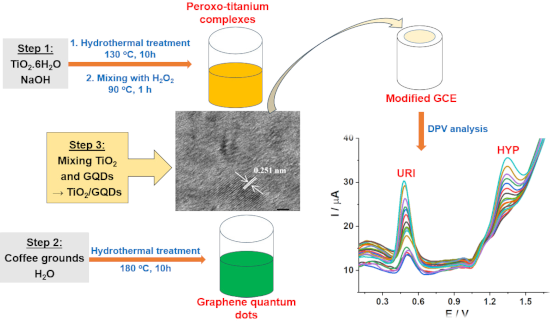
- conditions, the calibration plots were linear in the range from 1.00 to 15.26 μM for both uric acid and hypoxanthine. The limits of detection of this method were 0.58 and 0.68 μM for uric acid and hypoxanthine, respectively. The proposed DPV method was employed to determine uric acid and hypoxanthine in
- follows: The limit of detection (LOD) is described as 3S/M, where S is the standard deviation and M is the slope obtained from the calibration plot. The LOD values are 0.58 µM for URI and 0.68 µM for HYP. The cross-effect is a key factor for the simultaneous determination of analytes in a mixture. Figure
- )CURI (R2 = 0.9988) (LODURI = 0.61 µM). A similar behavior can be observed for the oxidation of an increasing amount of HYP (1.00–15.74 μM) (inset) in the presence of 15.74 μM URI. A linear calibration curve with a regression equation of IHYP = (−0.1160 ± 0.0830) + (0.8376 ± 0.0102)CHYP (R2 = 0.9990


Stiffness calibration of qPlus sensors at low temperature through thermal noise measurements
Beilstein J. Nanotechnol. 2024, 15, 580–602, doi:10.3762/bjnano.15.50
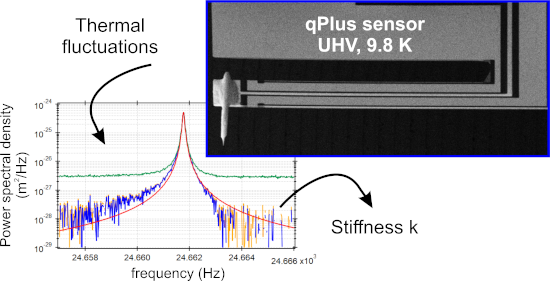
- little precision. An accurate stiffness calibration is therefore mandatory if accurate force measurements are targeted. In nc-AFM, the probe may either be a silicon cantilever, a quartz tuning fork (QTF), or a length extensional resonator (LER). When used in ultrahigh vacuum (UHV) and at low temperature
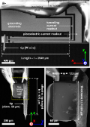
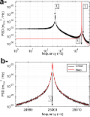
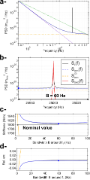
- stiffness calibration of a particular type of qPlus sensor in UHV and at 9.8 K by means of thermal noise measurements. The stiffness calibration of such high-k sensors, featuring high quality factors (Q) as well, requires to master both the acquisition parameters and the data post-processing. Our approach
- sensor without tip is expected to be ≃3300 N/m. The former value must not be considered as being representative of a generic value for any qPlus, as our study stresses the influence of the tip on the estimated stiffness and points towards the need for the individual calibration of these probes. Although

Aero-ZnS prepared by physical vapor transport on three-dimensional networks of sacrificial ZnO microtetrapods
Beilstein J. Nanotechnol. 2024, 15, 490–499, doi:10.3762/bjnano.15.44
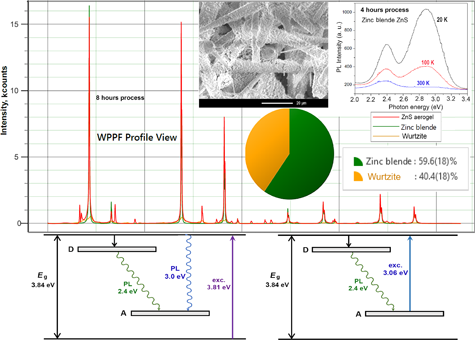
- selected to focus the light on the sample surface. The system calibration was performed on a monocrystalline Si wafer with the main peak measured at 521 cm−1. A 1200 gr/mm grating with a resolution of 1 cm−1 was utilized. SEM images of ZnS microtetrapods obtained from ZnO microtetrapods after a



Potential of a deep eutectic solvent in silver nanoparticle fabrication for antibiotic residue detection
Beilstein J. Nanotechnol. 2024, 15, 426–434, doi:10.3762/bjnano.15.38
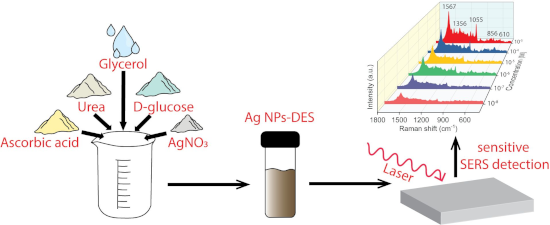
- reported in Table 1 with the most intense ones at 1580 and 1321 cm−1. Consequently, these two peaks were used to construct the calibration curves as shown in Figure 4B. The R2 values for 1580 and 1321 cm−1 are 0.9956 and 0.9993, respectively, which is close to the ideal value of 1. This indicates that the
- different [36][49], SERS analysis is meaningful for the selectivity test of the Ag NPs-DES substrate. In our study, different concentrations of SDZ were measured on the substrate to find out the LOD (Figure 6A). Collected peak intensity data were also used to construct the calibration curves shown in Figure


Vinorelbine-loaded multifunctional magnetic nanoparticles as anticancer drug delivery systems: synthesis, characterization, and in vitro release study
Beilstein J. Nanotechnol. 2024, 15, 256–269, doi:10.3762/bjnano.15.24
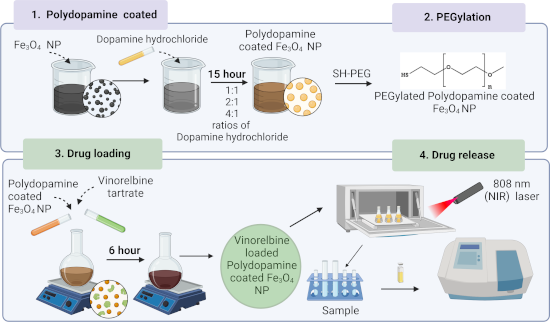
- efficiency (%EE) [39] of VNB into Fe3O4 NPs was calculated using Equation 1; it was found that the entrapment efficiency was approximately 98%. Standard curve of vinorelbine The calibration curve for the time-dependent release of VNB was generated by preparing VNB solutions at concentrations of 0, 20, 40, 60
- , 80, 100, 200, and 400 µg/mL. These solutions were then placed in quartz cuvettes, and absorbance readings were taken using the UV–vis spectrophotometer at a wavelength of 268 nm [40]. The absorbance values obtained were utilized to construct the calibration curve. Determination of photothermal
- taken. The concentration of the drug release was calculated using Equation 2 [42] with the calibration curve for VNB. In the in vitro dissolution test, the drug release (DR) was determined using Equation 3. The cumulative percentage of drug release (CPR %) was determined using Equation 4 [42] separately


Design, fabrication, and characterization of kinetic-inductive force sensors for scanning probe applications
Beilstein J. Nanotechnol. 2024, 15, 242–255, doi:10.3762/bjnano.15.23
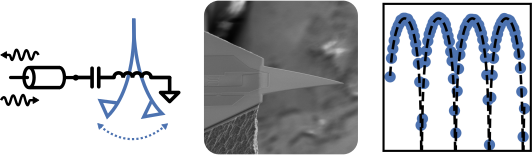
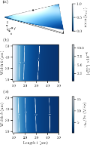
- plenty of room to explore variations. We have discussed the importance of G as a figure of merit. This parameter provides the calibration of cantilever tip motion, which is an important part in design optimization. A good design must also be fabricated at the wafer scale with a reasonable number of



Quantitative wear evaluation of tips based on sharp structures
Beilstein J. Nanotechnol. 2024, 15, 230–241, doi:10.3762/bjnano.15.22
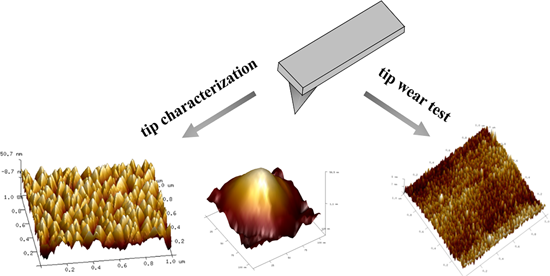
- analyze the shape of the tip, we use a probe to scan a TipCheck calibration sample and characterize its morphology. The TipCheck sample, provided by BudgetSensors, consists of a silicon chip sample with a wear-resistant thin film coating. The thin film coating exhibits granular and sharp nanostructures