


Search results
Search for "grafting" in Full Text gives 106 result(s) in Beilstein Journal of Nanotechnology.
Rational design of block copolymer self-assemblies in photodynamic therapy
Beilstein J. Nanotechnol. 2020, 11, 180–212, doi:10.3762/bjnano.11.15
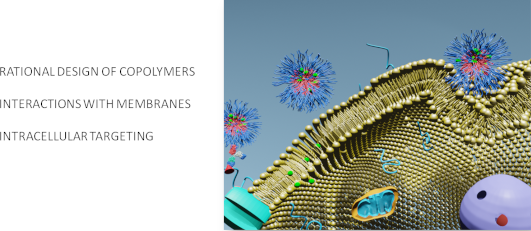
- block. Recent efforts in targeting through the hydrophilic block are summarized in Table 3. Carbohydrates have been used in order to confer targeting properties and they are often modified by grafting the hydrophobic photosensitizers in order to yield the amphiphilic properties necessary for self






Mobility of charge carriers in self-assembled monolayers
Beilstein J. Nanotechnol. 2019, 10, 2449–2458, doi:10.3762/bjnano.10.235
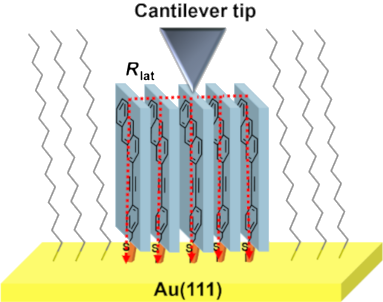
- stability resulting from the formation of a strong S–Au bond grafting the thiolates to the substrate. In selected cases, very high structural quality has been reported, with ordered domains in the size range of several 100 nm [11]. Previous research into the electron transfer within SAMs focused on the
- adhesion layer. The thickness and deposition rate (10 Å s−1) were monitored using a quartz crystal microbalance. Between substrate preparation and SAM formation, the substrates were stored in an argon atmosphere. The formation of the PAT monolayers on the gold silicon wafer was described above. Grafting
- experiments The grafting process was performed with the Bruker Dimension® Icon™ SPM system in a liquid cell filled with a 1 mM ethanolic solution of HDT. The PAT SAM-Au/mica substrate was placed into the solution and allowed to stand for 30 min in order to avoid thermal drift of the sample during grafting


pH-Controlled fluorescence switching in water-dispersed polymer brushes grafted to modified boron nitride nanotubes for cellular imaging
Beilstein J. Nanotechnol. 2019, 10, 2428–2439, doi:10.3762/bjnano.10.233
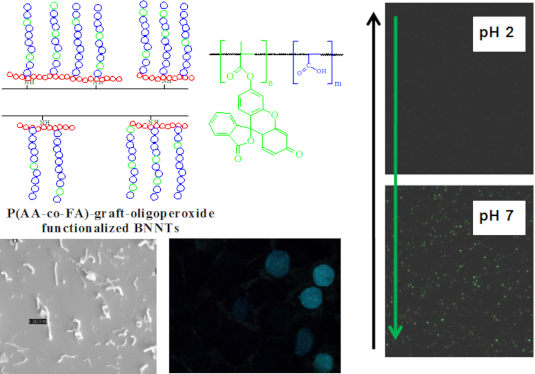
- functionalization strategies can be classified into three groups: (1) noncovalent, (2) covalent grafting to the surface, and (3) formation of amino and/or hydroxyl groups at the ends and defect sites [11][25][26][27]. Up to now, the most prospective procedure for BNNT functionalization is covalent grafting of
- irradiation [43], by mechanical milling [44] or with the iminoborane treatment [45]. The first step in covalent bonding of oligoperoxide to BNNT surfaces is to bind pyromellitic chloroanhydride moieties through available amino groups. The second step involves the grafting polymerization “from the surface” of
- -functionalized BNNTs were dried and used for grafting polymerization (2). Fabrication of P(AA-co-FA)-grafted brushes BNNTs with grafted oligoperoxide [(2) below in Scheme 1] were placed in a container with 0.1 М of AA and 0.01 M FA aqueous solution and sonicated for 20 min. Then, the mixture was heated under


Microbubbles decorated with dendronized magnetic nanoparticles for biomedical imaging: effective stabilization via fluorous interactions
Beilstein J. Nanotechnol. 2019, 10, 2103–2115, doi:10.3762/bjnano.10.205
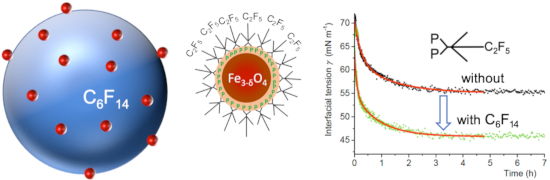
- and Discussion Synthesis and grafting of dendrons on iron oxide nanoparticles The OEG dendrons were synthesized as described in the Experimental section. Briefly, the piperazine scaffold was selected as an appropriate template to introduce the perfluoroalkylated or alkylated chain on a generation 1
- the IONPs [32]. The four dendrons were grafted on the magnetic IONPs by direct exchange of the ligand (oleic acid) according to [33]. The excess dendron material was removed by ultrafiltration. The grafting of the dendrons on the IONPs was assessed by infrared spectroscopy (IR), which showed a
- significant reduction of the oleic acid alkyl bands (2926‒2850 cm−1) and the appearance of the OEG signal (1096 cm−1) (Supporting Information File 1, Figure S1). The grafting of the dendrons on the IONPs was also confirmed by dynamic light scattering (DLS, Figure 2). The hydrodynamic mean diameter of IONP


Engineered superparamagnetic iron oxide nanoparticles (SPIONs) for dual-modality imaging of intracranial glioblastoma via EGFRvIII targeting
Beilstein J. Nanotechnol. 2019, 10, 1860–1872, doi:10.3762/bjnano.10.181
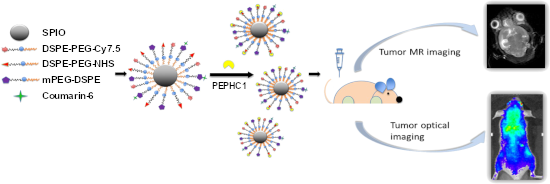
- promising marker for sensitive glioblastoma detection and localization in molecular MR imaging. PEPHC1 (the sequence: HFLIIGFMRRAACGA) is a small peptide that has been identified for specific binding with EGFRvIII [26]. Thus PEPHC1 grafting to PEGylated SPIONs could help to construct a targeted nanoprobe




Highly ordered mesoporous silica film nanocomposites containing gold nanoparticles for the catalytic reduction of 4-nitrophenol
Beilstein J. Nanotechnol. 2019, 10, 1368–1379, doi:10.3762/bjnano.10.135
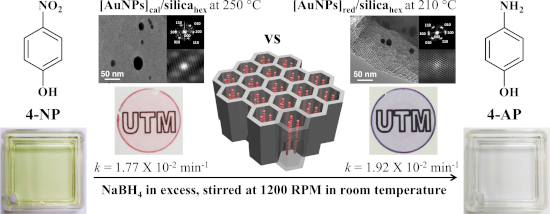
- from gold(III) chloride trihydrate (HAuCl4) solution have been used as a precursor for post-synthetic grafting upon mixing with mesoporous silica [20]. Another method is to utilize the co-condensation reaction by the mixing solution of HAuCl4 with surfactants and silica sources during the sol–gel


Scavenging of reactive oxygen species by phenolic compound-modified maghemite nanoparticles
Beilstein J. Nanotechnol. 2019, 10, 1073–1088, doi:10.3762/bjnano.10.108
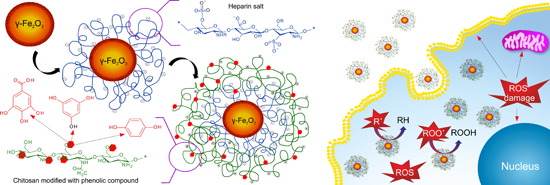
- of chitosan increase with an increasing degree of deacetylation and a decreasing molecular weight [14][15]. Three strategies for incorporating phenolic compounds into chitosan have previously been described, including laccase- or tyrosinase-mediated enzymatic grafting, carbodiimide-activated
- conjugation via esterification or amidation, and free-radical grafting [16]. The aim of this work was to design and fabricate superparamagnetic iron oxide nanoparticles with antioxidant properties. Positively charged γ-Fe2O3 nanoparticles were synthesized through co-precipitation, and their surface was
- phenolic compounds resembled each other (Figure 1b). After free-radical grafting, new peaks appeared at 3.85, 3.98, 6.91 (only in CS-G), 8.85, and 9.19 ppm. Moreover, peaks at 1.78, 4.32, and 4.61 ppm changed their multiplicity and intensity. Peaks at 6.91, 8.85, and 9.19 ppm were ascribed to the 1H, 3OH





Enhanced inhibition of influenza virus infection by peptide–noble-metal nanoparticle conjugates
Beilstein J. Nanotechnol. 2019, 10, 1038–1047, doi:10.3762/bjnano.10.104
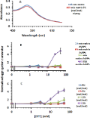
- enhanced antiviral activity compared to the free peptides. The IC50 value of the FluPep-functionalised nanoparticles decreased as the grafting density of FluPep ligand increased from 0.03% to 5% (both mol/mol), with IC50 values down to about 10% of that of the corresponding free peptide. The data
- and such nanoparticles could be used in cell culture medium. Purification of functionalised gold nanoparticles When the peptide FluPep ligand was included in the ligand mix to functionalise the nanoparticles, its molar fraction in percent in relation to the matrix ligand should reflect its grafting
- of approximately two to eight plaques at 200 pM (Figure 4). As the grafting density of FluPep ligand was increased, so did the antiviral activity, to reach a maximum at 5% (mol/mol) FluPep (Figure 4). This is reflected by the decreased IC50 value, which shows a 4.5-fold greater potency of


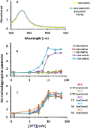


Topochemical engineering of composite hybrid fibers using layered double hydroxides and abietic acid
Beilstein J. Nanotechnol. 2019, 10, 589–605, doi:10.3762/bjnano.10.60
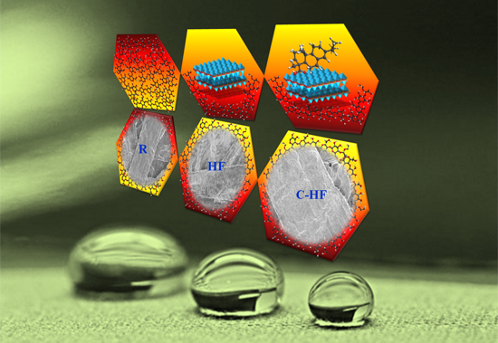
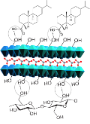
- . The disintegrated pulp was dewatered by centrifugation to yield the free unbound cellulose fibers. These cellulose fibers were used for further grafting with LDH. Refining of the pulps and Schopper–Riegler analysis Refining of bleached and unbleached pulps was performed at a pulp concentration of 1.57
- well packed and stacked fibers that decrease the free path of water during filtration are obtained. Thus, refining increases water retention of the wet fiber mat during the Schopper–Riegler measurement, expressed as a higher value of the refining degree in °SR. Grafting of LDH on cellulose fibers The
- min under ambient conditions to allow for the grafting between LDH and AA. Then the handsheets were gently taken out and allowed to dry at room temperature. Characterization Optical microscopy analysis: An optical microscope Nikon Eclipse E200 combined with a Nikon DS-Fi2 digital camera was used to




One-step nonhydrolytic sol–gel synthesis of mesoporous TiO2 phosphonate hybrid materials
Beilstein J. Nanotechnol. 2019, 10, 356–362, doi:10.3762/bjnano.10.35
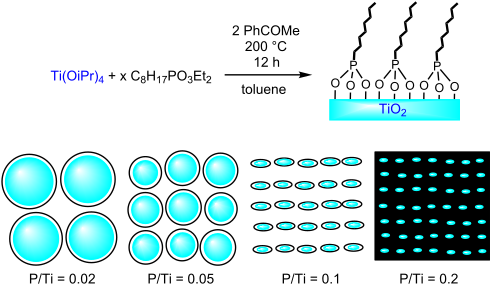
- octylphosphonic acid with grafting densities of 1.4 and 4.1 P/nm2, respectively [37]. In our hybrid materials, the anatase particle size decreases with the P/Ti ratio, leading to an increase of the specific surface area of the crystallites. The density of grafting, estimated from the composition and from the
- diameter of the crystallites (assuming a spherical shape and a density of 3.8), increases with the P/Ti ratio from 1.5 P/nm2 for TiP0.02 to 2.9 P/nm2 for TiP0.1. These values suggest the formation of monolayers with low to moderate density (grafting densities of up to 4 to 5 P/nm2 have been reported for


Removal of toxic heavy metals from river water samples using a porous silica surface modified with a new β-ketoenolic host
Beilstein J. Nanotechnol. 2019, 10, 262–273, doi:10.3762/bjnano.10.25
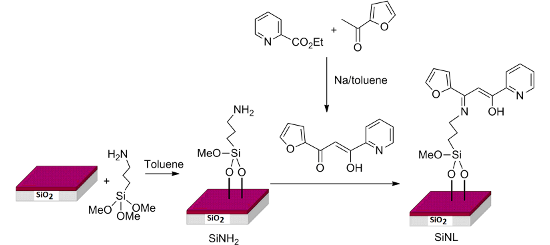
- at several pressures [54] and is shown in Figure 4. A clear decrease is observed after grafting. This is obviously due to the obstruction of N2(g) access by organic moieties anchored onto the silica matrix, thus reducing its surface area [55]. The observed decrease of the initial specific surface


Targeting strategies for improving the efficacy of nanomedicine in oncology
Beilstein J. Nanotechnol. 2019, 10, 168–181, doi:10.3762/bjnano.10.16
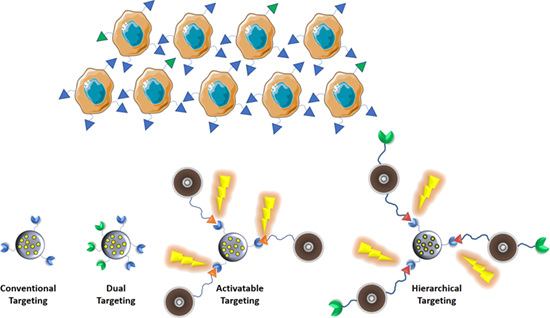
- strong affinity for NET. The replacement of the iodine by an amino group in MABG did not reduce the ability to bind to NET while it provided a reactive group that allowed for grafting this molecule to the surface of MSN employing a bifunctionalized polyethylene glycol (PEG) molecule as spacer between the
- circulation time of the particles caused by the presence of the PEG chains (Figure 2) [23]. The small size of these synthetic molecules allows for the grafting of multiple copies of them, or even combinations of two different molecules on the surface of the nanoparticles [24]. This fact can induce a


Colloidal chemistry with patchy silica nanoparticles
Beilstein J. Nanotechnol. 2018, 9, 2989–2998, doi:10.3762/bjnano.9.278
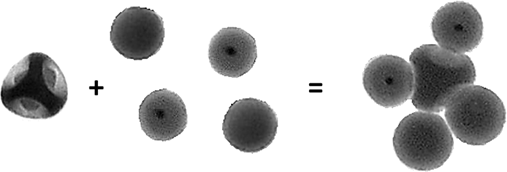
- carboxylic acid groups. The grafting efficiency was evidenced by zeta potential measurements and diffuse reflectance infrared Fourier-transform (DRIFT) spectroscopy. Figure 2b shows that after treatment of the silica surface by APTES, the so-aminated nanoparticles display a quite high zeta potential value of
- about 23 mV at pH 7.0. The isoelectric point (IEP) at pH 8.4 is close to the pKa value of the primary amine groups attesting to their efficient grafting and correct orientation on the silica surface. The carboxylated particles possess a zeta potential of about −43 mV at pH 7.0 and an isoelectric point
- shifted down to pH 3.8, attesting to the efficient grafting of the acid groups. Figure 2c shows that the IR spectrum of the aminated particles presents a characteristic band assigned to the C–C bond of the alkyl chain of APTES groups at 1473 cm−1, while the IR spectrum of the carboxylated particles


Layered calcium phenylphosphonate: a hybrid material for a new generation of nanofillers
Beilstein J. Nanotechnol. 2018, 9, 2906–2915, doi:10.3762/bjnano.9.269
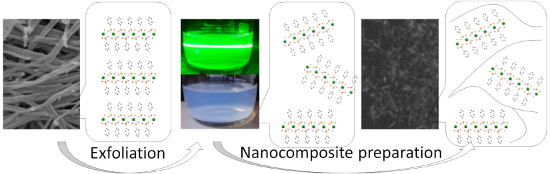
- structure or by a surface modification [3][4] by grafting organophilic functional groups onto the clay surface, leading to the synthesis of hybrid organic–inorganic materials [5]. Layered metal organophosphonates are a class of materials which exhibit a hybrid character by their nature. They are generally


Accurate control of the covalent functionalization of single-walled carbon nanotubes for the electro-enzymatically controlled oxidation of biomolecules
Beilstein J. Nanotechnol. 2018, 9, 2750–2762, doi:10.3762/bjnano.9.257
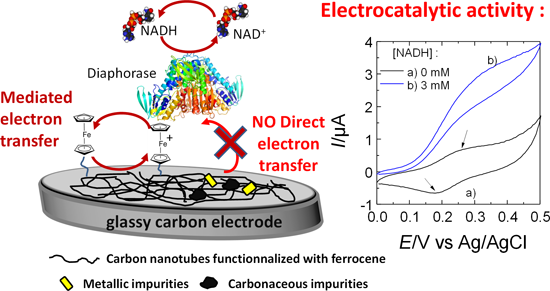
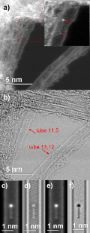
- to increase the water solubility of f-SWCNTs and ii) the influence of metallic and/or carbonaceous impurities that may be present in the CNT sample. In this article, by using advanced and complementary analytical techniques, we fully confirm the covalent nature of the chemical grafting. In particular
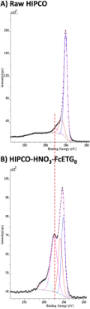
- level of functionalization. It also reports an increase of the oxygen content after grafting FcETGn groups and this is particularly true for the HIPCO-HNO3-FcETG8 sample (entry 5). The change in the detailed C 1s spectrum if compared to that of the starting material is quite obvious, as shown in Figure
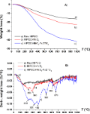
- to physisorbed molecules. TGA-MS experiments therefore confirm the covalent grafting of the ferrocene derivatives on the CNTs. Table 2 summarizes the global weight losses and the main departure peaks corresponding to the data plotted in Figure 6. Figure S2 (Supporting Information File 1) reports the






Nanocellulose: Recent advances and its prospects in environmental remediation
Beilstein J. Nanotechnol. 2018, 9, 2479–2498, doi:10.3762/bjnano.9.232
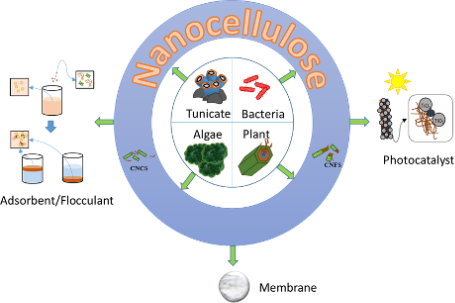
- the removal of toxic metal ions from wastewater. A carboxy group has two lone pairs of electrons on the oxygen, and hence it is required to form a chelate with a divalent metal. In this regard, Qiao et al. [101] synthesized a carboxylate-functionalized adsorbent by grafting maleic anhydride on primary
- flocculants are not only known for being biodegradable but also have a high specific surface area and have dimensions in the nanoscale regime [132]. Commonly, there are two categories of natural polymer based flocculants [133]. One of these categories involves the grafting of natural polymers to fabricate
- case, rod-shaped particles (commonly found in CNC) could deplete larger colloids than spherical particles [145]. Besides, the introduction of cationic pyridinium and imidazole functional groups through grafting provided an advantage to CNCs over common polymer flocculants in terms of flocculation


A scanning probe microscopy study of nanostructured TiO2/poly(3-hexylthiophene) hybrid heterojunctions for photovoltaic applications
Beilstein J. Nanotechnol. 2018, 9, 2087–2096, doi:10.3762/bjnano.9.197
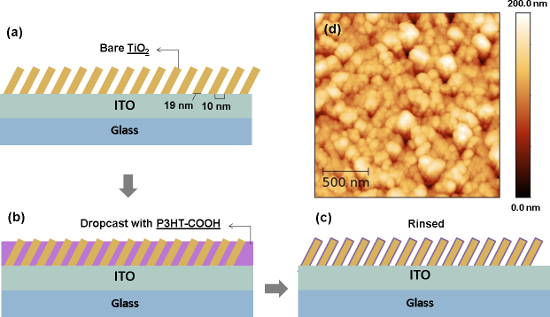
- photovoltaic process and the correlation to the nanoscale morphology. A down-shift of the vacuum level of the TiO2 surface upon grafting was measured by Kelvin probe force microscopy (KPFM), evidencing the formation of a dipole at the TiO2/P3HT-COOH interface. Upon in situ illumination, a positive photovoltage
- composed of arrays of nanoscale columns, covalently sensitized with a P3HT-COOH monolayer to form hybrid bulk heterojunctions. The grafting of P3HT on the surface of TiO2, ensured by the COOH groups, was demonstrated to be beneficial for the photoconversion efficiency of the system [16][17][18]. The
- hemispherical protuberances. Regio-regular P3HT-COOH (5400 g/mol, which corresponds to about 30 monomer units, i.e., a total polymer chain length around 130 Å) was synthesized following a reported procedure [24]. A schematic description of the grafting protocol is given in Figure 1a–c. The polymer deposit was


Nanocomposites comprised of homogeneously dispersed magnetic iron-oxide nanoparticles and poly(methyl methacrylate)
Beilstein J. Nanotechnol. 2018, 9, 1613–1622, doi:10.3762/bjnano.9.153
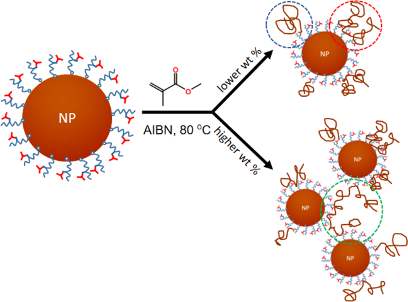
- are grafting density, molar mass of grafted chains (brushes) and conformation of brushes. Grafting density strongly influences chain conformation. At a large grafting density, brushes cannot adopt a random coil conformation but instead adopt a stretched brush conformation and their length (h) is
- matrix polymer was almost twice as large as that of the brush [23]. Moll et al. obtained a similar state of dispersion only when the molar mass of the brush was almost four times larger than that of the matrix when using a significantly lower grafting density than Xu [25]. Clearly, sufficiently long
- suspension was composed of 37.8 wt % nanoparticles (NPs), 4.1 wt % ricinoleic acid and 58.1 wt % toluene. The grafting of the methacrylic units to the nanoparticle surface (NP-MMA) was achieved by esterification of the hydroxyl group from the ricinoleic acid with methacrylic anhydride (Scheme 1). A round


Cr(VI) remediation from aqueous environment through modified-TiO2-mediated photocatalytic reduction
Beilstein J. Nanotechnol. 2018, 9, 1448–1470, doi:10.3762/bjnano.9.137
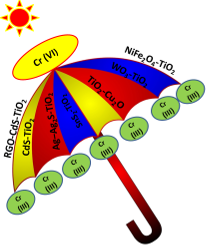
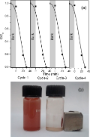
- positively charged, which adsorbed negatively charged Cr(VI) species effectively through electrostatic attraction. This facilitated the photocatalytic reduction of Cr(VI). In addition to this, the grafting of TiO2 onto RGO forms C–O–Ti bonds, which extends light absorption of TiO2 to longer wavelengths


Tuning adhesion forces between functionalized gold colloidal nanoparticles and silicon AFM tips: role of ligands and capillary forces
Beilstein J. Nanotechnol. 2018, 9, 660–670, doi:10.3762/bjnano.9.61
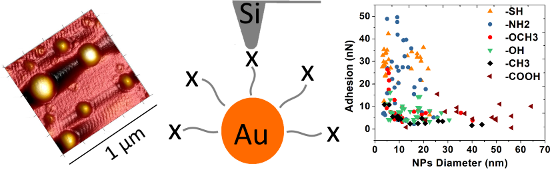
- surface treatment. One approach is the functionalization of the surfaces with various ligands. For instance, grafting a thin molecular film with hydrophobic tail groups on a surface, formed by self-assembly process, prevents the formation of nano- or microdroplets of water on the treated sample, or
- the importance of the surface and quantity of grafting sites to form well-packed monolayers of self assembled monolayers (SAMs) on a surface (or NPs), which will ensure a proper mechanical behavior and aging of the system and reduce its destabilization along the time. In addition, long chains of more


Facile phase transfer of gold nanorods and nanospheres stabilized with block copolymers
Beilstein J. Nanotechnol. 2018, 9, 616–627, doi:10.3762/bjnano.9.58
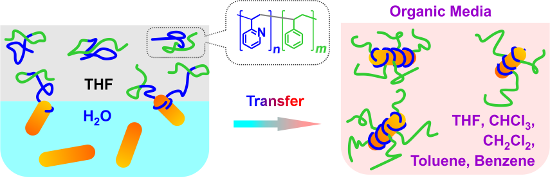
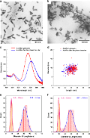
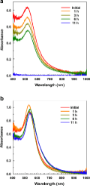
- due to van der Waals interactions, so their stabilization requires the use of bulky surfactant molecules [24][25][26] or polymers with a strongly binding groups via grafting-to [27][28], grafting-from [4] and grafting-around [29] approaches, hyperbranched polymers [30] or polymers with a significant
- number of interacting pendant groups that provide nanoparticle “wrapping” [31][32][33]. Block copolymers can also be used for the stabilization of Au nanoparticles via grafting-to [34][35], grafting-from [36] and wrapping [29][37] strategies. Since nanoparticles can be driven by laser light [36], they


Single-step process to improve the mechanical properties of carbon nanotube yarn
Beilstein J. Nanotechnol. 2018, 9, 545–554, doi:10.3762/bjnano.9.52
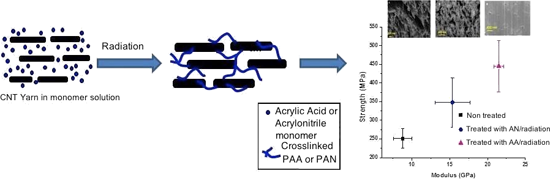
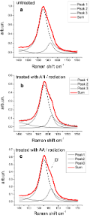
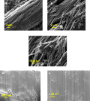
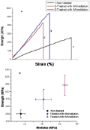
- ± 68.4 MPa) by more than 75% and the modulus (21.5 ± 0.6 GPa) by more than 144% as compared to untreated CNT yarn (strength 251 ± 26.5 MPa and modulus 8.8 ± 1.2 GPa). Keywords: carbon nanotube yarns; crosslinking; electron beam; grafting; Introduction Due to their exceptional mechanical, thermal, and
- ]. Ionizing radiation has a sufficiently high energy to break bonds and create free radicals that chemically react in several ways over a short period of time. The large penetrating power of high-energy radiation provides an opportunity to carry out grafting at different depths of the substrate and, also
- preliminary investigation was carried out with MWNTs as a loose powder grafted with AN. For this preliminary investigation, MWNTs as a loose powder were exposed to a direct radiation grafting technique in an aqueous solution of AN (20%, v/v in MeOH/H2O) and 4% of inhibitor Mohr’s salt ((NH4)2Fe(SO4)2·6H2O) at




L-Lysine-grafted graphene oxide as an effective adsorbent for the removal of methylene blue and metal ions
Beilstein J. Nanotechnol. 2017, 8, 2680–2688, doi:10.3762/bjnano.8.268
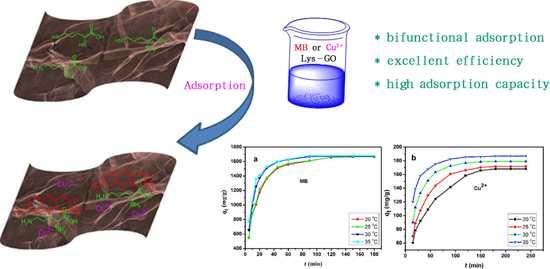
- ) used as an adsorbent for the removal of methyl orange and amaranth in 2017 [22]. The maximum adsorption capacities of PFGA for methyl orange and amaranth were as high as 3059.2 mg/g and 2043.7 mg/g, respectively. Herein, we inferred that grafting amino groups onto graphene might enhance the performance
- Table 3. Obviously, the adsorption performance of Lys-GO for MB and Cu2+ are much better than those of the other previously reported materials. The excellent adsorption performance of Lys-GO might be attributed to two factors: 1) Grafting L-lysine on the GO can improve the affinity for MB and Cu ions


The role of ligands in coinage-metal nanoparticles for electronics
Beilstein J. Nanotechnol. 2017, 8, 2625–2639, doi:10.3762/bjnano.8.263
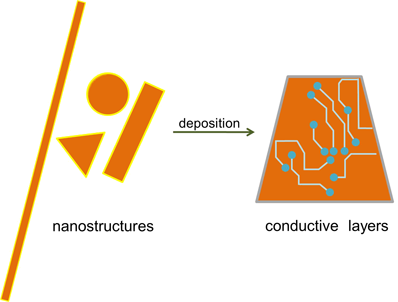
- carbon atoms in the alkyl chain were used as capping agents. Sheets of nanoparticles with short chains showed a conductivity (980.9 S/cm) that was ascribed to the shorter chain length and the lower grafting density, whereas sheets of particles functionalized with the longer thiocarboxylic acid were not
- the surface of metal nanoparticles lead to a different class of composites. Grafting or growing polymer chains from the metal surface can provide well-defined interfaces between polymer and particles that are favorable for charge transport [139][140]. Vijayakumar et al. stabilized gold nanoparticles


Identifying the nature of surface chemical modification for directed self-assembly of block copolymers
Beilstein J. Nanotechnol. 2017, 8, 1972–1981, doi:10.3762/bjnano.8.198
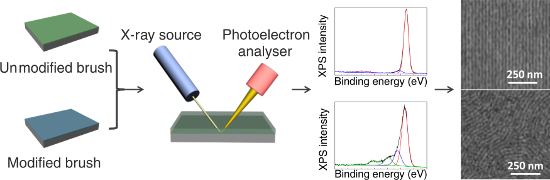
- essentially hydroxylation of the surface. Thus, the combination between optimal process conditions for grafting the polymer brush layer and an adequate chemical functionalization by oxygen plasma exposure leads to the possibility to generate efficient chemical patterns for guiding the self-assembly of the BCP





