Search results
Search for "modelling" in Full Text gives 187 result(s) in Beilstein Journal of Nanotechnology.
Measurements of dichroic bow-tie antenna arrays with integrated cold-electron bolometers using YBCO oscillators
Beilstein J. Nanotechnol. 2024, 15, 26–36, doi:10.3762/bjnano.15.3
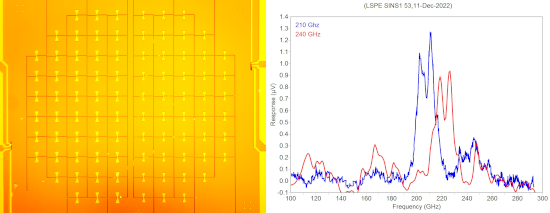
- of frequency bands between arrays of antennas can be seen. We should note here that a certain frequency shift of the channels is due to improper Si substrate thickness (available in the clean room at that time), which was about 0.29 mm instead of the optimized 0.26 mm (see modelling results in Figure


Upscaling the urea method synthesis of CoAl layered double hydroxides
Beilstein J. Nanotechnol. 2023, 14, 927–938, doi:10.3762/bjnano.14.76
- package. The k2-weighted χ(k) data, to enhance the oscillations at higher k, were Fourier-transformed. The Fourier transformation was calculated using the sine filtering function. EXAFS modelling was carried out using the ARTEMIS software [77]. Theoretical scattering path amplitudes and phase shifts for


Biomimetics on the micro- and nanoscale – The 25th anniversary of the lotus effect
Beilstein J. Nanotechnol. 2023, 14, 850–856, doi:10.3762/bjnano.14.69

- , and therefore the surface is multifunctional. In the paper “Suspension feeding in Copepoda (Crustacea) – a numerical model of setae acting in concert”, Filippov et al. [20] present a numerical modelling approach to understand the influence of different parameters on the feeding efficiency of


Cross-sectional Kelvin probe force microscopy on III–V epitaxial multilayer stacks: challenges and perspectives
Beilstein J. Nanotechnol. 2023, 14, 725–737, doi:10.3762/bjnano.14.59
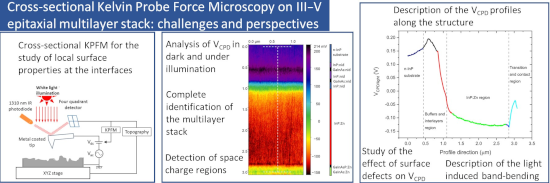
- photogenerated carrier distributions. The analysis of the KPFM data was assisted by means of theoretical modelling simulating the energy bands profile and KPFM measurements. Keywords: FM-KPFM; frequency-modulated Kelvin probe force microscopy; III–V multilayer stack; Kelvin probe modelling; KP modelling; SPV
- evaluation of the spatial resolution of our KPFM setup under ambient conditions. The second objective is a full understanding of the VCPD results combined with a description of the principal factors that affect KPFM measurements with the application of Kelvin probe (KP) numerical modelling. This enables the
- minimize the Dember effect since its contribution becomes significant only under high-injection conditions [20]. KP modelling In order to analyse the experimental characterization, scanning KP simulation was performed using the ATLAS software from Silvaco Inc. [21], controlled by the in-house software


Thermal transport in kinked nanowires through simulation
Beilstein J. Nanotechnol. 2023, 14, 586–602, doi:10.3762/bjnano.14.49
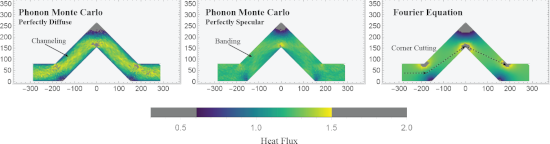
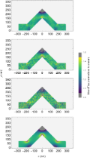
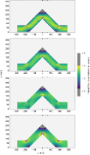
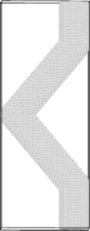
- detailed look is taken at the nature of heat flux within said systems. The effects of the kink angle are found to be complex, influenced by multiple factors including crystal orientation, details of transport modelling, and the ratio of mean free path to characteristic system lengths. The effect of varying
- . In the case of phonon transport, we often take this as an indicator of strong ballistic transport over diffusive modelling. Through the design of these systems, two factors control the limitation of the mean free path for heat transport by inducing phonon collisions with a surface. The first is the




Transferability of interatomic potentials for silicene
Beilstein J. Nanotechnol. 2023, 14, 574–585, doi:10.3762/bjnano.14.48
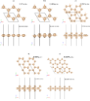
- for Mathematical and Computational Modelling of Warsaw University (ICM UW) and Poznań Supercomputing and Networking Center (PSNC). Funding This work was supported by the National Science Centre (NCN – Poland) Research Project: No. 2021/43/B/ST8/03207.
![[Graphic 3]](/bjnano/content/inline/2190-4286-14-48-i7.svg?max-width=637&scale=1.18182)

Plasmonic nanotechnology for photothermal applications – an evaluation
Beilstein J. Nanotechnol. 2023, 14, 380–419, doi:10.3762/bjnano.14.33
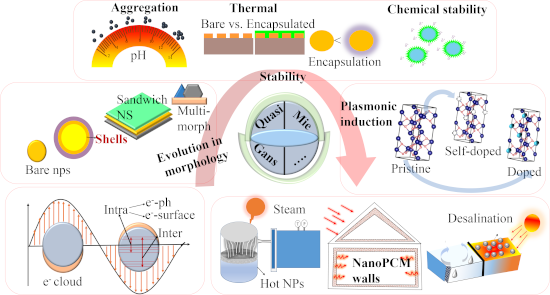
- plasmonic materials, such as a higher melting point, alloying capabilities, as well as possibly lower reactivities. Morphologies with optimal PT properties in terms of optical absorbance can benefit well from prior knowledge of the same, which can be obtained quite well through modelling efforts. Modelling
- where the incident electric field is assumed to be spatially uniform. This assumption is valid only for wavelengths much larger than the particle size. The extinction cross section, which is the result of this modelling and which is an expression summing up absorption and scattering of the incident
- continually improving computational resources, allowing for more complex calculations of extinction properties as well as PT conversion, modelling techniques are expected to play a symbiotic part with experiments in PT research. Understanding the processes that lead to the conversion of light to heat is




New trends in nanobiotechnology
Beilstein J. Nanotechnol. 2023, 14, 377–379, doi:10.3762/bjnano.14.32
- works on self-assembly have shown low synthesis cost, ease of modelling, and good biocompatibility of the generated biomolecules. The review discusses the introduction and case studies of different types of self-assembly, applying examples on the application of the method. Finally, the review summarizes
Coherent amplification of radiation from two phase-locked Josephson junction arrays
Beilstein J. Nanotechnol. 2022, 13, 1445–1457, doi:10.3762/bjnano.13.119
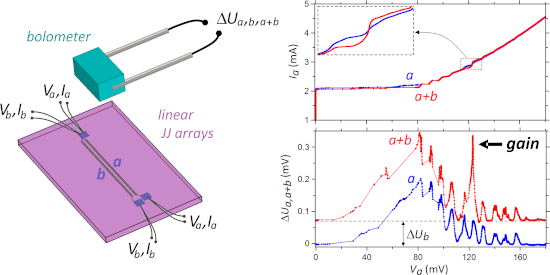
- , but also improved synchronization of junctions inside each array. Our conclusion is supported by numerical modelling. Keywords: coherent radiation; Josephson junction arrays; numerical modelling; single-strip line; synchronization; Introduction A Josephson junction (JJ) has the unique ability to
- a complex phenomenon, which cannot be reduced to a simple constructive interference of two independent sources. For a better understanding of the phase locking dynamics, we perform numerical modelling. Figure 6a demonstrates the general view of the considered model for on-chip synchronization. It


Orally administered docetaxel-loaded chitosan-decorated cationic PLGA nanoparticles for intestinal tumors: formulation, comprehensive in vitro characterization, and release kinetics
Beilstein J. Nanotechnol. 2022, 13, 1393–1407, doi:10.3762/bjnano.13.115
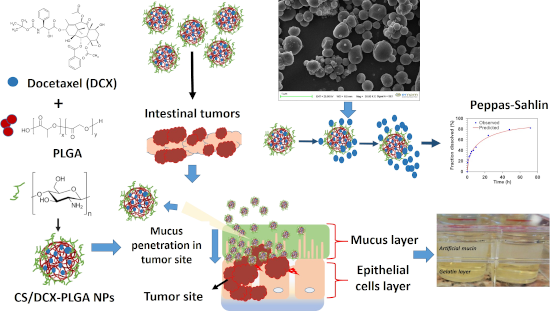
- interpretation of release behavior. These quantitative evaluations help to accelerate the drug development processes by estimating the in vivo performance of formulations. The results of the release kinetics modelling studies are presented in Table 3 and Figure 5. In Figure 5, DCX release curves and the curves


Laser-processed antiadhesive bionic combs for handling nanofibers inspired by nanostructures on the legs of cribellate spiders
Beilstein J. Nanotechnol. 2022, 13, 1268–1283, doi:10.3762/bjnano.13.105
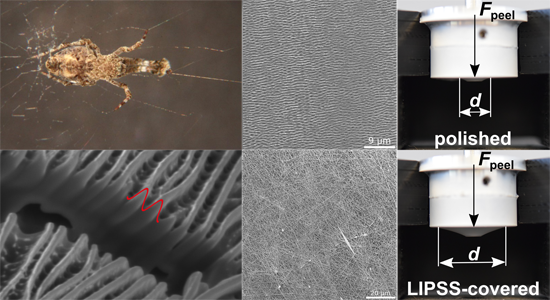
- surface structure, in contrast to earlier published works where solids with plane surfaces were assumed [24][25][26][27][28]. This is an important difference, which has to be considered when modelling the interaction of nanofibers with, in this case, a sinusoidal surface. Laser-induced periodic surface
- new way for technologically improving the production of tools for handling of artificial nanofibers. This can facilitate and optimize the production of, for example, filter materials and nanofabrics. Results and Discussion Theoretical modelling The general model is depicted in Figure 2. The course of
- detachment x0 is used as a parameter to characterize the system. A longitudinal force S can stretch the fiber. For theoretical modelling, a single unit is cut free (b) and the action of the fiber at x > λ is replaced by the yet unknown vertical force F. This is the force required to reach a value of zero for






Role of titanium and organic precursors in molecular layer deposition of “titanicone” hybrid materials
Beilstein J. Nanotechnol. 2022, 13, 1240–1255, doi:10.3762/bjnano.13.103
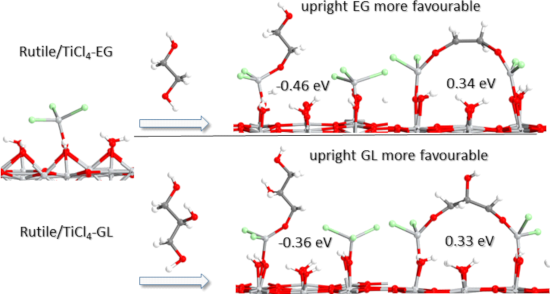
- TiCl4 pulse As oxide/metalcone films are of high interest, we explored the feasibility of anatase TiO2/titanicone, rutile TiO2/titanicone and Al2O3/titanicone film formation. This is a common approach in modelling MLD chemistry [24][39][40][41]. We performed fundamental investigation on the interactions


Microneedle-based ocular drug delivery systems – recent advances and challenges
Beilstein J. Nanotechnol. 2022, 13, 1167–1184, doi:10.3762/bjnano.13.98
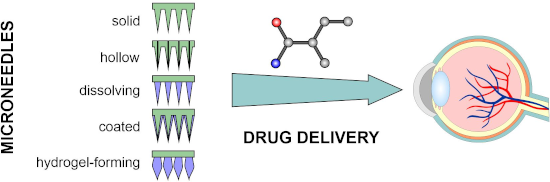
- , the substrate, absorbing the laser beam, heats up and evaporates or sublimes, which yields engraved 3D patterns [150]. In the fused deposition modelling (FDM) method, the thermoplastic material is heated to its softening point, then extruded through a nozzle and applied layer by layer to the build


Biomimetic chitosan with biocomposite nanomaterials for bone tissue repair and regeneration
Beilstein J. Nanotechnol. 2022, 13, 1051–1067, doi:10.3762/bjnano.13.92
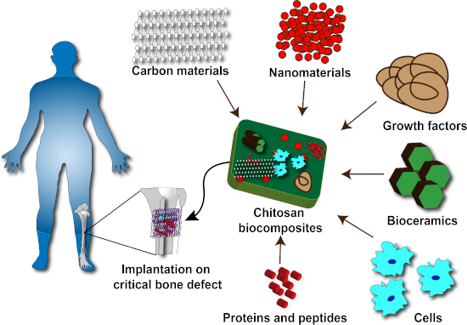
- modelling and clinical imaging of the scaffolds will assist in the establishment of its micro- and nanoarchitecture, which will aid in the regulation and activation of the immune system for bone tissue repair and regeneration. Conclusion Chitosan is a naturally occurring biopolymer with appropriate
Influence of water contamination on the sputtering of silicon with low-energy argon ions investigated by molecular dynamics simulations
Beilstein J. Nanotechnol. 2022, 13, 986–1003, doi:10.3762/bjnano.13.86
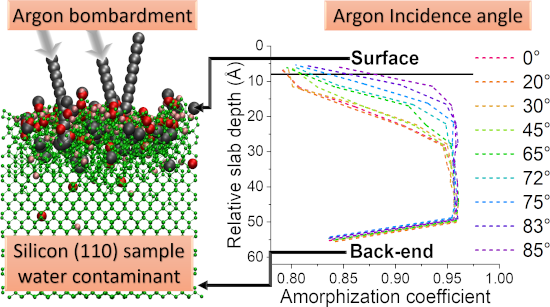
- the NVE ensemble in order to avoid any impact of a thermostat on the collision cascade. Once properly equilibrated, the simulation of argon bombardment of pristine Si(100) was run for 50 ps, which was enough for the modelling of energy dissipation and sputtering, and then thermalized to 300 K. The




Interaction between honeybee mandibles and propolis
Beilstein J. Nanotechnol. 2022, 13, 958–974, doi:10.3762/bjnano.13.84
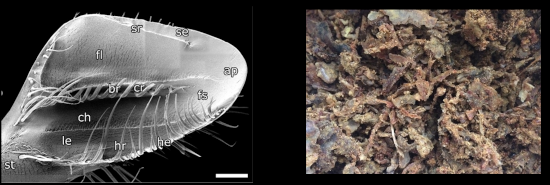
- ][6]. The mandibles of the bee are instrumental in processing propolis, but they are also used for other tasks such as biting through cell caps and modelling wax [7]. The mandibles, sometimes also called jaws, are situated laterally on the lower part of the bee’s head (see Figure 3) and operate


Comparing the performance of single and multifrequency Kelvin probe force microscopy techniques in air and water
Beilstein J. Nanotechnol. 2022, 13, 922–943, doi:10.3762/bjnano.13.82
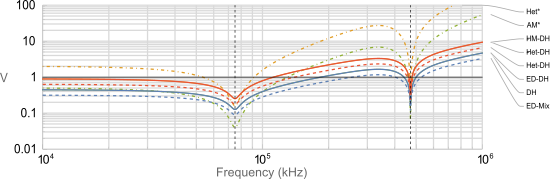
- environments by Collins et al. [81]. This technique exhibits a similar cantilever capacitive contribution to VCPD as AM-KPFM and is only quantitative if the relative gain of the two measured frequencies is known either through an additional measurement or through modelling [29]. Since the electrostatic
Comparative molecular dynamics simulations of thermal conductivities of aqueous and hydrocarbon nanofluids
Beilstein J. Nanotechnol. 2022, 13, 620–628, doi:10.3762/bjnano.13.54
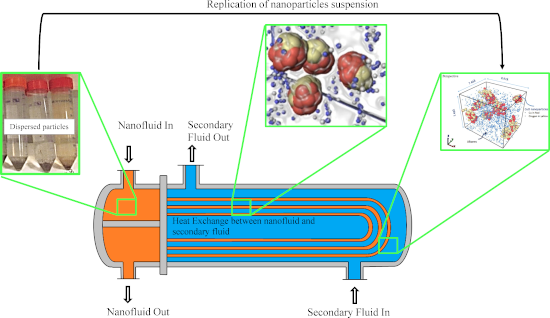
- study was carried out with different shapes (i.e., cylinder, platelet, and sphere) of nanoparticles (Cu/Al2O3 with ethylene glycol as the base fluid) using the finite element method (FEM) in MAPLE 18.0. For mathematical modelling and simulation of hybrid nanofluids, Shah et al. [33] considered a two


Quantitative dynamic force microscopy with inclined tip oscillation
Beilstein J. Nanotechnol. 2022, 13, 610–619, doi:10.3762/bjnano.13.53
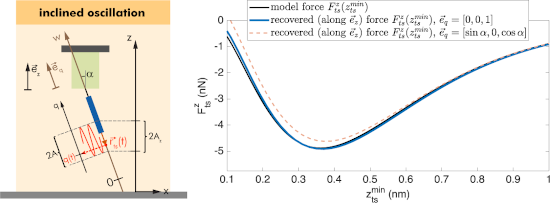
- stabilised sensor oscillation amplitude A. A sophisticated analysis of the Δf(zp) curves measured with different oscillation amplitudes A yields a precise result [2] for the force curve, yet with an arbitrary origin along the z-axis. In theoretical modelling and analysis of tip–sample interactions, it has


![[Graphic 38]](/bjnano/content/inline/2190-4286-13-53-i79.svg?max-width=637&scale=1.18182) and the axis w....
and the axis w....


Investigation of electron-induced cross-linking of self-assembled monolayers by scanning tunneling microscopy
Beilstein J. Nanotechnol. 2022, 13, 462–471, doi:10.3762/bjnano.13.39
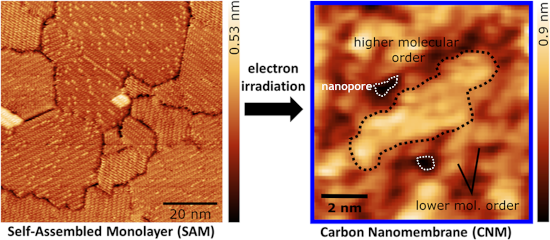
- molecular dynamics. The LAMMPS package was employed and the EDIP as well as AIREBO carbon potentials were used depending on more technical simulation-specific parameters. As reported in the reference [71], the simulations included only carbon atoms. The modelling was achieved through the following steps: (1


Controllable two- and three-state magnetization switching in single-layer epitaxial Pd1−xFex films and an epitaxial Pd0.92Fe0.08/Ag/Pd0.96Fe0.04 heterostructure
Beilstein J. Nanotechnol. 2022, 13, 334–343, doi:10.3762/bjnano.13.28
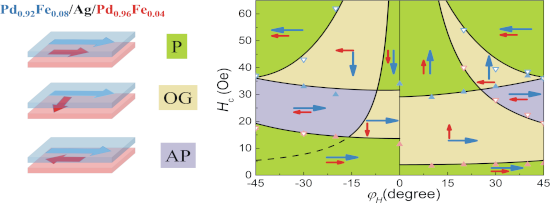
- on the applied magnetic field for (a) φΗ = 6°, θΗ = 90° and (c) φΗ = 0°, θΗ = 7°; points: experimental data, lines: results of the modelling with Equation 2 and Equation 3. (b) Rotation of the magnetic moment of the film (within the same model) for φΗ = 6°, θΗ = 90°; the vectors show the direction of
- K; points: experimental data, lines: results of the modelling with Equation 2 and Equation 3. (b) Rotation (within the model) of the magnetic moment of the film with a step of 20 Oe for φH = 90.5° under the field variation from +500 Oe to −500 Oe; insert: the geometry of the experiment. (c


Effect of lubricants on the rotational transmission between solid-state gears
Beilstein J. Nanotechnol. 2022, 13, 54–62, doi:10.3762/bjnano.13.3
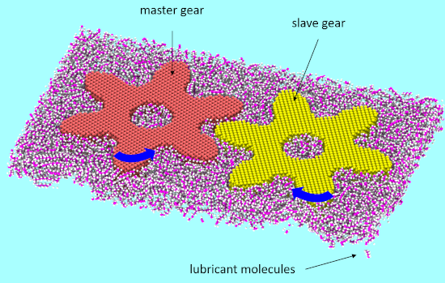
- multiscale simulation involving continuum modelling in combination with MD simulations would be helpful to connect the atomistic description with macroscopic behavior, for example, as given by the Stribeck curve [5]. A substrate can also provide significant friction due to electron or phonon excitations [65


Design aspects of Bi2Sr2CaCu2O8+δ THz sources: optimization of thermal and radiative properties
Beilstein J. Nanotechnol. 2021, 12, 1392–1403, doi:10.3762/bjnano.12.103
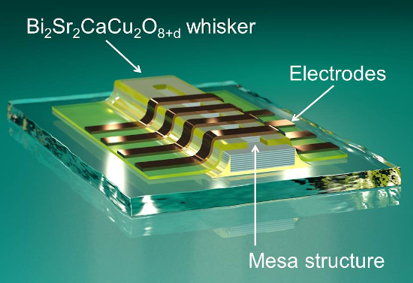
- junctions; numerical modelling; terahertz sources; Introduction Tunable, monochromatic, continuous-wave (CW), compact, and power-efficient terahertz (THz) sources of electromagnetic waves (EMW) are required for a broad variety of applications [1]. However, the key obstacle, colloquially known as “the THz
- -heating background. This indicates a much larger RPE in whisker-based devices [40]. Numerical Results To understand the reported difference between crystal- and whisker-based devices and to suggest possible optimizations of THz sources, we performed numerical modelling using the 3D finite element software
- the radiative power. Their goal is to reveal general trends and geometrical factors contributing to design aspects of Bi-2212 THz sources. Modelling of heat transfer Accurate analysis of self-heating in Bi-2212 mesas is a complex non-linear problem [28][30][31][32][36][38]. Simulations presented below


Identifying diverse metal oxide nanomaterials with lethal effects on embryonic zebrafish using machine learning
Beilstein J. Nanotechnol. 2021, 12, 1297–1325, doi:10.3762/bjnano.12.97
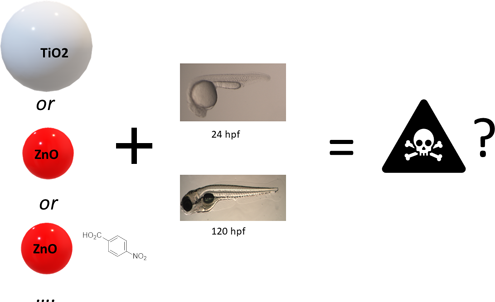
- hours post-fertilisation, at concentrations of 250 ppm or less. Models were developed using data from the Nanomaterial Biological-Interactions Knowledgebase for a dataset of 44 diverse, coated and uncoated metal or, in one case, metalloid oxide nanomaterials. Different modelling approaches were
- these modelling results are on truly external data, which were not used to select the single descriptor model. This will require further laboratory work to generate comparable data to those studied herein. Keywords: data augmentation; embryonic zebrafish; machine learning; nanosafety; nano-QSAR
- University), with minimal, clearly documented, variations in experimental conditions, and were linked to comparable physicochemical characterisation data. However, the first published modelling studies of NBI Knowledgebase data treated the characterisation data, used as input to predictive models, in a


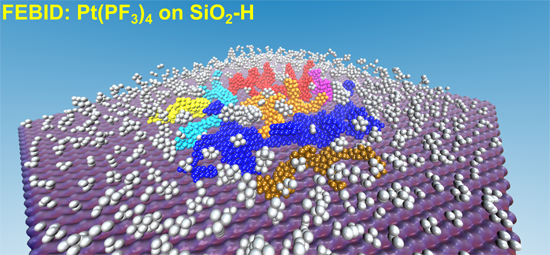
Irradiation-driven molecular dynamics simulation of the FEBID process for Pt(PF3)4
Beilstein J. Nanotechnol. 2021, 12, 1151–1172, doi:10.3762/bjnano.12.86